Field studies have revealed the impact of changing water regimes on the structure of arbuscular mycorrhizal fungal (AMF) communities, but it is not known what happens to the abundance of individual AMF species within the community when the water conditions in the rhizosphere change. The behavior of four AMF species isolated from the Arabian desert (Diversispora aurantia, Diversispora omaniana, Septoglomus africanum, and an undescribed Paraglomus species) was investigated when assembled in microcosms containing Sorghum bicolor as host plant, and treated with various water regimes. Furthermore, the impact of invasion of these assemblages by Rhizophagus irregularis, an AMF species widely used in commercial inocula, was studied. The abundance of each AMF species in sorghum roots was measured by determining the transcript numbers of their large ribosomal subunit (rLSU) by real-time PCR, using cDNA and species-specific primers. Plant biomass and length of AMF extraradical hyphae were also measured. The abundance of each AMF species within the sorghum roots was influenced by both the water regime and the introduction of R. irregularis. Under dry conditions, the introduction of R. irregularis reduced the total abundance of all native AMF species in roots and also led to a reduction in the amount of extraradical mycelium, as well as to a partial decrease in plant biomass. The results indicate that both water regime and the introduction of an invasive AMF species can strongly alter the structure of an AMF native assemblage with a consequent impact on the entire symbiotic mycorrhizal relationship.
We have extended the deadline for our workshop below with one week, until April the 17th! Also, we are now also welcoming applications from people who don’t have relevant sequencing data but can contribute in another meaningful way, or from people who do have sequencing data and would like to be involved but can’t attend in person. We are looking into possibilities of streaming the talks and videoconferencing remote contributors.
In respect of plant matter, phosphorus is one of three macronutrients and is required by turfgrasses in comparatively large quantities (0.1 - 1.0% dry weight in plant matter). Phosphorus is highly mobile within the plant itself, but it is commonly referred to as being immobile within soils. We, as turfgrass managers, are often told that phosphorus is essential for seed germination, and that it is required to root growth - is that it?
Is that the total significance of a mineral of which its parent rock (Apatite) will be mined to the tune of a projected 256 million tonnes (Mt) in 2015? There is more to it, much more. Allow me to expand on the roles of phosphorus in plant matter:
- Involved in all plant metabolic processes - Required for energy (ADP & ATP) storage and transfer - Critical for metabolic activities, such as protein, phospholipid, nucleic acid and lipid synthesis - Required for Phosphorylation - Is a structural constituent of phospholipids, phosphoproteins, nucleic acids, sugar phosphates, nucleotides and coenzymes - Required for photosynthesis - Serves the role of a bridge molecule between DNA and RNA, whereby it aids in the storage and transfer of genetic information
So, working on the basis of the above facts, it would seem that phosphorus is a critical element for plant growth - to maintain adequate growth, a sufficient level of plant available phosphorus is required 'year round'.
•Surprising overlaps between root symbiosis and pollen development. •Genetic and transcriptomic overlaps between arbuscular mycorrhiza and pollen development. •Lipid polyester pathway is involved in arbuscular mycorrhiza and pollen development. Roots and flowers are formed at the extreme ends of plants and they differ in almost every aspect of their development and function; even so, they exhibit surprising molecular commonalities. For example, the calcium and calmodulin-dependent protein kinase (CCaMK) plays a central role in root symbioses with fungi and bacteria, but is also highly expressed in developing anthers. Moreover, independent evidence from transcriptomics, phylogenomics, and genetics reveals common developmental elements in root symbioses and reproductive development. We discuss the significance of these overlaps, and we argue that an integrated comparative view of the two phenomena will stimulate research and provide new insight, not only into shared components, but also into the specific aspects of anther development and root symbioses.
The development of ectomycorrhizal associations is crucial for growth of many forest trees. However, the signals that are exchanged between the fungus and the host plant during the colonization process are still poorly understood. In this study, we have identified the relationship between expression patterns of Laccaria bicolor aquaporin LbAQP1 and the development of ectomycorrhizal structures in trembling aspen (Populus tremuloides) seedlings. The peak expression of LbAQP1 was 700-fold higher in the hyphae within the root than in the free-living mycelium after 24 h of direct interaction with the roots. Moreover, in LbAQP1 knock-down strains, a non-mycorrhizal phenotype was developed without the Hartig net and the expression of the mycorrhizal effector protein MiSSP7 quickly declined after an initial peak on day 5 of interaction of the fungal hyphae with the roots. The increase in the expression of LbAQP1 required a direct contact of the fungus with the root and it modulated the expression of MiSSP7. We have also determined that LbAQP1 facilitated NO, H2O2 and CO2 transport when heterologously expressed in yeast. The report demonstrates that the Laccaria bicolor aquaporin LbAQP1 acts as a molecular signaling channel, which is fundamental for the development of Hartig net in root tips of Populus tremuloides.
Development of the mutualistic arbuscular mycorrhiza (AM) symbiosis between most land plants and fungi of the Glomeromycota is regulated by phytohormones. The role of jasmonate (JA) in AM colonization has been investigated in the dicotyledons Medicago truncatula, tomato and Nicotiana attenuata and contradicting results have been obtained with respect to a neutral, promotive or inhibitory effect of JA on AM colonization. Furthermore, it is currently unknown whether JA plays a role in AM colonization of monocotyledonous roots. Therefore we examined whether JA biosynthesis is required for AM colonization of the monocot rice. To this end we employed the rice mutant constitutive photomorphogenesis 2 (cpm2), which is deficient in JA biosynthesis. Through a time course experiment the amount and morphology of fungal colonization did not differ between wild-type and cpm2 roots. Furthermore, no significant difference in the expression of AM marker genes was detected between wild type and cpm2. However, treatment of wild-type roots with 50 μM JA lead to a decrease of AM colonization and this was correlated with induction of the defense gene PR4. These results indicate that JA is not required for AM colonization of rice but high levels of JA in the roots suppress AM development likely through the induction of defense.
I am so glad that PLoS ONE allows to publish such "negative results" because they are very important too. I am not sure that this could have been published in more conventional journals.
Symbioses of plants with rhizobia and mycorrhizal fungi have been poorly studied in heavy metal-contaminated tropical soils. Studies found were mainly in areas subject to Zn processing, coal and gold mining activities and sewage sludge application. Although no data were found about the occurrence of rhizobia in these soils, tolerance of rhizobia from diverse origins (plant species and ecosystems) revealed strains with high tolerance to Zn, Cd and Cu. Cupriavidus necator, recently described as a nitrogen-fixing legume symbiont, is among the high-tolerant species. The arbuscular mycorrhizal fungi (AMF) genera most commonly reported in heavy metal (HM)-contaminated areas were Glomus and Acaulospora. Some tropical legume trees have been identified as promising for programmes to recover soils degraded by excess HMs, such as Enterolobium contortisiliquum and Acacia mangium, which are able to form an efficient symbiosis with Bradyrhizobium, Mimosa caesalpiniaefolia and Leucaena leucocephala, which form symbioses with Cupriavidus necator. AMF were shown to improve the tolerance of hosting plants to As in contaminated soils. Leguminous species had a low As translocation index from the roots to shoots when inoculated with AMF species.
The majority of vegetable crops are potential host plants of arbuscular mycorrhizal fungi (AMF). AMF can improve the nutrient and water supply, induce tolerance of environmental stress and resistance to root diseases and nematodes of their host plants. Therefore, inoculation of vegetable crops with AMF can be profitable and commercial inoculation products are available. While, the impact of AMF on diverse vegetable crops was described in the past, the deduction of their general significance for these crops in horticulture is missing so far. In this review, we examine the state-of-the-art of capabilities of AMF to increase the productivity of vegetable crops by growth promotion, amelioration of stress, biocontrol of pathogens and to improvement of the chemical quality. AMF can be effective to increase the drought and salt stress tolerance. They were supposed to be seem especially promising in biocontrol of root-knot nematodes and in increase of the chemical quality of vegetables for human nutrition. The efficiency of inoculation with AMF on their host plants was controlled by the genotype combinations (host plant × AMF), by soil properties and by the inoculation method. Vegetable crops with high mycorrhizal growth dependency are from diverse families: Amaryllidaceae (e.g., onion, leek), Apiaceae (e.g., carrot), Asteraceae (e.g., lettuce), Cucurbitaceae (cucumber), Fabaceae (e.g., bean and pea) and Solanaceae (e.g., tomato, bell pepper). The future challenge of use of AMF in the production of vegetables will be to optimize combinations of crop plant × AMF inoculum, inoculation methods and soil or substrate properties for mycorrhiza establishment and use. Promising perspectives for combined inoculations of AMF with other biofertilizers or biopesticides were identified.
Multispecies assemblages often consist of a complex network of interactions. Describing the architecture of these networks is a first step in understanding the stability and persistence of these species-rich communities. Whereas a large body of research has been devoted to the description of above-ground interactions, much less attention has been paid to below-ground interactions, probably because of difficulties to adequately assess the nature and diversity of interactions occurring below the ground. In this study, we used 454 amplicon pyrosequencing to investigate the architecture of the network between mycorrhizal fungi and 20 orchid species co-occurring in a species-rich Mediterranean grasslands. We found 100 different fungal operational taxonomic units (OTUs) known to be mycorrhizal in orchids, most of which were members related to the genera Ceratobasidium and Tulasnella. The network of interactions was significantly compartmentalized (M = 0.589, P = 0.001), but not significantly nested (N = 0.74, NODF = 10.58; P > 0.05). Relative nestedness was negative (N* = −0.014), also suggesting the existence of isolated groups of interacting species. Compartmentalization is a typical feature of ecological systems showing high interaction intimacy, and may reflect strong specialization between orchids and fungi resulting from physiological, physical or spatial constraints.
Changes in species richness and distributions of ectomycorrhizal (ECM) fungal communities along altitudinal gradients have been attributed to changes in both host distributions and abiotic variables. However, few studies have considered altitudinal relationships of ECM fungi associated with a single host to identify the role of abiotic drivers. To address this, ECM fungal communities associated with one host were assessed along five altitudinal transects in Scotland. Roots of Scots pine (Pinus sylvestris) were collected from sites between 300 and 550–600 m altitude, and ECM fungal communities were identified by 454 pyrosequencing of the fungal internal transcribed spacer (ITS) region. Soil moisture, temperature, pH, carbon : nitrogen (C : N) ratio and organic matter content were measured as potential predictors of fungal species richness and community composition. Altitude did not affect species richness of ECM fungal communities, but strongly influenced fungal community composition. Shifts in community composition along the altitudinal gradient were most clearly related to changes in soil moisture and temperature. Our results show that a 300 m altitudinal gradient produced distinct shifts in ECM fungal communities associated with a single host, and that this pattern was strongly related to climatic variables. This finding suggests significant climatic niche partitioning among ECM fungal species.
Five bacterial strains representing 45 isolates originated from root nodules of the medicinal legume Sophora flavescens were defined as two novel groups in the genus Rhizobium based on their phylogenetic relationships estimated from 16S rRNA genes and the housekeeping genes recA, glnII and atpD. These groups were distantly related to Rhizobium leguminosarum USDA 2370T (95.6 % similarity for group I) and Rhizobium phaseoli ATCC 14482T (93.4 % similarity for group II) in multilocus sequence analysis. In DNA–DNA hybridization experiments, the reference strains CCBAU 03386T (group I) and CCBAU 03470T (group II) showed levels of relatedness of 17.9–57.8 and 11.0–42.9 %, respectively, with the type strains of related species. Both strains CCBAU 03386T and CCBAU 03470T contained ubiquinone 10 (Q-10) as the major respiratory quinone and possessed 16 : 0, 18 : 0, 19 : 0 cyclo ω8c, summed feature 8 and summed feature 2 as major fatty acids, but did not contain 20 : 3 ω6,8,12c. Phenotypic features distinguishing both groups from all closely related species of the genus Rhizobium were found. Therefore, two novel species, Rhizobium sophorae sp. nov. for group I (type strain CCBAU 03386T = E5T = LMG 27901T = HAMBI 3615T) and Rhizobium sophoriradicis sp. nov. for group II (type strain CCBAU 03470T = C-5-1T = LMG 27898T = HAMBI 3510T), are proposed. Both groups were able to nodulate Phaseolus vulgaris and their hosts of origin (Sophora flavescens) effectively and their nodulation gene nodC was phylogenetically located in the symbiovar phaseoli.
What is Mycorrhiza? mycor = fungus, rhiza = root , 'fungus root' naturally occurring beneficial fungi, symbiotic on 90% of plants.
How does it work? Mycorrhizal spores germinate when in contact with plant roots and form filaments (hyphae), which create a symbiotic relationship increasing the plants ability to uptake fixed nutrients and water, improving plant performance, using a natural, organic product.
Why is mycorrhiza important? They improve the biology of the plant/soil relationship and are the essential active ingredient missing in most of the current growing practices, they reduce the need for chemical fertilizer and pesticides.
Endo Mycorrhiza – forms a symbiotic relationship with 90% of plants, mostly herbaceous plants. Endo is also referred to as VA Mycorrhiza or VAM
Ecto Mycorrhiza – some plants, mainly tree species, form a symbiotic relationship with Ecto Mycorrhiza.
Download our fact sheet to find out about the commercially important plant types that benefit from MycoApply® Mycorrhizal Plants.
This past week, as I harvested the last of my fall green beans and pulled up the vines (and put them in the compost), I saw something that made me think about the great big web of life that we rarely see and hardly think about.
There’s a huge microcosm of life underfoot, namely fungi and bacteria that have evolved over millions of years to live symbiotically with plants.
My bean roots had tiny little nodules on them, which are home to bacteria that perform a very important function. These bacteria, along with fungi, are so important to plant health that nearly all plants have an association with a bacteria or fungus.
Microorganisms play essential roles in almost every environment on earth. For instance, microbes decompose organic material, or establish symbiotic relationships that range from pathogenic to mutualistic. Symbiotic relationships have been particularly well studied for microbial plant pathogens and have emphasized the role of effectors; secreted molecules that support host colonization. Most effectors characterized thus far play roles in deregulation of host immunity. Arguably, however, pathogens not only deal with immune responses during host colonization, but also encounter other microbes including competitors, (myco)parasites and even potential co-operators. Thus, part of the effector catalog may target microbiome co-inhabitants rather than host physiology.
Arbuscular mycorrhizal (AM) association plays a key role in the sustainability of terrestrial plant ecosystems, in particular those presenting limitations for the establishment and subsequent growth of plants. In Chile, more than 50% of arable soils are originated from volcanic ashes, showing in general several constraints to crop production, such as low pH, high exchangeable aluminum content and low levels of available P. Under these conditions, the management of AM fungal propagules using adequate cultural management practices emerges as a successful alternative in order to maximize the positive effects of AM symbiosis on plant growth in these types of soil. This review presents the results of several years of research about the effect of different agronomic and forest management practices on the density and functionality of the native fungal populations in volcanic soils from Southern Chile, and their subsequent effect on the improvement of soil characteristics. These investigations have contributed to a better understanding of the role played by AM symbiosis in such soils and provide guidance on the most appropriate alternatives to increase its presence and functionality.
Several of the most important factors needed for plant survival are very dependent upon extremely complex back and forth, multi-layered communication – these include the use of vital plant communication with bacteria and fungus.
What is a symbiosis–two forces approaching and each learning the signaling language for the other?
Plants determine friends and foes from a wide range of microbes and fungus, and then encourage the relationships with symbionts and fight against the intrusion of pathogens. Plant communication with fungal wires is almost ubiquitous.
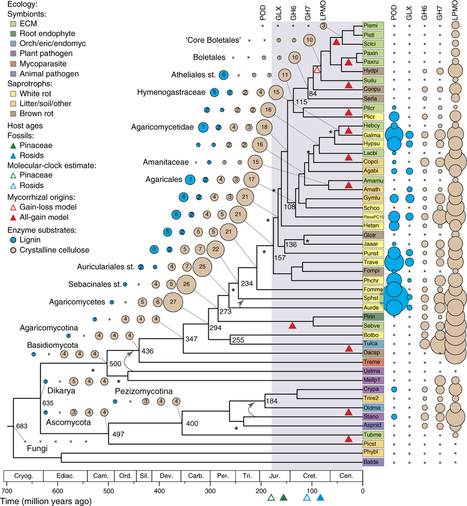
I wanted to write a bit more about my PhD and what I have been up to. However, I broke my knee 5 weeks ago playing rugby: rupturing two cruciate ligaments and fracturing my tibia… So I have been away from the lab. During an extended procrastination break I did however get chance to write this brief post, simplified to my level of understanding, about a recent Nature Genetics paper on the phylogenies of mycorrhizal fungi.
Mycorrhizal fungi form key association with plants. They effectively extend the surface area of their hosts roots - the fungi supply the plant with nutrients such as nitrogen and phosphorus, in return, the plant supplies the fungi with carbon fixed by photosynthesis. This association is ubiquitous in higher plant species, where more than 80% have fungal partners. Thus exploring this relationship is crucial to understanding many ecological and evolutionary questions.
Kohler et al.’s (2015) large scale study extended our knowledge of this plant-fungal association by delving into the evolution of mycorrhizal fungi. They compared fugal phylogenies of biotrophic (obtain carbon from plant hosts) and saprotrophic (carbon from degrading complex organic substrates) fungal genomes. This included studying 49 genomes of saprotrophs, ectomycorrhizal (ECM), orchid (ORM) and ericoid (ERM) species. Their comparison of these fungal genomes provides deeper understanding on how the plant-fungal association evolved and how this association aids the plant in adapting to its environment.
Spatial scaling is a critical issue in ecology, but how anthropogenic activities like fertilization affect spatial scaling is poorly understood, especially for microbial communities. Here, we determined the effects of long-term fertilization on the spatial scaling of microbial functional diversity and its relationships to plant diversity in the 150-year-old Park Grass Experiment, the oldest continuous grassland experiment in the world. Nested samples were taken from plots with contrasting inorganic fertilization regimes, and community DNAs were analyzed using the GeoChip-based functional gene array. The slopes of microbial gene-area relationships (GARs) and plant species-area relationships (SARs) were estimated in a plot receiving nitrogen (N), phosphorus (P), and potassium (K) and a control plot without fertilization. Our results indicated that long-term inorganic fertilization significantly increased both microbial GARs and plant SARs. Microbial spatial turnover rates (i.e., z values) were less than 0.1 and were significantly higher in the fertilized plot (0.0583) than in the control plot (0.0449) (P < 0.0001). The z values also varied significantly with different functional genes involved in carbon (C), N, P, and sulfur (S) cycling and with various phylogenetic groups (archaea, bacteria, and fungi). Similarly, the plant SARs increased significantly (P < 0.0001), from 0.225 in the control plot to 0.419 in the fertilized plot. Soil fertilization, plant diversity, and spatial distance had roughly equal contributions in shaping the microbial functional community structure, while soil geochemical variables contributed less. These results indicated that long-term agricultural practice could alter the spatial scaling of microbial biodiversity.
IMPORTANCE Determining the spatial scaling of microbial biodiversity and its response to human activities is important but challenging in microbial ecology. Most studies to date are based on different sites that may not be truly comparable or on short-term perturbations, and hence, the results observed could represent transient responses. This study examined the spatial patterns of microbial communities in response to different fertilization regimes at the Rothamsted Research Experimental Station, which has become an invaluable resource for ecologists, environmentalists, and soil scientists. The current study is the first showing that long-term fertilization has dramatic impacts on the spatial scaling of microbial communities. By identifying the spatial patterns in response to long-term fertilization and their underlying mechanisms, this study makes fundamental contributions to predictive understanding of microbial biogeography.
Backgrounds and aims Nitrogen (N) cycling in agro-ecosystems is likely to change under elevated O3 (eO3) as a result of changes in plant material inputs to soils. The objective of this study was to understand how eO3 could change key N cycling processes in soils. Methods Rhizosphere soils were collected from sensitive and tolerant wheat cultivars following a 5-year fumigation of O3 at 60 ppb (eO3) and at ambient 40 ppb (aO3) in a free-air ozone enrichment platform. Soil nitrifying and denitrifying enzyme activity (NEA and DEA), abundance of ammonia monooxygenase(amoA) and denitrifying bacteria genes(nirS and nirK), and other related properties were quantified. Results Soil NEA, DEA, NH4 + and NO3 − were higher under eO3 than under aO3, whereas microbial biomass N (MBN) decreased under eO3, especially with the O3-sensitive cultivar. No clear eO3 effect was observed on the abundance of amoA and nirS and nirK. Grain yield and shoot to root ratios decreased as a result of eO3 in the O3-sensitive cultivar. Conclusions eO3 stimulates soil N availability, but suppresses grain yields after 5 years, especially for the O3-sensitive cultivar. Adaptive strategies should focus more on cultivar selection to retain N in soil and to assure the resilience of crop production in the future.
Heavy metal-contaminated soils are a major concern for worldwide agricultural production. The main sources of environment pollution by heavy metal are the rapid urbanization and/or industrial growth. These pollutants induce the loss of the structure and the function of soil and microbial community. They affect human health through food chain and water contamination. To rehabilitate lands degraded by heavy metal, some efficiency and low-cost approaches have to be promoted widely. Phytoremediation is a potential tool to clean up pollutants from the contaminated site, implement a ground cover, and improve soil fertility. It is well known that symbiotic microorganisms tolerant to heavy metal increase plant resistance and toxic metal alleviation. So, management of the relationship between hyper-accumulator plants and these microorganisms increases the potential of this biological tool. In this chapter, we discuss (1) the use of actinorhizal plants for remediation of heavy metal-contaminated soils, (2) the impact of mycorrhizal fungi and/or nitrogen-fixing bacteria on plant adaptation and performance in heavy metal-contaminated sites, and (3) the positive effect of actinorhizal plants on soil fertility of heavy metal-contaminated soil.
The nature of our major global risks calls for sustainable innovations to decouple economic growth from greenhouse gases emission. The development of sustainable technologies has been negatively impacted by several factors including sugar production costs, production scale, economic crises, hydraulic fracking development and the market inability to capture externality costs. However, advances in engineering of biological systems allow bridging the gap between exponential growth of knowledge about biology and the creation of sustainable value chains for a broad range of economic sectors. Additionally, industrial symbiosis of different biobased technologies can increase competitiveness and sustainability, leading to the development of eco-industrial parks. Reliable policies for carbon pricing and revenue reinvestments in disruptive technologies and in the deployment of eco-industrial parks could boost the welfare while addressing our major global risks toward the transition from a fossil to a biobased economy.
Mycorrhizae (fungi) and the Groasis Technology. Use less water and fertilizers and still have good crops. Mycorrhizae (schimmels) en de Groasis Technology. G...
Any novice or experienced permaculturist has heard the adage:
“Just add carbon!”
It is a mantra long heard throughout the realms of organic gardening, ecology, permaculture, and soil science. And for good reason. Carbon is essential for life. Carbon is a unique element just itching for things to bind to it! It’s valence shell is exactly half full of electrons. As a result, carbon is always open for business. An assortment of elements can bind to carbon to create all sorts of unique compounds like simple sugars like glucose, fructose or galactose (yes, galactose is a real thing). Carbon can help bind free radicals in the soil and encourage diverse soil life which over time can create a thicker topsoil, or O soil horizon, which means more opportunity for all sorts of living endeavors, whether it be a vegetable garden to provide food for humans or habitat designated for native wildlife.
Two novel Gram-stain-negative strains (CCBAU 03422T and CCBAU 03415) isolated from root nodules of Sophora flavescens were classified phylogenetically into the genus Phyllobacterium based on the comparative analysis of 16S rRNA and atpD genes. They showed 99.8 % rRNA gene sequence similarities to Phyllobacterium brassicacearum LMG 22836T, and strain CCBAU 03422T showed 91.2 and 88.6 % atpD gene sequence similarities to strains Phyllobacterium endophyticum LMG 26470T and Phyllobacterium brassicacearum LMG 22836T, respectively. Strain CCBAU 03422T contained Q-10 as its major quinone and showed a cellular fatty acid profile, carbon source utilization and other phenotypic characteristics differing from type strains of related species. DNA–DNA relatedness (lower than 48.8 %) further confirmed the differences between the novel strains and the type strains of related species. Strain CCBAU 03422T could nodulate and fix nitrogen effectively on its original host plant, Sophora flavescens. Based upon the results mentioned above, a novel species named Phyllobacterium sophorae is proposed and the type strain is CCBAU 03422T ( = A-6-3T = LMG 27899T = HAMBI 3508T).
To get content containing either thought or leadership enter:
To get content containing both thought and leadership enter:
To get content containing the expression thought leadership enter:
You can enter several keywords and you can refine them whenever you want. Our suggestion engine uses more signals but entering a few keywords here will rapidly give you great content to curate.


 Your new post is loading...