Arbuscular mycorrhizal symbiosis is an important plant root–fungal partnership/interaction that affects the growth response of crops. We have investigated the molecular diversity of arbuscular mycorrhizal fungi (AMF) colonizing cowpea roots and the associated rhizosphere soil to test the hypothesis that community diversity in rhizosphere soil is similar to that in cowpea (Vigna unguiculata) roots. Cowpea plants were grown in farmers’ fields located in seven agro-ecological zones of Benin, and soil and root samples were collected. The molecular diversity of the AMF in these samples was assessed after amplification of the large ribosomal subunit of DNA extracted from the soil and the root samples. At fruition, the frequency of mycorrhizal infection was unaffected by the agro-ecological zone, but there were significant differences in the intensity of AMF colonization among the zones. Multiple regression analysis showed that the main factor affecting mycorrhizal frequency at flowering was available phosphorus. Phylogenetic analysis revealed 25 operational taxonomic units belonging to two fungal families (Glomeraceae and Gigasporaceae). The diversity of AMF colonizing roots of cowpea in Benin was high and fairly similar to that in the rhizosphere soil but with a prevalence of the Glomeraceae. Despite the absence of strict host specificity in mycorrhizal symbiosis, there was a preferential association between some AMF species and cowpea cultivar IT96D-610.
Plants that form root-nodule symbioses are within a monophyletic ‘nitrogen-fixing’ clade and associated signalling processes are shared with the arbuscular mycorrhizal symbiosis. Central to symbiotic signalling are nuclear-associated oscillations in calcium ions (Ca2+), occurring in the root hairs of several legume species in response to the rhizobial Nod factor signal.In this study we expanded the species analysed for activation of Ca2+ oscillations, including nonleguminous species within the nitrogen-fixing clade.We showed that Ca2+ oscillations are a common feature of legumes in their association with rhizobia, while Cercis, a non-nodulating legume, does not show Ca2+ oscillations in response to Nod factors from Sinorhizobium fredii NGR234. Parasponia andersonii, a nonlegume that can associate with rhizobia, showed Nod factor-induced calcium oscillations to S. fredii NGR234 Nod factors, but its non-nodulating sister species, Trema tomentosa, did not. Also within the nitrogen-fixing clade are actinorhizal species that associate with Frankia bacteria and we showed that Alnus glutinosa induces Ca2+ oscillations in root hairs in response to exudates from Frankia alni, but not to S. fredii NGR234 Nod factors.We conclude that the ability to mount Ca2+ oscillations in response to symbiotic bacteria is a common feature of nodulating species within the nitrogen-fixing clade.
Periglacial substrates exposed by retreating glaciers represent extreme and sensitive environments defined by a variety of abiotic stressors that challenge organismal establishment and survival. The simple communities often residing at these sites enable their analyses in depth. We utilized existing data and mined published sporocarp, morphotyped ectomycorrhizae (ECM), as well as environmental sequence data of internal transcribed spacer (ITS) and large subunit (LSU) regions of the ribosomal RNA gene to identify taxa that occur at a glacier forefront in the North Cascades Mountains in Washington State in the USA. The discrete data types consistently identified several common and widely distributed genera, perhaps best exemplified by Inocybe and Laccaria. Although we expected low diversity and richness, our environmental sequence data included 37 ITS and 26 LSU operational taxonomic units (OTUs) that likely form ECM. While environmental surveys of metabarcode markers detected large numbers of targeted ECM taxa, both the fruiting body and the morphotype datasets included genera that were undetected in either of the metabarcode datasets. These included hypogeous (Hymenogaster) and epigeous (Lactarius) taxa, some of which may produce large sporocarps but may possess small and/or spatially patchy genets. We highlight the importance of combining various data types to provide a comprehensive view of a fungal community, even in an environment assumed to host communities of low species richness and diversity.
Within the framework of the JGI Mycorrhizal Genomics Initiative (MGI) project, we are sequencing a phylogenetically and ecologically diverse suite of mycorrhizal fungi (Basidiomycota and Ascomycota), which include the major clades of symbiotic species associating with trees and woody shrubs. Analyses of these genomes will provide new insights into the diversity of mechanisms for the mycorrhizal symbioses, including ericoid-, orchidoid- and ectomycorrhizal associations. A large collaborative effort led by PI of these project, Francis Martin (INRA), aims for master publication(s) of the MGI data analyses. Researchers who wish to publish analyses using data from unpublished MGI genomes are respectfully required to contact the PIs and JGI to avoid potential conflicts on data use and coordinate other publications with the MGI master paper(s).
Strain NHI-8T was isolated from a forest soil sample, collected in South Korea, by using a modified culture method. Comparative analysis of its nearly full-length 16S rRNA gene sequence showed that strain NHI-8T belongs to the genus Mesorhizobium and to be closely related to Mesorhizobium chacoense PR5T (97.32 %). The levels of DNA–DNA relatedness between strain NHI-8T and reference type strains of the genus Mesorhizobium were 32.28–53.65 %. SDS-PAGE of total soluble proteins and the sequences of the housekeeping genes recA, glnII, and atpD were also used to support the clade grouping in rhizobia. The new strain contained summed feature 8 (57.0 %), cyclo-C19:0ω8c (17.3 %), and C18:0 (11.0 %) as the major fatty acids, as in genus Mesorhizobium. The strain contained cardiolipin, phosphatidylglycerol, ornithine-containing lipid, phosphatidylethanolamine, phosphatidyl-N-dimethylethanolamine, and phosphatidylcholine. Morphological and physiological analyses were performed to compare the characteristics of our strain with those of the reference type strains. Based on the results, strain NHI-8T was determined to represent a novel member of the genus Mesorhizobium, and the name Mesorhizobium soli is proposed. The type strain is NHI-8T (=KEMB 9005-153T = KACC 17916T = JCM 19897T).
Bacterial species belonging to the genus Burkholderia have been repeatedly reported to be associated with fungi but the extent and specificity of these associations in soils remain undetermined. To assess whether associations between Burkholderia and fungi are widespread in soils, we performed a co-occurrence analysis in an intercontinental soil sample collection. This revealed that Burkholderia significantly co-occurred with a wide range of fungi. To analyse the molecular basis of the interaction, we selected two model fungi frequently co-occurring with Burkholderia, Alternaria alternata and Fusarium solani, and analysed the proteome changes caused by cultivation with either fungus in the widespread soil inhabitant B. glathei, whose genome we sequenced. Co-cultivation with both fungi led to very similar changes in the B. glathei proteome. Our results indicate that B. glathei significantly benefits from the interaction, which is exemplified by a lower abundance of several starvation factors that were highly expressed in pure culture. However, co-cultivation also gave rise to stress factors, as indicated by the increased expression of multidrug efflux pumps and proteins involved in oxidative stress response. Our data suggest that the ability of Burkholderia to establish a close association with fungi mainly lies in the capacities to utilize fungal-secreted metabolites and to overcome fungal defense mechanisms. This work indicates that beneficial interactions with fungi might contribute to the survival strategy of Burkholderia species in environments with sub-optimal conditions, including acidic soils.
Nitrogen (N) nutrition in pristine peatlands relies on the natural input of inorganic N through atmospheric deposition or biological dinitrogen (N2) fixation. However, N2 fixation and its significance for N cycling, plant productivity, and peat buildup are mostly associated with the presence of Sphagnum mosses. Here, we report high nonsymbiotic N2-fixation rates in two pristine Patagonian bogs with diversified vegetation and natural N deposition. Nonsymbiotic N2 fixation was measured in samples from 0 to 10, 10 to 20, and 40 to 50 cm depth using the 15N2 assay as well as the acetylene reduction assay (ARA). The ARA considerably underestimated N2 fixation and can thus not be recommended for peatland studies. Based on the 15N2 assay, high nonsymbiotic N2-fixation rates of 0.3–1.4 μmol N2 g−1 day−1 were found down to 50 cm under micro-oxic conditions (2 vol.%) in samples from plots covered by Sphagnum magellanicum or by vascular cushion plants, latter characterized by dense and deep aerenchyma roots. Peat N concentrations point to greater potential of nonsymbiotic N2 fixation under cushion plants, likely because of the availability of easily decomposable organic compounds and oxic conditions in the rhizosphere. In the Sphagnum plots, high N2 fixation below 10 cm depth rather reflects the potential during dry periods or low water level when oxygen penetrates the top peat layer and triggers peat mineralization. Natural abundance of the 15N isotope of live Sphagnum (5.6 δ‰) from 0 to 10 cm points to solely N uptake from atmospheric deposition and nonsymbiotic N2 fixation. A mean 15N signature of −0.7 δ‰ of peat from the cushion plant plots indicates additional N supply from N mineralization. Our findings suggest that nonsymbiotic N2 fixation overcomes N deficiency in different vegetation communities and has great significance for N cycling and peat accumulation in pristine peatlands.
One of the fastest growing trees, poplars, may rely on tiny microbes in their leaves to fuel their growth. For more than a decade, a lone researcher has been building a case for nitrogen fixation by bacteria living in poplar leaves. There have been many claims of nitrogen fixation in plants outside nodules where it was known to occur for more than a century. Newly reported experiments involving rice grown on nitrogen-poor soil and poplar cuttings put in air with heavy nitrogen should help convince the skeptics. In addition, another researcher finds evidence of nitrogen fixation in the needles of limber pine and Englemann spruce. If these bacteria prove to be widespread, they could be used to boost crop production on marginal soils.
Leucine-rich repeat receptor-like kinases (LRR RLKs) form a large family of plant signaling proteins consisting of an extracellular domain connected by a single-pass transmembrane sequence to a cytoplasmic kinase domain. Autophosphorylation on specific Ser and/or Thr residues in the cytoplasmic domain is often critical for the activation of several LRR RLK family members with proven functional roles in plant growth regulation, morphogenesis, disease resistance, and stress responses. While identification and functional characterization of in vivo phosphorylation sites is ultimately required for full understanding of LRR RLK biology and function, bacterial expression of recombinant LRR RLK cytoplasmic catalytic domains for identification of in vitro autophosphorylation sites provides a useful resource for further targeted identification and functional analysis of in vivo sites. In this study we employed high-throughput cloning and a variety of mass spectrometry approaches to generate an autophosphorylation site database representative of more than 30% of the approximately 223 LRR RLKs in Arabidopsis thaliana. His-tagged constructs of complete cytoplasmic domains were used to identify a total of 591 phosphorylation events across 73 LRR RLKs, with 496 sites uniquely assigned to specific Ser (268 sites) or Thr (228 sites) residues in 68 LRR RLKs. Multiple autophosphorylation sites per LRR RLK were the norm, with an average of seven sites per cytoplasmic domain, while some proteins showed more than 20 unique autophosphorylation sites. The database was used to analyze trends in the localization of phosphorylation sites across cytoplasmic kinase subdomains, and to derive a statistically significant sequence motif for phosphoSer autophosphorylation.
It is not known how phosphate (P) deficiency affects the allocation of carbon (C) to biological nitrogen fixation (BNF) in legumes. The alteration of the respiratory and photosynthetic C costs of BNF was investigated under P deficiency. Although BNF can impose considerable sink stimulation on host respiratory and photosynthetic C, it is not known how the change in the C and energy allocation during P deficiency may affect BNF. Nodulated Lupinus luteus plants were grown in sand culture, using a modified Long Ashton nutrient solution containing no nitrogen (N) for ca. four weeks, after which one set was exposed to a P-deficient nutrient medium, while the other set continued growing on a P-sufficient nutrient medium. Phosphorus stress was measured at 20 days after onset of P-starvation. During P stress the decline in nodular P levels was associated with lower BNF and nodule growth. There was also a shift in the balance of photosynthetic and respiratory C toward a loss of C during P stress. Below-ground respiration declined under limiting P conditions. However, during this decline there was also a shift in the proportion of respiratory energy from maintenance toward growth respiration. Under P stress, there was an increased allocation of C toward root growth, thereby decreasing the amount of C available for maintenance respiration. It is therefore possible that the decline in BNF under P deficiency may be due to this change in resource allocation away from respiration associated with direct nutrient uptake, but rather toward a long term nutrient acquisition strategy of increased root growth.
Nearly all life and our human culture depend on plants. We consume plants and plant-derived material every day in large amounts as food, raw material for clothes, construction etc. However, most of us might not be aware of that plants (defined in a broad sense as oxygen-producing photosynthesizing organisms, as in this book) did so much more for us over the past 3.8 billion years. Without the great oxygenation event no complex animal life (as we know it) would have been possible on earth. Plants produced the fossil energy resources which enabled the industrial revolution and which we still depend on.
As molecular interactions of plants with N2-fixing endophytes are largely uncharacterized, we investigated whether the common signaling pathway (CSP) shared by root nodule symbioses (RNS) and arbuscular mycorrhizal (AM) symbioses may have been recruited for the endophytic Azoarcus sp.–rice (Oryza sativa) interaction, and combined this investigation with global approaches to characterize rice root responses to endophytic colonization.Putative homologs of genes required for the CSP were analyzed for their putative role in endophytic colonization. Proteomic and suppressive subtractive hybridization (SSH) approaches were also applied, and a comparison of defense-related processes was carried out by setting up a pathosystem for flooded roots with Xanthomonas oryzae pv. oryzae strain PXO99 (Xoo).All tested genes were expressed in rice roots seedlings but not induced upon Azoarcus sp. inoculation, and the oscyclops andoscastor mutants were not impaired in endophytic colonization. Global approaches highlighted changes in rice metabolic activity and Ca2+-dependent signaling in roots colonized by endophytes, including some stress proteins. Marker genes for defense responses were induced to a lesser extent by the endophytes than by the pathogen, indicating a more compatible interaction.Our results thus suggest that rice roots respond to endophytic colonization by inducing metabolic shifts and signaling events, for which the CSP is not essential.
In the last few years, a number of high-profile studies focused on land plant evolution have highlighted novel aspects of hornwort biology and the crucial position of this group among early land plants. For example, the widely accepted comprehensive molecular analysis of Qiu et al. (2006) which robustly recovered hornworts as sister to tracheophytes has recently been challenged. Using a phylotranscriptomic approach, Wickett et al. (2014) analyzed up to 852 nuclear genes from 92 taxa, and resolved hornworts as sister to land plants, sister to tracheophytes, or part of a bryophyte clade. Similarly, Cox et al. (2014) reanalyzed the Qiu et al. (2006) and other published data and recovered monophyly of bryophytes. These most recent studies have rekindled the debate about bryophyte interrelationships, while other comprehensive studies on hornworts have advanced the molecular and evolutionary frontiers in unexpected ways. In this review, we discuss emerging lines of inquiry that place hornworts in the centre stage and concentrate on pervasive and long-standing evolutionary issues. The five aspects of the review are: 1) the contentious position of hornworts in the global phylogeny of land plants, 2) revolutionary findings on horizontal gene transfer, 3) evolution of the peculiar hornwort plastid, 4) symbiotic relationships with fungal and cyanobacterial endophytes, and 5) new insights on hornwort stomata and clefts in the gametophyte thallus.
You will learn about "Nitrogen Cycle" in this video. Nitrogen constitutes around 78% of the air. However, atmospheric nitrogen cannot be used directly by pla...
Gene expression during arbuscular mycorrhizal development is highly orchestrated in both plants and arbuscular mycorrhizal fungi. To elucidate the gene expression profiles of the symbiotic association, we performed a digital gene expression analysis of Lotus japonicus and Rhizophagus irregularis using a HiSeq 2000 next-generation sequencer with a Cufflinks assembly and de novo transcriptome assembly. There were 3,641 genes differentially expressed during arbuscular mycorrhizal development, approximately 80% of which were upregulated. The upregulated genes included secreted proteins, transporters, proteins involved in lipid and amino acid metabolism, ribosomes, and histones. We also detected many genes that were differentially expressed in small-secreted peptides and transcription factors, which may be involved in signal transduction or transcription regulation during symbiosis. Co-regulated genes between arbuscular mycorrhizal and root nodule symbiosis were not particularly abundant, but transcripts encoding for membrane traffic-related proteins, transporters and iron transport-related proteins were found to be highly co-upregulated. In transcripts of arbuscular mycorrhizal fungi, expansion of cytochrome P450 was observed, which may contribute to various metabolic pathways required to accommodate roots and soil. The comprehensive gene expression data of both plants and arbuscular mycorrhizal fungi provide a powerful platform for investigating the functional and molecular mechanisms underlying arbuscular mycorrhizal symbiosis.
Bacteria that live on the fruitfly Drosophila melanogaster can affect their host's choice of mate by altering the fly's pheromones, a new study suggests. That change in mate choice could in turn lead to the evolution of new fly species — suggesting that bacteria can indirectly change the species of their hosts.
When microbiologist Gil Sharon, at Tel-Aviv University in Israel, and his colleagues raised some fruitflies on molasses and others on starch, they expected — on the basis of previous studies — that the flies would mate preferentially with partners raised on the same diet, and the flies did. However, why the flies showed a preference for mates that shared the same diet was unknown.
Addition of organic matter such as livestock manures and plant residues is a feasible practice to mitigate soil degradation caused by long-term application of chemical fertilizers, and the mitigation is largely mediated though activities of the soil-dwelling microorganisms. However, the roles of different kinds of organic matter in maintaining bacterial community structure have not been assessed in a comparative manner. In this study, 454 pyrosequencing of 16S rRNA gene was employed to compare the bacterial community structure among soils that had been subjected to 30 years of NPK fertilization under six treatment regimes: non-fertilization control, fertilization only, and fertilization combined with the use of pig manure, cow manure or low- and high-level of wheat straws. Consistent with expectation, long-term application of NPK chemical fertilizers caused a significant decrease of bacterial diversity in terms of species richness (i.e. number of unique operational taxonomic units (OTU)), Faith's index of phylogenetic diversity and Chao 1 index. Incorporation of wheat straw into soil produced little effects on bacterial community, whereas addition of either pig manure or cow manure restored bacterial diversity to levels that are comparable to that of the non-fertilization control. Moreover, bacterial abundance determined by quantitative PCR was positively correlated with the nutritional status of the soil (e.g., nitrate, total nitrogen, total carbon, available phosphorus); however, bacterial diversity was predominantly determined by soil pH. Together, our data implicate the role of livestock manures in preventing the loss of bacterial diversity during long-term chemical fertilization, and highlight pH as the major deterministic factor for soil bacterial community structure.
Bacterial endophytes, non-pathogenic bacteria residing within plants, contribute to the growth and development of plants and their ability to adapt to adverse conditions. In order to fully exploit the capabilities of these bacteria, it is necessary to understand the extent to which endophytic communities vary between species and over time. The endophytes of Acer negundo, Ulmus pumila, and Ulmus parvifoliawere sampled over three seasons and analyzed using culture dependent and independent methods (culture on two media, terminal restriction fragment length polymorphism, and tagged pyrosequencing of 16S ribosomal amplicons). The majority of culturable endophytes isolated were Actinobacteria, and all the samples harbored Bacillus, Curtobacterium, Frigoribacterium, Methylobacterium, Paenibacilllus, and Sphingomonas species. Regardless of culture medium used, only the culturable communities obtained in the winter for A. negundo could be distinguished from those of Ulmus spp. In contrast, the nonculturable communities were dominated by Proteobacteria and Actinobacteria, particularly Erwinia, Ralstonia, and Sanguibacter spp. The presence and abundance of various bacterial classes and phyla changed with the changing seasons. Multivariate analysis on the culture independent data revealed significant community differences between the endophytic communities of A. negundo and Ulmus spp., but overall season was the main determinant of endophytic community structure. This study suggests studies on endophytic populations of urban trees should expect to find significant seasonal and species-specific community differences and sampling should proceed accordingly.
Arbuscular mycorrhizal fungi (AMF) have been extensively studied in natural and agricultural ecosystems, but little is known about their diversity and community structure in highly petroleum-polluted soils. In this study we described an unexpected diversity of AMF in a sedimentation basin of a former petro-chemical plant, in which petroleum hydrocarbon (PH) wastes were dumped for many decades. We used high-throughput PCR, cloning and sequencing on 18S rDNA to assess the molecular diversity of AMF associated with Eleocharis obtusa and Panicum capillare spontaneously inhabiting extremely PH-contaminated sediments. The analyses of rhizosphere and root samples over two years showed a remarkable AMF richness comparable with that found in temperate natural ecosystems. Twenty-one taxa, encompassing the major families within Glomeromycota, were detected. The most abundant OTUs belong to genera Claroideoglomus, Diversispora, Rhizophagus and Paraglomus. Both plants had very similar overall community structures and OTU abundances, however AMF community structure differed when comparing the overall OTU distribution across the two years of sampling. This could be likely explained by variations in precipitations between 2011 and 2012. Our study provides the first view of AMF molecular diversity in soils extremely polluted by PH, and demonstrated the ability of AMF to colonize and establish in harsh environments.
Transposable elements (TEs) are mobile DNA segments, abundant and dynamic in plant genomes. Because their mobility can be potentially deleterious to the host, a variety of mechanisms evolved limiting that negative impact, one of them being preference for a specific target insertion site. Here, we describe a family of Mutator-like DNA transposons in Medicago truncatula targeting TA microsatellites. We identified 218 copies of MuTAnTs and an element carrying a complete ORF encoding a mudrA-like transposase. Most insertion sites are flanked by a variable number of TA tandem repeats, indicating that MuTAnTs are specifically targeting TA microsatellites. Other TE families flanked by TA repeats (e.g. TAFT elements in maize) were described previously, however we identified the first putative autonomous element sharing that characteristics with a related group of short non-autonomous transposons.
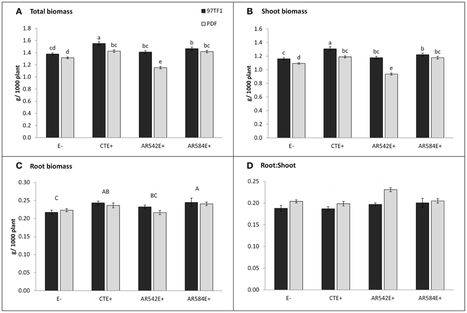
Tall fescue [Lolium arundinaceum (Schreb.)] is a cool-season perennial grass used in pastures throughout the Southeastern United States. The grass can harbor a shoot-specific fungal endophyte (Epichloë coenophiala) thought to provide the plant with enhanced resistance to biotic and abiotic stresses. Because alkaloids produced by the common variety of the endophyte cause severe animal health issues, focus has been on replacing the common-toxic strain with novel varieties that do not produce the mammal-toxic alkaloids but maintain abiotic and biotic stress tolerance benefits. Little attention has been given to the influence of the plant-fungal symbiosis on rhizosphere processes. Therefore, our objective was to study the influence of this relationship on plant biomass production and root exudate composition in tall fescue cultivars PDF and 97TF1, which were either not infected with the endophyte (E-), infected with the common toxic endophyte (CTE+) strain or with one of two novel endophytes (AR542E+, AR584E+). Plants were grown sterile for 3 weeks after which plant biomass, total organic carbon, total phenolic content and detailed chemical composition of root exudates were determined. Plant biomass production and exudate phenolic and organic carbon content were influenced by endophyte status, tall fescue cultivar, and their interaction. GC-TOF MS identified 132 compounds, including lipids, carbohydrates and carboxylic acids. Cluster analysis showed that the interaction between endophyte and cultivar resulted in unique exudate profiles. This is the first detailed study to assess how endophyte infection, notably with novel endophytes, and tall fescue cultivar interact to influence root exudate composition. Our results illustrate that tall fescue cultivar and endophyte status can influence plant growth and root exudate composition, which may help explain the observed influence of this symbiosis on rhizosphere biogeochemical processes.
Rapid development of high-throughput (HTS) molecular identification methods has revolutionized our knowledge about taxonomic diversity and ecology of fungi. However, PCR-based methods exhibit multiple technical shortcomings that may bias our understanding of the fungal kingdom. This study was initiated to quantify potential biases in fungal community ecology by comparing the relative performance of amplicon-free shotgun metagenomics and amplicons of nine primer pairs over seven nuclear ribosomal DNA (rDNA) regions often used in metabarcoding analyses. The internal transcribed spacer (ITS) barcodes ITS1 and ITS2 provided greater taxonomic and functional resolution and richness of operational taxonomic units (OTUs) at the 97% similarity threshold compared to barcodes located within the ribosomal small subunit (SSU) and large subunit (LSU) genes. All barcode-primer pair combinations provided consistent results in ranking taxonomic richness and recovering the importance of floristic variables in driving fungal community composition in soils of Papua New Guinea. The choice of forward primer explained up to 2.0% of the variation in OTU-level analysis of the ITS1 and ITS2 barcode data sets. Across the whole data set, barcode-primer pair combination explained 37.6–38.1% of the variation, which surpassed any environmental signal. Overall, the metagenomics data set recovered a similar taxonomic overview, but resulted in much lower fungal rDNA sequencing depth, inability to infer OTUs, and high uncertainty in identification. We recommend the use of ITS2 or the whole ITS region for metabarcoding and we advocate careful choice of primer pairs in consideration of the relative proportion of fungal DNA and expected dominant groups.
In all domains of life, proper regulation of the cell cycle is critical to coordinate genome replication, segregation and cell division. In some groups of bacteria, e.g. Alphaproteobacteria, tight regulation of the cell cycle is also necessary for the morphological and functional differentiation of cells. Sinorhizobium meliloti is an alphaproteobacterium that forms an economically and ecologically important nitrogen-fixing symbiosis with specific legume hosts. During this symbiosis S. meliloti undergoes an elaborate cellular differentiation within host root cells. The differentiation of S. meliloti results in massive amplification of the genome, cell branching and/or elongation, and loss of reproductive capacity. In Caulobacter crescentus, cellular differentiation is tightly linked to the cell cycle via the activity of the master regulator CtrA, and recent research in S. meliloti suggests that CtrA might also be key to cellular differentiation during symbiosis. However, the regulatory circuit driving cell cycle progression in S. meliloti is not well characterized in both the free-living and symbiotic state. Here, we investigated the regulation and function of CtrA in S. meliloti. We demonstrated that depletion of CtrA cause cell elongation, branching and genome amplification, similar to that observed in nitrogen-fixing bacteroids. We also showed that the cell cycle regulated proteolytic degradation of CtrA is essential in S. meliloti, suggesting a possible mechanism of CtrA depletion in differentiated bacteroids. Using a combination of ChIP-Seq and gene expression microarray analysis we found that although S. meliloti CtrA regulates similar processes as C. crescentus CtrA, it does so through different target genes. For example, our data suggest that CtrA does not control the expression of the Fts complex to control the timing of cell division during the cell cycle, but instead it negatively regulates the septum-inhibiting Min system. Our findings provide valuable insight into how highly conserved genetic networks can evolve, possibly to fit the diverse lifestyles of different bacteria.
To get content containing either thought or leadership enter:
To get content containing both thought and leadership enter:
To get content containing the expression thought leadership enter:
You can enter several keywords and you can refine them whenever you want. Our suggestion engine uses more signals but entering a few keywords here will rapidly give you great content to curate.


 Your new post is loading...


 Scoop.it!