Short-term effects of soil physical disturbance by ploughing and nitrogen and phosphate fertilisation on arbuscular mycorrhizal fungal (AMF) communities and on intraspecific populations of Rhizophagus irregularis in a buffer strip surrounded by arable fields were studied. Pre-grown Plantago lanceolata plantlets were transplanted into fertilised and/or ploughed experimental plots. After 3 months, the glomeromycotan communities in the roots of these trap plants were analysed using 454 pyrosequencing of a fragment of the RNA polymerase II gene (RPB1). Intraspecific populations of R. irregularis were studied by restriction fragment length polymorphism (RFLP) analysis of the mitochondrial large ribosomal subunit (mtLSU) gene. Soil disturbance significantly increased the diversity of species-level molecular taxa (MTs) and altered community structure, whilst fertilisation alone had no significant effect, unless coupled with ploughing. At the population level, the expected shift from genotypes of R. irregularis typically found in grasslands to those usually found in arable sites was only partially observed. In conclusion, in the short-term, physical soil disturbance, as well as nitrogen fertilisation when coupled with physical soil disturbance, affected AMF community and to a smaller extent population composition.
A considerable amount of symbiotic functional variability has been demonstrated among arbuscular mycorrhizal fungal (AMF) species. However, little is known about the functional divergence in AMF communities from contrasting climates. Ecotypes of Pennisetum flaccidum were grown in growth chambers with AMF communities originating from two elevations (3 105 and 4 176 m asl) on Mount Segrila in Tibet. The combinations were grown under two temperature regimes (7–12 °C and 14–19 °C), equivalent to the mean temperatures during the growing season at the two elevations. AMF communities from different elevations showed different fungal performance at both temperatures. In most cases, AMF from cold habitats developed higher intraradical and extraradical colonization at 7–12 °C than AMF from the warmer habitat, and vice versa. For mycorrhizal growth responses (MGR), there was no consistent local versus foreign effect, but AMF inoculum from colder habitats consistently led to a higher MGR than the other inoculum. These results provide strong evidence for functional differences among AMF communities from contrasting climates.
MicroRNA constitutes an important class of small RNAs that negative regulates post-transcriptionally protein-coding genes. MiRNA-guided gene regulation has been reported as essential for developmental processes and for plant proper responses to biotic and abiotic stresses. When plants are exposed to microorganisms, they resort to various strategies to either establish a beneficial association, or to fight against pathogenic infection. These strategies include changes in metabolic pathways and modifications in gene expression states, which can be achieved by the action of miRNA-guided complexes. Plants growing in tropical regions are exposed to numerous biotic factors and can show large differences in miRNA regulation when exposed to either pathogenic or beneficial microorganisms. Recent insights in this field have begun to shed light on the role played by miRNA in plant-microbe associations. Aiming to understand how plants sense the diverse microorganisms, we review here the current knowledge of the roles played by miRNAs during plant-microbe interactions, focusing in results of studies carried out with tropical plants.
Mycorrhizal fungi greatly enhanced the ability of plants to take up phosphorus and other nutrients those are relatively immobile and exist in low concentration in the soil solution. Fungi can be important in the uptake of other nutrients by the host plant. Mycorrhizae establish symbiotic relationships with plants and play an essential role in plant growth, disease protection, and overall soil quality. Of the seven types of mycorrhizae described in current scientific literature (arbuscular, ecto, ectendo, arbutoid, monotropoid, ericoid and orchidaceous mycorrhizae), the arbuscular and ectomycorrhizae are the most abundant and widespread. This chapter presents an overview of current knowledge of mycorrhizal interactions, processes, and potential benefits to society. The molecular basis of nutrient exchange between arbuscular mycorrhizal (AM) fungi and host plants is presented; the role of AM fungi in disease protection, alleviation of heavy metal stress and increasing grain production. Most land plants form associations with mycorrhizal fungi. Mycorrhizas are mutualistic associations between fungi and plant roots. They are described as symbiotic because the fungus receives photo synthetically derived carbon compounds and the plant has increased access to mineral nutrients and sometimes water.
Jasmonic acid (JA) mediates defense responses against herbivores and necrotrophic pathogens but does it influence the recruitment of bacterial communities in the field? We conducted field and laboratory experiments with transformed Nicotiana attenuata plants deficient in jasmonate biosynthesis (irAOC) and empty vector controls (EV) to answer this question. Using both culture-dependent and independent techniques, we characterized root and leaf-associated bacterial communities over five developmental stages, from rosette through flowering of plants grown in their natural habitat. Based on the pyrosequencing results, alpha and beta diversity did not differ among EV and irAOC plants or over ontogeny, but some genera were more abundant in one of the genotypes. Furthermore, bacterial communities were significantly different among leaves and roots. Taxa isolated only from one or both plant genotypes and hence classified as ‘specialists’ and ‘generalists’ were used in laboratory tests to further evaluate the patterns observed from the field. The putative specialist taxa did not preferentially colonize the jasmonate-deficient genotype, or alter the plant's elicited phytohormone signaling. We conclude that in N. attenuata, JA signaling does not have a major effect on structuring the bacterial communities and infer that colonization of plant tissues is mainly shaped by the local soil community in which the plant grows.
To better understand the diversity of metal resistance genetic determinant from microbes that survived at metal tailings in northwest of China, a highly elevated level of heavy metal containing region, genomic analyses was conducted using genome sequence of three native metal-resistant plant growth promoting bacteria (PGPB). It shows that: Mesorhizobium amorphae CCNWGS0123 contains metal transporters from P-type ATPase, CDF (Cation Diffusion Facilitator), HupE/UreJ and CHR (chromate ion transporter) family involved in copper, zinc, nickel as well as chromate resistance and homeostasis. Meanwhile, the putative CopA/CueO system is expected to mediate copper resistance in Sinorhizobium meliloti CCNWSX0020 while ZntA transporter, assisted with putative CzcD, determines zinc tolerance in Agrobacterium tumefaciens CCNWGS0286. The greenhouse experiment provides the consistent evidence of the plant growth promoting effects of these microbes on their hosts by nitrogen fixation and/or indoleacetic acid (IAA) secretion, indicating a potential in-site phytoremediation usage in the mining tailing regions of China.
The nitrogen-fixing rhizobia in the symbiotic infected cells of root nodules are kept in membrane compartments derived from the host cell plasma membrane, forming what are known as symbiosomes. These are maintained as individual units, with mature symbiosomes having a specific radial position in the host cell cytoplasm. The mechanisms that adapt the host cell architecture to accommodate intracellular bacteria are not clear. The intracellular organization of any cell depends heavily on the actin cytoskeleton. Dynamic rearrangement of the actin cytoskeleton is crucial for cytoplasm organization and intracellular trafficking of vesicles and organelles. A key component of the actin cytoskeleton rearrangement is the ARP2/3 complex, which nucleates new actin filaments and forms branched actin networks. To clarify the role of the ARP2/3 complex in the development of infected cells and symbiosomes, we analyzed the pattern of actin microfilaments and the functional role of ARP3 in Medicago truncatula root nodules. In infected cells, ARP3 protein and actin were spatially associated with maturing symbiosomes. Partial ARP3 silencing causes defects in symbiosome development; in particular, ARP3 silencing disrupts the final differentiation steps in functional maturation into nitrogen-fixing units.
Plants are exemplified by high plasticity in resource allocation strategies which allows them to maximize their fitness under changing resource conditions. In many plant species, obtaining resources involves mutualistic interactions with arbuscular mycorrhizal fungi (AMF), where plants provide the AMF with sugars in exchange for soil nutrients like phosphorus (P). These nutrient exchange rates have high context dependency, influenced by both the cooperative level of the AMF species involved (a qualitative trait) and the ambient nutrient concentrations in the soil (a quantitative value). Because this context dependency arises from a mix of both quantitative and qualitative factors, standard ordinary differential equation (ODE) modeling methods often complicate the representation of resource allocation strategies. Here, we explore the utility of a hybrid automata modeling framework that can intuitively combine the qualitative AMF traits and quantitative nutrient concentrations. This allows for a better analysis and understanding of phenotypic plasticity in resource allocation in the plant–AMF, and other nutrient exchange mutualisms. We consider a focal strategy in which nutrients are allocated to growth at times of nutrient limitations, and to storage otherwise and ask how this changes plant allocation to growth vs. storage. We first model this system dynamically to show how the plant responds to different environmental conditions and interacts with AMF and show that our hybrid automata model can replicate experimental data from the plant–AMF system. From our work, novel perceptions into the well-studied plant–AMF symbiosis and testable hypotheses can be underlined: (1) leaf biomass does not increase proportionally with the level of AMF cooperation; (2) in the context of multiple AMF simultaneously colonizing a host–plant, a narrow variance of response is observed and explained by an auction-like mechanism of the AMF to acquire C from the plant.
In a natural forest ecosystem, ectomycorrhiza formation is a way for soil fungi to obtain carbohydrates from their host plants. However, our knowledge of sugar transporters in ectomycorrhizal ascomycetous fungi is limited. To bridge this gap we used data obtained from the sequenced genome of the ectomycorrhizal fungus Tuber melanosporum Vittad. to search for sugar transporters. Twenty-three potential hexose transporters were found, and three of them (Tmelhxt1, Tmel2281 and Tmel131), differentially expressed during the fungus life cycle, were investigated. The heterologous expression of Tmelhxt1 and Tmel2281 in an hxt-null Saccharomyces cerevisiae strain restores the growth in glucose and fructose. The functional characterization and expression profiles of Tmelhxt1 and Tmel2281 in the symbiotic phase suggest that they are high affinity hexose transporters at the plant–fungus interface. On the contrary, Tmel131 is preferentially expressed in the fruiting body and its inability to restore the S. cerevisiae mutant strain growth led us to hypothesize that it could be involved in the transport of alternative carbon sources important for a hypothetical saprophytic strategy for the complete maturation of the carpophore.
Plants can establish root endosymbioses with both arbuscular mycorrhizal fungi and rhizobial bacteria to improve their nutrition. Our understanding of the molecular events underlying the establishment of these symbioses has significantly advanced in the last few years. Here I highlight major recent findings in the field of endosymbiosis signaling. Despite the identification of new signaling components and the definition, or in some cases better re-definition of the molecular functions of previously known players, major questions still remain that need to be addressed. Most notably the mechanisms defining signaling specificities within either symbiosis remain unclear.
Microorganisms are important factors in shaping our environment. One key characteristic that has been neglected for a long time is the ability of microorganisms to release chemically diverse volatile compounds. At present, it is clear that the blend of volatiles released by microorganisms can be very complex and often includes many unknown compounds for which the chemical structures remain to be elucidated. The biggest challenge now is to unravel the biological and ecological functions of these microbial volatiles. There is increasing evidence that microbial volatiles can act as infochemicals in interactions among microbes and between microbes and their eukaryotic hosts. Here, we review and discuss recent advances in understanding the natural roles of volatiles in microbe–microbe interactions. Specific emphasis will be given to the antimicrobial activities of microbial volatiles and their effects on bacterial quorum sensing, motility, gene expression and antibiotic resistance.
In this work we have studied the antagonistic interactions existing among cultivable bacteria isolated from three ecological niches (rhizospheric soil, roots, and stem/leaves) of the traditional natural medicinal plant Echinacea purpurea. The three compartments harbored different taxonomic assemblages of strains, which were previously reported to display different antibiotic resistance patterns, suggesting the presence of differential selective pressure due to antagonistic molecules in the three compartments. Antagonistic interactions were assayed by the cross-streak method and interpreted using a network-based analysis. In particular “within-niche inhibition” and “cross-niche inhibition'’ were evaluated among isolates associated with each compartment as well as between isolates retrieved from the three different compartments, respectively. Data obtained indicated that bacteria isolated from the stem/leaves compartment were much more sensitive to the antagonistic activity than bacteria from roots and rhizospheric soil. Moreover, both the taxonomical position and the ecological niche might influence the antagonistic ability/sensitivity of different strains. Antagonism could play a significant role in contributing to the differentiation and structuring of plant-associated bacterial communities.
Degree of arbuscular mycorrhizal (AM) association and its diversity were investigated in the coconut palm (Cocos nucifera L.) cultivated in crop mixed system under rain-fed condition in a highly productive humid tropical zone in Malappuram district of Kerala, India. Forty AM species belonging to ten genera viz. Acaulospora, Claroideoglomus, Dentiscutata, Diversispora, Funneliformis, Gigaspora, Glomus, Redeckera, Scutellospora and Septoglomus were recorded indicating high level of AM richness in coconut rhizosphere. Of these, eighteen AM fungal species are being reported for first time from this palm. Claroideoglomus, Glomus and Gigaspora were the most commonly present genera and Claroideoglomus etunicatum and Glomus aggregatum the common species. The diversity indices (Shannon indices values) of AM fungi associated with coconut palm in a crop mixed system and mono crop varied significantly. The Shannon index, Simpson’s index and evenness ranged from 1.40 ± 0.10 to 2.70 ± 0.01, 0.65 ± 0.033 to 0.90 ± 0.004, 0.51 ± 0.01 to 0.82 ± 0.01, respectively. Correlation between soil physio chemical characters and mycorrhizal parameters were worked out. Soil pH had negative correlation with spore count, root colonization, species richness, Shannon H and Simpson indices but had positive correlation with species evenness. Electrical conductivity showed positive correlation with root mycorrhizal colonization which indicated active AMF mediated uptake of nutrients.
Aims In this study, we aimed to understand effects and mechanisms of legume species and their relative abundance on soil N, species recruitment, and productivity in mixed grassland. We also assessed the utilization prospect of several legumes in natural grassland. Methods In 2006, grass-legume combinations (GLCs) with different ratios (GLR) were established using Leymus chinensis and four legume species (Medicago ruthenica, Lespedeza daurica, Medicago falcata, and Medicago sativa). In 2009, plant and soil samples were taken to examine the differences in soil nitrogen (N) properties, biological N fixation (BNF), recruitment characteristics, and aboveground biomass of the community under different mixture patterns. Results Soil total N and available N concentration increased when legume component increased from GLR 1:0 (grass monoculture) to GLR 1:1 (grass:legume 1:1) but decreased as legume component increased further from GLR 1:3 (grass:legume 1:3) to GLR 0:1 (legume monoculture). GLR 1:1 had the highest BNF in most GLCs except for L. chinensis-M. falcata. For any GLR with legume, L. chinensis-M. sativa combination (L-MS) had higher soil total N, available N, water content, and BNF. The legume combinations with a GLR lower than 1:1 resulted in more species recruitments compared with the grass monoculture, and L-MS induced relatively more species recruitments than other GLCs, which were correlated with improved soil water and NO3 −-N status. The grassland productivity increased as the GLR decreased; in any GLRs with legume, higher productivity was found under L-MS combination, and current results showed that grassland productivity was positively linked to soil NO3 −-N availability influenced by grass-legume mixture. Conclusions We concluded that the species and relative abundance of legumes had great impact on soil N status, species recruitment, and productivity in this temperate grassland ecosystem. In this study site, legume introduction can be considered as an alternative to N fertilization for increasing grassland productivity. M. sativa has the greatest economic and ecological potential species to be mixed into natural temperate steppe grassland, and grass-legume ratio 1:1 is the best combination in mixed communities.
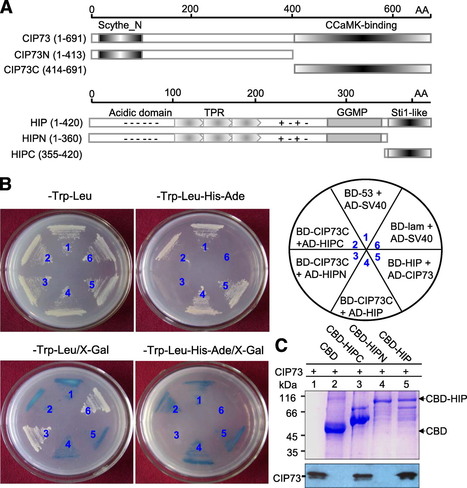
The calcium/calmodulin-dependent protein kinase CCaMK forms a complex with its phosphorylation target CIP73 (CCaMK-interacting protein of 73 kDa). In this work, a homolog of the animal HSC/HSP70 interacting protein (HIP) was identified as an interacting partner of CIP73 in Lotus japonicus. L. japonicus HIP contains all functional domains characteristic of animal HIP proteins. The C-terminal STI1-like domain of L. japonicus HIP was found to be necessary and sufficient for interaction with CIP73. The interaction between CIP73 and HIP occurred in both the nuclei and cytoplasm in Nicotiana benthamiana leaf cells. The interactions between CIP73 and HIP and between CIP73 and CCaMK could take place simultaneously in the same nuclei. HIP transcripts were detected in all plant tissues tested. As nodule primordia developed into young nodules, the expression of HIP was down-regulated and the HIP transcript level became very low in mature nodules. More nodules were formed in transgenic hairy roots of L. japonicus expressing HIP RNA interference at 16 days postinoculation as compared with the control hairy roots expressing the empty vector. It appears that HIP may play a role as a negative regulator for nodulation.
Arbuscular mycorrhiza (AM) is established by the entry of AM fungi into the host plant roots and the formation of symbiotic structures called arbuscules. The host plant supplies photosynthetic products to the AM fungi, which in return provide phosphate and other minerals to the host through the arbuscules. Both partners gain great advantages from this symbiotic interaction, and both regulate AM development. Our recent work revealed that gibberellic acids (GAs) are required for AM development in the legume Lotus japonicus. GA signaling interact with symbiosis signaling pathways, directing AM fungal colonization in host roots. Expression analysis showed that genes for GA biosynthesis and metabolism were induced in host roots around AM fungal hyphae, suggesting that the GA signaling changes with both location and time during AM development. The fluctuating GA concentrations sometimes positively and sometimes negatively affect the expression of AM-induced genes that regulate AM fungal infection and colonization.
The Bradyrhizobium japonicum NtrBC two component system is a critical regulator of cellular nitrogen metabolism, including the acquisition and catabolism of nitrogenous compounds. To better define the roles of this system, genome-wide transcriptional profiling was performed to identify the NtrC regulon during the response to nitrogen limitation. Upon perception of low intracellular nitrogen, phosphorylation of NtrC stimulates induction of genes responsible for alteration of the core glutamine synthetase/glutamate synthase nitrogen assimilation pathway, including the glutamine synthetases and PII proteins. In addition, genes responsible for the import and utilization of multiple nitrogen sources, specifically nitrate and nitrite, were up-regulated by NtrC activation. Mutational analysis of a candidate nitrite reductase revealed a role for NtrC in regulating assimilation of nitrite since mutations in both ntrC and the gene encoding the candidate nitrite reductase abolished the ability to grow on nitrite as a sole nitrogen source.
Four rhizobia like strains, isolated from root nodules of Pisum sativum and Vicia faba grown in Anhui and Jiangxi Provinces of China, were grouped into the genus Rhizobium but were distinct from all recognized Rhizobium species by phylogenetic analysis of 16S rRNA and housekeeping genes. The combined sequence of housekeeping genes atpD, recA and glnII for strains CCBAU 23252T was 86.9% to 95% similar to those of known Rhizobium species. All the four strains had nodC and nifH genes and could form effective nodules with Pisum sativum and Vicia faba, and ineffective nodules with Phaseolus vulgaris, but did not nodulate Glycine max, Arachis hypogaea, Medicago sativa, Trifolium repens or Lablab purpureus in cross-nodulation tests. Fatty acid composition, DNA-DNA relatedness and a series of phenotypic tests also separated these strains from the closely related species. Based on all the evidence, we propose a novel species Rhizobium anhuiense sp. nov., and designate CCBAU 23252T (=CGMCC 1.12621T =LMG 27729T) as the type strain. This strain was isolated from a root nodule of Vicia faba and has a GC content of 61.1 mol% (Tm).
Arbuscular mycorrhiza (AM) is established by the entry of AM fungi into the host plant roots and the formation of symbiotic structures called arbuscules. The host plant supplies photosynthetic products to the AM fungi, which in return provide phosphate and other minerals to the host through the arbuscules. Both partners gain great advantages from this symbiotic interaction, and both regulate AM development. Our recent work revealed that gibberellic acids (GAs) are required for AM development in the legume Lotus japonicus. GA signaling interact with symbiosis signaling pathways, directing AM fungal colonization in host roots. Expression analysis showed that genes for GA biosynthesis and metabolism were induced in host roots around AM fungal hyphae, suggesting that the GA signaling changes with both location and time during AM development. The fluctuating GA concentrations sometimes positively and sometimes negatively affect the expression of AM-induced genes that regulate AM fungal infection and colonization.
Forest soils constitute a major carbon pool in the context of the global carbon cycle. Although ectomycorrhizal fungi (EMF) are responsible for a large part of the input of carbon into this pool, information on the transformation of EMF biomass into soil organic matter (SOM) is scarce. In order to quantitatively analyze the contribution of EMF biomass to SOM formation, we incubated a typical forest arenosol with 13C-labeled fungal biomass from the ectomycorrhizal basidiomycete Laccaria bicolor in a closed bioreactor system for 231 d, enabling the establishment of a full mass balance for the turnover. An rDNA fragment specific for the genus Laccaria disappeared after 28 d, indicating death and decay of the organism. The amount of 13C PLFA as a proxy for living biomass decreased to roughly 10% of the initial value in the course of the experiment, suggesting efficient disintegration of the fungal organism as well. After 231 d, however, 63.5% of the initially added 13C had been converted to SOM and 52% belonged to the non-living fraction. The analysis of 13CO2 formation (36.5% of the initially added label) suggested two-pool exponential kinetics with k1 = 0.0615 d−1 for the easily degradable and k2 = 0.0005 d−1 for the stable fraction (pool sizes 74% and 26% of the initially added label, respectively). When compared to the degradation of bacterial biomass in agricultural soils, the pool of readily degradable fungal biomass was considerably smaller and the half-lives of both pools (readily degradable and persistent C) were markedly higher for fungal biomass. In summary, our data allow the conclusion that EMF biomass is a significant source of SOM in forest ecosystems.
Many plant genes belong to families that arise from extensive proliferation and diversification allowing the evolution of functionally new proteins. Here we report the characterization of a group of proteins evolved from WRKY and exocyst complex subunit Exo70 proteins through fusion with a novel transmembrane (TM) domain in soybean (Glycine max). From the soybean genome, we identified a novel WRKY-related protein (GmWRP1) that contains a WRKY domain with no binding activity for W-box sequences. GFP fusion revealed that GmWRP1 was targeted to the Golgi apparatus through its N-terminal TM domain. Similar Golgi-targeting TM domains were also identified in members of a new subfamily of Exo70J proteins involved in vesicle trafficking. The novel TM domains are structurally most similar to the endosomal cytochrome b561 from birds and close homologues of GmWRP1 and GmEx070J proteins with the novel TM domain have only been identified in legumes. Transient expression of some GmExo70J proteins or the Golgi-targeting TM domain in tobacco altered the subcellular structures labelled by a fluorescent Golgi marker. GmWRP1 transcripts were detected at high levels in roots, flowers, pods, and seeds, and the expression levels of GmWRP1 and GmExo70J genes were elevated with increased age in leaves. The legume-specific, Golgi apparatus-localized GmWRP1 and GmExo70J proteins are probably involved in Golgi-mediated vesicle trafficking of biological molecules that are uniquely important to legumes.
This video summarizes my and other people's research on apocarotenoids from arbuscular mycorrhizal roots. It is meant as an example how scientific data and i...
Whole plants, both grazed and ungrazed combined, grew 34% more with the microbial community of the grazed grassland compared to that of the fenced grassland. Plant biomass was less in fungicide treated pots; probably a result of removing AM fungal symbionts. But more interesting, the microbe effect did not occur among plants treated with fungicide, indicating that the facilitating influence of the grazed microbial community on plant growth was a result of the fungal component of the microbial community.
Data generated from next generation sequencing (NGS) will soon comprise the majority of information about arbuscular mycorrhizal fungal (AMF) communities. Although these approaches give deeper insight, analysing NGS data involves decisions that can significantly affect results and conclusions. This is particularly true for AMF community studies, because much remains to be known about their basic biology and genetics. During a workshop in 2013, representatives from seven research groups using NGS for AMF community ecology gathered to discuss common challenges and directions for future research. Our goal was to improve the quality and accessibility of NGS data for the AMF research community. Discussions spanned sampling design, sample preservation, sequencing, bioinformatics and data archiving. With concrete examples we demonstrated how different approaches can significantly alter analysis outcomes. Failure to consider the consequences of these decisions may compound bias introduced at each step along the workflow. The products of these discussions have been summarized in this paper in order to serve as a guide for any researcher undertaking NGS sequencing of AMF communities.
To get content containing either thought or leadership enter:
To get content containing both thought and leadership enter:
To get content containing the expression thought leadership enter:
You can enter several keywords and you can refine them whenever you want. Our suggestion engine uses more signals but entering a few keywords here will rapidly give you great content to curate.


 Your new post is loading...