Soil fertility and resulting crop plant nutrition contribute to optimal crop yields in both conventional and organic farming systems. Additionally, soil management practices can affect the colonization and efficacy of arbuscular mycorrhizae (AM), which in turn may improve crop resilience to drought and soil nutrient deficiencies. Soil mineral fertilization and AM colonization have been shown to affect herbivorous insect oviposition response and performance. However, the below-ground interaction of fertilization practices and AM colonization on plant nutrition and insect oviposition response has been largely unexplored. To test this, we obtained soils from agricultural fields managed under 3 different soil fertilization practices for 5 continuous years: Synthetic fertilizers only with a 2-year corn-soybean rotation (conventional farming, or CONV), dairy manure with a 4-year alfalfa/oat-alfalfa-corn-soybean rotation (standard organic farming, or STDO), and dairy manure + 4-year alfalfa/oat-alfalfa-corn-soybean rotation with biannual gypsum applications (organic basic cation saturation ratio farming, or BCSR). Soils from these treatments have been previously shown to vary significantly in their Ca:Mg:K ratios and also in S content. We reared field corn plants in these soils in a greenhouse, then used them to conduct oviposition choice assays with the corn insect pest Ostrinia nubilalis (European corn borer, or ECB). Colonization of AM on plant roots did not significantly differ among treatments. Plant tissue minerals (primarily S, Fe, and Cu) varied significantly among treatments but were not affected by AM colonization. However, the number of ECB eggs laid per plant per trial varied significantly by soil fertilization treatment, plant height, and AM colonization, with significant interaction effects. Female oviposition response was positively correlated with AM colonization and height in low mineral soil fertilization treatments (STDO and CONV), but moths showed a negative response to AM colonization in BCSR plants as plant height increased. Our results indicate that both fertilization practices and mycorrhizal associations can interact to modify oviposition in pest insects, which may have significant implications for the utilization of fertilization practices for pest insect suppression.
Nitrogen is arguably the most important nutrient required by plants. However, the availability of nitrogen is limited in many soils and although the earth’s atmosphere consists of 78.1% nitrogen gas (N2) plants are unable to use this form of nitrogen. To compensate , modern agriculture has been highly reliant on industrial nitrogen fertilizers to achieve maximum crop productivity. However, a great deal of fossil fuel is required for the production and delivery of nitrogen fertilizer. Moreover carbon dioxide (CO2) which is released during fossil fuel combustion contributes to the greenhouse effect and run off of nitrate leads to eutrophication of the waterways. Biological nitrogen fixation is an alternative to nitrogen fertilizer. It is carried out by prokaryotes using an enzyme complex called nitrogenase and results in atmospheric N2 being reduced into a form of nitrogen diazotrophic organisms and plants are able to use (ammonia). It is this process and its major players which will be discussed in this book. Biological Nitrogen Fixation is a comprehensive two volume work bringing together both review and original research articles on key topics in nitrogen fixation. Chapters across both volumes emphasize molecular techniques and advanced biochemical analysis approaches applicable to various aspects of biological nitrogen fixation. Volume 1 explores the chemistry and biochemistry of nitrogenases, nif gene regulation, the taxonomy, evolution, and genomics of nitrogen fixing organisms, as well as their physiology and metabolism. Volume 2 covers the symbiotic interaction of nitrogen fixing organisms with their host plants, including nodulation and symbiotic nitrogen fixation, plant and microbial “omics”, cyanobacteria, diazotrophs and non-legumes, field studies and inoculum preparation, as well as nitrogen fixation and cereals. Covering the full breadth of current nitrogen fixation research and expanding it towards future advances in the field, Biological Nitrogen Fixation will be a one-stop reference for microbial ecologists and environmental microbiologists as well as plant and agricultural researchers working on crop sustainability.
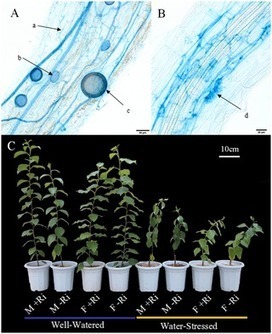
We investigated the impact of drought and arbuscular mycorrhizal (AM) fungi on the morphological structure and physiological function of shoots and roots of male and female seedlings of the dioecious plant Populus cathayana Rehder. Pot-grown seedlings were subjected to well watered or water-limiting conditions (drought) and were grown in soil that was either inoculated or not inoculated with the AM fungus Rhizophagus intraradices. No significant differences were found in the infection rates between the two sexes. Drought decreased root and shoot growth, biomass and root morphological characteristics, whereas superoxide radical (O2–) and hydrogen peroxide content, peroxidase (POD) activity, malondialdehyde (MDA) concentration and proline content were significantly enhanced in both sexes. Male plants that formed an AM fungal symbiosis showed a significant increase in shoot and root morphological growth, increased proline content of leaves and roots, and increased POD activity in roots under both watering regimes; however, MDA concentration in the roots decreased. By contrast, AM fungi either had no effect or a slight negative effect on the shoot and root growth of female plants, with lower root biomass, total biomass and root/shoot ration under drought. In females, MDA concentration increased in leaves and roots under both watering regimes, and the proline content and POD activity of roots increased under drought conditions; however, POD activity significantly decreased under well-watered conditions. These findings suggest that AM fungi enhanced the tolerance of male plants to drought by improving shoot and root growth, biomass and the antioxidant system. Further investigation is needed to unravel the complex effects of AM fungi on the growth and antioxidant system of female plants.
Plant-associated fungi often present in their genome areas enriched in repeat sequences and effector genes, the latter being specifically induced in planta. The location of effector genes in regions enriched in repeats has been shown to have an impact on adaptability of fungi but could also provide for tight control of effector gene expression through chromatin-based regulation. The distribution of two repressive histone marks was shown to be an important regulatory layer in two fungal species with different lifestyles. Chromatin-based control of effector gene expression is likely to provide an evolutionary advantage by preventing the expression of genes not needed during vegetative growth and allow for a massive concerted expression at particular time-points of plant infection.
A study authored by Michigan State University (MSU) Department of Plant, Soil and Microbial Sciences assistant professor Lisa Tiemann is the first of its kind to show that crop rotations, in isolation from other management factors, can increase the functions performed by soil microbial communities that benefit plant growth. The findings were published online May 25 in Ecology Letters, a highly selective peer-reviewed journal.
Fungi produce a myriad of secondary metabolites, compounds that are not required for basic cellular processes, but are thought to be central to ecological functions. Genomic sequencing of fungi has revealed a greater diversity of secondary metabolism than previously realized, including novel taxonomic distributions of known compounds and uncharacterized gene clusters in well-studied organisms. Here we provide an overview of the major groups of metabolites, their ecological functions, the genetic systems that produce them, and the patterns and processes associated with evolutionary diversification of secondary metabolism in plant-associated filamentous ascomycetes.
Plants must co-exist with both pathogenic and beneficial microbes. Antimicrobial peptides with broad antimicrobial activities represent one of the first lines of defense against pathogens. Many plant cysteine-rich peptides with potential antimicrobial properties have been predicted. Amongst them, defensins and defensin-like peptides are the most abundant and plants can express several hundreds of them. In some rhizobial–legume symbioses special defensin-like peptides, the nodule-specific cysteine-rich (NCR) peptides have evolved in those legumes whose symbiotic partner terminally differentiates. In Medicago truncatula, >700 NCRs exist and collectively act as plant effectors inducing irreversible differentiation of rhizobia to nitrogen-fixing bacteroids. Cationic NCR peptides have a broad range of potent antimicrobial activities but do not kill the endosymbionts.
Physiological, biochemical, metabolite changes, and gene expression analysis of greenhouse tomato (Solanum lycopersicum L.) were investigated in two grafting combinations (self-grafted ‘Ikram’ and ‘Ikram’ grafted onto interspecific hybrid rootstock ‘Maxifort’), with and without arbuscular mycorrhizal (AM), exposed to 0 and 25 μM Cd. Tomato plants responded to moderate Cadmium (Cd) concentration by decreasing yield and crop growth parameters due to the accumulation of Cd in leaf tissue, inhibition of the PS II activity, reduced nutrients translocation, and also to the oxidative stress as evidenced by enhanced hydrogen peroxide (H2O2) generation, ion leakage, and lipid peroxidation. AM inoculation significantly enhanced the metal concentration in shoots and reduced growth and yield. The Ikram/Maxifort combination induced higher antioxidant enzymes, higher accumulation of proline and reduction of lipid peroxidation products. This suggests that the use of Maxifort rootstock in tomato has a high reactive oxygen species scavenging activity since lower H2O2 concentrations were observed in the presence of Cd. The higher crop performance of Ikram/Maxifort in comparison to Ikram/Ikram combination was also due to the improved nutritional status (higher P, K, Ca, Fe, Mn, and Zn) and increased availability of metabolites involved in cadmium tolerance (phytochelatin PC2, fructans, and inulins). The up-regulation of LeNRAMP3 gene in leaf of Ikram/Maxifort could explain the better nutritional status of interspecific grafting combination (higher Fe, Mn, and Zn).
Herbicides containing glyphosate are widely used in agriculture and private gardens, however, surprisingly little is known on potential side effects on non-target soil organisms. In a greenhouse experiment with white clover we investigated, to what extent a globally-used glyphosate herbicide affects interactions between essential soil organisms such as earthworms and arbuscular mycorrhizal fungi (AMF). We found that herbicides significantly decreased root mycorrhization, soil AMF spore biomass, vesicles and propagules. Herbicide application and earthworms increased soil hyphal biomass and tended to reduce soil water infiltration after a simulated heavy rainfall. Herbicide application in interaction with AMF led to slightly heavier but less active earthworms. Leaching of glyphosate after a simulated rainfall was substantial and altered by earthworms and AMF. These sizeable changes provide impetus for more general attention to side-effects of glyphosate-based herbicides on key soil organisms and their associated ecosystem services.
Nitrogen-fixing symbioses between plants and bacteria are restricted to a few plant lineages. The plant partner benefits from these associations by gaining access to the pool of atmospheric nitrogen. By contrast, other plant species, including all cereals, rely only on the scarce nitrogen present in the soil and what they can glean from associative bacteria. Global cereal yields from conventional agriculture are dependent on the application of massive levels of chemical fertilisers. Engineering nitrogen-fixing symbioses into cereal crops could in part mitigate the economic and ecological impacts caused by the overuse of fertilisers and provide better global parity in crop yields. Comparative phylogenetics and phylogenomics are powerful tools to identify genetic and genomic innovations behind key plant traits. In this review we highlight recent discoveries made using such approaches and we discuss how these approaches could be used to help direct the engineering of nitrogen-fixing symbioses into cereals.
The formation of symbiotic nitrogen-fixing nodules on the roots and/or stem of leguminous plants involves a complex signal exchange between both partners. Since many microorganisms are present in the soil, legumes and rhizobia must recognize and initiate communication with each other to establish symbioses. This results in the formation of nodules. Rhizobia within nodules exchange fixed nitrogen for carbon from the legume. Symbiotic relationships can become non-beneficial if one partner ceases to provide support to the other. As a result, complex signal exchange mechanisms have evolved to ensure continued, beneficial symbioses. Proper recognition and signal exchange is also the basis for host specificity. Nodule formation always provides a fitness benefit to rhizobia, but does not always provide a fitness benefit to legumes. Therefore, legumes have evolved a mechanism to regulate the number of nodules that are formed, this is called autoregulation of nodulation. Sequencing of many different rhizobia have revealed the presence of several secretion systems - and the Type III, Type IV and Type VI secretion systems are known to be used by pathogens to transport effector proteins. These secretion systems are also known to have an effect on host specificity and are a determinant of overall nodule number on legumes. This review focuses on signal exchange between rhizobia and legumes, particularly focusing on the role of secretion systems involved in nodule formation and host specificity.
Technological advances are enabling the sequencing of environmental DNA and RNA at increasing depth and with decreasing costs. Metagenomic and transcriptomic analysis of soil microbial communities and the assembly of 'population genomes' from soil DNA are therefore now feasible. Although the value of such 'omic' approaches is limited by the associated technical and bioinformatic difficulties, even if these obstacles were eliminated and 'perfect' metagenomes and metatranscriptomes were available, important conceptual challenges remain. This Opinion article considers these conceptual challenges in the context of the current use of omics in soil microbiology, but the main arguments presented are also relevant to the application of omics to marine, freshwater, gut or other environments.
In microbial ecology, the “everything is everywhere” hypothesis has long been controversial. In the present study, we performed data-mining for 18S rDNA sequences of glomeromycotan fungi in order to test this hypothesis. 18S rDNA sequences targeted using AM1–NS31 fragments were retrieved from GenBank, with a total of 1768 sequences collected from 34 sites worldwide. In total, 229, 330 and 518 operational taxonomic units (OTUs) were defined based on 97, 98 and 99 % similarity, respectively. The 97 % OTUs showed a limited geographical range of glomeromycotan fungi. Among the OTUs, 58.1 % were endemic, and 17.9 % and 9.2 % were found in two and three sites, respectively. The most widespread OTU was shared by 17 sites. Phylogenetic structure analysis demonstrated that most local communities (26 of 34) were clustered. OTUs with larger host breadth had wider geographic ranges. A significant distance–decay relationship was revealed that was independent of habitat. Cluster analysis showed that fungal composition was not related to habitat, while Fast UniFrac analysis indicated that the distribution of Glomeromycota was affected by temperature. Taken together, these results suggest that glomeromycotan fungi were not randomly distributed under natural conditions; rather, they were affected by host plants, dispersal ability and temperature. Thus, the distribution of glomeromycotan fungi argues against the hypothesis that “everything is everywhere.”
The special issue “Symbiotic Nitrogen Fixation in Legume Nodules: Metabolism and Regulatory Mechanisms” aims to investigate the physiological and biochemical advances in the symbiotic process with an emphasis on nodule establishment, development and functioning. The original research articles included in this issue provide important information regarding novel aspects of nodule metabolism and various regulatory pathways, which could have important future implications. This issue also included one review article that highlights the importance of using legume trees in the production of renewable biofuels.
Arbuscular mycorrhizal (AM) fungi provide benefits to host plants and show functional diversity, with evidence of functional trait conservation at the family level. Diverse communities of AM fungi ought therefore to provide increased benefits to the host, with implications for the management of sustainable agroecosystems. However, this is often not evident in the literature, with diversity saturation at low species number. Growth and nutrient uptake were measured in onions in the glasshouse on AM-free phosphorus (P)-poor soil, inoculated with between one and seven species of AM fungi in all possible combinations. Inoculation with AM fungi increased shoot dry weight as well as P and copper concentrations in shoots but reduced the concentration of potassium and sulphur. There was little evidence of increased benefit from high AM fungal diversity, and increasing diversity beyond three species did not result in significantly higher shoot weight or P or Cu concentrations. Species of Glomeraceae had the greatest impact on growth and nutrient uptake, while species of Acaulospora and Racocetra did not have a significant impact. Failure to show a benefit from high AM fungal diversity in this and other studies may be the result of experimental conditions, with the benefits of AM fungal diversity only becoming apparent when the host plant is faced with multiple stress factors. Replicating the complex interactions between AM fungi, the host plant and their environment in the laboratory in order to fully understand these interactions is a major challenge to AM research.
The problem here is that diversity is not extremely useful in a single environmental condition. It's useful when environmental conditions change. Interesting study anyway.
The Silk Leaf, by RCA graduate Julian Melchiorri, is the first manmade material that can perform photosynthesis. It has huge implications for science and technology and it could also make long-distance space travel a possibility. The leaf contains chloroplasts taken from real plant cells. These are suspended in a silk protein material extracted directly from the fibers of silk, which has an amazing property of stabilizing molecules. When the leaf comes into contact with water and light, it converts it to oxygen, just like a natural leaf. At the moment, there isn’t a system that can provide astronauts with enough oxygen to travel far into Space. Melchiorri’s invention could be the answer to this problem, by converting water and artificial light into the oxygen that astronauts need to survive. The material could also transform cities, making buildings capable of generating their own oxygen.
The goal of microbiome engineering is to manipulate the microbiome toward a certain type of community that will optimize plant functions of interest. For instance, in crop production the goal is to reduce disease susceptibility, increase nutrient availability increase abiotic stress tolerance and increase crop yields. Various approaches can be devised to engineer the plant microbiome, but one particularly promising approach is to take advantage of naturally evolved plant-microbiome communication channels. This is however very challenging as the understanding of the plant-microbiome communication is still mostly rudimentary and plant-microbiome interactions varies between crops species (and even cultivars), between individual members of the microbiome and with environmental conditions. In each individual case, many aspects of the plant-microorganisms relationship should be thoroughly scrutinized. In this article we summarize some of the existing plant microbiome engineering studies and point out potential avenues for further research.
Plants can detect infecting fungi through the perception of chitin oligosaccharides by lysin motif receptors such as CEBiP and CERK1. A major function of CERK1 seems to be as a signaling molecule in the receptor complex formed with ligand-binding molecules and to activate downstream defense signaling. Fungal pathogens, however, have developed counter strategies to escape from the chitin-mediated detection by using effectors and/or changing their cell walls. Common structural features between chitin and Nod-/Myc-factors and corresponding receptors have suggested the close relationships between the chitin-mediated immunity and rhizobial/arbuscular mycorrhizal symbiosis. The recent discovery of the dual function of OsCERK1 in both plant immunity and mycorrhizal symbiosis sheds new light on the evolutionary relationships between defense and symbiotic systems in plants.
Root microbiomes are formed from diverse microbial soil settings with extraordinary consistency, suggesting both defined mechanisms of assembly and specific microbial activity. Recent improvements in sequencing technologies, data analysis techniques, and study design, allow definition of the microbiota within these intimate and important relationships with increasing accuracy. Comparing datasets provides powerful insights into the overlap of plant microbiomes, as well as the impacts of surrounding plants and microbes on root microbiomes and long-term soil conditioning. Here we address how recent studies tease apart the impact of various biotic interactions, including: plant–plant, plant–microbe, and microbe–microbe on root microbiome composition.
The AsPPD1 gene from Astragalus sinicus encodes a purple acid phosphatase. To address the functions of AsPPD1 in legume-rhizobium symbiosis, its expression patterns, enzyme activity, subcellular localization, and phenotypes associated with its over-expression and RNA interference (RNAi) were investigated. The expression of AsPPD1 was up-regulated in roots and nodules after inoculation with rhizobia. Phosphate starvation reduced the levels of AsPPD1 transcripts in roots while increased those levels in nodules. We confirmed the acid phosphatase and phosphodiesterase activities of recombinant AsPPD1 purified from Pichia pastoris, and demonstrated its ability to hydrolyze ADP and ATP in vitro. Subcellular localization showed that AsPPD1 located on the plasma membranes in hairy roots and on the symbiosomes membranes in root nodules. Over-expression of AsPPD1 in hairy roots inhibited nodulation, while its silencing resulted in nodules early senescence and significantly decreased nitrogenase activity. Furthermore, HPLC measurement showed that AsPPD1 overexpression affects the ADP levels in the infected roots and nodules, AsPPD1 silencing affects the ratio of ATP/ADP and the energy charge in nodules, and quantitative observation demonstrated the changes of AsPPD1 transcripts level affected nodule primordia formation. Taken together, it is speculated that AsPPD1 contributes to symbiotic ADP levels and energy charge control, and this is required for effective nodule organogenesis and nitrogen fixation.
Nodules of legume plants are highly integrated symbiotic systems shaped by millions of years of evolution. They harbor nitrogen fixing rhizobium bacteria called bacteroids. Several legume species produce peptides called NCRs in the symbiotic nodule cells which house the bacteroids. NCRs are related to antimicrobial peptides of innate immunity. They induce the endosymbionts into a differentiated, enlarged and polyploid state. The bacterial symbionts on their side evolved functions for the response to the NCR peptides. Here we identified the bclA gene of Bradyrhizobium strains ORS278 and ORS285 which is required for the formation of differentiated and functional bacteroids in the nodules of the NCR-producing Aeschynomene legumes. The BclA ABC transporter promotes the import of NCR peptides and provides protection against the antimicrobial activity of these peptides. Moreover, BclA can complement the role of the related BacA transporter of Sinorhizobium meliloti which has a similar symbiotic function in the interaction with Medicago legumes.
Nodulation of Bradyrhizobium japonicum Is-34 is restricted by Rj4 genotype soybeans (Glycine max). To identify genes responsible for this incompatibility, Tn5 mutants of B. japonicum Is-34 that were able to overcome this nodulation restriction were obtained. Analysis of the Tn5 mutants revealed that Tn5 was inserted into a region containing the MA20_12780 gene. In addition, direct disruption of this gene using marker exchange also overcame the nodulation restriction by Rj4 genotype soybeans. The MA20_12780 gene has a tts box motif in its upstream region, indicating a possibility that this gene encodes a Type III secretion system (T3SS) effector protein. Bioinformatic characterization revealed that MA20_12780 protein contains the small ubiquitin-like modifier (SUMO) protease domain of the C48 peptidase (the ubiquitin-like protease 1; Ulp1) family. Results of the present study indicate that a putative T3SS effector encoded by the MA20_12780 gene causes the incompatibility with Rj4 genotype soybeans, and suggest a possibility that nodulation restriction of B. japonicum Is-34 may be due to Rj4genotype soybeans recognizing the putative T3SS effector (MA20_12780 protein) as a virulence factor.
Background Rhizospheric fungi play an essential role in plant-soil ecosystem, affect plant growth and health. In this study, we evaluated the fungal diversity in the rhizosphere of 2-year-old healthy Panax notoginseng cultivated in Wenshan, China.
Methods Culture-independent Illumina MiSeq and culture-dependent techniques, combining molecular and morphological characteristics, were used to analyse the rhizospheric fungal diversity. Diffusion test was used to challenge the phytopathogens of P. notoginseng.
Results A total of 16,130 paired end reads of the nuclear ribosomal internal transcribed spacer-2 (ITS-2) were generated and clustered into 860 operational taxonomic units (OTUs) at 97% sequence similarity. All the OTUs were assigned to 5 phyla and 79 genera. Zygomycota (46.2%) and Ascomycota (37.8%) were the dominant taxa, Mortierella and unclassified Mortierellales accounted for a large proportion (44.9%) at genus level. The relative abundance of Fusarium and Phoma sequences was high, accounting for 12.9% and 5.5%, respectively. In total, 113 fungal isolates were isolated from rhizosphere soil. They were assigned into 5 classes, 8 orders (except for an Incertae sedis), 26 genera, 43 species based on morphological characteristics and phylogenetic analysis of ITS. The Fusarium was the most isolated genus with 6 species (24 isolates, 21.2%). The abundance of Phoma was also relatively high (8.0%). Thirteen isolates displayed antimicrobial activity against at least one test fungus.
Conclusion Our results suggest that diverse fungi including potential pathogenic ones exist in the rhizosphere soil of 2-year-old Panax notoginseng, and that antagonistic isolates could be useful for biological control of pathogens.
To get content containing either thought or leadership enter:
To get content containing both thought and leadership enter:
To get content containing the expression thought leadership enter:
You can enter several keywords and you can refine them whenever you want. Our suggestion engine uses more signals but entering a few keywords here will rapidly give you great content to curate.


 Your new post is loading...