1.Higher species diversity can improve community performance within a species guild when different species complement each other in their use of the available niche, such as through resource partitioning. However, species in one guild of organisms may act as resources for another such that the diversity in one guild alters the realized niche for species in another. Yet, it remains largely untested as to whether diversity in one guild of organisms influences species complementarity in another.
2.The productivity and diversity in plant and arbuscular mycorrhizal (AM) fungal communities can be positively associated with each other through their typically mutualistic exchange of resources. Here we utilized these two interacting species guilds to determine whether greater diversity in one influences species complementarity in the other. This was done by creating monocultures and a mixture of a grass, forb, and legume in a full factorial design with monocultures and a mixture of four AM fungi.
3.The presence of AM fungi reduced differences in the performance among plant species and greater diversity of fungi generally improved plant productivity over the average of the fungal monocultures. However, plant species complementarity was not greatest with a higher diversity of fungi and was only positive with a particular fungal monoculture.
4.AM fungal abundance was not affected by plant diversity, but was greatly reduced in the grass monoculture compared to the other plant communities. Variation in fungal complementarity among plant communities was low overall and was little influenced by plant diversity.
5.Synthesis. Using a model plant-mycorrhizal system our results suggest that the composition rather than the diversity of species within one guild may be more influential in determining how species function within an associated species guild. However, our model system does not represent a broad gradient of diversity in either plant or fungal communities and only assesses the initial growth phase. Nonetheless our results highlight that changes in species compositions in one species guild can affect the functioning of species diversity in another.
NITROGEN CYCLE:Nitrogen is the important essential element for all living organisms by the synthesis of Amino acids, proteins, Enzymesetc.What happens if the...
Endophytic Pseudomonas poae strain RE*1-1-14 was originally isolated from internal root tissue of sugar beet plants and shown to suppress growth of the fungal pathogen Rhizoctonia solani both in vitro and in the field. To identify genes involved in its biocontrol activity, RE*1-1-14 random mutagenesis and sequencing led to the identification of a nonribosomal peptide synthetase (NRPS) gene cluster predicted to encode a lipopeptide (LP) with a 10-amino-acid peptide moiety. The two unlinked gene clusters consisted of three NRPS genes, designated poaA (cluster 1) and poaB and poaC (cluster 2), spanning approximately 33.7 kb. In silico analysis followed by chemical analyses revealed that the encoded LP, designated poaeamide, is a structurally new member of the orfamide family. Poaeamide inhibited mycelial growth of R. solani and different oomycetes, including Phytophthora capsici, P. infestans, and Pythium ultimum. The novel LP was shown to be essential for swarming motility of strain RE*1-1-14 and had an impact on root colonization of sugar beet seedlings The poaeamide-deficient mutant colonized the rhizosphere and upper plant cortex at higher densities and with more scattered colonization patterns than the wild type. Collectively, these results indicate that Pseudomonas poae RE*1-1-14 produces a structurally new LP that is relevant for its antagonistic activity against soilborne plant pathogens and for colonization of sugar beet roots.
Matrix-assisted laser desorption/ionization (MALDI) mass spectrometry imaging (MSI) or imaging mass spectrometry (imaging MS) has been a powerful tool to map the spatial distribution of molecules on the surface of biological materials. This technique has frequently been applied to animal tissue slices for the purpose of mapping proteins, peptides, lipids, sugars or small metabolites to find disease-specific biomarkers or to study drug metabolism. Recently, it has also been applied to intact plant tissues or thin slices thereof using commercial mass spectrometers. The present work is concerned with the refinement of MALDI/laser desorption/ionization (LDI)-Fourier transform ion cyclotron resonance (FTICR)-MS incorporating certain specific features namely, ultra-high mass resolution (>100,000), ultra-high molecular mass accuracy (<1 p.p.m.) and high spatial resolution (<10 µm) for imaging MS of plant tissues. Employing an in-house built mass spectrometer, the imaging MS analysis of intact Arabidopsis thaliana tissues, namely etiolated seedlings and roots of seedlings, glued to a small transparent ITO (indium tin oxide)-coated conductive glass was performed. A matrix substance was applied to the vacuum-dried intact tissues by sublimation prior to the imaging MS analysis. The images of various small metabolites representing their two-dimensional distribution on the dried intact tissues were obtained with or without different matrix substances. The effects of MALDI matrices on the ionization of small metabolites during imaging MS acquisition are discussed.
Our study sought to assess how much phosphorus (P) runoff from paddy fields could be cut down by fertilizer management and inoculation with arbuscular mycorrhizal fungi. A field experiment was conducted in Lalin River basin, in the northeast China: six nitrogen–phosphorus–potassium fertilizer levels were provided (0, 20%, 40%, 60%, 80%, and 100% of the recommended fertilizer supply), with or without inoculation with Glomus mosseae. The volume and concentrations of particle P (PP) and dissolved P (DP) were measured for each runoff during the rice growing season. It was found that the seasonal P runoff, including DP and PP, under the local fertilization was 3.7 kg/ha, with PP, rather than DP, being the main form of P in runoff water. Additionally, the seasonal P runoff dropped only by 8.9% when fertilization decreased by 20%; rice yields decreased with declining fertilization. We also found that inoculation increased rice yields and decreased P runoff at each fertilizer level and these effects were lower under higher fertilization. Conclusively, while rice yields were guaranteed arbuscular mycorrhizal inoculation and fertilizer management would play a key role in reducing P runoff from paddy fields.
July 8, 2015- Recent research (and commercials) tell us probiotic products are good for our health, with benefits ranging from improved digestion to managing allergies and colds, Just as humans can benefit from the good bacteria of probiotics, plants can benefit from certain microbes. And that benefit is also good for the environment.
Surface polysaccharides are important for bacterial interactions with multicellular organisms, and some are virulence factors in pathogens. In the legume–rhizobium symbiosis, bacterial exopolysaccharides (EPS) are essential for the development of infected root nodules. We have identified a gene in Lotus japonicus, Epr3, encoding a receptor-like kinase that controls this infection. We show that epr3 mutants are defective in perception of purified EPS, and that EPR3 binds EPS directly and distinguishes compatible and incompatible EPS in bacterial competition studies. Expression of Epr3 in epidermal cells within the susceptible root zone shows that the protein is involved in bacterial entry, while rhizobial and plant mutant studies suggest that Epr3 regulates bacterial passage through the plant’s epidermal cell layer. Finally, we show that Epr3 expression is inducible and dependent on host perception of bacterial nodulation (Nod) factors. Plant–bacterial compatibility and bacterial access to legume roots is thus regulated by a two-stage mechanism involving sequential receptor-mediated recognition of Nod factor and EPS signals.
A University of Otago researcher is part of an international team of scientists that has discovered how legumes, which include important agricultural species such as white clover, are able to tell helpful and harmful invading bacteria apart.
Their study, which changes the understanding of carbohydrates as signal molecules, is newly published in the leading international journal Nature. The research has implications for improving the understanding of how other plant and animal species interact with bacteria in their environment and defend themselves against hostile infections.
Clover and other legumes form a unique symbiotic relationship with bacteria known as rhizobia, which they allow to infect their roots. This leads to root nodules being formed in which the bacteria convert nitrogen from the air into ammonia that the plant can use for growth.
Exactly how these plants are able to distinguish and welcome in compatible rhizobia for this self-fertilising activity—while halting infection by incompatible bacteria—has been a mystery.
Now Otago’s Professor Clive Ronson and colleagues in a research team led by Professor Jens Stougaard in Denmark at the Centre for Carbohydrate Recognition and Signalling (CARB) have determined how legumes perceive and distinguish compatible bacteria based on the exopolysaccharides featuring on the invading cells’ surfaces.
Globins (Glbs) are proteins widely distributed in organisms. Three evolutionary families have been identified in Glbs: the M, S and T Glb families. The M Glbs include flavohemoglobins (fHbs) and single-domain Glbs (SDgbs); the S Glbs include globin-coupled sensors (GCSs), protoglobins and sensor single domain globins, and the T Glbs include truncated Glbs (tHbs). Structurally, the M and S Glbs exhibit 3/3-folding whereas the T Glbs exhibit 2/2-folding. Glbs are widespread in bacteria, including several rhizobial genomes. However, only few rhizobial Glbs have been characterized. Hence, we characterized Glbs from 62 rhizobial genomes using bioinformatics methods such as data mining in databases, sequence alignment, phenogram construction and protein modeling. Also, we analyzed soluble extracts from Bradyrhizobium japonicum USDA38 and USDA58 by (reduced + carbon monoxide (CO) minus reduced) differential spectroscopy. Database searching showed that only fhb, sdgb, gcs and thb genes exist in the rhizobia analyzed in this work. Promoter analysis revealed that apparently several rhizobial glb genes are not regulated by a -10 promoter but might be regulated by -35 and Fnr (fumarate-nitrate reduction regulator)-like promoters. Mapping analysis revealed that rhizobial fhbs and thbs are flanked by a variety of genes whereas several rhizobial sdgbs and gcss are flanked by genes coding for proteins involved in the metabolism of nitrates and nitrites and chemotaxis, respectively. Phenetic analysis showed that rhizobial Glbs segregate into the M, S and T Glb families, while structural analysis showed that predicted rhizobial SDgbs and fHbs and GCSs globin domain and tHbs fold into the 3/3- and 2/2-folding, respectively. Spectra from B. japonicum USDA38 and USDA58 soluble extracts exhibited peaks and troughs characteristic of bacterial and vertebrate Glbs thus indicating that putative Glbs are synthesized in B. japonicum USDA38 and USDA58.
Plants can be primed to respond faster and more strongly to stress and multiple pathways, specific for the encountered challenge, are involved in priming. This adaptability of priming makes it difficult to pinpoint an exact mechanism: the same phenotypic observation might be the consequence of unrelated underlying events. Recently, details of the molecular aspects of establishing a primed state and its transfer to offspring have come to light. Advances in techniques for detection and quantification of elements spanning the fields of transcriptomics, proteomics, and metabolomics, together with adequate bioinformatics tools, will soon allow us to take a holistic approach to plant defence. This review highlights the state of the art of new strategies to study defence priming in plants and provides perspectives towards ‘prime-omics’.
Intensive land use practices necessary for providing food and raw materials are known to have a deleterious effect on soil. However, the effects that such practices have on soil microbes are less well understood. To investigate the effects of land use intensification on soil microbial communities we used a combined T-RFLP and pyrosequencing approach to study bacteria, archaea and fungi in spring and autumn at five long term observatories (LTOs) in Europe; each with a particular land use type and contrasting levels of intensification (low and high). Generally, due to large gradients in soil variables, both molecular methods revealed that soil microbial communities were structured according to differences in soil conditions between the LTOs, more so than land use intensity. Moreover, variance partitioning analysis also showed that soil properties better explained the differences in microbial communities than land use intensity effects. Predictable responses in dominant bacterial, archaeal and fungal taxa to edaphic conditions (e.g. soil pH and resource availability) were apparent between the LTOs. Some effects of land use intensification at individual field sites were observed. However, these effects were manifest when land use change affected soil conditions. Uniquely, this study details the responses of different microbial groups to soil type and land use intensification, and their relative importance across a range of European field sites. These findings reinforce our understanding of drivers impacting soil microbial community structure at both field and larger geographic scales.
Ectomycorrhizal (ECM) symbiosis has been proposed to link plant photosynthesis and soil organic matter (SOM) decomposition through the production of fungal enzymes which promote SOM degradation and nitrogen (N) uptake. However, laboratory and field evidence for the existence of these processes are rare. Piloderma sp., a common ECM genus in boreal forest soil, was chosen as model mycorrhiza for this study. The abundance of Piloderma sp. was studied in root tips and soil over one growing season and in winter. Protease production was measured from ectomycorrhiza and soil solution in the field and pure fungal cultures. We also tested the effect of Piloderma olivaceum on host plant organic N nutrition in the laboratory. The results showed that Piloderma sp. was highly abundant in the field and produced extracellular proteases, which correlated positively with the gross primary production, temperature and soil respiration. In the laboratory, Piloderma olivaceum could improve the ability of Pinus sylvestris L. to utilize N from extragenous proteins. We suggest that ECM fungi, although potentially retaining N in their hyphae, are important in forest C and N cycling due to their ability to access proteinaeous N. As Piloderma sp. abundance appeared to be seasonally highly variable, recycling of fungal-bound N after hyphal death may therefore be of primary importance for the N cycling in boreal ecosystems.
The widespread invasion of the nonmycorrhizal biennial plant, Alliaria petiolata in North America is hypothesized to be facilitated by the production of novel biochemical weapons that suppress the growth of mycorrhizal fungi. As a result, A. petiolata is expected to be a strong competitor against plant species that rely on mycorrhizal fungi for nutrient uptake services. If A. petiolata is also a strong competitor for soil resources, it should deplete nutrients to levels lower than can be tolerated by weaker competitors. Because the negative effect of losing the fungal symbiont for mycorrhizal plants is greatest when nutrients are low, the ability of A. petiolata to simultaneously suppress fungi and efficiently take up soil nutrients should further strengthen its competitive ability against mycorrhizal plants. To test this hypothesis, we grew 27 mycorrhizal tree, forb and grass species that are representative of invaded habitats in the absence or presence of competition with A. petiolata in soils that had previously been experimentally planted with the invader or left as a control. A history of A. petiolata in soil reduced plant available forms of nitrogen by >50% and phosphorus by 17% relative to control soil. Average mycorrhizal colonization of competitor species was reduced by >50% in A. petiolata history versus control soil. Contrary to expectations, competition between A. petiolata and other species was stronger in control than history soil. The invader suppressed the biomass of 70% of competitor species in control soil but only 26% of species in history soil. In addition, A. petiolata biomass was reduced by 56% in history versus control soil, whereas the average biomass of competitor species was reduced by 15%. Thus, our results suggest that the negative effect of nutrient depletion on A. petiolata was stronger than the negative effect of suppressing mycorrhizal colonization on competitor species. These findings indicate that the inhibitory potential of A. petiolata on competitor species via mycorrhizal suppression is not enhanced under nutrient limitation.
Background Alfalfa (Medicago sativa L.) is the primary forage legume crop species in the United States and plays essential economic and ecological roles in agricultural systems across the country. Modern alfalfa is the result of hybridization between tetraploid M. sativa ssp. sativa and M. sativa ssp. falcata. Due to its large and complex genome, there are few genomic resources available for alfalfa improvement.
Results A de novo transcriptome assembly from two alfalfa subspecies, M. sativa ssp. sativa (B47) and M. sativa ssp. falcata (F56) was developed using Illumina RNA-seq technology. Transcripts from roots, nitrogen-fixing root nodules, leaves, flowers, elongating stem internodes, and post-elongation stem internodes were assembled into the Medicago sativa Gene Index 1.2 (MSGI 1.2) representing 112,626 unique transcript sequences. Nodule-specific and transcripts involved in cell wall biosynthesis were identified. Statistical analyses identified 20,447 transcripts differentially expressed between the two subspecies. Pair-wise comparisons of each tissue combination identified 58,932 sequences differentially expressed in B47 and 69,143 sequences differentially expressed in F56. Comparing transcript abundance in floral tissues of B47 and F56 identified expression differences in sequences involved in anthocyanin and carotenoid synthesis, which determine flower pigmentation. Single nucleotide polymorphisms (SNPs) unique to each M. sativa subspecies (110,241) were identified.
Conclusions The Medicago sativa Gene Index 1.2 increases the expressed sequence data available for alfalfa by ninefold and can be expanded as additional experiments are performed. The MSGI 1.2 transcriptome sequences, annotations, expression profiles, and SNPs were assembled into the Alfalfa Gene Index and Expression Database (AGED) at http://plantgrn.noble.org/AGED/, a publicly available genomic resource for alfalfa improvement and legume research.
The formation of symbiotic nitrogen-fixing nodules on the roots and/or stem of leguminous plants involves a complex signal exchange between both partners. Since many microorganisms are present in the soil, legumes and rhizobia must recognize and initiate communication with each other to establish symbioses. This results in the formation of nodules. Rhizobia within nodules exchange fixed nitrogen for carbon from the legume. Symbiotic relationships can become non-beneficial if one partner ceases to provide support to the other. As a result, complex signal exchange mechanisms have evolved to ensure continued, beneficial symbioses. Proper recognition and signal exchange is also the basis for host specificity. Nodule formation always provides a fitness benefit to rhizobia, but does not always provide a fitness benefit to legumes. Therefore, legumes have evolved a mechanism to regulate the number of nodules that are formed, this is called autoregulation of nodulation. Sequencing of many different rhizobia have revealed the presence of several secretion systems - and the Type III, Type IV, and Type VI secretion systems are known to be used by pathogens to transport effector proteins. These secretion systems are also known to have an effect on host specificity and are a determinant of overall nodule number on legumes. This review focuses on signal exchange between rhizobia and legumes, particularly focusing on the role of secretion systems involved in nodule formation and host specificity.
Phytosulfokine (PSK) is a tyrosine-sulfated peptide that is widely distributed in plants, participating in cell proliferation, differentiation, and innate immunity. The potential role of PSK in nodulation in legumes has not been reported. In this work, five PSK precursor genes were identified in Lotus japonicas, designated as LjPSK1 to LjPSK5. Three of them (LjPSK1, LjPSK4, and LjPSK5) were found to be expressed in nitrogen-fixing root nodules. LjPSK1 and LjPSK4 were not induced at the early stage of nodulation. Interestingly, while the expression of LjPSK4 was also found in spontaneous nodules without rhizobial colonization, LjPSK1 was not induced in these pseudo nodules. Promoter-β-glucuronidase analysis revealed that LjPSK1 was highly expressed in enlarged symbiotic cells of nodules. Exogenous addition of 1 1M synthetic PSK peptide resulted in increased nodule numbers per plant. Consistently, the number of mature nodules but not the events of rhizobial infection and nodule initiation was increased by overexpressing LjPSK1 in transgenic hairy roots, in which the expression of jasmonate-responsive genes was found to be repressed. These results suggest that PSK is a new peptide signal that regulates nodulation in legumes, probably through cross-talking with other phytohormones.
The occurrence of alternative Nod factor (NF)-independent symbiosis between legumes and rhizobia was first demonstrated in some Aeschynomene species that are nodulated by photosynthetic bradyrhizobia lacking the canonical nodABC genes. In this study, we revealed that a large diversity of non-photosynthetic bradyrhizobia, including B. elkanii, was also able to induce nodules on the NF-independent Aeschynomene species, A. indica. Using cytological analysis of the nodules and the nitrogenase enzyme activity as markers, a gradient in the symbiotic interaction between bradyrhizobial strains and A. indica could be distinguished. This ranged from strains that induced nodules that were only infected intercellularly to rhizobial strains that formed nodules in which the host cells were invaded intracellularly and that displayed a weak nitrogenase activity. In all non-photosynthetic bradyrhizobia, the type III secretion system (T3SS) appears required to trigger nodule organogenesis. In contrast, genome sequence analysis revealed that apart from a few exceptions, like the Bradyrhizobium ORS285 strain, photosynthetic bradyrhizobia strains lack a T3SS. Furthermore, analysis of the symbiotic properties of an ORS285 T3SS mutant revealed that the T3SS could have a positive or negative role for the interaction with NF-dependent Aeschynomene species, but that it is dispensable for the interaction with all NF-independent Aeschynomene species tested. Taken together, these data indicate that two NF-independent symbiotic processes are possible between legumes and rhizobia: one dependent on a T3SS and one using a so far unknown mechanism.
In the last decades, an increasing number of forest decline events and widespread tree mortality have been reported worldwide as a consequence of different global change drivers. Such a general decrease in tree health and cover has a large potential to impact mycorrhizal communities, but this issue remains largely unexplored.
We used a Bayesian framework to analyze the impact of Quercus suber decline on spatial patterns of seedling-mycorrhiza interactions in mixed Mediterranean forests in Southern Spain, and evaluate the relative importance of this symbiosis as a driver of oak seedling establishment.
Our models showed that the spatial variability found in the patterns of oak seedling colonization by both arbuscular mycorrhizas and ectomycorrhizas was partially linked to the process of Q. suber decline. Moreover, seedling survival and growth was influenced by the intensity of mycorrhizal colonization, but in quite unexpected ways. Arbuscular mycorrhizas had a larger effect on seedling performance than ectomycorrhizas, and the effects of both groups were negative or neutral but never positive.
We conclude that because the spatial distribution of the seedling-mycorrhiza association responded to the identity and health status of individual trees, and mycorrhizal infection did in turn affect seedling performance, tree decline might affect forest dynamics through changes in plant–soil biota feedbacks.
EPR3, a plant protein, is found to act as a probable receptor for exopolysaccharide molecules that surround the plant's symbiotic bacteria. The advance sheds light on how recognition is governed in symbiotic relationships.
“ The concept of terroir will be familiar to anybody who takes more than a passing interest in the wines they drink. And it’s usually talked about in terms of the unique physical attributes of a vineyard site: the subdued chardonnay comes from the north-east-facing Guerin vineyard, on grey soil 200m above sea level; the tangy one from the cooler, higher southeast-facing Barkala Ridge vineyard on red soil at 230m. But there’s much more to terroir than the rocks and the dirt and the sun and the rain. There are also countless microorganisms — fungi, yeasts and bacteria — found in the ground, on the vines, on the grapes and even in the winery, that all have a role to play in creating the distinctive personalities of the wines you drink. The soil of every vineyard, for example, is teeming with life: a unique community of worms, bugs, fungi and bacteria that is crucial to how the vines grow.”
Plant plasticity is of high importance during environmental responses. The level of plasticity appears to be controlled at the genetic level and in the past ...
Scientists are learning more and more about mycorrhizae, the symbiotic associations between fungi and plant roots, and the benefits these relationships can have on plants. Here’s everything you need to know about incorporating this age-old partnership into your gardening practices.
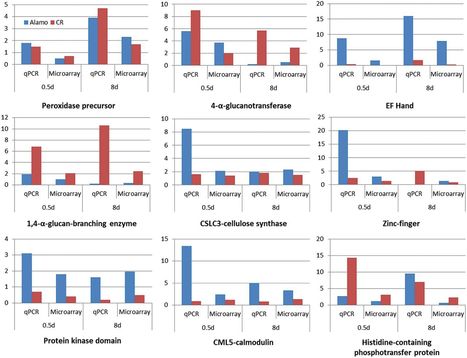
Improvement and year-to-year stabilization of biomass yields are primary objectives for the development of a low-input switchgrass feedstock production system using microbial endophytes. An earlier investigation of the effect of Burkholderia phytofirmans strain PsJN on switchgrass germplasm demonstrated differential responses between genotypes. PsJN inoculation of cv. Alamo (lowland ecotype) increased the plant root system, shoot length, and biomass yields, whereas it had no beneficial effect on cv. Cave-in-Rock (upland ecotype). To understand the gene networks governing plant growth promotion responses triggered by PsJN, the gene expression profiles were analysed in these two hosts, following seedling inoculation. The Affymetrix platform switchgrass expressed sequence tag (EST) microarray chip representing 122 972 probe sets, developed by the DOE BioEnergy Science Center, was employed to assess transcript abundance at 0.5, 2, 4, and 8 DAI (days after PsJN inoculation). Approximately 20 000 switchgrass probe sets showed significant responses in either cultivar. Switchgrass identifiers were used to map 19 421 genes in MapMan software. There were apparent differences in gene expression profiling between responsive and non-responsive cultivars after PsJN inoculation. Overall, there were 14 984 and 9691 genes affected by PsJN inoculation in Alamo and Cave-in-Rock, respectively. Of these, 394 are annotated as pathogenesis-related genes. In the responsive cv. Alamo, 68 pathogenesis-related genes were affected, compared with only 10 in the non-responsive cv. Cave-in-Rock. At the very early stage at 0.5 DAI, both cultivars exhibited similar recognition and defence responses, such as genes in signalling and proteolysis, after which the defence reaction in the responsive cv. Alamo became weaker while it was sustained in non-responsive cv. Cave-in-Rock.
A plant may be rooted in place, but it is never lonely. There are bacteria in, on and near it, munching away on their host, on each other, on compounds in the soil. Amoebae dine on bacteria, nematodes feast on roots, insects devour fruit — with consequences for the chemistry of the soil, the taste of a leaf or the productivity of a crop.
From 30 June to 2 July, more than 200 researchers gathered in Washington DC for the first meeting of the Phytobiomes Initiative, an ambitious proposal to catalogue and characterize a plant’s most intimate associates and their impact on agriculture. By the end of the year, attendees hope to carve out a project that will apply this knowledge in ways that will appeal to funders in industry and government.
“We want to get more money,” says plant pathologist Linda Kinkel at the University of Minnesota in St Paul. “But beyond that, let’s just all try to talk the same language and come up with some shared goals.”
Leach coined the term phytobiome in 2013,at a retreat about food security. She defines the phytobiome broadly, to encompass microbes, insects, nematodes and plants as well as the abiotic factors that influence all these.
Since then, she has visited companies, funding agencies and universities to call for a unifying phytobiomes initiative. She has teamed up with Kellye Eversole, a consultant based in Bethesda, Maryland, and the co-owner of a small family farm in Oklahoma, who has experience working on large agricultural genomics projects, including the US National Plant Genome Initiative. That initiative was launched in 1998 and continues to crank out databases and other tools for analysing plant genomes.
Leach hopes that the Phytobiomes Initiative will leave a similar legacy, but she is mindful that federal funding has tightened considerably since 1998. Still, she notes that the project can build on several emerging trends in agriculture. Industry has shown renewed interest in boosting plant growth by manipulating associated microbes (Nature 504, 199; 2013). Companies and farmers are also investing in ‘precision agriculture’, which uses high-tech monitors to track conditions in a field or even around individual plants, allowing farmers to water and fertilize in exactly the right places.
High-tech future
Eversole foresees a day when tractors will carry dipstick-like gauges that provide a snapshot of the microbial community in the soil. Data from the Phytobiomes Initiative would then help farmers to manipulate that community to their advantage, she says.
But first, the initiative needs to standardize protocols and metrics, the meeting’s attendees determined. Kinkel says that efforts are likely to focus initially on cataloguing microbes and insects and their interactions with different crops and habitats. “We’re where plant biologists were 150 years ago,” she says. “We’re still trying to inventory things.”
Work has already begun along these lines: for example, a group at the International Rice Research Institute in Los Baños in the Philippines is fishing for microbial DNA in data discarded from an effort to sequence the rice genome. The goal is to determine which microbes prefer which strains of the crop.
Kinkel, meanwhile, has begun experimenting with manipulating carbon levels in the soil to alter the microbial population, with the aim of improving plant productivity. “If we can understand better who lives on and within plants, we have the potential to manage them to have healthier, more resilient plants,” she says.
Projects such as these would move faster under an organized, cohesive framework, says Sarah Lebeis, a microbiologist at the University of Tennessee in Knoxville who is studying how plants manipulate microbial communities by secreting antibiotics into the soil. “Right now we’re working as individuals,” she says. “Having an initiative will give us focus and hopefully we’ll progress further, faster, better.”
Arbuscular mycorrhizal fungi (AMF) are promoted as biofertilizers for sustainable agriculture. So far, most researchers have investigated the effects of AMF on plant growth under highly controlled conditions with sterilized soil, soil substrates or soils with low available P or low inoculum potential. However, it is still poorly documented whether inoculated AMF can successfully establish in field soils with native AMF communities and enhance plant growth.
We inoculated grassland microcosms planted with a grass-clover mixture (Lolium multiflorum and Trifolium pratense) with the arbuscular mycorrhizal fungus Rhizoglomus irregulare. The microcosms were filled with eight different unsterilized field soils that varied greatly in soil type and chemical characteristics and indigenous AMF communities. We tested whether inoculation with AMF enhanced plant biomass and R. irregulare abundance using a species specific qPCR.
Inoculation increased the abundance of R. irregulare in all soils, irrespective of soil P availability, the initial abundance of R. irregulare, or the abundance of native AM fungal communities. AMF inoculation had no effect on the grass but significantly enhanced clover yield in 5 out of 8 field soils. The results demonstrate that AMF inoculation can be successful, even when soil P availability is high and native AMF communities are abundant.
To get content containing either thought or leadership enter:
To get content containing both thought and leadership enter:
To get content containing the expression thought leadership enter:
You can enter several keywords and you can refine them whenever you want. Our suggestion engine uses more signals but entering a few keywords here will rapidly give you great content to curate.


 Your new post is loading...








Very interesting paper.