Your new post is loading...

|
Scooped by
Jean-Michel Ané
July 20, 2015 11:39 PM
|
An intensively farmed crop such as potatoes always demands diligence in production. In addition to irrigation and finding suitable rotation crops, growers are constantly looking for an upper hand in dealing with nutrient issues and measures aimed at improving soil health and overall production. That might be where there’s an intriguing fit for a relatively new inoculant that reinforces root development and nutrient uptake through the introduction of mycorrhizal fungi.
|
|
Scooped by
Jean-Michel Ané
July 20, 2015 11:35 PM
|
Symbioses between leguminous plants and soil bacteria, known as rhizobia, are of great importance to agricultural production and nitrogen cycling. While these mutualistic symbioses can involve a wide range of rhizobia, some legumes exhibit incompatibility with specific strains resulting in ineffective nodulation. The formation of nodules in soybean (Glycine max) is controlled by several host genes, which are referred to as Rj. The soybean cultivar BARC2 carries the Rj4 gene, which restricts nodulation by specific strains including Bradyrhizobium elkanii USDA61. Here we employed transposon mutagenesis to identify the genetic locus in USDA61 that determines incompatibility with Rj4 soybean varieties. Introducing the Tn5 transposon into USDA61 resulted in the formation of nitrogen-fixation nodules on the roots of soybean cultivar BARC2 (Rj4Rj4). Sequencing analysis of the Tn5-flanking sequence revealed that six genes encoding putative histidine kinase, transcriptional regulator, DNA-binding transcriptional activator, Helix-turn-Helix type transcriptional regulator, phage shock protein, and cysteine protease were disrupted. The cysteine protease mutant shared high similarity with the type 3 effector protein XopD of Xanthomonas campestris. Our findings shed light on the diverse and complicated mechanisms that underlie these highly host-specific interactions, and indicate the involvement of a type 3 effector in Rj4 nodulation restriction, suggesting that Rj4 incompatibility is partly mediated by effector-triggered immunity.
|
|
Scooped by
Jean-Michel Ané
July 19, 2015 9:30 PM
|
Arbuscular mycorrhizal fungi (Glomeromycota) are the most widespread and important symbionts of plants. They cannot be cultured without plants, are apparently asexual, and have multiple nuclei in a common cytoplasm. There is evidence for genetic variation among nuclei, and for segregation of this variation during growth, but these findings remain contentious. Recently, two papers have reported whole genome sequences for a strain of Rhizophagus irregularis; both suggest that genetic variation among nuclei is low. Genome assembly is very incomplete, though, so significant nuclear diversity cannot be excluded. While the diversity of nuclear genomes remains unresolved, multiple complete mitochondrial genomes are now available; there is virtually no variation within isolates, but significant variation between them.
|
|
Scooped by
Jean-Michel Ané
July 19, 2015 9:28 PM
|
This study aimed at assessing the dynamics of lactic acid bacteria and other Firmicutes associated with durum wheat organs and processed products. 16S rRNA gene-based high-throughput sequencing approaches and culture-independent analyses showed that Lactobacillus, Streptococcus, Enterococcus and Lactococcus were the main epiphytic and endophytic genera among lactic acid bacteria. Bacillus, Exiguobacterium, Paenibacillus and Staphylococcus completed the picture of the core genera microbiome. The relative abundance of each lactic acid bacteria genus was affected by cultivars, phenological stages, other Firmicutes genera, environmental temperature and water activity (aw) of plant organs. Lactobacilli, showing the highest sensitivity to aw, markedly decreased during milk development (Odisseo) and physiological maturity (Saragolla). At these stages, Lactobacillus was mainly replaced by Streptococcus, Lactococcus and Enterococcus. However, a key sourdough species such as Lactobacillus plantarum was associated to plant organs during the life cycle of Odisseo and Saragolla wheat. The composition of the sourdough microbiota and the overall quality of leavened baked goods is also determined throughout the phenological stages of wheat cultivation, with variations depending on environmental and agronomic factors. Based on the adaptability of lactic acid bacteria on wheat plant, future research has to assess the potential of these bacteria for biocontrol and plant growth promotion.
|
|
Scooped by
Jean-Michel Ané
July 19, 2015 9:23 PM
|
The 8th congress of people interested in symbiosis is meeting 12 - 18 July 2015 in Lisbon, Portugal at the University of Lisbon.
|
|
Scooped by
Jean-Michel Ané
July 18, 2015 11:31 AM
|
The protective layers of polysaccharide molecules that bacteria build around themselves have varied roles, from buffering against environmental insults to disguising the cells from their hosts. These exopolysaccharides (EPS) are also thought to be involved in establishing symbiotic relationships, such as those between legume host plants and bacteria of the genus Rhizobium and related groups. On page 308 of this issue, Kawaharada et al.1 move the decades-old quest to define this role for EPS a step forward, identifying a plant receptor protein that interacts with rhizobial EPS in a structurally specific manner.
In rhizobium–legume symbioses, bacteria induce plant roots to form specialized organs called nodules. The rhizobia infect the nodule tissue and differentiate to form bacteroids, which convert nitrogen into ammonia that the plant can use to synthesize protein. The bacteria in turn benefit from plant-derived sugars. These relationships are often specific: particular strains or species of rhizobium typically form nitrogen-fixing root nodules on only a few species of legume2. Such specificity is particularly interesting because of its evolutionary and ecological implications and its mechanistic intricacy — how do plants allow infection by a symbiotic friend but not a pathogenic foe?
|
|
Scooped by
Jean-Michel Ané
July 18, 2015 11:21 AM
|
Suillus luteus (Boletales, Agaricomycetes) associates solely with Pinaceae species as an ectomycorrhizal symbiont in the Northern Hemisphere. Prunus speciosa (Rosaceae) and Cedrela odorata (Meliaceae) naturally harbor arbuscular mycorrhizal fungi. The present study documents that S. luteus establishes root endophyte symbioses in vitro with somatic Prunus speciosa; however, it does not penetrate root tissues of somatic Cedrela odorata. With P. speciosa, the hyphae of S. luteus were heavily entangled in the intercellular space, unlike the rather straight hyphae of Tricholoma matsutake (Agaricales, Agaricomycetes). With C. odorata, S. luteus colonized only the surface of the exodermis and exhibited dark-brown mycorrhiza-like morphology. Prunus speciosa associated with S. luteus grew significantly better than that without the fungus, but C. odorata did not show significant beneficial effects when growing with the fungus. The data indicate that apparent Pinaceae-specific ectomycorrhizal fungi associate with arbuscular mycorrhizal broad-leaved plants in vitro, although the physical characteristics of the interactions vary depending upon the plant and fungal species.
|
|
Scooped by
Jean-Michel Ané
July 18, 2015 11:20 AM
|
Understanding the patterns of biodiversity through time and space is a challenging task. However, phylogeny-based macroevolutionary models allow us to account and measure many of the processes responsible for diversity build-up, namely speciation and extinction. The general latitudinal diversity gradient (LDG) is a well-recognized pattern describing a decline in species richness from the equator pole-wards. Recent macroecological studies in ectomycorrhizal (EM) fungi have shown that their LDG is shifted, peaking at temperate rather than tropical latitudes. Here we investigate this phenomenon from a macroevolutionary perspective, focusing on a well-sampled group of edible EM edible mushrooms from the genus Amanita –the Caesar's mushrooms, which follow similar diversity patterns. Our approach consisted in applying a suite of models including: (1) non-trait-dependent time-varying diversification (BAMM), (2) continuous trait-dependent diversification (QuaSSE), and (3) diversity-dependent diversification (DDD). In short, results give strong support for high speciation rates at temperate latitudes (BAMM and QuaSSE). We also find some evidence for different diversity-dependence thresholds in ‘temperate’ and ‘tropical’ subclades, and little differences in diversity due to extinction. We conclude that our analyses on the Caesar's mushrooms give further evidence of a temperate-peaking LDG in EM fungi, highlighting the importance and the implications of macroevolutionary processes in explaining diversity gradients in microorganisms.
|
|
Scooped by
Jean-Michel Ané
July 18, 2015 11:18 AM
|
Selectable markers, e.g., antibiotic resistance, for conjugation experiments are not always effective for slow-growing plant growth promoting bacteria such asBurkholderia. We used PCAT medium containing Congo Redfor selectingBurkholderiatransconjugants. This method allows for the reliable selection of transconjugants of these novel plant growth-promoting bacteria.
|
|
Scooped by
Jean-Michel Ané
July 17, 2015 10:29 PM
|
Most Oaks are considered stress-tolerants- that is, they live a very long time (500+ years), live in harsh environments, deal directly with the stresses, have thick bark in fire areas, have a strong relationship with mycorrhizal fungi, are drought tolerant, and crown sprout.
|
|
Scooped by
Jean-Michel Ané
July 17, 2015 10:45 AM
|
Bacterial secretion systems play critical roles in communication with neighboring bacteria and in the modulation of host immune responses via the secretion of small proteins called effectors. Several secretion systems have been identified and these are denoted types I–VII. Of these, the type VI secretion system (T6SS) and its effectors were only recently elucidated. Most studies on the role and significance of the T6SS and its effectors have focused on human pathogens. In this review, type 6 effectors from plant-associated beneficial and pathogenic bacteria are discussed, including effectors from Agrobacterium tumefaciens, Dickeya dadanti, Rhizobium leguminosarum, Pectobacterium atroseptium, Ralstonia solanacearum, Pseudomonas syringae, Pseudomonas fluorescens, and Pseudomonas protegens. Type 6 effectors act in symbiosis, biofilm formation, virulence, and interbacterial competition. Understanding the impact of type 6 effectors on pathogenesis will contribute to the management of bacterial pathogens in crop plants by allowing the manipulation of intra and inter-specific interactions.
|
|
Scooped by
Jean-Michel Ané
July 16, 2015 10:41 PM
|
Azolla is a floating fern mostly utilized as bio-fertilizer for wetland paddy. It belongs to the family of azollaceace.
The fern Azolla, hosts a symbiotic blue green algae anabaena azolle, which is responsible for the fixation and assimilation of atmospheric nitrogen.
|
|
Scooped by
Jean-Michel Ané
July 16, 2015 10:35 PM
|
Organically produced herb and vegetable transplants represent an important commodity both for direct sales to consumers as well as for starter plants for organically grown field crops and potted greenhouse culture. With increased interest in organic and sustainable production methods for herbs and vegetables, the industry is ever more aware about the use of organic growing media and fertilizers for greenhouse production. Premier Tech Horticulture has developed two organic approved mixes to meet the needs and growing requirements of natural, organic and certified organic growers.
|
|
|
Scooped by
Jean-Michel Ané
July 20, 2015 11:39 PM
|
Azospirillum is a rhizobacterial genus containing plant growth-promoting species associated with different crops worldwide. Azospirillum brasilense strains exhibit a growth-promoting effect by means of phytohormone production and possibly by N2 fixation. However, one of the most important factors for increase in crop yield by plant growth-promoting rhizobacteria is the survival of the inoculant in the rhizosphere, which is not always achieved. The objective of this study was to develop quantitative PCR protocols for strain-specific quantification of A. brasilense FP2. A novel approach was applied to identify strain-specific DNA sequences based on comparison of genomic sequences within the same species. The draft-genome sequence of A. brasilense FP2 and Sp245 were aligned, FP2-specific regions were filtered and checked for other possible matches in public databases, Strain-specific regions were then selected to design and evaluate strain-specific primer pairs. The primer pairs AzoR2.1, AzoR2.2, AzoR5.1, AzoR5.2, and AzoR5.3 were strain-specific for A. brasilense FP2. These primer pairs were used to monitor quantitatively the population of A. brasilense in wheat roots under sterile and non-sterile growth conditions. In addition, co-inoculations with other plant-growth promoting bacteria in wheat were performed under non-sterile conditions. Results showed that A. brasilense FP2 inoculated to wheat roots is highly competitive and achieve high cell numbers (∼107 CFU/g of fresh weight root) in the rhizosphere even under non-sterile conditions and when co-inoculated with other rhizobacteria, maintaining the population rather stable for at least up to 13 days after inoculation. The strategy used here can be applied for other organisms whose genome sequences are available.
|
|
Scooped by
Jean-Michel Ané
July 19, 2015 9:41 PM
|
Recent research (and commercials) tell us probiotic products are good for our health, with benefits ranging from improved digestion to managing allergies and colds, Just as humans can benefit from the good bacteria of probiotics, plants can benefit from certain microbes. And that benefit is also good for the environment.
In plants, beneficial bacteria and fungi are endophytes. Scientists have known for decades that plants like legumes (peas, beans and lentils) have beneficial bacteria in nodules attached to their roots. These bacteria “fix” vital nitrogen, turning it into a form the plant can easily use. However, researchers have recently found some nitrogen-fixing bacteria actually live inside plant tissue--in the leaves, stems, and roots—with impressive results.
|
|
Scooped by
Jean-Michel Ané
July 19, 2015 9:29 PM
|
|
|
Scooped by
Jean-Michel Ané
July 19, 2015 9:24 PM
|
Truffles (Tuber spp.) are ascomycete subterraneous fungi that form ectomycorrhizas in a symbiotic relationship with plant roots. Their fruiting bodies are appreciated for their distinctive aromas which might be partially derived from microbes. Indeed truffle fruiting bodies are colonized by a diverse microbial community made of bacteria, yeasts, guest filamentous fungi and viruses. The aim of this mini-review is double. First the current knowledge on the microbial community composition of truffles has been synthesized to highlight similarities and differences among four truffle species (T. magnatum, T. melanosporum, T. aestivum and T. borchii) at various stages of their life cycle. Second the potential role of the microbiome in truffle aroma formation has been addressed for the same four species. Our results suggest that on one side odorants which are common to many truffle species might be of mixed truffle and microbial origin while on the other side less common odorants might be derived from microbes only. They also highlight that bacteria, the dominant group in the truffle's microbiome, might also be the most important contributors to truffle aromas not only in T. borchii as already demonstrated but also in T. magnatum, T. aestivum and T. melanosporum.
|
|
Scooped by
Jean-Michel Ané
July 18, 2015 11:31 AM
|
From 2000 to 2013, soybean [Glycine max (L.) Merr] grain commodity price increased by almost 300% generating interest in inputs to maximize yield. The objective of this study was to evaluate the effect of commonly sold inputs on soybean grain yield in enhanced (high-input) and traditional (low-input) production systems. Inputs evaluated included: Rhizobia inoculant, gypsum, Mn fertilizer, insecticide, and fungicide. A 16 site-year trial was established in Ohio during 2013 and 2014. Rhizobia inoculant was seed-applied before planting, gypsum was applied at the VC growth stage (unrolled unifoliate leaves), and foliar Mn, insecticide, and fungicide were applied at the R3 growth stage (initial pod development). There was very little yield response associated with the inoculant, gypsum, Mn, and insecticide due to fields being in a corn–soybean rotation, no S deficiencies, limited Mn deficiencies, and limited insect defoliation. The omission of fungicide from the enhanced production system reduced yield in 5 of 16 site-years by 0.21 to 0.79 Mg ha–1, but its addition to a traditional system increased yield significantly at 1 of 16 site-years by 0.47 Mg ha–1. Across the 16 site-years, soybean yield was influenced by fungicide application when fields had disease present, above average yield (>3.5 Mg ha–1), and received >25 cm of precipitation in June and July. The data indicate a very small potential for high-input production systems to enhance crop yield without the presence of diseases, insects, or nutrient deficiencies.
|
|
Scooped by
Jean-Michel Ané
July 18, 2015 11:30 AM
|
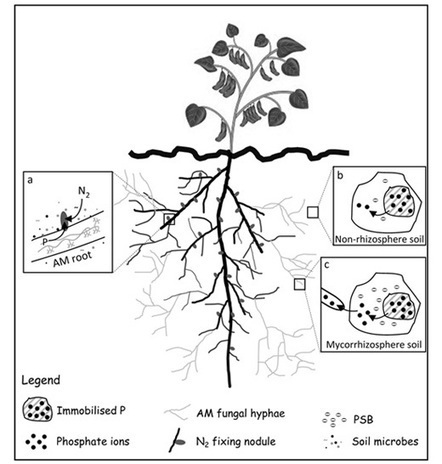
Optimizing the turnover and recycling of nutrients, a fundamental issue for the sustainability and productivity of agro-ecosystems is depending on the functionality of a framework of plant-soil interactions where microbial populations are involved. Both mutualistic symbionts and saprophytic microorganisms living at the root-soil interfaces, the rhizosphere, or in the plant-associated soil, are recognized as essential drivers of nutrient cycling, availability and capture. Among the mutualistic symbionts, arbuscular mycorrhizal (AM) fungi are one of the most influential groups of soil biota because after establishing the AM symbiosis with most plant species they enhance plant nutrient uptake properties. Saprophytic microorganisms are recognized for their abilities to propel nitrogen (N) fixation and/or phosphorus (P) mobilization, two fundamental processes for sustain plant productivity. Mycorrhiza establishment changes the biological and physical-chemical properties of the rhizosphere, developing the so-called mycorrhizosphere. Particularly relevant is the mycorrhizosphere of legume plants since it also involves the symbiosis with N2-fixing nodulating rhizobial bacteria. In this overview of mycorrhizosphere interactions related to nutrient cycling, after describing the protagonist microorganisms, the mechanisms responsible for nutrient acquisition by AM-plants are first analyzed. Then, the processes involved in mycorrhizosphere establishment and functions are described. Finally, the achievements derived from managing selected AM fungi and beneficial bacteria interactions (mycorrhizosphere tailoring) are discussed. The use of 15N and 32P to elucidate the contribution of the mycorrhizosphere components to plant nutrient acquisition is detailed.
|
|
Scooped by
Jean-Michel Ané
July 18, 2015 11:20 AM
|
Seeds have evolved in association with diverse microbial assemblages that may influence plant growth and health. However, little is known about the composition of seed-associated microbial assemblages and the ecological processes shaping their structures. In this work, we monitored the relative influence of the host genotypes and terroir on the structure of the seed microbiota through metabarcoding analysis of different microbial assemblages associated to five different bean cultivars harvested in two distinct farms. Overall, few bacterial and fungal operational taxonomic units (OTUs) were conserved across all seed samples. The lack of shared OTUs between samples is explained by a significant effect of the farm site on the structure of microbial assemblage, which explained 12.2% and 39.7% of variance in bacterial and fungal diversity across samples. This site-specific effect is reflected by the significant enrichment of 70 OTUs in Brittany and 88 OTUs in Luxembourg that lead to differences in co-occurrence patterns. In contrast, variance in microbial assemblage structure was not explained by host genotype. Altogether these results suggest that seed-associated microbial assemblage is determined by niche-based processes and that the terroir is a key driver of these selective forces.
|
|
Scooped by
Jean-Michel Ané
July 18, 2015 11:18 AM
|
Soil salinization is an increasingly important problem in many parts of the world, particularly under arid and semi-arid areas. Unfortunately, the knowledge about restoration of salt affected ecosystems using mycorrhizae is limited. The current study aims to investigate the impact of salinity on the microbial richness of the halophytic plant Tamarix articulata rhizosphere. Soil samples were collected from natural sites with increasing salinity (1.82–4.95 ds.m− 1). Six arbuscular mycorrhizal fungi (AMF) species were isolated from the different saline soils and identified as Septoglomus constrictum, Funneliformis mosseae, Funneliformis geosporum, Funneliformis coronatum, Rhizophagus fasciculatus, and Gigaspora gigantea. The number of AMF spores increased with soil salinity. Total root colonization rate decreased from 65 to 16% but remained possible with soil salinity. Microbial biomass in T. articulata rhizosphere was affected by salinity. The phospholipid fatty acids (PLFA) C16:1ω5 as well as i15:0, a15:0, i16:0, i17:0, a17:0, cy17:0, C18:1ω7 and cy19:0 increased in high saline soils suggesting that AMF and bacterial biomasses increased with salinity. In contrast, ergosterol amount was negatively correlated with soil salinity indicating that ectomycorrhizal and saprotrophic fungal biomasses were reduced with salinity. Our findings highlight the adaptation of arbuscular and bacterial communities to natural soil salinity and thus the potential use of mycorrhizal T. articulata trees as an approach to restore moderately saline disturbed arid lands.
|
|
Scooped by
Jean-Michel Ané
July 18, 2015 10:59 AM
|
CLE peptides are key regulators of cell proliferation and differentiation in plant shoots, roots, vasculature, and legume nodules. They are C-terminally encoded peptides that are post-translationally cleaved and modified from their corresponding pre-propeptides to produce a final ligand that is 12–13 amino acids in length. In this study, an array of bionformatic and comparative genomic approaches was used to identify and characterize the complete family of CLE peptide-encoding genes in two of the world’s most important crop species, soybean and common bean. In total, there are 84 CLE peptide-encoding genes in soybean (considerably more than the 32 present in Arabidopsis), including three pseudogenes and two multi-CLE domain genes having six putative CLE domains each. In addition, 44 CLE peptide-encoding genes were identified in common bean. In silico characterization was used to establish all soybean homeologous pairs, and to identify corresponding gene orthologues present in common bean and Arabidopsis. The soybean CLE pre-propeptide family was further analysed and separated into seven distinct groups based on structure, with groupings strongly associated with the CLE domain sequence and function. These groups provide evolutionary insight into the CLE peptide families of soybean, common bean, and Arabidopsis, and represent a novel tool that can aid in the functional characterization of the peptides. Transcriptional evidence was also used to provide further insight into the location and function of all CLE peptide-encoding members currently available in gene atlases for the three species. Taken together, this in-depth analysis helped to identify and categorize the complete CLE peptide families of soybean and common bean, established gene orthologues within the two legume species, and Arabidopsis, and provided a platform to help compare, contrast, and identify the function of critical CLE peptide hormones in plant development.
|
|
Scooped by
Jean-Michel Ané
July 17, 2015 10:26 PM
|
Celebrating 25 years as a seed development company located in Crosby, N.D., Legume Logic has begun efforts to introduce a new cool season legume into the market – faba beans.
Legume Logic, which has successfully developed an extensive line of field peas that are now grown in over five states, holds the rights to 80-90 percent of the pea varieties in the United States.
|
|
Scooped by
Jean-Michel Ané
July 16, 2015 10:42 PM
|
Rhizobium leguminosarum bv. viciae GB30 is an aerobic, motile, Gram-negative, non-spore-forming rod that can exist as a soil saprophyte or as a legume microsymbiont of Pisum sativum. GB30 was isolated in Poland from a nodule recovered from the roots of Pisum sativum growing at Janow. GB30 is also an effective microsymbiont of the annual forage legumes vetch and pea. Here we describe the features of R. leguminosarum bv. viciae strain GB30, together with sequence and annotation. The 7,468,464 bp high-quality permanent draft genome is arranged in 78 scaffolds of 78 contigs containing 7,227 protein-coding genes and 75 RNA-only encoding genes, and is part of the GEBA-RNB project proposal.
|
|
Scooped by
Jean-Michel Ané
July 16, 2015 10:39 PM
|
Immune systems distinguish “self” from “non-self” to maintain homeostasis and must differentially gate access to allow colonization by potentially beneficial, non-pathogenic microbes. Plant roots grow within extremely diverse soil microbial communities, but assemble a taxonomically limited root-associated microbiome. We grew isogenic Arabidopsis thaliana mutants with altered immune systems in a wild soil and also in recolonization experiments with a synthetic bacterial community. We established that biosynthesis of, and signaling dependent on, the foliar defense phytohormone salicylic acid is required to assemble a normal root microbiome. Salicylic acid modulates colonization of the root by specific bacterial families. Thus, plant immune signaling drives selection from the available microbial communities to sculpt the root microbiome.
|