I wanted to correct myself in the film where I called a plant bog buttercup, it is actually pennywort. I do have to credit myself, I did call it pennywort th...
Endophytic actinomycetes have shown unique plant growth promoting as well as antagonistic activity against fungal phytopathogens. In the present study forty-two endophytic actinomycetes recovered from medicinal plants were evaluated for their antagonistic potential and plant growth-promoting abilities. Twenty-two isolates which showed the inhibitory activity against at least one pathogen were subsequently tested for their plant-growth promoting activities and were compared genotypically using DNA based fingerprinting, including enterobacterial repetitive intergenic consensus (ERIC) and BOX repetitive elements. Genetic relatedness based on both ERIC and BOX-PCR generates specific patterns corresponding to particular genotypes. Exponentially grown antagonistic isolates were used to evaluate phosphate solubilization, siderophores, HCN, ammonia, chitinase, indole-3-acetic acid production, as well as antifungal activities. Out of 22 isolates, the amount of indole-3-acetic acid (IAA) ranging between 10–32 μg/ml was produced by 20 isolates and all isolates were positive for ammonia production ranging between 5.2 to 54 mg/ml. Among 22 isolates tested, the amount of hydroxamate-type siderophores were produced by 16 isolates ranging between 5.2 to 36.4 μg/ml, while catechols-type siderophores produced by 5 isolates ranging from 3.2 to 5.4 μg/ml. Fourteen isolates showed the solubilisation of inorganic phosphorous ranging from 3.2 to 32.6 mg/100ml. Chitinase and HCN production was shown by 19 and 15 different isolates, respectively. In addition, genes of indole acetic acid (iaaM) and chitinase (chiC) were successively amplified from 20 and 19 isolates respectively. The two potential strains Streptomyces sp. (BPSAC34) and Leifsonia xyli (BPSAC24) were tested in vivo and improved a range of growth parameters in chilli (Capsicum annuum L.) under greenhouse conditions. This study is the first published report that actinomycetes can be isolated as endophytes from within these plants and were shown to have antagonistic and plant growth promoting abilities. These results clearly suggest the possibility of using endophytic actinomycetes as bioinoculant for plant growth promotion, nutrient mobilization or as biocontrol agent against fungal phytopathogens for sustainable agriculture.
In Arabidopsis roots, the transcription factor MYB72 plays a dual role in the onset of rhizobacteria-induced systemic resistance (ISR) and plant survival under conditions of limited iron availability. Previously, it was shown that MYB72 coordinates the expression of a gene module that promotes synthesis and excretion of iron-mobilizing phenolic compounds in the rhizosphere, a process involved in both iron acquisition and ISR signaling. Here, we show that volatile compounds (VOCs) from ISR-inducing Pseudomonas bacteria are important elicitors of MYB72. VOCs-induced MYB72 is co-expressed with the iron uptake-related genes FERRIC REDUCTION OXIDASE 2 (FRO2) and IRON-REGULATED TRANSPORTER 1 (IRT1) in a FER-LIKE IRON DEFICIENCY INDUCED TRANSCRIPTION FACTOR (FIT)-dependent manner, indicating that MYB72 is an intrinsic part of the plants’ iron acquisition response that is typically activated upon iron starvation. However, VOCs-induced MYB72 is activated independently of the iron availability in the root vicinity. Moreover, rhizobacterial VOCs-mediated induction of MYB72 requires photosynthesis-related signals, while iron deficiency in the rhizosphere can activate MYB72 in the absence of shoot-derived signals. Together, these results show that the ISR- and iron acquisition-related transcription factor MYB72 in Arabidopsis roots is activated by rhizobacterial volatiles and photosynthesis-related signals, and can enhance the iron acquisition capacity of roots independently of the iron availability in the rhizosphere. This work highlights the role of MYB72 in plant processes by which root microbiota simultaneously stimulate systemic immunity and activate the iron uptake machinery in their host plants.
MgtE is predicted to be a Rhizobium leguminosarum channel that is essential for growth when both Mg2+ is limiting and the pH is low. N2 was only fixed at 8% of the rate of wild type when the crop legume Pisum sativum was inoculated with an mgtE mutant of R. leguminosarum and although bacteroids were present, they were few in number and not fully developed. R. leguminosarum MgtE was also essential for N2-fixation on the native legume Vicia hirsuta but not when in symbiosis with Vicia faba. The importance of MgtE and the relevance of the contrasting phenotypes is discussed.
Hidden Treasures Plant roots are vital components of the earth's ecosystem. They are necessary for all plant growth, including the production of food and nutrients for humans and many other organisms. However, as root systems are out off sight, their beauty and importance often go unnoticed. Exposed: The Secret Life of Roots showcases the presence and importance of roots through visually stunning root representations using the work of agricultural ecologist Dr. Jerry Glover, sculptor Steve Tobin, and photographer Jim Richardson.
Photography and Sculpture Jim Richardson is a photographer for the National Geographic Society. His photographs in this exhibits capture the disparity in the aboveground and belowground biomass of plants. His series on soil profiles, hung in the Classroom and National Garden (spring through fall), highlight striking differences in global soils and the human struggle to grow food.
Steve Tobin is a celebrated sculptor who specializes in nature-inspired works. Two of his pieces on display spring through fall on the U.S. Botanic Garden grounds, Romeo and Juliet, are bronze casts of tree roots washed out from a riverbank. The other two sculptures are from his Steelroot series.
Background The arbuscular mycorrhizal symbiosis is characterized by the presence of different symbiotic structures and stages within a root system. Therefore tools allowing the analysis of molecular changes at a cellular level are required to reveal insight into arbuscular mycorrhizal (AM) symbiosis development and functioning.
Results Here we describe the analysis of metabolite pools in arbuscule-containing cells, which are the site of nutrient transfer between AM fungus and host plant. Laser capture microdissection (LCM) combined with gas chromatography mass spectrometry (GC-EI/TOF-MS) enabled the analysis of primary metabolite levels,which might be of plant or fungal origin, within these cells.
Conclusions High levels of the amino acids, aspartate, asparagine, glutamate, and glutamine, were observed in arbuscule-containing cells. Elevated amounts of sucrose and the steady-state of hexose levels indicated a direct assimilation of monosaccharides by the fungal partner.
Plants reward microbial and animal mutualists with carbohydrates to obtain nutrients, defense, pollination, and dispersal. Under a fixed carbon budget, plants must allocate carbon to their mutualists at the expense of allocation to growth, reproduction, or storage. Such carbon trade-offs are indirectly expressed when a plant exhibits reduced growth or fecundity in the presence of its mutualist. Because carbon regulates the costs of all plant mutualisms, carbon dynamics are a common platform for integrating these costs in the face of ecological complexity and context dependence. The ecophysiology of whole-plant carbon allocation could thus elucidate the ecology and evolution of plant mutualisms. If mutualisms are costly to plants, then they must be important but frequently underestimated sinks in the terrestrial carbon cycle.
LjABCG1, a full-size ABCG subfamily of ATP-binding cassette proteins of a model legume, Lotus japonicus, was reported as a gene highly expressed during the early stages of nodulation, but have not been characterized in detail. In this study we showed that the induction of LjABCG1 expression was remarkable by methyl jasmonate treatment, and reporter gene experiments indicated that LjABCG1 was strongly expressed in the nodule parenchyma and cell layers adjacent to the root vascular tissue toward the nodule. LjABCG1 was suggested to be localized at the plasma membrane based on the fractionation of microsomal membranes as well as separation via aqueous two-phase partitioning. The physiological functions of LjABCG1 in symbiosis and pathogenesis were analyzed in homologous and heterologous systems. LjABCG1 knock-down L. japonicus plants did not show clear phenotypic differences in nodule formation, and not in defense against Pseudomonas syringae, either. In contrast, when LjABCG1 was expressed in the Arabidopsis pdr8-1 mutant, the penetration frequency of Phytophthora infestans, a potato late blight pathogen, was significantly reduced in LjABCG1/pdr8-1 than in pdr8-1 plants. This finding indicated that LjABCG1, at least partially, complemented the phenotype of pdr8 in Arabidopsis, suggesting the multiple roles of this protein in plant-microbe interactions.
Phytochromes are red/far-red photoreceptors that play essential roles in diverse plant morphogenetic and physiological responses to light. Despite their functional significance, phytochrome diversity and evolution across photosynthetic eukaryotes remain poorly understood. Using newly available transcriptomic and genomic data we show that canonical plant phytochromes originated in a common ancestor of streptophytes (charophyte algae and land plants). Phytochromes in charophyte algae are structurally diverse, including canonical and non-canonical forms, whereas in land plants, phytochrome structure is highly conserved. Liverworts, hornworts and Selaginella apparently possess a single phytochrome, whereas independent gene duplications occurred within mosses, lycopods, ferns and seed plants, leading to diverse phytochrome families in these clades. Surprisingly, the phytochrome portions of algal and land plant neochromes, a chimera of phytochrome and phototropin, appear to share a common origin. Our results reveal novel phytochrome clades and establish the basis for understanding phytochrome functional evolution in land plants and their algal relatives.
Cenozoic fossils of lichens clearly assignable to modern families and genera have been preserved as amber inclusions from different Paleogene deposits (Rikkinen & Poinar, 2002, 2008; Hartl et al., 2015; Kaasalainen et al., 2015). Amber, which is fossilized tree resin, has an ability to preserve tiny micro-organisms in exquisite detail, and several fossils of filamentous microfungi have been discovered from different amber deposits around the world (Taylor et al., 2015).
Here we report on the first fossils of lichen-associated filamentous fungi. Several distinct morphologies of darkly-pigmented fungi growing on crustose and foliose lichens are beautifully preserved, suggesting that hyphomycetous microfungi have colonized lichen surfaces at least since the Paleogene.
Introduction: The growing need for the bioactive compounds of ethnomedicinal plants for the treatment of diseases has resulted in exploitation of medicinal plants. The present investigation aimed to study the diversity of endophytic and epiphytic bacteria associated with ethnomedicinal plants and to explore their potential as source of bioactive compounds. Methodology: Characterization of culturable endophytic and epiphytic bacteria associated with 11 ethnomedicinal plants and their potential as natural antioxidants was assessed through free radical scavenging activity, total phenolics, total flavonoids, metal ion chelation, and antagonistic activity. Genetic screening to assess the potential of endophytes and epiphytes to synthesize bioactive compounds was achieved by screening for the presence of the non-ribosomal peptide synthetase (NRPS) gene. Result: The frequently isolated endophytic bacterium recovered was Bacillus sp. Antioxidative property of the bacterial extracts revealed endophytes with potent antioxidant activity and better antagonistic activity as compared to epiphytes. Genetic screening revealed the presence of the NRPS gene in seven plant-associated bacteria, indicating the production of natural products. Conclusions: The study indicated the extracts of bacterial endophytes associated with ethnomedicinal plants as good sources of natural products with potential application in oxidative stress. The isolates could be used as new bioactive agents
Extracellular vesicles (EVs) are produced by all domains of life. In Gram-negative bacteria, EVs are produced by the pinching off of the outer membrane; however, how EVs escape the thick cell walls of Gram-positive bacteria, mycobacteria and fungi is still unknown. Nonetheless, EVs have been described in a variety of cell-walled organisms, including Staphylococcus aureus, Mycobacterium tuberculosis and Cryptococcus neoformans. These EVs contain varied cargo, including nucleic acids, toxins, lipoproteins and enzymes, and have important roles in microbial physiology and pathogenesis. In this Review, we describe the current status of vesiculogenesis research in thick-walled microorganisms and discuss the cargo and functions associated with EVs in these species.
The order Endogonales within Mucoromycotina includes several ectomycorrhizal species and endophytes of lower land plants. As such, this order is a key taxon for investigation of the evolutionary process of plant–fungal symbioses. However, no taxonomic study of Endogonales based on morphological and phylogenetic data has been performed, and the geographic distribution of this order in Asia remains largely unknown. We collected E. incrassata, E. pisiformis, E. flammicorona, and E. lactiflua from forests in Japan, thus representing their first description in Asia. Collected sporocarps were examined microscopically to observe details of hyphal structures, particularly in zygosporangia and gametangia. In addition, we collected Japanese Sphaerocreas pubescens, recently reported to be related to Endogone-like mycobionts of liverworts, and described its morphology. Species were also analyzed phylogenetically based on large-subunit nuclear ribosomal RNA gene sequences. The phylogenetic relationships of the four Endogone species were supported by their zygosporangial morphogenesis: group A, comprising E. incrassata and E. pisiformis, formed homogametic zygosporangia with pale-colored sporangiothecia, whereas species in group B, E. flammicorona and E. lactiflua, formed heterogametic zygosporangia with orange-colored sporangiothecia. Sphaerocreas pubescens was phylogenetically close to Densospora solicarpa, which is an uncertain zygomycotan ectomycorrhizal fungus; however, the relationship between the “Sphaerocreas/Densospora” clade and Endogone was unclear.
This study was aimed at investigating the toxicological effects of GO on beneficial Bacillus soil microbes. Five bacterial isolates screened from the rhizosphere of a common pulse-growing agricultural field were identified as Bacillus marisflavi, Bacillus cereus, Bacillus subtilis, Bacillus megaterium, and Bacillus mycoides. To study the effect of GO under in vitro conditions, GO was prepared and characterized by various analytical techniques. Our results suggest that GO decreases cell viability in a concentration- and time-dependent manner by regulating biochemical changes and demonstrate that GO nanoparticles can negatively impact beneficial bacterial communities in the soil.
The world’s rapidly expanding populations have created a sense of urgency regarding global agricultural output, which needs to expand by at least 70% by the year 2050. Plants will provide a significant proportion of the world’s food supply. This international conference focuses on a group of plant enemies that have an unique style of attack. Instead of simply removing plant tissue, survival, growth and reproduction are enhanced by manipulating the plant to create specialized nutritional resources. This attack strategy can have serious consequences for both natural and agro-ecosystems. Mechanisms of reprogramming host plants remain largely unknown but clearly involve secreted effectors that are applied during attack. Options for defense against reprogrammers include effector-triggered immunity. Historically the phylogenetically diverse plant enemies that reprogram plants have been studied by different groups. This interdisciplinary meeting will bring together the complementary strengths of key international laboratories to discuss advances in our understanding of the enemies that reprogram plants and their associated symbionts, the options that plants have for their defense, and the evolutionary potential of enemies to adapt to plant defense.
It is a tendency of some people to only think of plant nutrition in terms of how much fertilizer to add. This simplification may be understandable since a healthy crop reveals only the above ground plant; the roots that support the visible plant are seldom seen without further exploration.
Plant roots grow in an incredibly complex soil environment, teeming with billions of organisms, particularly bacteria and fungi, which play a crucial role maintaining an adequate supply of plant nutrients for crop growth.
Nitric oxide (NO) is involved in various plant-microbe interactions. In the symbiosis between the soil bacterium Sinorhizobium meliloti and the model legume Medicago truncatula NO is required for an optimal establishment of the interaction but is also a signal for nodule senescence. Little is known about the molecular mechanisms responsible for NO effects in the legume-rhizobium interaction. Here we investigate the contribution of the bacterial NO response to the modulation of a plant protein post-translational modification in nitrogen fixing nodules. We made use of different bacterial mutants to finely modulate NO levels inside M. truncatula root nodules and examine the consequence on tyrosine nitration of the plant Glutamine synthetase (GS), a protein responsible for assimilation of the ammonia released by nitrogen fixation. Our results reveal that S. meliloti possesses several proteins which limit inactivation of plant enzyme activity via NO-mediated post-translational modifications. This is the first demonstration that rhizobia can impact the course of nitrogen fixation by modulating the activity of a plant protein.
Peas, beans and other members of the legume family of plants can form friendly relationships (symbioses) with nitrogen fixing bacteria from the soil. Guided by the plant, the bacteria infect into the root and colonise plant organs called nodules, which supply sugars to the bacteria. Nodules also provide conditions that enable the bacteria to efficiently convert nitrogen gas (N2) into a form of nitrogen that plants can use to grow.
Energy researchers have recently taken interest in the use of switchgrass (Panicum virgatum) as a biofuel. Arbuscular mycorrhizal fungi (AMF), which are known to increase plant acquisition of nutrients through a symbiotic relationship, may be used alongside nitrogen fertilizers to promote optimum biomass yield for the production of biofuels. The purpose of this study is to examine the effects of nitrogen input on the abundance of AMF to anticipate biomass yield. Samples from two years and varying nitrogen treatments were analyzed for glomalin related soil protein and extra-radical hyphae to determine AMF abundance. Nitrogen input did not significantly affect AMF abundance; however, there was a significant difference between years. These results suggest the possible use of AMF to counteract the detrimental environmental effects of fertilizers used to grow switchgrass.
Legume nodules result from coordinated interactions between the plant and nitrogen-fixing rhizobia bacteria. The phytohormone cytokinin promotes nodule formation and recent findings suggest that the phytohormone auxin can inhibit nodule formation. Here we show that microRNA160 (miR160) is a key signaling element that dictates auxin-cytokinin balance during nodule development in soybean. miR160 appears to promote auxin activity by suppressing the levels of ARF10/16/17 family of repressor ARF transcription factors. We show using qPCR assays and a fluorescence miRNA sensor that miR160 levels are relatively low early during nodule formation and high in mature nodules. We had previously shown that ectopic expression of miR160 in soybean roots led to a severe reduction in nodule formation coupled with enhanced sensitivity to auxin, and a reduced sensitivity to cytokinin. Here we show that exogenous cytokinin can restore nodule formation in miR160 over-expressing roots. Therefore, low miR160 levels early during nodule development favor cytokinin activity required for nodule formation. Suppression of miR160 levels using a short tandem target mimic (STTM160) resulted in reduced sensitivity to auxin and enhanced sensitivity to cytokinin. In contrast to miR160 over-expressing roots, STTM160 roots had increased nodule formation, but nodule maturation was significantly delayed. Exogenous auxin partially restored proper nodule formation and maturation in STTM160 roots suggesting that high miR160 activity later during nodule development favors auxin activity and promotes nodule maturation. Therefore, miR160 dictates developmental stage-specific sensitivities to auxin and cytokinin to direct proper nodule formation and maturation in soybean.
Land plants evolved more than 450 million years ago from a lineage of freshwater charophyte green algae1. The extent to which plant signalling systems existed before the evolutionary transition to land is unknown. Although charophytes occupy a key phylogenetic position for elucidating the origins of such signalling systems2,3,4, there is a paucity of sequence data for these organisms5,6. Here we carry out de novo transcriptomics of five representative charophyte species, and find putative homologues for the biosynthesis, transport, perception and signalling of major plant hormones. Focusing on the plant hormone ethylene, we provide evidence that the filamentous charophyte Spirogyra pratensis possesses an ethylene hormone system homologous to that in plants. Spirogyra produces ethylene and exhibits a cell elongation response to ethylene. Spirogyra ethylene-signalling homologues partially rescue mutants of the angiosperm Arabidopsis thaliana and respond post-translationally to ethylene when expressed in plant cells, indicative of unambiguously homologous ethylene-signalling pathways in Spirogyra and Arabidopsis. These findings imply that the common aquatic ancestor possessed this pathway prior to the colonization of land and that cell elongation was possibly an ancestral ethylene response. This highlights the importance of charophytes for investigating the origins of fundamental plant processes.
Numerous soil-dwelling Bacillus species form mutualistic relationships with plants, in which the hosts derive an array of benefits, including the alteration of nutrient and chemical content. Despite such ubiquitous and intimate Bacillus–plant associations, the role of these bacteria in affecting the performance of specialist foliage-feeding insects is largely unknown. We studied the effects of individual and mixed treatments of Bacillus cereus, Bacillus subtilis and Bacillus amyloliquefaciens on calabrese growth and important life-history characteristics and the population dynamics of the specialist phloem-feeding aphid Brevicoryne brassicae. All Bacillus species negatively affected the life-history traits and supressed the populations of B. brassicae in varying magnitudes. The differences in aphid populations and number of leaves infested increased swiftly towards the end of the experiment and peaked 71 days after sowing. Bacillus cereus was the most effective treatment in reducing B. brassicae growth rates, followed by the mixture of species, B. amyloliquefaciens and B. subtilis treatments. However, no synergistic or additive effects of bacteria were found. Overall, plant growth promoting Bacillus species significantly suppress the growth and development of B. brassicae and show great potential for use in an integrated biological control programme for this pest.
The commercially available inoculant Bacillus amyloliquefaciens FZB42 is able to considerably reduce lettuce bottom rot caused by Rhizoctonia solani. To understand the interaction between FZB42 and R. solani in the rhizosphere of lettuce, we used an axenic system with lettuce bacterized with FZB42 and inoculated with R. solani. Confocal laser scanning microscopy showed that FZB42 could delay the initial establishment of R. solani on the plants. To show which secondary metabolites of FZB42 are produced under these in-situ conditions, we developed an ultra-high performance liquid chromatography coupled to time of flight mass spectrometry–based method and identified surfactin, fengycin, and bacillomycin D in the lettuce rhizosphere. We hypothesized that lipopeptides and polyketides play a role in enhancing the plant defense responses in addition to the direct antagonistic effect toward R. solani and used a quantitative real-time polymerase chain reaction–based assay for marker genes involved in defense signaling pathways in lettuce. A significant higher expression of PDF 1.2 observed in the bacterized plants in response to subsequent pathogen challenge showed that FZB42 could enhance the lettuce defense response toward the fungal pathogen. To identify if surfactin or other nonribosomally synthesized secondary metabolites could elicit the observed enhanced defense gene expression, we examined two mutants of FZB42 deficient in production of surfactin and the lipopetides and polyketides, by expression analysis and pot experiments. In the absence of surfactin and other nonribosomally synthesized secondary metabolites, there was no enhanced PDF 1.2–mediated response to the pathogen challenge. Pot experiment results showed that the mutants failed to reduce disease incidence in lettuce as compared with the FZB42 wild type, indicating, that surfactin as well as other nonribosomally synthesized secondary metabolites play a role in the actual disease suppression and on lettuce health. In conclusion, our study showed that nonribosomally synthesized secondary metabolites of FZB42 are actually produced in the lettuce rhizosphere and contribute to the disease suppression by mediating plant defense gene expression toward the pathogen R. solani.
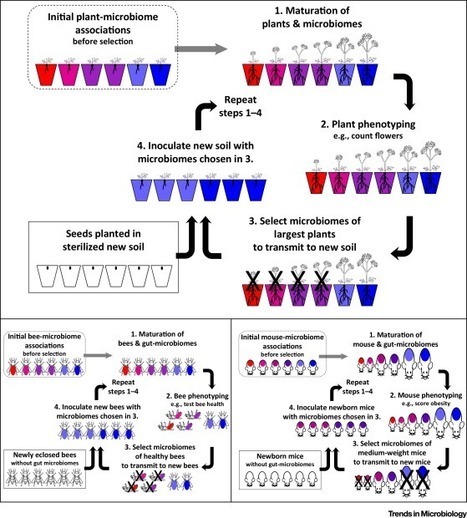
Animal and plant microbiomes encompass diverse microbial communities that colonize every accessible host tissue. These microbiomes enhance host functions, contributing to host health and fitness. A novel approach to improve animal and plant fitness is to artificially select upon microbiomes, thus engineering evolved microbiomes with specific effects on host fitness. We call this engineering approach host-mediated microbiome selection, because this method selects upon microbial communities indirectly through the host and leverages host traits that evolved to influence microbiomes. In essence, host phenotypes are used as probes to gauge and manipulate those microbiome functions that impact host fitness. To facilitate research on host-mediated microbiome engineering, we explain and compare the principal methods to impose artificial selection on microbiomes; discuss advantages and potential challenges of each method; offer a skeptical appraisal of each method in light of these potential challenges; and outline experimental strategies to optimize microbiome engineering. Finally, we develop a predictive framework for microbiome engineering that organizes research around principles of artificial selection, quantitative genetics, and microbial community-ecology.
Plant NADPH oxidases, known as respiratory burst oxidase homologs (RBOH), belong to a multigenic family that plays an important role in the regulation of plant development and responses to biotic and abiotic stresses. In this study, we monitored the expression profiles of five Rboh genes (MtRbohA, MtRbohB, MtRbohE, MtRbohG, MtRbohF) in the roots of the model species Medicago truncatula upon colonization by arbuscular mycorrhizal fungi. A complementary cellular and molecular approach was used to monitor changes in mRNA abundance and localize transcripts in different cell types from mycorrhizal roots. Rboh transcript levels did not drastically change in total RNA extractions from whole mycorrhizal and non-mycorrhizal roots. Nevertheless, the analysis of laser microdissected cells and Agrobacterium rhizogenes-transformed roots expressing a GUS transcriptional fusion construct highlighted the MtRbohE expression in arbuscule-containing cells. Furthermore, the down regulation of MtRbohE by an RNAi approach generated an altered colonization pattern in the root cortex, when compared to control roots, with fewer arbuscules and multiple penetration attempts. Altogether our data indicate a transient up-regulation of MtRbohE expression in cortical cells colonized by arbuscules and suggest a role for MtRbohE in arbuscule accommodation within cortical cells.
To get content containing either thought or leadership enter:
To get content containing both thought and leadership enter:
To get content containing the expression thought leadership enter:
You can enter several keywords and you can refine them whenever you want. Our suggestion engine uses more signals but entering a few keywords here will rapidly give you great content to curate.


 Your new post is loading...


 Scoop.it!