The U.S. Patent and Trademark Office has granted NewLeaf Symbiotics U.S. Patent No. 9,181,541 for its microbial fermentation technology. The patent covers compositions comprising Pink Pigmented Facultative Methylotrophs (PPFMs). PPFMs are beneficial bacteria that naturally colonize plants and stimulate their growth.
NewLeaf, a venture-funded non-GMO ag biological company, is developing and commercializing products that contain PPFMs and other bacteria. PPFMs will need to be fermented in vast numbers to fill demand for new and sustainable agricultural inputs. The patent discloses a breakthrough invention made by NewLeaf at its Bio Research & Development Growth (BRDG) Park labs in St. Louis County, Mo., that allow the company to produce these bacteria many times more efficiently than was possible in the past.
In order to effectively manipulate the rhizobium - legume symbiosis for our benefit, it is crucial to first gain a complete understanding of the underlying genetics and metabolism. Studies with rhizobium auxotrophs have provided insight into the requirement for amino acid biosynthesis during the symbiosis; however, a paucity of available L-proline auxotrophs has limited our understanding of the role of L-proline biosynthesis. Here, we examine the symbiotic phenotypes of a recently described Sinorhizobium meliloti L-proline auxotroph. Proline auxotrophy was observed to result in a host plant specific phenotype. The S. meliloti auxotroph displayed reduced symbiotic capability with alfalfa (Medicago sativa) due to a decrease in nodule mass formed and therefore a reduction in nitrogen fixed per plant. However, the proline auxotroph formed nodules on white sweet clover (Melilotus alba) that failed to fix N2. The rate of M. alba nodulation by the auxotroph was slightly delayed but the final number of nodules per plant was not impacted. Examination of M. alba nodules by confocal microscopy and transmission electron microscopy revealed the presence of the S. meliloti proline auxotroph cells within the host-legume cells, but few differentiated bacteroids were identified compared to the bacteroid-filled plant cells of wildtype nodules. Overall, these results indicated that L-proline biosynthesis is a general requirement for a fully effective nitrogen fixing symbiosis, likely due to a transient requirement during bacteroid differentiation.
diCenzo GC, Zamani M, Cowie A, Finan TM (2015). Microbiology. Sep 21. doi: 10.1099/mic.0.000182. [Epub ahead of print]
Rhizosphere interactions between earthworms (Eisenia fetida) and arbuscular mycorrhizal fungus (AMF, Funneliformis mosseae), suggested to promote phytate mineralization and maize phosphorus (P) content were studied in the Organization for Economic Co-operation and Development (OECD) (non-phosphorus active soil). Maize was planted and amended with AMF and/or earthworms (E) as well as insoluble phytate-P (C6H18O24P6), in comparison to not amended maize (control). The maize shoot and root biomass, shoot and root P uptake, soil alkaline phosphatase activity, soil microbial biomass P, available P, and the Shannon–Wiener index (H) for the bacterial communities from T-RFLP profiles were measured at harvest. The results indicated that both AM and AM + E treatments significantly increased the utilization efficiency of phytate-P in maize. Our results suggest there are significantly positive interactions between earthworms and AMF in terms of promoting the utilization efficiency of phytate-P in maize and enhancing soil microbial biomass P and alkaline phosphatase activity. The positive interaction enhanced soil microbial biomass P and alkaline phosphatase activity by regulating the bacterial diversity in the soil. The bacterial diversity was significantly correlated with alkaline phosphatase activity, shoot and root P content, biomass and the utilization efficiency of phytate-P. Additionally, alkaline phosphatase activity was positively correlated with microbial biomass P. Flavobacteriaceae and Xanthomonadales, which were the dominant bacteria under all conditions. A significant correlation was observed between Flavobacteriaceae and alkaline phosphatase activity as well as shoot P content, and there was also a significant correlation between Betaproteobacteria and the root and shoot P content. Earthworm and AMF interaction could enhance the phytate-P mineralization in the belowground and improve linking between the aboveground and belowground for phytate-P utilization.
The Open Tree of Life project (OpenTree) is enabling a community-assembled tree of life by synthesizing the wealth of phylogenetic data published / being published by the scientific community and providing the means to update and refine the draft tree. Our four major goals:
Build and make publicly available the first complete draft tree of life, capturing the depth of knowledge about biodiversity on Earth
Engage the community in refinement and annotation of the draft tree
Promote a culture of data sharing among systematists through software products that target key bottlenecks in phylogenetic workflows
Develop, disseminate, and evaluate novel methods for phylogenetic synthesis
I teach a freshman writing course at the University of Puget Sound that uses symbioses and parasitism as a focal point. Students learn about various associations between organisms, positive and negative, and develop skills in writing, evaluating scientific and popular literature, and creating presentations. As part of this course, several scientists have offered to "tele-visit" my classroom to discuss student questions.
Dr. Bordenstein of Vanderbilt University is our second "visitor" for this Fall 2015 course. His laboratory website is http://bordensteinlab.vanderbilt.edu/.
Dr. Bordenstein will be chatting with my students about his current championing of the "Hologenome/Holobiome" concept. My students read this summary of a very recent perspective written by Dr. Bordenstein and Dr. Kevin Theis, and that article itself. The title of that article says it all: "Host Biology in Light of the Microbiome: Ten Principles of Holobionts and Hologenomes."
I sometimes call Dr. Bordenstein the High Priest of the Hologenome. We all look forward to his sermon! I hope that everyone enjoys this wonderful treat---examining a new way of looking at the living world, from someone who has thought very deeply about it.
Ectomycorrhizal fungi play a key role in mobilizing nutrients embedded in recalcitrant organic matter complexes, thereby increasing nutrient accessibility to the host plant. Recent studies have shown that during the assimilation of nutrients, the ectomycorrhizal fungus Paxillus involutus decomposes organic matter using an oxidative mechanism involving Fenton chemistry (Fe2+ + H2O2 + H+ → Fe3+ + ˙OH + H2O), similar to that of brown rot wood-decaying fungi. In such fungi, secreted metabolites are one of the components that drive one-electron reductions of Fe3+ and O2, generating Fenton chemistry reagents. Here we investigated whether such a mechanism is also implemented by P. involutus during organic matter decomposition. Activity-guided purification was performed to isolate the Fe3+-reducing principle secreted by P. involutus during growth on a maize compost extract. The Fe3+-reducing activity correlated with the presence of one compound. Mass spectrometry and nuclear magnetic resonance (NMR) identified this compound as the diarylcyclopentenone involutin. A major part of the involutin produced by P. involutus during organic matter decomposition was secreted into the medium, and the metabolite was not detected when the fungus was grown on a mineral nutrient medium. We also demonstrated that in the presence of H2O2, involutin has the capacity to drive an in vitro Fenton reaction via Fe3+ reduction. Our results show that the mechanism for the reduction of Fe3+ and the generation of hydroxyl radicals via Fenton chemistry by ectomycorrhizal fungi during organic matter decomposition is similar to that employed by the evolutionarily related brown rot saprotrophs during wood decay.
WRKY transcription factors have been studied in a wide range of plant species, but have remained largely uncharacterized in legumes. To obtain insight into the functions of WRKY in legumes, we isolated and characterized one WRKY family member from Medicago truncatula, MtWRKY76, which belongs to sub-group II.
Expression analysis showed that MtWRKY76 was rapidly induced by abiotic stresses. MtWRKY76 overexpression markedly enhanced the salt and drought tolerance of transgenic M. truncatula and triggered abiotic inducible genes. MtWRKY76 was located in the nucleus and interacted with Medtr1g098680.1 that was deduced as ASR protein, which acted as a component of a transcription-regulating complex involved in abiotic stress signalling pathways. Interestingly, MtWRKY76 was found to be involved in regulated abiotic pathways via Solexa/Illumina digital gene expression (DGE) analysis.
In conclusion, we demonstrated that MtWRKY76 was a multifunctional abiotic stress response gene in M. truncatula.
Ectomycorrhizal (ECM) fungi are important for efficient nutrient uptake of several widespread arctic plant species. Knowledge of temporal variation of ECM fungi, and the relationship of these patterns to environmental variables, is essential to understand energy and nutrient cycling in Arctic ecosystems. We sampled roots of Bistorta vivipara ten times over two years; three times during the growing-season (June, July and September) and twice during winter (November and April) of both years. We found 668 ECM OTUs belonging to 25 different ECM lineages, whereof 157 OTUs persisted throughout all sampling time-points. Overall, ECM fungal richness peaked in winter and species belonging to Cortinarius, Serendipita and Sebacina were more frequent in winter than during summer. Structure of ECM fungal communities was primarily affected by spatial factors. However, after accounting for spatial effects, significant seasonal variation was evident revealing correspondence with seasonal changes in environmental conditions. We demonstrate that arctic ECM richness and community structure differ between summer (growing-season) and winter, possibly due to reduced activity of the core community, and addition of fungi adapted for winter conditions forming a winter-active fungal community. Significant month × year interactions were observed both for fungal richness and community composition, indicating unpredictable between-year variation. Our study indicates that addressing seasonal changes requires replication over several years.
Diversity and structure of the symbiotic soil microbial community significantly influences essential soil ecosystem services including nutrient cycling, C-mineralization and stabilization/formation of soil structure. The overall structure and function of the symbiotic microbial community can also impact trees' ability to acquire nutrients, potentially influencing its overall fitness. Interestingly, factors affecting below-ground signalling pathways between tree hosts and their symbiotic microbes (e.g. soil moisture and chemistry) can be altered by the tree's canopy structure partitioning precipitation. In fact, canopy precipitation partitioning produces persistent patterns in the receipt of meteoric water (and the solutes it carries) to soils via two pathways: throughfall (drips from canopy surfaces) and stemflow (the funnelling of droplets to an infiltration area around the trunk). If these above-ground, tree-directed mechanisms (throughfall and stemflow) altered edaphic conditions in the active zone surrounding the roots, it may be possible for canopy-derived hydrologic fluxes to influence host–symbiont signalling communication. In this chapter, we discuss and evaluate past research that indicates canopy precipitation partitioning may alter how microbial symbionts (specifically N-fixing bacteria and mycorrhizal fungi) interact with tree roots by changing soil characteristics (pH, micro–macronutrient status and concentration of allelopathic compounds). The potential for throughfall and stemflow to influence tree-symbiotic microbe communication has not been previously explored, but past literature indicate it could significantly alter the profile, and perhaps even the function, of root microbial symbiont communities. Our literature synthesis and evaluation concludes with suggested directions for future efforts to evaluate the existence (and extent of biogeochemical implications) of this process.
his study examines plant and soil microbial diversity in a cereal–fallow rotation scheme in the cereal steppes of Castro Verde, Southern Portugal, which have an important conservation value as they provide habitat for many steppic birds with unfavorable conservation status. For that we monitored plant and soil microbial diversity during 4 years including all stages of the rotation cycle.
The structure and composition of plant and soil communities during wheat crop were different from those found in the fallow years, although the effect of wheat crop on soil bacteria was still noticeable in the 1st year of fallow. The main changes in the structure of microbial communities happened between the first and second year of fallow, probably due to changes in the quality and quantity of litter inputs. As expected, we observed an overall decrease in plant diversity in the wheat stage. Fallows had a positive effect on plant species diversity by allowing the maintenance of a seed bank and controlling the simplification of weed communities. However, the impact of fallow on microbial communities is more complex: bacterial diversity was higher during the wheat stage while fungal diversity was either higher or unchanged.
These results suggest that the rotation stage is the main driver of the diversity and composition of soil microbial communities, probably through changes in the plant community that deserve further examination. Inter-annual fluctuations in rainfall had a stronger impact on plant communities than on microbial communities indicating that the later are likely adapted to the characteristic fluctuation of annual rainfall in areas under Mediterranean climate.
Plants often are exposed to antagonistic and symbiotic organisms both aboveground and belowground. Interactions between above- and belowground organisms may occur either simultaneously or sequentially, and jointly can determine plant responses to future enemies. However, little is known about time-dependency of such aboveground-belowground interactions. We examined how the timing of a 24 h period of aboveground herbivory by Spodoptera exigua (1–8 d prior to later arriving conspecifics) influenced the response of Plantago lanceolata and the performance of later arriving conspecifics. We also examined whether these induced responses were modulated by the arbuscular mycorrhizal fungus (AMF) Funneliformis mosseae. The amount of leaf area consumed by later arriving herbivores decreased with time after induction by early herbivores. Mycorrhizal infection reduced the relative growth rate (RGR) of later arriving herbivores, associated with a reduction in efficiency of conversion of ingested food rather than a reduction in relative consumption rates. In non-mycorrhizal plants, leaf concentrations of the defense compound catalpol showed a linear two-fold increase during the eight days following early herbivory. By contrast, mycorrhizal plants already had elevated levels of leaf catalpol prior to their exposure to early herbivory and did not show any further increase following herbivory. These results indicate that AMF resulted in a systemic induction, rather than priming of these defenses. AMF infection significantly reduced shoot biomass of Plantago lanceolata. We conclude that plant responses to future herbivores are not only influenced by exposure to prior aboveground and belowground organisms, but also by when these prior organisms arrive and interact.
Background and aims The positive interactive impacts of arbuscular mycorrhizal fungi (Funneliformis mosseae) and earthworms (Eisenia fetida) on increasing calcium phosphate availability, AM hyphal contribution to maize (Zea mays L.) P uptake and utilization efficiency of calcium phosphate-P by maize were studied in the Organization for Economic Co-operation and Development (OECD) artificial soil (non-phosphorus active soil). Methods Treatments included maize plants inoculated vs. not inoculated with AM fungi and treated with or without earthworms. Root colonization, maize shoot and root biomass, shoot and root N, P, K contents, soil available P, soil microbial biomass P, available P, and the Shannon-Wiener index (H) for the bacterial communities from T-RFLP profiles were measured at harvest. Results The results indicated that mycorrhizal colonization increased markedly in maize inoculated with AM fungi, which was further enhanced by the addition of earthworms. Earthworms decreased the soil pH and increased available soil P and soil microbial biomass P, as well as the abundance of Flavobacteriaceae and Betaproteobacteria. The addition of AM fungi to soils promoted soil bacterial diversity and soil microbial biomass P. The earthworm and AM fungi interaction increased maize shoot and root N, P, and K contents and shoot and root biomass, as well as enhanced the microbial biomass P and utilization efficiency of calcium phosphate-P (Ca-P), leading to greater nutrient uptake and AM hyphal contribution to plant P uptake. Conclusions Earthworms and AM fungi could interactively promote maize to absorb the free phosphate ions released from calcium phosphate.
Its important to consider more than just the interaction of a symbiont and its host. Other biological factors often play a role. This paper points out how earth worms have an additive effect on arbuscular mycorrhizal symbiosis.
Rhizobium etli aerobically respires with several terminal oxidases. The quinol oxidase (Cyo) encoded by cyoABCD is needed for efficient adaptation to low oxygen conditions and cyo transcription is upregulated at low oxygen. This study sought to determine how transcription of the cyo operon is regulated. The 5′ sequence upstream of cyo was analysed in silico and revealed putative binding sites for ActR of the ActSR two-component regulatory system. The expression of cyo was decreased in an actSR mutant regardless of the oxygen condition. As ActSR is known to be important for growth under low pH in another rhizobial species, the effect of growth medium pH on cyo expression was tested. As the pH of the media was incrementally decreased, cyo expression gradually increased in the WT, eventually reaching ∼10-fold higher levels at low pH (4.8) compared with neutral pH (7.0) conditions. This upregulation of cyo under decreasing pH conditions was eliminated in the actSR mutant. Both the actSR and cyo mutants had severe growth defects at low pH (4.8). Lastly, the actSR and cyo mutants had severe growth defects when grown in media treated with an iron chelator. Under these conditions, cyo was upregulated in the WT, whereas cyo was not induced in the actSR mutant. Altogether, the results indicated cyo expression is largely dependent on the ActSR two-component system. This study also demonstrated additional physiological roles for Cyo in R. etli CFN42, in which it is the preferred oxidase for growth under acidic and low iron conditions.
In peanut continuous cropping soil, the application of fungal endophyte Phomopsis liquidambari B3 showed peanut pod yield promotion and root nodule number increase. P. liquidambari improved soil environment by degrading allelochemicals and thus promoted peanut pod yield. Furthermore, peanut yield promotion is in part due to the root nodule increase since nodular nitrogen fixation provides the largest source of nitrogen for peanut. However, it is unknown whether this nodule number increase is induced by fungal endophyte. We therefore conducted several pot experiments using vermiculite to investigate the effects of P. liquidambari on peanut-bradyrhizobium nodulation. Our results showed that P. liquidambari co-inoculated with bradyrhizobium increased root nodule number and shoot accumulated nitrogen by 28.25% and 29.71%, respectively. Nodulation dynamics analysis showed that P. liquidambari accelerated nodule initiation and subsequent nodule development. Meanwhile, P. liquidambari was able to colonize the peanut root as an endophyte. The dynamics of P. liquidambari and bradyrhizobial root colonization analysis showed that P. liquidambari inoculation significantly increased the rate of bradyrhizobial colonization. Furthermore, P. liquidambari inoculation significantly increased flavonoids synthesis-related enzymes activities, two common types of flavonoid (luteolin and quercetin-peanut rhizobial nod gene inducer) secretion and lateral root (peanut rhizobial infection site) formation, indicating that P. liquidambari altered the peanut nodulation-related physiological and metabolic activities. These obtained results confirmed the direct contribution of P. liquidambari in enhancing peanut-bradyrhizobium interaction, nodulation and yield.
Rhizobium etli aerobically respires with several terminal oxidases. The quinol oxidase (Cyo) encoded by cyoABCD is needed for efficient adaptation to low oxygen conditions and cyo transcription is upregulated at low oxygen. This study sought to determine how transcription of the cyo operon is regulated. The 5' sequence upstream of cyo was analysed in silico and revealed putative binding sites for ActR of the ActSR two-component regulatory system. The expression of cyo was decreased in an actSR mutant regardless of the oxygen condition. As ActSR is known to be important for growth under low pH in another rhizobial species, the effect of growth medium pH on cyo expression was tested. As the pH of the media was incrementally decreased, cyo expression gradually increased in the WT, eventually reaching ∼10-fold higher levels at low pH (4.8) compared with neutral pH (7.0) conditions. This upregulation of cyo under decreasing pH conditions was eliminated in the actSR mutant. Both the actSR and cyo mutants had severe growth defects at low pH (4.8). Lastly, the actSR and cyo mutants had severe growth defects when grown in media treated with an iron chelator. Under these conditions, cyo was upregulated in the WT, whereas cyo was not induced in the actSR mutant. Altogether, the results indicated cyo expression is largely dependent on the ActSR two-component system. This study also demonstrated additional physiological roles for Cyo in R. etli CFN42, in which it is the preferred oxidase for growth under acidic and low iron conditions.
An effort was made after detailed literature survey and few experiments, conducted at Laboratory conditions about the VAM fungus inoculated plants; they have large surface area and more photosynthetic rate, can assimilate more CO2, even can grow in drought condition including water deficiency and high temperature. For this purpose, a greenhouse pot experiment was conducted in which soil manifested with fungi was used and Conocarpus erectus L (common on green belt of Karachi Streets) was selected for testing the fungal engineering. Results demonstrated a well-developed strong roots system and branching pattern of shoots rather than larger surface area of leaves of the fungal engineered plant when compared with non-treated ones. The long root system indicates the stability of plant and water transport system in high temperature and low water conditions. While increased branching pattern of areal part may be directly related to an increase in net photosynthetic rates or increase CO2 absorption in the fungal inoculated plants. This investigation showed an interesting use of VAM services for technology development of root organ culture development in areas of low water availability and high temperature condition with elevated concentration of CO2. A mechanism of absorption of CO2 related with the alteration in plant bio-physical metabolism is discussed in relation with phosphorus uptake under VAM inoculation.
A new book by University of Washington geologist David Montgomery weaves history, science and personal challenges into an exploration of humanity’s tangled relationship with microbes, perhaps the least loved and most misunderstood creatures on Earth — and in you.
“The Hidden Half of Nature: The Microbial Roots of Life and Health” comes out Nov. 16 from W.W. Norton & Co. Montgomery, a UW professor of Earth and space sciences, co-wrote the book with his wife, Anne Biklé, a biologist and environmental planner. From restoring the soil in their urban yard to building a garden, to grappling with a cancer diagnosis for Biklé, the authors share their discoveries about the unfolding revolution of microbiome science and how it transformed their view of nature — and themselves.
The aim of this study is to evaluate the efficacy of the strain Bacillus subtilis V26, a local isolate from the Tunisian soil, to control potato black scurf caused by Rhizoctonia solani. The in vitro antifungal activity of V26 significantly inhibited R. solani growth compared to the untreated control. Microscopic observations revealed that V26 caused considerable morphological deformations of the fungal hyphae such as vacuolation, protoplast leakage and mycelia crack. The most effective control was achieved when strain V26 was applied 24 h prior to inoculation (protective activity) in potato slices. The antagonistic bacterium V26 induced significant suppression of root canker and black scurf tuber colonization compared to untreated controls with a decrease in incidence disease of 63% and 81%, respectively, and promoted plant growth under greenhouse conditions on potato plants. Therefore, B. subtilis V26 has a great potential to be commercialized as a biocontrol agent against R. solani on potato crops.
By the 454 pyrosequencing technology, this research compared the bacterial communities in poplar plantation rhizosphere and bulk soil for an accurate understanding of bacterial community colonization in the two soil environments. The species annotation showed that rhizosphere soil contained 145 bacterial genera and bulk soil contained 141 bacterial genera, with 8 common genera shared by both at a relative abundance of more than 4%. The 8 genera in common were Acidobacterium GP1, Acidobacterium GP3, Acidobacterium GP6, Gemmatimonas, Bradyrhizobium, Burkholderia, Streptomyces and Acidobacterium GP4. The relative abundance of the same bacterial community was significantly different between rhizosphere and bulk soil environments. Alpha diversity analysis showed that the bacterial community diversity of rhizosphere soil was higher than that of bulk soil, but the difference was not significant. The results of bacterial communities sorting could reflect the variation of soil bacterial communities from rhizosphere to the bulk and the spatial variation among different sampling points, indicating a contribution of about 21.2% variance of bacterial communities by the effect of rhizosphere. Beta diversity analysis showed great difference between rhizosphere and bulk soil samples in bacterial community composition. There were 15 genera specific to rhizosphere soil and 11 to bulk soil. The abundance of 23 genera, mainly cellulose degrading bacteria and nitrogen-fixing bacteria, changed significantly. Selectivity of root to rhizosphere microorganisms is an important mechanism leading to significant differences in the rhizosphere microbial community composition and structure, which may significantly impact the carbon and nitrogen cycles of the root-soil interface.
Carbon (C) and nitrogen (N) mineralization is one of the key processes of biogeochemical cycling in terrestrial ecosystem in general and rice ecology in particular. Rice rhizosphere is a rich niche of microbial diversity influenced by change in atmospheric temperature and concentration of carbon dioxide (CO2). Structural changes in microbial communities in rhizosphere influence the nutrient cycling. In the present study, the bacterial diversity and population dynamics were studied under ambient CO2 (a-CO2) and elevated CO2 + temperature (e-CO2T) in lowland rice rhizosphere using whole genome metagenomic approach. The whole genome metagenomic sequence data of lowland rice exhibited the dominance of bacterial communities including Proteobacteria, Firmicutes, Acidobacteria, Actinobacteria and Planctomycetes. Interestingly, four genera related to methane production namely, Methanobacterium, Methanosphaera, Methanothermus and Methanothermococcus were absent in a-CO2 but noticed under e-CO2T. The acetoclastic pathway was found as the predominant pathway for methanogenesis, whereas, the serine pathway was found as the principal metabolic pathway for CH4 oxidation in lowland rice. The abundances of reads of enzymes in the acetoclastic methanogenesis pathway and serine pathways of methanotrophy were much higher in e-CO2T (328 and 182, respectively) as compared with a-CO2 (118 and 98, respectively). Rice rhizosphere showed higher structural diversities and functional activities in relation to N metabolism involving nitrogen fixation, assimilatory and dissimilatory nitrate reduction and denitrification under e-CO2T than that of a-CO2. Among the three pathways of N metabolism, dissimilarity pathways were predominant in lowland rice rhizosphere and more so under e-CO2T. Consequently, under e-CO2T, CH4 emission, microbial biomass nitrogen (MBN) and dehydrogenase activities were 45%, 20% and 35% higher than a-CO2, respectively. Holistically, a high bacterial diversity and abundances of C and N decomposing bacteria in lowland rice rhizosphere were found under e-CO2T, which could be explored further for their specific role in nutrient cycling, sustainable agriculture and environment management.
Nutrient exchange mutualisms between phototrophs and heterotrophs, such as plants and mycorrhizal fungi or symbiotic algae and corals, underpin the functioning of many ecosystems. These relationships structure communities, promote biodiversity and help maintain food security. Nutrient loading may destabilise these mutualisms by altering the costs and benefits each partner incurs from interacting. Using meta-analyses, we show a near ubiquitous decoupling in mutualism performance across terrestrial and marine environments in which phototrophs benefit from enrichment at the expense of their heterotrophic partners. Importantly, heterotroph identity, their dependence on phototroph-derived C and the type of nutrient enrichment (e.g. nitrogen vs. phosphorus) mediated the responses of different mutualisms to enrichment. Nutrient-driven changes in mutualism performance may alter community organisation and ecosystem processes and increase costs of food production. Consequently, the decoupling of nutrient exchange mutualisms via alterations of the world's nitrogen and phosphorus cycles may represent an emerging threat of global change.
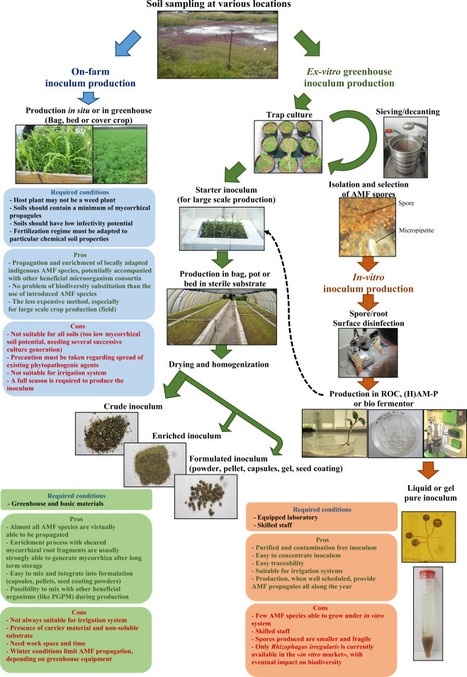
In the coming years, more sustainable horticultural practices should be developed to guarantee greater yield and yield stability, in order to meet the increasing food global demand. An environmentally-friendly way to achieve the former objectives is represented by the biostimulant functions displayed by arbuscular mycorrhizal fungi (AMF). AMF support plant nutrition by absorbing and translocating mineral nutrients beyond the depletion zones of plant rhizosphere (biofertilisers) and induce changes in secondary metabolism leading to improved nutraceutical compounds. In addition, AMF interfere with the phytohormone balance of host plants, thereby influencing plant development (bioregulators) and inducing tolerance to soil and environmental stresses (bioprotector). Maximum benefits from AMF activity will be achieved by adopting beneficial farming practices (e.g. reduction of chemical fertilisers and biocides), by inoculating efficient AMF strains and also by the appropriate selection of plant host/fungus combinations. This review gives an up to date overview of the recent advances in the production of quality AMF inocula and in the biostimulant properties of AMF on plant health, nutrition and quality of horticultural crops (fruit trees, vegetables, flower crops and ornamentals). The agronomical, physiological and biochemical processes conferring tolerance to drought, salinity, nutrient deficiency, heavy metal contaminations and adverse soil pH in mycorrhizal plants are encompassed. In addition, the influence of bacterial interactions and farm management on AMF is discussed. Finally, the review identifies several future research areas relevant to AMF to exploit and improve the biostimulant effects of AMF in horticulture.
In order to effectively manipulate the rhizobium - legume symbiosis for our benefit, it is crucial to first gain a complete understanding of the underlying genetics and metabolism. Studies with rhizobium auxotrophs have provided insight into the requirement for amino acid biosynthesis during the symbiosis; however, a paucity of available L-proline auxotrophs has limited our understanding of the role of L-proline biosynthesis. Here, we examine the symbiotic phenotypes of a recently described Sinorhizobium meliloti L-proline auxotroph. Proline auxotrophy was observed to result in a host plant specific phenotype. The S. meliloti auxotroph displayed reduced symbiotic capability with alfalfa (Medicago sativa) due to a decrease in nodule mass formed and therefore a reduction in nitrogen fixed per plant. However, the proline auxotroph formed nodules on white sweet clover (Melilotus alba) that failed to fix N2. The rate of M. alba nodulation by the auxotroph was slightly delayed but the final number of nodules per plant was not impacted. Examination of M. alba nodules by confocal microscopy and transmission electron microscopy revealed the presence of the S. meliloti proline auxotroph cells within the host-legume cells, but few differentiated bacteroids were identified compared to the bacteroid-filled plant cells of wildtype nodules. Overall, these results indicated that L-proline biosynthesis is a general requirement for a fully effective nitrogen fixing symbiosis, likely due to a transient requirement during bacteroid differentiation.
Experiments were conducted to evaluate cadmium (Cd) stress-induced changes in growth, antioxidants and lipid composition of Solanum lycopersicum with and without arbuscular mycorrhizal fungi (AMF). Cadmium stress (50 μM) caused significant changes in the growth and physio-biochemical attributes studied. AMF mitigated the deleterious impact of Cd on the parameters studied. Cadmium stress increased malonaldehyde and hydrogen peroxide production but AMF reduced these parameters by mitigating oxidative stress. The activity of antioxidant enzymes enhanced under Cd treatment and AMF inoculation further enhanced their activity, thus strengthening the plant’s defense system. Proline and phenol content increased in Cd-treated as well as AMF-inoculated plants providing efficient protection against Cd stress. Cadmium treatment resulted in great alterations in the main lipid classes leading to a marked change in their composition. Cadmium stress caused a significant reduction in polyunsaturated fatty acids resulting in enhanced membrane leakage. The present study supports the use of AMF as a biological means to ameliorate Cd stress-induced changes in tomato.
To get content containing either thought or leadership enter:
To get content containing both thought and leadership enter:
To get content containing the expression thought leadership enter:
You can enter several keywords and you can refine them whenever you want. Our suggestion engine uses more signals but entering a few keywords here will rapidly give you great content to curate.


 Your new post is loading...