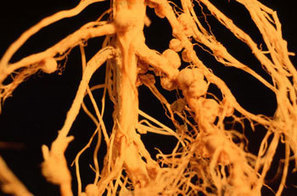
Bret Gygi, Technology Development Lead for Monsanto BioAg, talks Nitrogen Fixation in the second of a series of videos about the power of microbials in our soils. Monsanto BioAg offers products that are designed to play a role in Nitrogen fixation with products like Cell-Tech® and Optimize®. Soybeans can easily achieve 70% of its N through the nodulation process. @MonsantoBioAg
Soil microbes perform a range of jobs. Some break down dead plant and animal cells. Without those microbes, the dead stuff would pile up pretty fast. What’s more, living plants and animals wouldn’t last long. That’s because dead organisms contain nutrients. When microbes recycle these organisms, they release those nutrients back into the soil. That nourishes plants and other soil-dwelling organisms. And those organisms, in turn, feed other critters.
Some microbes provide nutrients to plants more directly. Of particular importance are microbes that live in the rhizosphere (RY-zo-sfeer). It’s a special soil habitat that forms in the 5 millimeters (0.2 inch) of soil surrounding a plant’s roots, notes Emma Tilston. She is a soil scientist at East Malling Research in Kent, England. Special communities of microbes develop in the rhizosphere. They help plants grow by providing them essential nutrients, such as nitrogen and phosphorus.
Beneficial microbes, including the all-powerful mycorrhizal fungi, are essential to the soil food web, and the most successful indoor growers make them a mainstay in their gardens. They are great at protecting plants in stressful conditions, and helping them thrive in ideal ones, but that’s only if the right ones are put to work. Use this guide to get to know your microbes before you buy.
Bacteria produce and excrete a versatile and dynamic suit of compounds to defend against microbial competitors and mediate local population dynamics. These include a wide range of broad-spectrum non-ribosomally synthesized antibiotics, lytic enzymes, metabolic by-products, proteinaceous exotoxins, and ribosomally produced antimicrobial peptides (bacteriocins). Most bacteria produce at least one bacteriocin. Bacteriocins are of interest in the food industry as natural preservatives and in the probiotics industry, leading to extensive studies on lactic acid bacteria (colicin produced by Escherichia coli is a model bacteriocin). Recent studies have projected use of bacteriocins in veterinary medicine and in agriculture, as biostimulants of plant growth and development and as biocontrol agents. For example, bacteriocins such as Cerein 8A, Bac-GM17, putidacin, Bac 14B, amylocyclicin have been studied for their mechanisms of anti-microbial activity. Bac IH7 promotes tomato and musk melon plant growth. Thuricin 17 (Th17) is the only bacteriocin studied extensively for plant growth promotion, including at the molecular level. Th17 functions as a bacterial signal compound, promoting plant growth in legumes and non-legumes. In Arabidopsis thaliana and Glycine max Th17 increased phytohormones IAA and SA at 24 h post treatment. At the proteome level Th17 treatment of 3-week-old A. thaliana rosettes led to >2-fold changes in activation of the carbon and energy metabolism pathway proteins, 24 h post treatment. At 250 mM NaCl stress, the control plants under osmotic-shock shut down most of carbon-metabolism and activated energy-metabolism and antioxidant pathways. Th17 treated plants, at 250 mM NaCl, retained meaningful levels of the light harvesting complex, photosystems I and II proteins and energy and antioxidant pathways were activated, so that rosettes could better withstand the salt stress. In Glycine max, Th17 helped seeds germinate in the presence of NaCl stress, and was most effective at 100 mM NaCl. The 48 h post germination proteome suggested efficient and speedier partitioning of storage proteins, activation of carbon, nitrogen and energy metabolisms in Th17 treated seeds both under optimal and 100 mM NaCl. This review focuses on the bacteriocins produced by plant-rhizosphere colonizers and plant-pathogenic bacteria, that might have uses in agriculture, veterinary, and human medicine.
Plant growth promoting rhizobacteria (PGPR) were reported to increase the productivity of switchgrass (Panicum virgatum L.), a model biofuel crop selected by the US Department of Energy (DOE). Physiological changes associated with the increased switchgrass productivity upon PGPR inoculation are unknown. Here we measured the photosynthetic rates, stomatal conductance, transpiration rates and water use efficiency weekly on both the upper canopy leaves and lower canopy leaves of switchgrass for 14 weeks and 8 weeks, respectively, on both Burkholderia phytofirmans strain PsJN inoculated switchgrass and control switchgrass. We also tracked changes in growth using a non-destructive photographic method. PsJN inoculation significantly enhanced early total leaf area of switchgrass by 107% (p < 0.0001). However, this beneficial effect linearly decreased with plant age. PsJN inoculation increased photosynthetic rates of upper canopy leaves by 14% (p = 0.0047). Nevertheless photosynthetic rates of lower canopy leaves were decreased by 8% (p = 0.0393). Accelerated leaf senescence and early flowering were also observed in PsJN inoculated switchgrass, which might contribute to slightly lower aboveground biomass at final harvesting as well as increased allocation to reproductive organs. In sum, this study verified advanced development of switchgrass due to PsJN inoculation and suggests that increased photosynthesis of newly developing foliage is related to enhanced productivity.
Soil is replete with microscopic life such as bacteria, fungi, actinomycetes, protozoa and algae. Microscopic life tends to reside in the rhizosphere of the soil and interact with plants. A microbial–plant interaction occurs due to the microbial ability to produce phytohormones regarded as the “classical five,” which are auxin, gibberellin, cytokinins, ethylene and abscisic acid. In addition to these modulators, jasmonic and salicylic acid are also documented as bacterial hormones contributing to a sustainable agro system. Auxins, gibberellins and cytokinins are known to be produced by Azospirillum species. Auxin production in fungus such as Pistolithus tinctorius leads to promotion of plant growth and different bacterial species show effect on root length by increasing the surface area and induction of gall and tumor formations. Gibberellins are tetracyclic diterpenoid acids that are involved in a number of developmental, reproduction and floral formation in plants, while plant growth promotion and induction of tumor and gall formation are done by cytokinins. Pseudomonas solanacearum, Mycobacterium hiemalis and largely spore forming bacteria have shown to form ethylene in culture. Abscisic acid (ABA) is a stress-related signaling molecule reported in all kingdoms of life such as plant-associated bacteria, plant pathogenic fungi, certain cyanobacteria, algae, lichens, protozoa and sponges. Salicylic acid is synthesized by the fungus P. patulum and it is an effective therapeutic agent for plants. SA plays a role in plant response during biotic and abiotic stress. It also regulates physiological and biochemical processes during the plant lifespan. Jasmonic acid is a signaling molecule involved in plant defense reported to be produced by fungus Lasiodiplodia theobromae. However, despite the significant research pursued in this area, there are limited reports suggesting strategies that focus on the production, extraction and detection of microbial phytohormones. Here, the present review focuses on the techniques used for isolation and purification of these phytohormones.
Context Forecasting the expansion of forest into Alaska tundra is critical to predicting regional ecosystem services, including climate feedbacks such as carbon storage. Controls over seedling establishment govern forest development and migration potential. Ectomycorrhizal fungi (EMF), obligate symbionts of all Alaskan tree species, are particularly important to seedling establishment, yet their significance to landscape vegetation change is largely unknown. Objective We used ALFRESCO, a landscape model of wildfire and vegetation dynamics, to explore whether EMF inoculum potential influences patterns of tundra afforestation and associated flammability. Methods Using two downscaled CMIP3 general circulation models (ECHAM5 and CCCMA) and a mid-range emissions scenario (A1B) at a 1 km2 resolution, we compared simulated tundra afforestation rates and flammability from four parameterizations of EMF effects on seedling establishment and growth from 2000 to 2100. Results Modeling predicted an 8.8–18.2 % increase in forest cover from 2000 to 2100. Simulations that explicitly represented landscape variability in EMF inoculum potential showed a reduced percent change afforestation of up to a 2.8 % due to low inoculum potential limiting seedling growth. This reduction limited fuel availability and thus, cumulative area burned. Regardless of inclusion of EMF effects in simulations, landscape flammability was lower for simulations driven by the wetter and cooler CCCMA model than the warmer and drier ECHAM5 model, while tundra afforestation was greater. Conclusions Results suggest abiotic factors are the primary driver of tree migration. Simulations including EMF effects, a biotic factor, yielded more conservative estimates of land cover change across Alaska that better-matched empirical estimates from the previous century.
Several processes mediated by soil microorganisms play an important role in nutrient cycling. One such process is biological nitrogen fixation (BNF) by representatives of various bacterial phylogenetic groups, which are called diazotrophs. Most studies of the Azospirillum-plant association have been conducted on cereals and grasses. Currently, 17 species of Azospirillum have been described. However, a great diversity of these bacteria continues to be revealed, and little is known of the potential applications of the many species that have been described. The Azospirillum-plant association begins with the adsorption and adherence process of these bacteria in roots. Involved in these processes is the recognition of bacterial polysaccharides by the host plant, a step that is necessary in successfully forming a positive relationship between roots and Azospirillum. The presence of Azospirillum in the rhizosphere can minimize the susceptibility to diseases caused by plant pathogens. Furthermore, the ability to produce phytohormones, mainly auxins (indole-3-acetic acid) and other molecules from secondary metabolism has been suggested to underlie the growth response to inoculation by Azospirillum species. These positive aspects of Azospirillum colonization in the roots are also responsible for the alleviation of plant stress. For all of the above-mentioned reasons, Azospirillum are also widely used as commercial inoculants, resulting in a significant economic impact in crop yields in many countries. In fact, solid and liquid formulations containing Azospirillum are marketed in various countries, such as Brazil, Argentina, Mexico, Italy, France, Belgium, Africa, Germany, Pakistan, Uruguay, India and the USA. In addition, new formulations containing Azospirillum, such as polymeric inoculants (alginate, agar, chitosan and gum), are already used for the improvement of many crops. This chapter summarizes the positive effects of Azospirillum-plant interactions and their biological importance for the improvement of agriculture worldwide.
Salinity is among the most challenging and devastating environmental problems which cause drastic decline in normal growth and developmental processes in crop plants. Plants have evolved several tolerance strategies to avert the damaging effects of high salinity. During the past few years most of the research is focused on increasing the salt tolerance of major food crops through the application of phytohormone producing beneficial microorganisms. During stress microbial phytohormones are having critical roles in modulating the physiology and biochemistry of plants so as to elicit a tolerance response to avoid stress. Induced plant growth and development of various plants by inoculation with PGPR having phytohormone, such as indole-3-acetic acid (IAA), cytokinins (CK), gibberelic acid (GA), salicylic acid (SA) and abscisic acid (ABA) producing ability, has been repeatedly documented. Present review discusses the role of phytohormones in ameliorating the salt stress-induced changes in plants and provides valuable insight into microbes evolved interactions with plant under hostile environmental conditions.
The ectendomycorrhizal fungus Terfezia boudieri is known to secrete auxin. While some of the effects of fungal auxin on the plant root system have been described, a comprehensive understanding is still lacking. A dual culture system to study pre mycorrhizal signal exchange revealed previously unrecognized root–fungus interaction mediated by the fungal auxin. The secreted fungal auxin induced negative taproot gravitropism, attenuated taproot growth rate, and inhibited initial host development. Auxin also induced expression of Arabidopsis carriers AUX1 and PIN1, both of which are involved in the gravitropic response. Exogenous application of auxin led to a root phenotype, which fully mimicked that induced by ectomycorrhizal fungi. Co-cultivation of Arabidopsis auxin receptor mutants tir1-1, tir1-1 afb2-3, tir1-1 afb1-3 afb2-3, and tir1-1 afb2-3 afb3-4 with Terfezia confirmed that auxin induces the observed root phenotype. The finding that auxin both induces taproot deviation from the gravity axis and coordinates growth rate is new. We propose a model in which the fungal auxin induces horizontal root development, as well as the coordination of growth rates between partners, along with the known auxin effect on lateral root induction that increases the availability of accessible sites for colonization at the soil plane of fungal spore abundance. Thus, the newly observed responses described here of the root to Terfezia contribute to a successful encounter between symbionts.
Legumes are the major sources of food and fodder with strong commercial relevance, and are essential components of agricultural ecosystems owing to their ability to carry out endosymbiotic nitrogen fixation. In recent years, legumes have become one of the major choices of plant research. The legume proteomics is currently represented by more than 100 reference maps and an equal number of stress-responsive proteomes. Among the 48 legumes in the protein databases, most proteomic studies have been accomplished in two model legumes, soybean and barrel medic. This review highlights recent contributions in the field of legume proteomics to comprehend the defence and regulatory mechanisms during development and adaptation to climatic changes. Here, we attempted to provide a concise overview of the progress in legume proteomics and discuss future developments in three broad perspectives: (i) proteome of organs/ tissues; (ii) subcellular compartments; and (iii) spatiotemporal changes in response to stress. Such data mining may aid in discovering potential biomarkers for plant growth, in general, apart from essential components involved in stress tolerance. The prospect of integrating proteome data with genome information from legumes will provide exciting opportunities for plant biologists towards achievement of long-term goals of crop improvement and sustainable agriculture.
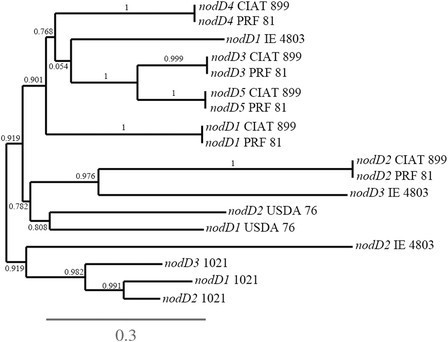
Background Transcription of nodulation genes in rhizobial species is orchestrated by the regulatory nodD gene. Rhizobium tropici strain CIAT 899 is an intriguing species in possessing features such as broad host range, high tolerance of abiotic stresses and, especially, by carrying the highest known number of nodD genes—five—and the greatest diversity of Nod factors (lipochitooligosaccharides, LCOs). Here we shed light on the roles of the multiple nodD genes of CIAT 899 by reporting, for the first time, results obtained with nodD3, nodD4 and nodD5 mutants.
Methods The three nodD mutants were built by insertion of Ω interposon. Nod factors were purified and identified by LC-MS/MS analyses. In addition, nodD1 and nodC relative gene expressions were measured by quantitative RT-PCR in the wt and derivative mutant strains. Phenotypic traits such as exopolysaccharide (EPS), lipopolysaccharide (LPS), swimming and swarming motilities, biofilm formation and indole acetid acid (IAA) production were also perfomed. All these experiments were carried out in presence of both inducers of CIAT 899, apigenin and salt. Finally, nodulation assays were evaluated in up to six different legumes, including common bean (Phaseolus vulgaris L.).
Results Phenotypic and symbiotic properties, Nod factors and gene expression of nodD3, nodD4 and nodD5 mutants were compared with those of the wild-type (WT) CIAT 899, both in the presence and in the absence of the nod-gene-inducing molecule apigenin and of saline stress. No differences between the mutants and the WT were observed in exopolysaccharide (EPS) and lipopolysaccharide (LPS) profiles, motility, indole acetic acid (IAA) synthesis or biofilm production, either in the presence, or in the absence of inducers. Nodulation studies demonstrated the most complex regulatory system described so far, requiring from one (Leucaena leucocephala, Lotus burtii) to four (Lotus japonicus) nodD genes. Up to 38 different structures of Nod factors were detected, being higher under salt stress, except for the nodD5 mutant; in addition, a high number of structures was synthesized by the nodD4 mutant in the absence of any inducer. Probable activator (nodD3 and nodD5) or repressor roles (nodD4), possibly via nodD1 and/or nodD2, were attributed to the three nodD genes. Expression of nodC, nodD1 and each nodD studied by RT-qPCR confirmed that nodD3 is an activator of nodD1, both in the presence of apigenin and salt stress. In contrast, nodD4 might be an inducer with apigenin and a repressor under saline stress, whereas nodD5 was an inducer under both conditions.
Conclusions We report for R. tropici CIAT 899 the most complex model of regulation of nodulation genes described so far. Five nodD genes performed different roles depending on the host plant and the inducing environment. Nodulation required from one to four nodD genes, depending on the host legume. nodD3 and nodD5 were identified as activators of the nodD1 gene, whereas, for the first time, it was shown that a regulatory nodD gene—nodD4—might act as repressor or inducer, depending on the inducing environment, giving support to the hypothesis that nodD roles go beyond nodulation, in terms of responses to abiotic stresses.
Fungi are major players in the carbon cycle in forest ecosystems due to the wide range of interactions they have with plants either through soil degradation processes by litter decayers or biotrophic interactions with pathogenic and ectomycorrhizal symbionts. Secretion of fungal proteins mediates these interactions by allowing the fungus to interact with its environment and/or host. Ectomycorrhizal (ECM) symbiosis independently appeared several times throughout evolution and involves approximately 80% of trees. Despite extensive physiological studies on ECM symbionts, little is known about the composition and specificities of their secretomes. In this study, we used a bioinformatics pipeline to predict and analyze the secretomes of 49 fungal species, including 11 ECM fungi, wood and soil decayers and pathogenic fungi to tackle the following questions: (1) Are there differences between the secretomes of saprophytic and ECM fungi? (2) Are small-secreted proteins (SSPs) more abundant in biotrophic fungi than in saprophytic fungi? and (3) Are there SSPs shared between ECM, saprotrophic and pathogenic fungi? We showed that the number of predicted secreted proteins is similar in the surveyed species, independently of their lifestyle. The secretome from ECM fungi is characterized by a restricted number of secreted CAZymes, but their repertoires of secreted proteases and lipases are similar to those of saprotrophic fungi. Focusing on SSPs, we showed that the secretome of ECM fungi is enriched in SSPs compared with other species. Most of the SSPs are coded by orphan genes with no known PFAM domain or similarities to known sequences in databases. Finally, based on the clustering analysis, we identified shared- and lifestyle-specific SSPs between saprotrophic and ECM fungi. The presence of SSPs is not limited to fungi interacting with living plants as the genome of saprotrophic fungi also code for numerous SSPs. ECM fungi shared lifestyle-specific SSPs likely involved in symbiosis that are good candidates for further functional analyses.
Arbuscular Mycorrhizal Fungi (AMF) form a ‘partnership’ with plants that benefits the fungi and the host plant, yet their use in commercial horticulture has previously met with some scepticism.
Now, the question is no longer ‘if’ AMF work, but how we capture their attributes and put them to greatest benefit in horticultural production.
This fascinating EMR Association Members’ Day, featuring some of the UK’s leading AMF researchers, will focus on what is known about these beneficial fungi, their potential to enhance production and the practicalities of their use in the cropping environment.
The significance of plant-microbe interactions in sustainable agriculture is enormous. These interactions may be negative such as the host-pathogen interactions leading to the disease development in plants or positive likes the interaction of the plants with the beneficial soil microbiota for stimulating the plant growth, conferring biotic, and abiotic stress tolerance in plants and helping the plants for the revitalization of contaminated and degraded soils (Abhilash et al., 2012). Apart from that, the beneficial microorganisms influence the resource allocation between root and shoot, biodiversity and also mediate the above-ground below ground interactions with herbivores and other natural enemies of the plants. Moreover, such dialogues between plant and microbes can modify the chemical, physical, and biochemical properties of the soil. The root exudate secreted by the plant allocates carbon and nutrients to the soil in the form of low molecular weight sugars, amino acids, and organic acids, polymerized sugars (e.g., mucilage), root border cells and dead root cap cells. Plant secretes phytosiderophores that help in sequestration of metallic micronutrients from the soil. Root exudates also contains secondary metabolites which help in the communication of plant and microbes. However, these interactions are intriguingly complex and dynamic and quite difficult to decipher as they takes places at different interfaces such as rhizosphere, phyllosphere, and endosphere. Therefore, a deep understanding of the interwoven processes taking place at the above interfaces is essential for disentangling the contribution of the each and every player for the ecosystem wellbeing. Thus, it is imperative to understand the key processes of the plant-microbe interactions in relation to assessing the contribution of the plant associated microorganisms to sustainable agriculture, ecosystem restoration, biomass and bioenergy production and mitigating the adverse impacts of climate change (Saleem and Moe, 2014). In this context, the book “Principles of Plant-Microbe Interactions: Microbes for Sustainable Agriculture,” edited by Ben Lugtenberg (2015) is a topical and timely contribution on plant-microbe interactions and offers a great hope for harnessing such beneficial interactions for making agriculture as a sustainable enterprise.
Sinorhizobium (Ensifer) fredii HH103 is a broad host-range nitrogen-fixing bacterium able to nodulate many legumes, including soybean. In several rhizobia, root nodulation is influenced by proteins secreted through the type 3 secretion system (T3SS). This specialized secretion apparatus is a common virulence mechanism of many plant and animal pathogenic bacteria that delivers proteins, called effectors, directly into the eukaryotic host cells where they interfere with signal transduction pathways and promote infection by suppressing host defenses. In rhizobia, secreted proteins, called nodulation outer proteins (Nops), are involved in host-range determination and symbiotic efficiency. S. fredii HH103 secretes at least eight Nops through the T3SS. Interestingly, there are Rhizobium-specific Nops, such as NopC, which do not have homologues in pathogenic bacteria. In this work we studied the S. fredii HH103 nopC gene and confirmed that its expression was regulated in a flavonoid-, NodD1- and TtsI-dependent manner. Besides, in vivo bioluminescent studies indicated that the S. fredii HH103 T3SS was expressed in young soybean nodules and adenylate cyclase assays confirmed that NopC was delivered directly into soybean root cells by means of the T3SS machinery. Finally, nodulation assays showed that NopC exerted a positive effect on symbiosis with Glycine max cv. Williams 82 and Vigna unguiculata. All these results indicate that NopC can be considered a Rhizobium-specific effector secreted by S. fredii HH103.
An expert group gathers to discuss this elemental problem. The John Innes Centre’s Allan Downie reports on problems and progress.
What is the nitrogen crisis? It is clear that we have introduced major global shifts in production and use of reactive nitrogen without really knowing what happens to the ammonia and nitrogen oxides released to the environment.
The production of nitrogen fertiliser and combustion of fossil fuels doubles the amount of reactive N entering the nitrogen cycle annually.
Plant adaptive potential is critically dependent upon efficient communication and co-ordination of resource allocation and signalling between above- and below-ground plant parts. Plant roots act as gatekeepers that sense and encode information about soil physical, chemical and biological factors, converting them into a sophisticated network of signals propagated both within the root itself, and also between the root and shoot, to optimise plant performance for a specific set of conditions. In return, plant roots receive and decode reciprocal information coming from the shoot. The communication modes are highly diverse and include a broad range of physical (electric and hydraulic signals, propagating Ca2+ and ROS waves), chemical (assimilates, hormones, peptides and nutrients), and molecular (proteins and RNA) signals. Further, different signalling systems operate at very different timescales. It remains unclear whether some of these signalling systems operate in a priming mode(s), whereas others deliver more specific information about the nature of the signal, or whether they carry the same ‘weight’. This review summarises the current knowledge of the above signalling mechanisms, and reveals their hierarchy, and highlights the importance of integration of these signalling components, to enable optimal plant functioning in a dynamic environment.
Single crystal X-ray structurally characterized several naphthalene based aldazine derivatives have been established as efficient colorimetric and fluorescence probes for selective ratiometric recognition of traces zinc acetate. Moreover, the probes are capable for in-vitro tracking of zinc acetate in endophytic bacteria within the rice root tissue. The probes are also useful to image zinc acetate in human breast cancer cells (MCF7) with normal as well as fluorescence microscopes. Density functional theoretical studies are in close agreement to the experimental findings.
Nitrogen (N) is the most limiting nutrient for corn production. Thereby, the goal of the paper was to evaluate inoculation methods of Azospirillum brasilense in order to partially supply N required by the crop. The experiment was carried out in Guarapuava, PR, Brasil, in 2011/2012 growing season. Randomized blocks with factorial 3 inoculation methods (seed treatment, planting furrow and non-inoculated control) x 5 doses of nitrogen (0, 75, 150, 225 and 300kg ha-1) x 8 replications was used as the experimental design. Leaf are index, foliar nitrogen content, total chlorophyll, grains per ear and yield were evaluated. There was significant interaction between inoculation methods and nitrogen fertilization to leaf area index, but not for yield. Inoculation with the diazotrophic bacteria provided yield increase of 702kg ha-1 for inoculation in seeding furrow and 432kg ha-1 for inoculation in seed treatment compared to the control, but both treatments did not differ between each other. Furthermore, total chlorophyll, grains per ear and yield were positively affected, with quadratic response, by the nitrogen fertilization in broadcasting
Majority of plants harbor a diverse community of bacteria, which can positively affect host plant growth. Plant-associated bacteria have various plant growth-promoting (PGP) traits. Rhizobacteria are PGP bacteria within rhizosphere that can enhance plant growth by a wide variety of mechanisms like production of phytohormones, siderophore, 1-aminocyclopropane-1-carboxylate (ACC) deaminase and volatile organic compounds, phosphate solubilization, biological nitrogen fixation, rhizosphere engineering, quorum sensing signal interference and inhibition of biofilm formation, exhibiting antifungal activity, induction of systemic resistance, promoting beneficial plant–microbe symbioses and interference with pathogen toxin production. In recent years, interest in the use of plant growth-promoting rhizobacteria (PGPRs) to promote plant growth has increased. The use of PGPRs has steadily increased in agriculture and offers an attractive alternative to replace chemical fertilizers, pesticides and supplements. To act as PGPRs, any bacteria should be able to colonize and survive in the rhizosphere of plants. A competent colonization is essential for PGP effects produced by the bacteria and the important first step in the interaction of bacteria with plants. The purpose of this review was to give an overview on the most important PGP traits involved in plant more colonization. It seems that PGP traits of production of IAA and ACC deaminase may be required for endophytic and rhizosphere competence by PGPRs. In addition, this review indicates that the selected bacterial isolates based on their IAA and ACC deaminase-producing traits have the potential for more colonization of plants. Such bacteria may be used for a sustainable crop management under field conditions. Bacterial IAA together with ACC deaminase increase root surface area and length, and thereby provide the plant to have greater access to soil nutrients under different environmental conditions including stress situations. Therefore, proper screening of PGPRs can be useful for future agricultural applications, providing higher production yields, reduced input costs and negative environmental impact due to the use of chemical fertilizers.
The global climate is predicted to change the environment drastically over the next century. Increase in CO2 and temperature and decrease in soil water content leading to enhance drought in several areas of the world are expected. In the last few years, it has been increased the interest in environmental friendly, sustainable, and organic cultural practices that warrant high yield and quality in agricultural crops. Plant growth-promoting rhizobacteria (PGPR) have an important role in the growth and metabolism of plants. The beneficial effects of PGPRs have been demonstrated for many agricultural crop species. Numerous studies indicated that PGPR allow plants survive to biotic and abiotic stresses. Production of phytohormones is one of the main mechanisms to explain the beneficial effects that modified plant growth and development. In this review we are focusing on drought tolerance through ABA regulation and we showed that PGPR act as important agent for influencing the beneficial response of plants to climate change.
We analyzed the community of ectomycorrhizal fungi of an autochthonous white poplar (Populus alba L.) stand in the Kovilj-Petrovaradin marshes (Serbia), and examined its seasonal dynamics. Ectomycorrhizal types were identified by combining morphological and anatomical descriptions with molecular methods (sequencing of ITS region of ribosomal DNA). In two seasons, 20 ectomycorrhizal types were recorded, from which 11 types were identified to the species level, six were determined to the genus level, two types were determined to the family level and one type remained unidentified. Number of ectomycorrhizal types, number of fine roots, percentage of vital mycorrhizal roots, diversity indexes and abundance of exploration types did not differ significantly between autumn and spring. During both seasons, the most abundant types were: Entoloma sp., Tuber maculatum, Cenococcum geophilum, Tuber rufum and Peziza sp. Due to the high variation of the ectomycorrhizal types-based Shannon-Weaver diversity index in poplar stands, and the fact that poplars form dual mycorrhizal association, this index is not recommended as a reliable index for bioindication in poplar.
Mesorhizobium ciceri Rch125 is a salt-sensitive strain isolated from root nodules of chickpea (Cicer arietinum L.). The aim of this work was to investigate the genes responsible for the sensitivity to salinity. Twelve Rch125 salt-tolerant mutants were isolated after random Tn5 mutagenesis and selected using a medium containing 300 mM NaCl, where growth of the wild-type is totally inhibited. In addition to this NaCl tolerance, the mutants also displayed higher tolerance to LiCl, CaCl2 and sucrose. Genes that were disrupted in the salt-tolerant mutants were in one of three functional categories: membrane transporters, outer membrane proteins, and genes of unknown function. Genetic complementation experiments demonstrated that the genes identified were involved in the salt sensitivity of the Rch125 strain. In most cases, disruption of the salt-sensitivity genes did not negatively affect the free-living or the symbiotic capabilities of Rch125 under non-saline conditions.
To get content containing either thought or leadership enter:
To get content containing both thought and leadership enter:
To get content containing the expression thought leadership enter:
You can enter several keywords and you can refine them whenever you want. Our suggestion engine uses more signals but entering a few keywords here will rapidly give you great content to curate.


 Your new post is loading...
 Scoop.it!