Your new post is loading...

|
Scooped by
Jean-Michel Ané
January 9, 2016 11:27 AM
|
Cooperation between organisms can often be understood, like trade between merchants, as a mutually beneficial exchange of services, resources or other ‘commodities’. Mutual benefits alone, however, are not sufficient to explain the evolution of trade-based cooperation. First, organisms may reject a particular trade if another partner offers a better deal. Second, while human trade often entails binding contracts, non-human trade requires unwritten ‘terms of contract’ that ‘self-stabilize’ trade and prevent cheating even if all traders strive to maximize fitness. Whenever trading partners can be chosen, market-like situations arise in nature that biologists studying cooperation need to account for. The mere possibility of exerting partner choice stabilizes many forms of otherwise cheatable trade, induces competition, facilitates the evolution of specialization and often leads to intricate forms of cooperation. We discuss selected examples to illustrate these general points and review basic conceptual approaches that are important in the theory of biological trade and markets. Comparing these approaches with theory in economics, it turns out that conventional models—often called ‘Walrasian’ markets—are of limited relevance to biology. In contrast, early approaches to trade and markets, as found in the works of Ricardo and Cournot, contain elements of thought that have inspired useful models in biology. For example, the concept of comparative advantage has biological applications in trade, signalling and ecological competition. We also see convergence between post-Walrasian economics and biological markets. For example, both economists and biologists are studying ‘principal–agent’ problems with principals offering jobs to agents without being sure that the agents will do a proper job. Finally, we show that mating markets have many peculiarities not shared with conventional economic markets. Ideas from economics are useful for biologists studying cooperation but need to be taken with caution.
|
|
Scooped by
Jean-Michel Ané
January 9, 2016 11:02 AM
|
This study examines the role mycorrhizae may play in protecting host plants from a soil fungal pathogen. Asexual propagules of three Allium vineale genotypes were grown in the presence and absence of mycorrhizae and the pathogen, Sclerotium cepivorum (white rot), with some plants encountering the mycorrhizal fungi first and others encountering the pathogen first. A significant three-way interaction indicates plant genotypes vary in response to the combined effects of mycorrhizae and the pathogen, with the A. vineale genotype most resistant to the pathogen deriving the least growth benefit from mycorrhizae and the genotype most susceptible to the pathogen receiving the highest relative growth benefit from mycorrhizae, despite there being no difference in the level of mycorrhizal colonization among the plant genotypes. No evidence was found that the presence of mycorrhizae reduced the impact of the pathogen for the most susceptible plant genotype (B). These findings support the hypothesis the primary function of mycorrhizae for A. vineale is nutrient acquisition and indicate genetic diversity within plant species is an important component in plant-mycorrhizae-pathogen interactions.
|
|
Scooped by
Jean-Michel Ané
January 9, 2016 10:47 AM
|
The occurrence of alternative Nod factor (NF)-independent symbiosis between legumes and rhizobia was first demonstrated in some Aeschynomene species that are nodulated by photosynthetic bradyrhizobia lacking the canonical nodABC genes. In this study, we revealed that a large diversity of non-photosynthetic bradyrhizobia, including B. elkanii, was also able to induce nodules on the NF-independent Aeschynomene species, A. indica. Using cytological analysis of the nodules and the nitrogenase enzyme activity as markers, a gradient in the symbiotic interaction between bradyrhizobial strains and A. indica could be distinguished. This ranged from strains that induced nodules that were only infected intercellularly to rhizobial strains that formed nodules in which the host cells were invaded intracellularly and that displayed a weak nitrogenase activity. In all non-photosynthetic bradyrhizobia, the type III secretion system (T3SS) appears required to trigger nodule organogenesis. In contrast, genome sequence analysis revealed that apart from a few exceptions, like the Bradyrhizobium ORS285 strain, photosynthetic bradyrhizobia strains lack a T3SS. Furthermore, analysis of the symbiotic properties of an ORS285 T3SS mutant revealed that the T3SS could have a positive or negative role for the interaction with NF-dependent Aeschynomene species, but that it is dispensable for the interaction with all NF-independent Aeschynomene species tested. Taken together, these data indicate that two NF-independent symbiotic processes are possible between legumes and rhizobia: one dependent on a T3SS and one using a so far unknown mechanism.
|
|
Scooped by
Jean-Michel Ané
January 7, 2016 3:30 PM
|
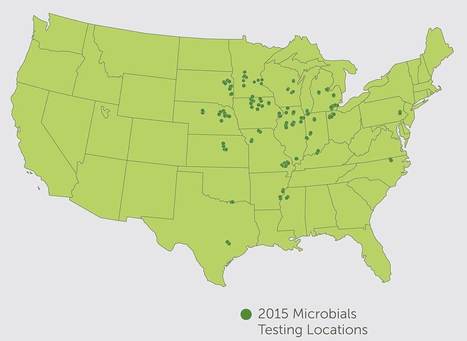
Nathan Cude pulls open the top of a white Tupperware container labeled Q8R, which holds one of the hundreds of samples of American farmland he’ll handle in a year. The dark brown soil inside looks lifeless, but the microbiologist at Novozymes smiles as he utters one of his favorite lines: A spoonful of soil contains about 50 billion microbes, representing up to 10,000 different species. The number of organisms in the container surpasses the number of people who have ever lived on Earth.
|
|
Scooped by
Jean-Michel Ané
January 7, 2016 11:26 AM
|
Gram-positive bacteria Bacillus subtilis B068150 has been used as a biocontrol agent against the pathogen Fusarium oxysporum cucumerinum. Cucumber was grown in three soils with strain B068150 inoculated in a greenhouse for 90 days, and the colonization ability of strain B068150 in cucumber rhizosphere and non-rhizosphere soils was determined. Changes in total bacteria and fungi community composition and structures using denaturing gradient gel electrophoresis (DGGE) and sequencing were determined. Colony counts showed that B068150 colonization in the rhizosphere was significantly higher (p < 0.001) than in non-rhizosphere soils. Based on our data, the introduction of B. bacillus B068150 did not change the diversity of microbial communities significantly in the rhizosphere of three soils. Our data showed that population density of B068150 in clay soil had a significant negative correlation on bacterial diversity in cucumber rhizosphere in comparison to loam and sandy soils, suggesting that the impact of B068150 might be soil specific.
|
|
Scooped by
Jean-Michel Ané
January 5, 2016 10:31 PM
|
Brassinosteroids (BRs) are natural plant hormones critical for growth and development. BR deficient or signaling mutants show significantly shortened root phenotypes. However, for a long time, it was thought that these phenotypes were solely caused by reduced cell elongation in the mutant roots. Functions of BRs in regulating root development have been largely neglected. Nonetheless, recent detailed analyses, revealed that BRs are not only involved in root cell elongation but are also involved in many aspects of root development, such as maintenance of meristem size, root hair formation, lateral root initiation, gravitropic response, mycorrhiza formation, and nodulation in legume species. In this review, current findings on the functions of BRs in mediating root growth, development, and symbiosis are discussed.
|
|
Scooped by
Jean-Michel Ané
January 5, 2016 10:29 PM
|
The influence of rhizospheric properties on nodulation status and resident rhizobial population of pea and lentil grown at twenty three sites of Assam were assessed. Besides the plant infectivity of rhizobia isolated from pea and lentil nodules were tested for symbiotic effectiveness. The survey established significant variation of nodule number ((35.0-223.8/plant)), nodule dry weight (69.6 to 271.8 mg/plant) and most probable number count (9 to 14700/g soil) across the twenty three diverse sites. Rhizospheric properties viz pH, organic carbon, available P2O5 and K2O could establish significant correlation with nodule number (r=0.892*, 0.771*, 0.753* and 0.669*) and most probable number (r=0.784*, 0.580*, 0.615* and 0.649*) counts, correspondingly. Microbial biomass carbon showed significant correlation with nodule number(r=0.672*). Dehydrogenase and phosphomonoesterase activities too showed significant correlation with nodule number(r=0.695* and 0.634*) and most probable number (r=0.575* and 0.534*) count, respectively. The symbiotic effectiveness of isolated rhizobia demonstrated significant variation of nodule score (1.33-3.67). Only 6 isolates could attain nodule score of ≥3.0, irrespective of resident rhizobial population.
|
|
Scooped by
Jean-Michel Ané
January 5, 2016 10:26 PM
|
The present study focused on the overproducing mutant of a plant growth promoting rhizobacterium (PGPR) Pseudomonas simiae strain AU (MTCC-12057) for significant drought tolerance in mung bean plants. Five mutants namely AU-M1, AU-M2, AU-M3, AU-M4 and AU-M5 were made after treatment of wild type strain with N-methyl-N-nitro-N-nitrosoguanidine. Mutant strain AU-M4 was recorded for enhanced ACC deaminase (ACC-D) activity, indole acetic acid (IAA) production and inorganic phosphate (Pi) solubilization compared to wild strain and other four mutant strains under drought condition. AU-M4 showed higher phosphate solubilization index (8.17) together with higher ACC-D activity (98 nmol/mg/h) and IAA concentration (69.35 µg/ml) compared with the wild type P. simiae strain AU ACC-D activity (79 nmol/mg/h) and IAA concentration (38.98 µg/ml) respectively. In this report, we investigated the effect of both wild and mutant type bacterial strain on mung bean plants under drought stress. Results showed that mutant AU-M4 and wild type strain AU inoculated plants exhibited superior tolerance against drought stress, as shown by their enhanced plant biomass (fresh weight), higher water content, higher proline accumulation and lower osmotic stress injury. Mutant AU-M4 and wild strain AU inoculated plants reduced the ethylene level by 59 and 45 % respectively, compared to the control under stress condition. Furthermore, bacterial inoculated plants showed enhanced induced systemic drought tolerance by reducing stomata size and net photosynthesis resulting higher water content in mung bean plants that may help in survival of plants during drought condition. To mitigate the effects of drought stress, use of PGPR will be needed to ensure sufficient production of food from crop plants. Taking current leads available, concerted future research is needed in this area, particularly on field evaluation with application of potential microorganisms.
|
|
Scooped by
Jean-Michel Ané
January 5, 2016 10:24 PM
|
Trifoliate orange seedlings were grown in perspex pots of a split-root system, where one half of the split roots was inoculated with or without arbuscular mycorrhizal fungi (AMF, Acaulospora scrobiculata or Funneliformis mosseae). Five months after inoculation, the growth performance, leaf, stem and root biomass and photosynthetic rate were generally significantly higher in AM than in non-AM seedlings. Greater root morphological traits were observed in the AM root side than in the non-AM side for the same plant and in AM than in non-AM plants. AM seedlings had significantly higher leaf sucrose and glucose contents and total (leaf + root) glucose and fructose contents as compared to non-AM ones. In the split roots, the AM side displayed substantially higher sucrose, glucose and fructose contents than the non-AM side for the same plant, and in AM than in non-AM plants. These results showed greater C movement into the non-AM side from an AM-colonized plant than from a non-AM-colonized plant. These results conclude that the presence of AM in one side of the split roots benefited C acquisition and root development to another half non-AM side, suggesting functional equilibrium and resource allocation of AM within a root system.
|
|
Scooped by
Jean-Michel Ané
January 5, 2016 10:22 PM
|
In their analysis of arbuscular mycorrhizal fungal communities sampled from roots collected around the globe, Davison et al. (2015, Science 349: 970) demonstrated that these fungi exhibit low endemism and suggested that their biogeography is largely determined by local environmental conditions. Here, we show that, within similar environments, these communities are largely unpredictable based on environmental conditions and exhibit patterns that are either consistent with neutral models of community assembly or are more stochastic than what models based on environmental filtering, niche-based assembly, or neutrality would predict. We also show that the degree of unpredictability is related to geography and the characteristics of the host plant, suggesting opportunities for future research to understand assembly processes in mycorrhizal fungal communities.
|
|
Scooped by
Jean-Michel Ané
January 5, 2016 10:16 PM
|
Plants interact closely with microbes, which are partly responsible for plant growth, health, and adaptation to stressful environments. Engineering the plant-associated microbiome could improve plant survival and performance in stressful environments such as contaminated soils. Here, willow cuttings were planted into highly petroleum-contaminated soils that had been gamma-irradiated and subjected to one of four treatments: inoculation with rhizosphere soil from a willow that grew well (LA) or sub-optimally (SM) in highly contaminated soils or with bulk soil in which the planted willow had died (DE) or no inoculation (CO). Samples were taken from the starting inoculum, at the beginning of the experiment (T0) and after 100 days of growth (TF). Short hypervariable regions of archaeal/bacterial 16S rRNA genes and the fungal ITS region were amplified from soil DNA extracts and sequenced on the Illumina MiSeq. Willow growth was monitored throughout the experiment, and plant biomass was measured at TF. CO willows were significantly smaller throughout the experiment, while DE willows were the largest at TF. Microbiomes of different treatments were divergent at T0, but for most samples, had converged on highly similar communities by TF. Willow biomass was more strongly linked to overall microbial community structure at T0 than to microbial community structure at TF, and the relative abundance of many genera at T0 was significantly correlated to final willow root and shoot biomass. Although microbial communities had mostly converged at TF, lasting differences in willow growth were observed, probably linked to differences in T0 microbial communities.
|
|
Scooped by
Jean-Michel Ané
January 5, 2016 10:13 PM
|
The Rhizobium-legume symbiosis is a complex partnership with many factors, with initial bacterial colonization of the plant root surface and primary infection as key early stages. Two molecules are strongly involved in these processes: the structural carbohydrate cellulose and the enzyme cellulase, which breaks down the former and allows rhizobia to infect the roots. Here, we report the effect on common bean (Phaseolus vulgaris L.) after co-inoculation of the non-nodulating, cellulase-overproducing strain Rhizobium cellulosilyticum ALA10B2T and the P. vulgaris-nodulating R. leguminosarum strain TPV08. In order to elucidate the effect of combined inoculation with both strains, we designed greenhouse assays, including single inoculation with strain TPV08, co-inoculation with both strains and an uninoculated treatment in non-sterile peat. Chemical fertilizers were not added. Chlorophyll content in the leaves was measured after the flowering stage by spectrophotometry and was considered to be indicative of the nutrient status of the plants. Nodule formation was observed on roots of the inoculated plants, while no nodulation was observed on roots of the uninoculated plants. The results indicate a synergistic effect between the two Rhizobium strains. Co-inoculated plants exhibited significant increases in seed yield and nitrogen content in comparison with the uninoculated control plants and with plants inoculated with a single strain. It is suggested that co-inoculation with strain ALA10B2T greatly increased the efficiency of N fixation by strain TPV08.
|
|
Scooped by
Jean-Michel Ané
January 5, 2016 12:06 PM
|
Aldina (Leguminosae) is among the very few ecologically successful ectomycorrhizal lineages in a family largely marked by the evolution of nodulating symbiosis. The genus comprises 20 species exclusively distributed in Amazonia and has been traditionally classified in the tribe Swartzieae because of its radial flowers with an entire calyx and numerous free stamens. The taxonomy of Aldina is complicated due to its poor representation in herbaria and the lack of a robust phylogenetic hypothesis of relationship. Recent phylogenetic analyses of matK and trnL sequences confirmed the placement of Aldina in the 50-kb inversion clade, although the genus remained phylogenetically isolated or unresolved in the context of the evolutionary history of the main early-branching papilionoid lineages. We performed maximum likelihood and Bayesian analyses of combined chloroplast datasets (matK, rbcL, and trnL) and explored the effect of incomplete taxa or missing data in order to shed light on the enigmatic phylogenetic position of Aldina. Unexpectedly, a sister relationship of Aldina with the Andira clade (Andira and Hymenolobium) is revealed. We suggest that a new tribal phylogenetic classification of the papilionoid legumes should place Aldina along with Andira and Hymenolobium. These results highlight yet another example of the independent evolution of radial floral symmetry within the early-branching Papilionoideae, a large collection of florally heterogeneous lineages dominated by papilionate or bilaterally symmetric flower morphology.
|
|
|
Scooped by
Jean-Michel Ané
January 9, 2016 11:26 AM
|
Background
Legumes are important to humans by providing food, feed and raw materials for industrial utilizations. Some legumes, such as alfalfa, are potential bioenergy crops due to their high biomass productivity. Global transcriptional profiling has been successfully used to identify genes and regulatory pathways in secondary cell wall thickening in Arabidopsis, but such transcriptome data is lacking in legumes.
Results
A systematic microarray assay and high through-put real time PCR analysis of secondary cell wall development were performed along stem maturation in Medicago truncatula. More than 11,000 genes were differentially expressed during stem maturation, and were categorized into 10 expression clusters. Among these, 279 transcription factor genes were correlated with lignin/cellulose biosynthesis, therefore representing putative regulators of secondary wall development. The b-ZIP, NAC, WRKY, C2H2 zinc finger (ZF), homeobox, and HSF gene families were over-represented. Gene co-expression network analysis was employed to identify transcription factors that may regulate the biosynthesis of lignin, cellulose and hemicellulose. As a complementary approach to microarray, real-time PCR analysis was used to characterize the expression of 1,045 transcription factors in the stem samples, and 64 of these were upregulated more than 5-fold during stem maturation. Reverse genetics characterization of a cellulose synthase gene in cluster 10 confirmed its function in xylem development.
Conclusions
This study provides a useful transcriptome and expression resource for understanding cell wall development, which is pivotal to enhance biomass production in legumes.
|
|
Scooped by
Jean-Michel Ané
January 9, 2016 10:54 AM
|
Plants and microbes have evolved mechanisms to communicate. Corral-Lugo et al. determined that a plant compound, rosmarinic acid, bound to a protein in the bacterial quorum-sensing pathway, which bacteria use to regulate “community” interactions, such as the formation of biofilms. In vitro analysis showed that rosmarinic acid bound to RhlR, a transcriptional regulator in the quorum-sensing pathway of the plant and human pathogen Pseudomonas aeruginosa. Both reporter gene analysis and in vivo analysis of quorum-sensing responses showed that rosmarinic acid stimulated RhlR activity, thereby functioning as a mimic of the bacterial ligands. Identification of this molecular mimic has both agricultural and biomedical implications by enabling strategic disruption of bacterial communication.
|
|
Scooped by
Jean-Michel Ané
January 9, 2016 10:46 AM
|
A growing body of research is highlighting the impacts root-associated microbial communities can have on plant health and development. These impacts can include changes in yield quantity and quality, timing of key developmental stages and tolerance of biotic and abiotic stresses. With such a range of effects it is clear that understanding the factors that contribute to a plant-beneficial root microbiome may prove advantageous. Increasing demands for food by a growing human population increases the importance and urgency of understanding how microbiomes may be exploited to increase crop yields and reduce losses caused by disease. In addition, climate change effects may require novel approaches to overcoming abiotic stresses such as drought and salinity as well as new emerging diseases. This review discusses current knowledge on the formation and maintenance of root-associated microbial communities and plant–microbe interactions with a particular emphasis on the effect of microbe–microbe interactions on the shape of microbial communities at the root surface. Further, we discuss the potential for root microbiome modification to benefit agriculture and food production.
|
|
Scooped by
Jean-Michel Ané
January 7, 2016 11:27 AM
|
1.Arbuscular mycorrhizal fungi (AMF) are ubiquitous plant symbionts that affect plant nutrient status, patterns of resource allocation, and rates of plant growth. In addition, AMF influence the expression of plant defense, which may affect subsequent interactions between plants and higher trophic levels. Tolerance to herbivory and chemical defense represent two distinct defense strategies of plants, and there is accumulating evidence that AMF can influence each strategy separately. However, investigations on the simultaneous effects of AMF on tolerance and chemical defense mechanisms are lacking.
2.Using six milkweed (Asclepias) species and three levels of AMF inoculum, we show that plant tolerance to herbivory increases with foliar P concentrations, while both foliar cardenolide concentration and latex exudation (major chemical defenses in milkweeds) increase with foliar N concentrations, but decrease with plant growth rate. Additionally, foliar cardenolide concentration increases with foliar P concentration, and latex exudation increases with root biomass. Because AMF have significant effects on all of these traits (foliar N and P concentrations, root biomass and growth rate), AMF can change plant tolerance and chemical defense simultaneously, albeit through different mechanisms.
3.Synthesis. Overall, plant tolerance and chemical defense to herbivores are affected by arbuscular mycorrhizal fungi (AMF) through changes in basic plant physiology such as nutrient status, allocation patterns and growth rate, and our study suggests that it may be possible to predict effects of AMF on plant defenses through these simple traits.
|
|
Scooped by
Jean-Michel Ané
January 7, 2016 11:16 AM
|
The crop legumes such as chickpea, common bean, cowpea, peanut, pigeonpea, soybean, etc. are important sources of nutrition and contribute to a significant amount of biological nitrogen fixation (>20 million tons of fixed nitrogen) in agriculture. However, the production of legumes is constrained due to abiotic and biotic stresses. It is therefore imperative to understand the molecular mechanisms of plant response to different stresses and identify key candidate genes regulating tolerance which can be deployed in breeding programs. The information obtained from transcriptomics has facilitated the identification of candidate genes for the given trait of interest and utilizing them in crop breeding programs to improve stress tolerance. However, the mechanisms of stress tolerance are complex due to the influence of multi-genes and post-transcriptional regulations. Furthermore, stress conditions greatly affect gene expression which in turn causes modifications in the composition of plant proteomes and metabolomes. Therefore, functional genomics involving various proteomics and metabolomics approaches have been obligatory for understanding plant stress tolerance. These approaches have also been found useful to unravel different pathways related to plant and seed development as well as symbiosis. Proteome and metabolome profiling using high-throughput based systems have been extensively applied in the model legume species, Medicago truncatula and Lotus japonicus, as well as in the model crop legume, soybean, to examine stress signaling pathways, cellular and developmental processes and nodule symbiosis. Moreover, the availability of protein reference maps as well as proteomics and metabolomics databases greatly support research and understanding of various biological processes in legumes. Protein-protein interaction techniques, particularly the yeast two-hybrid system have been advantageous for studying symbiosis and stress signaling in legumes. In this review, several studies on proteomics and metabolomics in model and crop legumes have been discussed. Additionally, applications of advanced proteomics and metabolomics approaches have also been included in this review for future applications in legume research. The integration of these “omics” approaches will greatly support the identification of accurate biomarkers in legume smart breeding programs.
|
|
Scooped by
Jean-Michel Ané
January 5, 2016 10:29 PM
|
Ectomycorrhizal (EM) fungi are ubiquitous in temperate and boreal forests, comprising over 20,000 species forming root symbiotic associations with Pinaceae and woody angiosperms. As much as 100 different EM fungal species can coexist and interact with the same tree species, forming complex multispecies networks in soils. The degree of host specificity and structural properties of these interaction networks (e.g., nestedness and modularity) may influence plant and fungal community assembly and species coexistence, yet their structure has been little studied in northern coniferous forests, where trees depend on EM fungi for nutrient acquisition. We used high-throughput sequencing to characterize the composition and diversity of bulk soil and root-associated fungal communities in four co-occurring Pinaceae in a relic foredune plain located at Îles de la Madeleine, Québec, Canada. We found high EM fungal richness across the four hosts, with a total of 200 EM operational taxonomic units (OTUs), mainly belonging to the Agaricomycetes. Network analysis revealed an antinested pattern in both bulk soil and roots EM fungal communities. However, there was no detectable modularity (i.e., subgroups of interacting species) in the interaction networks, indicating a low level of specificity in these EM associations. In addition, there were no differences in EM fungal OTU richness or community structure among the four tree species. Limited shared resources and competitive exclusion typically restrict the number of taxa coexisting within the same niche. As such, our finding of high EM fungal richness and low host specificity highlights the need for further studies to determine the mechanisms enabling such a large number of EM fungal species to coexist locally on the same hosts.
|
|
Scooped by
Jean-Michel Ané
January 5, 2016 10:29 PM
|
Background and aim
The root endophytic fungus Piriformospora indica increases plant resistance and tolerance to stress and promotes plant growth, but its ability to support plant nutrition is still controversially discussed. Irrespective of a potential nutrient transport towards the plant, the fungus might release P from sources unavailable for plant usage by transformation to available forms.
Methods
To test this hypothesis, sterile solid and liquid in vitro cultures of P. indica supplied with different organic and inorganic P sources were established. Cultures were investigated for growth, solubilised P, enzyme activities, RNA accumulation of the four genes encoding phosphate transporters and the two genes for acid phosphatases and phytases respectively found in P. indica genome, and for pH values in the media.
Results
P. indica growth was higher in the presence of inorganic P than in organic P sources. Significant amounts of P were solubilised by P. indica from Ca3(PO4)2 and rock phosphate. However, no relevant intra- or extracellular enzymatic activity was detected despite RNA accumulation of related genes. In general, the genes were all repressed by higher amounts of inorganic P and were expressed the most when the fungus received phytate. We observed a decrease in medium pH in the presence of P. indica irrespective of the P source.
Conclusions
P. indica is able to solubilise phosphate from inorganic, but not from organic P sources. This P solubilisation is not due to enzymatic activities but rather to the lowering of the medium pH.
|
|
Scooped by
Jean-Michel Ané
January 5, 2016 10:26 PM
|
Endophytes are important source of bioactive metabolites having antibacterial, antifungal and antiviral activities. Garcinia lancifolia Roxb. is an endemic medicinal plant of Assam and is known for its antiscorbutic, astringent, cardiotonic, and emollient properties. The aim of this study was to isolate and identify the endophytic bacteria associated with G. lancifolia for potential antimicrobial activity. The five bacterial endophytes isolated from different parts of G. lancifolia were tentatively identified as Bacillus cereus (GlB1), B. megaterium (GlB2), Staphylococcus sp (GlB3), Corynebacterium xerosis (GlB4) and C. kutscheri (GlB5) on the basis of their colony morphology and biochemical characteristics. The isolates were tested for antibiotic sensitivity, antibacterial and antifungal activities and plant growth promoting traits. All of them showed antibacterial and antifungal activities. Highest zone of inhibition (20 mm) was exhibited by GlB1 against K. pneumoniae followed by GlB3 and GlB5 against B. subtilis and E. coli respectively. All the isolates showed positive result in production of I. A. A, NH3 and solubilised phosphate.
|
|
Scooped by
Jean-Michel Ané
January 5, 2016 10:22 PM
|
Through evolutionary time, the ever changing environmental conditions have been faced by plants among which water stress is the most common. Nevertheless, a great deal of variations in responses of plants to water deficit and their sensitivity to water scarcity has been noticed. For perception, signalling and response to water stress, plants are supposed to have programmed capability. Under the conditions of water scarcity, improved resistance to drought has been provided by AM fungi by enhancing efficiency of water absorption, uptake of mineral nutrients, especially phosphorus, accumulation of osmoprotectants like proline and sugars, activity of antioxidant enzymes like SOD, CAT and POD, production of isoprenoids, stomatal conductance, chlorophyll contents, photosynthesis and decline in ABA content. Expression of drought related plant genes like p5cs genes, aquaporin genes, as well as need genes, brings about the physiological response of mycorrhizal plants to drought stress. Moreover, the efficacy of AM in reducing the use of phosphorus fertilisers and enhancement of soil stability increase the value of mycorrhizae for sustainability and ecosystem services. Their appropriate management has prospective to ameliorate the effectiveness and sustainability of drought tolerance.
|
|
Scooped by
Jean-Michel Ané
January 5, 2016 10:17 PM
|
Field samples from two coexisting plant species were examined to see whether they were colonised by distinct fungal communities, and whether the colonisation pattern differed between the two plant species.
Two plant species, Agrostis capillaris and Ranunculus acris from four mountain slopes in the Faroe Islands were examined for percentage root length colonisation (%RLC) including the amount of arbuscules and vesicles, and the arbuscular mycorrhizal (AM) fungal types in the roots identified by cloning and sequencing.
Fewer AM fungal types were found in Ranunculus acris than in Agrostis capillaris, but the %RLC was greater in Ranunculus acris, which also showed seasonal variability. Vesicles were more abundant in Ranunculus acris.
Statistical analysis suggested that the AM fungal communities colonising the two plant species were distinct. The root colonisation in Ranunculus acris responded to most soil nutrients, but in particular phosphate and nitrogen. The root colonisation in Agrostis capillaris responded most to nitrogen.
In conclusion the data support the hypothesis that plants from a single habitat that differ in mycorrhizal dependency would be colonised by distinct fungal communities. The fungal community is probably a reflection of plant community, nutrient availability, temperature, as well as other biotic and abiotic factors.
|
|
Scooped by
Jean-Michel Ané
January 5, 2016 10:15 PM
|
Frankia Sp+ strains maintain their ability to sporulate in symbiosis with actinorhizal plants, producing abundant sporangia inside host plant cells, in contrast to Sp– strains, which are unable to perform in-planta sporulation. We herein examined the role of in-planta sporulation in Frankia infectivity and competitiveness for root infection. Fifteen strains belonging to different Sp+ and Sp– phylogenetic lineages were inoculated on seedlings of Alnus glutinosa (Ag) and A. incana (Ai). Strain competitiveness was investigated by performing Sp–/Sp+ co-inoculations. Plant inoculations were standardized using crushed nodules obtained under laboratory-controlled conditions (same plant species, age, and environmental factors). Specific oligonucleotide primers were developed to identify Frankia Sp+ and/or Sp– strains in the resulting nodules. Single inoculation experiments showed that (i) infectivity by Sp+ strains was significantly greater than that by Sp– strains, (ii) genetically divergent Sp+ strains exhibited different infective abilities, and (iii) Sp+ and Sp– strains showed different host preferences according to the origin (host species) of the inocula. Co-inoculations of Sp+ and Sp– strains revealed the greater competitiveness of Sp+ strains (98.3 to 100% of Sp+ nodules, with up to 15.6% nodules containing both Sp+ and Sp– strains). The results of the present study highlight differences in Sp+/Sp– strain ecological behaviors and provide new insights to strengthen the obligate symbiont hypothesis for Sp+ strains.
|
|
Scooped by
Jean-Michel Ané
January 5, 2016 3:48 PM
|
Background
Azospirillum spp. are the most studied plant growth-promoting bacteria (PGPB). The genus represents a common model for plant-bacteria interactions. This genus was initially isolated and tested on cereals and was subsequently commercialized.
Aims
Despite claims of plant specificity, particularly towards cereals, data over the past 40 years does not appear to substantiate claims of such specificity/affinity of Azospirillum species. Consequently an evaluation of the specificity/affinity of the genus Azospirillum across all plants, in general, and cereals, in particular, was undertaken.
Results
Although the majority of studies focused on cereals, Azospirillum spp. increase growth of 113 plant species across 35 botanical families, including 14 species of cereals. Amongst Azospirillum spp., several well studied strains have been effective in several plant species, making these organisms potentially valuable for further study.
Conclusions
This review demonstrates that azospirilla are not cereal-specific at the genus and species levels. Azospirillum serves as a general PGPB to every plant species tested so far. Given the paucity of widespread screening, affinity of strains to a plant genotype, cultivar, or plant species cannot be overruled. Definitive conclusions concerning such specificity require molecular and cross-inoculation studies, using various strains of bacteria, and re-isolation after growth of the plants in different plant species.
|


 Scoop.it!