Your new post is loading...

|
Scooped by
Jean-Michel Ané
January 16, 2016 4:52 PM
|
A bacterial strain, designated shin9-1T, was isolated from a water sample taken from the water convoevueus field in Taiwan and characterized using the polyphasic taxonomy approach. Cells of strain shin9-1T were aerobic, Gram-stain-negative, rod-shaped that were surrounded by a thick capsule and formed cream colored colonies. Growth occurred at 10-45 °C (optimum, 30 °C), with 0-3.0 % NaCl (optimum, 0.5 %) and at pH 7.0-9.0 (optimum, pH 7.0). Strain shin9-1T did not form nodules on a legume plant, Macroptilium atropurpureum, and the nodulation genes nodA, nodC and the nitrogenase reductase gene nifH were not detected by PCR. Phylogenetic analyses based on 16S rRNA and three housekeeping gene sequences (recA, atpD and rpoB) showed that strain shin9-1T belonged to the genus Rhizobium. Strain shin9-1T had the highest level of 16S rRNA gene sequence similarity with respect to Rhizobium daejeonense L61T (97.6 %). The major fatty acid of strain shin9-1T was C18:1 7c. The polar lipid profile consisted of phosphatidylethanolamine, phosphatidylglycerol, phosphatidylcholine, diphosphatidylglycerol, phosphatidylmonomethylethanolamine and several uncharacterized lipids. The DNA G+C content was 58.3 mol%. The DNA-DNA relatedness of strain shin9-1T with respect to recognized species of the genus Rhizobium was less than 70 %. Phenotypic characteristics of the novel strain also differed from those of the closest related species of the genus Rhizobium. On the basis of the phylogenetic inference and phenotypic data, strain shin9-1T should be classified as a novel species, for which the name Rhizobium ipomoeae sp. nov. is proposed. The type strain is shin9-1T (=LMG 27163T =KCTC 32148T).
|
|
Scooped by
Jean-Michel Ané
January 14, 2016 4:40 PM
|
Nitric oxide (NO) is involved in various plant-microbe interactions. In the symbiosis between soil bacterium Sinorhizobium meliloti and model legume Medicago truncatula, NO is required for an optimal establishment of the interaction but is also a signal for nodule senescence. Little is known about the molecular mechanisms responsible for NO effects in the legume-rhizobium interaction. Here, we investigate the contribution of the bacterial NO response to the modulation of a plant protein post-translational modification in nitrogen-fixing nodules. We made use of different bacterial mutants to finely modulate NO levels inside M. truncatula root nodules and to examine the consequence on tyrosine nitration of the plant glutamine synthetase, a protein responsible for assimilation of the ammonia released by nitrogen fixation. Our results reveal that S. meliloti possesses several proteins that limit inactivation of plant enzyme activity via NO-mediated post-translational modifications. This is the first demonstration that rhizobia can impact the course of nitrogen fixation by modulating the activity of a plant protein.
|
|
Scooped by
Jean-Michel Ané
January 14, 2016 4:37 PM
|
Mycorrhizal fungi are found in almost all ecosystems of the planet. They interact with a majority of plant species, and it seems that every single aspect of the life history of a plant individual is affected by the presence of mycorrhizal fungal symbionts in its roots (van der Heijden et al., 2015). Mycorrhizal fungi are also known to affect plant population-level and community-level dynamics. Yet, classic 800-page plant ecology textbooks typically devote only one to two pages to mycorrhizal symbioses. Is it time to put mycorrhizal ecologists on the editorial boards of these textbooks? Meetings like the International Conference on Mycorrhizas (ICOM) tend to suggest that this might not be a bad idea.
On August 3–7, 2015, mycorrhizal researchers from around the world shared their thoughts and empirical results on these globally widespread symbioses at a comfortable elevation of 2135 m in Flagstaff, Arizona, surrounded by beautiful landscapes, like widespread Ponderosa Pine forests, the San Francisco Peaks area, and the impressive Grand Canyon. New Phytologist was present as a sponsor, continuing its ongoing support of mycorrhizal research (Selosse & Martin, 2013; Dickie et al., 2015). Through talks and posters, mycorrhizal researchers literally took us on a journey across all scales of observation of this symbiosis: from the intracellular environment to global patterns of mycorrhizal fungal diversity and biogeochemical cycles (Fig. 1).
|
|
Scooped by
Jean-Michel Ané
January 14, 2016 9:00 AM
|
Sclerotinia stem rot, caused by Sclerotinia sclerotiorum (Lib.) de Bary is a major disease of soybean (Glycine max (L.) Merr.). At present, we revealed the three-way interaction between Trichoderma harzianum T-aloe, pathogen S. sclerotiorum and soybean plants in order to demonstrate biocontrol mechanism and evaluate biocontrol potential of T-aloe against S. sclerotiorum in soybean. In our experiments, T-aloe inhibited the growth of S. sclerotiorum with an efficiency of 56.3% in dual culture tests. T-aloe hyphae grew in parallel or intertwined with S. sclerotiorum hyphae and produced hooked contact branches, indicating mycoparasitism. Plate tests showed that T-aloe culture filtrate inhibited S. sclerotiorum growth with an inhibition efficiency of 51.2% and sclerotia production. T-aloe pretreatment showed growth-promoting effect on soybean plants. The activities of peroxidase, superoxide dismutase, and catalase increased, and the hydrogen peroxide (H2O2) as well as the superoxide radical (O2-) content in soybean leaves decreased after T-aloe pretreatment in response to S. sclerotiorum pathogen challenge. T-aloe treatment diminished damage caused by pathogen stress on soybean leaf cell membrane, and increased chlorophyll as well as total phenol contents. The defense-related genes PR1, PR2, and PR3 were expressed in the leaves of T-aloe-treated plants. In summary, T-aloe displayed biocontrol potential against S. sclerotiorum. This is the first report of unraveling biocontrol potential of Trichoderma Spp. to soybean sclerotinia stem rot from the three-way interaction between the biocontrol agent, pathogen S. sclerotiorum and soybean plants.
|
|
Scooped by
Jean-Michel Ané
January 14, 2016 8:57 AM
|
Microbial populations residing in close contact with plants can be found in the rhizosphere, or in the phyllosphere as epiphytes on the surface, or endophytes inside plants. Here, we analyzed the microbiota associated with Espeletia plants, endemic to the Páramo environment of the Andes Mountains and a unique model for studying microbial populations and their adaptations to the adverse conditions of high-mountain neo-tropical ecosystems. Communities were analyzed using samples from the rhizosphere, necromass and young and mature leaves, the latter two analyzed separately as endophytes and epiphytes. The taxonomic composition performed by sequencing the V5-V6 region of the 16S rRNA gene indicated differences among populations of the leaf phyllosphere, the necromass and the rhizosphere, with predominance of some phyla but only few shared OTUs. Functional profiles predicted based on taxonomic affiliations differed from those obtained by GeoChip microarray analysis, which separated community functional capacity based on plant microenvironment. The identified metabolic pathways provided insight regarding microbial strategies for colonization and survival in these ecosystems. This study of novel plant phyllosphere microbiomes and their putative functional ecology is also the first step for future bioprospecting studies in search of enzymes, compounds or microorganisms relevant to industry or remediation efforts.
|
|
Scooped by
Jean-Michel Ané
January 12, 2016 1:02 PM
|
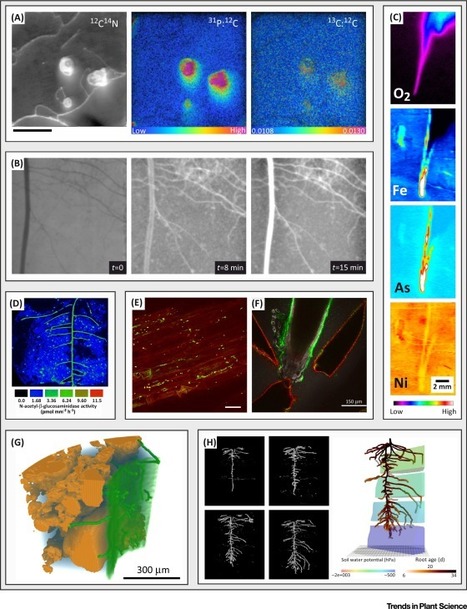
Root-triggered processes (growth, uptake and release of solutes) vary in space and time, and interact with heterogeneous soil microenvironments that provide habitats for (micro)biota on various scales. Despite tremendous progress in method development in the past decades, finding a suitable experimental set-up to investigate processes occurring at the dynamic conjunction of biosphere, hydrosphere, and pedosphere in the close vicinity of active plant roots still represents a major challenge. We discuss recent methodological developments in rhizosphere research with a focus on imaging techniques. We further review established concepts that have been updated with novel techniques, highlighting the need for combinatorial approaches to disentangle rhizosphere processes on relevant scales.
|
|
Scooped by
Jean-Michel Ané
January 12, 2016 1:00 PM
|
The disclosure provides materials and methods for conferring improved plant traits or benefits on plants. The materials can include a formulation comprising an exogenous endophytic bacterial population, which can be disposed on an exterior surface of a seed or seedling, typically in an amount effective to colonize the plant. The formulations can include at least one member selected from the group consisting of an agriculturally compatible carrier, a tackifier, a microbial stabilizer, a fungicide, an antibacterial agent, an herbicide, a nematicide, an insecticide, a plant growth regulator, a rodenticide, and a nutrient.
|
|
Scooped by
Jean-Michel Ané
January 12, 2016 12:56 PM
|
The arbuscular mycorrhiza (AM) is among the most ubiquitous symbiosis in the world. A meta-analysis of 759 articles (1978–2012) was conducted to test whether ecologically important host plant traits (N-fixation and C-fixation pathway) affect the response of the plant to mycorrhizal colonization. We found that the effect of N-fixation on mycorrhizal growth response (MGR) depended on whether the plant was woody or a forb. N-fixing forbs had a higher MGR than non-N-fixing forbs, but the reverse was true for woody plants. Moreover, C4-grasses had significantly higher MGR than C3-grasses, but no significant difference was found between C3 and C4 forbs, or between C3 and C4 woody species. Overall, woody species had higher MGR than any other functional group. These results demonstrate that MGR does depend on host functional characteristics, but neither N-fixation capacity nor C-fixation pathway are apparently fundamental controllers of MGR. Instead, it would appear possible that these traits influence MGR only insofar as they influence more fundamental functions such as P demand and P supply.
|
|
Scooped by
Jean-Michel Ané
January 12, 2016 12:51 PM
|
Many truffle species in the genus Tuber are endemic to North America. Some of these have commercial value such as Tuber oregonense and Tuber gibbosum, commonly known as Oregon white truffles. Most of what is known about the ecology of these truffles comes from observational data. These truffle species form ectomycorrhizas with Douglas-fir (Pseudotsuga menziesii) and sometimes fruit abundantly in early successional forest regrowth. The goal of this study was to characterize fungal communities and soils associated with truffle-producing Douglas-fir sites. We extracted DNA from roots of five trees at four different truffle-producing Douglas-fir sites (n = 20). We amplified the internal transcribed spacer (ITS) region of the nuclear ribosomal DNA (nrDNA) and sequenced amplicons with 454 pyrosequencing. After quality filtering, we assembled 15,713 sequences into 150 fungal operational taxonomic units (OTUs). Pezizomycetes (Tuber and Pyronemataceae) were the most abundant taxa detected followed by Helotiales. Agaricomycetes represented most by Thelephoraceae, Russulaceae, and Inocybaceae were also abundant. A total of five Tuber species were detected. T. oregonense was the most abundant OTU, followed by T. gibbosum and Wilcoxina mikolae. Fungal root endophytes were also detected and well represented by Chalara and Phialocephala spp. Fungal community structure and soil chemistry differed between sites. This study represents the first characterization of the fungal communities in Douglas-fir stands producing Oregon white truffles. We found that Tuber species can be dominant ectomycorrhizal symbionts of Douglas-fir. Truffle fungi are also important in forest health, food webs, and as a non-timber forest resource that can contribute to rural economies.
|
|
Scooped by
Jean-Michel Ané
January 12, 2016 12:48 PM
|
Aim
While plant species introduced to new regions may benefit from escaping natural enemies, their success may be impaired by losing key mutualists. We aimed to elucidate whether a selection of annual and perennial Trifolium (clover) species have lost associations with nitrogen-fixing bacteria (rhizobia) and arbuscular mycorrhizal fungi (AMF) in their introduced range.
Location
Introduced range in New Zealand (NZ) and native range in the United Kingdom (UK).
Methods
We compared the strain richness of rhizobia associated with five Trifolium species in both ranges using genetic fingerprinting (rep-PCR with ERIC primers). Phylogenetic analysis of the nodD gene was conducted to test for between-range differences in rhizobia genotypes associated with seven Trifolium species. We also used TRFLP to compare the richness of AMF associated with three Trifolium species in both ranges.
Results
Genetic fingerprinting indicated that Trifolium associate with a similar richness of rhizobia strains in NZ as they do in the UK. According to variation in the nodD gene, genotypes of rhizobia were indistinguishable between NZ and UK provenances. A total of 17 AMF operational taxonomic units were detected but there were no significant between-range differences in richness or in community structure.
Main conclusions
Contrary to general expectations regarding the loss of mutualists following species introduction, our findings suggest that alien plants, including those accidentally introduced, can have access to rich communities of soil-borne mutualists that are likely to facilitate successful naturalization.
|
|
Scooped by
Jean-Michel Ané
January 12, 2016 12:41 PM
|
Large scale exploitation of rhizospheric interactions is essential for enhancing the agroecosystems resilience to climate change and also for adopting inventive adaptation strategies for maximizing the food production under such adverse conditions. Successful exploitation of such interactions can be used for improving the soil fertility and organic carbon pool while minimizing the trace gases emission from agrosystems. Most importantly, such knowledge can be used to enhance the plant-microbe interactions, conferring diseases resistance to host plants, bioremediation and ecosystem restoration of marginal and degraded lands. However, recent studies proved that changing climatic conditions can alter the rhizosphere biology by modifying the root exudation rate, resource availability and biogeochemical cycling. Therefore, strategic and applied researches are essential to explore the rhizosphere biology under changing climatic conditions and harnessing all beneficial rhizospheric interactions as a low-input biotechnology for sustainable agriculture, ecosystem restoration and environmental sustainability.
|
|
Scooped by
Jean-Michel Ané
January 12, 2016 12:40 PM
|
ZnO nanoparticles (NPs) are considered an emerging contaminant when in high concentration, and their effects on crops and soil microorganisms pose new concerns and challenges. Arbuscular mycorrhizal (AM) fungi (AMF) form mutualistic symbioses with most vascular plants, and putatively contribute to reducing nanotoxicity in plants. Here, we studied the interactions between ZnO NPs and maize plants inoculated with or without AMF in ZnO NPs-spiked soil. ZnO NPs had no significant adverse effects at 400 mg/kg, but inhibited both maize growth and AM colonization at concentrations at and above 800 mg/kg. Sufficient addition of ZnO NPs decreased plant mineral nutrient acquisition, photosynthetic pigment concentrations, and root activity. Furthermore, ZnO NPs caused Zn concentrations in plants to increase in a dose-dependent pattern. As the ZnO NPs dose increased, we also found a positive correlation with soil diethylenetriaminepentaacetic acid (DTPA)-extractable Zn. However, AM inoculation significantly alleviated the negative effects induced by ZnO NPs: inoculated-plants experienced increased growth, nutrient uptake, photosynthetic pigment content, and SOD activity in leaves. Mycorrhizal plants also exhibited decreased ROS accumulation, Zn concentrations and bioconcentration factor (BCF), and lower soil DTPA-extractable Zn concentrations at high ZnO NPs doses. Our results demonstrate that, at high contamination levels, ZnO NPs cause toxicity to AM symbiosis, but AMF help alleviate ZnO NPs-induced phytotoxicity by decreasing Zn bioavailability and accumulation, Zn partitioning to shoots, and ROS production, and by increasing mineral nutrients and antioxidant capacity. AMF may play beneficial roles in alleviating the negative effects and environmental risks posed by ZnO NPs in agroecosystems.
|
|
Rescooped by
Jean-Michel Ané
from Plant pathogenic fungi
January 10, 2016 4:55 PM
|
Highlights
• Loline and ergot alkaloids are fundamental for Clavicipitaceae.
• These secondary metabolism clusters are found in other, far related, species.
• Phylogenetics establish a close relationship between clusters of different species.
• Detection of large amounts of gene loss supports the HGT events.
Via Steve Marek
|
Symbiotic interactions between plants and mycorrhizal fungi have a major impact on plant growth, development and evolution. Among them, the ectomycorrhizal (ECM) symbiosis formed between a large variety of phylogenetically diverse fungi and trees, and the arbuscular mycorrhizal (AM) symbiosis involving almost all land plants and the monophyletic Glomeromycota, are critical players of most ecosystems. Beyond their ecological functions, these associations offer a unique opportunity to improve the productivity and sustainability of current forest and agricultural systems. Over the last two decades, genetics conducted in model legumes has allowed the identification of a first set of genes and molecular mechanisms required for the efficient establishment of the AM symbiosis but also highlighted how scarce and incomplete our understanding of this association is at the molecular level. The 2nd international Molecular Mycorrhiza Meeting (2nd iMMM) brought together researchers who work on the molecular characterization of AM and ECM symbioses in a variety of contexts including root colonization, cell dynamics, nutrient exchange and metabolism, molecular evolution, genomics, effectors, plant–fungal communication, hormonal regulation or signal transduction. During this year's meeting many presenters outlined novel discoveries, concepts and models that are likely to take the research on mycorrhizal associations into new realms.
Via Francis Martin
|
|
Scooped by
Jean-Michel Ané
January 14, 2016 4:38 PM
|
Gene duplications generate new genes that can acquire similar but often diversified functions. Recent studies of gene co-expression networks have indicated that not only genes, but also pathways can be multiplied and diversified to perform related functions in different parts of an organism. Identification of such diversified pathways, or modules, is needed to expand our knowledge of biological processes in plants and to understand how biological functions evolve. However, systematic explorations of modules remain scarce and no user-friendly platform to identify them exists. We have established a statistical framework to identify modules and show that approximately one third of the genes of a plant's genome participate in hundreds of multiplied modules. Using this framework as a basis, we implemented a platform that can explore and visualize multiplied modules in co-expression networks of eight plant species. To validate the usefulness of the platform, we identified and functionally characterized pollen and root specific cell wall modules that multiplied to confer tip-growth in pollen tubes and root hairs, respectively. We, furthermore, identified multiplied modules involved in secondary metabolite synthesis and corroborated them by metabolite profiling of tobacco tissues. The interactive platform, referred to as FamNet is available at http://www.gene2function.de/famnet.html.
|
|
Scooped by
Jean-Michel Ané
January 14, 2016 9:01 AM
|
The classic understanding of organisms focuses on genes as the main source of species evolution and diversification. The recent concept of genetic accommodation questions this gene centric view by emphasizing the importance of phenotypic plasticity on evolutionary trajectories. Recent discoveries on epigenetics and symbiotic microbiota demonstrated their deep impact on plant survival, adaptation and evolution thus suggesting a novel comprehension of the plant phenotype. In addition, interplays between these two phenomena controlling plant plasticity can be suggested. Because epigenetic and plant-associated (micro-) organisms are both key sources of phenotypic variation allowing environmental adjustments, we argue that they must be considered in terms of evolution. This ‘non-conventional’ set of mediators of phenotypic variation can be seen as a toolbox for plant adaptation to environment over short, medium and long time-scales.
|
|
Scooped by
Jean-Michel Ané
January 14, 2016 8:58 AM
|
Plants and other multicellular organisms consist of many types of specialized cells. Systems-wide exploration of large scale information from singe cell level is essential to understand how cell works. Root hairs, tubular-shaped outgrowths from root epidermal cells, play important roles in the acquisition of nutrients and water, in the interaction with microbe, and in plant anchorage, and represent an ideal model to study the biology of a single cell type. Single cell sampling combined with omics approaches has been applied to study plant root hairs. This review emphasizes the integration of omics approaches towards understanding the systems biology of root hairs, unraveling the common and plant species-specific properties of root hairs, as well as the concordance of protein and transcript abundance. Understanding plant root hair biology by mining the integrated omics data will provide a way to know how a single cell differentiates, elongates, and functions, which might help molecularly modify crops for developing sustainable agriculture practices.
|
|
Scooped by
Jean-Michel Ané
January 14, 2016 8:56 AM
|
In order to improve food production while reducing environmental impact, the redesign of agrosystems to incorporate monitoring tools for decision-making is a fundamental requirement. Chemical and physical indicators of medium and long-term soil quality have been developed in order to monitor changes in agroecosystems; however, it is crucial to develop parameters that can predict the short-term trajectory of the system. For this reason, the objective of the present study was to determine whether certain soil biological parameters, such as the activities of microbial enzymes (dehydrogenase (DH), acid phosphatase (ACP), urease (URE) and protease (PRO)) and mycorrhizal colonization, could be useful as indicators of soil biological quality, given their sensitivity to different agricultural management practices. An evaluation was conducted over two years in five different agrosystems of Valle de México in Mexico. The activity of DH presented greater sensitivity to changes in agricultural management produced by types of tillage and input (organic or synthetic) and topological arrangement, compared to that of URE, ACP and PRO, which did not present a clear pattern with respect to the different agrosystems or to sampling date (based on the agricultural practices). Mycorrhizal colonization was sensitive to the type of inputs used, but not to tillage type or crop rotation. It is therefore considered that DH and mycorrhizal colonization could represent useful parameters for measuring soil quality and the environmental impact of the use of agrochemicals in agriculturally managed soils. Based on DH and mycorrhization, the agrosystem with the highest quality soil was the Mesoamerican system known as “Milpa” (typified by minimum tillage, intercropping and organic inputs).
|
|
Scooped by
Jean-Michel Ané
January 12, 2016 1:02 PM
|
It is important to quantify the nitrogen (N) uptake and dinitrogen (N2) fixation of legumes and estimate the N contribution that these crops make to subsequent crops for sustainable agricultural production. The growth and development of legumes and their impact on soil N fertility can be simulated by the Agricultural Production Systems Simulator (APSIM). However, the model performance has not been evaluated in simulating the dynamic processes of N accumulation and N2 fixation. The parameterised model was tested for the simulation of N uptake and N2 fixation in above-ground biomass of four crop legumes (lupin, chickpea, field pea and peanut). The simulations varied in location, cultivar, sowing date, climate, soil type, water regime (irrigated or dryland) and starting soil N and applied fertiliser N in tropical, subtropical, semiarid and Mediterranean environments across Australia. In general, the absolute amount of N uptake and N2 fixation in above-ground biomass (unit: kg ha−1) were reasonably well simulated, with 92% of the variation in observed N accumulation in above-ground biomass and 84% in N2 fixation being explained by APSIM. The model was also able to simulate the responses of N2 fixation by chickpea and peanut to differences in soil mineral N status. However, the simulations of N2 fixation efficiency (NFE, calculated as fixed N2 per unit above-ground dry matter (DM; unit: g N kg−1 DM) were much less accurate, especially for lupin. Sensitivity analysis showed that improving the definition of the model parameter of crop N2 fixing capacity (the potential to fix atmospheric N2 per unit above-ground DM; unit: g N g−1 DM) would improve the simulations of NFE. We therefore propose that to successfully simulate the absolute amount of N accumulation and N2 fixation, the above-ground biomass as the major driving factor must first be simulated well, and future work should focus on accurately determining the parameter of crop N2 fixing capacity through optimisation of N2 fixation data obtained from field or controlled experiments to fine-tune the simulations of the relative efficiency of N2 fixation.
|
|
Scooped by
Jean-Michel Ané
January 12, 2016 12:57 PM
|
Impact of atmospheric CO2 enrichment on soil aggregation, carbon and other nutrient availability and soil enzyme activities in relation to root and nodule biophysics in chickpea (Cicer arietinum L.; Pusa-1105 genotype) was studied in an open top chamber experiment at IARI, New Delhi, India, continuing since 2003. Soil samples were collected at the end of the crop growing seasons of 2010–11 and 2011–12, and analyzed. Root growth and nodulation were also studied in these seasons. Soil C and P pools, and associated enzyme activities responded differently to CO2 enrichment, while total soil N did not change. Soil labile C fractions viz., water soluble carbohydrate (WSC) and microbial biomass C (MBC) significantly increased, although recalcitrant C fraction declined marginally. The soil-CO2 flux increased by 28%. Dehydrogenase and fluorescein diacetate hydrolysis activity in soil increased by 44% and 67% respectively; and the β-glucosidase activity enhanced by 20% under enriched CO2 condition. The CO2 enrichment induced root growth and N2-fixation by root nodules, which were evidenced by increase in legheamoglobin content and nitrogenase activity. Nodules were bulky and had higher starch and soluble sugar contents under enriched atmospheric CO2 condition, allowing for greater N2-fixation. The rhizosphere C:N ratio, however, remained unaffected. It could be possible that larger partitioning of C to roots along with greater N2-fixation by nodules in chickpea might stabilize the net C:N ratio in the soil. Moreover, the increased soil biological activity under CO2 enrichment resulted in marginal depletion of soil recalcitrant C with increase in labile C pools. These are likely to offset the stability of soil C pools in a legume-based agroecosystems under the enriched CO2 condition in the semi-arid climate.
|
|
Scooped by
Jean-Michel Ané
January 12, 2016 12:53 PM
|
Concurrent interactions and the availability of resources (e.g., light) affect the cost/benefit balance during mutualistic and antagonistic interactions, as well as plant resource allocation patterns. Mycorrhizal interactions and herbivory concur in most plants, where mycorrhizae can enhance the uptake of soil nutrients by plants as well as consuming a large fraction of the plant's carbon, and defoliation usually reduces light interception and photosynthesis, thereby causing direct losses to the hosts of mycorrhizal fungi. Both types of interactions affect the carbon budget of their host plants and thus we predict that the relative costs of herbivory and mycorrhizal colonization will increase when photosynthesis is reduced, for instance in light limited environments. We conducted a greenhouse experiment using Datura stramonium to investigate the effects of defoliation and mycorrhizal inoculation on the resource allocation patterns in two different light environments. Defoliated plants overcompensated in terms of leaf mass in both light environments, but total seed mass per fruit was negatively affected by defoliation in both light environments. Mycorrhizal inoculation had a positive effect on vegetative growth and the leaf nitrogen content, but defoliation negates the benefit of mycorrhizal interactions in terms of the leaf nitrogen content. In general, D. stramonium compensated for the relative costs of concurrent mycorrhizal interactions and defoliation; plants that lacked both interactions exhibited the same performance as plants with both types of interactions.
|
|
Scooped by
Jean-Michel Ané
January 12, 2016 12:50 PM
|
We found that root endophytes of 137Cs accumulator plant produce siderophores, resulting in the desorption of 137Cs from the contaminated soil collected at Fukushima, Japan. We selected an endemic Japanese deciduous tree, Eleutherococcus sciadophylloides (Franch. et Sav), that accumulates high concentrations of 137Cs and Mn. Root endophytic bacteria were isolated from E. sciadophylloides and microbial siderophore production was evaluated via chrome azurol S (CAS) Fe and CAS Al assays. Of the 463 strains that we isolated, 107 (23.1%) produced the siderophores. Using eight strains that showed high siderophore production in our assays, we examined desorption of 137Cs, Mn, Fe and Al by the bacterial culture filtrates from 137Cs-contaminated soil after decomposing the soil organic matter using hydrogen peroxide. We found 137Cs and Mn desorption concomitant with Al and Fe desorption, as well as a decrease of pH. We also detected succinic acid, a well-known siderophore, in the bacterial culture filtrates of our two root endophytic bacteria. Our results strongly suggest that the root endophytic bacteria of E. sciadophylloides produce the siderophores that enhance 137Cs and Mn desorption in the rhizosphere, making the resulting 137Cs and Mn ions easier for E. sciadophylloides to absorb from the rhizosphere.
|
|
Scooped by
Jean-Michel Ané
January 12, 2016 12:43 PM
|
There is increasing interest in the use of plant growth-promoting rhizobacteria (PGPR) as environmental-friendly and healthy biofertilizers. Strawberries (Fragraria x ananassa) are mainly consumed fresh and hence any PGPRs used for biofertilization must be safe for humans, which is the case for members of the genus Rhizobium. In this study, the effects of inoculation of strawberry plants with Rhizobium sp. strain PEPV16, which belongs to the phylogenetic group of R. leguminosarum, and whose plant growth promotion ability has been reported previously for lettuce (Lactuca sativa) and carrots (Daucus carota), was examined. The results demonstrated that PEPV16 promotes strawberry growth through significant increases in the number of stolons, flowers and fruits as compared with uninoculated controls. Compared to uninoculated controls, the fruits of the inoculated plants had higher concentrations of Fe, Zn, Mn and Mo, and they also had higher concentrations of organic acids, such as citric and malic acid, and lower amounts of ascorbic acid than fruits. Although decreases in ascorbic acid have previously been described after the inoculation of strawberry with strains from different PGPR genera, this is the first study to report increases in organic acids after PGPR inoculation.
|
|
Scooped by
Jean-Michel Ané
January 12, 2016 12:40 PM
|
The present work was carried out to study the potential of bacteria isolated from seeds of rice plant for the biocontrol of five rice pathogenic fungi. Eleven endophytic bacteria isolated from rice seeds were evaluated for their antagonistic potential. Of five pathogens studied, only the growth of Magnaporthe grisea was inhibited by one bacterial isolate in an in vitro dual culture assay. Based on 16S rDNA sequence analysis, and biochemical and morphological characteristics, this strain was closely related to Stenotrophomonas maltophilia. We named this new isolate to be S. maltophilia SEN1 (seed endophyte). This isolate was further tested for the production of volatile and diffusible antibiotics against M. grisea, for plant growth promoting (PGP) traits and colonization of some rice cultivars. In addition, S. maltophilia SEN1 was tested for its ability to promote plant growth and reduce the incidence of rice blast disease under greenhouse conditions. When applied to the soil, this isolate increased seedling growth and suppressed blast disease in plants of three studied cultivars. This study also showed this isolate could colonize the root interior of other rice cultivars. This study indicates that the S. maltophilia isolate studied has an excellent potential to be used as biocontrol agents of M. grisea or biofertilizer under in vitro and in vivo conditions.
|
|
Scooped by
Jean-Michel Ané
January 12, 2016 10:38 AM
|
L'homme utilise les légumineuses dans son alimentation depuis l'émergence de l'agriculture. Dans les pays à économie riche, le 20e siècle a vu le remplacement progressif d'une grande part des protéines végétales par celles d'origine animale, tendance qui se propage aujourd'hui dans les pays en voie de développement.
Actuellement en Europe, les protéines de légumineuses sont surtout utilisées pour l'alimentation animale.
Dans l'ensemble des espèces cultivées, les graines de légumineuses sont parmi les plus riches en protéines. Grâce à la symbiose entre leurs racines et les bactéries rhizobiacées du sol, les légumineuses ne requièrent pas de fertilisation azotée. Par cette propriété remarquable et comme élément de diversification et d'innovation, les légumineuses apportent différents services environnementaux et écologiques dans les systèmes de culture et d'alimentation.
Face au défi de la croissance de la population mondiale et des besoins alimentaires associés, la consommation de davantage de graines de légumineuses à faible coûts de production peut contribuer à des système d'alimentation équilibrés et durables pour les pays riches et pauvres.
Quels sont les freins, les besoins de connaissance et les attentes des transformateurs et des décideurs pour développer une telle filière ?
|


 Scoop.it!