Your new post is loading...

|
Scooped by
Jean-Michel Ané
February 18, 2016 1:09 PM
|
“No longer a ‘fringe’ solution, agricultural biologicals are complementing and replacing traditional fertilizers and chemicals, and helping lower the industry’s environment impact,” stated the agenda of the Ag Innovation Showcase held this past fall in St. Louis.
|
|
Scooped by
Jean-Michel Ané
February 18, 2016 1:07 PM
|
The transgenic soybean [Glycine max (L.) Merrill] occupies about 80 % of the global area cropped with this legume, the majority comprising the glyphosate-resistant trait (Roundup Ready®, GR or RR). However, concerns about possible impacts of transgenic crops on soil microbial communities are often raised. We investigated soil chemical, physical and microbiological properties, and grain yields in long-term field trials involving conventional and nearly isogenic RR transgenic genotypes. The trials were performed at two locations in Brazil, with different edaphoclimatic conditions. Large differences in physical, chemical and classic microbiological parameters (microbial biomass of C and N, basal respiration), as well as in grain production were observed between the sites. Some phyla (Proteobacteria, Actinobacteria, Acidobacteria), classes (Alphaproteobacteria, Actinomycetales, Solibacteres) and orders (Rhizobiales, Burkholderiales, Myxococcales, Pseudomonadales), as well as some functional subsystems (clustering-based subsystems, carbohydrates, amino acids and protein metabolism) were, in general, abundant in all treatments. However, bioindicators related to superior soil fertility and physical properties at Londrina were identified, among them a higher ratio of Proteobacteria:Acidobacteria. Regarding the transgene, the metagenomics showed differences in microbial taxonomic and functional abundances, but lower in magnitude than differences observed between the sites. Besides the site-specific differences, Proteobacteria, Firmicutes and Chlorophyta were higher in the transgenic treatment, as well as sequences related to protein metabolism, cell division and cycle. Although confirming effects of the transgenic trait on soil microbiome, no differences were recorded in grain yields, probably due to the buffering capacity associated with the high taxonomic and functional microbial diversity observed in all treatments.
|
|
Scooped by
Jean-Michel Ané
February 18, 2016 1:03 PM
|
Serotonin (5-hydroxytryptamine) is a bioactive indoleamine with neurotransmitter function in vertebrates, which represents an emerging signaling molecule in plants, playing key roles in development and defense. In this report, the role of reactive oxygen species (ROS) and jasmonic acid–ethylene signaling in root developmental alterations induced by serotonin was investigated. An Arabidopsis thaliana mutant defective at the RADICAL-INDUCED CELL DEATH1 (RCD1) locus was resistant to paraquat-induced ROS accumulation in primary roots and showed decreased inhibition or root growth in response to serotonin. A suite of jasmonic acid (JA) and ethylene (Et) related mutants including coi1, jar1, etr1, ein2 and ein3 showed tolerance to serotonin in the inhibition of primary root growth and ROS redistribution within the root tip when compared to wild-type seedlings. Competence assays between serotonin and AgNO3, a well-known blocker of ethylene action, showed that primary root growth in medium supplemented with serotonin was normalized by AgNO3, whereas roots of eto3, an ethylene overproducer mutant, were oversensitive to serotonin. Comparison of ROS levels in WT, etr1, jar1 and rcd1 primary root tips using the ROS specific probe H2DCF-DA and confocal imaging showed that serotonin inhibition of primary root growth likely occurs independently of its conversion into melatonin. Our results provide compelling evidence that serotonin affects ROS distribution in roots, involving RCD1 and components of the JA–Et signaling pathways.
|
|
Scooped by
Jean-Michel Ané
February 18, 2016 12:57 PM
|
Halimione portulacoides is abundant in salt marshes, accumulates mercury (Hg), and was proposed as useful for phytoremediation and pollution biomonitoring. Endophytic bacteria promote plant growth and provide compounds with industrial applications. Nevertheless, information about endophytic bacteria from H. portulacoides is scarce. Endophytic isolates (n = 665) were obtained from aboveground and belowground plant tissues, from two Hg-contaminated sites (sites E and B) and a noncontaminated site (site C), in the estuary Ria de Aveiro. Representative isolates (n = 467) were identified by 16S rRNA gene sequencing and subjected to functional assays. Isolates affiliated with Proteobacteria (64 %), Actinobacteria (23 %), Firmicutes (10 %), and Bacteroidetes (3 %). Altererythrobacter (7.4 %), Marinilactibacillus (6.4 %), Microbacterium (10.2 %), Salinicola (8.8 %), and Vibrio (7.8 %) were the most abundant genera. Notably, Salinicola (n = 58) were only isolated from site C; Hoeflea (17), Labrenzia (22), and Microbacterium (67) only from belowground tissues. This is the first report of Marinilactibacillus in the endosphere. Principal coordinate analysis showed that community composition changes with the contamination gradient and tissue. Our results suggest that the endosphere of H. portulacoides represents a diverse bacterial hotspot including putative novel species. Many isolates, particularly those affiliated to Altererythrobacter, Marinilactibacillus, Microbacterium, and Vibrio, tested positive for enzymatic activities and plant growth promoters, exposing H. portulacoides as a source of bacteria and compounds with biotechnological applications.
|
|
Scooped by
Jean-Michel Ané
February 18, 2016 12:55 PM
|
Strigolactones are a class of natural and synthetic compounds that in the latest decade are exciting the scientific community not only for their intriguing biological properties, but also for the potential applications in agriculture. These latter range from the use as hormones to modify and/or manage the plant architecture, to stimulants to induce seed germination of parasitic weeds and thus control their infestation by a reduced seed bank; from "biostimulants" of plant root colonization by arbuscular mycorrhiza fungi, improving plant nutritional capabilities, to other still unknown effects on microbial soil communities. More recently, those compounds are also attracting the interest of agro-chemical companies. Despite their biological attractiveness, practical applications are still strongly hampered by the low product yields obtainable by plant root exudates, by the costs of their synthesis, by the lacking knowledge of the off-target effects, and by the not yet specified or properly identified legislation that could regulate the use of those compounds, depending on the agricultural purposes. The aim of this article is to discuss, in the light of the current knowledge, the different "scenarios" that could appear in the near future about bringing strigolactones into the practice.
|
|
Scooped by
Jean-Michel Ané
February 18, 2016 12:52 PM
|
The regulation of arbuscular mycorrhizal development and nodulation involves complex interactions between the plant and its microbial symbionts. In this study, we use the recently identified ethylene-insensitive ein2 mutant in pea (Pisum sativum L.) to explore the role of ethylene in the development of these symbioses. We show that ethylene acts as a strong negative regulator of nodulation, confirming reports in other legumes. Minor changes in gibberellin1 and indole-3-acetic acid levels in ein2 roots appear insufficient to explain the differences in nodulation. Double mutants produced by crosses between ein2 and the severely gibberellin-deficient na and brassinosteroid-deficient lk mutants showed increased nodule numbers and reduced nodule spacing compared with the na and lk single mutants, but nodule numbers and spacing were typical of ein2 plants, suggesting that the reduced number of nodules in na and lk plants is largely due to the elevated ethylene levels previously reported in these mutants. We show that ethylene can also negatively regulate mycorrhizae development when ethylene levels are elevated above basal levels, consistent with a role for ethylene in reducing symbiotic development under stressful conditions. In contrast to the hormone interactions in nodulation, ein2 does not override the effect of lk or na on the development of arbuscular mycorrhizae, suggesting that brassinosteroids and gibberellins influence this process largely independently of ethylene.
|
|
Scooped by
Jean-Michel Ané
February 18, 2016 12:46 PM
|
Fourteen endophytic bacterial isolates were isolated from the rhizome of Curcuma longa L. were characterized on the basis of morphology, biochemical characteristics and 16S rRNA gene sequence analysis. The isolates were identified to six strains namely Bacillus cereus (ECL1), Bacillus thuringiensis (ECL2), Bacillus sp. (ECL3), Bacillus pumilis (ECL4), Pseudomonas putida (ECL5), and Clavibacter michiganensis (ECL6). All the strains produced IAA and solubilized phosphate and only two strains produced siderophore (ECL3 and ECL5) during plant growth promoting trait analysis. All the endophytic strains utilized glucose, sucrose and yeast extract as a carbon source where as glycine, alanine, cystine and glutamine as nitrogen source. The strains were mostly sensitive to antibiotic chloramphenicol followed by erythromycin while resistant to polymixin B. The endophytic strains effectively inhibit the growth of Escherichia coli, Klebsiella pneumoniae and some of the fungal strain like Fusarium solani and Alterneria alternata. The strain ECL2 and ECL4 tolerated maximum 8 % of NaCl concentration where as strains ECL5 and ECL6 6 % in salinity tolerance.
|
|
Scooped by
Jean-Michel Ané
February 18, 2016 11:58 AM
|
The symbiosis between leguminous plants and soil rhizobia culminates in the formation of nitrogen-fixing organs called nodules that support plant growth. A Medicago truncatula Tnt1-insertion mutant was identified that produced small nodules that were unable to fix nitrogen effectively due to ineffective rhizobial colonization. The gene underlying this phenotype was found to encode a protein containing a putative membrane-localized DUF21 domain and a cystathionine-beta-synthase domain. The cbs1 mutant had defective infection threads that were sometimes devoid of rhizobia and formed small nodules with greatly reduced numbers of symbiosomes. We studied the expression of this gene, designated MtCBS1 (M. truncatula Cystathionine Beta Synthase-like 1) using a promoter-β-glucuronidase gene fusion which revealed expression in infected root hair cells, developing nodules, and in the invasion zone of mature nodules. An MtCBS1-GFP fusion protein localized to the infection thread and symbiosomes. Nod factor-induced Ca2+ responses were observed in the cbs1 mutant, indicating that MtCBS1 acts 'downstream' of Nod factor signaling. Induction of MtCBS1 expression during symbiosis was found to be dependent on Nodule Inception (NIN), a key transcription factor that controls both rhizobial infection and nodule organogenesis. Interestingly, a close homologue of CBS1 is specifically induced in mycorrhizal roots suggesting common infection mechanisms in nodulation and mycorrhization. Related proteins in Arabidopsis thaliana have been implicated in cell wall maturation suggesting a potential role for CBS1 in the formation of the infection thread wall.
|
|
Scooped by
Jean-Michel Ané
February 18, 2016 11:41 AM
|
Ian Sanders wants to feed the world. A soft-spoken Brit, Sanders studies fungus genetics in a lab at the University of Lausanne in Switzerland. But fear not, he’s not on a mad-scientist quest to get the world to eat protein pastes made from ground-up fungi. Still, he believes—he’s sure—that these microbes will be critical to meeting the world’s future food needs.
Sanders’s eyes widen with delight and almost childlike glee when he talks about a microscopic life form called mycorrhizal fungus, his chosen lifetime research subject. Mycorrhizal fungi live in a tightly wound, mutually beneficial embrace with most plants on the planet. Years of dedication have made Sanders into one of the world’s foremost experts on the genetics of the microbe, and he recently was part of a team that sequenced the first mycorrhizal fungi genome.
|
|
Scooped by
Jean-Michel Ané
February 18, 2016 10:50 AM
|
The ubiquitous fungal order Sebacinales has the greatest diversity of mycorrhizal-types and is the earliest lineage containing such symbionts to diverge within the Basidiomycota. Two members of the Sebacinales, Piriformospora indica and Sebacina vermifera, have received most of the attention because of their growth-enhancing effects on a variety of host plants. Despite their worldwide distribution, axenic cultures of sebacinoids are extremely rare, and most of the knowledge gained thus far has been inferred using environmental and root tissue DNA. The global distribution of these fungi suggests host-tracking to novel habitats, sharing hosts within a habitat, and a general lack of host specificity. Their propensity as both saprotrophs and plant growth-promoting symbionts makes them strong candidates to be deployed for ecosystem restoration, bioremediation, and sustainable low-input agricultural efforts.
|
|
Scooped by
Jean-Michel Ané
February 17, 2016 5:33 PM
|
Background and aim
There is little quantitative information about the relationship between root traits and the extent of arbuscular mycorrhizal fungi (AMF) colonization. We expected that ancestral species with thick roots will maximize AMF habitat by maintaining similar root traits across root orders (i.e., high root trait integration), whereas more derived species are expected to display a sharp transition from acquisition to structural roots. Moreover, we hypothesized that interspecific morphological differences rather than soil conditions will be the main driver of AMF colonization.
Methods
We analyzed 14 root morphological and chemical traits and AMF colonization rates for the first three root orders of 34 temperate tree species grown in two common gardens. We also collected associated soil to measure the effect of soil conditions on AMF colonization.
Results
Thick-root magnoliids showed less variation in root traits along root orders than more-derived angiosperm groups. Variation in stele:root diameter ratio was the best indicator of AMF colonization within and across root orders. Root functional traits rather than soil conditions largely explained the variation in AMF colonization among species.
Conclusions
Not only the traits of first order but the entire structuring of the root system varied among plant lineages, suggesting alternative evolutionary strategies of resource acquisition. Understanding evolutionary pathways in belowground organs could open new avenues to understand tree species influence on soil carbon and nutrient cycling.
|
|
Scooped by
Jean-Michel Ané
February 17, 2016 5:28 PM
|
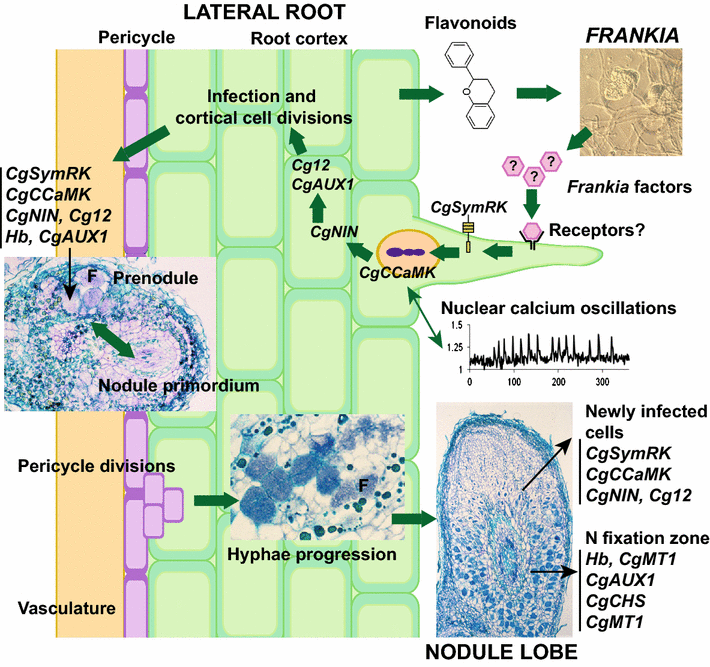
Nitrogen and phosphorus availability are frequent limiting factors in plant growth and development. Certain bacteria and fungi form root endosymbiotic relationships with plants enabling them to exploit atmospheric nitrogen and soil phosphorus. The relationships between bacteria and plants include nitrogen-fixing Gram-negative proteobacteria called rhizobia that are able to interact with most leguminous plants (Fabaceae) but also with the non-legume Parasponia (Cannabaceae), and actinobacteria Frankia, which are able to interact with about 260 species collectively called actinorhizal plants. Fungi involved in the relationship with plants include Glomeromycota that form an arbuscular mycorrhizal (AM) association intracellularly within the roots of more than 80 % of land plants. Increasing numbers of reports suggest that the rhizobial association with legumes has recycled part of the ancestral program used by most plants to interact with AM fungi. This review focuses on the most recent progress made in plant genetic control of root nodulation that occurs in non-legume actinorhizal plant species.
|
|
Scooped by
Jean-Michel Ané
February 17, 2016 5:22 PM
|
Background
Arbuscular mycorrhizal fungi (AMF) form an ecologically important symbiosis with more than two thirds of studied land plants. Recent studies of plant-pathogen interactions showed that effector proteins play a key role in host colonization by controlling the plant immune system. We hypothesise that also for symbiotic-plant interactions the secreted effectome of the fungus is a major component of communication and the conservation level of effector proteins between AMF species may be indicative whether they play a fundamental role.
Results
In this study, we used a bioinformatics pipeline to predict and compare the effector candidate repertoire of the two AMF species, Rhizophagus irregularis and Rhizophagus clarus. Our in silico pipeline revealed a list of 220 R. irregularis candidate effector genes that create a valuable information source to elucidate the mechanism of plant infection and colonization by fungi during AMF symbiotic interaction. While most of the candidate effectors show no homologies to known domains or proteins, the candidates with homologies point to potential roles in signal transduction, cell wall modification or transcription regulation. A remarkable aspect of our work is presence of a large portion of the effector proteins involved in symbiosis, which are not unique to each fungi or plant species, but shared along the Glomeromycota phylum. For 95 % of R. irregularis candidates we found homologs in a R. clarus genome draft generated by Illumina high-throughput sequencing. Interestingly, 9 % of the predicted effectors are at least as conserved between the two Rhizophagus species as proteins with housekeeping functions (similarity > 90 %). Therefore, we state that this group of highly conserved effector proteins between AMF species may play a fundamental role during fungus-plant interaction.
Conclusions
We hypothesise that in symbiotic interactions the secreted effectome of the fungus might be an important component of communication. Identification and functional characterization of the primary AMF effectors that regulate symbiotic development will help in understanding the mechanisms of fungus-plant interaction.
|
|
|
Scooped by
Jean-Michel Ané
February 18, 2016 1:09 PM
|
Since the post-war Green Revolution, agricultural productivity has increased dramatically in terms of crop yield and predictability, largely dependent on the development and application of novel pesticides and nitrogen- and phosphorus-based fertilisers, coupled to advances in plant breeding and genetic technologies. In the last 15 years however, the yields of many key European crops have plateaued. With an ever-increasing human population and depletion of global rock-phosphorus and growing energy prices making fertiliser production unsustainable, Europe is now facing a food security crisis.
Many crops have been shown to form mutualisms with arbuscular mycorrhizal fungi (AMF) leading to the development of novel approaches in crop breeding and agricultural practices, encouraging the formation of crop-mycorrhizal associations and thereby the utilisation of existing soil phosphorus pools. However, it has also been shown that the colonisation of roots by AMF varies significantly and continuously among cultivars in cereals. It remains unknown how effective the application of commercially available mycorrhizal inoculums are in increasing mycorrhizal colonisation and functioning in crops. In addition to this, research on wild plants has shown that the functional efficiency of the exchange of carbon-for nutrients is affected by atmospheric CO2 concentrations. With global CO2 concentrations reaching a record high in 2015, it is now vital that we understand the interactions between domestic crops, AMF and CO2 with a view to optimising future crop production and establishing food security.
Objectives
Determine the physiological basis of mycorrhizal functioning relative to and interactions between:
1) Crop cultivar
2) Application of commercially available mycorrhizal inoculum
3) Increases in atmospheric CO2
By growing cereal crops under CO2 concentrations relative to present day and future-climate predictions, and using different combinations of commercially-available AMF inocula, this project will explore the physiological mechanisms underpinning carbon-for-nutrient exchange dynamics between crops and a range of potential fungal symbionts. Using a range of cutting-edge techniques including isotope tracing and metabolomics, this project project provides excellent opportunities for training in a wide variety of lab and field techniques, including: isotope tracing, metabolite profiling, experimental design and analysis of complex physiological datasets using statistical models.
This fully-funded PhD position is co-supervised by Prof. Duncan Cameron (Univ. Sheffield) and is part of the White Rose Studentship Network: Water, nutrients and pests – the key drivers to unlocking food security targets. This multidisciplinary network promotes collaboration between the Universities of Leeds, Sheffield and York each of which will be allocated one PhD studentship. Each studentship is bilateral involving two supervisors – the principal supervisor at the lead institution and the co-supervisor at the partner institution. Studentships provide full tuition fees at UK/EU student rates, an annual maintenance grant and a contribution towards research and travel expenses to students embarking on full-time PhD programmes. The students will therefore benefit from being part of an integrated community working upon a larger initiative.
The advertised network focuses on three priority areas in agri-science: plant water use efficiency in relation to nitrate cycling (Sheffield - York), understanding how mutualistic plant-fungi interactions change in response to elevated CO2 (Leeds - Sheffield) and development of broad-range bacterial biocontrol application against co-occurring soil-borne pathogens (York - Leeds). Students will meet their supervisors on weekly basis and all members of the network will meet formally three times a year, once at each site, to present their work and discuss plans for joint experiments. Students will be encouraged to fulfil the award training requirements at their host institutions and avail themselves of opportunities at the other network institutions. Participation at both national and international conferences will be encouraged.
|
|
Scooped by
Jean-Michel Ané
February 18, 2016 1:05 PM
|
The complete mitochondrial genome of Medicago truncatula (M. truncatula) was reported in this study. The mitochondrial genome (mitogenome) was assembled to 271 618 nt. The mitogenome contains 31 protein-coding genes, three rRNA genes and 16 tRNAs. The overall base composition of the mitogenome in descending order is A: 27.21%, C: 22.61%, G: 22.78% and T: 27.40%, and the G + C content is 45.39%. Additionally, 30 exons and 17 introns were identified in eight genes and nine tandem repeats were identified with the period size from 10 nt to 33 nt. Phylogenetic analysis shows that the M. truncatula genome is evolutionarily closest to that of Lotus japonicas. With the complete mitogenome of M. truncatula, it is beneficial to the further research of mitogenome of seed plants, and especially helpful for elucidating vital activities of legumes.
|
|
Scooped by
Jean-Michel Ané
February 18, 2016 12:59 PM
|
Rhodococcus fascians is a phytopathogenic Gram-positive Actinomycete with a very broad host range encompassing especially dicotyledonous herbaceous perennials, but also some monocots, such as the Liliaceae and, recently, the woody crop pistachio. The pathogenicity of R. fascians strain D188 is known to be encoded by the linear plasmid pFiD188 and to be dictated by its capacity to produce a mixture of cytokinins. Here, we show that D188-5, the nonpathogenic plasmid-free derivative of the wild-type strain D188 actually has a plant growth-promoting effect. With the availability of the genome sequence of R. fascians, the chromosome of strain D188 was mined for putative plant growth-promoting functions and the functionality of some of these activities was tested. This analysis together with previous results suggests that the plant growth-promoting activity of R. fascians is due to production of plant growth modulators, such as auxin and cytokinin, combined with degradation of ethylene through 1-amino-cyclopropane-1-carboxylic acid deaminase. Moreover, R. fascians has several functions that could contribute to efficient colonization and competitiveness, but there is little evidence for a strong impact on plant nutrition. Possibly, the plant growth promotion encoded by the D188 chromosome is imperative for the epiphytic phase of the life cycle of R. fascians and prepares the plant to host the bacteria, thus ensuring proper continuation into the pathogenic phase.
|
|
Scooped by
Jean-Michel Ané
February 18, 2016 12:56 PM
|
Lentil plays a major role in the food and nutritional security of low income Ethiopian families because of the high protein content of their seed; however, their productivity typically is low largely due to soil fertility limitations. Field and pot experiments were conducted during the 2011 cropping season to determine the effectiveness of Rhizobium strains on two cultivars of lentil in Southern Ethiopia. Six rhizobial inoculant treatments (four indigenous and two commercial inoculants), a nitrogen (N) fertilizer treatment (50 kg·urea·ha−1) and an absolute control (non-inoculated non-fertilized) were used. Inoculated plants produced significantly higher nodule number, nodule dry weight, grain yield and yield components than non-inoculated non-fertilized plants. Inoculation of field grown lentil with rhizobia strain Lt29 and Lt5 enhanced seed yield by 59% and 44%, respectively. Whereas urea fertilization enhanced yields by 40%. Similarly, grain yields were increased during the pot experiment by 92% and 67% over the control treatments by inoculation with Lt29 and Lt5, respectively. The highest levels of N fixation were achieved in plants inoculated with Lt29 (65.7% Ndfa). Both field and pot investigations indicate that inoculation of lentil with native rhizobial strains replace the need for inorganic N fertilization to optimize lentil yields.
|
|
Scooped by
Jean-Michel Ané
February 18, 2016 12:54 PM
|
Azorhizobium oxalatiphilum is a Gram-negative, motile, non-spore-forming bacteria from the familia of Xanthobacteraceae wich has been isolated from the plant Rumex sp. petioles in Mugla in Turkey.[1][3][4][5] Azorhizobium oxalatiphilum has the ability to utilizes oxalic acid.[5][3]
|
|
Scooped by
Jean-Michel Ané
February 18, 2016 12:49 PM
|
Trichoderma spp. are versatile opportunistic plant symbionts that can cause substantial changes in the metabolism of host plants, thereby increasing plant growth and activating plant defense to various diseases. Target metabolite profiling approach was selected to demonstrate that Trichoderma longibrachiatum isolated from desert soil can confer beneficial agronomic traits to onion and induce defense mechanism against Fusarium oxysporum f. sp. cepa (FOC), through triggering a number of primary and secondary metabolite pathways. Onion seeds primed with Trichoderma T1 strain displayed early seedling emergence and enhanced growth compared with Trichoderma T2-treatment and untreated control. Therefore, T1 was selected for further investigations under greenhouse conditions, which revealed remarkable improvement in the onion bulb growth parameters and resistance against FOC. The metabolite platform of T1-primed onion (T1) and T1-primed onion challenged with FOC (T1 + FOC) displayed significant accumulation of 25 abiotic and biotic stress-responsive metabolites, representing carbohydrate, phenylpropanoid and sulfur assimilation metabolic pathways. In addition, T1- and T1 + FOC-treated onion plants showed discrete antioxidant capacity against 1,1 −diphenyl-2-picrilhydrazyl (DPPH) compared with control. Our findings demonstrated the contribution of T. longibrachiatum to the accumulation of key metabolites, which subsequently leads to the improvement of onion growth, as well as its resistance to oxidative stress and FOC.
|
|
Scooped by
Jean-Michel Ané
February 18, 2016 12:43 PM
|
Plant growth promoting rhizobacteria (PGPR) can associate and enhance the growth of important crop grasses. However, in most cases, the molecular mechanisms responsible for growth promotion are not known. Such research could benefit by the adoption of a grass model species that showed a positive response to bacterial inoculation and was amenable to genetic and molecular research methods. In this work we inoculated different genotypes of the model grass Brachypodium distachyon with two, well-characterized PGPR bacteria, Azospirillum brasilense and Herbaspirillum seropedicae, and evaluated the growth response. Plants were grown in soil under no nitrogen or with low nitrogen (i.e., 0.5 mM KNO3). A variety of growth parameters (e.g., shoot height, root length, number of lateral roots, fresh and dry weight) were measured 35 days after inoculation. The data indicate that plant genotype plays a very important role in determining the plant response to PGPR inoculation. A positive growth response was observed with only four genotypes grown under no nitrogen and three genotypes tested under low nitrogen. However, in contrast, relatively good root colonization was seen with most genotypes, as measured by drop plate counting and direct, microscopic examination of roots. In particular, the endophytic bacteria H. seropedicae showed strong epiphytic and endophytic colonization of roots.
|
|
Scooped by
Jean-Michel Ané
February 18, 2016 11:53 AM
|
Jasmonic acid (JA) is an essential hormone in plant development and defense responses in Arabidopsis thaliana. Exogenous treatment with JA has recently been shown to alter root exudate profiles and the composition of root-associated bacterial communities. However, it is currently unknown whether disruptions of the JA in the rhizosphere affect root exudation profiles and the relative abundance of bacteria and archaea in the rhizosphere. In the present study, two Arabidopsis mutants that are disrupted in different branches of the jasmonate pathway, namely myc2 and med25, were cultivated in nutrient solution and soil to profile root exudates and bacterial and archaeal communities, respectively. Compared with the wild type, both mutants showed distinct exudation patterns, including lower amounts of asparagine, ornithine, and tryptophan, as well as distinct bacterial and archaeal community composition, as illustrated by an increased abundance of Streptomyces, Bacillus, and Lysinibacillus taxa in the med25 rhizosphere and an Enterobacteriaceae population in myc2. Alternatively, the Clostridiales population was less abundant in the rhizosphere of both mutants. Similarities between plant genotypes were highly correlated, as determined by operational taxonomic units in the rhizosphere and metabolites in root exudates. This strongly suggests that root exudates play a major role in modulating changes in microbial community composition upon plant defense responses.
|
|
Scooped by
Jean-Michel Ané
February 18, 2016 10:51 AM
|
In this chapter, we explore some of the evolutionary, ecological, molecular genetics, and applied aspects of a subset of insect pathogenic fungi that also have a lifestyle as endophytes and we term endophytic insect pathogenic fungi (EIPF). We focus particularly on Metarhizium spp. and Beauveria bassiana as EIPF.
The discussion of the evolution of EIPF challenges a view that these fungi were first and foremost insect pathogens that eventually evolved to colonize plants. Phylogenetic evidence shows that the lineages of EIPF are most closely related to grass endophytes that diverged c. 100 MYA. We discuss the relationship between genes involved in “insect pathogenesis” and those involved in “endophytism” and provide examples of genes with potential importance in lifestyle transitions toward insect pathogenicity. That is, some genes for insect pathogenesis may have been coopted from genes involved in endophytic colonization. Other genes may be multifunctional and serve in both lifestyle capacities.
The interactions of EIPF with their host plants are discussed in some detail. The genetic basis for rhizospheric competence, plant communication, and nutrient exchange is examined and we highlight, with examples, the benefits of EIPF to plants, and the potential reservoir of secondary metabolites hidden within these beneficial symbioses.
|
|
Scooped by
Jean-Michel Ané
February 18, 2016 10:48 AM
|
HAK/KUP/KT K+ transporters have been widely associated with K+ transport across membranes in bacteria, fungi, and plants. Indeed some members of the plant HAK/KUP/KT family contribute to root K+ uptake, notably at low external concentrations. Besides such role in acquisition, several studies carried out in Arabidopsis have shown that other members are also involved in developmental processes. With the publication of new plant genomes, a growing interest on plant species other than Arabidopsis has become evident. In order to understand HAK/KUP/KT diversity in these new plant genomes, we discuss the evolutionary trends of 913 HAK/KUP/KT sequences identified in 46 genomes revealing five major groups with an uneven distribution among angiosperms, notably between dicotyledonous and monocotyledonous species. This information evidenced the richness of crop genomes in HAK/KUP/KT transporters and supports their study for unraveling novel physiological roles of such transporters in plants.
|
|
Scooped by
Jean-Michel Ané
February 17, 2016 5:30 PM
|
Pseudomonas sp. strain L10.10 (=DSM 101070) is a psychrotolerant bacterium which was isolated from Lagoon Island, Antarctica. Analysis of its complete genome sequence indicates its possible role as a plant-growth promoting bacterium, including nitrogen-fixing ability and indole acetic acid (IAA)-producing trait, with additional suggestion of plant disease prevention attributes via hydrogen cyanide production.
|
|
Scooped by
Jean-Michel Ané
February 17, 2016 5:27 PM
|
Background and aims
Belowground competition and allelopathic interference of neighbouring plants play important roles in shaping plant performance. We assessed the effect of belowground interactions involving root competition, root exudates and ectomycorrhizal (ECM) association between Kalmia and black spruce on above- and belowground biomass increment and foliar nutrient content of black spruce seedlings. We predicted that root competition and root exudates of Kalmia would exert a negative impact on black spruce performance, while ECM in black spruce would exert positive impacts on its performance.
Methods
In a greenhouse experiment, using the neutral growth medium of peat-vermiculite, we planted Kalmia and black spruce seedling in pairs. We controlled root competition by placing fine wire mesh between the seedlings and applied benomyl fungicide to control ectomycorrhizae. We used activated charcoal to neutralize the potential allelopathic effects associated with root exudates. After 8 months, we evaluated the performance of black spruce seedlings in terms of biomass, abundance of ectomycorrhizal short roots and foliar nutrient concentrations. To determine treatment effects on soil processes, we also analysed soil pH, total phenols, C:N ratio and bioavailable nitrogen (NO3− and NH4+) at the end of the experiment.
Results
We found a significant effect of root competition on root-shoot ratio and biomass increment in black spruce seedlings, which achieved the highest root-shoot ratio and biomass increment when major root competition was controlled. Kalmia produced twice the root biomass than black spruce. Surprisingly, charcoal and benomyl treatments—which remove the effects of Kalmia allelopathy on black spruce and suppress ECM growth, respectively—had little or no significant effect on overall biomass of black spruce. In contrast, Kalmia biomass increment and root-shoot ratio were maximized in benomyl treatment. Soil pH and C:N ratio were significantly higher in free competition than root exclusion and benomyl treatments and with activated charcoal.
Conclusions
Kalmia root competition mediated by high root biomass is the predominant driver shaping neighbourhood interactions between Kalmia and black spruce, which in turn shape the performance of black spruce seedlings. Root exudates of Kalmia have a very weak effect on black spruce seedling growth.
|