Your new post is loading...

|
Scooped by
Jean-Michel Ané
February 23, 2016 3:50 PM
|
The use of high-quality rhizobial inoculants on agricultural legumes has contributed substantially to the N economy of farming systems through inputs from biological nitrogen fixation (BNF). Large populations of symbiotically effective rhizobia should be available in the rhizosphere for symbiotic BNF with host plants. The rhizobial populations should also be able to compete and infect host plants. However, the rhizosphere comprises large populations of different microorganisms. Some of these microorganisms naturally produce antibiotics which are lethal to susceptible rhizobial populations in the soil. Therefore, intrinsic resistance to antibiotics is a desirable trait for the rhizobial population. It increases the rhizobia’s chances of growth, multiplication and persistence in the soil. With a large population of rhizobia in the soil, infectivity of host plants and the subsequent BNF efficiency can be guaranteed. This review, therefore, puts together findings by various researchers on antibiotic resistance in bacteria with the main emphasis on rhizobia. It describes the different modes of action of different antibiotics, the types of antibiotic resistance exhibited by rhizobia, the mechanisms of acquisition of antibiotic resistance in rhizobia and the levels of tolerance of different rhizobial species to different antibiotics.
|
|
Scooped by
Jean-Michel Ané
February 22, 2016 2:10 PM
|
We all know about the World Wide Web. But you describe something called the “wood wide web.” Tell us about it.
It’s long been known that the trees in a forest are connected by mycorrhizal fungi. This means fungi that live symbiotically with the roots of forest trees. The forest trees can’t grow without them because they haven’t got enough access to the minerals in the soil, and the fungi can’t grow without the trees because they have no chlorophyll and therefore can’t manufacture sugars. It's a beautiful symbiosis in which all trees are involved.
|
|
Scooped by
Jean-Michel Ané
February 21, 2016 3:50 PM
|
In temperate and boreal forest ecosystems, nitrogen (N) limitation of tree metabolism is alleviated by ectomycorrhizal (ECM) fungi. As forest soils age, the primary source of N in soil switches from inorganic (NH4+ and NO3−) to organic (mostly proteins). It has been hypothesized that ECM fungi adapt to the most common N source in their environment, which implies that fungi growing in older forests would have greater protein degradation abilities. Moreover, recent results for a model ECM fungal species suggest that organic N uptake requires a glucose supply. To test the generality of these hypotheses, we screened 55 strains of 13 Suillus species with different ecological preferences for their in vitro protein degradation abilities. Suillus species preferentially occurring in mature forests, where soil contains more organic matter, had significantly higher protease activity than those from young forests with low-organic-matter soils or species indifferent to forest age. Within species, the protease activities of ecotypes from soils with high or low soil organic N content did not differ significantly, suggesting resource partitioning between mineral and organic soil layers. The secreted protease mixtures were strongly dominated by aspartic peptidases. Glucose addition had variable effects on secreted protease activity; in some species, it triggered activity, but in others, activity was repressed at high concentrations. Collectively, our results indicate that protease activity, a key ectomycorrhizal functional trait, is positively related to environmental N source availability but is also influenced by additional factors, such as carbon availability.
|
|
Scooped by
Jean-Michel Ané
February 21, 2016 3:02 PM
|
As a crucial reciprocal partner, arbuscular mycorrhizal fungi (AMF) can alleviate the negative effects of a variety of pollutants on their hosts and soil microbes. In our previous studies, such characteristics of AMF on plant growth were documented in response to metal engineered nanoparticle (ENP) treatments. However, the role of AMF in influencing ENP effects on soil microbes remains a matter of debate. To address this issue, we investigated the responses of soil microorganisms to iron oxide nanoparticles (Fe3O4NPs) along a concentration gradient (0.1, 1.0, and 10.0 mg kg−1) in maize plants inoculated with and without AMF. The results showed that a high concentration of Fe3O4NPs significantly decreased the soil bacterial abundance and shifted the community composition, and these negative responses were associated with decreased soil dissolved organic C (DOC) contents in non-AMF-inoculated treatments. However, in AMF-inoculated treatments, no significant changes in soil biota or DOC contents were observed under Fe3O4NPs treatment. These results indicate that AMF alter the effects of Fe3O4NPs on soil microorganisms, possibly by influencing plant growth and organic matter released from plant roots, as DOC contents were impacted by AMF. Our findings suggest that AMF can influence Fe3O4NP-plant-microbe interactions; therefore, more attention should be focused on plant-associated microbes when evaluating the biological effects of nanoparticles.
|
|
Scooped by
Jean-Michel Ané
February 21, 2016 2:07 PM
|
A greenhouse pot experiment was conducted to study the impact of arbuscular mycorrhizal fungi−Glomus versiforme (Gv) and Rhizophagus intraradices (Ri) on the growth, Cd uptake, antioxidant indices [glutathione reductase (GR), ascorbate peroxidase (APX), superoxide dismutase (SOD), catalase (CAT), ascorbate (ASA), glutathione (GSH) and malonaldehyde (MDA)] and phytochelatins (PCs) production of Lonicera japonica in Cd-amended soils. Gv and Ri significantly increased P acquisition, biomass of shoots and roots at all Cd treatments. Gv significantly decreased Cd concentrations in shoots and roots, and Ri also obviously reduced Cd concentrations in shoots but increased Cd concentrations in roots. Meanwhile, activities of CAT, APX and GR, and contents of ASA and PCs were remarkably higher in Gv/Ri-inoculated plants than those of uninoculated plants, but lower MDA and GSH contents in Gv/Ri-inoculated plants were found. In conclusion, Gv and Ri symbiosis alleviated Cd toxicity of L. japonica through the decline of shoot Cd concentrations and the improvement of P nutrition, PCs content and activities of GR, CAT, APX in inoculated plants, and then improved plant growth. The decrease of shoot Cd concentrations in L. japonica inoculated with Gv/Ri would provide a clue for safe production of this plant from Cd-contaminated soils.
|
|
Scooped by
Jean-Michel Ané
February 21, 2016 11:40 AM
|
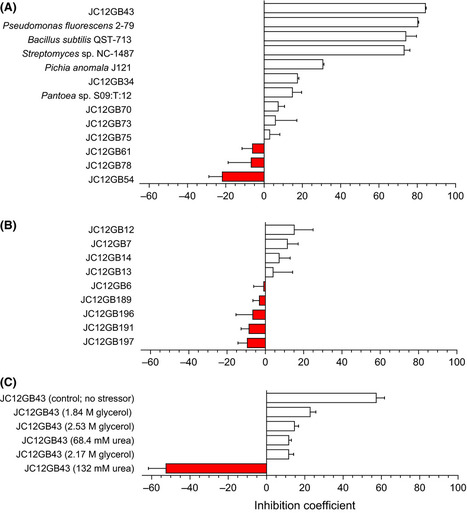
There is a pressing need to understand and optimize biological control so as to avoid over-reliance on the synthetic chemical pesticides that can damage environmental and human health. This study focused on interactions between a novel biocontrol-strain, Bacillus sp. JC12GB43, and potato-pathogenic Phytophthora and Fusarium species. In assays carried out in vitro and on the potato tuber, the bacterium was capable of near-complete inhibition of pathogens. This Bacillus was sufficiently xerotolerant (water activity limit for growth = 0.928) to out-perform Phytophthora infestans (~0.960) and challenge Fusarium coeruleum (~0.847) and Fusarium sambucinum (~0.860) towards the lower limits of their growth windows. Under some conditions, however, strain JC12GB43 stimulated proliferation of the pathogens: for instance, Fusarium coeruleum growth-rate was increased under chaotropic conditions in vitro (132 mM urea) by >100% and on tubers (2-M glycerol) by up to 570%. Culture-based assays involving macromolecule-stabilizing (kosmotropic) compatible solutes provided proof-of-principle that the Bacillus may provide kosmotropic metabolites to the plant pathogen under conditions that destabilize macromolecular systems of the fungal cell. Whilst unprecedented, this finding is consistent with earlier reports that fungi can utilize metabolites derived from bacterial cells. Unless the antimicrobial activities of candidate biocontrol strains are assayed over a full range of field-relevant parameters, biocontrol agents may promote plant pathogen infections and thereby reduce crop yields. These findings indicate that biocontrol activity, therefore, ought to be regarded as a mode-of-behaviour (dependent on prevailing conditions) rather than an inherent property of a bacterial strain.
|
|
Scooped by
Jean-Michel Ané
February 21, 2016 11:35 AM
|
As it is well known, arbuscular mycorrhizal (AM) colonization can be initiated from the following three types of fungal propagules: spores, extraradical mycelium (ERM), and mycorrhizal root fragments harboring intraradical fungal structures. It has been shown that biomass allocation of AM fungi (AMF) among these three propagule types varies between fungal taxa, as also differs the ability of the different AMF propagule fractions to initiate new colonizations. In this study, the composition of the AMF community in the roots of rosemary (Rosmarinus officinalis L., a characteristic Mediterranean shrub), inoculated with the three different propagule types, was analyzed. Accordingly, cuttings from this species were inoculated with either AMF spores, ERM, or colonized roots extracted from a natural soil. The AMF diversity within the rosemary roots was characterized using terminal restriction fragment length polymorphism (T-RFLP) of the small subunit (SSU) rDNA region. The AMF community established in the rosemary plants was significantly different according to the type of propagule used as inoculum. AMF taxa differed in their ability to initiate new colonizations from each propagule type. Results suggest different colonization strategies for the different AMF families involved, Glomeraceae and Claroideoglomeraceae colonizing mainly from colonized roots whereas Pacisporaceae and Diversisporaceae from spores and ERM. This supports that AMF taxa show contrasting life-history strategies in terms of their ability to initiate new colonizations from the different propagule types. Further research to fully understand the colonization and dispersal abilities of AMF is essential for their rational use in ecosystem restoration programs.
|
|
Scooped by
Jean-Michel Ané
February 19, 2016 10:13 AM
|
Small molecule histone deacetylase (HDAC) and DNA methyltransferase (DNMT) inhibitors are commonly used to perturb the production of fungal metabolites leading to the induction of the expression of silent biosynthetic pathways. Several reports have described the variable effects observed in natural product profiles in fungi treated with HDAC and DNMT inhibitors, such as enhanced chemical diversity and/or the induction of new molecules previously unknown to be produced by the strain. Fungal endophytes are known to produce a wide variety of secondary metabolites (SMs) involved in their adaptation and survival within higher plants. The plant-microbe interaction may influence the expression of some biosynthetic pathways, otherwise cryptic in these fungi when grown in vitro. The aim of this study was to setup a systematic approach to evaluate and identify the possible effects of HDAC and DNMT inhibitors on the metabolic profiles of wild type fungal endophytes, including the chemical identification and characterization of the most significant SMs induced by these epigenetic modifiers.
|
|
Scooped by
Jean-Michel Ané
February 19, 2016 10:08 AM
|
The effects of slope aspects on soil biogeochemical properties and plant communities in forested environments have been studied extensively; however, slope aspect influence on soil microbial communities remains largely unexamined, despite the central role of soil biota in ecosystem functioning. In this study, the communities of both soil bacteria and arbuscular mycorrhizal fungi (AMF) were investigated using tagged pyrosequencing for three types of slope aspects (south-facing aspect, north-facing aspect and flat area) in a boreal forest of the Greater Khingan Mountains, China. The bacterial and AMF community composition differed with slope aspects. Bacterial diversity was the lowest on the north-facing aspect, and AMF diversity was the lowest on the flat area. Aspects also had a significant impact on soil pH and available phosphorus (P) and shrubby biomass. Soil pH and understory shrub biomass were significantly correlated with bacterial communities, and soil available P and shrub biomass showed significant correlations with AMF communities. Our results suggested that slope aspects affected bacterial and AMF communities, mediated by aspect-induced changes in plant community and soil chemical properties (e.g., pH and available P), which improved the knowledge on the effects of forest slope aspects on aboveground and belowground communities.
|
|
Scooped by
Jean-Michel Ané
February 19, 2016 10:05 AM
|
The conservation of orchids is challenging due to their strong biotic relations and tiny seeds, requiring mycorrhiza for germination. This is aggravated when tropical plants are maintained in artificial conditions of greenhouses. We aimed to select the plant growth promoting rhizobacteria (PGPR) for orchid seed germination, to study plant–microbial interactions, and to determine whether there is any specificity between two species of Dendrobium plants in choosing bacterial partners. By the isolation of rhizoplane and endophytic rhizobacteria from Dendrobium moschatum roots, the known PGPR (Azospirillum, Enterobacter, Streptomyces) and less popular (Roseomonas, Agrococcus) strains were tested for the production of biologically active auxin. The bacterization of another orchid, D. noblie, with several newly selected strains and previously isolated ones (Mycobacterium sp., Bacillus pumilus) revealed that the orchids did not express evident specificity in relations with favorable bacteria, but refused to establish associations with Streptomyces and Azospirillum. Endophytic Agrococcus and Sphingomonas strains showed significant promotion of orchid germination. Mycobacterium and B. pumilus were also stable in their positive influence on the acceleration of D. noblie seed development. The active colonization of the seed surface and the inner tissues by associated bacteria was observed under electron microscopy. The analysis of orchid–bacteria relations was made. Altogether, the data shows that selection provides a good strategy for choosing the active strains for orchid seeds’ bacterization, since not all known PGPR are useful and successful in building associative frameworks with orchid seeds. The stable activity of the strains guarantees their long-term and effective application in orchid in vitro biotechnology.
|
|
Scooped by
Jean-Michel Ané
February 19, 2016 9:59 AM
|
Over the last decades, understanding of the effects of plants on soil microbiomes has greatly advanced. However, knowledge on the assembly of rhizospheric communities in aged-contaminated industrial soils is still limited, especially with regard to transcriptionally active microbiomes and their link to the quality or quantity of carbon sources. We compared the short-term (2–10 days) dynamics of bacterial communities and potential PAH-degrading bacteria in bare or ryegrass-planted aged-contaminated soil spiked with phenanthrene, put in relation with dissolved organic carbon (DOC) sources and polycyclic aromatic hydrocarbon (PAH) pollution. Both resident and active bacterial communities (analyzed from DNA and RNA, respectively) showed higher species richness and smaller dispersion between replicates in planted soils. Root development strongly favored the activity of Pseudomonadales within the first 2 days, and of members of Actinobacteria, Caulobacterales, Rhizobiales, and Xanthomonadales within 6–10 days. Plants slowed down the dissipation of phenanthrene, while root exudation provided a cocktail of labile substrates that might preferentially fuel microbial growth. Although the abundance of PAH-degrading genes increased in planted soil, their transcription level stayed similar to bare soil. In addition, network analysis revealed that plants induced an early shift in the identity of potential phenanthrene degraders, which might influence PAH dissipation on the long-term.
|
|
Scooped by
Jean-Michel Ané
February 19, 2016 9:57 AM
|
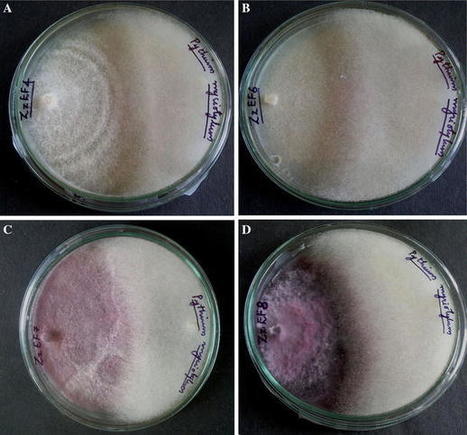
Zingiber zerumbet, a perennial rhizomatous herb exhibits remarkable disease resistance as well as a wide range of pharmacological activities. Towards characterizing the endophytic population of Z. zerumbet rhizomes, experiments were carried out during two different growing seasons viz., early-June of 2013 and late-July of 2014. A total of 34 endophytes were isolated and categorized into 11 morphologically distinct groups. Fungi were observed to predominate bacterial species with colonization frequency values ranging from 12.5 to 50 %. Among the 11 endophyte groups isolated, molecular analyses based on ITS/16S rRNA gene sequences identified seven isolate groups as Fusarium solani, two as F. oxysporum and one as the bacterium Rhizobium spp. Phylogenetic tree clustered the ITS sequences from Z. zerumbet endophytes into distinct clades consistent with morphological and sequence analysis. Dual culture assays were carried out to determine antagonistic activity of the isolated endophytes against Pythium myriotylum, an economically significant soil-borne phytopathogen of cultivated ginger. Experiments revealed significant P. myriotylum growth inhibition by F. solani and F. oxysporum isolates with percentage of inhibition (PoI) ranging from 45.17 ± 0.29 to 62.2 ± 2.58 with F. oxysporum exhibiting higher PoI values against P. myriotylum. Using ZzEF8 metabolite extract, concentration-dependent P. myriotylum hyphal growth inhibition was observed following radial diffusion assays. These observations were confirmed by scanning electron microscopy analysis wherein exposure to ZzEF8 metabolite extract induced hyphal deformities. Results indicate Z. zerumbet endophytes as promising resources for biologically active compounds and as biocontrol agents for soft rot disease management caused by Pythium spp.
|
|
Scooped by
Jean-Michel Ané
February 18, 2016 1:14 PM
|
Key steps in evolution are often singularities. The emergence of land plants is one such case and it is not immediately apparent why. A recent analysis found that the zygnematophycean algae represent the closest relative to embryophytes. Intriguingly, many exaptations thought essential to conquer land are common among various streptophytes, but zygnematophycean algae share with land plants the transfer of a few plastid genes to the nucleus. Considering the contribution of the chloroplast to terrestrialization highlights potentially novel exaptations that currently remain unexplored. We discuss how the streptophyte chloroplast evolved into what we refer to as the embryoplast, and argue this was as important for terrestrialization by freshwater algae as the host cell-associated exaptations that are usually focused upon.
|
|
|
Scooped by
Jean-Michel Ané
February 23, 2016 3:38 PM
|
Glutaredoxins (GRXs) are small ubiquitous oxidoreductases involved in the regulation of the redox state in living cells. In an attempt to identify the full complement of GRXs in the arbuscular mycorrhizal (AM) fungus Rhizophagus irregularis, three additional GRX homologs, besides the formerly characterized GintGRX1 (renamed here as RiGRX1), were identified. The three new GRXs (RiGRX4, RiGRX5 and RiGRX6) contain the CXXS domain of monothiol GRXs, but whereas RiGRX4 and RiGRX5 belong to class II GRXs, RiGRX6 belongs to class I together with RiGRX1. By using a yeast expression system, we observed that the newly identified homologs partially reverted sensitivity of the GRX deletion yeast strains to external oxidants. Furthermore, our results indicated that RiGRX4 and RiGRX5 play a role in iron homeostasis in yeast. Gene expression analyses revealed that RiGRX1 and RiGRX6 were more highly expressed in the intraradical (IRM) than in the extraradical mycelium (ERM). Exposure of the ERM to hydrogen peroxide induced up-regulation of RiGRX1, RiGRX4 and RiGRX5 gene expression. RiGRX4 expression was also up-regulated in the ERM when the fungus was grown in media supplemented with a high iron concentration. These data indicate the two monothiol class II GRXs, RiGRX4 and RiGRX5, might be involved in oxidative stress protection and in the regulation of fungal iron homeostasis. Increased expression of RiGRX1 and RiGRX6 in the IRM suggests that these GRXs should play a key role in oxidative stress protection of R. irregularis during its in planta phase.
|
|
Scooped by
Jean-Michel Ané
February 22, 2016 11:19 AM
|
Dear Colleagues,
We are very pleased to welcome you to the 9th International Conference on Mycorrhizae, to be held from July 30 till August 4, 2017 in Prague, Czech Republic.
Returning to Europe after previous meetings of this series in Brazil, India and the United States of America, this conference will provide a truly global platform for a wide and open exchange of knowledge on mycorrhizal symbiosis, from its anatomy and development through the underlying molecular mechanisms, mycorrhizal ecology and functioning, and its implications for the ecosystems as well as the human society. Particularly, we would like to stimulate discussion on whether the lessons of cooperation in mycorrhizal symbiosis could help establishing a brighter future of the mankind. Given the attractive destination, available congress infrastructure, professional organizer support, and vibrant mycorrhizal research in the Czech Republic, we strongly believe that the International Conference on Mycorrhiza in Prague will be a great success with possibly a record-breaking attendance.
We are looking forward seeing you in Prague!
On behalf of the Local Organizing Committee
Jan Jansa, Ph.D.
|
|
Scooped by
Jean-Michel Ané
February 21, 2016 3:47 PM
|
In this episode, we discuss the complex relationship between fungi and
earth systems processes through time, focusing on the potential role of
fungi in facilitating early terrestrialization and the proposed hypothesis
that fungi may (or may not) have been indirectly responsible for the
Carboniferous coal swamps. Also, Amanda aggressively segues, Curt derails
the conversation into navel gazing about the nature of scientific fields,
and James goes on a fascinating journey from Angry to Annoyed finally
ending up at Resentfully Happy.
"Aces High" Kevin MacLeod (incompetech.com)
Licensed under Creative Commons: By Attribution 3.0
http://creativecommons.org/licenses/by/3.0/
References:
Redecker, Dirk, Robin Kodner, and Linda E. Graham. "Glomalean fungi from
the Ordovician." Science 289.5486 (2000): 1920-1921.
Heckman, Daniel S., et al. "Molecular evidence for the early colonization
of land by fungi and plants." Science 293.5532 (2001): 1129-1133.
Lücking, Robert, et al. "Fungi evolved right on track." Mycologia 101.6
(2009): 810-822.
Nelsen, Matthew P., et al. "Delayed fungal evolution did not cause the
Paleozoic peak in coal production." Proceedings of the National Academy of
Sciences (2016): 201517943.
|
|
Scooped by
Jean-Michel Ané
February 21, 2016 2:57 PM
|
In this study, the tolerance of Mesorhizobium sp. ACMP18, Mesorhizobium sp. USDA3350, and Mesorhizobium temperatum LMG23931 strains, to cold and freezing were investigated. The ability to withstand freezing at −20 °C and −70 °C for 24 months was different among the studied strains and depended on the cryoprotectant used. The survivability of mesorhizobial strains at −20 °C and −70 °C was significantly improved by some cryoprotectans (glycerol and sucrose/peptone). It is worth noting that the greatest resistance to freezing was detected when stress treatments were performed in glycerol as a cryoprotectant. Using PCR analysis, cspA genes were identified in the studied strains. Their nucleotide sequences were most similar to the sequences of the corresponding genes of the Mesorhizobium species. The expression of the cspA gene in the studied bacteria was analyzed using the RT-PCR technique. The fatty acid composition of the mesorhizobia was determined at 5, 10, 15, and 28 °C. It was noticed that growth temperature significantly affected the fatty acid composition and the amounts of unsaturated fatty acids, especially that of cis-vaccenic acid (18:1ɷ11), increased markedly in bacterial cells cultivated at 5, 10, and 15 °C.
|
|
Scooped by
Jean-Michel Ané
February 21, 2016 12:02 PM
|
The phyllosphere presents a unique system of discrete and easily replicable surfaces colonized primarily by bacteria. However, the biogeography of bacteria in the phyllosphere is little understood, especially at small to intermediate scales. Bacterial communities on the leaves of 91 southern magnolia (Magnolia grandiflora) trees 1–452 m apart in a small forest plot were analyzed and fragments of the 16S ribosomal RNA (rRNA) gene sequenced using the Illumina platform. Assemblages were dominated by members of the Alphaproteobacteria, Bacteroidetes, and Acidobacteria. Patterns in community composition were measured by both relative abundance (theta) and presence-absence (Jaccard) dissimilarity metrics. Distance-based Moran’s eigenvector map analyses of the distance-decay relationship found a significant, positive relationship between each dissimilarity metric and significant eigenfunctions derived from geographic distance between trees, indicating trees that were closer together had more similar bacterial phyllosphere communities. Indirect gradient analyses revealed that several environmental parameters (canopy cover, tree elevation, and the slope and aspect of the ground beneath trees) were significantly related to multivariate ordination scores based on relative bacterial sequence abundances; however, these relationships were not significant when looking at the incidence of bacterial taxa. This suggests that bacterial growth and abundance in the phyllosphere is shaped by different assembly mechanisms than bacterial presence or absence. More broadly, this study demonstrates that the distance-decay relationship applies to phyllosphere communities at local scales, and that environmental parameters as well as neutral forces may both influence spatial patterns in the phyllosphere.
|
|
Scooped by
Jean-Michel Ané
February 21, 2016 11:39 AM
|
In order to assess the physiological responses of bradyrhizobia and competition for the nodulation of soybean at different temperatures, we investigated the expression of the nodC gene at 20, 25, and 30°C and the abilities of bacteria to nodulate soybean in microcosms at day/night cultivation temperatures of 23/18°C, 28/23°C, and 33/28°C for 16/8 h. We tested five Bradyrhizobium USDA strains: B. diazoefficiens USDA 110T and 122, B. japonicum USDA 123, and B. elkanii USDA 31 and 76T. The expression of nodC was up-regulated by increasing culture temperatures in USDA 110T, 122, 31, and 76T, but was down-regulated in USDA 123. The proportions of USDA 110T and 122 within the community were the greatest at 28/23°C. The population of USDA 31 increased, whereas that of USDA 123 decreased with increasing cultivation temperatures. On the other hand, infection by USDA 76T was not detected, and low numbers of USDA 76T nodules confirmed its poor nodulation ability. These results indicate that the competitiveness of and infection by USDA 110T, 122, 123, and 31 for soybean nodulation depend on cultivation temperatures, and suggest that the temperature dependence of nodC expression affects the bradyrhizobial community structure.
|
|
Scooped by
Jean-Michel Ané
February 21, 2016 11:32 AM
|
Endosymbiosis interactions allow plants to grow in nutrient-deficient soil environments. The arbuscular mycorrhizal (AM) symbiosis is an ancestral interaction between land plants and fungi, whereas nitrogen-fixing symbioses are highly specific for certain plants, notably major crop legumes. The signaling pathways triggered by specific lipochitooligosaccharide molecules involved in these interactions have common components that also overlap with plant root development. These pathways include receptor-like kinases, transcription factors (TFs), and various intermediate signaling effectors, including noncoding (nc)RNAs. These latter molecules have emerged as major regulators of gene expression and small ncRNAs, composed of micro (mi)RNAs and small interfering (si)RNAs, are known to control gene expression at transcriptional (chromatin) or posttranscriptional levels. In this review, we describe exciting recent data connecting variants of conserved si/miRNAs with the regulation of TFs, such as NSP2, NFY-A1, auxin-response factors, and AP2-like proteins, known to be involved in symbiosis. The link between hormonal regulations and these si- and miRNA-TF nodes is proposed in a model in which different feedback loops or regulations controlling endosymbiosis signaling are integrated. The diversity and emerging regulatory networks of young legume miRNAs are also highlighted.
|
|
Scooped by
Jean-Michel Ané
February 19, 2016 10:13 AM
|
CRAG (Centre for Research in Agricultural Genomics) is developing a high-throughput screening system to assess colonization by the arbuscular mycorrhizal fungi (AMF) Rizhophagus irregularis and the impact of the AMF on resistance to the foliar pathogen Magnaporte oryzae. Expression profiling will be used to identify marker genes for AM-induced disease resistance in rice.
|
|
Scooped by
Jean-Michel Ané
February 19, 2016 10:08 AM
|
Aims
We aimed to characterise the arbuscular mycorrhizal fungal (AMF) community structure and potential edaphic determinants in the dominating, but poorly described, root-colonizing Paris-type AMF community on co-occurring Amazonian leguminous trees.
Methods
Three highly productive leguminous trees (Dicorynia guianensis, Eperua falcata and Tachigali melinonii were targeted) in species-rich forests on contrasting soil types at the Nouragues Research Station in central French Guiana. Abundant AMF SSU rRNA amplicons (NS31-AM1 & AML1-AML2 primers) from roots identified via trnL profiling were subjected to denaturing gradient gel electrophoresis (DGGE), clone library sequencing and phylogenetic analysis.
Results
Classical approaches targeting abundant SSU amplicons highlighted a diverse root-colonizing symbiotic AMF community dominated by members of the Glomeraceae. DGGE profiling indicated that, of the edaphic factors investigated, soil nitrogen was most important in influencing the AMF community and this was more important than any host tree species effect.
Conclusions
Dominating Paris-type mycorrhizal leguminous trees in Amazonian soils host diverse and novel taxa within the Glomeraceae that appear under edaphic selection in the investigated tropical forests. Linking symbiotic diversity of identified AMF taxa to ecological processes is the next challenge ahead.
|
|
Scooped by
Jean-Michel Ané
February 19, 2016 10:02 AM
|
The interaction between roots and bacterial communities in halophytic species is poorly understood. Here, we used Jerusalem artichoke cultivar Nanyu 1 (NY-1) to characterise root distribution patterns and determine diversity and abundance of bacteria in the rhizosphere soil under variable salinity. Root growth was not inhibited within the salinity range 1.2 to 1.9 g salt/kg, but roots were mainly confined to 0–20 cm soil layer vertically and 0–30 cm horizontally from the plant centre. Root concentrations of K+, Na+, Mg2+ and particularly Ca2+ were relatively high under salinity stress. High salinity stress decreased soil invertase and catalase activity. Using a next-generation, Illumina-based sequencing approach, we determined higher diversity of bacteria in the rhizosphere soil at high than low salinity. More than 15,500 valid reads were obtained, and Proteobacteria, Acidobacteria, Bacteroidetes and Actinobacteria predominated in all samples, accounting for >80% of the reads. On a genus level, 636 genera were common to the low and high salinity treatments at 0–5 cm and 5–10 cm depth. The abundance of Steroidobacter and Sphingomonas was significantly decreased by increasing salinity. Higher Shannon and Chao 1 indices with increasing severity of salt stress indicated that high salt stress increased diversity in the bacterial communities.
|
|
Scooped by
Jean-Michel Ané
February 19, 2016 9:58 AM
|
Riptortus pedestris harboring Burkholderia symbiont is a useful symbiosis model to study the molecular interactions between insects and bacteria. We recently reported that the lipopolysaccharide O-antigen is absent in the Burkholderia symbionts isolated from Riptortus guts. Here, we investigated the symbiotic role of O-antigen comprehensively in the Riptortus-Burkholderia model. Firstly, Burkholderia mutant strains deficient of O-antigen biosynthesis genes were generated and confirmed for their different patterns of the lipopolysaccharide by electrophoretic analysis. The O-antigen-deficient mutant strains initially exhibited a reduction of infectivity, having significantly lower level of symbiont population at the second-instar stage. However, both the wild-type and O-antigen mutant symbionts exhibited a similar level of symbiont population from the third-instar stage, indicating that the O-antigen deficiency did not affect the bacterial persistence in the host midgut. Taken together, we showed that the lipopolysaccharide O-antigen of gut symbiont plays an exclusive role in the initial symbiotic association.
|
|
Scooped by
Jean-Michel Ané
February 19, 2016 9:56 AM
|
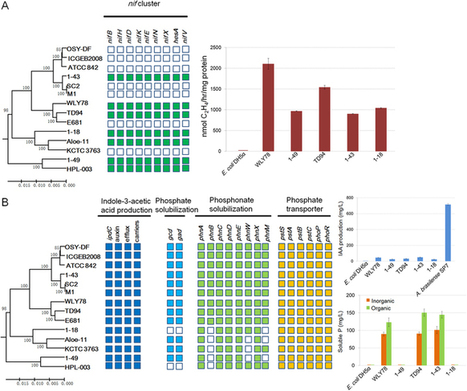
Paenibacillus polymyxa has widely been studied as a model of plant-growth promoting rhizobacteria (PGPR). Here, the genome sequences of 9 P. polymyxa strains, together with 26 other sequenced Paenibacillus spp., were comparatively studied. Phylogenetic analysis of the concatenated 244 single-copy core genes suggests that the 9 P. polymyxa strains and 5 other Paenibacillus spp., isolated from diverse geographic regions and ecological niches, formed a closely related clade (here it is called Poly-clade). Analysis of single nucleotide polymorphisms (SNPs) reveals local diversification of the 14 Poly-clade genomes. SNPs were not evenly distributed throughout the 14 genomes and the regions with high SNP density contain the genes related to secondary metabolism, including genes coding for polyketide. Recombination played an important role in the genetic diversity of this clade, although the rate of recombination was clearly lower than mutation. Some genes relevant to plant-growth promoting traits, i.e. phosphate solubilization and IAA production, are well conserved, while some genes relevant to nitrogen fixation and antibiotics synthesis are evolved with diversity in this Poly-clade. This study reveals that both P. polymyxa and its closely related species have plant growth promoting traits and they have great potential uses in agriculture and horticulture as PGPR.
|


 Scoop.it!