Aims Our aim was to investigate the effects of short-term waterlogging in shaping communities of the obligately aerobic AMF in roots of Populus deltoides. Methods AMF community in populus roots was deciphered with 454-pyrosequencing method from a field plot before and after 15 days waterlogging. Results We found that short-term waterlogging significantly altered the AMF community as confirmed with NMDS. Indicator species analysis identified 12 AMF OTUs that shown with different relative abundance between before and after waterlogging. In contrast to expectation, short-term waterlogging increased detectable AMF species richness: 4 OTUs were detected only before and 17 only after waterlogging. Conclusions Variation in abundance of dominant OTUs was possibly due to short-term waterlogging disturbance and the role of competitive release in the increase in species richness following waterlogging.
Plasmamembrane potassium channels importantly contribute to maintain ion homeostasis across the cell membrane. The view is emerging that also those residing in intracellular membranes play pivotal roles for the coordination of correct cell function. In this review we critically discuss our current understanding of the nature and physiological tasks of potassium channels in organelle membranes in both animal and plant cells, with a special emphasis on their function in the regulation of photosynthesis and mitochondrial respiration. In addition, the emerging role of potassium channels in the nuclear membranes in regulating transcription will be discussed. The possible functions of endoplasmic reticulum-, lysosome- and plant vacuolar membrane-located channels are also referred to. Altogether, experimental evidence obtained with distinct channels in different membrane systems points to a possible unifying function of most intracellular potassium channels in counterbalancing the movement of other ions including protons and calcium and modulating membrane potential, thereby fine-tuning crucial cellular processes
Arbuscular mycorrhizal (AM) fungi play an important role in protecting plant growth against phytotoxic aluminum (Al) in soil. The aim of this work was to analyze the effect of native AM fungi on the growth of four Al-tolerant wheat (Triticum aestivum L.) genotypes. A greenhouse experiment was conducted using three near isogenic Chilean wheat genotypes ('Crac', 'Invento' and 'Otto') and one of recognized Al-tolerance ('Atlas 66') which were grown in an acid Andisol with 34% Al-saturation. The plant dry biomass and root colonization were determined at six early growth stages and AM spore density, soil glomalin (as GRSP) and acid phosphatase (P-ase) activity were analyzed at the first (11 days after sowing -DAS-) and last harvest (60 DAS). Results showed that in all genotypes AM root colonization was not inhibited in spite of high soil Al saturation in the soil and a significant root colonization degree was observed at the first phenological stage mainly in the native wheat genotypes. Also, 'Crac' and 'Invento' genotypes showed the highest amounts of AM spores and GRSP production. All wheat cultivars increased the P-ase activity overtime. Root biomass correlated positively and significantly with root colonization (r=0.71; P<0.001) and inversely with AM spores (r=-0.61; P<0.001). 'Atlas 66' showed a high adaptability to grow in acid conditions but produced the lesser amounts of AM propagules supporting the idea that this genotype would show Al-tolerance mechanisms not fully associated to AM symbiosis as the Chilean wheat cultivars do. In conclusion, the higher early root colonization, AM spores and GRSP production associated with our native wheat genotypes support the hypothesis that AM fungi play an important role in the Al tolerance capacity of T. aestivum developed in those soils with high Al levels and fungal native populations adapted to this conditions.
Artemisia annua L. is presently the sole natural source of antimalarial drug artemisinin. We established dual cultures of A. annua callus or regenerated plantlets with endophytic Penicillium oxalicum B4 to explore endophyte-mediated effects on artemisinin biosynthesis. Although A. annua callus could not produce artemisinin with or without the endophyte, simultaneous growth stimulation of the endophyte and inhibition of A. annua callus were observed in dual cultures. In an in vitro dual culture of endophyte-regenerated plantlets, the endophyte enhanced growth and artemisinin content of host plant. The endophyte could simultaneously induce oxidative stress in regenerated plantlets through the generation of reactive oxygen species (ROS) including O 2 •− and H2O2, which was then accompanied by the activation of antioxidant enzymes such as peroxidase, catalase and superoxide dismutase during the later stages. There was a significant increase in amorphadiene synthase (ADS) and amorpha-4,11-diene monooxygenase (CYP71AV1) transcripts in dual culture of endophyte-plantlets. The induced ROS could modulate the expression of those key genes for artemisinin biosynthesis and might be responsible for conversion of artemisinin acid into artemisinin production. Our results demonstrated that endophytic P. oxalicum B4 could be applied as a promising means to enhance artemisinin production in plants.
Herein we summarize the results of a comprehensive study aimed on the creation of liquid form of biological products for symbiotic and associative rhizobacteria. The objects of study were nodule bacteria from the rhizosphere of galegae (Rhizobium galegae), soybean (Bradyrhizobium japonicum) and associative rhizobacteria (Arthrobacter mysorens, Azospirillum brasilense, Agrobacterium radiobacter), as well as plants of soybean (Glycine max L.), barley (Hordeum L.), alfalfa (Medicago L.), etc. As carriers for bacteria, we used gamma-sterile peat, vermiculite and improved sterile liquid media on the basis of components of vegetable or synthetic origin, with the introduction of nutrients and stabilizers (humates, glycerine, potassium sorbate, carboxymethylcellulose, etc.). The efficacy of tested products and forms were compared in a biological survey carried out in different regions of the Russian Federation. Under the conditions of Leningrad Region the effectiveness was evaluated for the preparations based on recently used and perspective strains of alfalfa nodule bacteria Sinorhizobium meliloti. An optimized combination of stabilizers, nutrients and protective substrates provided a long-term storage and high efficiency of biological products. Nevertheless, plant nutrient media (bean broth) did not provide the required quality. Using bean medium for cultivation it is possible to obtain the desired titer of bacteria in the product, but their numbers are rapidly decreasing. Furthermore, preparations obtained with use of bean broth lose quality after 2-3 months after the beginning of storage because of extraneous microflora therein. The new forms of biochemicals designed on the basis of a synthetic nutrient medium can be stored at room temperature for at least 6 months, when sterile-packed in plastic bottles. High bacteria titer (3.6-4.2 billion CFU/ml of liquid formulation) was obtained after cultivation. It is shown that an improved liquid form has a high efficiency. Its application on leguminous plants increased grain yield by 20-40 % in soy, and by 15-25 % in peas. Productivity of cereal crops (wheat, barley) increased by 15-25 %, and the productivity of alfalfa was 20-45 % higher. A significant increase in crop quality was found to be due to higher protein content. The effectiveness of biological products considerably depended on agroecological conditions and biological features of the crops. Using different strains of nodule bacteria Sinorhizobium meliloti in the Leningrad Region allowed us to create the effective plantmicrobe systems. Thus on the sod-podzolic soil the strain A-4 was most effective providing yield increase by more than 25 %, while on sod-carbonate soil it was the strain A-5 which increased the productivity of alfalfa by 140 %.
2016 a été proclamée année internationale des légumineuses par l’Onu. Une invitation à redécouvrir les multiples vertus nutritionnelles des légumes secs.
Les légumineuses sont parmi nos principales sources de protéines végétales : soja (38,2 %), pois cassés (33 %), haricot rouge et lentilles (environ 20 %). Dans les régimes végétariens, les légumes secs sont souvent associés aux céréales, permettant de couvrir les besoins en protéines et pouvant remplacer la viande et le poisson. Des études fiables (3) ont en effet montré que l’association de légumes secs et de céréales fournit l’ensemble des neuf acides aminés essentiels que notre corps n’est pas capable de synthétiser, indispensables pour la formation des os et de la masse musculaire et pour la défense de l’organisme. Ils sont en effet complémentaires : les légumineuses sont riches en un acide aminé (lysine) mais pauvre en un autre (méthionine). À l’inverse des céréales.
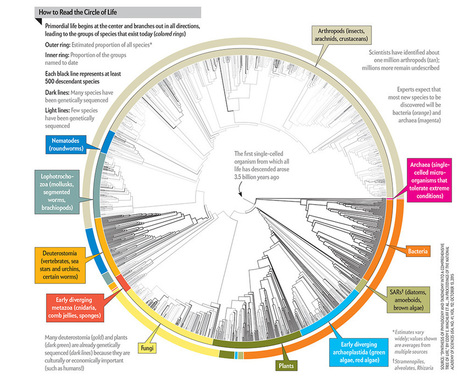
This is great - the inner circles are known species, and the outer circle shows the estimated relative of proportion of each type of organism (plants are truly dwarfed by those arthropods and bacteria!)
This is great - the inner circles are known species, and the outer circle shows the estimated relative of proportion of each type of organism (plants are truly dwarfed by those arthropods and bacteria!)
all fescue, a grass important to the southeastern United States, has a fungal partner that is known to help it grow better and tolerate a harsh climate. But there is a catch: Some of these fungal endophytes produce chemical compounds that can be toxic to livestock. Many studies have explored the relationship between the grass and the fungus, but a recent paper in Crop Science is among the first to investigate the future of the association with regard to climate change.
The symbiosis between tall fescue (Schedonorus arundinaceus) and the fungal endophyte (Epichloë coenophiala), found mostly in tall fescue’s leaves and stems, was once thought to be relatively straightforward. But researchers at the University of Kentucky are learning that it’s not so clear cut. In particular, genetics can complicate the mutualistic partnership, says the study’s lead author, Marie Bourguignon.
AoB PLANTS is pleased to announce the publication of a Special Issue entitled The Role of Below-Ground Processes in Mediating Plant Invasions (edited by Inderjit, University of Delhi, India), which examines the role of soil microbial-driven belowground processes in mediating plant invasions. Both the success of plant invasions and their impacts are profoundly influenced by a wide range of soil communities and the soil processes mediated by them. With the aim of better understanding the mechanisms responsible for the soil communities-driven routes, papers in this special issue deal with some relevant areas of soil communities and invasion in an ecological and evolutionary context. Topics include the invasional meltdown hypothesis, which predicts that one invader facilitates the invasion of another, and the converse situation, whereby an exotic invasive can suppress another exotic invasive. Articles also discuss the effect of activated carbon on plant-microbe interactions in the context of allelopathy research. Greenhouse and field experiments shed light on the mutualistic disruption hypothesis, in which allelochemicals of the invasive plant interfere with root-fungal symbiosis in the natives, resulting in physiological plant stress and demographic declines. The 10 papers published in this special issue provide some novel insights into current research on soil microbial-driven belowground processes mediating the dynamics of plant invasions and reveal areas that need attention in future studies.
bioRxiv (pronounced "bio-archive") is a free online archive and distribution service for unpublished preprints in the life sciences. It is operated by Cold Spring Harbor Laboratory, a not-for-profit research and educational institution. By posting preprints on bioRxiv, authors are able to make their findings immediately available to the scientific community and receive feedback on draft manuscripts before they are submitted to journals.
Articles are not peer-reviewed, edited, or typeset before being posted online. However, all articles undergo a basic screening process for offensive and/or non-scientific content and are checked for plagiarism. No endorsement of an article’s methods, assumptions, conclusions, or scientific quality by Cold Spring Harbor Laboratory is implied by its appearance in bioRxiv. An article may be posted prior to, or concurrently with, submission to a journal but should not be posted if it has already been published.
Authors may submit a revised version of an article to bioRxiv at any time (prior to publication in a journal). Once posted on bioRxiv, articles are citable and therefore cannot be removed.
Background and Aims In orchid species that have populations occurring in strongly contrasting habitats, mycorrhizal divergence and other habitat-specific adaptations may lead to the formation of reproductively isolated taxa and ultimately to species formation. However, little is known about the mycorrhizal communities associated with recently diverged sister taxa that occupy different habitats.
Methods In this study, 454 amplicon pyrosequencing was used to investigate mycorrhizal communities associating with Epipactis helleborine in its typical forest habitat and with its presumed sister species E. neerlandica that almost exclusively occurs in coastal dune habitats. Samples of the phylogenetically more distant E. palustris, which co-occurred with E. neerlandica, were also included to investigate the role of habitat-specific conditions on mycorrhizal communities.
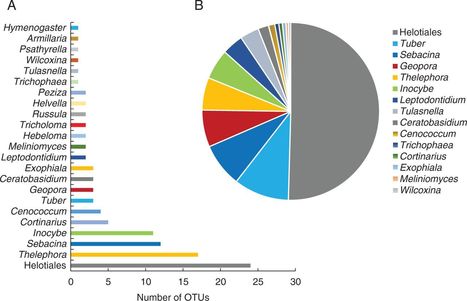
Results A total of 105 operational taxonomic units (OTUs) of putative orchid mycorrhizal fungi were observed in the three studied species. The majority of these fungi were endophytic fungi of Helotiales and ectomycorrhizal fungi belonging to Thelephoraceae, Sebacinaceae and Inocybaceae. In addition, a large number of other ectomycorrhizal taxa were detected, including Cortinarius, Cenococcum, Tuber, Geopora, Wilcoxina, Meliniomyces, Hebeloma, Tricholoma, Russula and Peziza. Mycorrhizal communities differed significantly between the three species, but differences were most pronounced between the forest species (E. helleborine) and the two dune slack species (E. neerlandica and E. palustris).
Conclusion The results clearly showed that recently diverged orchid species that occupy different habitats were characterized by significantly different mycorrhizal communities and call for more detailed experiments that aim at elucidating the contribution of habitat-specific adaptations in general and mycorrhizal divergence in particular to the process of speciation in orchids.
Using biological control agents (BCAs) is an essential component of integrated pest and diseases management. Despite much research on biocontrol of plant diseases, success in field crops has been limited with most successes being achieved in greenhouse cultivation. This lack of success is often attributed to the complex ecological processes involved in biocontrol. We used next generation sequencing (NGS) technology to study environmental fate of Bacillus subtilis, a widely used BCA, focusing on its dispersal aspect in open field and under protection. The dispersal of B. subtilis was very limited, particularly under protection. The reduction in the BCA population size was relatively small within 8 days; indeed, no overall reduction in the relative abundance was observed under the protected condition. These results suggested that limited dispersal is probably the main reason for its variable (and often low) control efficacy under field conditions. Thus to increase biocontrol efficacy, it is necessary to frequently apply this BCA with the application interval depending on the growth rate of target host tissues. Phyllosphere microbiota differed significantly between plants grown in open field and under protection but were not greatly affected by the introduced BCA.
Arbuscular mycorrhizal (AM) fungi are symbionts of most plants, increasing plant growth and diversity. The model AM fungus Rhizophagus irregularis (isolate DAOM 197198) exhibits low within-fungus polymorphism. In contrast, another study reported high within-fungus variability. Experiments with other R. irregularis isolates suggest that within-fungus genetic variation can affect the fungal phenotype and plant growth, highlighting the biological importance of such variation. We investigated whether there is evidence of differing levels of within-fungus polymorphism in an R. irregularis population. We genotyped 20 isolates using restriction site-associated DNA sequencing and developed novel approaches for characterizing polymorphism among haploid nuclei. All isolates exhibited higher within-isolate poly-allelic single-nucleotide polymorphism (SNP) densities than DAOM 197198 in repeated and non-repeated sites mapped to the reference genome. Poly-allelic SNPs were independently confirmed. Allele frequencies within isolates deviated from diploids or tetraploids, or that expected for a strict dikaryote. Phylogeny based on poly-allelic sites was robust and mirrored the standard phylogeny. This indicates that within-fungus genetic variation is maintained in AM fungal populations. Our results predict a heterokaryotic state in the population, considerable differences in copy number variation among isolates and divergence among the copies, or aneuploidy in some isolates. The variation may be a combination of all of these hypotheses. Within-isolate genetic variation in R. irregularis leads to large differences in plant growth. Therefore, characterizing genomic variation within AM fungal populations is of major ecological importance.
Dietary iron deficiency is a worldwide prevalent nutritional disorder to which women and children are especially vulnerable. A common strategy to combat iron deficiency consists of dietary supplementation with inorganic iron salts, whose bioavailability is low and causes frequently gastric problems. Iron-enriched yeasts and cereals are alternative strategies to diminish iron deficiency. Animals and plants possess large ferritin complexes that accumulate, detoxify or buffer excess cellular iron. However, fungi including yeast Saccharomyces cerevisiae lack ferritin and use vacuoles as iron storage organelles. This work explored how plant ferritin expression influenced baker's yeast iron metabolism. Soybean seed ferritin H1 and H2 (SFerH1 and SFerH2) genes were cloned and expressed in yeast cells. Both soybean ferritins assembled as multimeric complexes, which bound yeast intracellular iron in vivo and, consequently, induced the activation of the genes expressed during iron scarcity. Soybean ferritin protected yeast cells that lacked the Ccc1 vacuolar iron detoxification transporter from toxic iron levels by reducing cellular oxidation, thus allowing growth at high iron concentrations. Interestingly when simultaneously expressed in ccc1Δ cells, ferritins SFerH1 and SFerH2 assembled as heteropolymers, which further increased iron resistance and reduced the oxidative stress produced by excess iron compared to ferritin homopolymer complexes. Finally, soybean ferritin expression led to increased iron accumulation in both wild-type and ccc1Δ yeast cells at certain environmental iron concentrations. Hence yeasts that express soybean seed ferritin could be explored as a novel strategy to increase dietary iron absorption.
Endohyphal bacteria (EHB) can influence fungal phenotypes and shape the outcomes of plant-fungal interactions. Previous work has suggested that EHB form facultative associations with many foliar fungi in the Ascomycota. These bacteria can be isolated in culture, and fungi can be cured of EHB using antibiotics. Here we present methods for successfully introducing EHB into axenic mycelia of strains representing two classes of Ascomycota. We first establish in vitro conditions favoring reintroduction of two strains of EHB (Luteibacter spp.) into axenic cultures of their original fungal hosts, focusing on fungi isolated from healthy plant tissue as endophytes: Microdiplodia sp. (Dothideomycetes) and Pestalotiopsis sp. (Sordariomycetes). We then demonstrate that these EHB can be introduced to a novel fungal host under the same conditions, successfully transferring EHB between fungi representing different classes. Finally, we manipulate conditions to optimize reintroduction in a focal EHB/fungal association. We show that EHB infections were initiated and maintained more often under low-nutrient culture conditions and when EHB and fungal hyphae were washed with MgCl2 prior to reassociation. Our study provides new methods for experimental assessment of the effects of EHB on fungal phenotypes, and shows how identity of the fungal host and growth conditions can define the establishment of these widespread and important symbioses.
Much research has been invested into engineering microorganisms to perform desired biotransformations; nonetheless, these efforts frequently fall short of expected results due to the unforeseen effects of biofeedback regulation and functional incompatibility. In nature, metabolic function is compartmentalized into diverse organisms assembled into robust consortia, in which the division of labor is thought to lead to increased community efficiency and productivity. Here we consider whether and how consortia can be designed to perform bioprocesses of interest beyond the metabolic flexibility limitations of a single organism. Advances in post-genomic analysis of microbial consortia and application of high-resolution global measurements now offer the promise of systems-level understanding of how microbial consortia adapt to changes in environmental variables and inputs of carbon and energy. We argue that, when combined with appropriate modeling frameworks, systems-level knowledge can markedly improve our ability to predict the fate and functioning of consortia. Here we articulate our collective perspective on the current and future state of microbial community engineering and control while placing specific emphasis on ecological principles that promote control over community function and emergent properties.
The charophyte green algae (sometimes called basal streptophytes) belong to the lineage that gave rise to land plants (embryophytes), but are distinguished by lacking a number of features and characteristics of land plants, most notably the land plant life cycle. Individually, many charophyte algae have been used as systems to study plant biology, but the realization that these organisms belong together as an evolutionary lineage dates only to ultrastructural studies in the 1970s, and a more detailed understanding of their relationships to each other and to land plants is still emerging. Currently recognized members of the group include Mesostigma, Chlorokybus, Klebsormidiophyceae, Charophyceae sensu stricto, Coleochaetophyceae and Zygnematophyceae (Conjugatophyceae). Contrary to earlier molecular systematic studies, Zygnematophyceae appear as the sister to land plants in current multigene phylogenetic analyses. Early studies reported chromosome numbers and morphologies, and identified polyploid series in the Zygnematophyceae and Charophyceae s. str., with less detailed chromosome counts in the other groups. Molecular studies using PCR and related methods to study individual genes and processes have been accelerated by high-throughput sequencing, particularly of transcriptomes. Both chloroplast and mitochondrial organellar genomes are available for representatives of each major subgroup, but the only near-complete nuclear genome currently available is that of Klebsormidium. There are several genome sequencing projects underway, and expansion of genomic data available should occur soon.
Roots and leaves of healthy plants host taxonomically structured bacterial assemblies, and members of these communities contribute to plant growth and health. We established Arabidopsisleaf- and root-derived microbiota culture collections representing the majority of bacterial species that are reproducibly detectable by culture-independent community sequencing. We found an extensive taxonomic overlap between the leaf and root microbiota. Genome drafts of 400 isolates revealed a large overlap of genome-encoded functional capabilities between leaf- and root-derived bacteria with few significant differences at the level of individual functional categories. Using defined bacterial communities and a gnotobiotic Arabidopsis plant system we show that the isolates form assemblies resembling natural microbiota on their cognate host organs, but are also capable of ectopic leaf or root colonization. While this raises the possibility of reciprocal relocation between root and leaf microbiota members, genome information and recolonization experiments also provide evidence for microbiota specialization to their respective niche.
Have you ever had questions related to your career development that you didn’t know who to ask for answers for? Or have you ever felt that you would probably profit from having a mentor, but …
Excellent article that explores the many different ways we all need mentoring - from sponsorship to emotional support. This article, derived form Earth Science Women's Network, explains the many kinds of mentor you need, their roles, and provides a worksheet so you can make sure you've got them all.
Excellent article that explores the many different ways we all need mentoring - from sponsorship to emotional support. This article, derived form Earth Science Women's Network, explains the many kinds of mentor you need, their roles, and provides a worksheet so you can make sure you've got them all.
Excellent article that explores the many different ways we all need mentoring - from sponsorship to emotional support. This article, derived form Earth Science Women's Network, explains the many kinds of mentor you need, their roles, and provides a worksheet so you can make sure you've got them all.
Excellent article that explores the many different ways we all need mentoring - from sponsorship to emotional support. This article, derived form Earth Science Women's Network, explains the many kinds of mentor you need, their roles, and provides a worksheet so you can make sure you've got them all.
Hemoglobin (Hb) is a heme-containing protein found in the red blood cells of vertebrates. For many years, the only known Hb-like molecule in plants was leghemoglobin (Lb). The discovery that other Hb-like proteins existed in plants led to the term “nonsymbiotic Hbs (nsHbs)” to differentiate them from the Lbs. While this terminology was adequate in the early stages of research on the protein, the complexity of the research in this area necessitates a change in the definition of these proteins to delineate them from red blood cell Hb. At the 2014 XVIII Conference on Oxygen-Binding and Sensing Proteins, the group devoted to the study of heme-containing proteins, this issue was discussed and a consensus was reached on a proposed name change. We propose Phytoglobin (Phytogb) as a logical, descriptive name to describe a heme-containing (Hb-like) protein found in plants. It will be readily recognized by the research community without a prolonged explanation of the origin of the term. The classification system that has been established can essentially remain unchanged substituting Phytogb in place of nsHb. Here, we present a guide to the new nomenclature, with reference to the existing terminology and a phylogenetic scheme, placing the known Phytogbs in the new nomenclature.
Legumes interact with rhizobium convert N2 into ammonia for plant use. To investigate the plant basal nitrogen fixation mechanisms induced in response to Bradyrhizobium, differential gene expression in root of inoculated and mock-inoculated soybean was analysed by RNA-Seq. A total of 55787 transcripts were aligned to soybean genome reference sequences, 280 and 316 transcripts were found to be up- and down-regulated, respectively, in inoculated relative to mock-inoculated soybean???s root at V1 stage. Gene ontology (GO) analyses detected 104, 182 and 178 genes associated with cell component category, molecular function category and biological process category, respectively. Pathway analysis revealed that 98 differentiallly expressed genes (115 transcripts) involved in 169 biological pathways. We selected 19 differentially expressed genes and analyzed their expressions in mock-inoculated, inoculated USDA110 and CCBAU45436 using qRT-PCR. The results were consistent with those obtained from rhizobia infected RNA-Seq data. These showed that the results of RNA-Seq have reliability and universality. Additionally, this study showed some novel genes associated with nitrogen fixation process comparison with the previously identified QTLs.
By breaking up soil, tillage often disrupts mycorrhizal extraradical mycelium (ERM). In a core having four windows covered with 37-μm mesh in a perspex box, trifoliate orange (Poncirus trifoliata) seedlings were colonized with an arbuscular mycorrhizal (AM) fungus, Funneliformis mosseae. The core was rotated weekly at 180° around vertical axes, in order to simulate ERM disruption. After 13 such rotations, root mycorrhizal colonization, soil hyphal length inside and outside the core, and plant biomass were substantially reduced. On the other hand, mycorrhizal inoculation without disruption of ERM (static core) was associated with significant increase in biomass production, compared with disruption of ERM (rotating core). Disruption of ERM (rotating core) inhibited the production of easily-extractable glomalin-related soil protein (EE-GRSP) and total GRSP (T-GRSP) inside the core under mycorrhization, due to breakdown of ERM. Mycorrhization markedly increased soil organic carbon content, distribution of water-stable aggregate (WSA) at 0.5–4 mm size and mean weight diameter (MWD), whereas core rotation showed a negative effect on MWD and the percentage of WSA within 1–4 mm size under mycorrhization and within 0.25–2 mm size under non-mycorrhization. It was proposed that soil tillage, in terms of the core rotation, strongly disrupted ERM network, which adversely influenced EE-GRSP and T-GRSP production and plant growth under mycorrhization, subsequently weakening the GRSP functioning on WSA stability.
Clearing techniques eliminate factors that interfere with microscopic observation, including light scattering and absorption by pigments and cytoplasmic components. The techniques allow fluorescence-based detailed analyses of materials and characterization of the three-dimensional structure of organs. We describe a simple and rapid clearing and imaging method, termed ‘TOMEI’ (Transparent plant Organ MEthod for Imaging), which enables microscopic observation of intact plant organs. This method involves a clearing reagent containing 2,2′-thiodiethanol. Conveniently, transparent plant organs were prepared within only 3–6 h. We detected fluorescent stains at a depth of approximately 200 µm using confocal laser scanning microscopy and analyzed fluorescent proteins in internal tissues of transparent organs cleared using TOMEI. We adapted TOMEI for various plant organs of Arabidopsis thaliana and Oryza sativa, including leaves, flower buds, flower stalks, root and nematode-infected root-knots. We visualized whole leaves of A. thaliana from the adaxial epidermis to the abaxial epidermis as well as protoxylem and metaxylem vessels of vascular bundles embedded in spongy mesophyll cells. Inner floral organs were observed in flower buds cleared using TOMEI without the need to prepare sections or remove sepals. Multicolor imaging of fluorescent proteins and dyes, and analyses of the three-dimensional structure of plant organs based on optical sections are possible using TOMEI. We analyzed root-knots cleared using TOMEI and revealed that nematodes induce giant cell expansion in a DNA content-dependent manner. The TOMEI method is applicable to analysis of fluorescent proteins and dyes quantitatively with cell morphological characteristics in whole plant organs.
To get content containing either thought or leadership enter:
To get content containing both thought and leadership enter:
To get content containing the expression thought leadership enter:
You can enter several keywords and you can refine them whenever you want. Our suggestion engine uses more signals but entering a few keywords here will rapidly give you great content to curate.


 Your new post is loading...


 Scoop.it!