 Your new post is loading...

|
Scooped by
Jean-Michel Ané
June 26, 2016 8:00 PM
|
Aim: To improve knowledge of arbuscular fungal communities for a sustainable management in vineyards.
Methods and results: In 16 plots across Burgundy under contrasted soil properties and agricultural practices, we assessed arbuscular mycorrhizal fungal (AMF) diversity in vine roots, using pyrosequencing of ribosomal Internal Transcribed Spacers (ITS). AMF sequences could be retrieved from all plots across Burgundy, both in organic and in conventional vineyards with high chemical inputs. Sequences from the survey were almost exclusively affiliated to molecular taxa in the Glomerales, including six “core species” found in all plots, corresponding to 77% of all sequences, suggesting a relatively low species diversity in vine roots. A large part of the molecular taxa had no close similarity to previously-reported sequences.
Conclusion: AMF diversity observed in vine roots was relatively low and a significant proportion of molecular taxa shared between the sites. Nevertheless, some differences in the AMF community composition were observed between the plots.
Significance and impact of the study: This is the first large-scale study of AMF diversity in French vineyards using high-throughput sequencing, which will contribute to a better understanding of ecology of these fungi in vine roots, thus providing essential knowledge for future applications in sustainable agriculture in vineyards
|
|
Scooped by
Jean-Michel Ané
June 26, 2016 5:06 PM
|
The present study demonstrates the plant growth promoting (PGP) potential of a bacterial isolate CDP-13 isolated from ‘Capparis decidua’ plant, and its ability to protect plants from the deleterious effect of biotic and abiotic stressors. Based on 16S rRNA gene sequence analysis, the isolate was identified as Serratia marcescens. Among the PGP traits, the isolate was found to be positive for ACC deaminase activity, phosphate solubilization, production of siderophore, indole acetic acid production, nitrogen fixation, and ammonia production. CDP-13 showed growth at an increased salt (NaCl) concentration of up to 6%, indicating its potential to survive and associate with plants growing in saline soil. The inoculation of S. marcescens enhanced the growth of wheat plant under salinity stress (150–200 mM). It significantly reduced inhibition of plant growth (15 to 85%) caused by salt stressors. Application of CDP-13 also modulated concentration (20 to 75%) of different osmoprotectants (proline, malondialdehyde, total soluble sugar, total protein content, and indole acetic acid) in plants suggesting its role in enabling plants to tolerate salt stressors. In addition, bacterial inoculation also reduced the disease severity caused by fungal infection, which illustrated its ability to confer induced systemic resistance (ISR) in host plants. Treatment of wheat plants with the test organism caused alteration in anti-oxidative enzymes activities (Superoxide dismutase, Catalase, and Peroxidase) under various salinity levels, and therefore minimizes the salinity-induced oxidative damages to the plants. Colonization efficiency of strain CDP-13 was confirmed by CFU count, epi-fluorescence microscopy, and ERIC-PCR-based DNA fingerprinting approach. Hence, the study indicates that bacterium CDP-13 enhances plant growth, and has potential for the amelioration of salinity stress in wheat plants. Likewise, the results also provide insights into biotechnological approaches to using PGPR as an alternative to chemicals and pesticides.
|
|
Scooped by
Jean-Michel Ané
June 26, 2016 4:55 PM
|
Mycorrhizal symbiosis often displays low specificity, except for mycoheterotrophic plants that obtain carbon from their mycorrhizal fungi and often have higher specificity to certain fungal taxa. Partially mycoheterotrophic (or mixotrophic, MX) plant species tend to have a larger diversity of fungal partners, e.g., in the genus Pyrola (Monotropoideae, Ericaceae). Preliminary evidence however showed that the Japanese Pyrola japonica has preference for russulacean fungi based on direct sequencing of the fungal internal transcribed spacer (ITS) region from a single site. The present study challenges this conclusion using (1) sampling of P. japonica in different Japanese regions and forest types and (2) fungal identification by ITS cloning. Plants were sampled from eight sites in three regions, in one of which the fungal community on tree ectomycorrhizal (ECM) tips surrounding P. japonica was also analyzed. In all, 1512 clone sequences were obtained successfully from 35 P. japonica plants and 137 sequences from ECM communities. These sequences were collectively divided into 74 molecular operational taxonomic units (MOTUs) (51 and 33 MOTUs, respectively). MOTUs from P. japonica involved 36 ECM taxa (96 % of all clones), and 17 of these were Russula spp. (76.2 % of all clones), which colonized 33 of the 35 sampled plants. The MOTU composition significantly differed between P. japonica and ECM tips, although shared species represented 26.3 % of the ECM tips community in abundance. This suggests that P. japonica has a preference for russulacean fungi.
|
|
Scooped by
Jean-Michel Ané
June 26, 2016 4:40 PM
|
Nitrogenase is the only enzyme known to catalyze the reduction of N2 to 2NH3. In vivo, the MoFe protein component of nitrogenase is exclusively reduced by the ATP-hydrolyzing Fe protein in a series of transient association/dissociation steps that are linked to the hydrolysis of two ATP for each electron transferred. We report MoFe protein immobilized at an electrode surface, where cobaltocene (as an electron mediator that can be observed in real time at a carbon electrode) is used to reduce the MoFe protein (independent of the Fe protein and of ATP hydrolysis) and support the bioelectrocatalytic reduction of protons to dihydrogen, azide to ammonia, and nitrite to ammonia. Bulk bioelectrosynthetic N3- or NO2- reduction (50 mM) for 30 minutes yielded 70.2 ± 8.8 nmol NH3 and 234.0 ± 61.9 nmol NH3, with NO2- reduction operating at high faradaic efficiency.
|
|
Scooped by
Jean-Michel Ané
June 26, 2016 4:38 PM
|
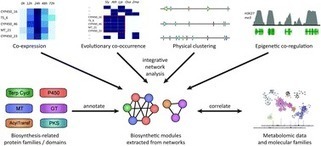
The last decade has seen the first major discoveries regarding the genomic basis of plant natural product biosynthetic pathways. Four key computationally driven strategies have been developed to identify such pathways, which make use of physical clustering, co-expression, evolutionary co-occurrence and epigenomic co-regulation of the genes involved in producing a plant natural product. Here, we discuss how these approaches can be used for the discovery of plant biosynthetic pathways encoded by both chromosomally clustered and non-clustered genes. Additionally, we will discuss opportunities to prioritize plant gene clusters for experimental characterization, and end with a forward-looking perspective on how synthetic biology technologies will allow effective functional reconstitution of candidate pathways using a variety of genetic systems.
|
|
Scooped by
Jean-Michel Ané
June 24, 2016 7:47 PM
|
Pseudomonas fluorescens PICF7, an indigenous olive roots inhabitant, displays endophytic lifestyle in this woody crop and exerts biocontrol against the fungal phytopathogen Verticillium dahliae. Here we report microscopy evidence that the strain PICF7 is also able to colonize and persist on/in wheat and barley root tissues. Root colonization of both cereal species followed a similar pattern to that previously reported in olive, including inner colonization of the root hairs. This demonstrates that strain PICF7 can colonize root systems of distant botanical species. Barley plants germinated from PICF7-treated seeds showed enhanced vegetative growth. Moreover, significant increases in the number of grains (up to 19.5%) and grain weight (up to 20.5%) per plant were scored in this species. In contrast, growth and yield were not significantly affected in wheat plants by the presence of PICF7. Proteomics analysis of the root systems revealed that different proteins were exclusively found depending on the presence or absence of PICF7 and only one protein with hydrogen ion transmembrane transporter activity was exclusively found in both PICF7-inoculated barley and wheat plants but not in the controls.
|
|
Scooped by
Jean-Michel Ané
June 24, 2016 7:34 PM
|
Biological nitrogen fixation (BNF) in soybeans is a complex process involving the interplay between the plant host and the symbiotic rhizobia. As nitrogen supply has a crucial role in growth and development, higher nitrogen fixation capacity would be important to achieve bigger plants and larger seeds, which were important selection criteria during plant domestication by humans. To test this hypothesis, we monitored the nitrogen fixation-related performance in 31 cultivated and 17 wild soybeans after inoculation with the slow-growing Bradyrhizobium diazoefficiens sp. nov. USDA110 and the fast-growing Sinorhizobium (Ensifer) fredii CCBAU45436. Our results showed that, in general, cultivated soybeans gave better performance in BNF. Electron microscopic studies indicated that there was an exceptionally high accumulation of poly-β-hydroxybutyrate bodies in bacteroids in the nodules of all wild soybeans tested, suggesting that the C/N balance in wild soybeans may not be optimized for nitrogen fixation. Furthermore, we identified new quantitative trait loci (QTLs) for total ureides and total nodule fresh weight by employing a recombinant inbred population composed of descendants from a cross between a cultivated and a wild parent. Using nucleotide diversity (θπ), divergence index (Fst) and distribution of fixed single-nucleotide polymorphisms as parameters, we found that some regions in the total ureides QTL on chromosome 17 and the total nodule fresh weight QTL on chromosome 12 exhibited very low diversity among cultivated soybeans, suggesting that these were traits specially selected during the domestication and breeding process.
|
|
Scooped by
Jean-Michel Ané
June 24, 2016 5:05 PM
|
A large percentage (~50 %) of the global human population lives in urban systems. The transition from largely rural to urban lifestyles began gradually, but has accelerated. Given the magnitude of anthropogenic changes in the Earth system as a whole and concerns about resource availability and continued population growth, questions about the sustainability of urban systems have become a focal point for a variety of research and civic efforts, including programs promoting urban agriculture as a means to provide local food sources and to better manage critical nutrients such as nitrogen and phosphorus. The last decade or so has also witnessed a remarkable transformation in our understanding of the centrality of microbes for virtually all aspects of human life and wellbeing. However, this transformation has not yet been incorporated into a fuller understanding of the biology and ecology of urban life. Research on microbial assemblages (or microbiomes) in the built environment, particularly building interiors, has provided compelling examples of the importance of microbes, but these results provide at most an incomplete picture of microbial distribution and activity in urban systems. For example, though very little is known about microbial interactions with urban agriculture, the success of urban agriculture and its potential to contribute to urban sustainability will depend in part of incorporating new knowledge about soil and plant microbiomes to optimize production and to minimize some of the adverse effects of agriculture in traditional settings (e.g., greenhouse gas emission, nitrogen and phosphorus eutrophication). To that end, this review defines and provides examples of the microbiome concept and the significance of microbiomes in urban systems; it also identifies large knowledge gaps and unanswered questions that must be addressed to develop a robust and predictive understanding of urban biology and ecology.
|
|
Scooped by
Jean-Michel Ané
June 24, 2016 5:01 PM
|
To gain more insight in nitrogen metabolism in actinorhizal nodules, a comparison between the N metabolite profiles in roots vs. nodules was initiated for one host plant from the best-examined order of actinorhizal plants, Fagales, A. glutinosa (Betulaceae), a temperate tree, and one host plant from the Cucurbitales order, Datisca glomerata (Datiscaceae). For both symbioses, the symbiotic transcriptomes have been published and can be used to assess the expression of genes representing specific metabolic pathways in nodules. The amino acid profiles of roots in this study suggest that A. glutinosa transported aspartate, glutamate and citrulline in the xylem, a combination of nitrogenous solutes not published previously for this species. The amino acid profiles of D. glomerata roots depended on whether the plants were nodulated or grown on nitrate; roots of nodulated plants contained increased amounts of arginine. Although bacterial transcriptome data showed no symbiotic auxotrophy for branched chain amino acids (leucine, isoleucine, valine) in either symbiosis, D. glomerata nodules contained comparatively high levels of these amino acids. This might represent a response to osmotic stress.
|
|
Scooped by
Jean-Michel Ané
June 24, 2016 4:54 PM
|
When a more complex, functionally integrated entity emerges from the association of simpler, initially independent entities, a major evolutionary transition has occurred. Transitions that result from the association of different species include the evolution of the eukaryotic cell and some obligate mutualisms. Recent studies are revolutionizing our understanding of how these intimate interspecific associations come to be, revealing how and to what extent each partner contributes to the relationship, and how partners mediate conflict. Here, we review work on the evolution of mutualistic symbioses in the context of transitions in individuality and highlight how a better mechanistic understanding of the ecological drivers of host-symbiont interdependencies can help elucidate the evolutionary path to symbiotic organismality.
|
|
Scooped by
Jean-Michel Ané
June 24, 2016 4:09 PM
|
Rhizobia are best known for nodulating legume roots and fixing atmospheric nitrogen for the host in exchange for photosynthates. However, the majority and diversity of rhizobia do not form nodules on legumes, often because they lack key loci that are needed to induce nodulation. Non-nodulating rhizobia are robust heterotrophs can persist in bulk soil, thrive in the rhizosphere, or colonize roots as endophytes, but their role in the legume-rhizobium mutualism remains unclear. Here, we investigated the effects of non-nodulating strains on the native Acmispon-Bradyrhizobium mutualism. To examine the effects on both host performance and symbiont fitness, we performed clonal inoculations of diverse non-nodulating Bradyrhizobium strains on Acmispon strigosus hosts and also co-inoculated hosts with mixtures of sympatric nodulating and non-nodulating strains. In isolation, non-nodulating Bradyrhizobium strains did not affect plant performance. In most cases, co-inoculation of nodulating and non-nodulating strains reduced host performance when compared to hosts inoculated only with a symbiotic strain. However, co-inoculation increased host performance only under one extreme experimental treatment. Nearly all estimates of nodulating strain fitness were reduced in the presence of non-nodulating strains. We discovered that non-nodulating strains were consistently capable of co-infecting legume nodules in the presence of nodulating strains, but that the fitness effects of co-infection for hosts and symbionts were negligible. Our data suggest that non-nodulating strains most often attenuate the Acmispon-Bradyrhizobium mutualism, and that this occurs via competitive interactions at the root-soil interface as opposed to in planta.
|
|
Scooped by
Jean-Michel Ané
June 24, 2016 4:01 PM
|
Background
The increasing awareness of the role of phyllosphere microbial communities in plant health calls for a greater understanding of their structure and dynamics in natural ecosystems. Since most knowledge of tree phyllosphere bacterial communities has been gathered in tropical forests, our goal was to characterize the community structure and assembly dynamics of phyllosphere epiphytic bacterial communities in temperate forests in Quebec, Canada. We targeted five dominant tree species: Acer saccharum, Acer rubrum, Betula papyrifera, Abies balsamea, and Picea glauca. We collected 180 samples of phyllosphere communities on these species at four natural forest sites, three times during the growing season.
Results
Host functional traits (i.e., wood density, leaf nitrogen content) and climate variables (summer mean temperature and precipitation) were strongly correlated with community structure. We highlight three key findings: (1) temperate tree species share a “core microbiome”; (2) significant evolutionary associations exist between groups of bacteria and host species; and (3) a greater part of the variation in phyllosphere bacterial community assembly is explained by host species identity (27 %) and species-site interaction (14 %), than by site (11 %) or time (1 %).
Conclusions
We demonstrated that host species identity is a stronger driver of temperate tree phyllosphere bacterial communities than site or time. Our results suggest avenues for future studies on the influence of host functional traits on phyllosphere community functional biogeography across terrestrial biomes.
|
|
Scooped by
Jean-Michel Ané
June 24, 2016 2:14 PM
|
It may seem like something from science fiction, but researchers have found a group of microorganisms that can live off of pure electricity, Quanta Magazine reports. All life uses electricity, but scientists long thought it impossible for a cell to directly consume and expel electrons. That’s because fatty cell membranes act as insulators, preventing the flow of electricity. Scientists have now found evidence that some cells can discharge electrons through specialized proteins in their membranes, and others can ingest electrons from an electrode by using an enzyme that creates hydrogen atoms. Still others might be able to directly consume electrons, though that research has yet to be published. The findings could help researchers understand how life thrives under a variety of conditions, and how it could exist on places like Mars.
|
|
|
Scooped by
Jean-Michel Ané
June 26, 2016 5:13 PM
|
The extreme sensitivity of nitrogenase towards oxygen stands as a major barrier to engineer biological nitrogen fixation into cereal crops by direct nif gene transfer. Here, we use yeast as a model of eukaryotic cell and show that aerobically grown cells express active nitrogenase Fe protein when the NifH polypeptide is targeted to the mitochondrial matrix together with the NifM maturase. Co-expression of NifH and NifM with Nif-specific Fe–S cluster biosynthetic proteins NifU and NifS is not required for Fe protein activity, demonstrating NifH ability to incorporate endogenous mitochondrial Fe–S clusters. In contrast, expression of active Fe protein in the cytosol requires both anoxic growth conditions and co-expression of NifH and NifM with NifU and NifS. Our results show the convenience of using mitochondria to host nitrogenase components, thus providing instrumental technology for the grand challenge of engineering N2-fixing cereals.
|
|
Scooped by
Jean-Michel Ané
June 26, 2016 4:56 PM
|
Forest ecosystem disturbances generate changes including soil changes, generally with loss of topsoil and loss of much of the diversity of microorganisms, which are usually replaced by others that are more adapted to the new conditions. We describe the effect of rainforest clear-cutting in Madagascar, with stripping of surface soil horizons among ectomycorrhizal fungal communities associated with natural Asteropeia mcphersonii seedlings. An experimental device was placed on four sites, each including an undisturbed plot with litter and a plot in clear-cut areas on a soil composed of a homogeneous mineral substrate. On each of these eight plots the ectomycorrhizal infection rate was determined and root tips were collected to sequence the internal transcribed spacer. 219 sequences grouped into 59 operational taxonomic units (OTUs) were obtained. The main taxonomic groups were Russulaceae, Boletales and Thelephoraceae. Marked spatial aggregation was observed for OTUs. The disturbance significantly affected the ectomycorrhizal infection rate of A. mcphersonii seedlings and the OTU composition of mycorrhizal communities. However, some OTUs were found in both types of environments. We discuss the effect of the disturbance on mycorrhizal communities associated with natural ectomycorrhizal A. mcphersonii seedlings, particularly in view of its application to ecological restoration of disturbed forest environments.
|
|
Scooped by
Jean-Michel Ané
June 26, 2016 4:42 PM
|
We studied the effects of invasions by three plant species: Reynoutria japonica, Rudbeckia laciniata, and Solidago gigantea, on arbuscular mycorrhizal fungi (AMF) communities in habitats located within and outside river valleys. Arbuscular mycorrhizal colonization, AMF abundance and species richness in soils were assessed in adjacent plots with invaders and native vegetation. We also quantified the performance (expressed as shoot mass, chlorophyll fluorescence, and the concentration of elements in shoots) of two common, mycorrhizal native plants, Plantago lanceolata and Trifolium repens, grown in these soils. The invasions of R. japonica, R. laciniata, and S. gigantea influenced AMF communities compared to native vegetation, but the changes depended on the mycorrhizal status of invaders. The effects of non-mycorrhizal R. japonica were the most pronounced. Its invasion reduced AMF abundance and species richness. In the plots of both mycorrhizal plants, R. laciniata and S. gigantea, we observed decreased AMF species richness in comparison to native vegetation. The AMF community alterations could be due to (i) depletion of organic C inputs to AMF in the case of R. japonica, (ii) plant secondary metabolites that directly inhibit or selectively stimulate AMF species, or (iii) changes in soil physicochemical properties induced by invasions. The effect of invasion on AMF abundance and species richness did not generally differ between valley and outside-valley habitats. The invasions affected photosynthetic performance and the concentrations of elements in the shoots of P. lanceolata or T. repens. However, the directions and magnitude of their response depended on both species identity and the mycorrhizal status of invaders.
|
|
Scooped by
Jean-Michel Ané
June 26, 2016 4:39 PM
|
The acidic polysaccharide succinoglycan produced by the rhizobial symbiont Sinorhizobium meliloti 1021 is required for this bacterium to invade the host plant Medicago truncatula and establish a nitrogen-fixing symbiosis. S. meliloti mutants that cannot make succinoglycan cannot initiate invasion structures called infection threads in plant root hairs. S. meliloti exoH mutants that cannot succinylate succinoglycan are also unable to form infection threads, despite the fact that they make large quantities of succinoglycan. Succinoglycan produced by exoH mutants is refractory to cleavage by the glycanases encoded by exoK and exsH, and thus succinoglycan produced by exoH mutants is made only in the high-molecular-weight (HMW) form. One interpretation of the symbiotic defect of exoH mutants is that the low-molecular-weight (LMW) form of succinoglycan is required for infection thread formation. However, our data demonstrate that production of the HMW form of succinoglycan by S. meliloti 1021 is sufficient for invasion of the host M. truncatula and that the LMW form is not required. Here, we show that S. meliloti strains deficient in the exoK- and exsH-encoded glycanases invade M. truncatula and form a productive symbiosis, although they do this with somewhat less efficiency than the wild type. We have also characterized the polysaccharides produced by these double glycanase mutants and determined that they consist of only HMW succinoglycan and no detectable LMW succinoglycan. This demonstrates that LMW succinoglycan is not required for host invasion. These results suggest succinoglycan function is not dependent upon the presence of a small, readily diffusible form.
|
|
Scooped by
Jean-Michel Ané
June 24, 2016 7:50 PM
|
Isoprenoids comprise an astonishingly diverse group of metabolites with numerous potential and actual applications in medicine, agriculture and the chemical industry. Generation of efficient platforms producing isoprenoids is a target of numerous laboratories. Such efforts are generally enhanced if the native biosynthetic routes can be identified, and if the regulatory mechanisms responsible for the biosynthesis of the compound(s) of interest can be determined.
In this review a critical summary of the techniques applied to establish the contribution of the two alternative routes of isoprenoid production operating in plant cells, the mevalonate and methylerythritol pathways, with a focus on their co-operation (cross-talk) is presented. Special attention has been paid to methodological aspects of the referred studies, in order to give the reader a deeper understanding for the nuances of these powerful techniques. This review has been designed as an organized toolbox, which might offer the researchers comments useful both for project design and for interpretation of results obtained.
|
|
Scooped by
Jean-Michel Ané
June 24, 2016 7:47 PM
|
The value of healthy forest ecosystems is well known and trees in these systems form symbioses with a variety of living organisms. This review focuses on literature pertaining to the potential interactions of arboreal yeast endophytes with trees and their associated insects. Although very little is known about the symbioses of arboreal yeast endophytes, indications are that some of these unicellular fungi produce plant-growth promoting phytohormones, while others are antagonistic towards phytopathogens or are capable of producing pheromones that affect the behavior of insect herbivores. However, more research needs to be conducted to fully understand the role of arboreal yeast endophytes in ecosystem processes.
|
|
Scooped by
Jean-Michel Ané
June 24, 2016 5:05 PM
|
Natural resources have been traditionally used in agriculture by humans. For example, crab and shrimp shell powder has been applied to control crop disease and improve soil fertility (Ha and Huang, 2007). On the other hand, chitin is an important structural component in fungal cell walls and can be degraded by plant chitinases to eradicate fungal infection (Grover, 2012). Plant cells can recognize chitin and chitin-derived molecules to elicit immune response. Since the 1980s, chitin and its deacetylation product chitosan have been used for crop farming as biopesticides, biofertilizers, seed coating formulation, and agricultural film (El Hadrami et al., 2010; Hadwiger, 2013; Trouvelot et al., 2014).
In order to overcome the poor solubility obstacle to chitin and chitosan application, soluble chitin oligosaccharides (CTOS) and chitosan oligosaccharides (CSOS) are prepared from these polysaccharides. The effects of CTOS and CSOS on crop disease control were validated by several researches (Yin et al., 2010). Several biopesticides or biofertilizers have been developed based on these two oligosaccharides. However, the quantity and quality of the research on CTOS is much better than that on CSOS. Some papers even claimed that CSOS had no effect on plant disease control (Vander et al., 1998). However, based on the previous works (Cabrera et al., 2006; Maksimov et al., 2011; Guo et al., 2012), just like CTOS, CSOS are potent pathogen-associated molecular patterns (PAMP).
|
|
Scooped by
Jean-Michel Ané
June 24, 2016 5:02 PM
|
Spores are important propagules as well as the most reliable species-distinguishing traits of arbuscular mycorrhizal (AM) fungi. During surveys of AM fungal communities, spore enumeration and spore identification are frequently conducted, but generally little attention is given to the age and viability of the spores. In this study, AM fungal spores in the rhizosphere were characterized as live or dead by vital staining and by performing a germination assay. A considerable proportion of the spores in the rhizosphere were dead despite their intact appearance. Furthermore, morphological and molecular analyses of spores to determine species identity revealed that both viable spores and dead spores with contents were identified. The accurate identification of spores at different developmental stages on the basis of morphology requires considerable experience. Our findings suggest that surveys of AM fungal communities based on spore enumeration and morphological and molecular identification are likely to be inaccurate, primarily because of the large proportion of dead spores in the rhizosphere. A viability check is recommended prior to spore molecular identification, and the use of trap cultures would give more reliable morphological identification results. We show that the abundance and activity of AM fungi in the rhizosphere can be determined by calculating the density of viable spores and the density of spores that could germinate. The adoption of these methods should provide a more reliable basis for further AM fungal community analysis.
|
|
Scooped by
Jean-Michel Ané
June 24, 2016 4:59 PM
|
Premise of research. Ailanthus altissima, an invasive Asiatic tree, is notable for its rapid growth rate (particularly in nutrient-poor soils), root-based cloning, and allelopathy. We investigated whether root exudates from A. altissima stimulate nodulation of red clover, Trifolium pratense, as a mechanism by which the former species may increase nitrogen availability and facilitate its own rapid growth and reproduction.
Methodology. To test this possibility and account for the effects of nutrient availability, we conducted a greenhouse experiment that included a full factorial design with 30 T. pratense in each of the following treatments: (1) presence versus absence of A. altissima in leachate source pots, (2) fertilization versus nonfertilization of leachate source pots, and (3) fertilization versus nonfertilization of pots containing T. pratense. Soil leachates acquired from source pots (half of which contained 8-wk-old A. altissima) were applied to pots containing 1-wk-old T. pratense for 7 wk and harvested 1 wk thereafter.
Pivotal results. (1) Total biomass and shoot∶root ratio of T. pratense were unaffected by the presence of A. altissima in leachate source pots. (2) Presence of A. altissima resulted in a 2.57-fold increase in the proportion of T. pratense possessing nodules, an effect that was greatest when the leachate source pots were also fertilized. (3) Presence of A. altissima was associated with a 261% increase in the number of nodules per unit total (Trifolium) biomass and a 171% increase in nodule biomass per unit total biomass; these traits were otherwise unaffected.
Conclusions. Root exudates from A. altissima stimulate nodulation by T. pratense, regardless of the nutrient status (fertilization) experienced by either species. The nodule-stimulating mechanism reported here may be responsible—at least in part—for previous reports of increased soil nitrogen levels associated with invasion by A. altissima, a nutrient increase that likely facilitates its growth, allelopathy, and reproduction.
|
|
Scooped by
Jean-Michel Ané
June 24, 2016 4:51 PM
|
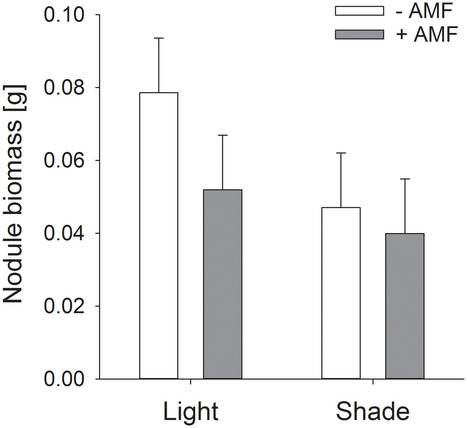
Plant associations with root microbes represent some of the most important symbioses on earth. While often critically promoting plant fitness, nitrogen-fixing rhizobia and arbuscular mycorrhizal fungi (AMF) also demand significant carbohydrate allocation in exchange for key nutrients. Though plants may often compensate for carbon loss, constraints may arise under light limitation when plants cannot extensively increase photosynthesis. Under such conditions, costs for maintaining symbioses may outweigh benefits, turning mutualist microbes into parasites, resulting in reduced plant growth and reproduction. In natural systems plants commonly grow with different symbionts simultaneously which again may interact with each other. This might add complexity to the responses of such multipartite relationships. We experimented with lima bean (Phaseolus lunatus), which efficiently forms associations with both types of root symbionts. We applied full light and low-light to each of four treatments of microbial inoculation. After an incubation period of 14 weeks, we quantified vegetative aboveground and belowground biomass and number and viability of seeds to determine effects of combined inoculant and light treatment on plant fitness. Under light-limited conditions, vegetative and reproductive traits were inhibited in AMF and rhizobia inoculated lima bean plants relative to controls (un-colonized plants). Strikingly, reductions in seed production were most critical in combined treatments with rhizobia x AMF. Our findings suggest microbial root symbionts create additive costs resulting in decreased plant fitness under light-limited conditions.
|
|
Scooped by
Jean-Michel Ané
June 24, 2016 4:04 PM
|
Arbuscular mycorrhizal (AM) fungi are associated with about 80% of land plants. AM fungi provide inorganic nutrients to plants and in return up to 20% of the plant-fixed CO2 is transferred to the fungal symbionts. Since AM fungi are obligate biotrophs, unraveling how sugars are provided to the fungus partner is a key for understanding the functioning of the symbiosis. In this study, we identified two new monosaccharide transporters from Rhizophagus irregularis (RiMST5 and RiMST6) that we characterized as functional high affinity monosaccharide transporters. RiMST6 was characterized as a glucose specific, high affinity H+ co-transporter. We provide experimental support for a primary role of both RiMST5 and RiMST6 in sugar uptake directly from the soil. The expression patterns of RiMSTs in response to partial light deprivation and to interaction with different host plants were investigated. Expression of genes coding for RiMSTs was transiently enhanced after 48 h of shading and was unambiguously dependent on the host plant species. These results cast doubt on the 'fair trade' principle under carbon-limiting conditions. Therefore, in light of these findings, the possible mechanisms involved in the modulation between mutualism and parasitism in plant-AM fungus interactions are discussed.
|
|
Scooped by
Jean-Michel Ané
June 24, 2016 4:00 PM
|
Root associated bacteria are critical for plant growth and health. Understanding the composition and role of root microbiota is crucial toward agricultural practices that are less dependent on chemical fertilization, which has known negative effects on the environment and human health. Here we analyzed the root-associated microbiomes of soybean and wheat under agricultural field conditions. We took samples from 11 different production fields across a large geographic area. We used 16S rRNA pyrosequencing to explore root microbial communities and also obtained 2,007 bacterial isolates from rhizospheres, which were tested for the presence of plant growth promoting (PGP) traits in-vitro. We observed that pH and nitrate content correlated with beta diversity variability of rhizospheric bacterial communities despite the variable field conditions. We described the dominant bacterial groups associated to roots from both crops at a large geographic scale and we found that a high proportion of them (60–70%) showed more than 97% similarity to bacteria from the isolated collection. Moreover, we observed that 55% of the screened isolates presented PGP activities in vitro. These results are a significant step forward in understanding crop-associated microbiomes and suggest that new directions can be taken to promote crop growth and health by modulating root microbiomes.
|













I volunteer to test the effect of AMF on wine quality :-)