Your new post is loading...

|
Scooped by
Jean-Michel Ané
November 26, 2016 7:24 PM
|
Mycorrhizal fungi are essential for the survival of orchid seedlings under natural conditions. The distribution of these fungi in soil can constrain the establishment and resulting spatial arrangement of orchids at the local scale, but the actual extent of occurrence and spatial patterns of orchid mycorrhizal (OrM) fungi in soil remain largely unknown.
We addressed the fine-scale spatial distribution of OrM fungi in two orchid-rich Mediterranean grasslands by means of high-throughput sequencing of fungal ITS2 amplicons, obtained from soil samples collected either directly beneath or at a distance from adult Anacamptis morio and Ophrys sphegodes plants.
Like ectomycorrhizal and arbuscular mycobionts, OrM fungi (tulasnelloid, ceratobasidioid, sebacinoid and pezizoid fungi) exhibited significant horizontal spatial autocorrelation in soil. However, OrM fungal read numbers did not correlate with distance from adult orchid plants, and several of these fungi were extremely sporadic or undetected even in the soil samples containing the orchid roots.
Orchid mycorrhizal ‘rhizoctonias’ are commonly regarded as unspecialized saprotrophs. The sporadic occurrence of mycobionts of grassland orchids in host-rich stands questions the view of these mycorrhizal fungi as capable of sustained growth in soil.
|
|
Scooped by
Jean-Michel Ané
November 26, 2016 5:13 PM
|
Many studies in recent decades have shown the signature effect of the host plant in determining the plant-associated microbiome in the soil. However, the important question as to the factors contributing to the selective enrichment of microorganisms in the plant rhizosphere has not been fully addressed. In this study, the role of the nutrient preferences of two plant species, tomato and cucumber, in variations in the soil microbiome were investigated using a five-season continuous pot experiment. The results of MiSeq sequencing showed that these two plants assembled specific bacterial and fungal communities in their rhizospheres, and the soil nutrient status resulting from the plant nutrient preference was identified as a key driver in the development of a plant-specific microbiome.
|
|
Scooped by
Jean-Michel Ané
November 26, 2016 5:12 PM
|
Gibberellins (GAs) are crucial phytohormones involved in many aspects of plant growth and development, including plant–microbe interactions, which has led to GA production by plant-associated fungi and bacteria as well. While the GA biosynthetic pathways in plants and fungi have been elucidated and found to have arisen independently through convergent evolution, little has been uncovered about GA biosynthesis in bacteria. Some nitrogen-fixing, symbiotic, legume-associated rhizobia, including Bradyrhizobium japonicum—the symbiont of soybean—and Sinorhizobium fredii—a broad-host-nodulating species—contain a putative GA biosynthetic operon, or gene cluster. Through functional characterization of five unknown genes, we demonstrate that this operon encodes the enzymes necessary to produce GA9, thereby elucidating bacterial GA biosynthesis. The distinct nature of these enzymes indicates that bacteria have independently evolved a third biosynthetic pathway for GA production. Furthermore, our results also reveal a central biochemical logic that is followed in all three convergently evolved GA biosynthetic pathways.
|
|
Scooped by
Jean-Michel Ané
November 26, 2016 5:05 PM
|
The effects of drought on growth, several physiological and biochemical processes in six winter varieties (Zhour, Rizki, Douyet, V46, V34 and P37) of chickpea (Cicer arietinum L.) and two rhizobial strains (MC07 and MC10) were studied. The experiment was conducted under greenhouse conditions. Seedlings were grown under three regimes moistening and inoculated separately: 100 % of field capacity (control), 80% of field capacity (optimal irrigation) and 40% of field capacity (water deficit). The results showed that the hydric deficit had significantly perturbed the dry biomass, proline activity, total chlorophyll and nitrogen contents. Moreover, this constraint negatively affected the water deficit saturation (WDS), the membrane permeability and the stomatal conductance of leaves. Under drought, the varieties Zhour and Rizki showed a better water efficiency that was translated by high level in proline accumulation, membrane stability, total chlorophyll and nitrogen contents. These parameters were maintained at the adequate levels with the rhizobial strain MC07 which showed a tolerance in the drought condition. On the contrary, the symbiotic combination least powerful according to the studied parameters is formed by the variety P37-MC10.
|
|
Scooped by
Jean-Michel Ané
November 26, 2016 12:39 PM
|
Processes governing the fixation, partitioning, and mineralization of carbon in soils are under increasing scrutiny as we develop a more comprehensive understanding of global carbon cycling. Here we examined fixation by Douglas-fir seedlings and transfer to associated ectomycorrhizal fungi, soil microbes, and full-sibling or nonsibling neighbouring seedlings.
Stable isotope probing with 99% 13C-CO2 was applied to trace 13C-labelled photosynthate throughout plants, fungi, and soil microbes in an experiment designed to assess the effect of relatedness on 13C transfer between plant pairs. The fixation and transfer of the 13C label to plant, fungal, and soil microbial tissue was examined in biomass and phospholipid fatty acids.
After a 6 d chase period, c. 26.8% of the 13C remaining in the system was translocated below ground. Enrichment was proportionally greatest in ectomycorrhizal biomass. The presence of mesh barriers (0.5 or 35 μm) between seedlings did not restrict 13C transfer.
Fungi were the primary recipients of 13C-labelled photosynthate throughout the system, representing 60–70% of total 13C-enriched phospholipids. Full-sibling pairs exhibited significantly greater 13C transfer to recipient roots in two of four Douglas-fir families, representing three- and fourfold increases (+ c. 4 μg excess 13C) compared with nonsibling pairs. The existence of a root/mycorrhizal exudation–hyphal uptake pathway was supported.
|
|
Scooped by
Jean-Michel Ané
November 26, 2016 12:31 PM
|
We examined whether the microbiota of two related aromatic thyme species, Thymus vulgaris and Thymus citriodorus, differs in relation to the composition of the respective essential oil (EO). A total of 576 bacterial isolates were obtained from three districts (leaves, roots and rhizospheric soil). They were taxonomically characterized and inspected for tolerance to the EO from the two thyme species.
A district-related taxonomic pattern was found. In particular, high taxonomic diversity among the isolates from leaves was detected. Moreover, data obtained revealed a differential pattern of resistance of the isolates to EOs extracted from T. vulgaris and T. citriodorus, which was interpreted in terms of differing chemical composition of the EO of their respective host plants.
In conclusion, we suggest that bacterial colonization of leaves in Thymus spp. is influenced by the EO present in leaf glandular tissue as one of the selective forces shaping endophytic community composition.
|
|
Scooped by
Jean-Michel Ané
November 26, 2016 12:27 PM
|
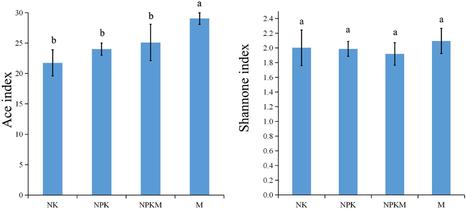
The understanding of the response of arbuscular mycorrhizal fungi (AMF) community composition to fertilization is of great significance in sustainable agriculture. However, how fertilization influences AMF diversity and composition is not well-established yet. A field experiment located in northeast China in typical black soil (Chernozem) was conducted and high-throughput sequencing approach was used to investigate the effects of different fertilizations on the variation of AMF community in the rhizosphere soil of maize crop. The results showed that AMF diversity in the maize rhizosphere was significantly altered by different fertilization regimes. As revealed by redundancy analysis, the application of organic manure was the most important factor impacting AMF community composition between samples with and without organic manure, followed by N fertilizer and P fertilizer inputs. Moreover, the organic matter composition in the rhizosphere, determined by GC–MS, was significantly altered by the organic manure amendment. Many of the chemical components displayed significant relationships with the AMF community composition according to the Mantel test, among those, 2-ethylnaphthalene explained the highest percentage (54.2%) of the variation. The relative contents of 2-ethylnaphthalene and 2, 6, 10-trimethyltetradecane had a negative correlation with Glomus relative abundance, while the relative content of 3-methylbiphenyl displayed a positive correlation with Rhizophagus. The co-occurrence patterns in treatments with and without organic manure amendment were analyzed, and more hubs were detected in the network of soils with organic manure amendment. Additionally, three operational taxonomic units (OTUs) belonging to Glomerales were identified as hubs in all treatments, indicating these OTUs likely occupied broad ecological niches and were always active for mediating AMF species interaction in the maize rhizosphere. Taken together, impacts of fertilization regimes on AMF community composition were correlated with organic matter composition in maize rhizosphere soil and the application of manure could activate more AMF species to interact with other species in the maize rhizosphere. This knowledge can be valuable in regulating the symbiotic system of plants and AMF, maintaining the health and high yields of crops and providing a primary basis for rational fertilization.
|
|
Scooped by
Jean-Michel Ané
November 26, 2016 12:21 PM
|
A radio series on the history of music called “Composers Datebook” ends each vignette by reminding listeners that “All music was once new.” Well, in evolutionary terms, every tissue and every organ was once an innovation, assembled de novo or from bits and pieces of pre-existing parts. How novelty arises is a fundamental question in the field of developmental evolution. In plants, the legume nodule is a fascinating system for studying the process by which a novel structure evolves and is modified in diverse lineages.
|
|
Scooped by
Jean-Michel Ané
November 25, 2016 7:56 PM
|
The phyllosphere of the Brazilian Atlantic Forest has been estimated to contain several million bacterial species that are associated with approximately 20000 plant species. Despite the high bacterial diversity in the phyllosphere, the function of these microorganisms and the mechanisms driving their community assembly are largely unknown. In this study, we characterized the bacterial communities in the phyllospheres of four tree species of the Atlantic Forest (Mollinedia schottiana, Ocotea dispersa, Ocotea teleiandra, and Tabebuia serratifolia) and their metaproteomes to examine the basic protein functional groups expressed in the phyllosphere. Bacterial community analyses using 16S rRNA gene sequencing confirmed prior observations that plant species harbor distinct bacterial communities and that plants of the same taxon have more similar communities than more distantly related taxa. Using LC-ESI-Q-TOF, we identified 216 nonredundant proteins, based on 3503 peptide mass spectra. Most protein families were shared among the phyllosphere communities, suggesting functional redundancy despite differences in the species compositions of the bacterial communities. Proteins involved in glycolysis and anaerobic carbohydrate metabolism, solute transport, protein metabolism, cell motility, stress and antioxidant responses, nitrogen metabolism, and iron homeostasis were among the most frequently detected. In contrast to prior studies on crop plants and Arabidopsis, a low abundance of OTUs related to Methylobacterium and no proteins associated with the metabolism of one-carbon molecules were detected in the phyllospheres of the tree species studied here. Our data suggest that even though the phyllosphere bacterial communities of different tree species are phylogenetically diverse, their metaproteomes are functionally convergent with respect to traits required for survival on leaf surfaces.
|
|
Scooped by
Jean-Michel Ané
November 25, 2016 7:52 PM
|
Fungi in soil play pivotal roles in nutrient cycling, pest controls, and plant community succession in terrestrial ecosystems. Despite the ecosystem functions provided by soil fungi, our knowledge of the assembly processes of belowground fungi has been limited. In particular, we still have limited knowledge of how diverse functional groups of fungi interact with each other in facilitative and competitive ways in soil. Based on the high-throughput sequencing data of fungi in a cool-temperate forest in northern Japan, we analyzed how taxonomically and functionally diverse fungi showed correlated fine-scale distributions in soil. By uncovering pairs of fungi that frequently co-occurred in the same soil samples, networks depicting fine-scale co-occurrences of fungi were inferred at the O (organic matter) and A (surface soil) horizons. The results then led to the working hypothesis that mycorrhizal, endophytic, saprotrophic, and pathogenic fungi could form compartmentalized (modular) networks of facilitative, antagonistic, and/or competitive interactions in belowground ecosystems. Overall, this study provides a research basis for further understanding how interspecific interactions, along with sharing of niches among fungi, drive the dynamics of poorly explored biospheres in soil.
|
|
Scooped by
Jean-Michel Ané
November 25, 2016 7:28 PM
|
Microbial-based inoculants have been reported to stimulate plant growth and nutrient uptake. However, their effect may vary depending on the growth stage when evaluated or fertilizer applied. Thus, the objective of this study was to test the hypothesis that microbial-based inoculants known to promote root growth and nutrient uptake will promote plant growth, enhance early root development, and increase nutrient concentrations of corn (Zea mays L.). Plants were evaluated at four different growth stages and in the presence of three different nitrogen (N) fertilizers. The microbial-based treatments evaluated were: SoilBuilder™ (SB), a filtered metabolite extract of SoilBuilder™ (SBF), a mixture of four strains of plant growth-promoting Bacillus spp (BM), and a water-inoculated control. The experiment also included four fertilizer treatments: urea (U), urea-ammonium nitrate (UAN), calcium-ammonium nitrate (CAN), and an unfertilized control. Corn plants were evaluated at growth stages V2, V4, V6, and VT. Plant growth parameters for biomass, height, and SPAD readings were enhanced by the three microbial-based treatments. A greater effect of microbial-based treatments was observed when plants were evaluated at V6 and VT stages. Parameters of early root development such as total root length (TRL), root surface area (RSA), and length of fine roots were enhanced when microbial-based treatments were applied. Concentrations of N, P, and K were also increased by microbial-based treatments compared to the non-inoculated control. Increases in plant N concentration due to microbial-based treatments were on average 72% for CAN, 61% for UAN, 72% for urea, and 54% for the unfertilized control. Phosphorus concentration was increased most (138%) when BM was applied with CAN. In the same way, when CAN was present, K concentration was increased by 95% with BM and 65% when SB and SBF were applied. Overall, the results demonstrate that microbial-based inoculants evaluated in this study can positively impact corn growth and nutrient concentration, especially during the late vegetative stages. Furthermore, the results indicate that the enhancement of nutrient concentrations (N, P, and K) in this case was related to the capacity of microbial-based treatments to impact root morphology at early stages of corn growth.
|
|
Scooped by
Jean-Michel Ané
November 25, 2016 7:24 PM
|
Ectomycorrhizal (ECM) symbioses are major components of boreal and temperate forest ecosystems (Smith and Read, 2008; Clemmensen et al., 2013). Although well studied for several decades, very little is known about the molecular players involved in the establishment and maintenance of ECM symbioses (Garcia et al., 2015). Identifying the symbiont secretome is a promising way to dissect the fungal contribution to the mutualistic molecular dialog. Pellegrin et al. (2015) compared for the first time the predicted secretome of 49 soil-borne ECM, saprotrophic and pathogenic fungi, revealing shared and specific features between species, and providing a better understanding of the ECM lifestyle evolution.
|
|
Scooped by
Jean-Michel Ané
November 25, 2016 7:22 PM
|
Mine tailings contain high concentrations of metal contaminants and only little nutrients, making the tailings barren for decades after the mining has been terminated. Effective phytoremediation of mine tailings calls for deep-rooted, metal accumulating, and soil fertility increasing plants with tolerance against harsh environmental conditions. We assessed the potential of the biofuel leguminous tree Pongamia pinnata inoculated with plant growth promoting rhizobia to remediate iron–vanadium–titanium oxide (V–Ti magnetite) mine tailing soil by pot experiment and in situ remediation test. A metal tolerant rhizobia strain PZHK1 was isolated from the tailing soil and identified as Bradyrhizobium liaoningense by phylogenetic analysis. Inoculation with PZHK1 increased the growth of P. pinnata both in V–Ti magnetite mine tailings and in Ni-contaminated soil. Furthermore, inoculation increased the metal accumulation capacity and superoxide dismutase activity of P. pinnata. The concentrations of Ni accumulated by inoculated plants were higher than the hyperaccumulator threshold. Inoculated P. pinnata accumulated high concentration of Fe, far exceeding the upper limit (1000 mg kg−1) of Fe in plant tissue. In summary, P. pinnata–B. liaoningense PZHK1 symbiosis showed potential to be applied as an effective phytoremediation technology for mine tailings and to produce biofuel feedstock on the marginal land.
|
|
|
Scooped by
Jean-Michel Ané
November 26, 2016 5:17 PM
|
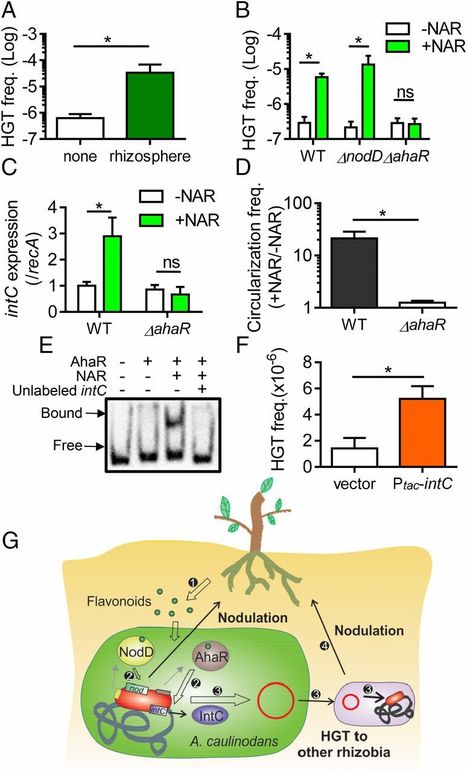
Horizontal gene transfer (HGT) of genomic islands is a driving force of bacterial evolution. Many pathogens and symbionts use this mechanism to spread mobile genetic elements that carry genes important for interaction with their eukaryotic hosts. However, the role of the host in this process remains unclear. Here, we show that plant compounds inducing the nodulation process in the rhizobium-legume mutualistic symbiosis also enhance the transfer of symbiosis islands. We demonstrate that the symbiosis island of the Sesbania rostrata symbiont, Azorhizobium caulinodans, is an 87.6-kb integrative and conjugative element (ICEAc) that is able to excise, form a circular DNA, and conjugatively transfer to a specific site of gly-tRNA gene of other rhizobial genera, expanding their host range. The HGT frequency was significantly increased in the rhizosphere. An ICEAc-located LysR-family transcriptional regulatory protein AhaR triggered the HGT process in response to plant flavonoids that induce the expression of nodulation genes through another LysR-type protein, NodD. Our study suggests that rhizobia may sense rhizosphere environments and transfer their symbiosis gene contents to other genera of rhizobia, thereby broadening rhizobial host-range specificity.
|
|
Scooped by
Jean-Michel Ané
November 26, 2016 5:13 PM
|
The microbial groups of nitrogen fixers, ammonia oxidizers, and denitrifiers largely drive the inorganic nitrogen cycle in temperate terrestrial ecosystems. Their spatial and temporal dynamics, however, vary depending on the studied scale. The present study aimed to fill a knowledge gap by providing an explicit picture of spatial and temporal dynamics of a subset of these soil microorganisms at the plot scale. We selected an unfertilized perennial grassland, where nitrogen cycling is considered to be efficient and tightly coupled to plant growth. At six times over one growing season 60 soil samples were taken from a 10 m × 10 m area and abundances of marker genes for total archaea and bacteria (16S rRNA), nitrogen fixing bacteria (nifH), ammonia oxidizing archaea (amoA AOA) and bacteria (amoA AOB), and denitrifying bacteria (nirS, nirK and nosZ) were determined by qPCR. Potential nitrification activity (PNA) and denitrifying enzyme activity (DEA) were determined. Seasonal changes in abundance patterns of marker genes were detected, and were associated with changes in substrate availability associated with plant growth stages. Potential nitrification and denitrification enzyme activities were strongly spatially structured at the studied scale, corresponding to periods of rapid plant growth, June and October, and their spatial distributions were similar, providing visual evidence of highly localized spatial and temporal conditions at this scale. Temporal variability in the N-cycling communities versus the stability of their respective potential activities provided evidence of both short-lived temporal niche partitioning and a degree of microbial functional redundancy. Our results indicate that in an unfertilized grassland, at the meter scale, abundances of microbial N-cycling organisms can exhibit transient changes, while nitrogen cycling processes remain stable.
|
|
Scooped by
Jean-Michel Ané
November 26, 2016 5:09 PM
|
High tissue nitrogen (N) concentrations in N-fixing legumes may be driven by an evolutionary commitment to a high N strategy, by higher N availability from fixation, or by some other cause. To disentangle these hypotheses, we asked two questions: are legumes hardwired to have high N concentrations? Aside from delivering fixed N, how does inoculation affect legume N concentrations?
In order to understand drivers of plant stoichiometry, we subjected four herbaceous legume species to nine levels of N fertilization in a glasshouse. Half of the individuals were inoculated with crushed nodules, whereas the other half remained uninoculated and could not fix N.
Across four legume species, we found that tissue stoichiometry and nutrient content were more plastic than has been described for any other plant species. In addition, inoculated plants had higher tissue N concentrations than N fixation activity alone can explain.
Rather than being hardwired for high N or phosphorus (P) demand, the legumes we examined were highly flexible in their nutrient allocation. Understanding the drivers of legume N concentrations is essential to understanding the role of N fixers in community- and ecosystem-level processes.
|
|
Scooped by
Jean-Michel Ané
November 26, 2016 5:01 PM
|
Aims
This study aimed at evaluating the impact of seven plant growth-promoting rhizobacteria (PGPR) on root colonization and life cycle of Rhizophagus irregularis MUCL 41833 when co-entrapped in alginate beads.
Methods and results
Two in vitro experiments were conducted. The first consisted in the immobilization of R. irregularis and seven PGPR isolates into alginate beads to assess the effect of the bacteria on the pre-symbiotic growth of the fungus. In the second experiment, the best-performing PGPR from experiment 1 was tested on its ability to promote the symbiotic development of the AMF in potato plantlets from three cultivars. Results showed that only one isolate identified as Pseudomonas plecoglossicida (R-67094) promoted germ tube elongation and hyphal branching of germinated spores during pre-symbiotic phase of the fungus. This PGPR further promoted the symbiotic development of the AMF in potato plants.
Conclusions
The co-entrapment of P. plecoglossicida R-67094 and R. irregularis MUCL 41833 in alginate beads improved root colonization by the AMF and its further life cycle under the experimental conditions.
Significance and impact of the study
Co-entrapement of suitable AMF-PGPR combinations within alginate beads may represent an innovative technology that can be fine-tuned for the development of efficient consortia-based bioformulations.
|
|
Scooped by
Jean-Michel Ané
November 26, 2016 12:39 PM
|
The effects of plant symbionts on host defence responses against pathogens have been extensively documented, but little is known about the impact of pathogens on the symbiosis and if such an impact may differ for nonnative and native pathogens. Here, this issue was addressed in a study of the model system comprising Pinus pinea, its ectomycorrhizal symbiont Tuber borchii, and the nonnative and native pathogens Heterobasidion irregulare and Heterobasidion annosum, respectively.
In a 6-month inoculation experiment and using both in planta and gene expression analyses, we tested the hypothesis that H. irregulare has greater effects on the symbiosis than H. annosum.
Although the two pathogens induced the same morphological reaction in the plant−symbiont complex, with mycorrhizal density increasing exponentially with pathogen colonization of the host, the number of target genes regulated in T. borchii in plants inoculated with the native pathogen (i.e. 67% of tested genes) was more than twice that in plants inoculated with the nonnative pathogen (i.e. 27% of genes).
Although the two fungal pathogens did not differentially affect the amount of ectomycorrhizas, the fungal symbiont perceived their presence differently. The results may suggest that the symbiont has the ability to recognize a self/native and a nonself/nonnative pathogen, probably through host plant-mediated signal transduction.
|
|
Scooped by
Jean-Michel Ané
November 26, 2016 12:29 PM
|
Weeds and crop plants select their microbiota from the same pool of soil microorganisms, however, the ecology of weed microbiomes is poorly understood. We analyzed the microbiomes associated with roots and rhizospheres of grapevine and four weed species (Lamium amplexicaule L., Veronica arvensis L., Lepidium draba L. and Stellaria media L.) growing in proximity in the same vineyard using 16S rRNA gene sequencing. We also isolated and characterized 500 rhizobacteria and root endophytes from L. draba and grapevine. Microbiome data analysis revealed that all plants hosted significantly different microbiomes in the rhizosphere as well as in root compartment, however, differences were more pronounced in the root compartment. The shared microbiome of grapevine and the four weed species contained 145 OTUs (54.2%) in the rhizosphere, but only nine OTUs (13.2%) in the root compartment. Seven OTUs (12.3%) were shared in all plants and compartments. Approximately 56% of the major OTUs (>1%) showed more than 98% identity to bacteria isolated in this study. Moreover, weed-associated bacteria generally showed a higher species richness in the rhizosphere, whereas the root-associated bacteria were more diverse in the perennial plants grapevine and L. draba. Overall, weed isolates showed more plant growth-promoting characteristics compared to grapevine isolates. This article is protected by copyright. All rights reserved.
|
|
Scooped by
Jean-Michel Ané
November 26, 2016 12:22 PM
|
Bacterial species in the plant-beneficial-environmental clade of Burkholderia represent a substantial component of rhizosphere microbes in many plant species. To better understand the molecular mechanisms of the interaction, we combined functional studies with high-resolution dual transcriptome analysis of sugarcane and root-associated diazotrophic Burkholderia strain Q208. We show that Burkholderia Q208 forms a biofilm at the root surface and suppresses the virulence factors that typically trigger immune response in plants. Up-regulation of bd-type cytochromes in Burkholderia Q208 suggests an increased energy production and creates the microaerobic conditions suitable for BNF. In this environment, a series of metabolic pathways are activated in Burkholderia Q208 implicated in oxalotrophy, microaerobic respiration, and formation of PHB granules, enabling energy production under microaerobic conditions. In the plant, genes involved in hypoxia survival are up-regulated and through increased ethylene production, larger aerenchyma is produced in roots which in turn facilitates diffusion of oxygen within the cortex. The detected changes in gene expression, physiology and morphology in the partnership are evidence of a sophisticated interplay between sugarcane and a plant-growth promoting Burkholderia species that advance our understanding of the mutually beneficial processes occurring in the rhizosphere.
|
|
Scooped by
Jean-Michel Ané
November 26, 2016 12:19 PM
|
The charophytes, or stoneworts, are a group of green algae with six extant genera in one family, distributed worldwide in freshwater ponds and lakes. They are among the green algal groups most closely related to land plants and exhibit a complex thallus, with multinucleate internodal cells joined at nodes comprising smaller, uninucleate cells giving rise to whorled branchlets. Two genera (Chara, Nitella) contain most of the described species, with a third (Tolypella) containing several dozen taxa. The remaining genera have one or a few species. Reproduction is oogamous, with sperm and eggs produced in separate multicellular structures. The thallus is haploid; the zygote is the only diploid cell in the life cycle, and meiosis is followed by the development of a resistant spore. Thalli and spores are often encrusted with calcium carbonate. Such spores are abundant in the fossil record of the Charales, which extends to the Upper Silurian, and many genera and families have become extinct. These algae provide important ecosystem services, for example, as colonizing species, as biological agents for producing water clarity, or as the base of the food web. Charophytes are important for the study of evolution of embryophyte development, growth meristems, and cell biophysics. As one of the green algal groups most closely related to land plants, the rich charophyte fossil record may reveal clues regarding the earliest algae that invaded the land.
|
|
Scooped by
Jean-Michel Ané
November 25, 2016 7:53 PM
|
In this short review, I am discussing the relatively recent awareness of the role of symbionts in plant, marine-invertebrates and fungal areas. It is now quite obvious that in marine-invertebrates, a majority of compounds found are from either as yet unculturable or poorly culturable microbes, and techniques involving “state of the art” genomic analyses and subsequent computerized analyses are required to investigate these interactions. In the plant kingdom evidence is amassing that endophytes (mainly fungal in nature) are heavily involved in secondary metabolite production and that mimicking the microbial interactions of fermentable microbes leads to involvement of previously unrecognized gene clusters (cryptic clusters is one name used), that when activated, produce previously unknown bioactive molecules.
|
|
Scooped by
Jean-Michel Ané
November 25, 2016 7:28 PM
|
The influences of five different fertilizer treatments on diversity of rhizobia in soybean nodule were investigated in a long-term experiment with with four replicates: (1) control (without fertilization), (2) balanced NPK fertilizer (NPK), and (3–5) unbalanced chemical fertilizers without one of the major elements (NP, PK, and NK) in Mollisol in Northeast China. The highest soybean yield was observed in the NPK treatment. Total of 200 isolates were isolated and grouped into four Bradyrhizobium genospecies corresponding to B. japonicum, B. diazoefficiens, B. ottawaense and Bradyrhizobium sp. I, based upon the multilocus sequence analysis of 6 housekeeping genes. The Bradyrhizobium sp. I was extensively distributed throughout the study site and was recorded as the dominant soybean rhizobia (82.5–87.5%). Except the NK treatment, the other fertilizer treatments had no effect on rhizobial species composition. Compared with the CK treatment, all the fertilizer treatments decreased species richness, diversity and evenness. The soil organic carbon contents, available N content and pH were the key soil factors to rhizobial community structure. Results suggest that long-term fertilization can decrease rhizobial species diversity, while balanced fertilization with NPK is the most suitable fertilization regime if taking both soybean yields and rhizobial diversity into account.
|
|
Scooped by
Jean-Michel Ané
November 25, 2016 7:27 PM
|
The RNA-binding chaperone Hfq plays critical roles in the establishment and functionality of the symbiosis between Sinorhizobium meliloti and its legume hosts. A mutation in hfq reduces symbiotic efficiency resulting in a Fix− phenotype, characterized by the inability of the bacterium to fix nitrogen. At least in part, this is due to the ability of Hfq to regulate the fixLJ operon, which encodes a sensor kinase–response regulator pair that controls expression of the nitrogenase genes. The ability of Hfq to bind fixLJ in vitro and in planta was demonstrated with gel shift and coimmunoprecipitation experiments. Two (ARN)2 motifs in the fixLJ message were the likely sites through which Hfq exerted its posttranscriptional control. Consistent with the regulatory effects of Hfq, downstream genes controlled by FixLJ (such as nifK, noeB) were also subject to Hfq regulation in planta.
|
|
Scooped by
Jean-Michel Ané
November 25, 2016 7:23 PM
|
In this study, yeast HOG1 homologue from the root endophyte Piriformospora indica (PiHOG1) was isolated and functionally characterized. Functional expression of PiHOG1 in S. cerevisiae ∆hog1 mutant restored osmotolerance under high osmotic stress. Knockdown (KD) transformants of PiHOG1 generated by RNA interference in P. indica showed that genes for the HOG pathway, osmoresponse and salinity tolerance were less stimulated in KD-PiHOG1 compared to the wild-type under salinity stress. Furthermore, KD lines are impaired in the colonization of rice roots under salinity stress of 200 mM NaCl, and the biomass of the host plants, their shoot and root lengths, root number, photosynthetic pigment and proline contents were reduced as compared to rice plants colonized by WT P. indica. Therefore, PiHOG1 is critical for root colonisation, salinity tolerance and the performance of the host plant under salinity stress. Moreover, downregulation of PiHOG1 resulted not only in reduced and delayed phosphorylation of the remaining PiHOG1 protein in colonized salinity-stressed rice roots, but also in the downregulation of the upstream MAP kinase genes PiPBS2 and PiSSK2 involved in salinity tolerance signalling in the fungus. Our data demonstrate that PiHOG1 is not only involved in the salinity response of P. indica, but also helping host plant to overcome salinity stress.
|


 Scoop.it!