Your new post is loading...

|
Scooped by
Jean-Michel Ané
April 4, 2017 11:51 AM
|
In Chilean volcanic soil, crop production often is limited by a combination of the low available P and high concentration of toxic aluminum (Al). In this study we aimed to isolate Al-tolerant plant-growth-promoting bacteria from the rhizosphere and the endosphere of ryegrass grown in acidic Chilean volcanic soil in order to characterize a bacterial consortium capable of contributing to alleviation of Al3+ toxicity and supporting plant growth in Andisol. Five strains, i.e. Klebsiella sp. RC3, Stenotrophomonas sp. RC5, Klebsiella sp. RCJ4, Serratia sp. RCJ6 and Enterobacter sp. RJAL6, were selected based on their capacity to tolerate high Al concentration (10 mM) and to exhibit multiple plant-growth-promoting traits (P solubilization, indole acetic acid production, 1-aminocyclopropane-1-carboxylate deaminase activity, and exudation of organic acid anions and siderophores). Based on the results, we can suggest that selected bacteria could alleviate Al stress by forming Al3+-siderophore complexes. The plant-growth-promoting potential of the bacterial consortium was confirmed in an assay with ryegrass plants. In the treatment with cattle dung manure, the consortium promoted plant growth and the phosphatase activity in the rhizosphere soil. Increased phosphatase activity coincided with elevated P concentration in shoots. Our results suggest that a combination of native Al-tolerant bacteria and cattle dung manure is effective in decreasing Al toxicity and promoting plant growth in Andisols of southern Chile.
|
|
Rescooped by
Jean-Michel Ané
from Colletotrichum
April 4, 2017 10:29 AM
|
Highlights
•
Fungal endophyte and epiphyte were assessed in olives of cultivars with different susceptibilities to anthracnose.
•
Olives harbour fungal communities containing pathogenic and potentially antagonists.
•
Host genotype, at cultivar level, is important in shaping endophytic but not epiphytic fungal communities.
•
Endophytic and epiphytic fungal communities differed in size and in composition.
•
The fungal tested showed excellent potential in the biocontrol of Colletotrichum acutatum.
Via Serenella A Sukno
Identifying the factors that drive large-scale patterns of biotic interaction is fundamental for understanding how communities respond to changing environmental conditions. Mycorrhizal symbiosis is a key interaction between fungi and most vascular plants. Whether plants are obligately (OM) or facultatively (FM) mycorrhizal, and which mycorrhizal type they form – arbuscular mycorrhizal (AM), ectomycorrhizal (ECM), ericoid mycorrhizal (ERM) or non-mycorrhizal (NM) – can have strong implications for plant species distribution at the continental scale and on the responses of plants to environmental gradients.
Using published sources, we compiled the most complete dataset yet of plant mycorrhizal and geographical information for Europe, comprising 1442 plant species. We mapped the European distributions of plant mycorrhizal status (OM and FM) and type (AM, ECM, ERM and NM) and analysed their relationships with climatic, edaphic and plant productivity drivers on a 50 km × 50 km equal-area grid.
Via Francis Martin
|
|
Scooped by
Jean-Michel Ané
March 30, 2017 1:03 PM
|
In seed plants, strigolactones (SLs) regulate architecture and induce mycorrhizal symbiosis in response to environmental cues. SLs are formed by combined activity of the carotenoid cleavage dioxygenases (CCDs) 7 and 8 from 9-cis-β-carotene, leading to carlactone that is converted by cytochromes P450 (clade 711; MAX1 in Arabidopsis) into various SLs. As Physcomitrella patens possesses CCD7 and CCD8 homologs but lacks MAX1, we investigated if PpCCD7 together with PpCCD8 form carlactone and how deletion of these enzymes influences growth and interactions with the environment.
We investigated the enzymatic activity of PpCCD7 and PpCCD8 in vitro, identified the formed products by high performance liquid chromatography (HPLC) and LC-MS, and generated and analysed ΔCCD7 and ΔCCD8 mutants.
We defined enzymatic activity of PpCCD7 as a stereospecific 9-cis-CCD and PpCCD8 as a carlactone synthase. ΔCCD7 and ΔCCD8 lines showed enhanced caulonema growth, which was revertible by adding the SL analogue GR24 or carlactone. Wild-type (WT) exudates induced seed germination in Orobanche ramosa. This activity was increased upon phosphate starvation and abolished in exudates of both mutants. Furthermore, both mutants showed increased susceptibility to phytopathogenic fungi.
Our study reveals the deep evolutionary conservation of SL biosynthesis, SL function, and its regulation by biotic and abiotic cues.
|
|
Scooped by
Jean-Michel Ané
March 30, 2017 12:57 PM
|
Ensuring adequate populations of effective rhizobia in soil is essential to guarantee optimum nodulation and nitrogen fixation in legumes. The population of soybean-rhizobia and the proportion of slow and fast growers were enumerated in Vertisols of central India in different crop rotations for three years during 2013-15. Soils were from soybean-based (soybean-wheat and soybean-chickpea) and cereal-based rotations (maize-wheat, rice-wheat and maize-chickpea) rotations. Soybean-based rotations stimulated the rhizobial population by 22-fold compared to cereal rotations. Lowest populations were in the summer but increased in soybean rotations by 13.3-fold after the rainy season to 2743 cells g−1 soil at maximum vegetative growth. In the cereal rotations, the increase was by 1.7-fold to 61 cells g−1 soil. Long-term integrated nutrient management, by annual application of farmyard manure in soybean along with chemical fertilizers, improved the rhizobial numbers by 1.5-fold over chemical fertilization alone and by 2.9-fold over unfertilized treatments. Increased crop growth by chemical fertilizers also stimulated rhizobial populations by 1.9-fold over unfertilized soybean. The proportion of slow-growing soybean rhizobia was lower in soybean-based rotations (38%) compared to cereal-based rotations (62%), showing that continued soybean growth led to a greater proliferation of fast-growing rhizobia. Application of farmyard manure did not change the proportion of slow growers. The proportion of slow growers was ∼15% more in winter compared with the summer populations. The slow growers were symbiotically superior, producing greater dry matter and nodule mass (+12%), with more biologically fixed nitrogen (+18%) than the fast growers. Results highlight the importance of crop rotation with cereals, application of organic amendments along with chemical fertilizers and selection of slow-growing rhizobia as inoculants.
|
|
Scooped by
Jean-Michel Ané
March 30, 2017 12:51 PM
|
Abstract. In pristine Sphagnum-dominated peatlands, (di)nitrogen (N2) fixing (diazotrophic) microbial communities associated with Sphagnum mosses contribute substantially to the total nitrogen input, increasing carbon sequestration. The rates of symbiotic nitrogen fixation reported for Sphagnum peatlands, are, however, highly variable, and experimental work on regulating factors that can mechanistically explain this variation is largely lacking. For two common fen species (Sphagnum palustre and S. squarrosum) from a high nitrogen deposition area (25 kg N ha−1 yr−1), we found that diazotrophic activity (as measured by 15 − 15N2 labeling) was still present at a rate of 40 nmol N gDW−1 h−1. This was surprising, given that nitrogen fixation is a costly process. We tested the effects of phosphorus availability and buffering capacity by bicarbonate-rich water, mimicking a field situation in fens with stronger groundwater or surface water influence, as potential regulators of nitrogen fixation rates and Sphagnum performance. We expected that the addition of phosphorus, being a limiting nutrient, would stimulate both diazotrophic activity and Sphagnum growth. We indeed found that nitrogen fixation rates were doubled. Plant performance, in contrast, did not increase. Raised bicarbonate levels also enhanced nitrogen fixation, but had a strong negative impact on Sphagnum performance. These results explain the higher nitrogen fixation rates reported for minerotrophic and more nutrient-rich peatlands. In addition, nitrogen fixation was found to strongly depend on light, with rates 10 times higher in light conditions suggesting high reliance on phototrophic organisms for carbon. The contrasting effects of phosphorus and bicarbonate on Sphagnum spp. and their diazotrophic communities reveal strong differences in the optimal niche for both partners with respect to conditions and resources. This suggests a trade-off for the symbiosis of nitrogen fixing microorganisms with their Sphagnum hosts, in which a sheltered environment apparently outweighs the less favorable environmental conditions. We conclude that microbial activity is still nitrogen limited under eutrophic conditions because dissolved nitrogen is being monopolized by Sphagnum. Moreover, the fact that diazotrophic activity can significantly be upregulated by increased phosphorus addition and acid buffering, while Sphagnum spp. do not benefit, reveals remarkable differences in optimal conditions for both symbiotic partners and calls into question the regulation of nitrogen fixation by Sphagnum under these eutrophic conditions. The high nitrogen fixation rates result in high additional nitrogen loading of 6 kg ha−1 yr−1 on top of the high nitrogen deposition in these ecosystems.
|
|
Scooped by
Jean-Michel Ané
March 30, 2017 12:35 PM
|
This study investigates Arbuscular Mycorrhizal Fungi (AMF) spore population and root colonization in 25 different ornamental families (35 species) collected from District Charsadda, at early winter and summer seasons. The spore density of AMF ranged from 23-80% and root colonization from 0-100%. The lowest spore density was recorded in Canna indica purpurea, Eriodictyon californicum, Lagerstroemia indica and the highest spore density was recorded in Jasminum sambc. The AMF root colonization was observed to be the lowest in Portulaca indica, Dracaena (Dragon tree) and the highest in Alocasia indica, Chlorophytum borivilianum, Eriodictyon californicum, Cesturnum nocturnum, Euphorbia milli. The present study also reports that roots of a few species of family Portulaceae have not been colonized by AMF. The spore density of AMF and root colonization by these fungi varied from species to species, season to season and also affected by host plant growth stages (vegetative-fruiting).
|
|
Scooped by
Jean-Michel Ané
March 30, 2017 12:32 PM
|
The functional link between the aboveground systems and the below ground microorganisms in a plant system determines the restoration and re-establishment success of degraded ecosystems. This paper examined the arbuscular mycorrhiza fungi (AMF) spore density and root colonization in relation to slope position and age of exclosures. The first age group had less than five years old, the second age group was 5–10 years old and the third age group had 10–15 years old exclosure while the fourth age group had age between 15 and 20 years. The root and soil samples of 23 plant species that belong to 13 families from 12 sites of exclosures and grazing land were collected and analyzed using the magnified intersection and wet sieving method from the highlands of Tigray, Northern Ethiopia. . The AMF root colonization ranged from 24% to 96%. The lowest colonization was observed from plant species that belong to the grazing land, and the highest were from plant roots in exclosures. The spore density was between 30 and 2980 of 100 g−1 of dry soil with the lowest from the grazing lands and the highest was from exclosures of middle slope position. Glomus was the dominant AMF genus found in all soil from both land uses. A significant difference in spore density (p < 0.05) was observed between slope position and age of exclosures. AMF root colonization positively correlated (P < 0.05) with spore density. Exclosures of middle slope showed high spore density and root colonization and it increased significantly with increasing age of exclosures. The presence of abundant AMF spore in exclosures indicated the role exclosures played in the restoration of ecosystem health. Forestland restoration through exclosures could facilitates the survival of planted and regenerated plants by providing enough AMF inoculum in the restored ecosystem. AMF spore density and colonization should be considered as an indicator of restoration in measuring success of restoration in the drylands.
|
|
Scooped by
Jean-Michel Ané
March 30, 2017 12:15 PM
|
The most recent data on the system of cmp (competitiveness) genes that determine the nodulation competitiveness of rhizobial strains, i.e., the ability to compete for nodule formation in leguminous plants, is analyzed. Three genetic approaches for the construction of economically valuable strains of rhizobia are proposed: the amplification of positive regulators of competitiveness, the inactivation of the negative regulators of this trait, and the introduction of efficient competitiveness factors into strains capable of active nitrogen fixation.
|
|
Scooped by
Jean-Michel Ané
March 30, 2017 12:10 PM
|
Negative population feedbacks mediated by natural enemies can promote species coexistence at the community scale through disproportionate mortality of numerically dominant (common) tree species. Simultaneously, associations with arbuscular mycorrhizal fungi (AMF) can result in positive effects on tree populations. Coupling data on seedling foliar damage from herbivores and pathogens and DNA sequencing of soil AMF diversity, we assessed the effects of these factors on tree seedling mortality at local (1 m2) and community (16 ha plot) scales in a tropical rainforest in Puerto Rico. At the local scale, AMF diversity in soil counteracted negative effects from foliar damage on seedling mortality. At the community scale, mortality of seedlings of common tree species increased with foliar damage while rare tree species benefited from soil AMF diversity. Together, the effects of foliar damage and soil AMF diversity on seedling mortality might foster tree species coexistence in this forest.
|
|
Scooped by
Jean-Michel Ané
March 30, 2017 12:07 PM
|
Growth patterns of individual plants and evolutionary trajectories of plant communities are intimately linked with and are critically affected by host-associated microbiomes. Research across systems has begun to shed light on how these phytobiomes are established and under laboratory and natural conditions, and have cultivated hope that a better understanding of the governing principles for host-microbe interactions can guide attempts to engineer microbiomes to boost agricultural yields. One important, yet relatively understudied, parameter in regards to phytobiome membership is the degree to which specialization and coevolution between plant species and microbial strains structures these communities. In this article, I provide an broad overview about current knowledge concerning mechanisms enabling adaptation and specialization of phytobiome communties to host plants as well as the potential for plants themselves to recruit and cultivate interactions with beneficial microbes. I further explore the possibility of host-beneficial microbe coevolution and suggest interactions that could promote the evolution of such close-knit partnerships. It is my hope that this overview will encourage future experiments that can begin to fill in this black box of ecological and evolutionary interactions across phytobiomes.
|
|
Scooped by
Jean-Michel Ané
March 30, 2017 12:02 PM
|
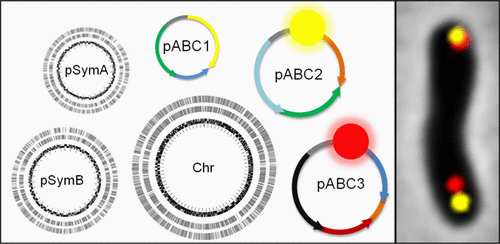
A considerable share of bacterial species maintains segmented genomes. Plant symbiotic α-proteobacterial rhizobia contain up to six repABC-type replicons in addition to the primary chromosome. These low or unit-copy replicons, classified as secondary chromosomes, chromids, or megaplasmids, are exclusively found in α-proteobacteria. Replication and faithful partitioning of these replicons to the daughter cells is mediated by the repABC region. The importance of α-rhizobial symbiotic nitrogen fixation for sustainable agriculture and Agrobacterium-mediated plant transformation as a tool in plant sciences has increasingly moved biological engineering of these organisms into focus. Plasmids are ideal DNA-carrying vectors for these engineering efforts. On the basis of repABC regions collected from α-rhizobial secondary replicons, and origins of replication derived from traditional cloning vectors, we devised the versatile family of pABC shuttle vectors propagating in Sinorhizobium meliloti, related members of the Rhizobiales, and Escherichia coli. A modular plasmid library providing the elemental parts for pABC vector assembly was founded. The standardized design of these vectors involves five basic modules: (1) repABC cassette, (2) plasmid-derived origin of replication, (3) RK2/RP4 mobilization site (optional), (4) antibiotic resistance gene, and (5) multiple cloning site flanked by transcription terminators. In S. meliloti, pABC vectors showed high propagation stability and unit-copy number. We demonstrated stable coexistence of three pABC vectors in addition to the two indigenous megaplasmids in S. meliloti, suggesting combinability of multiple compatible pABC plasmids. We further devised an in vivo cloning strategy involving Cre/lox-mediated translocation of large DNA fragments to an autonomously replicating repABC-based vector, followed by conjugation-mediated transfer either to compatible rhizobia or E. coli.
|
|
Scooped by
Jean-Michel Ané
March 30, 2017 11:57 AM
|
The genus Chamaecrista comprises more than 330 species which are mainly distributed across tropical America, especially in Brazil (256 spp.), the main center of radiation. In this study, nodulation of herbaceous Chamaecrista species that are commonly found growing in different vegetation types in the north eastern Brazilian state of Bahia was assessed together with the diversity of rhizobia isolated from their root nodules. Genetic characterization of the isolates was performed using molecular markers to examine the phylogeny of their “core” (16S rRNA, ITS, recA, glnII, dnaK and gyrB) and symbiosis-related (nifH, nodC) genomes. Nodule morphology, anatomy and ultrastructure were also examined, as was the capacity of the isolates to form nodules on Chamaecrista desvauxii and siratro (Macroptilium atropurpureum). Analysis of 16S rRNA gene sequences demonstrated that the isolates belonged to seven clusters within the genus Bradyrhizobium, and more detailed analyses using sequences of the ITS region and concatenated housekeeping genes grouped the Chamaecrista rhizobia by vegetation type and plant species. These analyses also suggested some potentially novel Bradyrhizobium species, which was corroborated by analyses of their nifH and nodC sequences, as these formed separated branches from all Bradyrhizobium type strains. All the 47 strains tested produced effective nodules on C. desvauxii but none on siratro. Chamaecrista nodules are herein described for the first time in detail: they are indeterminate and structurally similar to others described in the Caesalpinioideae, with infection threads in the invasion and nitrogen fixation zones, and with both infected and uninfected (interstitial) cells in the nitrogen fixation zone.
|
|
|
Scooped by
Jean-Michel Ané
April 4, 2017 10:58 AM
|
The rice lysin-motif (LysM) receptor-like kinase OsCERK1 is now known to have a dual role in both pathogenic and symbiotic interactions. Following the recent discovery that the Oscerk1 mutant is unable to host arbuscular mycorrhizal (AM) fungi, we have examined whether OsCERK1 is directly involved in the perception of the short-chain chitin oligomers (Myc-COs) identified in AM fungal exudates and shown to activate nuclear calcium (Ca2+) spiking in the rice root epidermis.
An Oscerk1 knockout mutant expressing the cameleon NLS-YC2.60 was used to monitor nuclear Ca2+ signaling following root treatment with either crude fungal exudates or purified Myc-COs.
Compared with wild-type rice, Ca2+ spiking responses to AM fungal elicitation were absent in root atrichoblasts of the Oscerk1 mutant. By contrast, rice lines mutated in OsCEBiP, encoding the LysM receptor-like protein which associates with OsCERK1 to perceive chitin elicitors of the host immune defense pathway, responded positively to Myc-COs.
These findings provide direct evidence that the bi-functional OsCERK1 plays a central role in perceiving short-chain Myc-CO signals and activating the downstream conserved symbiotic signal transduction pathway.
|
|
Scooped by
Jean-Michel Ané
April 3, 2017 10:20 PM
|
|
|
Scooped by
Jean-Michel Ané
April 1, 2017 6:23 PM
|
The plant hormone auxin is a critical signal during root growth and development. A role for auxin in the formation of nodules, specialized lateral organs that form on roots and house nitrogen-fixing rhizobia, has been suggested by numerous studies. We report that auxin influx inhibitors 1-naphthoxyacetic acid (1-NOA) and 2-NOA reduced nodulation of Medicago truncatula, suggesting potential involvement of the AUX/LAX family of auxin influx transporters in nodulation. Gene expression studies identified MtLAX2, an ortholog of Arabidopsis AUX1, as being induced at early stages of nodule development. Arabidopsis AUX1 is known to regulate root gravitropism and lateral root development. MtLAX2 is expressed in nodule primordia, the vasculature of developing nodules and at the apex of mature nodules. The MtLAX2 promoter contains several auxin response elements and q-RT-PCR experiments confirmed that indole-acetic acid (IAA) strongly induces MtLAX2 in roots. Two mtlax2 mutants showed root agravitropism, reduced numbers of lateral roots, and auxin resistance, phenotypes typical of Arabidopsis aux1 mutants. In accordance with this, DR5-GUS expression was strongly reduced in mtlax2 roots with and without treatment with IAA. The mtlax2 mutations also caused reduced nodulation and decreased expression of the auxin reporter DR5-GUS associated with infection sites. Our data provide evidence that localized auxin influx mediated by MtLAX2, is required for the accumulation of auxin for nodule formation in tissues underlying sites of rhizobial infection.
|
|
Scooped by
Jean-Michel Ané
March 30, 2017 1:00 PM
|
GRAS transcription factors (TFs) play critical roles in plant growth and development such as gibberellin and mycorrhizal signaling. Proteins belonging to this gene family contain a typical GRAS domain in the C-terminal sequence, whereas the N-terminal region is highly variable. Although, GRAS genes have been characterized in a number of plant species, their classification is still not completely resolved. Based on a panel of eight representative species of angiosperms, we identified 29 orthologous groups or orthogroups (OGs) for the GRAS gene family, suggesting that at least 29 ancestor genes were present in the angiosperm lineage before the “Amborella” evolutionary split. Interestingly, some taxonomic groups were missing members of one or more OGs. The gene number expansion usually observed in transcription factors was not observed in GRAS while the genome triplication ancestral to the eudicots (γ hexaploidization event) was detectable in a limited number of GRAS orthogroups. We also found conserved OG-specific motifs in the variable N-terminal region. Finally, we could regroup OGs in 17 subfamilies for which names were homogenized based on a literature review and described 5 new subfamilies (DLT, RAD1, RAM1, SCLA, and SCLB). This study establishes a consistent framework for the classification of GRAS members in angiosperm species, and thereby a tool to correctly establish the orthologous relationships of GRAS genes in most of the food crops in order to facilitate any subsequent functional analyses in the GRAS gene family. The multi-fasta file containing all the sequences used in our study could be used as database to perform diagnostic BLASTp to classify GRAS genes from other non-model species.
|
|
Scooped by
Jean-Michel Ané
March 30, 2017 12:55 PM
|
The nitrogen-fixing nodule is a unique ecological niche for rhizobia, where microaerobic conditions support functioning of the main enzyme of nitrogen fixation, nitrogenase, which is highly sensitive to oxygen. To accommodate bacteria in a symbiotic nodule, the specialised infected cells increase in size owing to endoreduplication and are able to shelter thousands of bacteria. Bacteria are isolated from the cytoplasm of the plant cell by a membrane-bound organelle-like structure termed the symbiosome. It is enclosed by a symbiosome membrane, mainly of plant origin but with some inclusion of bacterial proteins. Within the symbiosome, bacterial cells differentiate into bacteroids a form that is specialised for nitrogen fixation. In this review, we briefly summarise recent advances in studies of differentiation both of symbiosomes and of the infected cells that accommodate them. We will consider the role of CCS52A, DNA topoisomerase VI, tubulin cytoskeleton rearrangements in differentiation of infected cells, the fate of the vacuole, and the distribution of symbiosomes in the infected cells. We will also consider differentiation of symbiosomes, paying attention to the role of NCR peptides, vesicular transport to symbiosomes, and mutant analysis of symbiosome development in model and crop legumes. Finally, we conclude that mechanisms involved in redistribution organelles, including the symbiosomes, clearly merit much more attention.
|
|
Scooped by
Jean-Michel Ané
March 30, 2017 12:38 PM
|
Legume plants interact with rhizobia to form nitrogen-fixing root nodules. Legume-rhizobium interactions are specific and only compatible rhizobia and plant species will lead to nodule formation. Even within compatible interactions, the genotype of both the plant and the bacterial symbiont will impact on the efficiency of the nodule functioning and nitrogen fixation activity. The model legume Medicago truncatula forms nodules with several species of the Sinorhizobium genus. However, the efficiency of these bacterial strains is highly variable. In this study, we compared the symbiotic efficiency of Sinorhizobium meliloti strains Sm1021, 102F34 and FSM-MA, and Sinorhizobium medicae strain WSM419 on the two widely used M. truncatula accessions A17 and R108. The efficiency of the interactions was determined by multiple parameters. We found a high effectiveness of the FSM-MA strain with both M. truncatula accessions. In contrast, specific highly efficient interactions were obtained for the A17–WSM419 and R108–102F34 combinations. Remarkably, the widely used Sm1021 strain performed weakly on both hosts. We showed that Sm1021 efficiently induce nodule organogenesis but cannot fully activate the differentiation of the symbiotic nodule cells, explaining its weaker performance. These results will be informative for the selection of appropriate rhizobium strains in functional studies on symbiosis using these M. truncatula accessions, particularly for research focusing on late stages of the nodulation process.
|
|
Scooped by
Jean-Michel Ané
March 30, 2017 12:32 PM
|
Tropical dry forests have high diversity and plant abundance of potentially biologically nitrogen fixing (BNF) legume species, attributed to the ecological advantage of fixation. However, there are few estimates of N quantities annually fixed, hindering the understanding of factors that control BNF, like low phosphorus availability. The quantities of N fixed in three dry forest (caatinga) fragments of the semiarid Brazilian northeastern region with different legume plant proportions were determined and seedlings of Mimosa tenuiflora were grown with phosphorous fertilized soil from the fragments to verify if lack of fixation was due to the absence of rhizobia populations or P deficiency. The vegetation of all areas was dominated by legume plants, mainly potentially nodulating ones, despite the relatively high soil N availability. M. tenuiflora was the most abundant nodulating legume in all fragments, with annual leaf productions from 800 to 1400 kg ha−1. BNF amounts were low (1.4, 18 and 3.6 kg ha−1 year−1 in the mature caatinga of Petrolina and in the mature and regenerating caatingas of São João, respectively) considering the high proportions of potentially nodulating plants (33, 61 and 82% of total plant basal area), because 80, 10 and 70% of these plants were not fixing and those fixing had only 20–46% of their N derived from the atmosphere. Since the pot grown seedlings nodulated abundantly, the low BNF could not be explained by absence of microsymbionts but likely to low symbiosis efficiency due to relatively high N and low P availability.
|
|
Scooped by
Jean-Michel Ané
March 30, 2017 12:17 PM
|
Plant-associated microbes are important for the growth and health of their hosts. As a result of numerous prior studies, we know that host genotypes and abiotic factors influence the composition of plant microbiomes. However, the high complexity of these communities challenges detailed studies to define experimentally the mechanisms underlying the dynamics of community assembly and the beneficial effects of such microbiomes on plant hosts. In this work, from the distinctive microbiota assembled by maize roots, through host-mediated selection, we obtained a greatly simplified synthetic bacterial community consisting of seven strains (Enterobacter cloacae, Stenotrophomonas maltophilia, Ochrobactrum pituitosum, Herbaspirillum frisingense, Pseudomonas putida, Curtobacterium pusillum, and Chryseobacterium indologenes) representing three of the four most dominant phyla found in maize roots. By using a selective culture-dependent method to track the abundance of each strain, we investigated the role that each plays in community assembly on roots of axenic maize seedlings. Only the removal of E. cloacae led to the complete loss of the community, and C. pusillum took over. This result suggests that E. cloacae plays the role of keystone species in this model ecosystem. In planta and in vitro, this model community inhibited the phytopathogenic fungus Fusarium verticillioides, indicating a clear benefit to the host. Thus, combined with the selective culture-dependent quantification method, our synthetic seven-species community representing the root microbiome has the potential to serve as a useful system to explore how bacterial interspecies interactions affect root microbiome assembly and to dissect the beneficial effects of the root microbiota on hosts under laboratory conditions in the future.
|
|
Scooped by
Jean-Michel Ané
March 30, 2017 12:13 PM
|
The soil bacterium Sinorhizobium meliloti, a nitrogen-fixing symbiont of legume plants, is exposed to numerous stress conditions in nature, some of which cause the formation of harmful DNA double-strand breaks (DSBs). In particular, the reactive oxygen species (ROS) and the reactive nitrogen species (RNS) produced during symbiosis, and the desiccation occurring in dry soils, are conditions which induce DSBs. Two major systems of DSB repair are known in S. meliloti: homologous recombination (HR) and non-homologous end-joining (NHEJ). However, their role in the resistance to ROS, RNS and desiccation has never been examined in this bacterial species, and the importance of DSB repair in the symbiotic interaction has not been properly evaluated. Here, we constructed S. meliloti strains deficient in HR (by deleting the recA gene) or in NHEJ (by deleting the four ku genes) or both. Interestingly, we observed that ku and/or recA genes are involved in S. meliloti resistance to ROS and RNS. Nevertheless, an S. meliloti strain deficient in both HR and NHEJ was not altered in its ability to establish and maintain an efficient nitrogen-fixing symbiosis with Medicago truncatula, showing that rhizobial DSB repair is not essential for this process. This result suggests either that DSB formation in S. meliloti is efficiently prevented during symbiosis or that DSBs are not detrimental for symbiosis efficiency. In contrast, we found for the first time that both recA and ku genes are involved in S. meliloti resistance to desiccation, suggesting that DSB repair could be important for rhizobium persistence in the soil.
|
|
Scooped by
Jean-Michel Ané
March 30, 2017 12:08 PM
|
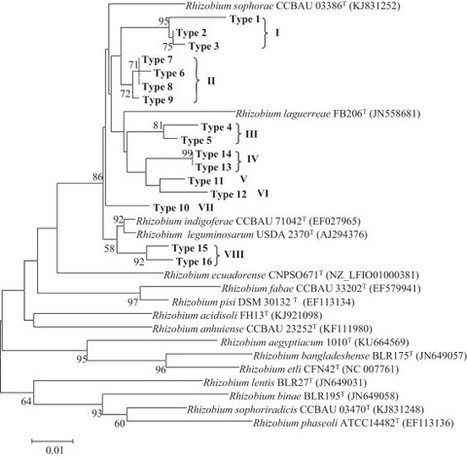
Forest fires lead to the annual disappearance of many natural formations that require the creation of firewall areas. They can be maintained by enriching their pastures with attractive plants for grazing livestock, mainly legumes, which have a high protein content and low dependence on N fertilizers due to their ability to establish nitrogen-fixing symbiosis with rhizobia. In this study, the rhizobia isolated from the nodules of six legumes from the genera Vicia, Lathyrus and Trifolium were analysed in a firewall zone established in Lanjarón (Granada) close to the Sierra Nevada National Park (Spain). The results showed a high genetic diversity of the isolated strains that had 3, 16, 14 and 13 different types of rrs, recA, atpD and glnII genes, respectively. All strains were phylogenetically close to the species from the Rhizobium leguminosarum group, although they were not identified as any of them. The isolated strains belonged to the symbiovars viciae and trifolii but high phylogenetic diversity was found within both symbiovars, since there were 16 and 14 nodC gene types, respectively. Some of these strains clustered with strains isolated in other countries and continents, but others formed atpD, recA, glnII and nodC clusters and lineages only found to date in this study.
|
|
Scooped by
Jean-Michel Ané
March 30, 2017 12:04 PM
|
In this work we revise the taxonomic status of the Lotus-nodulating strains MAFF 303099T and R7A isolated in Japan and New Zealand, respectively. Their 16S rRNA gene sequences are identical and show 98.0, 99.7, 99.8 and 99.9 % similarity values with respect to Mesorhizobium loti NZP 2213T, M. jarvisii ATCC 33669T, M. huakuii USDA 4779T (=CCBAU 2609T) and M. erdmanii USDA 3471T, respectively. The analysis of recA and glnII gene sequeces showed that M. jarvisii ATCC 33669T and M. huakuii USDA 4779T (=CCBAU 2609T) are the most closely related strains to MAFF 303099T and R7A, with similarity values suggesting that these two strains belong to a different species for which MAFF 303099T is selected as the type strain. The DNA-DNA relatedness values between strain MAFF 303099T and its closest phylogenetic relatives ranged from 53 to 60 % in average. Strains MAFF 303099T and R7A presented slight differences in the proportions of C18 : 1ω7c 11-methyl and C19 : 0 cyclo ω8c fatty acids with respect to M. jarvisii ATCC 33669T and M. huakuii USDA 4779T, and also in several phenotypic characteristics. Therefore, we propose the reclassification of these two strains into a novel species named Mesorhizobium japonicum sp. nov., with the type strain being MAFF 303099T (=LMG 29417T=CECT 9101T).
|
|
Scooped by
Jean-Michel Ané
March 30, 2017 12:00 PM
|
Genetic modification of maize with Bacillus thuringiensis (Bt) cry proteins may predispose shifts in the bacterial endophytes’ community associated with maize shoots. In this study, the diversity of bacterial endophytes associated with a Bt maize genotype (Mon810) and its isogenic non-transgenic parental line were investigated at pre-flowering (50 days) and post-flowering (90 days) developmental stages. PCR-DGGE and high throughput sequencing on the Illumina MiSeq sequencer were used to characterize bacterial 16S rRNA gene diversity in leaves, stems, seeds and tassels. PCR-DGGE profile revealed similarity as well as differences between bacterial communities of shoots in both cultivars and at both developmental stages. A total of 1771 operational taxonomic units (OTUs) were obtained from the MiSeq and assigned into 14 phyla, 27 classes, 58 orders, 116 families and 247 genera. Differences in alpha and beta diversity measures of OTUs between the phyllospheres of both genotypes were not significant (P > .05) at all developmental stages. In all cultivars, OTU diversity reduced with plant development. OTUs belonging to the phyla Proteobacteria were dominant in all maize phyllospheres. The class Gammaproteobacteria was dominant in Bt maize while, Alphaproteobacteria and Actinobacteria were dominant in non-Bt maize phyllospheres. Differences in the abundance of some genera, including Acidovorax, Burkerholderia, Brachybacterium, Enterobacter and Rhodococcus, whose species are known beneficial endophytes were observed between cultivars. Hierarchical cluster analysis further suggests that the bacterial endophyte communities of both maize genotypes associate differently (are dissimilar). Overall, the results suggest that bacterial endophytes community differed more across developmental stages than between maize genotypes.
|