Your new post is loading...

|
Scooped by
Jean-Michel Ané
April 18, 2017 5:21 PM
|
Brachypodium distachyon is a C3 grass that is an attractive model host system for studying pathogenicity of major turfgrass pathogens due to its genetic similarity to many cool-season turfgrasses. Infection assays with two or more isolates of the casual agents of dollar spot, brown patch, and Microdochium patch resulted in compatible interactions with B. distachyon inbred line Bd21-3. The symptoms produced by these pathogens on Bd21-3 closely resembled those observed on the natural turfgrass host (creeping bentgrass), demonstrating that B. distachyon is susceptible to the fungal pathogens that cause dollar spot, brown patch, and Microdochium patch on turfgrasses. The interaction between Sclerotinia homoeocarpa isolates and Brachypodium ecotypes was also investigated. Interestingly, differential responses of these ecotypes to S. homoeocarpa isolates was found, particularly when comparing B. distachyon to B. hybridum ecotypes. Taken together, these findings demonstrate that B. distachyon can be used as a model host system for these turfgrass diseases and leveraged for studies of molecular mechanisms contributing to host resistance.
|
|
Scooped by
Jean-Michel Ané
April 17, 2017 11:41 AM
|
Plants produce diverse specialized metabolites (SMs), but the genes responsible for their production and regulation remain largely unknown, hindering efforts to tap plant pharmacopeia. Given that genes comprising SM pathways exhibit environmentally dependent co-regulation, we hypothesized that genes within a SM pathway would form tight associations (modules) with each other in co-expression networks, facilitating their identification. To evaluate this hypothesis, we used 10 global co-expression datasets, each a meta-analysis of hundreds to thousands of experiments, across eight plant species to identify hundreds of co-expressed gene modules per dataset. In support of our hypothesis, 15.3-52.6% of modules contained two or more known SM biosynthetic genes, and module genes were enriched in SM functions. Moreover, modules recovered many experimentally validated SM pathways, including all six known to form biosynthetic gene clusters (BGCs). In contrast, bioinformatically predicted BGCs (i.e. those lacking an associated metabolite) were no more co-expressed than the null distribution for neighboring genes. These results suggest that most predicted plant BGCs are not genuine SM pathways and argue that BGCs are not a hallmark of plant specialized metabolism. We submit that global gene co-expression is a rich, largely untapped resource for discovering the genetic basis and architecture of plant natural products.
|
|
Scooped by
Jean-Michel Ané
April 14, 2017 11:13 AM
|
Transferring the prokaryotic enzyme nitrogenase into a eukaryotic host with the final aim of developing N2 fixing cereal crops would revolutionize agricultural systems worldwide. Targeting it to mitochondria has potential advantages because of the organelle’s high O2 consumption and the presence of bacterial-type iron–sulfur cluster biosynthetic machinery. In this study, we constructed 96 strains of Saccharomyces cerevisiae in which transcriptional units comprising nine Azotobacter vinelandii nif genes (nifHDKUSMBEN) were integrated into the genome. Two combinatorial libraries of nif gene clusters were constructed: a library of mitochondrial leading sequences consisting of 24 clusters within four subsets of nif gene expression strength, and an expression library of 72 clusters with fixed mitochondrial leading sequences and nif expression levels assigned according to factorial design. In total, 29 promoters and 18 terminators were combined to adjust nif gene expression levels. Expression and mitochondrial targeting was confirmed at the protein level as immunoblot analysis showed that Nif proteins could be efficiently accumulated in mitochondria. NifDK tetramer formation, an essential step of nitrogenase assembly, was experimentally proven both in cell-free extracts and in purified NifDK preparations. This work represents a first step toward obtaining functional nitrogenase in the mitochondria of a eukaryotic cell.
|
|
Scooped by
Jean-Michel Ané
April 11, 2017 11:02 AM
|
Background and aims
We characterized fungal endophytes of seeds of invasive, non-native Phragmites from three sites in the Great Lakes region to determine if fungal symbiosis could contribute to invasiveness through their effects on seed germination and seedling growth.
Methods
Field-collected seeds were surface sterilized and plated on agar to culture endophytes for ITS sequencing. Prevalence of specific endophytes from germinated and non-germinated seeds, and from seedlings, was compared.
Results
One-third of 740 seeds yielded endophyte isolates. Fifteen taxa were identified with Alternaria sp. representing 54% of all isolates followed by Phoma sp. (21%) and Penicillium corylophilum (12%). Overall germination of seeds producing an isolate (36%) was significantly higher than seeds not producing an isolate (20%). Penicillium in particular was strongly associated with increased germination of seeds from one site. Sixty-three isolates and 11 taxa were also obtained from 30 seedlings where Phoma, Penicillium and Alternaria respectively were most prevalent. There was a significant effect of isolating an endophyte from the seed on seedling growth.
Conclusions
These results suggest that many endophyte taxa are transmitted in seeds and can increase seed germination and seedling growth of invasive Phragmites. The role of fungal endophytes in host establishment, growth and invasiveness in nature requires further research.
|
|
Scooped by
Jean-Michel Ané
April 11, 2017 11:01 AM
|
Diverse communities of bacteria colonize plant roots and the rhizosphere. Many of these rhizobacteria are symbionts and provide plant growth promotion (PGP) services, protecting the plant from biotic and abiotic stresses and increasing plant productivity by providing access to nutrients that would otherwise be unavailable to roots. In return, these symbiotic bacteria receive photosynthetically-derived carbon (C), in the form of sugars and organic acids, from plant root exudates. PGP activities have been characterized for a variety of forest tree species and are important in C cycling and sequestration in terrestrial ecosystems. The molecular mechanisms of these PGP activities, however, are less well-known. In a previous analysis of Pseudomonas genomes, we found that the bacterial transportome, the aggregate activity of a bacteria's transmembrane transporters, was most predictive for the ecological niche of Pseudomonads in the rhizosphere. Here, we used Populus tremuloides Michx. (trembling aspen) seedlings inoculated with one of three Pseudomonas fluorescens strains (Pf0-1, SBW25, and WH6) and one Pseudomonas protegens (Pf-5) as a laboratory model to further investigate the relationships between the predicted transportomic capacity of a bacterial strain and its observed PGP effects in laboratory cultures. Conditions of low nitrogen (N) or low phosphorus (P) availability and the corresponding replete media conditions were investigated. We measured phenotypic and biochemical parameters of P. tremuloides seedlings and correlated P. fluorescens strain-specific transportomic capacities with P. tremuloides seedling phenotype to predict the strain and nutrient environment-specific transporter functions that lead to experimentally observed, strain, and media-specific PGP activities and the capacity to protect plants against nutrient stress. These predicted transportomic functions fall in three groups: (i) transport of compounds that modulate aspen seedling root architecture, (ii) transport of compounds that help to mobilize nutrients for aspen roots, and (iii) transporters that enable bacterial acquisition of C sources from seedling root exudates. These predictions point to specific molecular mechanisms of PGP activities that can be directly tested through future, hypothesis-driven biological experiments.
|
|
Scooped by
Jean-Michel Ané
April 11, 2017 10:37 AM
|
Coal open pit mining in the South of Santa Catarina state (Brazil) was inappropriately developed, affecting approximately 6.700 ha. Re-vegetation is an alternative for the recovery of these areas. Furthermore, the use of herbaceous legumes inoculated with nitrogen fixing bacteria is motivated due to the difficulty implementing a vegetation cover in these areas, mainly due to low nutrient availability. Therefore, the aim of this work was to evaluate, among 16 autochthonous rhizobia isolated from the coal mining areas, those with the greatest potential to increase growth of the herbaceous legumes Vicia sativa and Calopogonium mucunoides. Tests were conducted in greenhouse containing 17 inoculation treatments (16 autochthonous rhizobia + Brazilian recommended strain for each plant species), plus two treatments without inoculation (with and without mineral nitrogen). After 60 days, nodulation, growth, N uptake, and symbiotic efficiency were evaluated. Isolates characterization was assessed by the production of indole acetic acid, ACC deaminase, siderophores, and inorganic phosphate solubilization. The classification of the isolates was performed by 16 S rDNA gene sequencing. Only isolates UFSC-M4 and UFSC-M8 were able to nodulate C. mucunoides. Among rhizobia capable of nodulating V. sativa, only UFSC-M8 was considered efficient. It was found the presence of more than one growth-promoting attributes in the same organism, and isolate UFSC-M8 presented all of them. Isolates were classified as belonging to Rhizobium, Burkholderia and Curtobacterium. The results suggest the inoculation of Vicia sativa with strain UFSC-M8, classified as Rhizobium sp., as a promising alternative for the revegetation of coal mining degraded areas.
|
|
Scooped by
Jean-Michel Ané
April 11, 2017 10:29 AM
|
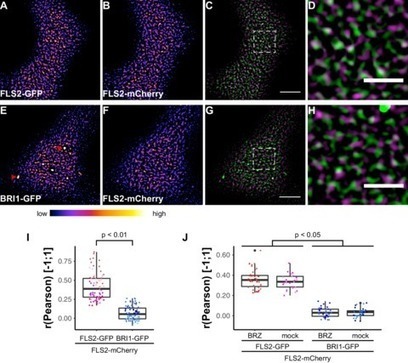
Cell surface receptors govern a multitude of signalling pathways in multicellular organisms. In plants, prominent examples are the receptor kinases FLS2 and BRI1, which activate immunity and steroid-mediated growth, respectively. Intriguingly, despite inducing distinct signalling outputs, both receptors employ common downstream signalling components, which exist in plasma membrane (PM)-localised protein complexes. An important question is thus how these receptor complexes maintain signalling specificity. Live-cell imaging revealed that FLS2 and BRI1 form PM nanoclusters. Using single-particle tracking we could discriminate both cluster populations and we observed spatiotemporal separation between immune and growth signalling platforms. This finding was confirmed by visualising FLS2 and BRI1 within distinct PM nanodomains marked by specific remorin proteins and differential co-localisation with the cytoskeleton. Our results thus suggest that signalling specificity between these pathways may be explained by the spatial separation of FLS2 and BRI1 with their associated signalling components within dedicated PM nanodomains.
|
|
Scooped by
Jean-Michel Ané
April 11, 2017 10:26 AM
|
Background and aims
Diazotrophic endophytic bacteria colonizing cereal plants have a tremendous scope to increase crop yields by supporting low input sustainable agricultural demands of nitrogen. Present work was aimed at studying diversity and functional attributes of nitrogen fixing bacterial endophytes from cereal plants.
Methods
Diazotrophic endophytic bacteria from cereal plants were enriched on nitrogen-free medium and their diversity analyzed by PCR-denaturing gradient gel electrophoresis. Evaluation of plant growth promoting traits of individual isolates and their effect on wheat plants was carried out in plant-soil system.
Results
DGGE analysis and band sequencing showed diazotrophic community to be similar in different plant parts but different than total endophytes. Thirty-one nitrogen fixing endophytic bacteria affiliated to Actinobacteria, Proteobacteria and Firmicutes representing 14 genera were isolated, where Arthrobacter, Rhizobium, and Bacillus spp. were more cosmopolitan. Cross-colonization of the endophytes monitored by green fluorescent protein tagging showed that they are not plant specific. All the bacterial isolates showed presence of nifH gene, siderophore production whereas 81% and 48% isolates showed IAA and P-solubilization, respectively. Biocontrol activity was seen only in Streptomyces spp. which inhibited the growth of Rhizoctonia solani. Pot experiments conducted with wheat plant inoculations showed good growth promotion and correlated with IAA and siderophore production by the isolates.
Conclusion
Diverse endophytic nitrogen fixing bacteria colonize cereal plants non-specifically and possess other plant beneficial traits which help in plant growth promotion.
|
|
Scooped by
Jean-Michel Ané
April 11, 2017 10:25 AM
|
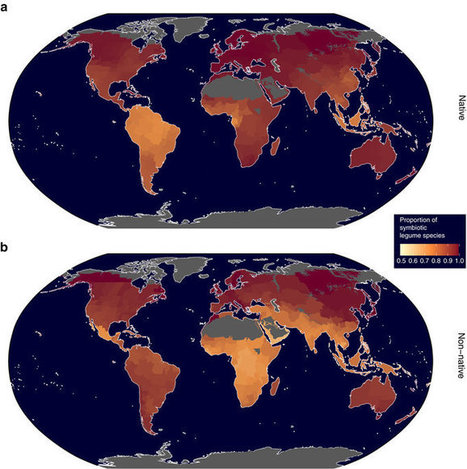
Microbial symbiosis is integral to plant growth and reproduction, but its contribution to global patterns of plant distribution is unknown. Legumes (Fabaceae) are a diverse and widely distributed plant family largely dependent on symbiosis with nitrogen-fixing rhizobia, which are acquired from soil after germination. This dependency is predicted to limit establishment in new geographic areas, owing to a disruption of compatible host-symbiont associations. Here we compare non-native establishment patterns of symbiotic and non-symbiotic legumes across over 3,500 species, covering multiple independent gains and losses of rhizobial symbiosis. We find that symbiotic legume species have spread to fewer non-native regions compared to non-symbiotic legumes, providing strong support for the hypothesis that lack of suitable symbionts or environmental conditions required for effective nitrogen-fixation are driving these global introduction patterns. These results highlight the importance of mutualisms in predicting non-native species establishment and the potential impacts of microbial biogeography on global plant distributions.
|
|
Scooped by
Jean-Michel Ané
April 11, 2017 10:09 AM
|
Auxin is well known to be a key regulator that acts in almost all physiological processes during plant growth, and in interactions between plants and microbes. However, to date, the regulatory mechanisms underlying auxin-mediated plant–arbuscular mycorrhizal (AM) fungi symbiosis have not been well deciphered. Previously we identified a GH3 gene, SlGH3.4, strongly responsive to both auxin induction and mycorrhizal symbiosis. Here, we reported a refined dissection of the SlGH3.4 promoter activity using the β-glucuronidase (GUS) reporter. The SlGH3.4 promoter could drive GUS expression strongly in mycorrhizal roots of soybean and rice plants, and in IAA-treated soybean roots, but not in IAA-treated rice roots. A promoter deletion assay revealed three cis-acting motifs, i.e. the auxin-responsive element, AuxRE, and two newly identified motifs named MYCRS1 and MYCRS2, involved in the activation of auxin- and AM-mediated expression of SlGH3.4. Deletion of the AuxRE from the SlGH3.4 promoter caused almost complete abolition of GUS staining in response to external IAA induction. Seven repeats of AuxRE fused to the Cauliflower mosaic virus (CaMV) 35S minimal promoter could direct GUS expression in both IAA-treated and AM fungal-colonized roots of tobacco plants. Four repeats of MYCRS1 or MYCRS2 fused to the CaMV35S minimal promoter was sufficient to drive GUS expression in arbuscule-containing cells, but not in IAA-treated tobacco roots. In summary, our results offer new insights into the molecular mechanisms underlying the potential cross-talk between the auxin and the AM regulatory pathways in modulating the expression of AM-responsive GH3 genes in diverse mycorrhizal plants.
|
|
Scooped by
Jean-Michel Ané
April 11, 2017 9:59 AM
|
During the endosymbiosis formed between plants and arbuscular mycorrhizal (AM) fungi, the root cortical cells are colonized by branched hyphae called arbuscules, which function in nutrient exchange with the plant [1]. Despite their positive function, arbuscules are ephemeral structures, and their development is followed by a degeneration phase, in which the arbuscule and surrounding periarbuscular membrane and matrix gradually disappear from the root cell [2 ; 3]. Currently, the root cell’s role in this process and the underlying regulatory mechanisms are unknown. Here, by using a Medicago truncatula pt4 mutant in which arbuscules degenerate prematurely [ 4], we identified arbuscule degeneration-associated genes, of which 38% are predicted to encode secreted hydrolases, suggesting a role in disassembly of the arbuscule and interface. Through RNAi and analysis of an insertion mutant, we identified a symbiosis-specific MYB-like transcription factor (MYB1) that suppresses arbuscule degeneration in mtpt4. In myb1, expression of several degeneration-associated genes is reduced. Conversely, in roots constitutively overexpressing MYB1, expression of degeneration-associated genes is increased and subsequent development of symbiosis is impaired. MYB1-regulated gene expression is enhanced by DELLA proteins and is dependent on NSP1 [ 5], but not NSP2 [6]. Furthermore, MYB1 interacts with DELLA and NSP1. Our data identify a transcriptional program for arbuscule degeneration and reveal that its regulators include MYB1 in association with two transcriptional regulators, NSP1 and DELLA, both of which function in preceding phases of the symbiosis. We propose that the combinatorial use of transcription factors enables the sequential expression of transcriptional programs for arbuscule development and degeneration.
During arbuscular mycorrhizal symbiosis (AMS), considerable amounts of lipids are generated, modified and moved within the cell to accommodate the fungus in the root, and it has also been suggested that lipids are delivered to the fungus. To determine the mechanisms by which root cells redirect lipid biosynthesis during AMS we analyzed the roles of two lipid biosynthetic enzymes (FatM and RAM2) and an ABC transporter (STR) that are required for symbiosis and conserved uniquely in plants that engage in AMS.
Complementation analyses indicated that the biochemical function of FatM overlaps with that of other Fat thioesterases, in particular FatB. The essential role of FatM in AMS was a consequence of timing and magnitude of its expression.
Lipid profiles of fatm and ram2 suggested that FatM increases the outflow of 16:0 fatty acids from the plastid, for subsequent use by RAM2 to produce 16:0 β-monoacylglycerol.
Thus, during AMS, high-level, specific expression of key lipid biosynthetic enzymes located in the plastid and the endoplasmic reticulum enables the root cell to fine-tune lipid biosynthesis to increase the production of β-monoacylglycerols. We propose a model in which β-monoacylglycerols, or a derivative thereof, are exported out of the root cell across the periarbuscular membrane for ultimate use by the fungus.
Via Francis Martin
|
|
Scooped by
Jean-Michel Ané
April 10, 2017 11:00 AM
|
The plant membrane localized NADPH oxidases, also known as respiratory burst oxidase homologs (RBOHs), play crucial roles in various cellular activities including plant disease responses, and are a major source of reactive oxygen species (ROS). Sclerotinia sclerotiorum is a cosmopolitan fungal pathogen that causes Sclerotinia stem rot (SSR) in soybean. Via a key virulence factor, oxalic acid, it induces programmed cell death (PCD) in the host plant, a process that is reliant on ROS generation. In this study, using protein sequence similarity searches, we have identified seventeen soybean RBOHs (GmRBOHs) and studied their contribution to SSR disease development, drought tolerance and nodulation. We clustered the soybean RBOH genes into six groups of orthologs based on phylogenetic analysis with their Arabidopsis counterparts. Transcript analysis of all seventeen GmRBOHs revealed that out of the six identified groups, group VI (GmRBOH-VI) was specifically and drastically induced following S. sclerotiorum challenge. Virus-induced gene silencing (VIGS) of GmRBOH-VI using Bean pod mottle virus (BPMV) resulted in enhanced resistance to S. sclerotiorum and markedly reduced ROS levels during disease development. Coincidently, GmRBOH-VI-silenced plants were also found to be drought tolerant, but had a reduce capacity to form nodules. Our results indicate that the pathogenic development of S. sclerotiorum in soybean requires the active participation of specific host RBOHs, to induce ROS and cell death, thus leading to the establishment of disease. This article is protected by copyright. All rights reserved.
|
|
|
Scooped by
Jean-Michel Ané
April 18, 2017 11:41 AM
|
SEED: The Untold Story follows passionate seed-keepers protecting our 12,000-year-old food legacy, seeds.
|
|
Scooped by
Jean-Michel Ané
April 14, 2017 3:25 PM
|
In this review, the wisdom and efficacy of studies seeking disease attenuating microbes and microbiomes only in healthy plant communities is questioned and an alternative view is posited, namely that success in biocontrol of crop diseases may also come from studies of microbiota, or at least individual species isolates, associated with diseased plants. In support of this view, I summarize the current extensive knowledge of the biology behind what is probably the most successful biocontrol of a plant disease, namely the biocontrol of crown gall of stone fruit using non-pathogenic Rhizobium rhizogenes K84, in which the biocontrol agent itself came from a diseased plant.
|
|
Scooped by
Jean-Michel Ané
April 13, 2017 12:54 PM
|
After a lifetime of stomach problems, Josiah Zayner declared war on his own body’s microbes.
|
|
Scooped by
Jean-Michel Ané
April 11, 2017 11:01 AM
|
The genus Ensifer (formerly Sinorhizobium) contains many species able to form nitrogen-fixing nodules on plants of the legume family. Here, we report the 6.1-Mb draft genome sequence of Ensifer sp. strain LCM 4579, with a G+C content of 62.4% and 5,613 candidate protein-encoding genes.
|
|
Scooped by
Jean-Michel Ané
April 11, 2017 10:37 AM
|
A Gram-negative, non-spore-forming, aerobic rods, strain YIC4121T, was isolated from root nodule of Sesbania cannabina grown in Dongying (Yellow River Delta), Shandong Province, PR China. Based on phylogenetic analysis of 16 S rRNA gene sequences, strain YIC4121T was assigned to the genus Agrobacterium with 99.7, 99.3, 99.0, 98.8 and 98.7% sequence similarities to Agrobacterium radiobacter LMG140T, A. pusense NRCPB10T, A. arsenijevicii KFB 330T, A. nepotum 39/7T and A. larrymoorei ATCC51759T. Analysis of the concatenated housekeeping genes (recA-atpD-glnII), showed lower sequence similarities (≤94.6%) between strain YIC4121T and other recognized Agrobacterium species. Strain YIC4121T shared whole-genome average nucleotide identities (ANI) 87.94, 91.27 and 77.42%, with A. pusense NRCPB10T, A. radiobacter LMG140T and A. larrymoorei ATCC51759T. The predominant cellular fatty acids were C19:0 cyclo ω8c, summed feature 2 (C12:0 aldehyde/unknown 10.9525), summed feature 8 (C18:1ω7c/C18:1ω6c), C16:0 3 OH and C16:0. The G + C content of strain YIC4121T was 59.80 mol%. Tween 80, lactulose, citric acid, α-ketoglutaric acid, glycyl-l-glutamic acid and 2, 3-butanediol could not be utilized as carbon source, distinguishing strain YIC4121T from the other related species. Based on the distinctly genetic and phenotypic dissimilarity, a novel species Agrobacterium deltaense sp. nov. is proposed with YIC4121T (=HAMBI 3654T = LMG 29283T) as the type strain.
|
|
Scooped by
Jean-Michel Ané
April 11, 2017 10:32 AM
|
In plants, receptor-like kinases (RLKs) and extracellular reactive oxygen species (ROS) contribute to the communication between the environment and the interior of the cell. Apoplastic ROS production is a frequent result of RLK signaling in a multitude of cellular processes. However, it is as yet unclear how ROS signaling downstream of receptor activation is executed. In this review, we provide a broad view of the intricate connections between RLKs and ROS signaling and describe the regulatory events that control and coordinate extracellular ROS production. We propose that concurrent initiation of ROS dependent and independent signaling might be a critical element in establishing cellular responses. Further, we discuss the possible ROS sensing mechanisms in the context of the biochemical environment in the apoplast. We suggest that RLK-dependent modulation of apoplastic and intracellular conditions facilitates ROS perception and signaling. Based on data from plant as well as animal models, we argue that specific RLKs could be components of the ROS sensing machinery or ROS sensors. The importance of the crosstalk between RLK and ROS signaling is discussed in the context of stomatal immunity. Finally, we highlight challenges in the understanding of these signaling processes and provide perspectives for future research.
|
|
Scooped by
Jean-Michel Ané
April 11, 2017 10:26 AM
|
Rhizobia that nodulate peas comprise a heterogeneous group of bacteria. The aim of this study was to investigate the relationship between phylogeny and electrophoretic and hydroxy fatty acid lipopolysaccharide (LPS) profiles of pea microsymbionts. Based on amplified fragment length polymorphism (AFLP) fingerprinting data, the pea microsymbionts were grouped into two clusters distinguished at 58% similarity level. Based on the concatenated 16S rRNA, recA, and atpD housekeeping gene data, the microsymbionts appeared to be most closely related to Rhizobium leguminosarum biovars viciae and trifolii. Applying cluster analysis to their LPS electrophoretic profiles, the strains were assigned to two major groups with different banding patterns. All hydroxy fatty acids common to R. leguminosarum and R. etli were detected in each examined strain. Differences in the proportions of 3- to ω-1 hydroxy fatty acids allowed us to distinguish two groups of strains. This classification did not overlap with one based on LPS electrophoretic profiles. No clear correlation was apparent between the genetic traits and LPS profiles of the pea nodule isolates.
|
|
Scooped by
Jean-Michel Ané
April 11, 2017 10:25 AM
|
Understanding crop resilience to environmental stress is critical in predicting the consequences of global climate change for agricultural systems worldwide, but to date studies addressing crop resiliency have focused primarily on plant physiological and molecular responses. Arbuscular mycorrhizal fungi (AMF) form mutualisms with many crop species, and these relationships are key in mitigating the effects of abiotic stress in many agricultural systems. However, to date there is little research examining whether (1) fungal community structure in agroecosystems is resistant to changing environmental conditions, specifically water limitation and (2) resilience of fungal community structure is moderated by agricultural management systems, namely the integration of trees into cropping systems. Here, we address these uncertainties through a rainfall reduction field experiment that manipulated short-term water availability in a soybean-based (Glycine max L. Merr.) agroforest in Southern Ontario, Canada. We employed terminal restriction fragment length polymorphism analysis to determine the molecular diversity of both general fungal and AMF communities in soybean roots under no stress, stress (rainfall shelters added), and poststress (rainfall shelters removed). We found that general fungal and AMF communities sampled from soybean roots were resistant to rainfall reduction in a monoculture, but not in an agroforest. While AMF communities were unchanged after stress removal, general fungal communities were significantly different poststress in the agroforest, indicating a capacity for resiliency. Our study indicates that generalist fungi and AMF are responsive to changes in environmental conditions and that agroecosystem management plays a key role in the resistance and resilience of fungal communities to water limitation.
|
|
Scooped by
Jean-Michel Ané
April 11, 2017 10:14 AM
|
The question of how genotypic and ecological units arise and spread in natural microbial populations remains controversial in the field of evolutionary biology. Here, we investigated the early stages of ecological and genetic differentiation in a highly clonal sympatric Sinorhizobium meliloti population. Whole-genome sequencing revealed that a large DNA region of the symbiotic plasmid pSymB was replaced in some isolates with a similar synteny block carrying densely clustered SNPs and displaying gene acquisition and loss. Two different versions of this genomic island of differentiation (GID) generated by multiple genetic exchanges over time appear to have arisen recently, through recombination in a particular clade within this population. In addition, these isolates display resistance to phages from the same geographic region, probably due to the modification of surface components by the acquired genes. Our results suggest that an underlying process of early ecological and genetic differentiation in S. meliloti is primarily triggered by acquisition of genes that confer resistance to soil phages within particular large genomic DNA regions prone to recombination.
|
|
Scooped by
Jean-Michel Ané
April 11, 2017 10:08 AM
|
Symbiotic nitrogen (N)-fixing trees can drive N and carbon cycling, and thus are critical components of future climate projections. Despite detailed understanding of how climate influences N-fixation enzyme activity and physiology, comparatively little is known about how climate influences N-fixing tree abundance. Here, we used forest inventory data from the USA and Mexico (>125,000 plots) along with climate data to address two questions: (1) How does the abundance distribution of N-fixing trees (rhizobial, actinorhizal, and both types together) vary with mean annual temperature (MAT) and precipitation (MAP)? (2) How will changing climate shift the abundance distribution of N-fixing trees? We found that rhizobial N-fixing trees were nearly absent below 15◦C MAT, but above 15◦C MAT, they increased in abundance as temperature rose. We found no evidence for a hump-shaped response to temperature throughout the range of our data. Rhizobial trees were more abundant in dry than in wet ecosystems. By contrast, actinorhizal trees peaked in abundance at 5-10◦C MAT, and were least abundant in areas with intermediate precipitation. Next, we used a climate envelope approach to project how N-fixing tree relative abundance might change in the future. The climate envelope projection showed that rhizobial N-fixing trees will likely become more abundant in many areas by 2080, particularly in the southern USA and western Mexico, due primarily to rising temperatures. Projections for actinorhizal N-fixing trees were more nuanced due to their non-monotonic dependence on temperature and precipitation. Overall, the dominant trend is that warming will increase N-fixing tree abundance in much of the USA and Mexico, with large increases up to 40° North latitude. The quantitative link we provide between climate and N-fixing tree abundance can help improve the representation of symbiotic N fixation in Earth System Models.
|
|
Scooped by
Jean-Michel Ané
April 11, 2017 9:57 AM
|
Strigolactones (SLs) are plant hormones that have important roles as modulators of
plant development. They were originally described as ex planta signaling molecules
in the rhizosphere that induce the germination of parasitic plants, a role that was
later linked to encouraging the beneficial symbiosis with arbuscular mycorrhizal (AM)
fungi. Recently, the focus has shifted to examining the role of SLs in plant–microbe
interactions, and has revealed roles for SLs in the association of legumes with nitrogen-fixing
rhizobacteria and in interactions with disease-causing pathogens.
|
|
Scooped by
Jean-Michel Ané
April 10, 2017 11:03 AM
|
Organic farming is often advocated as an approach to mitigate biodiversity loss on agricultural land. The phyllosphere provides a habitat for diverse fungal communities that are important for plant health and productivity. However, it is still unknown how organic farming affects the diversity of phyllosphere fungi in major crops. We sampled wheat leaves from 22 organically and conventionally cultivated fields in Sweden, paired based on their geographical location and wheat cultivar. Fungal communities were described using amplicon sequencing and real-time PCR. Species richness was higher on wheat leaves from organically managed fields, with a mean of 54 OTUs compared with 40 OTUs for conventionally managed fields. The main components of the fungal community were similar throughout the 350 km long sampling area and seven operational taxonomic units (OTUs) were present in all fields: Zymoseptoria, Dioszegia fristingensis, Cladosporium, Dioszegia hungarica, Cryptococcus, Ascochyta and Dioszegia. Fungal abundance was highly variable between fields, 103-105 internal transcribed spacer (ITS) copies per ng wheat DNA, but did not differ between cropping systems. Further analyses showed that weed biomass was the strongest explanatory variable for fungal community composition and OTU richness. These findings help provide a more comprehensive understanding of the effect of organic farming on the diversity of organism groups in different habitats within the agroecosystem.
|