Your new post is loading...

|
Scooped by
Jean-Michel Ané
December 12, 2017 2:40 PM
|
The coordinated control of Ca2+ signaling is essential for development in eukaryotes. Cyclic nucleotide-gated channel (CNGC) family members mediate Ca2+ influx from cellular stores in plants (Charpentier et al., 2016; Gao et al., 2016; Frietsch et al., 2007; Urquhart et al., 2007). Here, we report the unusual genetic behavior of a quantitative gain-of-function CNGC mutation (brush) in Lotus japonicus resulting in a leaky tetrameric channel. brush resides in a cluster of redundant CNGCs encoding subunits which resemble metazoan voltage-gated potassium (Kv1-Kv4) channels in assembly and gating properties. The recessive mongenic brush mutation impaired root development and infection by nitrogen-fixing rhizobia. The brush allele exhibited quantitative behavior since overexpression of the cluster subunits was required to suppress the brush phenotype. The results reveal a mechanism by which quantitative competition between channel subunits for tetramer assembly can impact the phenotype of the mutation carrier.
|
|
Scooped by
Jean-Michel Ané
December 11, 2017 12:42 PM
|
Perception of arbuscular mycorrhizal fungi (AMF) triggers distinct plant signalling responses for parallel establishment of symbiosis and induction of lateral root formation. Rice receptor kinase CHITIN ELICITOR RECEPTOR KINASE 1 (CERK1) and α/β-fold hydrolase DWARF14-LIKE (D14L) are involved in pre-symbiotic fungal perception.
After 6 wk post-inoculation with Rhizophagus irregularis, root developmental responses, fungal colonization and transcriptional responses were monitored in two independent cerk1 null mutants; a deletion mutant lacking D14L, and with D14L complemented as well as their respective wild-type cultivars (cv Nipponbare and Nihonmasari).
Here we show that although essential for symbiosis, D14L is dispensable for AMF-induced root architectural modulation, which conversely relies on CERK1.
Our results demonstrate uncoupling of symbiosis and the symbiotic root developmental signalling during pre-symbiosis with CERK1 required for AMF-induced root architectural changes.
|
|
Scooped by
Jean-Michel Ané
December 11, 2017 11:23 AM
|
Arbuscular mycorrhizal fungi (AMF) are a group of soil microorganisms that establish symbioses with the vast majority of land plants. To date, generation of AMF coding information has been limited to model genera that grow well axenically; Rhizoglomus and Gigaspora. Meanwhile, data on the functional gene repertoire of most AMF families is non-existent. Here, we provide primary large-scale transcriptome data from eight poorly studied AMF species (Acaulospora morrowiae, Diversispora versiforme, Scutellospora calospora, Racocetra castanea, Paraglomus brasilianum, Ambispora leptoticha, Claroideoglomus claroideum and Funneliformis mosseae) using ultra-low input ribonucleic acid (RNA)-seq approaches. Our analyses reveals that quiescent spores of many AMF species harbour a diverse functional diversity and solidify known evolutionary relationships within the group. Our findings demonstrate that RNA-seq data obtained from low-input RNA are reliable in comparison to conventional RNA-seq experiments. Thus, our methodology can potentially be used to deepen our understanding of fungal microbial function and phylogeny using minute amounts of RNA material.
|
|
Scooped by
Jean-Michel Ané
December 11, 2017 11:20 AM
|
Nitrogenase is a complex, bacterial enzyme that catalyzes the ATP-dependent reduction of dinitrogen (N2) to ammonia (NH3). In its most prevalent form, it consists of two proteins, the catalytic molybdenum-iron protein (MoFeP) and its specific reductase, the iron protein (FeP). A defining feature of nitrogenase is that electron and proton transfer processes linked to substrate reduction are synchronized by conformational changes driven by ATP-dependent FeP–MoFeP interactions. Yet, despite extensive crystallographic, spectroscopic, and biochemical information on nitrogenase, the structural basis of the ATP-dependent synchronization mechanism is not understood in detail. In this chapter, we summarize some of our efforts toward obtaining such an understanding.
Experimental investigations of the structure–function relationships in nitrogenase are challenged by the fact that it cannot be readily expressed heterologously in nondiazotrophic bacteria, and the purification protocols for nitrogenase are only known for a small number of diazotrophic organisms. Here, we present methods for purifying and characterizing nitrogenase from a new model organism, Gluconacetobacter diazotrophicus. We also describe procedures for observing redox-dependent conformational changes in G. diazotrophicus nitrogenase by X-ray crystallography and electron paramagnetic resonance spectroscopy, which have provided new insights into the redox-dependent conformational gating processes in nitrogenase.
|
|
Scooped by
Jean-Michel Ané
December 11, 2017 11:05 AM
|
Arbuscular mycorrhizal fungi (AMF) establish symbiosis with most terrestrial plants, and greatly regulate lateral root (LR) formation. Phosphorus (P), sugar, and plant hormones are proposed being involved in this regulation, however, no global evidence regarding these factors is available so far, especially in woody plants. In this study, we inoculated trifoliate orange seedlings (Poncirus trifoliata L. Raf) with an AMF isolate, Rhizophagus irregularis BGC JX04B. After 4 months of growth, LR formation was characterized, and sugar contents in roots were determined. RNA-Seq analysis was performed to obtain the transcriptomes of LR root tips from non-mycorrhizal and mycorrhizal seedlings. Quantitative real time PCR (qRT-PCR) of selected genes was also conducted for validation. The results showed that AMF significantly increased LR number, as well as plant biomass and shoot P concentration. The contents of glucose and fructose in primary root, and sucrose content in LR were also increased. A total of 909 differentially expressed genes (DEGs) were identified in response to AMF inoculation, and qRT-PCR validated the transcriptomic data. The numbers of DEGs related to P, sugar, and plant hormones were 31, 32, and 25, respectively. For P metabolism, the most up-regulated DEGs mainly encoded phosphate transporter, and the most down-regulated DEGs encoded acid phosphatase. For sugar metabolism, the most up-regulated DEGs encoded polygalacturonase and chitinase. For plant hormones, the most up-regulated DEGs were related to auxin signaling, and the most down-regulated DEGs were related to ethylene signaling. PLS-SEM analysis indicates that P metabolism was the most important pathway by which AMF regulates LR formation in this study. These data reveal the changes of genome-wide gene expression in responses to AMF inoculation in trifoliate orange and provide a solid basis for the future identification and characterization of key genes involved in LR formation induced by AMF.
|
|
Scooped by
Jean-Michel Ané
December 11, 2017 11:03 AM
|
In legume plants, low nitrogen soils promote symbiotic interactions with rhizobial bacteria, leading to the formation of nitrogen-fixing root nodules. Amongst critical signals regulating this developmental process are bacterial Nod Factors (NFs) and several plant hormones, including cytokinins (CKs) and gibberellins (GAs). Here we show in Medicago truncatula that GA signaling mediated by DELLA1 decreases the amount of bioactive CKs in roots and negatively impacts the CRE1 (Cytokinin Response 1)-dependent NF activation of a subset of CK-signaling genes, as well as of the CK-regulated NSP2 (Nodulation Signaling pathway 2) and ERN1 (ERF required for Nodulation) early nodulation genes. Consistently, a dominant active DELLA1 protein can partially rescue the reduced nodulation of the cre1 mutant and triggers the formation of nodule-like structures when expressed in the root cortex or in the root epidermis. This suggests a model where the DELLA1-mediated GA signaling interplays with the CRE1-dependent CK pathway to regulate early nodulation in response to both NF and CK signals critical for this symbiotic interaction.
|
|
Scooped by
Jean-Michel Ané
December 6, 2017 2:56 PM
|
|
|
Scooped by
Jean-Michel Ané
December 5, 2017 9:28 PM
|
Plant genomes encode many lineage-specific, unique transcription factors. Expansion of such gene families has been previously found to coincide with the evolution of morphological complexity, although comparative analyses have been hampered by severe sampling bias. Here, we make use of the recently increased availability of plant genomes. We have updated and expanded previous rule sets for domain-based classification of transcription associated proteins (TAPs), comprising transcription factors and transcriptional regulators. The genome-wide annotation of these protein families has been analyzed and made available via the novel TAPscan web interface. We find that many TAP families previously thought to be specific for land plants actually evolved in streptophyte (charophyte) algae; 26 out of 36 TAP family gains are inferred to have occurred in the common ancestor of the Streptophyta (uniting the land plants – Embryophyta – with their closest algal relatives). In contrast, expansions of TAP families were found to occur throughout streptophyte evolution. 17 out of 76 expansion events were found to be common to all land plants and thus probably evolved concomitant with the water-to-land-transition.
|
|
Scooped by
Jean-Michel Ané
December 4, 2017 11:20 AM
|
Promoters with tissue-specific activity are very useful to address cell-autonomous and non cell autonomous functions of candidate genes. Although this strategy is widely used in Arabidopsis thaliana, its use to study tissue-specific regulation of root symbiotic interactions in legumes has only started recently. Moreover, using tissue specific promoter activity to drive a GAL4-VP16 chimeric transcription factor that can bind short upstream activation sequences (UAS) is an efficient way to target and enhance the expression of any gene of interest. Here, we developed a collection of promoters with different root cell layers specific activities in Medicago truncatula and tested their abilities to drive the expression of a chimeric GAL4-VP16 transcription factor in a trans-activation UAS: β-Glucuronidase (GUS) reporter gene system. By developing a binary vector devoted to modular Golden Gate cloning together with a collection of adapted tissue specific promoters and coding sequences we could test the activity of four of these promoters in trans-activation GAL4/UAS systems and compare them to “classical” promoter GUS fusions. Roots showing high levels of tissue specific expression of the GUS activity could be obtained with this trans-activation system. We therefore provide the legume community with new tools for efficient modular Golden Gate cloning, tissue specific expression and a trans-activation system. This study provides the ground work for future development of stable transgenic lines in Medicago truncatula.
|
|
Scooped by
Jean-Michel Ané
December 4, 2017 9:52 AM
|
Nucleotide-binding site leucine-rich repeat resistance genes (NLRs) allow plants to detect microbial effectors. We hypothesized that NLR expression patterns could reflect organ-specific differences in effector challenge and tested this by carrying out a meta-analysis of expression data for 1,235 NLRs from 9 plant species. We found stable NLR root/shoot expression ratios within species, suggesting organ-specific hardwiring of NLR expression patterns in anticipation of distinct challenges. Most monocot and dicot plant species preferentially expressed NLRs in roots. In contrast, Brassicaceae species, including oilseed rape and the model plant Arabidopsis thaliana, were unique in showing NLR expression skewed towards the shoot across multiple phylogenetically distinct groups of NLRs. The Brassicaceae are also outliers in the sense that they have lost the common symbiosis signaling pathway, which enables intracellular infection by root symbionts. While it is unclear if these two events are related, the NLR expression shift identified here suggests that the Brassicaceae may have evolved unique PRRs and antimicrobial root metabolites to substitute for NLR protection. Such innovations in root protection could potentially be exploited in crop rotation schemes or for enhancing root defense systems of non-Brassicaceae crops.
|
|
Scooped by
Jean-Michel Ané
December 1, 2017 10:01 AM
|
Establishment of symbiotic nitrogen-fixation in legumes is regulated by the plant hormone ethylene, but it has remained unclear whether and how its biosynthesis is regulated by the symbiotic pathway. We established a sensitive ethylene detection system for Lotus japonicus and found that ethylene production increased as early as six hours after inoculation with Mesorhizobium loti. This ethylene response was dependent on Nod factor production by compatible rhizobia. Analyses of nodulation mutants showed that perception of Nod factor was required for ethylene emission, while downstream transcription factors including CYCLOPS, NIN and ERN1 were not required for this response. Activation of the nodulation signalling pathway in spontaneously nodulating mutants was also sufficient to elevate ethylene production. Ethylene signalling is controlled by EIN2, which is duplicated in L. japonicus. We obtained a L. japonicus Ljein2a Ljein2b double mutant which exhibits complete ethylene insensitivity and confirms that these two genes act redundantly in ethylene signalling. Consistent with this redundancy, both LjEin2a and LjEin2b are required for negative regulation of nodulation and Ljein2a Ljein2b double mutants are hypernodulating and hyperinfected. We also identified an unexpected role for ethylene in the onset of nitrogen fixation, with the Ljein2a Ljein2b double mutant showing severely reduced nitrogen fixation These results demonstrate that ethylene production is an early and sustained nodulation response which acts at multiple stages to regulate infection, nodule organogenesis and nitrogen fixation in L. japonicus.
|
|
Scooped by
Jean-Michel Ané
November 30, 2017 11:24 AM
|
Acacia seyal is a leguminous plant that plays an important role in the ecosystem of Sahelian zone by producing gum, wood and fodder. The growth of A. seyal is subject to many constraints as salinity which can affect the development of this tree. Therefore, soil microorganisms can help A. seyal to better tolerate the effects of negative environmental stresses. The contribution of arbuscular mycorrhizal fungi (AMF) to the salt tolerance of A. seyal, was evaluated by testing the effects of eight different arbuscular mycorrhizal fungi (AMF) isolates in the performance of A. seyal seedlings subjected to different levels of salinity (0, 340 and 680 mM). The results based on growth parameters of shoot and root parts, shoot mineral N, P, K and Na content as well as survival rates and mycorrhization showed that AMF improved mineral nutrition of A. seyal seedlings during salt stress. The combination between AMF and salinity provided evidence that the efficiency of AMF isolates were variable in improving mineral nutrition and mortality rate for A. seyal seedlings related to the level of salt stress. However, the effects of inoculation were variable depending to the AMF isolate associated with seedlings and the level of salinity, suggesting that interactions between plants and AMF can be modulated by both AMF diversity and the type and level of abiotic factors. Rhizophagus intraradices was more efficient at 680 mM NaCl in plant growth and mineral uptake while Glomus deserticola did not promote a better plant development than most of the other species inoculated to seedlings.
|
|
Scooped by
Jean-Michel Ané
November 27, 2017 9:35 AM
|
The roots of most land plants are colonized by symbiotic arbuscular mycorrhiza (AM) fungi. To facilitate this symbiosis, plant genomes encode a set of genes required for microbial perception and accommodation. However, the extent to which infection by filamentous root pathogens also relies on some of these genes remains an open question. Here, we used genome-wide association mapping to identify genes contributing to colonization of Medicago truncatula roots by the pathogenic oomycete Phytophthora palmivora. Single-nucleotide polymorphism (SNP) markers most significantly associated with plant colonization response were identified upstream of RAD1, which encodes a GRAS transcription regulator first negatively implicated in root nodule symbiosis and recently identified as a positive regulator of AM symbiosis. RAD1 transcript levels are up-regulated both in response to AM fungus and, to a lower extent, in infected tissues by P. palmivora where its expression is restricted to root cortex cells proximal to pathogen hyphae. Reverse genetics showed that reduction of RAD1 transcript levels as well as a rad1 mutant are impaired in their full colonization by AM fungi as well as by P. palmivora. Thus, the importance of RAD1 extends beyond symbiotic interactions, suggesting a general involvement in M. truncatula microbe-induced root development and interactions with unrelated beneficial and detrimental filamentous microbes.
|
|
|
Scooped by
Jean-Michel Ané
December 12, 2017 2:40 PM
|
Microorganisms are found everywhere, and they are closely associated with plants. Because the establishment of any plant–microbe association involves chemical communication, understanding crosstalk processes is fundamental to defining the type of relationship. Although several metabolites from plants and microbes have been fully characterized, their roles in the chemical interplay between these partners are not well understood in most cases, and they require further investigation. In this review, we describe different plant–microbe associations from colonization to microbial establishment processes in plants along with future prospects, including agricultural benefits.
|
|
Scooped by
Jean-Michel Ané
December 11, 2017 12:40 PM
|
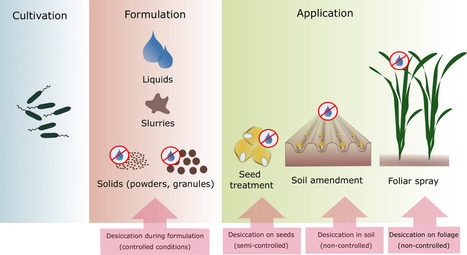
The application of beneficial, plant-associated microorganisms is a sustainable approach to improving crop performance in agriculture. However, microbial inoculants are often susceptible to prolonged periods of storage and deleterious environmental factors, which negatively impact their viability and ultimately limit efficacy in the field. This particularly concerns non-sporulating bacteria. To overcome this challenge, the availability of protective formulations is crucial. Numerous parameters influence the viability of microbial cells, with drying procedures generally being among the most critical ones. Thus, technological advances to attenuate the desiccation stress imposed on living cells are key to successful formulation development. In this review, we discuss the core aspects important to consider when aiming at high cell viability of non-sporulating bacteria to be applied as microbial inoculants in agriculture. We elaborate the suitability of commonly applied drying methods (freeze-drying, vacuum-drying, spray-drying, fluidized bed-drying, air-drying) and potential measures to prevent cell damage from desiccation (externally applied protectants, stress pre-conditioning, triggering of exopolysaccharide secretion, ‘helper’ strains). Furthermore, we point out methods for assessing bacterial viability, such as colony counting, spectrophotometry, microcalorimetry, flow cytometry and viability qPCR. Choosing appropriate technologies for maintenance of cell viability and evaluation thereof will render formulation development more efficient. This in turn will aid in utilizing the vast potential of promising, plant beneficial bacteria as sustainable alternatives to standard agrochemicals.
|
|
Scooped by
Jean-Michel Ané
December 11, 2017 11:23 AM
|
Arbuscular mycorrhizal fungi (AMF) play an important role in litter decomposition. This study investigated how soil nutrient level affected the process. Results showed that AMF colonization had no significant effect on litter decomposition under normal soil nutrient conditions. However, litter decomposition was accelerated significantly under lower nutrient conditions. Soil microbial biomass in decomposition system was significantly increased. Especially, in moderate lower nutrient treatment (condition of half-normal soil nutrient), litters exhibited the highest decomposition rate, AMF hypha revealed the greatest density, and enzymes (especially nitrate reductase) showed the highest activities as well. Meanwhile, the immobilization of nitrogen (N) in the decomposing litter remarkably decreased. Our results suggested that the roles AMF played in ecosystem were largely affected by soil nutrient levels. At normal soil nutrient level, AMF exhibited limited effects in promoting decomposition. When soil nutrient level decreased, the promoting effect of AMF on litter decomposition began to appear, especially on N mobilization. However, under extremely low nutrient conditions, AMF showed less influence on decomposition and may even compete with decomposer microorganisms for nutrients.
|
|
Scooped by
Jean-Michel Ané
December 11, 2017 11:06 AM
|
Growing evidence indicates that small, secreted peptides (SSPs) play critical roles in legume growth and development, yet the annotation of SSP-coding genes is far from complete. Systematic reannotation of the Medicago truncatula genome identified 1,970 homologs of established SSP gene families and an additional 2,455 genes that are potentially novel SSPs, previously unreported in the literature. The expression patterns of known and putative SSP genes based on 144 RNA sequencing data sets covering various stages of macronutrient deficiencies and symbiotic interactions with rhizobia and mycorrhiza were investigated. Focusing on those known or suspected to act via receptor-mediated signaling, 240 nutrient-responsive and 365 nodulation-responsive Signaling-SSPs were identified, greatly expanding the number of SSP gene families potentially involved in acclimation to nutrient deficiencies and nodulation. Synthetic peptide applications were shown to alter root growth and nodulation phenotypes, revealing additional regulators of legume nutrient acquisition. Our results constitute a powerful resource enabling further investigations of specific SSP functions via peptide treatment and reverse genetics.
|
|
Scooped by
Jean-Michel Ané
December 11, 2017 11:05 AM
|
Root exudates are plant metabolites secreted from the roots into the soil. These exudates are involved in many important biological processes, including acquisition of nutrients, defense, and signaling to rhizosphere bacteria, such as isoflavones of soybean crucial for the symbiosis with rhizobium. Less is known, however, about other types of root exudates. This study shows that soybean roots secrete large amounts of soyasaponins (triterpenoid glycosides) as root exudates. The soyasaponins are classified into four groups, with group A being the most secreted of these compounds, whereas DDMP soyasaponins being the group showing greatest accumulation in root tissues, suggesting a selection system for secreted compounds. Time-course experiments showed that the soyasaponin secretion peaked during early vegetative stages. Particularly, soyasaponin Ah was the major compound secreted by soybean roots, whereas deacetylated derivative Af was the major compound secreted specifically during VE stage. The secretion of soyasaponins containing glycosyl moieties is an apparent loss of photosynthates. This phenomenon has been also observed in other legume species, although the composition of secreted soyasaponins is plant species-dependent. The identification of triterpenoid saponins as major metabolites in legume root exudates will provide novel insights into chemical signaling in the rhizosphere between plants and other organisms.
|
|
Scooped by
Jean-Michel Ané
December 10, 2017 9:37 AM
|
Analytical methods can offer insights into the structure of biological networks, but mechanisms that determine the structure of these networks remain unclear. We conducted a synthesis based on 111 previously published datasets to assess a range of ecological and evolutionary mechanisms that may influence the plant-associated fungal interaction networks. We calculated the relative host effect on fungal community composition and compared nestedness and modularity among different mycorrhizal types and endophytic fungal guilds. We also assessed how plant-fungal network structure was related to host phylogeny, environmental and sampling properties. Orchid mycorrhizal fungal communities responded most strongly to host identity, but the effect of host was similar among all other fungal guilds. Community nestedness, which did not differ among fungal guilds, declined significantly with increasing mean annual precipitation on a global scale. Orchid and ericoid mycorrhizal fungal communities were more modular than ectomycorrhizal and root endophytic communities, with arbuscular mycorrhizal fungi in an intermediate position. Network properties among a broad suite of plant-associated fungi were largely comparable and generally unrelated to phylogenetic distance among hosts. Instead, network metrics were predominantly affected by sampling and matrix properties, indicating the importance of study design in properly inferring ecological patterns.
Arbuscular mycorrhizal fungi (AMF) are a group of soil microorganisms that establish symbioses with the vast majority of land plants. To date, generation of AMF coding information has been limited to model genera that grow well axenically; Rhizoglomus and Gigaspora. Meanwhile, data on the functional gene repertoire of most AMF families is non-existent. Here, we provide primary large-scale transcriptome data from eight poorly studied AMF species (Acaulospora morrowiae, Diversispora versiforme, Scutellospora calospora, Racocetra castanea, Paraglomus brasilianum, Ambispora leptoticha, Claroideoglomus claroideum and Funneliformis mosseae) using ultra-low input ribonucleic acid (RNA)-seq approaches. Our analyses reveals that quiescent spores of many AMF species harbour a diverse functional diversity and solidify known evolutionary relationships within the group. Our findings demonstrate that RNA-seq data obtained from low-input RNA are reliable in comparison to conventional RNA-seq experiments. Thus, our methodology can potentially be used to deepen our understanding of fungal microbial function and phylogeny using minute amounts of RNA material.
Via Francis Martin, Jessie Uehling
|
|
Scooped by
Jean-Michel Ané
December 4, 2017 11:24 AM
|
Legume root nodules develop as a result of a symbiotic relationship between the plant and nitrogen-fixing rhizobia bacteria in soil. Auxin activity is detected in different cell types at different stages of nodule development; as well as an enhanced sensitivity to auxin inhibits, which could affect nodule development. While some transport and signaling mechanisms that achieve precise spatiotemporal auxin output are known, the role of auxin metabolism during nodule development is unclear. Using a soybean root lateral organ transcriptome data set, we identified distinct nodule enrichment of three genes encoding auxin-deactivating GRETCHEN HAGEN 3 (GH3) indole-3-acetic acid (IAA) amido transferase enzymes: GmGH3-11/12, GmGH3-14 and GmGH3-15. In vitro enzymatic assays showed that each of these GH3 proteins preferred IAA and aspartate as acyl and amino acid substrates, respectively. GmGH3-15 showed a broad substrate preference, especially with different forms of auxin. Promoter:GUS expression analysis indicated that GmGH3-14 acts primarily in the root epidermis and the nodule primordium where as GmGH3-15 might act in the vasculature. Silencing the expression of these GH3 genes in soybean composite plants led to altered nodule numbers, maturity, and size. Our results indicate that these GH3s are needed for proper nodule maturation in soybean, but the precise mechanism by which they regulate nodule development remains to be explained.
|
|
Scooped by
Jean-Michel Ané
December 4, 2017 11:01 AM
|
To evaluate crop rotation effects on maize seedling performance and its associated microbiome, maize plants were grown in the greenhouse in soils preceded by either maize, pea, soybean or sunflower. Soils originated from a replicated field experiment evaluating different four-year rotation combinations. In the greenhouse, a stressor was introduced by soil infestation with western corn rootworm (WCR) or Fusarium graminearum. Under non-infested conditions, maize seedlings grown in soils preceded by sunflower or pea had greater vigor. Stress with WCR or F. graminearum resulted in significant root damage. WCR root damage was equivalent for seedlings regardless of soil provenance; whereas F. graminearum root damage was significantly lower in maize grown in soils preceded by sunflower. Infestation with WCR affected specific microbial taxa (Acinetobacter, Smaragdicoccus, Aeromicrobium, Actinomucor). Similarly, F. graminearum affected fungal endophytes including Trichoderma and Endogone. In contrast to the biological stressors, rotation sequence had a greater effect on rhizosphere microbiome composition, with larger effects observed for fungi compared to bacteria. In particular, relative abundance of Glomeromycota was significantly higher in soils preceded by sunflower or maize. Defining the microbial players involved in crop rotational effects in maize will promote selection and adoption of favorable crop rotation sequences.
|
|
Rescooped by
Jean-Michel Ané
from Host Microbe Interactions
December 4, 2017 9:49 AM
|
Plant growth-promoting rhizobacteria (PGPR) increase plant growth and crop productivity. The inoculation of plants with a bacterial mixture (consortium) apparently provides greater benefits to plant growth than inoculation with a single bacterial strain. In the present work, a bacterial consortium was formulated containing four compatible and desiccation-tolerant strains with potential as PGPR. The formulation had one moderately (Pseudomonas putida KT2440) and three highly desiccation-tolerant (Sphingomonas sp. OF178, Azospirillum brasilense Sp7 and Acinetobacter sp. EMM02) strains. The four bacterial strains were able to adhere to seeds and colonize the rhizosphere of plants when applied in both mono-inoculation and multi-inoculation treatments, showing that they can also coexist without antagonistic effects in association with plants. The effects of the bacterial consortium on the growth of blue maize were evaluated. Seeds inoculated with either individual bacterial strains or the bacterial consortium were subjected to two experimental conditions before sowing: normal hydration or desiccation. In general, inoculation with the bacterial consortium increased the shoot and root dry weight, plant height and plant diameter compared to the non-inoculated control or mono-inoculation treatments. The bacterial consortium formulated in this work had greater benefits for blue maize plants even when the inoculated seeds underwent desiccation stress before germination, making this formulation attractive for future field applications.
Via Ryohei Thomas Nakano
|
|
Scooped by
Jean-Michel Ané
November 30, 2017 11:24 AM
|
Abstract: The plant endosphere contains a diverse group of microbial communities. There is general consensus that these microbial communities make significant contributions to plant health. Both recently adopted genomic approaches and classical microbiology techniques continue to develop the science of plant-microbe interactions. Endophytes are microbial symbionts residing within the plant for the majority of their life cycle without any detrimental impact to the host plant. The use of these natural symbionts offers an opportunity to maximize crop productivity while reducing the environmental impacts of agriculture. Endophytes promote plant growth through nitrogen fixation, phytohormone production, nutrient acquisition, and by conferring tolerance to abiotic and biotic stresses. Colonization by endophytes is crucial for providing these benefits to the host plant. Endophytic colonization refers to the entry, growth and multiplication of endophyte populations within the host plant. Lately, plant microbiome research has gained considerable attention but the mechanism allowing plants to recruit endophytes is largely unknown. This review summarizes currently available knowledge about endophytic colonization by bacteria in various plant species, and specifically discusses the colonization of maize plants by Populus endophytes.
Many heritable mutualisms, in which beneficial symbionts are transmitted vertically between host generations, originate as antagonisms with parasite dispersal constrained by the host. Only after the parasite gains control over its transmission is the symbiosis expected to transition from antagonism to mutualism. Here, we explore this prediction in the mutualism between the fungus Rhizopus microsporus (Rm, Mucoromycotina) and a beta-proteobacterium Burkholderia, which controls host asexual reproduction. We show that reproductive addiction of Rm to endobacteria extends to mating, and is mediated by the symbiont gaining transcriptional control of the fungal ras2 gene, which encodes a GTPase central to fungal reproductive development. We also discover candidate G-protein-coupled receptors for the perception of trisporic acids, mating pheromones unique to Mucoromycotina. Our results demonstrate that regulating host asexual proliferation and modifying its sexual reproduction are sufficient for the symbiont’s control of its own transmission, needed for antagonism-to-mutualism transition in heritable symbioses. These properties establish the Rm-Burkholderia symbiosis as a powerful system for identifying reproductive genes in Mucoromycotina.
Via Francis Martin
|