Your new post is loading...

|
Scooped by
Jean-Michel Ané
February 15, 2018 5:02 PM
|
Research using model species leads to fundamental discoveries in biology, and this holds true of our favorite model legume Medicago truncatula as well. Findings made over the past year made particularly significant contributions to what will soon be textbook knowledge. Here’s a roundup of three noteworthy lessons we learned last year from international groups working on Medicago.
|
|
Scooped by
Jean-Michel Ané
February 15, 2018 9:44 AM
|
Without fertilizer, the world’s food production would be cut by 48%. Fertilizer is the fuel that powers modern agriculture. Yet, we are learning that the extended use of fertilizer causes problems. For example, a small portion of chemical fertilizer decomposes into nitrous oxide and becomes a greenhouse gas 300 times more potent than CO2. It’s responsible for about 5% of global warming. In addition, rains wash excess fertilizer into streams and rivers, causing algal blooms that suffocate fish and aquatic life. Worldwide fertilizer-linked pollution is responsible for more than 500 dead zones: places so toxic that nothing lives. One of the largest is where the Mississippi River empties into the Gulf of Mexico. It’s the size of New Jersey.
|
|
Scooped by
Jean-Michel Ané
February 14, 2018 10:15 PM
|
Domesticated species are impacted in unintended ways during domestication and breeding. Changes in the nature and intensity of selection impart genetic drift, reduce diversity, and increase the frequency of deleterious alleles. Such outcomes constrain our ability to expand the cultivation of crops into environments that differ from those under which domestication occurred. We address this need in chickpea, an important pulse legume, by harnessing the diversity of wild crop relatives. We document an extreme domestication-related genetic bottleneck and decipher the genetic history of wild populations. We provide evidence of ancestral adaptations for seed coat color crypsis, estimate the impact of environment on genetic structure and trait values, and demonstrate variation between wild and cultivated accessions for agronomic properties. A resource of genotyped, association mapping progeny functionally links the wild and cultivated gene pools and is an essential resource chickpea for improvement, while our methods inform collection of other wild crop progenitor species.
|
|
Scooped by
Jean-Michel Ané
February 13, 2018 3:39 PM
|
In root-nodule symbiosis, rhizobial invasion and nodule organogenesis are host controlled. In most legumes, rhizobia enter through infection-threads and nodule primordium in the cortex is induced from distance. But in dalbergoid legumes like Arachis hypogaea, rhizobia directly invade cortical cells through epidermal cracks to generate the primordia. Herein we report the transcriptional dynamics with the progress of symbiosis in A. hypogaea by profiling the transcriptome at 1dpi: invasion; 4dpi: nodule primordia; 8dpi: spread of infection in nodule-like structure; 12dpi: immature nodules containing rod-shaped rhizobia; and 21dpi: mature nodules with spherical symbiosomes. Differentially expressed genes show clear transcriptional shifts at these stages. Expressions of putative orthologues of symbiotic genes in crack-entry legume A. hypogaea were compared with their expression in model legumes where rhizobia invade through infection-threads. The notable contrasting features were (i) absence of early induction of NIN and NSP2, (ii) insignificant expression of VPY and (iii) significantly high expression of ERF1, bHLH476, EIN2 and divergent PR-1 genes that produce CAPE peptides. Additionally, homologues for RPG, SymCRK and DNF2 were absent in A. hypogaea genome and for FLOT4, ROP6, RR9, NOOT, and SEN1, their symbiotic orthologues were not detectable. A molecular framework that may guide symbiosis in A. hypogaea is proposed.
|
|
Scooped by
Jean-Michel Ané
February 13, 2018 1:12 PM
|
Several studies have investigated soil microbial biodiversity, but understanding of the mechanisms underlying plant responses to soil microbiota remains in its infancy. Here, we focused on tomato (Solanum lycopersicum), testing the hypothesis that plants grown on native soils display different responses to soil microbiotas. Using transcriptomics, proteomics, and biochemistry, we describe the responses of two tomato genotypes (susceptible or resistant to Fusarium oxysporum f. sp. lycopersici) grown on an artificial growth substrate and two native soils (conducive and suppressive to Fusarium). Native soils affected tomato responses by modulating pathways involved in responses to oxidative stress, phenol biosynthesis, lignin deposition, and innate immunity, particularly in the suppressive soil. In tomato plants grown on steam-disinfected soils, total phenols and lignin decreased significantly. The inoculation of a mycorrhizal fungus partly rescued this response locally and systemically. Plants inoculated with the fungal pathogen showed reduced disease symptoms in the resistant genotype in both soils, but the susceptible genotype was partially protected from the pathogen only when grown on the suppressive soil. The ‘state of alert’ detected in tomatoes reveals novel mechanisms operating in plants in native soils and the soil microbiota appears to be one of the drivers of these plant responses.
|
|
Scooped by
Jean-Michel Ané
February 11, 2018 6:49 PM
|
Leguminous crops can form nodules to fix atmospheric nitrogen (N2). Senescence of nodules is associated with a rapid decline in N fixation. During the process of nodule senescence, a number of visible or detectable changes on morphology, biochemistry, and physiology occur. Here we describe several methods for examining the senescing phenotypes of nodules, including rhizobium inoculation, nitrogenase activity determination with the acetylene reduction assay, leghemoglobin content determination, and apoptotic cell identification with TdT-mediated dUTP-biotin nick end-labeling (TUNEL) staining.
|
|
Scooped by
Jean-Michel Ané
February 11, 2018 6:47 PM
|
Background. Rhizobial Nod factors (NFs), the key regulators of legume-rhizobia symbiosis, act in low concentrations and their biological activity depends on structural features, that suggests the presence of specific receptors in plants. Putative receptors, LysM-receptor-like kinases (LysM-RLKs), were found in model legumes L. japonicus and M. truncatula. However, binding capacity with NFs was only studied for L. japonicus LysM-RLKs. In pea a few candidates for NF receptors like Sym10, Sym37 and K1 were found. Analysis of mutants revealed the importance of these proteins for symbiosis development. However, the biochemical function of these receptors has not been studied.
Materials and methods. Sequences encoding extracellular domains (ECDs) of LysM-RLKs Sym10, Sym37, and K1 were cloned in the pRSETa vector. Constructs were introduced in E. coli strain C41 to produce proteins with His6 residues on either the amino or carboxyl terminus. Protein purification was carried out using metal chelate affinity chromatography. The binding capacity with ligand was evaluated using ProteonXPR36 biosensor.
Results. To study binding capacity with NFs, we have developed approaches for the synthesis of LysM-RLK Sym10, Sym37 and K1 in soluble form in heterologous system. The high level of protein synthesis was achieved at +28 °C using 0,5 mM IPTG in 2-16 hours. Analysis of binding capacity of ECDs with NFs revealed the low affinity using the surface plasmon resonance.
Conclusion. The possibility of recombinant receptor synthesis in soluble state in E. coli at high level was demonstrated. Analysis of binding capacity with NFs showed the potential interaction, but with low affinity.
|
|
Scooped by
Jean-Michel Ané
February 11, 2018 6:44 PM
|
Mycorrhizae are mutualistic associations between fungi and plant roots. These symbiotic associations are abundant and occur in 75 to 80 % of plants. Ectomycorrhizal fungi are very important in ecosystems, because their mutualistic association with plants of different species helps nutrients and water absorption, as well as protection of the host plant against pathogens and abiotic stresses. Most ectomycorrhizal fungi belong to the Basidiomycota class, such as the following genera: Amanita, Hebeloma, Hysterangium, Laccaria, Lactarius, Rhizopogon, Russula, Scleroderma, Suillus, Tricholoma, among others. Morphological studies on ectomycorrhizae report important results in understanding the species biodiversity. However, the use of molecular biology nowadays is indispensable. Among the various molecular tools available, there is consensus about the use of tools based on sequencing of the Internal Transcribed Spacer (ITS) of fungi rDNA, aiding in species characterization and construction of phylogenetic studies. The ITS region is of easy amplification, it has multicopy nature and enables differentiation between species. The objective of this study was to show that the use of molecular biology tools associated with morphotyping to characterize species of ectomycorrhizae is more effective than when they are used on their own.
|
|
Scooped by
Jean-Michel Ané
February 11, 2018 6:41 PM
|
Antimicrobial peptides (AMPs) have been known for well over three decades as crucial mediators of the innate immune response in animals and plants, where they are involved in the killing of infecting microbes. However, AMPs have now also been found to be produced by eukaryotic hosts during symbiotic interactions with bacteria. These symbiotic AMPs target the symbionts and therefore have a more subtle biological role: not eliminating the microbial symbiont population but rather keeping it in check. The arsenal of AMPs and the symbionts' adaptations to resist them are in a careful balance, which contributes to the establishment of the host-microbe homeostasis. Although in many cases the biological roles of symbiotic AMPs remain elusive, for a number of symbiotic interactions, precise functions have been assigned or proposed to the AMPs, which are discussed here. The microbiota living on epithelia in animals, from the most primitive ones to the mammals, are challenged by a cocktail of AMPs that determine the specific composition of the bacterial community as well as its spatial organization. In the symbiosis of legume plants with nitrogen-fixing rhizobium bacteria, the host deploys an extremely large panel of AMPs – called nodule-specific cysteine-rich (NCR) peptides – that drive the bacteria into a terminally differentiated state and manipulate the symbiont physiology to maximize the benefit for the host. The NCR peptides are used as tools to enslave the bacterial symbionts, limiting their reproduction but keeping them metabolically active for nitrogen fixation. In the nutritional symbiotic interactions of insects and protists that have vertically transmitted bacterial symbionts with reduced genomes, symbiotic AMPs could facilitate the integration of the endosymbiont and host metabolism by favouring the flow of metabolites across the symbiont membrane through membrane permeabilization.
|
|
Scooped by
Jean-Michel Ané
February 11, 2018 6:37 PM
|
Arbuscular Mycorrhizal Fungi (AMF) are key components of the plant microbiota. AMF genetic complexity is increased by the presence of endobacteria, which live inside many species. A further component of such complexity is the virome associated to AMF, whose knowledge is still very limited. Here, by exploiting transcriptomic data we describe the virome of Gigaspora margarita. A BLAST search for viral RNA-dependent RNA polymerases sequences allowed the identification of four mitoviruses, one Ourmia-like narnavirus, one Giardia-like virus, and two sequences related to Fusarium graminearum mycoviruses. Northern blot and RT-PCR confirmed the authenticity of all the sequences with the exception of the F. graminearum-related ones. All the mitoviruses are replicative and functional since both positive strand and negative strand RNA are present. The abundance of the viral RNA molecules was not regulated by the presence or absence of Candidatus Glomeribacter gigasporarum, the endobacterium hosted by G. margarita, with the exception of the Ourmia-like sequence which is absent in bacteria-cured spores. In addition, we report, for the first time, DNA fragments corresponding to mitovirus sequences associated to the presence of viral RNA. These sequences are not integrated in the mitochondrial DNA and preliminary evidence seems to exclude integration in the nuclear genome. This article is protected by copyright. All rights reserved.
|
|
Scooped by
Jean-Michel Ané
February 11, 2018 3:25 PM
|
Legumes enter into a symbiotic relationship with nitrogen-fixing rhizobia, leading to nodule development. Two main types of nodules have been widely studied, indeterminate and determinate, which differ in the location of the first cell division in the root cortex, and persistency of the nodule meristem. Here we compared the control of auxin transport, content and response during the early stages of indeterminate and determinate nodule development in the model legumes Medicago truncatula and Lotus japonicus, respectively, to investigate whether differences in auxin transport control could explain the differences in the location of cortical cell divisions. While auxin responses were activated in dividing cortical cells during nodulation of both nodule types, auxin (indole-3-acetic acid) content at the nodule initiation site was transiently increased in M. truncatula, but transiently reduced in L. japonicus. Root acropetal auxin transport was reduced in M. truncatula at the very start of nodule initiation, in contrast to a prolonged increase in acropetal auxin transport in L. japonicus. The auxin transport inhibitors 2,3,5-triiodobenzoic acid (TIBA) and 1-N-naphtylphthalamic acid (NPA) only induced pseudonodules in legume species forming indeterminate nodules, but failed to elicit such structures in a range of species forming determinate nodules. The development of these pseudonodules in M. truncatula exhibited increased auxin responses in a small primordium formed from the pericycle, endodermis and inner cortex, similar to rhizobia-induced nodule primordia. In contrast, a diffuse cortical auxin response and no associated cortical cell divisions were found in L. japonicus. Collectively, we hypothesise that a step of acropetal auxin transport inhibition is unique to the process of indeterminate nodule development, leading to auxin responses in pericycle, endodermis and inner cortex cells, while increased auxin responses in outer cortex cells likely require a different mechanism during the formation of determinate nodules.
|
|
Scooped by
Jean-Michel Ané
February 11, 2018 3:17 PM
|
This book presents a comprehensive collection of articles illustrating the importance of microbial community structure and function for ecosystem sustainability and environmental reclamation. It addre
|
|
Scooped by
Jean-Michel Ané
February 11, 2018 3:03 PM
|
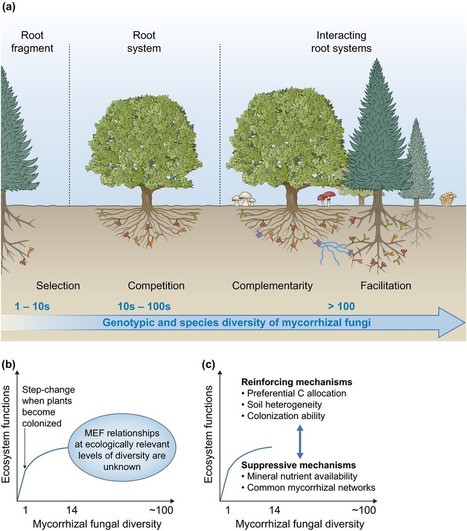
Both genotypes and species of mycorrhizal fungi exhibit considerable variation in traits, and this variation can result in their diversity regulating ecosystem function. Yet, the nature of mycorrhizal fungal diversity–ecosystem function (MEF) relationships for both genotypes and species is currently poorly defined. New experiments should reflect the richness of genotypes and species in nature, but we still lack information about the extent to which fungal populations in particular are structured. Sampling designs should quantify the diversity of mycorrhizal fungal genotypes and species at three key broad spatial scales (root fragment, root system and interacting root systems) in order to inform manipulation experiments and to test how mycorrhizal fungal diversity both responds, and confers resilience to, environmental drivers.
|
|
|
Scooped by
Jean-Michel Ané
February 15, 2018 9:45 AM
|
Several scientists from the Department of Energy's Lawrence Berkeley National Laboratory (Berkeley Lab) will present talks at the annual meeting of the American Association for the Advancement of Science, to be held Feb. 15 - 19 in Austin, Texas. Topics include a new model for science innovation, new ways to search for dark matter, and developments in advanced bioenergy.
|
|
Rescooped by
Jean-Michel Ané
from Fungal|Oomycete Biology
February 15, 2018 9:16 AM
|
Microorganisms serve important functions within numerous eukaryotic host organisms. An understanding of the variation in the plant niche-level microbiome, from rhizosphere soils to plant canopies, is imperative to gain a better understanding of how both the structural and functional processes of microbiomes impact the health of the overall plant holobiome. Using Populus trees as a model ecosystem, we characterized the archaeal/bacterial and fungal microbiome across 30 different tissue-level niches within replicated Populus deltoides and hybrid Populus trichocarpa × deltoides individuals using 16S and ITS2 rRNA gene analyses. Our analyses indicate that archaeal/bacterial and fungal microbiomes varied primarily across broader plant habitat classes (leaves, stems, roots, soils) regardless of plant genotype, except for fungal communities within leaf niches, which were greatly impacted by the host genotype. Differences between tree genotypes are evident in the elevated presence of two potential fungal pathogens, Marssonina brunnea and Septoria sp., on hybrid P. trichocarpa × deltoides trees which may in turn be contributing to divergence in overall microbiome composition. Archaeal/bacterial diversity increased from leaves, to stem, to root, and to soil habitats, whereas fungal diversity was the greatest in stems and soils. This study provides a holistic understanding of microbiome structure within a bioenergy relevant plant host, one of the most complete niche-level analyses of any plant. As such, it constitutes a detailed atlas or map for further hypothesis testing on the significance of individual microbial taxa within specific niches and habitats of Populus and a baseline for comparisons to other plant species.
Via Alejandro Rojas
"Root-derived inputs are increasingly viewed as primary controls of soil organic matter (SOM) formation; however, we have a limited understanding of how root decay rates depend on soil factors, and how decaying roots influence the breakdown of leaf litter and SOM.
We incubated root and leaf litter (alone and in combination) from arbuscular mycorrhizal (AM) and ectomycorrhizal (ECM) trees in soils collected from forest plots dominated by AM and ECM trees in a factorial design. In each microcosm, we quantified litter decay rates and the effects of decaying litters on soil C balance. We hypothesized that (1) AM root litters would decompose faster than ECM root litters, (2) root litter decay would be greatest when decomposed in “home” soils (e.g. AM litters in AM soils and ECM litters in ECM soils) and (3) root and leaf litters would decompose faster when decaying in the same microcosms than when decaying in separate microcosms, resulting in the largest CO2 losses.
Overall, AM root litter decomposed faster than ECM root litter, and the magnitude of this effect depended on soil origin. AM litters decayed fastest in AM soils, but ECM and mixed AM–ECM litters were unaffected by soil origin. Decaying roots increased leaf litter mass loss, but only in microcosms containing soils of the same origin (e.g. AM litters in AM soils; mixed litters in mixed soils).
Carbon losses were dominated by microbial respiration, and the magnitude of this flux depended on litter type and soil origin. When leaves and roots decayed together, respiratory losses exceeded those from microcosms containing leaves and roots alone, with the largest losses occurring in each litters' “home” soil. In AM soils, elevated losses were driven by roots accelerating leaf decay, while in ECM soils, elevated losses resulted from roots and leaves accelerating the decay of SOM; in mixed soils, root-induced increases in leaf and SOM decay contributed to elevated C losses.
Our results suggest that root, leaf and SOM decay are intertwined, and that measurements of these processes in isolation may lead to incorrect estimates of the magnitude and source of C losses from soils."
Via Gabriel R. Smith
|
|
Scooped by
Jean-Michel Ané
February 13, 2018 1:13 PM
|
Legumes form endosymbiotic interaction with host compatible rhizobia, resulting in the development of nitrogen-fixing root nodules. Within symbiotic nodules, rhizobia are intracellularly accommodated in plant-derived membrane compartments, termed symbiosomes. In mature nodule, the massively colonized cells tolerate the existence of rhizobia without manifestation of visible defense responses, indicating the suppression of plant immunity in the nodule in the favur of the symbiotic partner. Medicago truncatula DNF2 (defective in nitrogen fixation 2) and NAD1 (nodules with activated defense 1) genes are essential for the control of plant defense during the colonization of the nitrogen-fixing nodule and are required for bacteroid persistence. The previously identified nodule-specific NAD1 gene encodes a protein of unknown function. Herein, we present the analysis of novel NAD1 mutant alleles to better understand the function of NAD1 in the repression of immune responses in symbiotic nodules. By exploiting the advantage of plant double and rhizobial mutants defective in establishing nitrogen-fixing symbiotic interaction, we show that NAD1 functions following the release of rhizobia from the infection threads and colonization of nodule cells. The suppression of plant defense is self-dependent of the differentiation status of the rhizobia. The corresponding phenotype of nad1 and dnf2 mutants and the similarity in the induction of defense-associated genes in both mutants suggest that NAD1 and DNF2 operate close together in the same pathway controlling defense responses in symbiotic nodules.
|
|
Scooped by
Jean-Michel Ané
February 11, 2018 6:51 PM
|
Arbuscular mycorrhizal fungi inhabiting soil play an important role for vascular plants. Interaction between arbuscular mycorrhizal fungi, plants and soil microorganisms leads to many mutual advantages. However, the effectiveness of mycorrhizal fungi depends not only on biotic, but also abiotic factors such as physico-chemical properties of the soil, availability of water and biogenic elements, agricultural practices, and climatic conditions. First of all, it is important to adapt the arbuscular mycorrhizal fungi species to changing environmental conditions. The compactness of the soil and its structure have a huge impact on its biological activity. Soil pH reaction has a substantial impact on the mobility of ions in soil dilutions and their uptake by plants and soil microflora. Water excess can be a factor negatively affecting arbuscular mycorrhizal fungi because these microorganisms are sensitive to a lower availability of oxygen. Mechanical cultivation of the soil has a marginal impact on the arbuscular mycorrhizal fungi spores. However, soil translocation can cause changes to the population of the arbuscular mycorrhizal fungi abundance in the soil profile. The geographical location and topographic differentiation of cultivated soils, as well as the variability of climatic factors affect the population of the arbuscular mycorrhizal fungi in the soils and their symbiotic activity.
|
|
Scooped by
Jean-Michel Ané
February 11, 2018 6:48 PM
|
Chitosan oligosaccharides (COS) have the ability to improve plant resistance to pests and diseases through activating plant immune system. However, it remains unclear whether stimulating reason of COS was associated with the plasma membrane proteins. Here, the interaction of COS with wheat leaf cell demonstrated that fluorescence-labeled COS were enriched on the cell surface and the interaction of COS with plasma membrane proteins was confirmed by quartz crystal microbalance (QCM) biosensor. What's more, HPLC and SDS-PAGE analysis showed that COS binding proteins exhibited more than three peaks and the molecular weight were 66 kDa to 97 kDa, where the COS binding proteins were fished out from wheat plasma membrane proteins by the COS affinity column. More importantly, LC-MS/MS analysis demonstrated that several candidates, including W5G2U8_WHEAT (a potential wall-associated receptor kinase protein), W5HY42_WHEAT and W5I0R4_WHEAT (potential G-type lectin S-receptor-like serine/threonine-protein kinase), have the potential to be COS receptor.
|
|
Scooped by
Jean-Michel Ané
February 11, 2018 6:47 PM
|
The biological nitrogen fixation (BNF) process in wheat (Triticum aestivum L.) occurs by diazotrophic bacteria, particularly Azospirillum brasilense. However, researches are lacking on BNF efficiency to define how much mineral nitrogen (N) can be applied to achieve more sustainable high yields, and if urea with the urease enzyme inhibitor is less harmful, benefiting BNF in grasses (cereals). Therefore, the objective was to evaluate the effect of N sources (urea and Super N, urea with urease enzyme inhibitor N‐(n‐butyl thiophosphoric triamide) (NBPT) and N rates (0, 50, 100, 150, and 200 kg ha−1) applied in topdressing associated with inoculation with A. brasilense, regarding the leaf N concentration, leaf chlorophyll index (LCI), accumulation of N in the straw and grains, the nitrogen utilization efficiency (NUE), recovery of the applied nitrogen (RAN), physiological efficiency (FE), agronomic efficiency (AE), and wheat grain yield in the Brazilian Cerrado (tropical savanna) region. The N sources provide similar N accumulations in straw and grains, and wheat grain yield. Inoculation with A. brasilense afforded higher N grain concentration (increase in protein content more sustainably) by applying less N fertilizer in topdressing. Inoculation with A. brasilense increased the AE, RAN, and NUE.
|
|
Scooped by
Jean-Michel Ané
February 11, 2018 6:43 PM
|
Arbuscular mycorrhizal fungal (AMF) colonisation of plant roots is one of the most ancient and widespread interactions in ecology, yet the systemic consequences for plant secondary chemistry remain unclear. We performed the first metabolomic investigation into the impact of AMF colonisation by Rhizophagus irregularis on the chemical defences, spanning above- and below-ground tissues, in its host-plant ragwort (Senecio jacobaea). We used a non-targeted metabolomics approach to profile, and where possible identify, compounds induced by AMF colonisation in both roots and shoots. Metabolomics analyses revealed that 33 compounds were significantly increased in the root tissue of AMF colonised plants, including seven blumenols, plant-derived compounds known to be associated with AMF colonisation. One of these was a novel structure conjugated with a malonyl-sugar and uronic acid moiety, hitherto an unreported combination. Such structural modifications of blumenols could be significant for their previously reported functional roles associated with the establishment and maintenance of AM colonisation. Pyrrolizidine alkaloids (PAs), key anti-herbivore defence compounds in ragwort, dominated the metabolomic profiles of root and shoot extracts. Analyses of the metabolomic profiles revealed an increase in four PAs in roots (but not shoots) of AMF colonised plants, with the potential to protect colonised plants from below-ground organisms.
|
|
Scooped by
Jean-Michel Ané
February 11, 2018 6:40 PM
|
Atmospheric nitrogen (N) and phosphorus (P) deposition rates are predicted to drastically increase in the coming decades. The ecosystem level consequences of these increases will depend on how plant tissue nutrient concentrations, stoichiometry and investment in nutrient uptake mechanisms such as arbuscular mycorrhizal fungi (AMF) change in response to increased nutrient availability, and how responses differ between plant functional types. Using a factorial nutrient addition experiment with seedlings of multiple N-fixing and non-N-fixing tree species, we examined whether leaf chemistry and AMF responses differ between these dominant woody plant functional groups of tropical savanna and dry forest ecosystems. We found that N-fixers have remarkably stable foliar chemistry that stays constant with external input of nutrients. Non-N-fixers responded to N and N + P addition by increasing both concentrations and total amounts of foliar N, but showed a corresponding decrease in P concentrations while total amounts of foliar P stayed constant, suggesting a ‘dilution’ of tissue P with increased N availability. Non-N-fixers also showed an increase in N:P ratios with N and N + P addition, probably driven by both an increase in N and a decrease in P concentrations. AMF colonization decreased with N + P addition in non-N-fixers and increased with N and N + P addition in N-fixers, suggesting differences in their nutrient acquisition roles in the two plant functional groups. Our results suggest that N-fixers and non-N-fixers can differ significantly in their responses to N and P deposition, with potential consequences for future nutrient and carbon cycling in savanna and dry forest ecosystems.
|
|
Scooped by
Jean-Michel Ané
February 11, 2018 6:29 PM
|
Initiation of symbiotic nodules in legumes requires cytokinin signaling, but its mechanism of action is largely unknown. Here, we tested whether the failure to initiate nodules in the Medicago truncatula cytokinin perception mutant cre1 (cytokinin response1) is due to its altered ability to regulate auxin transport, auxin accumulation, and induction of flavonoids. We found that in the cre1 mutant, symbiotic rhizobia cannot locally alter acro- and basipetal auxin transport during nodule initiation and that these mutants show reduced auxin (indole-3-acetic acid) accumulation and auxin responses compared with the wild type. Quantification of flavonoids, which can act as endogenous auxin transport inhibitors, showed a deficiency in the induction of free naringenin, isoliquiritigenin, quercetin, and hesperetin in cre1 roots compared with wild-type roots 24 h after inoculation with rhizobia. Coinoculation of roots with rhizobia and the flavonoids naringenin, isoliquiritigenin, and kaempferol, or with the synthetic auxin transport inhibitor 2,3,5,-triiodobenzoic acid, rescued nodulation efficiency in cre1 mutants and allowed auxin transport control in response to rhizobia. Our results suggest that CRE1-dependent cytokinin signaling leads to nodule initiation through the regulation of flavonoid accumulation required for local alteration of polar auxin transport and subsequent auxin accumulation in cortical cells during the early stages of nodulation.
|
|
Scooped by
Jean-Michel Ané
February 11, 2018 3:19 PM
|
The rhizosphere microbiome is composed of diverse microorganisms directly interacting with plants and each other. We sought to achieve a better understanding of how rhizobia interact with other soil bacteria during the initial symbiosis period. In this study, we investigated how soil commensals, particularly other rhizobia, affect Rhizobium etli–Phaseolus vulgaris interactions. We found that R. etli formed significantly more nodules on beans grown in unsterilized soil than those in sterilized soil. Furthermore, a strain identified as Rhizobium fabae, isolated from unsterilized soil, was found to affect R. etli nodulation. Interestingly, we found that the key quorum sensing regulator CinR is important for R. etli nodulation efficiency when it is co-inoculated with R. fabae. Moreover, we found that quorum sensing signals produced by R. fabae promoted CinR-mediated gene expression in R. etli. These data suggest that the effects of R. fabae on R. etli symbiosis may act through multispecies bacterial cell–cell communication.
|
|
Scooped by
Jean-Michel Ané
February 11, 2018 3:14 PM
|
The family Russulaceae is considered an iconic lineage of mostly mushroom-forming basidiomycetes due to their importance as edible mushrooms in many parts of the world, and their ubiquity as ectomycorrhizal symbionts in both temperate and tropical forested biomes. Although much research has been focused on this group, a comprehensive or cohesive synthesis by which to understand the functional diversity of the group has yet to develop. Interest in ectomycorrhizal fungi, of which Russulaceae is a key lineage, is prodigious due to the important roles they play as plant root mutualists in ecosystem functioning, global carbon sequestration, and a potential role in technology development toward environmental sustainability. As one of the most species-diverse ectomycorrhizal lineages, the Russulaceae has recently been the focus of a dense sampling and genome sequencing initiative with the Joint Genome Institute aimed at untangling their functional roles and testing whether functional niche specialization exists for independent lineages of ectomycorrhizal fungi. Here we present a review of important studies on this group to contextualize what we know about its members' evolutionary history and ecosystem functions, as well as to generate hypotheses establishing the Russulaceae as a valuable experimental system.
|