Nodule primordia induced by rhizobial glycan mutants often remain uninfected. To identify processes involved in infection and organogenesis we used forward genetics to identify plant genes involved in perception and responses to bacterial glycans.
To dissect the mechanisms underlying the negative plant responses to the Mesorhizobium loti R7AexoU and ML001cep mutants, a screen for genetic suppressors of the nodulation phenotypes was performed on a chemically mutagenized Lotus population.
Two mutant lines formed infected nitrogen‐fixing pink nodules, while five mutant lines developed uninfected large white nodules, presumably altered in processes controlling organogenesis. Genetic mapping identified a mutation in the cytokinin receptor Lhk1 resulting in an alanine to valine substitution adjacent to a coiled‐coil motif in the juxta‐membrane region of LHK1. This results in a spontaneous nodulation phenotype and increased ethylene production. The allele was renamed snf5, and segregation studies of snf5 together with complementation studies suggest that snf5 is a gain‐of‐function allele.
This forward genetic approach to investigate the role of glycans in the pathway synchronizing infection and organogenesis shows that a combination of plant and bacterial genetics opens new possibilities to study glycan responses in plants as well as identification of mutant alleles affecting nodule organogenesis.
Besides improved mineral nutrition, plants colonised by arbuscular mycorrhizal (AM) fungi often display increased biomass and higher tolerance to biotic and abiotic stresses. Notwithstanding the global importance of wheat as an agricultural crop, its response to AM symbiosis has been poorly investigated. We focused on the role of an AM fungus on mineral nutrition of wheat, and on its potential protective effect against Xanthomonas translucens. To address these issues, phenotypical, molecular and metabolomic approaches were combined. Morphological observations highlighted that AM wheat plants displayed an increased biomass and grain yield, as well as a reduction in lesion area following pathogen infection. To elucidate the molecular mechanisms underlying the mycorrhizal phenotype, we investigated changes of transcripts and proteins in roots and leaves during the double (wheat-AM fungus) and tripartite (wheat-AM fungus-pathogen) interaction. Transcriptomic and proteomic profiling identified the main pathways involved in enhancing plant biomass, mineral nutrition and in promoting the bio-protective effect against the leaf pathogen. Mineral and amino acid contents in roots, leaves and seeds, and protein oxidation profiles in leaves, supported the omics data, providing new insight into the mechanisms exerted by AM symbiosis to confer stronger productivity and enhanced resistance to X. translucens in wheat.
Symbiotic nitrogen fixation in legume root nodules requires a steady supply of molybdenum for synthesis of the iron‐molybdenum cofactor of nitrogenase. This nutrient has to be provided by the host plant from the soil, crossing several symplastically disconnected compartments through molybdate transporters, including members of the MOT1 family. MtMOT1.2 is a Medicago truncatula MOT1 family member located in the endodermal cells in roots and nodules. Immunolocalization of a tagged MtMOT1.2 indicates that it is associated to the plasma membrane and to intracellular membrane systems, where it would be transporting molybdate towards the cytosol, as indicated in yeast transport assays. Loss‐of‐function mot1.2‐1 mutant showed reduced growth compared to wild‐type plants when nitrogen fixation was required, but not when nitrogen was provided as nitrate. While no effect on molybdenum‐dependent nitrate reductase activity was observed, nitrogenase activity was severely affected, explaining the observed difference of growth depending on nitrogen source. This phenotype was the result of molybdate not reaching the nitrogen‐fixing nodules, since genetic complementation with a wild‐type MtMOT1.2 gene or molybdate‐fortification of the nutrient solution, both restored wild‐type levels of growth and nitrogenase activity. These results support a model in which MtMOT1.2 would mediate molybdate delivery by the vasculature into the nodules.
Through a mutualistic relationship with woody plant roots, ectomycorrhizal fungi provide growth‐limiting nutrients, including inorganic phosphate (Pi), to their host. Reciprocal trades occur at the Hartig net, which is the symbiotic interface of ectomycorrhizas where the two partners are symplasmically isolated. Fungal Pi must be exported to the symbiotic interface, but the proteins facilitating this transfer are unknown. In the present study, we combined transcriptomic, microscopy, whole plant physiology, X‐ray fluorescence mapping, 32P labeling and fungal genetic approaches to unravel the role of HcPT2, a fungal Pi transporter, during the Hebeloma cylindrosporum–Pinus pinaster ectomycorrhizal association. We localized HcPT2 in the extra‐radical hyphae and the Hartig net and demonstrated its determinant role for both the establishment of ectomycorrhizas and Pi allocation towards P. pinaster. We showed that the host plant induces HcPT2 expression and that the artificial overexpression of HcPT2 is sufficient to significantly enhance Pi export towards the central cylinder. Together, our results reveal that HcPT2 plays an important role in ectomycorrhizal symbiosis, affecting both Pi influx in the mycelium and efflux towards roots under the control of P. pinaster.
The legume–rhizobia association is a powerful model of the limits of host control over microbes. Legumes regulate the formation of root nodules that house nitrogen‐fixing rhizobia and adjust investment into nodule development and growth. However, the range of fitness outcomes in these traits reveals intense conflicts of interest between the partners. New work that we review and synthesize here shows that legumes have evolved varied mechanisms of control over symbionts, but that host control is often subverted by rhizobia. An outcome of this conflict is that both legumes and rhizobia have evolved numerous traits that can improve their own short‐term fitness in this interaction, but little evidence exists for any net improvement in the joint trait of nitrogen fixation.
The influence of agronomic management of poblano pepper crops on the composition and effectiveness of arbuscular mycorrhizal fungi (AMF) was determined based on growth promotion and nutrition of Capsicum annuum plants. Mycorrhizal colonization, spore number, and AMF-species composition in the rhizosphere soil of C. annuum were determined from six agroecosystems with different agronomic management: a) San Martinito (SM) with little management, b) Santa María Zacatepec (SMZ), Juárez Coronaco I and II (JCI and JCII) with moderate management, and c) San Mateo Capultitlan I and II (SMCI and SMCII) with intense management. From each agroecosystem an AMF consortium was obtained for evaluating its effectiveness on plant growth. A completely randomized design with seven treatments and 10 replicates was set. Plant growth parameters and leaf content (N, P, and K) were determined after 90 days of AMF-inoculation; in addition, AMF colonization, spore number, and mycorrhizal dependence were determined. The AMF-species composition in consortia from agroecosystems with low and moderate management was different from that obtained from agroecosystems with intensive management. The SMZ consortium, isolated from the agroecosystem with moderate management, significantly increased the stem diameter, plant height, and leaf area; in contrast, the SMCI consortium, isolated from the agroecosystem with intense management, showed the lowest values in all growth parameters. All AMF-consortia increased the leaf content of N and K; however, only the SMZ consortium had significant effects on P content. Plants inoculated with the SMCII and SMZ consortia showed highest mycorrhizal dependence for shoot biomass and nutrient content, respectively. The isolation and utilization of native AMF consortia may promote the growth and nutrition of poblano pepper plants, and be an important biological component for sustainable pepper cropping.
Soil microbes that colonize plant roots and are responsive to differences in plant genotype remain to be ascertained for agronomically important crops. From a very large-scale longitudinal field study of 27 maize inbred lines planted in three fields, with partial replication 5 y later, we identify root-associated microbiota exhibiting reproducible associations with plant genotype. Analysis of 4,866 samples identified 143 operational taxonomic units (OTUs) whose variation in relative abundances across the samples was significantly regulated by plant genotype, and included five of seven core OTUs present in all samples. Plant genetic effects were significant amid the large effects of plant age on the rhizosphere microbiome, regardless of the specific community of each field, and despite microbiome responses to climate events. Seasonal patterns showed that the plant root microbiome is locally seeded, changes with plant growth, and responds to weather events. However, against this background of variation, specific taxa responded to differences in host genotype. If shown to have beneficial functions, microbes may be considered candidate traits for selective breeding.
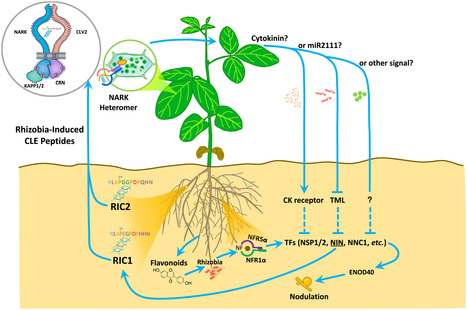
Root nodule symbiosis is one of the best characterized mutualistic relationships of plant–microbe symbiosis, where mainly leguminous species can obtain nitrogen sources fixed by nitrogen-fixing rhizobia through the formation of symbiotic organ root nodules. In order to drive this symbiotic process, plants need to provide carbon sources that should be used for their growth. Therefore, a balance between the benefits of obtaining nitrogen sources and the costs of losing carbon sources needs to be maintained during root nodule symbiosis. Plants have developed at least two negative regulatory systems of root nodule symbiosis. One strategy involves the regulation of nodule number in response to rhizobial infection. For this regulation, a systemic long-range signaling between roots and shoots called autoregulation of nodulation has a pivotal role. Another strategy involves the regulation of root nodule symbiosis in response to nitrate, the most abundant form of nitrogen nutrients in the soil. Recent studies indicate that long-distance signaling is shared between the two strategies, where NIN and NRSYM1, two paralogous RWP-RK transcription factors, can activate the production of nodulation-related CLE peptides in response to different inputs. Here, we provide an overview of such progress in our understanding of molecular mechanisms relevant to the control of the symbiotic balance, including their biological significance.
Metabolomic profiling is becoming an increasingly important technique in the larger field of systems biology by allowing the simultaneous measurement of thousands of small molecules participating in and resulting from cellular reactions. In this way, metabolomics presents an opportunity to observe the physiological state of a system, which may provide the ability to monitor the whole of cellular metabolism as the technology progresses. The arbuscular mycorrhizal fungus Gigaspora margarita has not previously been explored with regard to metabolite composition. To develop a better understanding of G. margarita and the influences of its endosymbiont Candidatus Glomeribacter gigasporarum, a metabolomic analysis was applied to quiescent and germinated spores with and without endobacteria. Over 100 metabolites were identified and greater than 2600 unique unidentified spectral features were observed. Multivariate analysis of the metabolomes was performed, and a differentiation between all metabolic states of spores and spores hosting the endobacteria was observed. The known metabolites were recruited to many biochemical pathways, with many being involved in maintenance of the antioxidant potential, tyrosine metabolism, and melanin production. Each of the pathways had higher metabolite abundances in the presence of the endosymbiont. These metabolomics data also agree with previously reported transcriptomics results demonstrating the capability of this technique to confirm hypotheses and showing the feasibility of multi-omic approaches for the study of arbuscular mycorrhizal fungi and their endobacterial communities. Challenges still exist in metabolomic analysis, e.g., the identification of compounds is demanding due to incomplete libraries. A metabolomics technique to probe the effects of bacterial endosymbionts on fungal physiology is presented herein, and this method is useful for hypothesis generation as well as testing as noted above.
Native arbuscular mycorrhizal fungi (AMF) associated to cassava (Mannihot esculenta), a globally important food crop have been shown to enhance its growth, nutrition and enhance productivity. In order to better characterize levels of AMF diversity and identify species relevant to cassava productivity, deeper sequencing depth of cassava field soils is needed. In this paper, we hypothesise that community composition could be linked to specific edaphic factors within contrasted soils. The arbuscular mycorrhizal fungi (AMF) communities of Manihot esculenta rhizosphere soils was investigated by Illumina MiSeq technology. We analyzed the possible correlation between soil characteristics and AMF community composition in cassava field soils within three different agro-ecological zones. Principal Coordinate Analysis (PCoA) and Permutational Multivariate Analysis of Variance were used to test the relative contribution of each agro-ecological zone in explaining the variation in AMF community composition within cassava field soils. Pearson correlations were used to identify the soil properties that significantly explained AMF community compositions within the three zones. The results have shown that despite the fact that the three zones exhibited contrasted soils, AMF community in cassava field soils was dominated by Glomeraceae (Rhizophagus, Glomus, Funneliformis and Septoglomus), with Rhizophagus as the most dominant core genus. Soil type determined the distribution of AMF communities in cassava field soils, and this effect was attributed to soil properties related to organic matter, three micronutrients (available phosphorus, Ca2+, Mg2+), V% and clay. It was shown that high available phosphorus contents (50-100ppm) reduce diversity but did not affect the dominance of the genus Rhizophagus.
Nitrogen (N) is the most growth-limiting nutrient in most terrestrial and aquatic ecosystems, with new nitrogen is brought in primarily through biological nitrogen fixation (BNF) performed by bacteria and archaea. In addition to the well-studied nodulating symbioses between bacteria and legumes or actinorhizal plants, many plants, from grasses to trees, appear to meet some of their N demand by hosting N2-fixing endophytes above- or belowground. Most studies on endophytic N2 fixation come from grasses, but knowledge about endophytic N2 fixation in forest trees, including both conifers and woody angiosperms, is emerging. Studies of how the diazotroph Paenibacillus polymyxa strain P2b-2R, interacts with its host lodgepole pine as well as other plants, suggest that diazotrophs can colonize their host intracellulary; that conifers can derive a significant part of N from the atmosphere; and that the association can take months to establish and may depend on N soil content. P. polymyxa strain P2b-2R has also been shown to colonize, promote growth and fix N2 in crops, demonstrating that endophytic diazotrophs can be generalists. Culture independent studies suggest that conifers growing in N limited high altitude environments consistently host foliar endophytes related to the diazotroph Gluconacetobacter in their needles, and that nitrogenase is active within pine foliage, suggesting that endophytes may represent an N2-fixing strategy for long-living conifers to meet their N demand in N limited subalpine ecosystems. Diazotrophs have also been isolated from poplar and willow growing in N limited riparian ecosystems. These strains are also generalists and can promote growth and provide N to both poplar clones and crops. Direct evidence of N2 fixation and incorporation by native endophytes has been demonstrated in poplar using labelling with the stable nitrogen isotope 15N2. Enrichment of 15N was highly variable among samples, potentially as a result of differences in the endophyte community structure and abundance. We provide suggestions for research efforts that can take advantage of this new knowledge with the goal of reducing the use of chemical fertilizer in agriculture and forestry.
The root systems of sugarcane (Saccharum L. spp. hybrids) form multifunctional associations with a variety of fungal symbionts including arbuscular mycorrhizal (AM) fungi and dark septate endophytes (DSE). A comprehensive understanding of the temporal changes in symbiotic fungal colonisation of sugarcane roots following ratooning is currently lacking, therefore limiting our ability to accurately assess the role of root-associated fungi on soil nutrition and crop productivity. This field study investigated the colonisation dynamics of native populations of AM/DSE in the root systems of 1st and 2nd ratoon phase sugarcane at two proximal sites where crops had previously been grown for either 1 or 2 years. Total percent colonisation of AM/DSE in two sugarcane root types (sett roots/shoot roots) was quantified over 28 weeks of crop development. Relevant AM functional structures (arbuscules, hyphae, spores and vesicles) were also delineated and quantified at each observation for both root types. Significant differences (P < 0.05) in total root colonisation over time for both fungal types and between sett roots and shoot roots were observed. At each site, a variety of AM morphologies were observed in both root types. Maximum sett root colonisation for both fungal types was observed at 5 weeks in the 1st ratoon and at 7 weeks in the 2nd ratoon crop, which may be due to difference in the ratoon year, but differences in field history between the sites cannot be ruled out as a contributing factor. Significantly lower levels of DSE sett root colonisation were observed in the 2nd ratoon compared to the 1st ratoon crop. Maximum AM shoot root colonisation occurred at 7 weeks in the 1st ratoon and 11 weeks in the 2nd ratoon crop. In shoot roots, significantly lower levels of DSE compared to AM colonisation were observed at both sites. For both fungal types, sett root colonisation was significantly higher than for shoot roots at both sites. There were no differences in total AM sett root colonisation between sites. For both fungal types, there were no differences in total shoot root colonisation between sites. Maximum levels of AM/DSE sett root colonisation occurred between 5–7 weeks, prior to shoot root establishment and rapid growth period of 1st and 2nd ratoon crops. While AM colonisation of sett roots was maintained across ratoon phases, there is a need to account for apparent differences in DSE sett root colonisation between 1st and 2nd ratoon crops. Our data provide the basis for the development of sampling strategies in future studies investigating impacts of crop management on AM/DSE symbioses in sugarcane systems.
LysM receptor-like kinases (LysM-RLKs), which are specific to plants, can control establishment of both the arbuscular mycorrhizal (AM) and the rhizobium-legume (RL) symbioses in response to signal molecules produced, respectively, by the fungal and bacterial symbiotic partners. While most studies on these proteins have been performed in legume species, there are also important findings that demonstrate the roles of LysM-RLKs in controlling symbiosis in non-legume plants. Phylogenomic studies, which have revealed the presence or absence of certain LysM-RLKs among different plant species, have provided insight into the evolutionary mechanisms underlying both the acquisition and the loss of symbiotic properties. The role of a key nodulation LysM-RLK, NFP/NFR5, in legume plants has thus probably been co-opted from an ancestral role in the AM symbiosis, and has been lost in most plant species that have lost the ability to establish the AM or the RL symbiosis. Another LysM-RLK, LYK3/NFR1, that controls the RL symbiosis probably became neo-functionalised following two rounds of gene duplication. Evidence suggests that a third LysM-RLK, LYR3/LYS12, is also implicated in perceiving microbial symbiotic signals, and this protein could have roles in symbiosis and/or plant immunity in different plant species. By focusing on these three LysM-RLKs that are widespread in plants we review their evolutionary history and what this can tell us about the evolution of both the RL and the AM symbioses.
Climate change scenarios predict a higher variability in rainfall and an increased risk of water deficits during summers for the coming decades. For this reason, arbuscular mycorrhizal fungi (AMF) and their mitigating effects on drought stress in plants are increasingly considered in crop management. However, the impact of a decrease in water availability on the development of AMF and their ability to take up and transport inorganic phosphorus (Pi) to their hosts remain poorly explored. Here, Medicago truncatula plantlets were grown in association with Rhizophagus irregularis MUCL 41833 in bi-compartmented Petri plates. The system consisted in associating the plant and AMF in a root compartment (RC), allowing only the hyphae to extend in a root-free hyphal compartment (HC). Water availability in the HC was then lowered by increasing the concentration of polyethylene glycol-8000 (PEG-8000) from 0 to 10, 25, and 50 g L-1 (corresponding to a slight decrease in water potential of -0.024, -0.025, -0.030, and -0.056 Mpa, respectively). Hyphal growth, spore production and germination were severely impaired at the lowest water availability. The dynamics of Pi uptake by the AMF was also impacted, although total Pi uptake evaluated after 24 h stayed unchanged. The percentage of metabolically active extraradical hyphae remained above 70%. Finally, at the lowest water availability, a higher P concentration was observed in the shoots of M. truncatula. At reduced water availability, the extraradical mycelium (ERM) development was impacted, potentially limiting its capacity to explore a higher volume of soil. Pi uptake was slowed down but not prevented. The sensitivity of R. irregularis MUCL 41833 to a, even small, decrease in water availability contrasted with several studies reporting tolerance of AMF to drought. This suggests a species or strain-dependent effect and support the necessity to compare the impact of water availability on morpho-anatomy, nutrient uptake and transport capacities of other, potentially more drought-tolerant (e.g., isolated from dry environments) AMF.
Plants that live in aquatic habitats are frequently subjected to oxygen limitation and many of them modify their anatomy and physiology to counteract hypoxia. In these habitats, the role of plant associations with arbuscular mycorrhizal fungi (AMF), which are widespread in terrestrial environments and frequently confer benefits to the associated plant, is still debated. Starting from data taken from 34 selected papers, this study focuses on the occurrence of AMF in the roots of wetland and aquatic plants, taking into account the hydrological conditions of the sites, the plant wetland indicators and life forms, plant taxonomy and colonization by dark septate endophytes. The results have demonstrated the importance of hydrology in controlling the frequency and intensity of AMF root colonization, which tends to be low in obligate wetland plants. Moreover, colonization is generally lower and, possibly, less functional in monocots than in dicots. We suggest that the hydrological conditions, by filtering species according to their water tolerance, shape plant community composition, and that although AMF colonization is one of the traits that may increase plant fitness, it is not the most important one. In fact, a range of nutritional and growth strategies, which are more variegated than in terrestrial habitats, exists in wetland/aquatic habitats, and these strategies may rely, or not, on AMF colonization, as a consequence of the habitat and species.
Ribosomally synthesized peptides have wide ranges of functions in plants being, for example, signal molecules, transporters, alkaloids or antimicrobial agents. Legumes are an unprecedented rich source of peptides which are used to control the symbiosis of these plants with the nitrogen-fixing Rhizobium bacteria. Here we discuss the function and the evolution of these peptides playing an important role in the formation or functioning of the symbiotic organs, the root nodules. We distinguish peptides that can be either cell-autonomous or secreted short-range or long-range signals, carrying messages in or between plant cells or that can act as effectors interacting with the symbiotic bacteria. Peptides are further classified according to the stage of the symbiotic process where they act. Several peptide classes, including RALF, DLV, ENOD40 and others, control Rhizobium infection and the initiation of cell divisions and the formation of nodule primordia. CLE and CEP peptides are implicated in systemic and local control of nodule initiation during autoregulation of nodulation and in response to the nutritional demands of the plant. Still other peptides act at later stages of the symbiosis. The PSK peptide is thought to be involved in the suppression of immunity in nodules and the NCR, GRP and SNARP (LEED..PEED) peptide families are essential in the functioning of the nitrogen fixing root nodules. The NCRs and possibly also the GRP and SNARPs are targeted to the endosymbionts and play essential roles in the terminal differentiation of these bacteria.
Most land plants rely on root symbioses to complement or improve their mineral nutrition. Recent researches have put forward that mycorrhizal fungi efficiently absorb and transfer potassium (K+) from the soil to host plant roots, but the molecular mechanisms involved are not completely elucidated yet. We have recently revealed that K+ is likely released from the fungal Hartig net to the plant by TOK channels in the ectomycorrhizal model Hebeloma cylindrosporum – Pinus pinaster. H. cylindrosporum harbours three TOK members. Herein, we report that one of them, HcTOK1, has similar features than the yeast ScTOK1. Moreover, we propose a role for this channel in the transport of K+ from the medium to ectomycorrhizal roots under K+ starvation.
Global demand to increase food production and simultaneously reduce synthetic nitrogen fertilizer inputs in agriculture are underpinning the need to intensify the use of legume crops. The symbiotic relationship that legume plants establish with nitrogen‐fixing rhizobia bacteria is central to their advantage. This plant–microbe interaction results in newly developed root organs, called nodules, where the rhizobia convert atmospheric nitrogen gas into forms of nitrogen the plant can use. However, the process of developing and maintaining nodules is resource intensive; hence, the plant tightly controls the number of nodules forming. A variety of molecular mechanisms are used to regulate nodule numbers under both favourable and stressful growing conditions, enabling the plant to conserve resources and optimize development in response to a range of circumstances. Using genetic and genomic approaches, many components acting in the regulation of nodulation have now been identified. Discovering and functionally characterizing these components can provide genetic targets and polymorphic markers that aid in the selection of superior legume cultivars and rhizobia strains that benefit agricultural sustainability and food security. This review addresses recent findings in nodulation control, presents detailed models of the molecular mechanisms driving these processes, and identifies gaps in these processes that are not yet fully explained.
Recognition of Nod factors by LysM receptors is crucial for nitrogen-fixing symbiosis in most legumes. The large families of LysM receptors in legumes suggest concerted functions, yet only NFR1 and NFR5 and their closest homologs are known to be required. Here we show that an epidermal LysM receptor (NFRe), ensures robust signalling in L. japonicus. Mutants of Nfre react to Nod factors with increased calcium spiking interval, reduced transcriptional response and fewer nodules in the presence of rhizobia. NFRe has an active kinase capable of phosphorylating NFR5, which in turn, controls NFRe downstream signalling. Our findings provide evidence for a more complex Nod factor signalling mechanism than previously anticipated. The spatio-temporal interplay between Nfre and Nfr1, and their divergent signalling through distinct kinases suggests the presence of an NFRe-mediated idling state keeping the epidermal cells of the expanding root system attuned to rhizobia.
Two lines of Zea mays were developed as a short-generation model for maize. The Fast-Flowering Mini-Maize (FFMM) lines A and B are robust inbred lines with a significantly shorter generation time, much smaller stature, and better greenhouse adaptation than traditional maize varieties. Five generations a year are typical. FFMM is the result of a modified double-cross hybrid between four fast-flowering lines: Neuffer’s Early ACR (full color), Alexander’s Early Early Synthetic, Tom Thumb Popcorn, and Gaspe Flint, followed by selection for early flowering and desirable morphology throughout an 11-generation selfing regime. Lines A and B were derived from different progeny of the initial hybrid, and crosses between Mini-Maize A and B exhibit heterosis. The ancestry of each genomic region of Mini-Maize A and B was inferred from the four founder populations using genotyping by sequencing. Other genetic and genomic tools for these lines include karyotypes for both lines A and B, kernel genetic markers y1 (white endosperm) and R1-scm2 (purple endosperm and embryo) introgressed into Mini-Maize A, and ∼24× whole-genome resequencing data for Mini-Maize A.
The genome of an organism bears the signature of its lifestyle, and organisms with similar life strategies are expected to share common genomic traits. Indeed, ectomycorrhizal and arbuscular mycorrhizal fungi share some genomic traits, such as the expansion of gene families encoding taxon‐specific small secreted proteins, which are candidate effectors in the symbiosis, and a very small repertoire of plant cell wall‐degrading enzymes. A large gene family coding for candidate effectors was also revealed in ascomycetous ericoid mycorrhizal (ERM) fungi, but these fungal genomes are characterised by a very high number of genes encoding degradative enzymes, mainly acting on plant cell wall components. We suggest that the genomic signature of ERM fungi mirrors a versatile life strategy, which allows them to occupy several ecological niches.
Plants essentially contribute to the strength of soil and, in particular, steep slopes susceptible to erosion and shallow landslides. The corresponding functions of vegetation significantly control processes above and below ground such as interception, evapo-transpiration, soil aggregation and root reinforcement. Either way, they are all correlated with plant growth. Consequently, in order to unfold their soil stabilising potential, the plants must grow and sustainably survive. However, what sounds so obvious is anything but given under the often hostile conditions dominating on bare and steep slopes. This is exactly the point where mycorrhizal fungi come into play, known to improve the plants’ ability to overcome periods governed by strongly (growth) limiting factors. Within this scope, numerous investigations have been conducted in order to understand and quantify mycorrhizal effects on different plant and soil functions related to eco-engineering and, particularly, to soil and slope stability. Results on plant growth and survival as well as on soil aggregation and slope stabilisation are presented and discussed from a mycorrhizal perspective.
Arachis monticola (2n = 4x = 40) is the only allotetraploid wild peanut within the Arachis genus and section, with an AABB-type genome of ∼2.7 Gb in size. The AA-type subgenome is derived from diploid wild peanut Arachis duranensis, and the BB-type subgenome is derived from diploid wild peanut Arachis ipaensis. A. monticola is regarded either as the direct progenitor of the cultivated peanut or as an introgressive derivative between the cultivated peanut and wild species. The large polyploidy genome structure and enormous nearly identical regions of the genome make the assembly of chromosomal pseudomolecules very challenging. Here we report the first reference quality assembly of the A. monticola genome, using a series of advanced technologies. The final whole genome of A. monticola is ∼2.62 Gb and has a contig N50 and scaffold N50 of 106.66 Kb and 124.92 Mb, respectively. The vast majority (91.83%) of the assembled sequence was anchored onto the 20 pseudo-chromosomes, and 96.07% of assemblies were accurately separated into AA- and BB- subgenomes. We demonstrated efficiency of the current state of the strategy for de novo assembly of the highly complex allotetraploid species, wild peanut (A. monticola), based on whole-genome shotgun sequencing, single molecule real-time sequencing, high-throughput chromosome conformation capture technology, and BioNano optical genome maps. These combined technologies produced reference-quality genome of the allotetraploid wild peanut, which is valuable for understanding the peanut domestication and evolution within the Arachis genus and among legume crops.
To get content containing either thought or leadership enter:
To get content containing both thought and leadership enter:
To get content containing the expression thought leadership enter:
You can enter several keywords and you can refine them whenever you want. Our suggestion engine uses more signals but entering a few keywords here will rapidly give you great content to curate.


 Your new post is loading...


 Scoop.it!