Your new post is loading...

|
Scooped by
Jean-Michel Ané
August 7, 2018 9:23 PM
|
A public-private collaboration of researchers at the University of Wisconsin–Madison, the University of California, Davis, and Mars Inc., have identified varieties of tropical corn from Oaxaca, Mexico, that can acquire a significant amount of the nitrogen they need from the air by cooperating with bacteria.
To do so, the corn secretes copious globs of mucus-like gel out of arrays of aerial roots along its stalk. This gel harbors bacteria that convert atmospheric nitrogen into a form usable by the plant, a process called nitrogen fixation. The corn can acquire 30 to 80 percent of its nitrogen in this way, but the effectiveness depends on environmental factors like humidity and rain.
Scientists have long sought corn that could fix nitrogen, with the goal of reducing the crop’s high demand for artificial fertilizers, which are energy intensive, expensive and polluting. Further research is required to determine if the trait can be bred into commercial cultivars of corn, the world’s most productive cereal crop.
The findings are reported Aug. 7 in the journal PLOS Biology.
|
|
Scooped by
Jean-Michel Ané
July 24, 2018 9:52 AM
|
The current study purposed to improve vegetative growth, nodules formation and biological dinitrogen fixation of Vicia faba L. (faba bean) grown in sandy soil by inoculation with bacterial feather hydrolysate fertilizer (BFH) and arbuscular mycorrhizal fungi (AMF). A potent feather-degrading bacterium was isolated from chicken feathers and molecular identified as Bacillus licheniformis ASU (Accession number KF446641). Two different native AMF were recovered from the sandy soil and identified as Acaulospora bireticulata and Glomus caesaris. Bacillus licheniformis has the capability to degrade the chicken feathers efficiently. Furthermore, it can solubilize tricalcium phosphate and produce ammonia and IAA (indole acetic acid). Faba bean seeds were grown in pot experiments containing sandy soil inoculated with AMF or BFH individually or in combination. The application of AMF and BFH in combination significantly increased nodule formation and N2-fixation. The total dry biomass of plants co-inoculated with AMF and BFH was increased significantly compared with non-inoculated plants. So, the combination with AMF and BFH has the potential to be developed as a useful biofertilizer in future. This paper is expected to afford a competitive economic outcome for sustainable cropping systems.
|
|
Scooped by
Jean-Michel Ané
July 24, 2018 9:33 AM
|
Peanut root invasion by Bradyrhizobia is through a crack entry, which is different from many other legumes applying an infection thread entry in root hair. Understanding the role of root hair in the crack entry of Bradyrhizobia invasion of peanut root and subsequent peanut nodulation would facilitate improvement of biological nitrogen fixation in cultivated peanut. The objective of this study was to investigate the involvement of root hair in Bradyrhizobial invasion of peanut. Seedling roots of a nodulating peanut cultivar were observed for root hair emergence, its life span, and nodule formation at the base of the lateral roots with and without rhizobia inoculation for 14 days after germination (DAG). Scanning electron microscopy (SEM) was utilized to observe rhizobia accumulation at lateral roots at 24 hours after inoculation (HAI) before the emergence of root hair. Root hair emerged at 7 DAG with or without rhizobia inoculation. Two variations of rosette hair (RoH) were observed, the transient-thin RoH had life span of 3 days after root hair emergence and the thick and densely distributed RoH type stayed till the time of nodule emergence (9 days after inoculation). The lateral root devoid of root hair at the top 2 cm region was found to produce nodules. The SEM observation of seedling roots at 24 HAI showed that Bradyrhizobia invaded the roots at epidermis, protoplasm of cortical cell, and cortical cells of the main root near the newly emerged lateral root in the absence of RoH. The observations validated that root hair is not required in the Bradyrhizobia invasion of peanut root in the crack entry mode. Results from this study provided important morphological information for the hypothesis of close relationship between RoH and peanut nodulation for further genetic study of crack entry mechanism and signaling pathway of symbiosis between Bradyrhizobia and peanut.
|
|
Scooped by
Jean-Michel Ané
July 24, 2018 9:30 AM
|
Since rooted vascular plants rose to dominance, associated microbiota have powerfully influenced global biogeochemistry by mobilizing N and P and otherwise aiding plant health, thereby fostering sequestration of CO2 into coal and soil organics. Less well understood are evolutionary history and biogeochemical roles of microbiomes of ecologically significant nonvascular plants and related algae, whose lineages penetrate more deeply into time. Because analyses of diverse host-microbiome systems indicate that evolutionary history commonly influences microbiome composition and function, we mapped onto a geological time frame biogeochemical features inferred in our previous metagenomic studies of a phylogenetic spectrum of multicellular, freshwater-terrestrial, nonvascular autotroph-microbiome systems: Nostoc commune, representing microbialite-forming cyanobacteria; the Nostoc lichen Peltigera ponojensis; chlorophyte Cladophora glomerata; streptophyte alga Coleochaete pulvinata; moss Sphagnum fimbriatum; and liverwort Conocephalum conicum. Widespread and often abundant today, these species represent ancient lineages of minimal ages ranging from 1450 to 380 Ma, information we used to estimate present global annual magnitudes of organic/inorganic C sequestration, N fixation, and methane oxidation and to calculate biogeochemical impacts during periods from lineage origin to the rise of vascular plants and from lineage origins to present. Functional comparisons indicated that (1) functionally diverse bacterial associates have likely enhanced global C- and N-cycle roles of cyanobacteria for ∼1.5 billion years; (2) by 700–800 Ma, chlorophyte microbiomes retaining ancient functional features (e.g., vitamin B12 biosynthesis and N fixation) had added diverse methane-oxidizing bacteria and eukaryotes, including early metazoans; (3) by ∼500 Ma, streptophyte algal microbiomes possessing ancient functions had incorporated early-diverging fungi; (4) by 450 Ma, microbiomes of early plants included diverse prokaryotes, protists, fungi, and early terrestrial animals; and (5) by 385 Ma, plant microbiomes included P-mobilizing fungi. Autotroph-microbiome systems appear to have accreted functions of global significance over deep time, a new concept that illuminates the early evolution of terrestrial life and that aids modeling past, present, and future biogeochemical impacts.
|
|
Rescooped by
Jean-Michel Ané
from Plant Sciences
July 23, 2018 11:46 AM
|
Symbiotic interactions between legume plants and rhizobia result in the formation of nitrogen-fixing nodules, but the molecular actors and the mechanisms allowing for the maintenance of nodule identity are poorly understood. Medicago truncatula NODULE ROOT1 (MtNOOT1), Pisum sativum COCHLEATA1 (PsCOCH1) and Lotus japonicus NOOT-BOP-COCH-LIKE1 (LjNBCL1) are orthologs of Arabidopsis (Arabidopsis thaliana) AtBLADE-ON-PETIOLE1/2 and are members of the NOOT-BOP-COCH-LIKE (NBCL) gene family, which has conserved roles in plant development and is essential for indeterminate and determinate nodule identity in legumes. The loss-of-function of MtNOOT1, PsCOCH1 and LjNBCL1 triggers a partial loss of nodule identity characterized by the development of ectopic roots arising from nodule vascular meristems. Here, we report the identification and characterization of a second gene involved in regulating indeterminate nodule identity in M. truncatula, MtNODULE ROOT2 (MtNOOT2). MtNOOT2 is the paralog of MtNOOT1 and belongs to a second legume-specific NBCL sub-clade, the NOOT-BOP-COCH-LIKE2 (NBCL2) clade. MtNOOT2 expression was induced during early nodule formation, and it was primarily expressed in the nodule central meristem. Mtnoot2 mutants did not present any particular symbiotic phenotype; however, the loss-of-function of both MtNOOT1 and MtNOOT2 resulted in the complete loss of nodule identity and was accompanied by drastic changes in the expression of symbiotic, defense, and root apical meristem marker genes. Mtnoot1 noot2 double mutants developed only non-fixing root-like structures that were no longer able to host symbiotic rhizobia. This study provides original insights into the molecular basis underlying nodule identity in legumes forming indeterminate nodules.
Via Saclay Plant Sciences
Drought is a limiting factor for crop production, especially in arid and semi-arid climates. In this study, Sorghum bicolor plants were inoculated, or not, with Rhizophagus irregularis, an arbuscular mycorrhizal (AM) strain typical for temperate climates, or Rhizophagus arabicus, a strain endemic to hyper-arid ecosystems. Plants were grown under well-watered or drought conditions in compartmented microcosms. Transpiration rates, plant growth, and nutrient uptake (using 15N as a tracer) were determined to assess the impact of drought stress on sorghum plants in AM symbiosis. Although AM colonization did not affect the bulk biomass of host plants, R. arabicus improved their transpiration efficiency and drought tolerance more than R. irregularis. Moreover, R. arabicus was able to extract more 15N from the soil under both water regimes, and AM-driven enhancement of the nitrogen and phosphorus content of sorghum, especially when water was limiting, was greater for R. arabicus-inoculated plants than for R. irregularis-inoculated plants. Our work demonstrates close links between AM hyphal phosphorus and nitrogen transport and uptake by AM plants for both AM fungal species. It also underscores that, under the drought stress conditions we applied, R. arabicus transfers significantly more nitrogen to sorghum than R. irregularis.
Via Kevin Garcia
|
|
Scooped by
Jean-Michel Ané
July 17, 2018 4:54 PM
|
Plants face temporal and spatial variation in nitrogen (N) availability. This includes heterogeneity in soil nitrate (NO3-) content. To overcome these constraints, plants modify their gene expression and physiological processes to optimize N acquisition. This plasticity relies on a complex long-distance root-shoot-root signaling network that remains poorly understood. We previously showed that cytokinin (CK) biosynthesis is required to trigger systemic N signaling. Here, we performed split-root experiments and used a combination of CK-related mutant analyses, hormone profiling, transcriptomic analysis, NO3- uptake assays, and root growth measurements to gain insight into systemic N signaling in Arabidopsis thaliana. By comparing wild-type plants and mutants affected in CK biosynthesis and ABCG14-dependent root-to-shoot translocation of CK, we revealed an important role for active trans-Zeatin (tZ) in systemic N signaling. Both rapid sentinel gene regulation and long-term functional acclimation to heterogeneous NO3- supply, including NO3- transport and root growth regulation, are likely mediated by the integration of tZ content in shoots. Furthermore, shoot transcriptome profiling revealed that glutamate/glutamine metabolism is likely a target of tZ root-to-shoot translocation, prompting an interesting hypothesis regarding shoot-to-root communication. Finally, this study highlights tZ-independent pathways regulating gene expression in shoots as well as NO3- uptake activity in response to total N-deprivation.
|
|
Scooped by
Jean-Michel Ané
July 17, 2018 4:52 PM
|
Background
Broad bean fits sustainable agriculture model due to symbiosis with Rhizobium, the seeds being a good source of energy, proteins, polyphenols, and fiber. The large amount of broad bean biomass residues can be employed for biofuel production, thus valorizing the overall production process. This research was aimed to investigate on the effects of farming management, such as greenhouse cultivation and appropriate planting time on the qualities of broad bean seeds and residual biomass for conversion into biofuel. The related balances of energy gain associated to both ethanol yield and nitrogen fertilizer saving due to Rhizobium nitrogen fixation were assessed.
Methods
Research was carried out on broad bean in Portici, province of Naples, southern Italy, based on the factorial combination of two farming systems (open field, greenhouse) and five planting times: 27 September and 11 October, to obtain early production; 25 October, which fell in the usual period for broad bean planting in the province area; and 8 November and 22 November, for late production. For each of these cultivation conditions, the quality of seeds, in terms of protein, fiber and antioxidant concentrations, and of crop residual biomass were determined. In addition, the energy yield as ethanol production from residual biomass and nitrogen fertilizer saving due to Rhizobium atmospheric fixation were assessed.
Results and discussion
The highest plant nitrogen uptake was recorded under the fourth planting time in open field and the third in greenhouse, the average accumulation attaining 87% in residual biomass, 7.4% in pods, and 5.6% in seeds. Seed protein content was 12.6% higher in greenhouse than in open field and 16.2% higher under the latest planting time compared to the earliest one. Seed polyphenol concentration was higher in open field than in greenhouse and with the two earliest planting times. Greenhouse grown biomass showed higher values of lignin, hemicellulose and pectin, compared to open field, whereas the opposite trend was for cellulose. Lignin showed a decrease from the first to the last crop cycle, opposite to cellulose, and glucose was the most represented monosaccharide. Both the highest theoretical ethanol and overall energy production were highest with the fourth planting time.
Conclusions
Greenhouse management enabled broad bean plants to accumulate higher proteins in seeds, but open field conditions resulted in better residual biomass quality for ethanol and Rhizobium-depending energy production.
|
|
Scooped by
Jean-Michel Ané
July 17, 2018 4:47 PM
|
Rhizobia are a paraphyletic group of soil-borne bacteria that induce nodule organogenesis in legume roots and fix atmospheric nitrogen for plant growth. In non-leguminous plants, species from the Rhizobiales order define a core lineage of the plant microbiota, suggesting additional functional interactions with plant hosts. In this work, genome analyses of 1,314 Rhizobiales isolates along with amplicon studies of the root microbiota reveal the evolutionary history of nitrogen-fixing symbiosis in this bacterial order. Key symbiosis genes were acquired multiple times, and the most recent common ancestor could colonize roots of a broad host range. In addition, root growth promotion is a characteristic trait of Rhizobiales in Arabidopsis thaliana, whereas interference with plant immunity constitutes a separate, strain-specific phenotype of root commensal Alphaproteobacteria. Additional studies with a tripartite gnotobiotic plant system reveal that these traits operate in a modular fashion and thus might be relevant to microbial homeostasis in healthy roots.
|
|
Scooped by
Jean-Michel Ané
July 14, 2018 12:09 PM
|
Symbiosis is a complex genetic regulatory biological evolution which is highly specific pertaining to plant species and microbial strains. Biological nitrogen fixation in legumes is a functional combination of nodulation by nod genes and regulation by nif, fix genes. Three rhizobial strains (Rhizobium leguminosarum, Bradyrhizobium japonicum, and Mesorhizobium ciceri) that we considered for in silico analysis of nif A are proved to be the best isolates with respect to N2 fixing for ground nut, chick pea and soya bean (in vitro) out of 47 forest soil samples. An attempt has been made to understand the structural characteristics and variations of nif genes that may reveal the factors influencing the nitrogen fixation. The primary, secondary and tertiary structure of nif A protein was analyzed by using multiple bioinformatics tools such as chou-Fasman, GOR, ExPasy ProtParam tools, Prosa -web. Literature shows that the homology modeling of nif A protein have not been explored yet which insisted the immediate development for better understanding of nif A structure and its influence on biological nitrogen fixation. In the present predicted 3D structure, the nif A protein was analyzed by three different software tools (Phyre2, Swiss model, Modeller) and validated accordingly which can be considered as an acceptable model. However further in silico studies are suggested to determine the specific factors responsible for nitrogen fixing in the present three rhizobial strains.
|
|
Scooped by
Jean-Michel Ané
July 14, 2018 12:07 PM
|
Aims
There is considerable interest in breeding for crop genotypes that harness rhizosphere microbial communities and processes in support of plant productivity. However, the extent to which past breeding efforts have altered plant rhizosphere traits and plant-microbe collaborations is unknown.
Methods
We evaluated twelve best-selling and widely adapted maize hybrids released between 1936 and 2011 for changes in rhizosphere bacterial community composition (BCC) and plant access to endogenous soil nitrogen. Plants were grown in replicated monocultures fertilized with 0, 85 or 170 kg N ha−1 and measured for yield, nitrogen uptake and source. Rhizosphere BCC and function was assessed through potential extracellular enzyme assays and 16S rRNA gene amplicon sequencing.
Results
Grain yield and nitrogen uptake from soil pools increased with year of hybrid release at all fertilization levels. Rhizosphere BCC and enzyme activity also varied among hybrids. However, releases from the 1960s and 70s were most distinct, while early and late releases shared similar BCC and enzyme activity.
Conclusions
These results indicate that breeding has increased maize ability to acquire nitrogen from soil reserves, but has not resulted in a directional shift in rhizosphere bacterial community assembly. The variation observed among hybrids reveals the potential for future breeding efforts to influence rhizosphere traits.
|
|
Scooped by
Jean-Michel Ané
July 14, 2018 11:54 AM
|
Arbuscular mycorrhizal fungi (AMF) are ubiquitous in agroecosystems and often stated to be critical for crop yield and agroecosystem sustainability. However, should farmers modify management to enhance the abundance and diversity of AMF? We address this question with a focus on field experiments that manipulated colonisation by indigenous AMF and report crop yield, or investigated community structure and diversity of AMF. We find that the literature presents an overly optimistic view of the importance of AMF in crop yield due, in part, to flawed methodology in field experiments. A small body of rigorous research only sometimes reports a positive impact of high colonisation on crop yield, even under phosphorus limitation. We suggest that studies vary due to the interaction of environment and genotype (crop and mycorrhizal fungal). We also find that the literature can be overly pessimistic about the impact of some common agricultural practices on mycorrhizal fungal communities and that interactions between AMF and soil microbes are complex and poorly understood. We provide a template for future field experiments and a list of research priorities, including phosphorus‐efficient agroecosystems. However, we conclude that management of AMF by farmers will not be warranted until benefits are demonstrated at the field scale under prescribed agronomic management.
|
|
Scooped by
Jean-Michel Ané
July 14, 2018 11:41 AM
|
Symbiosis receptor kinase (SYMRK) is a cell membrane-localized protein kinase containing extracellular malectin-like domain (MLD) and leucine-rich repeat (LRR) domains, which is critically required for both root nodule symbiosis (RNS) and arbuscular mycorrhizal symbiosis (AMS). SYMRK is widely distributed in the genomes of different plant species; however, the contribution of different domains of SYMRK and its homologs from other plant species to RNS is largely unclear. In this study, SYMRK and its homologs from three typical plant species including Medicago truncatula (for both RNS and AMS), Oryza sativa (for AMS but not RNS), and Arabidopsis thaliana (for neither RNS or AMS) were investigated using domain swap approach in response to rhizobia in Lotus japonicus. Full-length SYMRK from rice and Medicago but not from Arabidopsis could complement Lotus symrk-409 mutant plants to contribute RNS. The chimeric protein with the extracellular domain (ED) of LjSYMRK and cytoplasmic domains (CD) of SYMRK from both Medicago and rice but not Arabidopsis could contribute to RNS in Lotus, suggesting that the CD of SYMRK is required for symbiotic signaling. The chimeric receptors containing the CD of LjSYMRK (SYMRKCD) and the EDs of MtDMI2 (MtDMI2ED), OsSYMRK (OsSYMRKED), AtSYMRK (AtSYMRKED), NFR1 (NFR1ED), and NFR5 (NFR5ED) could complement Lotus symrk-409 mutant plants to develop nodules. However, MtDMI2 could partially complement Lotus symrk-409 mutants to form both effective nodules and ineffective bumps, which is similar to the complementation results from MtDMI2ED-LjSYMRKCD and LjSYMRKGDLC in Lotus symrk-409 mutants, suggesting that ED of SYMRK has a very fine-tune regulation for RNS in Lotus. The deletion of either MLD or LRR on SYMRKGDLC (a mutant version of SYMRK with GDPC motif replaced by GDLC) could contribute to RNS when overexpressed in Lotus symrk-409 mutants, suggesting that MLD and LRR domains might work together to be involved in symbiotic signaling and the LRR domain might play a negative role in LjSYMRKGDLC-mediated RNS. By mutagenizing the conserved amino acids on LRR domain, five serine residues were found to be required for the function of LjSYMRKGDLC in RNS. These finding precisely refine the molecular mechanisms of SYMRK function in symbiotic signaling in L. japonicus.
|
|
|
Scooped by
Jean-Michel Ané
August 7, 2018 9:22 PM
|
Author summary Nitrogen is an essential nutrient for plants, and for many nonlegume crops, the requirement for nitrogen is primarily met by the use of inorganic fertilizers. These fertilizers are produced from fossil fuel by energy-intensive processes that are estimated to use 1% to 2% of the total global energy supply and produce an equivalent share of greenhouse gases. Because maize (Zea mays L.) is a significant recipient of nitrogen fertilization, a research goal for decades has been to identify or engineer mechanisms for biological fixation of atmospheric nitrogen in association with this crop. We hypothesized that isolated indigenous landraces of maize grown using traditional practices with little or no fertilizer might have evolved strategies to improve plant performance under low-nitrogen nutrient conditions. Here, we show that for one such maize landrace grown in nitrogen-depleted fields near Oaxaca, Mexico, 29%–82% of the plant nitrogen is derived from atmospheric nitrogen. High levels of nitrogen fixation are supported, at least in part, by the abundant production of a sugar-rich mucilage associated with aerial roots that provides a home to a complex nitrogen-fixing microbiome.
|
|
Scooped by
Jean-Michel Ané
July 24, 2018 9:33 AM
|
Transfer of nitrogen fixation (nif) genes from diazotrophs to amenable heterologous hosts is of increasing interest to genetically engineer nitrogen fixation. However, how the non-diazotrophic host maximizes opportunities to fine-tune the acquired capacity for nitrogen fixation has not been fully explored. In this study, a global investigation of an engineered nitrogen-fixing Escherichia coli strain EN-01 harboring a heterologous nif island from Pseudomonas stutzeri was performed via transcriptomics and proteomics analyses. A total of 1156 genes and 206 discriminative proteins were found to be significantly altered when cells were incubated under nitrogen-fixation conditions. Pathways for regulation, metabolic flux and oxygen protection to nitrogenase were particularly discussed. An NtrC-dependent regulatory coupling between E. coli nitrogen regulation system and nif genes was established. Additionally, pentose phosphate pathway was proposed to serve as the primary route for glucose catabolism and energy supply to nitrogenase. Meanwhile, HPLC analysis indicated that organic acids produced by EN-01 might have negative effects on nitrogenase activity. This study provides a global view of the complex network underlying the acquired nif genes in the recombinant E. coli and also provides clues for the optimization and redesign of robust nitrogen-fixing organisms to improve nitrogenase efficiency by overcoming regulatory or metabolic obstacles.
|
|
Scooped by
Jean-Michel Ané
July 24, 2018 9:33 AM
|
Nod factors (NF) were assumed to be indispensable for the establishment of a rhizobium-legume symbiosis until the discovery that certain Bradyrhizobium strains interacting with certain Aeschynomene species lack the canonical nodABC genes required for their synthesis. So far, the molecular dialogue between Aeschynomene and its symbionts remains an open question. Here we report a time course transcriptional analysis of Aeschynomene evenia in response to inoculation with Bradyrhizobium ORS278. The NF-independent symbiotic process was monitored at five time points between bacterial infection and nodule maturity. The five time points correspond to three specific events, root infection by crack entry, nodule organogenesis, and the establishment of the nitrogen fixing process. During the third stage, about 80 NCR-like genes and eight symbiotic genes known to be involved in signaling, bacterial infection or nodulation regulation were highly expressed. Comparative gene expression analyses at the five time points also enabled the selection of genes with an expression profile that makes them promising markers to monitor early plant responses to bacteria. Such markers could be used in bioassays to identify the nature of the bacterial signal(s). Our data represent valuable resources for investigation of this Nod factor-independent symbiosis.
|
|
Scooped by
Jean-Michel Ané
July 24, 2018 9:27 AM
|
Mycorrhizal symbiosis between soil fungi and land plants is one of the most widespread and ecologically important mutualisms on earth. It has long been hypothesized that the Glomeromycotina, the mycorrhizal symbionts of the majority of plants, facilitated colonization of land by plants in the Ordovician. This view was recently challenged by the discovery of mycorrhiza-like associations with Mucoromycotina in several early diverging lineages of land plants. Utilizing a large, species-level database of plants’ mycorrhiza-like associations and a Bayesian approach to state transition dynamics we here show that the recruitment of Mucoromycotina is the best supported transition from a non-mycorrhizal state. We further found that transitions between different combinations of either or both of Mucoromycotina and Glomeromycotina occur at high rates, and found similar promiscuity among combinations that include either or both of Glomeromycotina and Ascomycota with a nearly fixed association with Basidiomycota. Our results portray an evolutionary scenario of evolution of mycorrhizal symbiosis with a prominent role for Mucoromycotina in the early stages of land plant diversification.
|
|
Scooped by
Jean-Michel Ané
July 22, 2018 5:38 PM
|
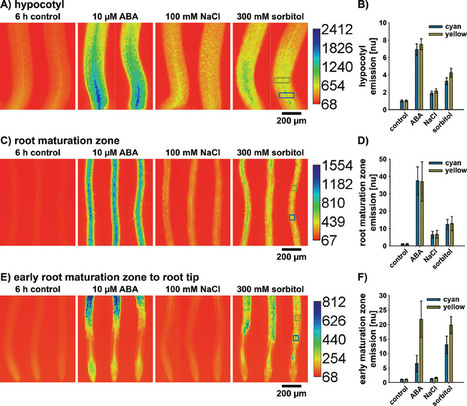
The exploration of plant behavior on a cellular scale in a minimal invasive manner is key to understanding plant adaptations to their environment. Plant hormones regulate multiple aspects of growth and development and mediate environmental responses t
|
|
Scooped by
Jean-Michel Ané
July 17, 2018 4:55 PM
|
Plants interact with numerous pathogenic and beneficial bacteria. In this issue of Cell Host & Microbe, Karasov et al. (2018) and Garrido-Oter et al. (2018) use NextGen sequencing and data analysis from more than 2,000 bacterial genomes to draw hypotheses about interactions and evolution of microbes with their plant hosts.
|
|
Scooped by
Jean-Michel Ané
July 17, 2018 4:52 PM
|
Microbiomes impact nearly all systems on Earth, and despite vast differences among systems, we contend that it is possible and highly beneficial to develop a unified conceptual framework for understanding microbiome dynamics that is applicable across systems. The ability to robustly predict and control environmental and human microbiomes would provide impactful opportunities to sustain and improve the health of ecosystems and humans alike. Doing so requires understanding the processes governing microbiome temporal dynamics, which currently presents an enormous challenge. We contend, however, that new opportunities can emerge by placing studies of both environmental and human microbiome temporal dynamics in the context of a unified conceptual framework. Our conceptual framework poses that factors influencing the temporal dynamics of microbiomes can be grouped into three broad categories: biotic and abiotic history, internal dynamics, and external forcing factors. Both environmental and human microbiome science study these factors, but not in a coordinated or consistent way. Here we discuss opportunities for greater crosstalk across these domains, such as leveraging specific ecological concepts from environmental microbiome science to guide optimization of strategies to manipulate human microbiomes towards improved health. To achieve unified understanding, it is necessary to have a common body of theory developed from explicit iteration between models and molecular-based characterization of microbiome dynamics across systems. Only through such model-experiment iteration will we eventually achieve prediction and control across microbiomes that impact ecosystem sustainability and human health.
|
|
Scooped by
Jean-Michel Ané
July 17, 2018 4:50 PM
|
Context
Land salinization is a serious problem worldwide that mainly leads to soil degradation and reduces crop productivity. These degraded areas could be rehabilitated by planting salt-tolerant species like Casuarina glauca Sieb. and Casuarina equisetifolia L. These are pioneer plants, able to form symbiotic associations with arbuscular mycorrhizal fungi (AMF), ectomycorrhizal fungi (EMF), and nitrogen-fixing bacteria.
Aims
The aim of this study was to select the highest salt-tolerant combination of Casuarina/AMF that can be used for the rehabilitation of lands degraded by salinity.
Methods
C. equisetifolia and C. glauca were grown in sandy sterile soil in the greenhouse and inoculated separately with Rhizophagus fasciculatus (Thaxt.) C. Walker & A. Schüßler, Rhizophagus aggregatus (N.C. Schenck & G.S. Sm.) C. Walker, and Rhizophagus intraradices (N.C. Schenck & G.S. Sm.) C. Walker & A. Schüßler. After confirming the establishment of a symbiosis, the plants were watered with gradually increasing concentrations of saline solution. After harvest, size and biomass of the seedlings, root colonization by AMF, and AMF metabolic activities were evaluated.
Results
A larger growth was obtained in the two species when the individuals were inoculated with R. fasciculatus. Root colonization rates did not differ among fungal species, but fungal metabolic activities were higher in mycorrhizal roots of C. glauca plants inoculated with R. fasciculatus.
Conclusion
Among the three mycorrhizal fungi, R. fasciculatus was more efficient in association with Casuarinaceae species under salt stress. Our results suggest that selection of appropriate fungal strains is crucial to improve plant performance in saline soils.
|
|
Scooped by
Jean-Michel Ané
July 17, 2018 3:46 PM
|
In this work we investigated the variability and the genetic basis of susceptibility to arbuscular mycorrhizal (AM) colonization of wheat roots. The mycorrhizal status of wild, domesticated and cultivated tetraploid wheat accessions, inoculated with the AM species Funneliformis mosseae, was evaluated. In addition, to detect genetic markers in linkage with chromosome regions involved in AM root colonization, a genome wide association analysis was carried out on 108 durum wheat varieties and two AM fungal species (F. mosseae and Rhizoglomus irregulare). Our findings showed that a century of breeding on durum wheat and the introgression of Reduced height (Rht) genes associated with increased grain yields did not select against AM symbiosis in durum wheat. Seven putative Quantitative Trait Loci (QTLs) linked with durum wheat mycorrhizal susceptibility in both experiments, located on chromosomes 1A, 2B, 5A, 6A, 7A and 7B, were detected. The individual QTL effects (r2) ranged from 7 to 16%, suggesting a genetic basis for this trait. Marker functional analysis identified predicted proteins with potential roles in host-parasite interactions, degradation of cellular proteins, homeostasis regulation, plant growth and disease/defence. The results of this work emphasize the potential for further enhancement of root colonization exploiting the genetic variability present in wheat.
|
|
Scooped by
Jean-Michel Ané
July 14, 2018 12:07 PM
|
The diversity of pathways through which mycorrhizal fungi alter plant coexistence hinders the understanding of their effects on plant‐plant interactions. The outcome of plant facilitative interactions can be indirectly affected by mycorrhizal symbiosis, ultimately shaping biodiversity patterns. We tested whether mycorrhizal symbiosis enhances plant facilitative interactions and whether its effect is consistent across different methodological approaches and biological scenarios. We conducted a meta‐analysis of 215 cases (involving 21 nurse and 29 facilitated species), in which the performance of a facilitated plant species is measured in the presence or absence of mycorrhizal fungi. We show that mycorrhizal fungi significantly enhance plant facilitative interactions mainly through an increment in plant biomass (aboveground) and nutrient content, although their effects differ across biological contexts. In semiarid environments mycorrhizal symbiosis enhances plant facilitation, while its effect is non‐significant in temperate ecosystems. In addition, arbuscular but not ecto‐mycorrhizal (EMF) fungi significantly enhances plant facilitation, particularly increasing the P content of the plants more than EMF. Some knowledge gaps regarding the importance of this phenomenon have been detected in this meta‐analysis. The effect of mycorrhizal symbiosis on plant facilitation has rarely been assessed in other ecosystems different from semiarid and temperate forests, and rarely considering other fungal benefits provided to plants besides nutrients. Finally, we are still far from understanding the effects of the whole fungal community on plant‐plant interactions, and on plant species coexistence.
|
|
Scooped by
Jean-Michel Ané
July 14, 2018 11:58 AM
|
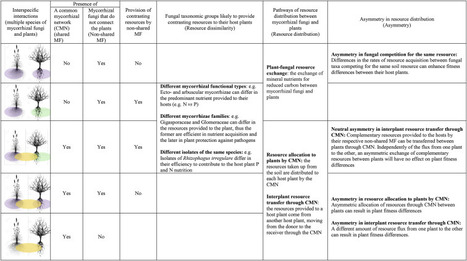
Mycorrhizal symbiosis has important implications for the diversity and productivity of plant communities. However, our mechanistic understanding of its influence on the outcome of plant-plant interactions is still expanding. In this review we propose a framework that might be useful to efficiently approach the effects of mycorrhizal fungi (MF) on plant-plant interactions. We propose several scenarios that can theoretically result in different outcomes of plant-plant interactions based on the combination of two processes: the diversity of resources provided by MF taxa to their host (resource dissimilarity) and contrasting ways of distributing those resources (resource distribution). Then, we illustrate our arguments with different ecological contexts where certain combinations of these two processes are prone to occur. The proposed framework suggests testable hypotheses that can contribute to elucidate relevant processes underlying the effects of mycorrhizal symbiosis on plant-plant interactions.
|
|
Scooped by
Jean-Michel Ané
July 14, 2018 11:43 AM
|
Efficient DNA assembly is of great value in biological research and biotechnology. Type IIS restriction enzyme-based assembly systems allow assembly of multiple DNA fragments in a one-pot reaction. However, large DNA fragments can only be assembled by alternating use of two or more type IIS restriction enzymes in a multi-step approach. Here, we present MetClo, a DNA assembly method that uses only a single type IIS restriction enzyme for hierarchical DNA assembly. The method is based on in vivo methylation-mediated on/off switching of type IIS restriction enzyme recognition sites that overlap with site-specific methylase recognition sequences. We have developed practical MetClo systems for the type IIS enzymes BsaI, BpiI and LguI, and demonstrated hierarchical assembly of large DNA fragments up to 218 kb. The MetClo approach substantially reduces the need to remove internal restriction sites from components to be assembled. The use of a single type IIS enzyme throughout the different stages of DNA assembly allows novel and powerful design schemes for rapid large-scale hierarchical DNA assembly. The BsaI-based MetClo system is backward-compatible with component libraries of most of the existing type IIS restriction enzyme-based assembly systems, and has potential to become a standard for modular DNA assembly.
|