Your new post is loading...

|
Scooped by
Jean-Michel Ané
January 9, 2019 4:49 PM
|
Background
Medicinal plant species have been used by the ancestors around the world since ancient times. Rosmarinus officinalis is one of the most used medicinal plants, which belongs to the family Lamiaceae. To investigate the effects of different levels of salinity stress along with the induction of bacterial growth stimulation on the amount of essential oil composition in R. officinalis, an experiment was conducted in a randomized complete block design with 12 treatments and five replications. Salinity treatments included 0 (control), 2.5 (T1), 5 (T2), 7.5 (T3), 10 (T4) and 12.5 (T5) NaCl g/L, and the bacterium was pseudomonas fluorescence.
Results
The percentage of essential oils showed a significant relationship with increasing salinity either alone or in composition with plant growth-promoting rhizobacteria (PGPR) inoculation treatments and it increased with increasing salinity levels to treatment 4 (T4, 10 g/L NaCl) but decreased with further increases in salinity levels in treatments without using PGPR and it was constant in treatment with using PGPR. Phellandrene, one of the main compounds of essential oils, showed a trend like the whole amount of essential oils in both group of treatments.
Conclusion
Abiotic and biotic factors may influence the different mechanisms and limit the interactions between plant and beneficial bacteria, resulting in less-than-acceptable performance in plant growth promotion and management of diseases. In this context, the results revealed that the application of PGPRs can help improve the essential oil yield in R. officinalis even in salinity conditions.
|
|
Scooped by
Jean-Michel Ané
January 9, 2019 4:45 PM
|
The recent development of mass spectrometry imaging (MSI) technology allowed to obtain highly detailed images of the spatial distribution of proteins in tissue at high spatial resolution reaching cell dimensions, high target specificity and a large dynamic concentration range. This review focusses on the development of two main MSI principles, targeted and untargeted detection of protein distribution in tissue samples, with special emphasis on the improvements in analyzed mass range and spatial resolution over the last 10 years. Untargeted MSI of in situ digested proteins with matrix-assisted laser desorption ionization is the most widely used approach, but targeted protein MSI technologies using laser ablation inductively coupled plasma (LA-ICP) and photocleavable mass tag chemical labeling strategies are gaining momentum. Moreover, this review also provides an overview of the effect of sample preparation on image quality and the bioinformatic challenge to identify proteins and quantify their distribution in complex MSI data.
|
|
Scooped by
Jean-Michel Ané
January 9, 2019 4:29 PM
|
The legume-rhizobium symbiosis results in nitrogen fixing root nodules, and their formation involves both intracellular infection initiated in the epidermis and nodule organogenesis initiated in inner root cell layers. NODULE INCEPTION (NIN) is a nodule-specific transcription factor essential for both processes. These NIN-regulated processes occur at different times and locations in the root, demonstrating a complex pattern of spatiotemporal regulation. We show that regulatory sequences sufficient for the epidermal infection process are located within a 5 kb region directly upstream of the NIN start codon in Medicago truncatula. Furthermore, we identify a remote upstream cis-regulatory region required for the expression of NIN in the pericycle, and we show that this region is essential for nodule organogenesis. This region contains putative cytokinin response elements, and is conserved in eight more legume species. Both the cytokinin receptor CRE1, which is essential for nodule primordium formation, and the B-type response regulator RR1 are expressed in the pericycle in the susceptible zone of the uninoculated root. This, together with the identification of the cytokinin responsive elements in the NIN promoter, strongly suggests that NIN expression is initially triggered by cytokinin signalling in the pericycle to initiate nodule primordium formation.
|
|
Rescooped by
Jean-Michel Ané
from Transport in plants and fungi
December 28, 2018 11:06 AM
|
To get insights into the dynamics of nutrient exchange in arbuscular mycorrhizal (AM) symbiosis, we modelled mathematically the two‐membrane system at the plant–fungus interface and simulated its dynamics. In computational cell biology experiments, the full range of nutrient transport pathways was tested for their ability to exchange phosphorus (P) / carbon (C) / nitrogen (N) sources. As a result, we obtained a thermodynamically justified, independent, and comprehensive model of the dynamics of the nutrient exchange at the plant–fungus contact zone. The predicted optimal transporter network coincides with the transporter set independently confirmed in wet‐lab experiments previously, indicating that all essential transporter types have been discovered. The thermodynamic analyses suggest that phosphate is released from the fungus via proton‐coupled phosphate transporters rather than anion channels. Optimal transport pathways, such as cation channels or proton‐coupled symporters, shuttle nutrients along with a positive charge across the membranes. Only in exceptional cases, also the electroneutral transport via diffusion facilitators appears plausible. The thermodynamic models presented here can be generalised and adapted to other forms of mycorrhiza and open the door for future studies combining wet‐lab experiments with computational simulations to obtain a deeper understanding of the investigated phenomena.
Via Kevin Garcia
|
|
Scooped by
Jean-Michel Ané
December 22, 2018 6:21 PM
|
Despite their ubiquitous distribution and significant ecological roles, soil microorganisms have long been neglected in investigations addressing parasitic plant–host interactions. Because nutrient deprivation is a primary cause of host damage by parasitic plants, we hypothesized that beneficial soil microorganisms conferring nutrient benefits to parasitized hosts may play important roles in alleviating damage.
We conducted a pot cultivation experiment to test the inoculation effect of an arbuscular mycorrhizal fungus (Glomus mosseae), a rhizobium (Rhizobium leguminosarum) and their interactive effects, on alleviation of damage to a legume host (Trifolium repens) by two root hemiparasitic plants with different nutrient requirements (N‐demanding Pedicularis rex and P‐demanding P. tricolor).
Strong interactive effects between inoculation regimes and hemiparasite identity were observed. The relative benefits of microbial inoculation were related to hemiparasite nutrient requirements. Dual inoculation with the rhizobium strongly enhanced promotional arbuscular mycorrhizal effects on hosts parasitized by P. rex, but reduced the arbuscular mycorrhizal promotion on hosts parasitized by P. tricolor.
Our results demonstrate substantial contribution of arbuscular mycorrhizal and rhizobial symbioses to alleviating damage to the legume host by root hemiparasites, and suggest that soil microorganisms are critical factors regulating host–parasite interactions and should be taken into account in future studies.
|
|
Scooped by
Jean-Michel Ané
December 20, 2018 3:20 PM
|
|
|
Scooped by
Jean-Michel Ané
December 20, 2018 3:03 PM
|
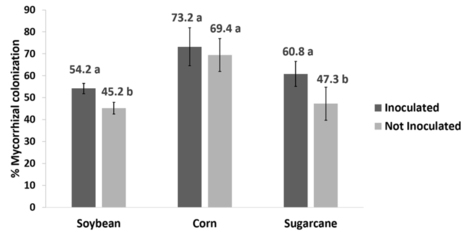
Plant growth and arbuscular mycorrhizal colonization were studied in sugarcane, corn and soybean by applying five plant growth promoting fungi: Beauveria bassiana, Metarhizium anisopliae, Pochonia chlamydosporia, Purpureocillium lilacinum, and Trichoderma asperella. Sugarcane, corn and soybean were grown in pots under two treatments: (1) inoculation with the fungal consortium and (2) control without inoculation. In the inoculated treatment, fungal spore suspension were applied to the seeds and shoots were sprayed every 28 days. Means were analyzed by analysis of variance and Tukey’s test at 5% probability level. The experiment was arranged in a completely randomized design, with six replications. Fungi consortium mediate root growth in soybean and corn, and arbuscular mycorrhizal colonization in soybean and sugarcane. These findings are probably caused by the fungi producing phytohormones and inducing the plants to synthesize phytohormones: auxins for root growth; and jasmonic, abscisic, and salicylic acids with a role in the regulation of mycorrhizal colonization. These effects are important when seeking conservation strategies in agriculture and livestock production, since Fungi consortium can better mediate soil resource acquisition, promoting greater absorption of nutrients and water.
|
|
Scooped by
Jean-Michel Ané
December 20, 2018 2:57 PM
|
Nodule formation by a specialized group of plants is one of the most beneficial plant-environment interactions, where atmospheric nitrogen is biologically fixed into ammonia, which is subsequently converted to nitrates and amino acids. The molecular basis of nodule formation has been studied in detail, and work done in the past few years has led to seminal discoveries, connecting the initial signal perception by the root hairs to the downstream signaling events and finally to cellular and developmental changes that result in organogenesis and nodule formation. Although the physiology of biological nitrogen fixation has been well known for many years, the exquisite molecular details of nodule formation have been made possible, mostly, by using the transgenic hairy roots on composite plants. Development of hairy roots by Agrobacterium rhizogenes (A. rhizogenes) infection provides an excellent experimental system to rapidly and efficiently evaluate the effect of changes in the expression of specific genes or gene families on a range of root phenotypes. By using this system, the Nod factor receptor-mediated signaling has been linked to the infection thread formation and nodule organogenesis, two critical events of nodulation. The use of hairy root system has made it possible to uncover the details of signaling and developmental events using molecular genetics, genomics, proteomics, and cell biological approaches, making the nodulation signaling pathway one of the best understood in leguminous plants. This article provides an overview of multiple rhizobium-legume interaction studies that utilized the hairy root system to uncover the signaling pathways and offers perspectives on its future uses in the context of the development of novel gene-editing capabilities in plants.
|
|
Scooped by
Jean-Michel Ané
December 20, 2018 2:50 PM
|
Legumes rely on soil mineral nitrogen (N) and biological N fixation (BNF). The interplay between these two sources is biologically interesting and agronomically relevant as the crop can accommodate the cost of BNF by five non-mutually exclusive mechanisms, whereby BNF: reduces shoot growth and seed yield, or maintains shoot growth and seed yield by enhanced photosynthesis, or reduced root:shoot ratio, or maintains shoot growth but reduces seed yield by reducing the fraction of shoot biomass allocated to seed (harvest index), or reducing concentration of oil and protein in seed. We explore the impact of N application on the seasonal dynamics of BNF, and its consequences for seed yield with emphasis on growth and shoot allocation mechanisms. Trials were established in 23 locations across the US Midwest under four N conditions. Fertilizer reduced the peak of BNF up to 16% in applications at the full flowering stage. Seed yield declined 13 kg ha−1 per % increase in RAUR6. Harvest index accounted for the decline in seed yield with increasing BNF. This indicates the cost of BNF was met by a relative change in dry matter allocation against the energetically rich seed, and in favor of energetically cheaper vegetative tissue.
|
|
Scooped by
Jean-Michel Ané
December 20, 2018 9:48 AM
|
Aquaporins (AQPs) are membrane channel proteins regulating the flux of water and other various small solutes across membranes. Significant progress has been made in understanding the roles of AQPs in plants’ physiological processes, and now their activities in various plant–microbe interactions are receiving more attention. This review summarizes the various roles of different AQPs during interactions with microbes which have positive and negative consequences on the host plants. In positive plant–microbe interactions involving rhizobia, arbuscular mycorrhizae (AM), and plant growth-promoting rhizobacteria (PGPR), AQPs play important roles in nitrogen fixation, nutrient transport, improving water status, and increasing abiotic stress tolerance. For negative interactions resulting in pathogenesis, AQPs help plants resist infections by preventing pathogen ingress by influencing stomata opening and influencing defensive signaling pathways, especially through regulating systemic acquired resistance. Interactions with bacterial or viral pathogens can be directly perturbed through direct interaction of AQPs with harpins or replicase. However, whilst these observations indicate the importance of AQPs, further work is needed to develop a fuller mechanistic understanding of their functions. View Full-Text
|
|
Scooped by
Jean-Michel Ané
December 20, 2018 9:44 AM
|
Resources that microbial symbionts obtain from hosts may enhance fitness during free-living stages when resources are comparatively scarce. For rhizobia in legume root nodules, diverting resources from nitrogen fixation to polyhydroxybutyrate (PHB) has been discussed as a source of host–symbiont conflict. Yet, little is known about natural variation in PHB storage and its implications for rhizobial evolution. We therefore measured phenotypic variation in natural rhizobia populations and investigated how PHB might contribute to fitness in the free-living stage. We found that natural populations of rhizobia from Glycine max and Chamaecrista fasciculata had substantial, heritable variation in PHB acquisition during symbiosis. A model simulating temperature-dependent metabolic activity showed that the observed range of stored PHB per cell could support survival for a few days, for active cells, or over a century for sufficiently dormant cells. Experiments with field-isolated Bradyrhizobium in starvation culture suggest PHB is partitioned asymmetrically in dividing cells, consistent with individual-level bet-hedging previously demonstrated in E. meliloti. High-PHB isolates used more PHB over the first month, yet still retained more PHB for potential long-term survival in a dormant state. These results suggest that stored resources like PHB may support both short-term and long-term functions that contribute to fitness in the free-living stage.
|
|
Scooped by
Jean-Michel Ané
December 17, 2018 11:47 AM
|
Rhizobia bacteria engage in nitrogen-fixing root nodule symbiosis, a mutualistic interaction with legume plants in which a bidirectional nutrient exchange takes place. Occasionally, this interaction is suboptimal resulting in the formation of ineffective nodules in which little or no atmospheric nitrogen fixation occurs. Rhizobium leguminosarum Norway induces ineffective nodules in a wide range of Lotus hosts. To investigate the basis of this phenotype, we sequenced the complete genome of Rl Norway and compared it to the genome of the closely related strain R. leguminosarum bv. viciae 3841. The genome comprises 7,788,085 bp, distributed on a circular chromosome containing 63% of the genomic information and five large circular plasmids. The functionally classified bacterial gene set is distributed evenly among all replicons. All symbiotic genes (nod, fix, nif) are located on the pRLN3 plasmid. Whole genome comparisons revealed differences in the metabolic repertoire and in protein secretion systems, but not in classical symbiotic genes.
|
|
Scooped by
Jean-Michel Ané
December 17, 2018 11:42 AM
|
We investigated the role of three autoregulation of nodulation (AON) genes in regulating of root and shoot phenotypes when responding to changing nitrogen availability in the model legume, Medicago truncatula. These genes, RDN1‐1 (ROOT DETERMINED NODULATION1‐1), SUNN (SUPER NUMERIC NODULES) and LSS (LIKE SUNN SUPERNODULAOR), act in a systemic signaling pathway that limits nodule numbers. This pathway is also influenced by nitrogen availability, but it is not well known if AON genes control root and shoot phenotypes other than nodule numbers in response to nitrogen. We conducted a controlled glasshouse experiment to compare root and shoot phenotypes of mutants and wild type plants treated with four nitrate concentrations. All AON mutants showed altered rhizobia‐independent phenotypes, including biomass allocation, lateral root length, lateral root density and root length ratio. In response to nitrogen, uninoculated AON mutants were less plastic than the wild type in controlling root mass ratio, root length ratio, and lateral root length. This suggest that AON genes control nodulation‐independent root architecture phenotypes in response to nitrogen. The phenotypic differences between wild type and AON mutants were exacerbated by the presence of nodules, pointing to resource competition as an additional mechanism affecting root and shoot responses to nitrogen.
|
|
|
Scooped by
Jean-Michel Ané
January 9, 2019 4:47 PM
|
Aims
Cereal can stimulate legume N fixation through competition for soil mineral N. In addition, organic acids in the rhizosphere can mobilize external nutrients, which may help nodulation. However, how much NO3− and NH4+ competition and organic acids in the rhizosphere of intercropped crops contribute to N fixation remains unclear and requires study.
Methods
Field and greenhouse experiments were conducted to quantify effects of N competition and organic acids on N fixation in a maize/alfalfa intercropping system.
Results
Intercropping increased nitrogen derived from the atmosphere (%Ndfa), nodules number, and leghemoglobin content by 43.66%, 85.53%, 141.05%, respectively, leading to significantly improved total N uptake and yield, compared to monoculture. The improved %Ndfa was not only due to the depletion of NO3−, but also significantly correlated with the decrease of NO3−/NH4+ ratio and the increase of citric acid in rhizosphere of alfalfa, which could mobilize soluble resources for N fixation under no N addition. Overall, 15.4%–21.5% of N fixed by alfalfa was transferred to associated maize, and the improved N fixation enhanced N transfer.
Conclusions
Our findings provide a mechanism for how root interactions facilitate N fixation, highlighting the importance of NO3−/NH4+ ratio and citric acid in nutrient mobilization for N fixation.
|
|
Scooped by
Jean-Michel Ané
January 9, 2019 4:44 PM
|
Plants, fungi, and bacteria form complex, mutually-beneficial communities within the soil environment. In return for photosynthetically derived sugars in the form of exudates from plant roots, the microbial symbionts in these rhizosphere communities provide their host plants access to otherwise inaccessible nutrients in soils and help defend the plant against biotic and abiotic stresses. One role that bacteria may play in these communities is that of Mycorrhizal Helper Bacteria (MHB). MHB are bacteria that facilitate the interactions between plant roots and symbiotic mycorrhizal fungi and, while the effects of MHB on the formation of plant-fungal symbiosis and on plant health have been well documented, the specific molecular mechanisms by which MHB drive gene regulation in plant roots leading to these benefits remain largely uncharacterized.
|
|
Scooped by
Jean-Michel Ané
January 7, 2019 5:27 PM
|
Alternative splicing (AS) is a key regulatory mechanism that contributes to transcriptome and proteome diversity. Investigation of the genome-wide conserved AS events across different species will help with the understanding of the evolution of the functional diversity in legumes, allowing for genetic improvement. Genome-wide identification and characterization of AS were performed using the publically available mRNA, EST, and RNA-Seq data for four important legume species. A total of 15,165 AS genes in Glycine max, 6077 in Cicer arietinum, 7240 in Medicago truncatula, and 7358 in Lotus japonicus were identified. Intron retention (IntronR) was the dominant AS type among the identified events, with IntronR occurring from 53.76% in M. truncatula to 43.91% in C. arietinum. We identified 1159 AS genes that were conserved among four species. Furthermore, nine nitrogen fixation-related gene families with 237 genes were identified, and 80 of them were AS, accounting for the 43.48% in G. max and 27.78% in C. arietinum. An evolutionary analysis showed that these AS genes tended to be located adjacent to each other in the evolutionary tree and are unbalanced in the distribution in the sub-family. This study provides a foundation for future studies on transcription complexity, evolution, and the role of AS on plant functional regulation.
|
|
Scooped by
Jean-Michel Ané
December 27, 2018 1:01 PM
|
Joyn Bio is a joint venture founded by Bayer and Ginkgo Bioworks developing probiotics for plants to provide growers with next generation solutions to their biggest challenges, including reducing reliance on fossil fuel intensive nitrogen fertilizers.
|
|
Scooped by
Jean-Michel Ané
December 20, 2018 3:26 PM
|
Arbuscular mycorrhizas are widespread in land plants including liverworts, some of the closest living relatives of the first plants to colonize land 500 million years ago (MYA). Previous investigations reported near-exclusive colonization of liverworts by the most recently evolved arbuscular mycorrhizal fungi, the Glomeraceae, indicating a recent acquisition from flowering plants at odds with the widely held notion that arbuscular mycorrhizal-like associations in liverworts represent the ancestral symbiotic condition in land plants. We performed an analysis of symbiotic fungi in 674 globally collected liverworts using molecular phylogenetics and electron microscopy. Here, we show every order of arbuscular mycorrhizal fungi colonizes early-diverging liverworts, with non-Glomeraceae being at least 10 times more common than in flowering plants. Arbuscular mycorrhizal fungi in liverworts and other ancient plant lineages (hornworts, lycopods, and ferns) were delimited into 58 taxa and 36 singletons, of which at least 43 are novel and specific to liverworts. The discovery that early plant lineages are colonized by early-diverging fungi supports the hypothesis that arbuscular mycorrhizas are an ancestral symbiosis for all land plants.
|
|
Scooped by
Jean-Michel Ané
December 20, 2018 3:07 PM
|
Two types of nitrogen-fixing root nodule symbioses are known, rhizobial and actinorhizal symbioses. The latter involve plants of three orders, Fagales, Rosales, and Cucurbitales. To understand the diversity of plant symbiotic adaptation, we compared the nodule transcriptomes of Datisca glomerata (Datiscaceae, Cucurbitales) and Ceanothus thyrsiflorus (Rhamnaceae, Rosales); both species are nodulated by members of the uncultured Frankia clade, cluster II. The analysis focused on various features. In both species, the expression of orthologs of legume Nod factor receptor genes was elevated in nodules compared to roots. Since arginine has been postulated as export form of fixed nitrogen from symbiotic Frankia in nodules of D. glomerata, the question was whether the nitrogen metabolism was similar in nodules of C. thyrsiflorus. Analysis of the expression levels of key genes encoding enzymes involved in arginine metabolism revealed up-regulation of arginine catabolism, but no up-regulation of arginine biosynthesis, in nodules compared to roots of D. glomerata, while arginine degradation was not upregulated in nodules of C. thyrsiflorus. This new information corroborated an arginine-based metabolic exchange between host and microsymbiont for D. glomerata, but not for C. thyrsiflorus. Oxygen protection systems for nitrogenase differ dramatically between both species. Analysis of the antioxidant system suggested that the system in the nodules of D. glomerata leads to greater oxidative stress than the one in the nodules of C. thyrsiflorus, while no differences were found for the defense against nitrosative stress. However, induction of nitrite reductase in nodules of C. thyrsiflorus indicated that here, nitrite produced from nitric oxide had to be detoxified. Additional shared features were identified: genes encoding enzymes involved in thiamine biosynthesis were found to be upregulated in the nodules of both species. Orthologous nodule-specific subtilisin-like proteases that have been linked to the infection process in actinorhizal Fagales, were also upregulated in the nodules of D. glomerata and C. thyrsiflorus. Nodule-specific defensin genes known from actinorhizal Fagales and Cucurbitales, were also found in C. thyrsiflorus. In summary, the results underline the variability of nodule metabolism in different groups of symbiotic plants while pointing at conserved features involved in the infection process.
|
|
Scooped by
Jean-Michel Ané
December 20, 2018 3:02 PM
|
Endogonales (Mucoromycotina), composed of Endogonaceae and Densosporaceae, is the only known non‐Dikarya order with ectomycorrhizal members. They also form mycorrhizal‐like association with some non‐Spermatophyte plants. It has been recently proposed that Endogonales were among the earliest mycorrhizal partners with land plants. It remains unknown whether Endogonales possess genomes with mycorrhizal‐lifestyle signatures and whether Endogonales originated around the same time as land plants did.
We sampled sporocarp tissue from four Endogonaceae collections and performed shotgun genome sequencing. After binning the metagenome data, we assembled and annotated the Endogonaceae genomes. We performed comparative analysis on plant‐cell‐wall‐degrading‐enzymes (PCWDEs) and small secreted proteins (SSPs). We inferred phylogenetic placement of Endogonaceae and estimated the ages of Endogonaceae and Endogonales with expanded taxon sampling.
Endogonaceae have large genomes with high repeat content, low diversity of PCWDEs, but without elevated SSP/secretome ratios. Dating analysis estimated that Endogonaceae originated in the Permian‐Triassic boundary and Endogonales originated in the mid‐late Silurian. Mycoplasma‐related endobacterium sequences were identified in three Endogonaceae genomes.
Endogonaceae genomes possess typical signatures of mycorrhizal lifestyle. The early origin of Endogonales suggests that the mycorrhizal association between Endogonales and plants might have played an important role during the colonization of land by plants.
|
|
Scooped by
Jean-Michel Ané
December 20, 2018 2:51 PM
|
Root surfaces are major sites of interactions between plants and associated microorganisms. Here, plants and microbes communicate via signaling molecules, compete for nutrients, and release substrates that may have beneficial or harmful effects on each other. Whilst the body of knowledge on the abundance and diversity of microbial communities at root-soil interfaces is now substantial, information on their spatial distribution at the microscale is still scarce. In this study, a standardized method for recognizing and analyzing microbial cell distributions on root surfaces is presented. Fluorescence microscopy was combined with automated image analysis and spatial statistics to explore the distribution of bacterial colonization patterns on rhizoplanes of rice roots. To test and evaluate the presented approach, a gnotobiotic experiment was performed using a potential nitrogen-fixing bacterial strain in combination with roots of wetland rice. The automated analysis procedure resulted in reliable spatial data of bacterial cells colonizing the rhizoplane. Among all replicate roots, the analysis revealed an increasing density of bacterial cells from the root tip to the region of root cell maturation. Moreover, bacterial cells showed significant spatial clustering and tended to be located around plant root cell borders. The quantitative data suggest that the structure of the root surface plays a major role in bacterial colonization patterns. Possible adaptations of the presented approach for future studies are discussed along with potential pitfalls such as inaccurate imaging. Our results demonstrate that standardized recognition and statistical evaluation of microbial colonization on root surfaces holds the potential to increase our understanding of microbial associations with roots and of the underlying ecological interactions.
|
|
Scooped by
Jean-Michel Ané
December 20, 2018 2:45 PM
|
Abstract: The endosymbiotic relationship between legumes and rhizobia results in the development of a root nodule, a specialized plant organ where symbiotic nitrogen fixation occurs. During nodule formation, bacteria enter the host’s cell within the invasion zone of the nodule using an endocytosis-like process. Within the cell, the symbiosome membrane encases the microbial symbiont and provides a physical barrier that separates the microbe from the plant’s cytoplasm. The work described in this thesis aims at investigating the development of the symbiosome membrane using early nodulin 16 protein (ENOD16) and a series of novel organelle markers in the model legume plant Medicago truncatula. Proteomic studies identified ENOD16 as a component of the symbiosome membrane in M. truncatula. I hypothesize that ENOD16 is essential for the development of a functional root nodule. In this work, ENOD16 localization was first determined by tagging its gene to the fluorescent marker citrine and HA epitope tag and comparing its localization with known organelle markers. Confocal laser scanning microscopy determined that ENOD16 localization in transiently expressed tobacco leaves and transformed M. truncatula root nodules was consistent with plasma membrane labeling. Secondly, symbiosome formation was evaluated in a set of M. truncatula mutants that each encoded an intervening retrotransposon Tnt1 within the ENOD16 gene or within the closely related ENOD20 gene. Nodules formed on ENOD16 and ENOD20 Tnt1 mutants displayed relatively smaller nodules in size with an overall lower density of infected cells compared to wild type as observed by transmission electron microscopy. In addition, the infection thread matrices within the mutant nodules were abnormal, as were the bacteroids. The infection thread matrices displayed a granulated texture compared to the smooth texture typically seen in wild type, and the released bacteroids appeared to be distressed and unhealthy, some of which were observed in vacuoles. Moreover, the infected cells of the mutants showed signs of membrane degradation and early senescence compared to wild type. ☐ To sum up, the results of this thesis will help advance what is currently known about ENOD16 and its role in the development of a functional root nodule in M. truncatula.
|
|
Scooped by
Jean-Michel Ané
December 20, 2018 9:46 AM
|
Interspecific interactions play an important role in community assembly. A basic ecological question is whether interactions are specialized (one to one) or generalized (many to many). Specialization of interactions should ideally be assessed across several populations because species could be specialists at a particular site but generalists when several sites are considered. Mycorrhizal interactions are fundamental for orchid life and distribution, but their level of specialization is still under debate. To understand the extent to which epiphytic orchids are specialists in their mycorrhizal interactions, we studied the richness and phylogenetic structure of mycobionts across different sites, and the similarity in the mycobiont composition between coexisting orchid species. We sequenced the nrDNA ITS2 region and explored the mycobiont communities associated with two epiphytic orchids, Epidendrum marsupiale and Cyrtochilum pardinum, at two elevations within two sites in Ecuador. We found 108 OTUs belonging to Serendipitaceae (66), Ceratobasidiaceae (22), Atractiellales (11) and Tulasnellaceae (9). Orchids at the highest elevations hosted the highest OTU richness. The two orchid species shared a high percentage of mycobionts between all sites. No phylogenetic structure within orchid mycorrhizal communities was found at any sites or elevations. Our results indicate that the studied orchids are generalists and share a broad group of mycobionts (16 OTUs) with no apparent niche segregation within or between sites.
|
|
Scooped by
Jean-Michel Ané
December 17, 2018 11:48 AM
|
The structural variation of symbiotic signals released by rhizobia determines the specificity of their interaction with legume plants. Previous studies showed that Sinorhizobium strains from different phylogenetic lineages had different symbiotic performance on certain cultivated soybeans. Whether they released similar or different symbiotic signals remained unclear. In this study, we compared their nod and exo gene clusters and made a detailed structural analysis of Nod factors and EPS by ESI-MS/MS and two dimensions NMR. Even if there are some differences among nod or exo gene clusters; they produced much conserved Nod factor and EPS compositions. The Nod factors consist of a cocktail of β-(1, 4)-linked tri-, tetra-, and pentamers of N-acetyl-D-glucosamine (GlcNAc). The C2 position on the non-reducing terminal end is modified by a lipid chain that contains 16 or 18 atoms of carbon–with or without unsaturations-, and the C6 position on the reducing residue is decorated by a fucose or a 2-O-methylfucose. Their EPS are composed of glucose, galactose, glucuronic acid, pyruvic acid in the ratios 5:1:2:1 or 6:1:2:1. These findings indicate that soybean cultivar compatibility of Sinorhizobium strains does not result from Nod factor or EPS structure variations. The structure comparison of the soybean microbionts with other Sinorhizobium strains showed that Nod factor structures of soybean microbionts are much conserved, although there are no specific genes shared by the soybean microsymbionts. EPS produced by Sinorhizobium strains are different from those of Bradyrhizobium. All above is consistent with the previous deduction that Nod factor structures are related to host range, while those of EPS are connected with phylogeny.
|
|
Scooped by
Jean-Michel Ané
December 17, 2018 11:46 AM
|
Background
Among semi-aquatic species of the legume genus Aeschynomene, some have the property of being nodulated by photosynthetic Bradyrhizobium lacking the nodABC genes necessary for the synthesis of Nod factors. Knowledge of the specificities underlying this Nod-independent symbiosis has been gained from the model legume Aeschynomene evenia but our understanding remains limited due to the lack of comparative genetics with related taxa using a Nod factor-dependent process. To fill this gap, we combined different approaches to perform a thorough comparative analysis in the genus Aeschynomene.
Results
This study significantly broadened previous taxon sampling, including in allied genera, in order to construct a comprehensive phylogeny. In the phylogenetic tree, five main lineages were delineated, including a novel lineage, the Nod-independent clade and another one containing a polytomy that comprised several Aeschynomene groups and all the allied genera. This phylogeny was matched with data on chromosome number, genome size and low-copy nuclear gene sequences to reveal the diploid species and a polytomy containing mostly polyploid taxa. For these taxa, a single allopolyploid origin was inferred and the putative parental lineages were identified. Finally, nodulation tests with different Bradyrhizobium strains revealed new nodulation behaviours and the diploid species outside of the Nod-independent clade were compared for their experimental tractability and genetic diversity.
Conclusions
The extended knowledge of the genetics and biology of the different lineages sheds new light of the evolutionary history of the genus Aeschynomene and they provide a solid framework to exploit efficiently the diversity encountered in Aeschynomene legumes. Notably, our backbone tree contains all the species that are diploid and it clarifies the genetic relationships between the Nod-independent clade and the Nod-dependent lineages. This study enabled the identification of A. americana and A. patula as the most suitable species to undertake a comparative genetic study of the Nod-independent and Nod-dependent symbioses.
|