 Your new post is loading...

|
Scooped by
Jean-Michel Ané
October 15, 2019 4:51 PM
|
Mutualistic plant-microbe associations are widespread in natural ecosystems and have made major contributions throughout the evolutionary history of terrestrial plants. Amongst the most remarkable of these are the so-called root endosymbioses, resulting from the intracellular colonization of host tissues by either arbuscular mycorrhizal (AM) fungi or nitrogen-fixing bacteria that both provide key nutrients to the host in exchange for energy-rich photosynthates. Actinorhizal host plants, members of the Eurosid 1 clade, are able to associate with both AM fungi and nitrogen-fixing actinomycetes known as Frankia. Currently, little is known about the molecular signaling that allows these plants to recognize their fungal and bacterial partners. In this article, we describe the use of an in vivo Ca2+ reporter to identify symbiotic signaling responses to AM fungi in roots of both Casuarina glauca and Discaria trinervis, actinorhizal species with contrasting modes of Frankia colonization. This approach has revealed that, for both actinorhizal hosts, the short-chain chitin oligomer chitotetraose is able to mimic AM fungal exudates in activating the conserved symbiosis signaling pathway (CSSP) in epidermal root cells targeted by AM fungi. These results mirror findings in other AM host plants including legumes and the monocot rice. In addition, we show that chitotetraose is a more efficient elicitor of CSSP activation compared to AM fungal lipo-chitooligosaccharides. These findings reinforce the likely role of short-chain chitin oligomers during the initial stages of the AM association, and are discussed in relation to both our current knowledge about molecular signaling during Frankia recognition as well as the different microsymbiont root colonization mechanisms employed by actinorhizal hosts.
|
|
Scooped by
Jean-Michel Ané
October 13, 2019 9:48 PM
|
Pea aphids (Acyrthosiphon pisum) are one of the most important insect pests of alfalfa (Medicago sativa). Arbuscular mycorrhizal (AM) fungi are important microorganisms of the agroecosystem that promote plant growth and improve plant resistance to abiotic and biotic stress. Little information is available on AM fungi-regulated defense responses of alfalfa to pea aphids. To better understand how alfalfa responds and to evaluate the impact of an AM fungus on aphid infestation, transcriptome sequencing was done and physiological parameters were analyzed. Our experiments showed that Rhizophagus intraradices can regulate plant response to aphids by promoting growth and increasing plant peroxidase (POD) and catalase (CAT) activities and salicylic acid (SA) concentration after aphid infestation. Transcriptome analysis showed that R. intraradices increased the expression of resistance-related genes, such as “WRKY transcription factor” and “Kunitz trypsin inhibitor.” Additionally, GO terms “chitinase activity,” “peroxidase activity,” “defense response,” and “response to biotic stimulus,” and KEGG pathways “phenylpropanoid biosynthesis” and “phenylalanine metabolism” were significantly enriched in mycorrhizal fungus-inoculated plants and aphid-infested plants. These findings will improve our understanding about the impact of this AM fungus on alfalfa response to aphid feeding and will provide the basis for further research on plant defense against aphids.
|
|
Scooped by
Jean-Michel Ané
October 13, 2019 9:42 PM
|
This application relates to methods and materials for providing a benefit to a seed, seedling or plant by producing seeds that are internally colonized with endophytes. Beneficial endophytes with particular characteristics are provided. These may be used in the methods described to provide a benefit to a seed, seedling or plant.
|
|
Scooped by
Jean-Michel Ané
October 13, 2019 3:54 PM
|
Symbiotic nitrogen fixation (SNF) is a characteristic feature of nodulating legumes. The wild legumes are comparatively less explored for their SNF ability; hence, it is essential to study nodulation and identify the microsymbiont diversity associated with them. This chapter aims to describe the methodology for nodule hunting; trapping, isolation, and characterization of root nodule bacteria (RNB) at phenotypic, genotypic, and symbiotic levels. The documentation of nodulating native legume species and the rhizobial diversity associated with them in various parts of world has gained attention as this symbiotic association provides fixed nitrogen, improves productivity of plants in an ecofriendly manner. Before field-based applications the symbiotic bacteria need to be assessed for their N fixing ability as well as characterized at molecular level. The phylogeny based on symbiosis-essential genes supplemented with the host-range studies helps in better understanding of the symbiotaxonomy of rhizobia. More efficient symbiotic couples need to be screened by cross-nodulation studies for their application in agricultural practices.
|
|
Scooped by
Jean-Michel Ané
October 8, 2019 11:40 PM
|
Quorum Sensing (QS) is a mechanism of bacterial intercellular communication that depends on their population density. QS activates the expression of hundreds of bacterial genes, many of which play an important role in plant-bacterial interactions. This review summarizes the latest achievements in the research of bacterial QS signaling in plant-microbial interactions. The review focuses specifically on the best-studied QS systems, i.e., those of gram-negative bacteria which involve N-acyl-homoserine lactones (AHL). The effects of AHL and AHL-producing bacteria on plant growth, development, and defense responses are considered. Signaling functions of plant metabolites which regulate QS-dependent behavior of associated microbiota via the activation or inhibition of bacterial QS systems are described. Possible degradation pathways of AHL in the rhizosphere are also considered. Practical applications of QS regulation for plant protection are discussed.
|
|
Scooped by
Jean-Michel Ané
October 8, 2019 11:36 PM
|
The effect of soil type on establishment of arbuscular mycorrhizal (AM) fungi, and their effects on plant growth and resistance to rice pests are poorly understood. We investigated the effects of inoculation with AM fungi on rice plants in two different unsterilized field soils under greenhouse and field conditions in two consecutive years in Louisiana, United States. We tested whether inoculation with AM fungi in the two soils changed plant biomass, nutrient concentration, resistance to pests, and yields. Inoculation with a commercial formulation of AM fungi increased root colonization by fungi in all soils, regardless of soil P availability; it also increased densities of root-feeding rice water weevil larvae and growth of leaf-feeding fall armyworm larvae, but these effects were soil-dependent. Inoculation with AM fungi had no effect on N and P concentrations or rice yields. The effect on plant biomass was also soil-dependent. Our study provides evidence for the first time that inoculation with AM fungi can increase colonization of roots of rice plants, but the effects of colonization on resistance to pests and plant biomass appear to be soil dependent. Moreover, the increased susceptibility to pests of rice colonized by AM fungi does not appear to be related to nutrient concentrations.
|
|
Scooped by
Jean-Michel Ané
October 8, 2019 11:26 PM
|
Arbuscular mycorrhizas absorb water from soil to host plants, while the relationship between mycorrhizas and aquaporins (AQPs, membrane water channel proteins, which function in water transport) in mycorrhizal plants is unclear. In this study, Funneliformis mosseae-colonized trifoliate orange (Poncirus trifoliata) seedlings were grown in pots fitted with 37-μm nylon meshes at the bottom of each pot to allow mycorrhizal hyphae absorb water from an outer beaker. The expression of seven plasma membrane intrinsic proteins (PIPs) genes, six tonoplast intrinsic proteins (TIPs) genes, and four nodulin-26 like intrinsic proteins (NIPs) genes were analyzed in roots of both well-watered (WW) and drought stressed (DS) plants. The six-week DS plants dramatically increased hyphal water absorption rate by 1.4 times, as compared with WW plants. Mycorrhizal plants exhibited greater plant growth performance, leaf water status (water potential and relative water content), and gas exchange under both WW and DS conditions. Mycorrhizal inoculation induced diverse expression patterns in these AQPs under WW: up-regulation of PtNIP1;1, PtPIP2;1, and PtPIP2;5, down-regulation of PtNIP1;2, PtNIP6;1, PtPIP1;2, PtPIP1;5, PtPIP2;8, PtTIP1;1, PtTIP1;2, PtTIP1;3, and PtTIP5;1, and no changes in other AQPs. However, the expression of PtPIPs and PtNIPs was down-regulated by mycorrhizal inoculation under DS, and PtTIPs was not induced by mycorrhizal colonization under DS. The expression pattern of AQPs in response to mycorrhizas under DS is a way of mycorrhizal plants to minimize water loss.
|
|
Scooped by
Jean-Michel Ané
October 8, 2019 11:22 PM
|
We identified two poplar (Populus sp.)-associated microbes, the fungus, Mortierella elongata strain AG77, and the bacterium, Burkholderia strain BT03, that mutually promote each other’s growth. Using culture assays in concert with a novel microfluidic device to generate time-lapse videos, we found growth specific media differing in pH and pre-conditioned by microbial growth led to increased fungal and bacterial growth rates. Coupling microfluidics and comparative metabolomics data results indicated that observed microbial growth stimulation involves metabolic exchange during two ordered events. The first is an emission of fungal metabolites, including organic acids used or modified by bacteria. A second signal of unknown nature is produced by bacteria which increases fungal growth rates. We find this symbiosis is initiated in part by metabolic exchange involving fungal organic acids.
|
|
Scooped by
Jean-Michel Ané
October 8, 2019 11:15 PM
|
Invasive plant species are often able to alter soils in a way that benefits their own fitness over that of native species. While interspecific competitions may drive species to acquire different forms of nitrogen (N) to avoid intensive competition, plant-mycorrhizal interactions can also influence plant nutrient acquisition. Yet, it is unclear whether a variation in N acquisition by an invasive species is driven by interspecific resource partitioning due to competition with native species or by its symbiosis with arbuscular mycorrhizal (AM) fungi. We conducted a pot experiment to examine the effects of competition and fungicide on the uptake of different N forms by Flaveria bidentis, an invasive plant having symbiotic relationships with AM fungi, and two coexisting native species, mycotrophic Bidens maximowicziana and non-mycotrophic Amaranthus retroflexus (referred to by genus hereafter), by growing them either in two-species mixtures or in monocultures. We found that the growth of Flaveria was suppressed by its association with AM fungi regardless of the presence of competing native species, but the degree of suppression was related to the native species with which Flaveria competed. When growing in monocultures, all three species showed a strong preference for NO3−-N over NH4+-N and glycine-N regardless of mycorrhizal status. However, under competition conditions, Flaveria increased 15N recovery in any form of N available (in particular NH4+-15N), depending on neighboring plant identity and AM fungi association, whereas Amaranthus specially tended to decrease NH4+-15N uptake when competing with Flaveria, suggesting a niche complementarity in the utilization of N between two species. Our findings suggested that AM fungi may have the potential to limit the invasion of Flaveria, in the short term, and that interspecific competition plays an important role in partitioning soil N acquisition between plant species.
|
|
Scooped by
Jean-Michel Ané
October 8, 2019 11:11 PM
|
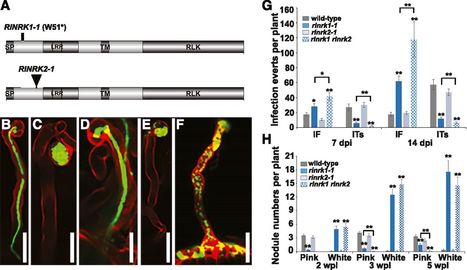
During the legume-rhizobium symbiotic interaction, rhizobial invasion of legumes is primarily mediated by a plant-made tubular invagination called an infection thread (IT). Here, we identify a gene in Lotus japonicus encoding a Leu-rich repeat receptor-like kinase (LRR-RLK), RINRK1 (Rhizobial Infection Receptor-like Kinase1), that is induced by Nod factors (NFs) and is involved in IT formation but not nodule organogenesis. A paralog, RINRK2, plays a relatively minor role in infection. RINRK1 is required for full induction of early infection genes, including Nodule Inception (NIN), encoding an essential nodulation transcription factor. RINRK1 displayed an infection-specific expression pattern, and NIN bound to the RINRK1 promoter, inducing its expression. RINRK1 was found to be an atypical kinase localized to the plasma membrane and did not require kinase activity for rhizobial infection. We propose RINRK1 is an infection-specific RLK, which may specifically coordinate output from NF signaling or perceive an unknown signal required for rhizobial infection.
|
|
Scooped by
Jean-Michel Ané
October 8, 2019 2:24 PM
|
L-Tyrosine (Tyr) is an aromatic amino acid synthesized de novo in plants and microbes downstream of the shikimate pathway. In plants, Tyr and a Tyr pathway intermediate, 4-hydroxyphenylpyruvate (HPP), are precursors to numerous specialized metabolites, which are crucial for plant and human health. Tyr is synthesized in the plastids by a TyrA family enzyme, arogenate dehydrogenase (ADH/TyrAa), which is feedback inhibited by Tyr. In addition to ADH enzymes, many legumes possess prephenate dehydrogenases (PDH/TyrAp), which are insensitive to Tyr and localized to the cytosol. Yet the role of PDH in legumes is currently unknown. This study isolated and characterized Tnt1-transposon mutants of MtPDH1 (pdh1) in Medicago truncatula to investigate PDH function. The pdh1 mutants lacked PDH transcript, PDH activity, and displayed little aberrant morphological phenotypes under standard growth conditions providing genetic evidence that MtPDH1 is responsible for the PDH activity detected in M. truncatula. Though plant PDH enzymes and activity have been specifically found in legumes, nodule number and nitrogenase activity of pdh1 mutants were not significantly reduced compared to wild-type (Wt) during symbiosis with nitrogen-fixing bacteria. Although Tyr levels were not significantly different between Wt and mutants under standard conditions, when carbon flux was increased by shikimate precursor feeding, mutants accumulated significantly less Tyr than Wt. These data suggest that MtPDH1 is involved in Tyr biosynthesis when the shikimate pathway is stimulated, and possibly linked to unidentified legume-specific specialized metabolism.
|
|
Scooped by
Jean-Michel Ané
October 6, 2019 8:18 PM
|
Despite of important functions of strigolactones (SLs) and karrikins (KARs) in plant development, plant‐parasite and plant‐fungi interactions, their roles in soybean‐rhizobia interaction remain elusive. SL/KAR signaling genes GmMAX2a, GmD14s, and GmKAIs are activated by rhizobia infection. GmMAX2a restored atmax2 root hair defects and soybean root hairs were changed in GmMAX2a overexpression (GmMAX2a‐OE) or knockdown (GmMAX2a‐KD) mutants. GmMAX2a‐KD gave fewer, whereas GmMAX2a‐OE produced more nodules than GUS hairy roots. Mutation of GmMAX2a in its KD or OE transgenic hairy roots affected the rhizobia infection‐induced increases in early nodulation gene expression. Both mutant hairy roots also displayed the altered auxin, jasmonate and abscisic acid levels, as further verified by transcriptomic analyses of their synthetic genes. Overexpression of an auxin synthetic gene GmYUC2a also affected SL and KAR signaling genes. GmMAX2a physically interacted with SL/KAR receptors GmD14s, GmKAIs, and GmD14Ls with different binding affinities, depending on variations in the critical amino acids, forming active D14/KAI‐SCFMAX2 complexes. The knockdown mutant roots of the nodule‐specifically expressing GmKAIs and GmD14Ls gave fewer nodules, with altered expression of several early nodulation genes. The expression levels of GmKAIs, and GmD14Ls were markedly changed in GmMAX2a mutant roots, so did their target repressor genes GmD53s and GmSMAX1s. Thus, SL and KAR signaling were involved in soybean‐rhizobia interaction and nodulation partly through interactions with hormones, and this may explain the different effects of MXA2 orthologs on legume determinate and indeterminate nodulation. The study provides fresh insights into the roles of GmMAX2‐mediated SL/KAR signaling in soybean root hair and nodule formation.
|
|
Scooped by
Jean-Michel Ané
October 3, 2019 2:56 PM
|
Plants interact throughout their lives with environmental microorganisms. These interactions determine plant development, nutrition, and fitness in a dynamic and stressful environment, forming the basis for the holobiont concept in which plants and plant-associated microbes are not considered as independent entities but as a single evolutionary unit. A primary open question concerns whether holobiont structure is shaped by its microbial members or solely by the plant. Current knowledge of plant–microbe interactions argues that the establishment of symbiosis directly and indirectly conditions the plant-associated microbiome. We propose to define the impact of the symbiont on the plant microbiome as the ‘symbiosis cascade effect’, in which the symbionts and their plant host jointly shape the plant microbiome.
|
|
|
Scooped by
Jean-Michel Ané
October 13, 2019 10:16 PM
|
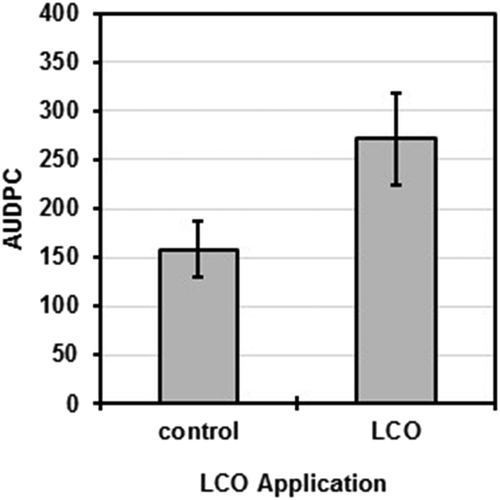
Lipo-chitooligosaccharides (LCOs) are signal molecules produced by plant root endosymbionts and have been identified, formulated, and marketed as growth-promoting adjuvants for soybean (Glycine max [L.] Merr.). Experiments were conducted under controlled environmental conditions to characterize the effects of foliar LCO applications on early symptom development of sudden death syndrome (SDS), caused by Fusarium virguliforme, and Sclerotinia stem rot (SSR), caused by Sclerotinia sclerotiorum. Treatment factors for the SDS experiment included two soybean cultivars (Sloan and CH2105R2), two inoculation levels (noninoculated control and inoculated), and two LCO applications (control and foliar LCO application), whereas two experimental soybean lines (91-38 and 91-44) and two LCO applications (water control and foliar LCO application) were used in the SSR experiment. The LCO application did not significantly influence SDS root symptom severity or early-season growth characteristics. However, on the susceptible line (P = 0.01) and with LCO application (P = 0.03), significantly larger SSR lesions developed compared with the nontreated control and resistant line. These results suggest foliar-applied LCOs have a limited effect on early root symptom development caused by F. virguliforme but increase stem symptom development caused by S. sclerotiorum.
|
|
Scooped by
Jean-Michel Ané
October 13, 2019 9:47 PM
|
Unlike most other land plants, legumes can fulfill their nitrogen needs through the establishment of symbioses with nitrogen-fixing soil bacteria (rhizobia). Through this symbiosis, fixed nitrogen is incorporated into the food chain. Because of this ecological relevance, the genetic mechanisms underlying the establishment of the legume–rhizobia symbiosis (LRS) have been extensively studied over the past decades. During this time, different types of regulators of this symbiosis have been discovered and characterized. A growing number of studies have demonstrated the participation of different types of small RNAs, including microRNAs, in the different stages of this symbiosis. The involvement of small RNAs also indicates that Argonaute (AGO) proteins participate in the regulation of the LRS. However, despite this obvious role, the relevance of AGO proteins in the LRS has been overlooked and understudied. Here, we discuss and hypothesize the likely participation of AGO proteins in the regulation of the different steps that enable the establishment of the LRS. We also briefly review and discuss whether rhizobial symbiosis induces DNA damages in the legume host. Understanding the different levels of LRS regulation could lead to the development of improved nitrogen fixation efficiency to enhance sustainable agriculture, thereby reducing dependence on inorganic fertilizers.
|
|
Scooped by
Jean-Michel Ané
October 13, 2019 9:38 PM
|
Genus Frankia is comprised primarily of nitrogen-fixing actinobacteria that form root nodule symbioses with a group of hosts known as the actinorhizal plants. These plants are evolutionarily closely related to the legumes that are nodulated by the rhizobia. Both host groups utilize homologs of nodulation genes for root-nodule symbiosis, derived from common plant ancestors. The corresponding endosymbionts, Frankia and the rhizobia, however, are distantly related groups of bacteria, leading to questions about their symbiotic mechanisms and evolutionary history. To date, a stable system of electrotransformation has been lacking in Frankia despite numerous attempts by research groups worldwide. We have identified type IV methyl-directed restriction systems, highly-expressed in a range of actinobacteria, as a likely barrier to Frankia transformation. Here we report the successful electrotransformation of the model strain F. alni ACN14a with an unmethylated, broad host-range replicating plasmid, expressing chloramphenicol-resistance for selection and GFP as a marker of gene expression. This system circumvented the type IV restriction barrier and allowed the stable maintenance of the plasmid. During nitrogen limitation, Frankia differentiates into two cell types: the vegetative hyphae and nitrogen-fixing vesicles. When the expression of egfp under the control of the nif gene cluster promoter was localized using fluorescence imaging, the expression of nitrogen fixation in nitrogen-limited culture was localized in Frankia vesicles but not in hyphae. The ability to separate gene expression patterns between Frankia hyphae and vesicles will enable deeper comparisons of molecular signaling and metabolic exchange between Frankia-actinorhizal and rhizobia-legume symbioses to be made, and may broaden potential applications in agriculture. Further downstream applications are possible, including gene knock-outs and complementation, to open up a range of experiments in Frankia and its symbioses. Additionally, in the transcriptome of F. alni ACN14a, type IV restriction enzymes were highly expressed in nitrogen-replete culture but their expression strongly decreased during symbiosis. The down-regulation of type IV restriction enzymes in symbiosis suggests that horizontal gene transfer may occur more frequently inside the nodule, with possible new implications for the evolution of Frankia.
|
|
Scooped by
Jean-Michel Ané
October 13, 2019 3:47 PM
|
Rhizobia and legume plants are famous mutualistic symbiosis partners who provide nitrogen nutrition to the natural environment. Rhizobial type III secretion systems (T3SSs) deliver effectors that manipulate the metabolism of eukaryotic host cells. Mesorhizobium amorphae CCNWGS0123 (GS0123) contains two T3SS gene clusters, T3SS-I and T3SS-II. T3SS-I contains all the basal components for an integrated T3SS, and the expression of T3SS-I genes is up-regulated in the presence of flavonoids. In contrast, T3SS-II lacks the primary extracellular elements of T3SSs, and the expression of T3SS-II genes is down-regulated in the presence of flavonoids. Inoculation tests on Robinia pseudoacacia displayed considerable differences in gene expression patterns and levels among roots inoculated with GS0123 and T3SS-deficient mutant (GS0123ΔrhcN1 (GS0123ΔT1), GS0123ΔrhcN2 (GS0123ΔT2) and GS0123ΔrhcN1ΔrhcN2 (GS0123ΔS)). Compared with the GS0123-inoculated plants, GS0123ΔT1-inoculated roots formed very few infection threads and effective nodules, while GS0123ΔT2-inoculated roots formed a little fewer infection threads and effective nodules with increased numbers of bacteroids enclosed in one symbiosome. Moreover, almost no infection threads or effective nodules were observed in GS0123ΔS-inoculated roots. In addition to evaluations of plant immunity signals, we observed that the coexistence of T3SS-I and T3SS-II promoted infection by suppressing host defense response in the reactive oxygen species defense response pathway. Future studies should focus on identifying rhizobial T3SS effectors and their host target proteins.
|
|
Scooped by
Jean-Michel Ané
October 8, 2019 11:40 PM
|
Little is known about the microbiota that form symbioses with wetland plants. We describe how endophytes from leaves and roots of baldcypress trees changed along a nutrient gradient and differed in wastewater treated versus untreated wetlands. Cultured bacterial and fungal endophytes were most abundant and diverse in baldcypress roots (compared to leaves) for both treated and untreated wetlands. Bacterial endophyte abundance increased with increasing distance from the wastewater outfall pipe, while fungal endophytes decreased with increasing distance from the wastewater outfall pipe—showing a greater abundance of fungi where nutrients were greatest. Bacterial endophyte abundance and species richness were greater in the wastewater-treatment compared to untreated wetlands, but diversity metrics suggested this was due to incomplete sampling at some sites. Community composition of endophytes in the treated wetland differed from some but not all of the communities observed in untreated wetlands. Since baldcypress is a key restoration species for declining swamps in the southeastern US, our descriptive work provides a foundation for future studies to understand the functional roles of plant-microbial interactions and community patterns.
|
|
Scooped by
Jean-Michel Ané
October 8, 2019 11:34 PM
|
Abiotic stresses hamper plant growth and productivity. Climate change and agricultural malpractices like excessive use of fertilizers and pesticides have aggravated the effects of abiotic stresses on crop productivity and degraded the ecosystem. There is an urgent need for environment-friendly management techniques such as the use of arbuscular mycorrhizal fungi (AMF) for enhancing crop productivity. AMF are commonly known as bio-fertilizers. Moreover, it is widely believed that the inoculation of AMF provides tolerance to host plants against various stressful situations like heat, salinity, drought, metals, and extreme temperatures. AMF may both assist host plants in the up-regulation of tolerance mechanisms and prevent the down-regulation of key metabolic pathways. AMF, being natural root symbionts, provide essential plant inorganic nutrients to host plants, thereby improving growth and yield under unstressed and stressed regimes. The role of AMF as a bio-fertilizer can potentially strengthen plants’ adaptability to changing environment. Thus, further research focusing on the AMF-mediated promotion of crop quality and productivity is needed. The present review provides a comprehensive up-to-date knowledge on AMF and their influence on host plants at various growth stages, their advantages and applications, and consequently the importance of the relationships of different plant nutrients with AMF.
|
|
Scooped by
Jean-Michel Ané
October 8, 2019 11:26 PM
|
Sugar transporters play a crucial role for plant productivity, as they coordinate sugar fluxes from source leaf towards sink organs (seed, fruit, root) and regulate the supply of carbon resources towards the microorganisms of the rhizosphere (bacteria and fungi). Thus, sugar fluxes mediated by SUT (sucrose transporters), MST (monosaccharide transporters) and SWEET (sugar will eventually be exported transporters) families are key determinants of crop yield and shape the microbial communities living in the soil. In this work, we performed a systematic search for sugar transporters in Fabaceae genomes, focusing on model and agronomical plants. Here, we update the inventory of sugar transporter families mining the latest version of the Medicago truncatula genome and identify for the first time SUT MST and SWEET families of the agricultural crop Pisum sativum. The sugar transporter families of these Fabaceae species comprise respectively 7 MtSUT 7 PsSUT, 72 MtMST 59 PsMST and 26 MtSWEET 22 PsSWEET. Our comprehensive phylogenetic analysis sets a milestone for the scientific community, as we propose a new and simple nomenclature to correctly name SUT MST and SWEET families. Then, we searched for transcriptomic data available for our gene repertoire. We show that several clusters of homologous genes are co-expressed in different organs, suggesting that orthologous sugar transporters may have a conserved function. We focused our analysis on gene candidates that may be involved in remobilizing resources during flowering, grain filling and in allocating carbon towards roots colonized by arbuscular mycorrhizal fungi and Rhizobia. Our findings open new perspectives for agroecological applications in legume crops, as for instance improving the yield and quality of seed productions and promoting the use of symbiotic microorganisms.
|
|
Scooped by
Jean-Michel Ané
October 8, 2019 11:18 PM
|
The soil microbiome governs biogeochemical cycling of macronutrients, micronutrients and other elements vital for the growth of plants and animal life. Understanding and predicting the impact of climate change on soil microbiomes and the ecosystem services they provide present a grand challenge and major opportunity as we direct our research efforts towards one of the most pressing problems facing our planet. In this Review, we explore the current state of knowledge about the impacts of climate change on soil microorganisms in different climate-sensitive soil ecosystems, as well as potential ways that soil microorganisms can be harnessed to help mitigate the negative consequences of climate change.
|
|
Scooped by
Jean-Michel Ané
October 8, 2019 11:15 PM
|
Plant growth response to Arbuscular Mycorrhizal (AM) fungi is variable and depends on genetic and environment factors that still remain largely unknown. Identification of these factors can be envisaged using high-throughput and accurate plant phenotyping.
We setup experimental conditions based on a two-compartment system allowing to measure Brachypodium distachyon mycorhizal growth response (MGR) in an automated phenotyping greenhouse. We developed a new image analysis software “IPSO Phen” to estimate of B. distachyon aboveground biomass.
We found a positive MGR in the B. distachyon Bd3-1 genotype inoculated with the AM fungi Rhizophagus irregularis only if nitrogen and phosphorus were added together in the compartment restricted to AM fungi. Using this condition, we found genetic diversity in B. distachyon for MGR ranging from positive to negative MGR depending on the plant genotype tested.
Our result on the interaction between nitrogen and phosphorus for MGR in B. distachyon opens new perspectives about AM functioning. In addition, our open-source software allowing to test and run image analysis parameters on large amount of images generated by automated plant phenotyping facilities, will help to screen large panels of genotypes and environmental conditions to identify the factors controlling the MGR.
|
|
Scooped by
Jean-Michel Ané
October 8, 2019 2:26 PM
|
The ability of symbiosis with Rhizobium bacteria is an extremely important trait of Lupinus luteus L. Its cultivation increases soil fertility and reduces the necessity of using chemical fertilizers, thus makes lupine an excellent proecological and agronomical species. Nevertheless, nodule functioning associated with nitrogen fixation can be strongly affected by soil drought. On the face of changing climatic conditions, the emphasis should be given to get the knowledge concerning the phytohormonal and molecular markers of early response on water deficit in soil. In this paper, we have shown that soil drought stress, by causing water loss in nodules and affecting their structure, evokes degradation of symbiosome and leads to hormonal and molecular changes. The stress factor modulated abscisic acid (ABA) and ethylene (ET) biosynthesis pathways. It was reflected by increased expression of LlZEP (ZEAXANTHIN EPOXIDASE) involved in ABA biosynthesis and strong accumulation of this phytohormone. At the same time, the mRNA of synthase (LlACS) and oxidase (LlACO) of 1-aminocyclopropane-1-carboxylic acid (ACC) were elevated, while ACC accumulated significantly. Moreover, drought stress negatively influenced the expression of LlBOP (BLADE-ON-PETIOLE) and LlLbI (LEGHEMOGLOBIN), previously pointed out as regulators of nodule functioning. Simultaneously the iron and nitrogen content drastically decreased in the stressed nodules. Presented novel information describing phytohormonal changes during drought stress directly in the nodules can help to elucidate the hormonal and molecular mechanisms that control plant response to water loss.
|
|
Scooped by
Jean-Michel Ané
October 7, 2019 11:35 PM
|
Legumes have a tremendous ecological and agronomic importance due to their ability to interact symbiotically with nitrogen-fixing rhizobia. In most of the rhizobial–legume symbioses, the establishment of the interaction requires the plant perception of the bacterial lipochitooligosaccharide Nod factor signal. However, some bradyrhizobia can activate the symbiosis differently, thanks to their type III secretion system, which delivers effector proteins into the host cell. Here, we demonstrate that this symbiotic process relies on a small set of effectors playing distinct and complementary roles. Most remarkably, a nuclear-targeted effector named ErnA conferred the ability to form nodules. The understanding of this alternative pathway toward nitrogen-fixing symbiosis could pave the way for designing new strategies to transfer nodulation into cereals.
|
|
Scooped by
Jean-Michel Ané
October 6, 2019 8:16 PM
|
The initiation of intracellular host cell colonization by symbiotic rhizobia in Medicago truncatula requires repolarization of root hairs, which includes the re-arrangement of cytoskeletal filaments. The molecular players governing microtubule (MT) re-organization during infection remain to be discovered. Here, we identified the M. truncatula DREPP protein and investigated its functions during rhizobial infections. We show that rhizobial colonization of drepp mutant roots as well as transgenic roots over-expressing DREPP is impaired. DREPP re-localizes into symbiosis-specific membrane nanodomains in a stimulus-dependent manner. This subcellular segregation coincides with DREPP-dependent MT fragmentation and a partial loss of the ability to re-organize the MT cytoskeleton in response to rhizobia, which might relay on an interaction between DREPP and MT organizing protein SPIRAL2 (SPR2). Taken together, our results reveal that establishment of symbiotic associations in M. truncatula require DREPP in order to regulate MT reorganization during initial root hair responses to rhizobia.
|










Nice work!