Your new post is loading...

|
Scooped by
Jean-Michel Ané
November 7, 2019 4:31 PM
|
The extensive use of nitrogen (N) fertilizers implicates a paradox: while fertilizers ensure the supply of a large amount of food, they cause negative environmental externalities, including reduced biodiversity, and eutrophic streams and lakes. Moreover, such fertilizers may also result in a major public health hazard: increased antibiotic resistance. This article discusses the critical implications of perturbations in N cycle caused by excessive use of fertilizers and resulting policy implications as they relate to ecosystem services. While there are solutions such as cover crops, these solutions are expensive and inconvenient for farmers. We advocate the use of biological fixation (BF) for staple crops—microbiome mediated natural supply of fixed N. This would involve engineering a microbiome that can be grown cheaply and at industrial scale. Fertilizers resulting from such innovation are termed as “biofertilizers” in this article. Following a qualitative cost-benefit analysis broken down by key stakeholders and a quick exploration of policy frameworks as they relate to the advancement of biofertilizers, we propose a practical pathway of where and how research investments should be directed to make such a solution feasible. We make five policy recommendations for decision-makers to facilitate a successful trajectory for this solution: 1) Future agricultural science should seek to understand how BF might be employed as a practical and efficient strategy. This effort would require that industry and the government partner to establish a pre-competitive research laboratory equipped with the latest state-of-the-art technologies that conduct metagenomic experiments to reveal signature microbiomes and form novel symbiotic connections. 2) To have a smooth ride in the market, ag-bio companies should: i) create awareness among farmers; ii) impart skills to farmers in testing and using biofertilizers, and iii) conduct extensive field tests and more research in studying the scalability potential of such fertilizers. 3) The United States Department of Agriculture (USDA) and state governments should provide research and development (R&D) tax credits to biotech companies specifically geared towards R&D investments aimed at increasing the viability of BF and microbiome engineering. 4) To control agricultural pollution in the biosphere, federal governments should consider passing a Clean Agriculture Act (CAA), including a specific clause that regulate the use of chemical fertilizers. 5) Governments and the UN Food and Agriculture Organization (FAO) should coordinate Biological Advanced Research in Agriculture (BARA)—a global agricultural innovation initiative for investments and research in biological fixation and ethical, legal, and social implications of such innovation. While biological fixation will be central in BARA, we envision it to conduct research around other agricultural innovations as well, such as increasing photosynthetic efficiency.
|
|
Scooped by
Jean-Michel Ané
November 7, 2019 4:27 PM
|
Background
Reactive oxygen species (ROS) are generated by NADPH oxidases known as respiratory burst oxidase homologs (RBOHs) in plants. ROS regulate various cellular processes, including the mutualistic interactions between legumes and nitrogen-fixing bacteria or arbuscular mycorrhizal (AM) fungi. Rboh is a multigene family comprising nine members (RbohA–I) in common bean (Phaseolus vulgaris). The RNA interference-mediated silencing of RbohB (PvRbohB-RNAi) in this species diminished its ROS production and greatly impaired nodulation. By contrast, the PvRbohB-RNAi transgenic roots showed early hyphal root colonization with enlarged fungal hypopodia; therefore, we proposed that PvRbohB positively regulates rhizobial infection (Rhizobium tropici) and inhibits AM colonization by Rhizophagus irregularis in P. vulgaris.
Results
To corroborate this hypothesis, an RNA-Seq transcriptomic analysis was performed to identify the differentially expressed genes in the PvRbohB-RNAi roots inoculated with Rhizobium tropici or Rhizophagus irregularis. We found that, in the early stages, root nodule symbioses generated larger changes of the transcriptome than did AM symbioses in P. vulgaris. Genes related to ROS homeostasis and cell wall flexibility were markedly upregulated in the early stages of rhizobial colonization, but not during AM colonization. Compared with AM colonization, the rhizobia induced the expression of a greater number of genes encoding enzymes involved in the metabolism of auxins, cytokinins, and ethylene, which were typically repressed in the PvRbohB-RNAi roots.
Conclusions
Our research provides substantial insights into the genetic interaction networks in the early stages of rhizobia and AM symbioses with P. vulgaris, as well as the differential roles that RbohB plays in processes related to ROS scavenging, cell wall remodeling, and phytohormone homeostasis during nodulation and mycorrhization in this legume.
|
|
Scooped by
Jean-Michel Ané
November 7, 2019 4:26 PM
|
Rhizobia are nitrogen-fixing symbionts of plants. Their genomes frequently contain large plasmids, some of which are able to perform conjugative transfer. Plasmid pSfr64a from Sinorhizobium fredii GR64 is a conjugative plasmid, whose transfer is regulated by quorum sensing genes encoded by itself (traR64a, traI64a), in the symbiotic plasmid pSfr64b (traR64b, traI64b), and in the chromosome (ngrI). Also, transfer of pSfr64b requires quorum sensing elements encoded in this plasmid (traR64b, traI64b), in pSfr64a (traR64a), and in the chromosome (ngrI). These results demonstrate that pSfr64a and the symbiotic plasmid depend on each other for conjugative transfer. Plasmid pSfr64a from S. fredii GR64 is unable to transfer from the genomic background of Rhizobium etli CFN42. Our results show that the relaxase of pRet42a is able to process the oriT of pSfr64a, and viceversa, underlining their functional similarity and suggesting that in addition to the external signals, the “cytoplasmic environment” may pose a barrier to plasmid dissemination, even if the plasmids are functional in other aspects.
|
|
Scooped by
Jean-Michel Ané
November 7, 2019 1:34 PM
|
My curiosity for plants started when I was a Bachelor's student at the University of Nancy, France. I was fascinated by the ability of plants to produce their own energy through the process of photosynthesis and I realized the extent to which these organisms are critical for ecosystem functioning. I was particularly intrigued by the sophisticated mechanisms these sessile organisms have evolved to adapt to their environments and to rapidly respond to external stimuli in order to maximize survival. My first exposure to research was at the tree–microbe interactions laboratory at the Institut National de la Recherche Agronomique (INRA) Nancy (France) under the supervision of Valérie Legué. Scrutinizing morphological and molecular changes in tree roots during the establishment of the ectomycorrhizal symbiosis whetted my appetite for studying plant‐associated microbes. I am deeply grateful to Valérie for giving me this fantastic opportunity that has definitively shaped my future scientific career.
|
|
Scooped by
Jean-Michel Ané
November 7, 2019 1:27 PM
|
The complete symbiosis island (SI) of Bradyrhizobium paxllaeri LMTR 21T, a mutualistic symbiont of the legume Phaseolus lunatus, was identified and analyzed. The SI was 646 kb in size, had lower G+C content than the genome average, and encoded not only nodulation and nitrogen fixation functions but also those for hydrogen uptake, vitamin and phytohormone biosynthesis, molybdenum transport, nonribosomal peptide synthesis, and type III secretion. Additionally, two divergent nodA genes were encoded in the SI.
|
|
Scooped by
Jean-Michel Ané
November 7, 2019 1:17 PM
|
The current trajectory for crop yields is insufficient to nourish the world’s population by 20501. Greater and more consistent crop production must be achieved against a backdrop of climatic stress that limits yields, owing to shifts in pests and pathogens, precipitation, heat-waves and other weather extremes. Here we consider the potential of plant sciences to address post-Green Revolution challenges in agriculture and explore emerging strategies for enhancing sustainable crop production and resilience in a changing climate. Accelerated crop improvement must leverage naturally evolved traits and transformative engineering driven by mechanistic understanding, to yield the resilient production systems that are needed to ensure future harvests.
|
|
Scooped by
Jean-Michel Ané
November 7, 2019 1:14 PM
|
The composition of complex microbial communities found in association with plants is influenced in part by host genotype. Yet, the salient genetic architecture is often unknown. Genome duplication events are common in the evolutionary history of plants, influence many important diverse plant traits, and may affect associated microbial communities. Using genotypes with experimentally induced whole genome duplication (WGD), we tested the effect of WGD on rhizosphere bacterial communities in Arabidopsis thaliana. Specifically, we performed 16s rRNA amplicon sequencing to characterize differences between microbiomes associated with specific host genotypes (Columbia vs. Landsberg) and ploidy levels (diploid vs. tetraploid). We modeled abundances of individual bacterial taxa by utilizing a hierarchical Bayesian framework, based on the Dirichlet and multinomial distributions. We found that host genotype and host ploidy level affected rhizosphere community composition. Further, the microbiome of the tetraploid Columbia genotype differed from that of other host genotypes. We then tested to what extent microbiomes derived from a given host genotype or ploidy level affected plant performance by inoculating sterile seedlings of each genotype with microbial communities harvested from a prior generation, using a full factorial design. We found a negative effect of the tetraploid Columbia microbiome on growth of all four plant genotypes. The findings suggest that while both host genotype and ploidy affect microbial community assembly, bacterial communities found in association with only some host genotypes may affect growth of subsequent plant generations.
|
|
Scooped by
Jean-Michel Ané
November 7, 2019 1:11 PM
|
Symbiosis biology is curretly focuses on revealing the mechanisms behind efficient symbiosis between plants and fungi in the form of arbuscular mycorrhiza (AM). AM is the most common rhizosphere symbiosis formed between plants (>92% of families) and fungi of the Glomeromycotina subdivision of the Mucoromycota subphylum [1]. AM is distributed from alpine meadows to tundra and deserts, achieving the most diverse communities in the taiga zone [2, 3]. AM has also been used actively to create artificial agrosystems. However, the successful development of biological farming is impossible without understanding the mechanisms of formation and development of effective plant–microbe interactions within agroecosystems.
AM fungus may have enabled plants’ occupation of land ecosystems almost 0.5 billion years ago, which played a key role in forming the contemporary biosphere [4]. Under the conditions of symbiosis, the fungus receives carbohydrates and fatty acids from the plant. These fatty acids constitute up to 70% of the total volume of metabolites received [5, 6], whereas the host plant receives phosphorus, water, and a number of macro- and microelements from the AM fungus [3]. Thus, the effectiveness of AM symbiosis probably depends largely on transport processes’ intensity. The transport of metabolites from plants to mycosymbionts, which are not able to feed themselves autotrophically since they have limited ability to synthesize the necessary organic substances, is very important. This is why they are considered plant symbionts [3]. In the case of carbohydrate metabolism violations and/or transport of its products to mycosymbiont, the plant–microbial interaction can change; specifically, it can shift from a mutualistic relationship to a parasitic one [3, 7, 8]. Revealing the genes encoding the enzymes involved in regulating carbohydrate metabolic intensity, as well as the transporters of host plant metabolites to AM, should contribute to a deeper understanding of the formation and development of effective AM symbiosis. This review presents the latest data on carbohydrate exchange and the transport of metabolites within plants without AM fungi and upon their inoculation.
|
|
Scooped by
Jean-Michel Ané
November 5, 2019 3:49 PM
|
Background
Burkholderia cenocepacia is a human opportunistic pathogen causing devastating symptoms in patients suffering from immunodeficiency and cystic fibrosis. Out of the 303 B. cenocepacia strains with available genomes, the large majority were isolated from a clinical context. However, several isolates originate from other environmental sources ranging from aerosols to plant endosphere. Plants can represent reservoirs for human infections as some pathogens can survive and sometimes proliferate in the rhizosphere. We therefore investigated if B. cenocepacia had the same potential.
Results
We selected genome sequences from 31 different strains, representative of the diversity of ecological niches of B. cenocepacia, and conducted comparative genomic analyses in the aim of finding specific niche or host-related genetic determinants. Phylogenetic analyses and whole genome average nucleotide identity suggest that strains, registered as B. cenocepacia, belong to at least two different species. Core-genome analyses show that the clade enriched in environmental isolates lacks multiple key virulence factors, which are conserved in the sister clade where most clinical isolates fall, including the highly virulent ET12 lineage. Similarly, several plant associated genes display an opposite distribution between the two clades. Finally, we suggest that B. cenocepacia underwent a host jump from plants/environment to animals, as supported by the phylogenetic analysis. We eventually propose a name for the new species that lacks several genetic traits involved in human virulence.
Conclusion
Regardless of the method used, our studies resulted in a disunited perspective of the B. cenocepacia species. Strains currently affiliated to this taxon belong to at least two distinct species, one having lost several determining animal virulence factors.
|
|
Scooped by
Jean-Michel Ané
November 3, 2019 12:27 PM
|
Some soils show a remarkable ability to suppress disease caused by plant pathogens, an ability that is attributed to plant-associated microbiota. Carrión et al. investigated the role of endophytes, the intimate microbial community found within roots, in fungal disease suppression (see the Perspective by Tringe). The wilt fungus Rhizoctonia solani infects sugar beets, whereupon transcriptional analysis shows that several bacterial endophyte species activate biosynthetic gene clusters to cause disease suppression. These organisms produce antifungal effectors, including enzymes that can digest fungal cell walls, and secondary metabolites, including phenazines, polyketides, and siderophores, which may contribute to the antifungal phenotype.
|
|
Scooped by
Jean-Michel Ané
November 3, 2019 12:08 PM
|
Model plant species are valuable not only because they lead to discoveries in basic biology, but also because they provide resources that facilitate translational biology to improve crops of economic importance. Plant scientists are drawn to models because of their ease of manipulation, simple genome organization, rapid life cycles, and the availability of multiple genetic and genomic tools. This reference provides comprehensive coverage of the Model Legume Medicago truncatula. It features review chapters as well as research chapters describing experiments carried out by the authors with clear materials and methods. Most of the chapters utilize advanced molecular techniques and biochemical analyses to approach a variety of aspects of the Model.
The Model Legume Medicago truncatula starts with an examination of M. truncatula plant development; biosynthesis of natural products; stress and M. truncatula; and the M. truncatula-Sinorhizobium meliloti symbiosis. Symbiosis of Medicago truncatula with arbuscular mycorrhiza comes next, followed by chapters on the common symbiotic signaling pathway (CSSP or SYM) and infection events in the Rhizobium-legume symbiosis. Other sections look at hormones and the rhizobial and mycorrhizal symbioses; autoregulation of nodule numbers (AON) in M. truncatula; Medicago truncatula databases and computer programs; and more.
Contains reviews, original research chapters, and methods
Covers most aspects of the M. truncatula Model System, including basic biology, biochemistry, genetics, and genomics of this system
Offers molecular techniques and advanced biochemical analyses for approaching a variety of aspects of the Model Legume Medicago truncatula
Includes introductions by the editor to each section, presenting the summary of selected chapters in the section
Features an extensive index, to facilitate the search for key terms
The Model Legume Medicago truncatula is an excellent book for researchers and upper level graduate students in microbial ecology, environmental microbiology, plant genetics and biochemistry. It will also benefit legume biologists, plant molecular biologists, agrobiologists, plant breeders, bioinformaticians, and evolutionary biologists.
|
|
Scooped by
Jean-Michel Ané
November 1, 2019 5:36 PM
|
Auxin plays central roles in rhizobial infection and nodule development in legumes. However, the sources of auxin during nodulation are unknown. In this study, we analyzed the YUCCA (YUC) gene family of soybean and identified GmYUC2a as an important regulator of auxin biosynthesis that modulates nodulation. Following rhizobial infection, GmYUC2a exhibited increased expression in various nodule tissues. Overexpression of GmYUC2a (35S::GmYUC2a) increased auxin production in soybean, resulting in severe growth defects in root hairs and root development. Upon rhizobial infection, 35S::GmYUC2a hairy roots displayed altered patterns of root hair deformation and nodule formation. Root hair deformation occurred mainly on primary roots, and nodules formed exclusively on primary roots of 35S::GmYUC2a plants. Moreover, transgenic 35S::GmYUC2a composite plants showed delayed nodule development and a reduced number of nodules. Our results suggest that GmYUC2a plays an important role in regulating both root growth and nodulation by modulating auxin balance in soybean.
|
|
Scooped by
Jean-Michel Ané
November 1, 2019 5:21 PM
|
Microorganisms have cornered the market on metabolic diversity, innovation, and flexibility. Macroorganisms, though sometimes nice to look at, are comparatively dull from a metabolic point of view. But macroorganisms can be clever in their own ways. For example, many plants and animals have developed symbioses with microbes that exploit their vast metabolic potentials. The microbes in these associations can transform recalcitrant sources of energy into host-usable forms, concentrate limiting nutrients that hosts cannot access, produce protective compounds for their hosts, or even synthesize essential nutrients that macroorganisms are unable to make on their own [1]. One archetypal and ecologically vital symbiosis is the relationship formed between arbuscular mycorrhizal (AM) fungi and the roots of more than 70% of all vascular plants [2] (Figure 1). This symbiosis is often described as a mutualism, one in which plants deliver carbon to the fungi in exchange for nutrients — in particular phosphorus — and other services, including pathogen protection and drought tolerance [3]. In reality, however, the AM symbiosis seems to function along a continuum from parasitism to mutualism [4], and when interactions have been carefully examined they tend to resemble ruthless free markets more than groovy hippie hangouts. In this issue of Current Biology, Whiteside and colleagues [5] describe a clever, fluorescent-phosphorus labeling technique that allowed them to visualize phosphorus delivery from AM fungi to plants on microscopic scales. Using this technique, they discovered a novel fungal strategy that appears to increase resource delivery to plants while optimizing trade conditions for the fungal partner.
|
|
|
Scooped by
Jean-Michel Ané
November 7, 2019 4:29 PM
|
Polyamines (PAs) are hormonal compounds and growth regulators, with low molecular weight, aliphatic nature, and polycationic character at physiological pH, present in different types of organisms and particularly in plants, where they are involved in the regulation of various physiological processes related to growth and development as well as in responses to abiotic and biotic stresses. One of the strategies of plants to cope with salt stress is the accumulation of PAs since they have the capacity to stabilize macromolecules such as DNA, RNA, proteins and phospholipids, as well as free radical scavenging activity. Alterations of PAs metabolism constitute a strategy to increment salinity tolerance in plants, not only by the direct implication of PAs but also by the link between PAs and the synthesis of proline and γ-aminobutiric acid (GABA), key osmoprotectants in salt stress responses. Legumes have the capacity to establish symbiotic interactions with soil nitrogen-fixing bacteria known as rhizobia that provide this nutrient to the plant. The symbiosis induces the formation of root nodules where the nitrogen fixation occurs; however, this process is extremely sensitive to salinity. Polyamines metabolism has an active role in the legume-rhizobia symbiosis, and in addition, PAs metabolism in root nodules of legumes is the result of the plant and rhizobia interaction with nodule-specific PAs involved in mechanisms of tolerance to salinity in the symbiosis. Therefore, the gain of knowledge in the alterations of the metabolism of PAs in the legume-rhizobia symbiosis and its interaction with other molecules involved in salt stress tolerance is of great interest to improve the ability to fix atmospheric nitrogen of legumes under salinity.
|
|
Scooped by
Jean-Michel Ané
November 7, 2019 4:26 PM
|
Bacterial surface molecules have an important role in the rhizobia-legume symbiosis. Ensifer meliloti (previously, Sinorhizobium meliloti), a symbiotic Gram-negative rhizobacterium, produces two different exopolysaccharides (EPSs), termed EPS I (succinoglycan) and EPS II (galactoglucan), with different functions in the symbiotic process. Accordingly, we undertook a study comparing the potential differences in alfalfa nodulation by E. meliloti strains with differences in their EPSs production. Strains recommended for inoculation as well as laboratory strains and native strains isolated from alfalfa fields were investigated. This study concentrated on EPS-II production, which results in mucoid colonies that are dependent on the presence of an intact expR gene. The results revealed that although the studied strains exhibited different phenotypes, the differences did not affect alfalfa nodulation itself. However, subtle changes in timing and efficacy to the effects of inoculation with the different strains may result because of other as-yet unknown factors. Thus, additional research is needed to determine the most effective inoculant strains and the best conditions for improving alfalfa production under agricultural conditions.
|
|
Scooped by
Jean-Michel Ané
November 7, 2019 1:41 PM
|
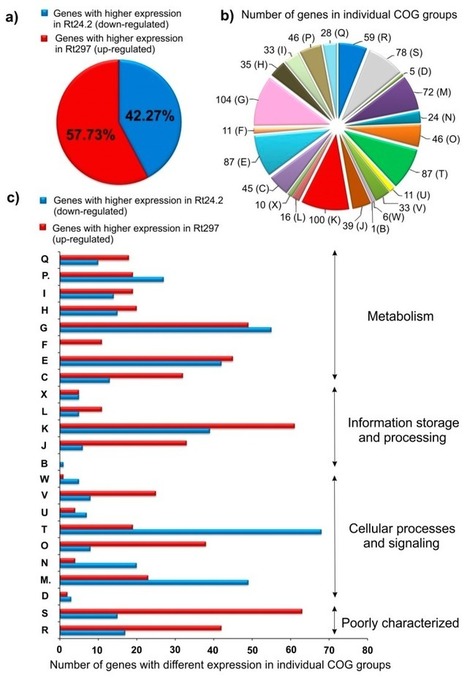
Rhizobium leguminosarum bv. trifolii is a soil bacterium capable of establishing symbiotic associations with clover plants (Trifolium spp.). Surface polysaccharides, transport systems, and extracellular components synthesized by this bacterium are required for both the adaptation to changing environmental conditions and successful infection of host plant roots. The pssZ gene located in the Pss-I region, which is involved in the synthesis of extracellular polysaccharide, encodes a protein belonging to the group of serine/threonine protein phosphatases. In this study, a comparative transcriptomic analysis of R. leguminosarum bv. trifolii wild-type strain Rt24.2 and its derivative Rt297 carrying a pssZ mutation was performed. RNA-Seq data identified a large number of genes differentially expressed in these two backgrounds. Transcriptome profiling of the pssZ mutant revealed a role of the PssZ protein in several cellular processes, including cell signalling, transcription regulation, synthesis of cell-surface polysaccharides and components, and bacterial metabolism. In addition, we show that inactivation of pssZ affects the rhizobial ability to grow in the presence of different sugars and at various temperatures, as well as the production of different surface polysaccharides. In conclusion, our results identified a set of genes whose expression was affected by PssZ and confirmed the important role of this protein in the rhizobial regulatory network.
|
|
Scooped by
Jean-Michel Ané
November 7, 2019 1:29 PM
|
The regulation of reactive oxygen species (ROS) generation and ROS scavenging is essential to understand the redox balance state under heavy metal stress. In order to figure out the effect of arbuscular mycorrhizal (AM) fungus on ROS generation and ROS scavenging ability under Pb stress, the ROS content, NADPH oxidase activity, the expression levels of MtRbohs, and the antioxidant response were evaluated in AM roots under Pb stress. AM inoculation decreased the malondialdehyde content by 18%–38% and decreased the O2− production rate by 20%–38% compared with non-mycorrhizal (NM) roots. The water-soluble Pb complex content was decreased by AM inoculation. Without Pb stress, the H2O2 content and NADPH oxidase activity in roots were increased by AM inoculation by 4-fold and 1-fold, respectively. Pb stress decreased H2O2 content by 12%–39% and decreased NADPH oxidase activity by 14%–43% in AM roots. When exposed to Pb stress, MtRbohC-G were down-regulated in AM roots, but MtRbohA-G were up-regulated in NM roots. AM inoculation increased the glutathione content in roots by 2-fold, 2-fold, and 3-fold under 0, 500, and 1000 mg kg−1 Pb treatment, respectively. The antioxidant enzyme activity was increased 43%–322% by AM inoculation under 1000 mg kg−1 Pb treatment. These results reveal that AM inoculation might maintain ROS homeostasis by decreasing Pb induced ROS, by decreasing the NADPH oxidase-mediated H2O2 generation, and by increasing the antioxidant response under Pb stress.
|
|
Scooped by
Jean-Michel Ané
November 7, 2019 1:20 PM
|
Inhabiting the interface between plant roots and soil, mycorrhizal fungi play a unique but underappreciated role in soil organic matter (SOM) dynamics. Their hyphae provide an efficient mechanism for distributing plant carbon throughout the soil, facilitating its deposition into soil pores and onto mineral surfaces, where it can be protected from microbial attack. Mycorrhizal exudates and dead tissues contribute to the microbial necromass pool now known to play a dominant role in SOM formation and stabilization. While mycorrhizal fungi lack the genetic capacity to act as saprotrophs, they use several strategies to access nutrients locked in SOM and thereby promote its decay, including direct enzymatic breakdown, oxidation via Fenton chemistry, and stimulation of heterotrophic microorganisms through carbon provision to the rhizosphere. An additional mechanism, competition with free-living saprotrophs, potentially suppresses SOM decomposition, leading to its accumulation. How these various nutrient acquisition strategies differentially influence SOM formation, stabilization, and loss is an area of critical research need.
|
|
Scooped by
Jean-Michel Ané
November 7, 2019 1:14 PM
|
Drought is a limiting factor for crop plant production, especially in arid and semi-arid climates. In this study, sorghum (Sorghum bicolor) was inoculated with two arbuscular mycorrhizal fungi, either the standard Rhizophagus irregularis or the desert-adapted Rhizophagus arabicus, and grown in experimental microcosms under well-watered or drought conditions. We investigated gene expression of selected major intrinsic proteins (MIPs) of sorghum in these mycorrhizal plants in comparison to non-inoculated, well-watered controls. Colonization with R. irregularis resulted in the induction of the MIPs SbPIP2.2 and SbPIP2.5, regardless of whether sorghum plants were well watered or not. Root colonization with R. arabicus, however, caused an exclusive, strong reduction in the transcript levels of three MIP genes (SbTIP2.1, SbNIP1.2, SbNIP2.2) under drought conditions. . We also studied water transport properties of mycorrhiza-regulated MIPs. One particular MIP, SbPIP2.8, was found to mediate particularly high water permeability. Expression of this gene was strongly repressed upon drought, irrespectively on whether plants were mycorrhized or not.
|
|
Scooped by
Jean-Michel Ané
November 7, 2019 1:11 PM
|
Ectomycorrhizal (ECM) fungi are important root symbionts of trees, as they can have significant effects on the nutrient status of plants. In polluted environments, particular ECM fungi can protect their host tree from Zn toxicity by restricting the transfer of Zn while securing supply of essential nutrients. However, mechanisms and regulation of cellular Zn homeostasis in ECM fungi are largely unknown, and it remains unclear how ECM fungi affect the Zn status of their host plants. This study focuses on the characterization of a ZIP (Zrt/IrtT-like protein) transporter, SlZRT2, in the ECM fungus Suillus luteus, a common root symbiont of young pine trees. SlZRT2 is predicted to encode a plasma membrane-located Zn importer. Heterologous expression of SlZRT2 in yeast mutants with impaired Zn uptake resulted in a minor impact on cellular Zn accumulation and growth. The SlZRT2 gene product showed a dual localization and was detected at the plasma membrane and perinuclear region. S. luteus ZIP-family Zn uptake transporters did not show the potential to induce trehalase activity in yeast and to function as Zn sensors. In response to excess environmental Zn, gene expression analysis demonstrated a rapid but minor and transient decrease in SlZRT2 transcript level. In ECM root tips, the gene is upregulated. Whether this regulation is due to limited Zn availability at the fungal–plant interface or to developmental processes is unclear. Altogether, our results suggest a function for SlZRT2 in cellular Zn redistribution from the ER next to a putative role in Zn uptake in S. luteus.
|
|
Scooped by
Jean-Michel Ané
November 6, 2019 9:45 PM
|
Plants associate with beneficial arbuscular mycorrhizal fungi facilitating nutrient acquisition. Arbuscular mycorrhizal fungi produce chitooligosaccharides (COs) and lipo-chitooligosaccharides (LCOs), that promote symbiosis signalling with resultant oscillations in nuclear-associated calcium. The activation of symbiosis signalling must be balanced with activation of immunity signalling, which in fungal interactions is promoted by COs resulting from the chitinaceous fungal cell wall. Here we demonstrate that COs ranging from CO4-CO8 can induce symbiosis signalling in Medicago truncatula. CO perception is a function of the receptor-like kinases MtCERK1 and LYR4, that activate both immunity and symbiosis signalling. A combination of LCOs and COs act synergistically to enhance symbiosis signalling and suppress immunity signalling and receptors involved in both CO and LCO perception are necessary for mycorrhizal establishment. We conclude that LCOs, when present in a mix with COs, drive a symbiotic outcome and this mix of signals is essential for arbuscular mycorrhizal establishment.
|
|
Scooped by
Jean-Michel Ané
November 5, 2019 2:37 PM
|
Premise
Most plants interact with mycorrhizal fungi and animal pollinators simultaneously. Yet, whether mycorrhizae affect traits important to pollination remains poorly understood and may depend on the match between host and fungal genotypes. Here, we examined how ericoid mycorrhizal fungi affected flowering phenology, floral traits, and reproductive success, among eight genotypes of highbush blueberry, Vaccinium corymbosum (Ericaceae). We asked three overarching questions: (1) Do genotypes differ in response to inoculation? (2) How does inoculation affect floral and flowering traits? (3) Are inoculated plants more attractive to pollinators and less pollen limited than non‐inoculated plants of the same genotype?
Methods
To examine these questions, we experimentally inoculated plants with ericoid mycorrhizal fungi, grew the plants in the field, and measured flowering and floral traits over 2 years. In year 2, we conducted a hand‐pollination experiment to test whether plants differed in pollen limitation.
Results
Inoculated plants had significantly higher levels of colonization for some genotypes, and there were significant floral trait changes in inoculated plants for some genotypes as well. On average, inoculated plants produced significantly larger floral displays, more fruits per inflorescence, and heavier fruits with lower sugar content, than non‐inoculated, control plants. Hand pollination enhanced the production of fruits, and fruit mass, for non‐inoculated plants but not for those that were inoculated.
Conclusions
Our results demonstrate that inoculation with ericoid mycorrhizal fungi enhanced flowering and altered investment in reproduction in genotype‐specific ways. These findings underscore the importance of examining belowground symbionts and genotype‐specific responses in their hosts to fully understand the drivers of aboveground interactions.
|
|
Scooped by
Jean-Michel Ané
November 3, 2019 12:20 PM
|
Aeschynomene indica is a semiaquatic legume that forms both stem and root nodules with rhizobia. Some A. indica rhizobia (AIRs) have been reported to nodulate the host using a Nod factor-independent pathway and possess photosynthetic abilities. To investigate the diversity and community structure of AIRs in China, a total of 300 rhizobial isolates were acquired from the root and stem nodules of A. indica grown at 4 sites in Shandong Peninsula, China. Nineteen representative strains were selected according to their recA phylogeny. With further classification in comparison with reference strains, 10 Bradyrhizobium genospecies were defined based on the 16S rRNA gene phylogeny and multilocus sequence analysis (MLSA) of housekeeping genes (HKGs) recA, atpD, glnII, dnaK, gyrB, and rpoB. In addition, 6 genospecies were found only in China. No nodulation gene (nodA, nodB, nodC, or nodZ) was detected in the AIRs isolates by PCR amplification and Southern blotting. Phylogenetic analysis of nifH and the photosynthesis-related gene pufLM revealed their common origins. All representative strains formed root nodules, but only 9 representative strains for 4 genospecies formed stem nodules on A. indica, indicating that the stem nodulation process of A. indica is limited to some strains. The nucleotide diversity and recombination events of the HKGs, as well as nifH and pufLM genes, showed that mutation contributes more than recombination in evolution. The distribution of dominant AIR genospecies was mainly affected by available nitrogen, organic carbon, total nitrogen, and pH. Our study helps to characterize the diversity and evolution of AIRs.
|
|
Scooped by
Jean-Michel Ané
November 3, 2019 12:03 PM
|
Arbuscular mycorrhizal fungi have been used as bio-fertilizers in agriculture and horticulture for more than 30 years, yet the efficacy of such products in agro-systems has not been well established. Although they have the potential to provide a variety of benefits to their plant hosts, the lack of knowledge of their ecology and functional traits among and within species along with the unknown effects of continuous in vitro cultivation on AM fungal functionality, makes it difficult to predict inoculation outcomes. The ability to track commercial AM fungi in the field after inoculation has limited the ability to evaluate their utility thus far. Recent developments in molecular biology makes it possible to track single fungal genotypes in the field. These tools will help improve the success of AM fungal products by evaluating conditions that increase their establishment and persistence. The objectives of this thesis are to determine whether (1) commercial AM fungal inoculants can effectively establish and persist under different agricultural conditions, (2) there is an environmental risk following inoculation with commercial AM fungi, (3) in vitro cultivation affects the efficacy of AM fungal inoculants by altering life history traits and functionality of AM fungi. Establishment and persistence of a commercial fungal inoculant was site specific since none of the manipulated practices contributed to the establishment and abundance of the inoculant in roots. When I grew two isolates of Rhizoglomus irregulare with crop and wild plants, I found that wild plants are more sensitive to differences in mutualistic quality among fungal isolates and all plants associating with the commercial fungus had lower leaf P. Finally, I found that In vitro cultivation leads to increased germination rates, increased fungal spore production but reduced plant shoot phosphorus benefit. We need to re-consider the way AM fungal inoculants are mass produced but we also need to re-evaluate the field inoculation practices using fungal inoculants. Not only via continuous in vitro cultivation we are choosing for traits that are not beneficial to the symbiosis, introducing alien isolates during field inoculation with commercial products can also be detrimental for natural plant communities beyond the agricultural fields.
|
|
Scooped by
Jean-Michel Ané
November 1, 2019 5:25 PM
|
In the Anthropocene, in which we now live, climate change is impacting most life on Earth. Microorganisms support the existence of all higher trophic life forms. To understand how humans and other life forms on Earth (including those we are yet to discover) can withstand anthropogenic climate change, it is vital to incorporate knowledge of the microbial ‘unseen majority’. We must learn not just how microorganisms affect climate change (including production and consumption of greenhouse gases) but also how they will be affected by climate change and other human activities. This Consensus Statement documents the central role and global importance of microorganisms in climate change biology. It also puts humanity on notice that the impact of climate change will depend heavily on responses of microorganisms, which are essential for achieving an environmentally sustainable future.
|