 Your new post is loading...

|
Scooped by
Jean-Michel Ané
November 24, 2019 9:50 PM
|
This book reviews the history and development of rhizobial ecology (diversity, function and interactions with the biotic and abiotic environments), evolution (genome diversification, systematics of symbiotic genes) and application. Further, it describes the new concept of rhizobia, the latest systematic methods, biogeographic study methods, and genomic studies to identify the interactions between rhizobia, legumes and environments. To enable readers to gain a comprehensive understanding of rhizobial biogeography, the book provides effective protocols for the selection and application of high-efficiency rhizobial inoculants. In addition, it presents standard and modern methods used in studies on rhizobial ecology and evolution in dedicated appendices, making it a unique and valuable handbook for researchers.
|
|
Scooped by
Jean-Michel Ané
November 22, 2019 10:08 AM
|
Arbuscular mycorrhizal fungi (AMF) are important components of the grassland ecosystems in terms of plant phosphorus uptake and accumulation of glomalin-related soil protein (GRSP). Though Mongolian grasslands are seriously degraded by livestock grazing, the effects of grazing on soil AMF and GRSP remain unclear. Here, we examined community composition and diversity of AMF as well as amount of GRSP at three different grazing intensities: lightly grazed (LG), moderately grazed (MG), and heavily grazed (HG) under two different types of grassland, mountain forest steppe at Hustai and desert steppe at Mandalgobi. The diversity and biomass of AMF-host and non-AMF plants strongly affected the overall AMF community composition and its diversity. When we separately analyzed the factors affecting soil AMF diversity at Hustai and Mandalgobi, decrease in the shoot biomass of Poaceae plants at Hustai and decreases in the species number and shoot biomass of AMF-host plants at Mandalgobi were significantly correlated with AMF diversity. GRSP decreased with increasing grazing intensity, which was significantly correlated with soil pH and total root biomass at Hustai. The decrease in plant biomass caused by grazing thus led to GRSP reduction. Our results showed that change in soil AMF community caused by livestock grazing were associated with change in the biomass and diversity of functional vegetation groups such as Poaeceae, AMF-host and non-AMF plants, indicating the importance to focus on such functional vegetation groups to evaluate the effect of grazing on AMF.
|
|
Scooped by
Jean-Michel Ané
November 22, 2019 10:06 AM
|
The development of root nodules leads to an increased auxin response in early nodule primordia, which is mediated by changes in acropetal auxin transport in some legumes. Here, we investigated the role of root basipetal auxin transport during nodulation. Rhizobia inoculation significantly increased basipetal auxin transport in both Medicago truncatula and Lotus japonicus. In M. truncatula, this increase was dependent on functional Nod factor signalling through NFP, NIN and NSP2, as well as ethylene signalling through SKL. To test whether increased basipetal auxin transport is required for nodulation, we examined a loss-of-function mutant of the M. truncatula PIN2 gene. The Mtpin2 mutant exhibited a reduction in basipetal auxin transport and an agravitropic phenotype. Inoculation of Mtpin2 roots with rhizobia still led to a moderate increase in basipetal auxin transport, but the mutant nodulated normally. No clear differences in auxin response were observed during nodule development. Interestingly, inoculation of wild type roots increased lateral root numbers, whereas inoculation of Mtpin2 mutants resulted in reduced lateral root numbers compared to uninoculated roots. We conclude that the MtPIN2 auxin transporter is involved in basipetal auxin transport, that its function is not essential for nodulation, but that it plays an important role in the control of lateral root development.
|
|
Scooped by
Jean-Michel Ané
November 22, 2019 10:00 AM
|
A complex network of pathways coordinates nodulation and epidermal root hair infection in the symbiotic interaction between rhizobia and legume plants. Whereas nodule formation was known to be autoregulated, it was so far unclear whether a similar control is exerted on the infection process.
We assessed the capacity of Medicago plants nodulated by Sinorhizobium meliloti to modulate root susceptibility to secondary bacterial infection or to purified Nod factors in split‐root and volatile assays using bacterial and plant mutant combinations. Ethylene implication in this process emerged from gas production measurements, use of a chemical inhibitor of ethylene biosynthesis and of a Medicago mutant affected in ethylene signal transduction.
We identified a feedback mechanism that we named AOI (for Autoregulation Of Infection) by which endosymbiotic bacteria control secondary infection thread formation by their rhizospheric peers. AOI involves activation of a cyclic adenosine 3′,5′‐monophosphate (cAMP) cascade in endosymbiotic bacteria, which decreases both root infectiveness and root susceptibility to bacterial Nod factors. These latter two effects are mediated by ethylene.
AOI is a novel component of the complex regulatory network controlling the interaction between Sinorhizobium meliloti and its host plants that emphasizes the implication of endosymbiotic bacteria in fine‐tuning the interaction.
|
|
Scooped by
Jean-Michel Ané
November 22, 2019 9:50 AM
|
When agronomy professor Chris Kucharik and his wife, Amy, moved into a subdivision in the Town of Burke in 2006, they weren’t surprised to learn their well water contained quite a bit of nitrate. Nitrate is the most widespread groundwater contaminant in Wisconsin, and it’s often associated with agriculture. Their home, located in rural Dane County, is surrounded by current and former farmlands.
Their nitrate level was around 9 parts per million (ppm), below the maximum contaminant level of 10 ppm set by the Environmental Protection Agency. But that still felt too high for them. Fortunately, the house came with a reverse osmosis system that filters out around 70% of the nitrate in their drinking water. Besides changing the filter annually, they didn’t think about it much. Set it and forget it.
|
|
Scooped by
Jean-Michel Ané
November 20, 2019 7:34 PM
|
Questions
Although the roles of mycorrhizal fungi in different vegetation types are widely acknowledged, it is still largely unknown how the diversity and frequency of different symbiotic partners vary among plant assemblages globally. We asked (i) how the global distribution of vascular plants correlates with the diversity (i.e. number of species) and frequency (i.e. relative abundance) of different plant mycorrhizal types (i.e. arbuscular mycorrhizal (AM), ectomycorrhizal (ECM), ericoid mycorrhizal (ERM), orchid mycorrhizal (ORM) and nonmycorrhizal (NM)) and (ii) how the diversities of the most dominant plant mycorrhizal types (AM and ECM) correlate with those of their respective mycorrhizal fungal partners.
Location
Worldwide.
Methods
We retrieved all vascular plant occurrences available in the Global Biodiversity Information Facility (GBIF) database from sites worldwide where AM and ECM fungal diversity has been examined. Plant mycorrhizal types were assigned to plant species using expert‐based imputation. Diversity and frequency indices were calculated using extrapolation and bootstrapping procedures in order to account for the heterogeneity and uncertainty of the datasets.
Results
Each plant mycorrhizal type correlated differently with the global diversity pattern of vascular plants, with higher total plant diversity in AM‐dominated vegetation, compared with vegetation containing a larger share of ECM, ERM or NM plant species. The diversities of AM and ECM fungi were positively correlated with the frequency, but not diversity, of their respective plant mycorrhizal types; and weakly correlated with the frequency and diversity of other plant mycorrhizal types.
Conclusions
At the global scale, vascular plant distribution correlates, among other factors, with the frequency, and to a lesser extent diversity, of different mycorrhizal types of plants and fungi. Recognizing these relationships may help to predict changes in the frequency of ECM and AM plant mycorrhizal types under the different ongoing global changes.
|
|
Scooped by
Jean-Michel Ané
November 20, 2019 7:28 PM
|
Plants in soil are not solitary, hence continually interact with and obtain benefits from a community of microbes (“microbiome”). The meta-functional output from the microbiome results from complex interactions among the different community members with distinct taxonomic identities and metabolic capacities. Particularly, the bacterial communities of the root surface are spatially organized structures composed of root-attached biofilms and planktonic cells arranged in complex layers. With the distinct but coordinated roles among the different member cells, bacterial communities resemble properties of a multicellular organism. High throughput sequencing technologies have allowed rapid and large-scale analysis of taxonomic composition and metabolic capacities of bacterial communities. However, these methods are generally unable to reconstruct the assembly of these communities, or how the gene expression patterns in individual cells/species are coordinated within these communities. Single-cell transcriptomes of community members can identify how gene expression patterns vary among members of the community, including differences among different cells of the same species. This information can be used to classify cells based on functional gene expression patterns, and predict the spatial organization of the community. Here we discuss strategies for the isolation of single bacterial cells, mRNA enrichment, library construction, and analysis and interpretation of the resulting single-cell RNA-Seq datasets. Unraveling regulatory and metabolic processes at the single cell level is expected to yield an unprecedented discovery of mechanisms involved in bacterial recruitment, attachment, assembly, organization of the community, or in the specific interactions among the different members of these communities.
|
|
Scooped by
Jean-Michel Ané
November 20, 2019 11:57 AM
|
Forest trees are able to thrive in nutrient poor soils in part because they obtain growth‐limiting nutrients, especially nitrogen (N), through mutualistic symbiosis with ectomycorrhizal (ECM) fungi. Addition of inorganic N into these soils is known to disrupt this mutualism and reduce the diversity of ECM fungi. Despite its ecological impact, the mechanisms governing the observed effects of elevated inorganic N on mycorrhizal communities remain unknown.
We address this by using a compartmentalized in vitro system to independently alter nutrients to each symbiont. Using stable isotopes, we traced the nutrient flux under different nutrient regimes between Eucalyptus grandis and its ectomycorrhizal symbiont, Pisolithus albus.
We demonstrate that giving E. grandis independent access to N causes a significant reduction in root colonization by P. albus. Transcriptional analysis suggests that the observed reduction in colonization may be caused, in part, by altered transcription of microbe perception genes and defence genes. We show that delivery of N to host leaves is not increased by host nutrient deficiency but by fungal nutrient availability.
Overall, this advances our understanding of the effects of N fertilization on ECM fungi and the factors governing nutrient transfer in the E. grandis ‐ P. microcarpus interaction.
|
|
Scooped by
Jean-Michel Ané
November 20, 2019 11:54 AM
|
Root nodulation results from a symbiotic relationship between a plant host and Rhizobium bacteria. Synchronized gene expression patterns over the course of rhizobial infection result in activation of pathways that are unique but overlapping with the highly conserved pathways that enable mycorrhizal symbiosis. We performed RNA sequencing of 30 Medicago truncatula root maturation zone samples at five distinct time points. These samples included plants inoculated with Sinorhizobium medicae and control plants that did not receive any Rhizobium. Following gene expression quantification, we identified 1,758 differentially expressed genes at various time points. We constructed a gene co-expression network (GCN) from the same data and identified link community modules (LCMs) that were comprised entirely of differentially expressed genes at specific time points post-inoculation. One LCM included genes that were up-regulated at 24 h following inoculation, suggesting an activation of allergen family genes and carbohydrate-binding gene products in response to Rhizobium. We also identified two LCMs that were comprised entirely of genes that were down regulated at 24 and 48 h post-inoculation. The identity of the genes in these modules suggest that down-regulating specific genes at 24 h may result in decreased jasmonic acid production with an increase in cytokinin production. At 48 h, coordinated down-regulation of a specific set of genes involved in lipid biosynthesis may play a role in nodulation. We show that GCN-LCM analysis is an effective method to preliminarily identify polygenic candidate biomarkers of root nodulation and develop hypotheses for future discovery.
|
|
Scooped by
Jean-Michel Ané
November 20, 2019 11:53 AM
|
Stabilizing mechanisms in plant-microbe symbioses are critical to maintaining beneficial functions, with two main classes: host sanctions and partner choice. Sanctions are currently presumed to be more effective and widespread, based on the idea that microbes rapidly evolve cheating while retaining signals matching cooperative strains. However, hosts that effectively discriminate among a pool of compatible symbionts would gain a significant fitness advantage. Using the well-characterized legume-rhizobium symbiosis as a model for these general principles, we evaluate the evidence for partner choice in the context of the growing field of genomics. Empirical studies, which rely upon bacteria that only vary in nitrogen-fixation ability, ignore host-symbiont signaling and frequently conclude that partner choice is not a robust stabilizing mechanism. Here, we argue that partner choice is an overlooked mechanism of mutualism stability and emphasize that plants need not use the microbial services provided a priori to discriminate among suitable partners. Additionally, we include a model which shows that partner choice signaling increases symbiont and host fitness in the absence of sanctions. Finally, we call for a renewed focus on elucidating the signaling mechanisms that are critical to partner choice while further aiming to understand their evolutionary dynamics in nature.
|
|
Scooped by
Jean-Michel Ané
November 20, 2019 11:46 AM
|
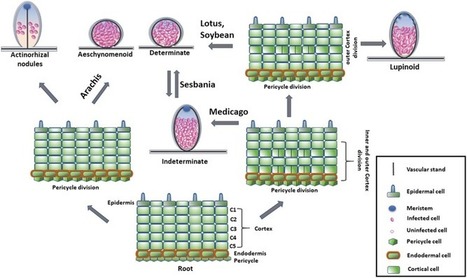
Nitrogen-fixing symbiosis is the most successful metabolism-dependent mutualistic symbiosis on earth that influences global nitrogen cycles. Engineering and improvement of this symbiosis is the major avenue towards sustainable agriculture. Root nodule symbiosis (RNS) is restricted to a monophyletic group of angiosperm order. Collectively this group is called nitrogen-fixing symbiosis (NFS) clade. Tremendous multifariousness exists among the infection mechanism, nodule structure, and nitrogen fixation efficiency among nodules. We have gained significant knowledge about the molecular mechanism of RNS in last two decades, using model legumes Medicago truncatula and Lotus japonicus. In this chapter, we present the current status of model legumes used to unveil the molecular mechanisms behind the development of nodules and RNS. We further introduce non-canonical legume species that have been used to expand our understanding of the traits associated with RNS in plants. We have also highlighted the extraordinary variations which came up during the evolution of the RNS. This comparative approach will enable us to identify the variable genetic events that rendered NFS to the RNS clade. In turn, this knowledge will hopefully allow us to carefully engineer it in non-fixing crops.
|
|
Scooped by
Jean-Michel Ané
November 17, 2019 10:36 PM
|
Understanding how plants respond to nitrogen in their environment is crucial for determining how they use it and how the nitrogen use affects other processes related to plant growth and development. Under nitrogen limitation the activity and affinity of uptake systems is increased in roots, and lateral root formation is regulated in order to adapt to low nitrogen levels and scavenge from the soil. Plants in the legume family can form associations with rhizobial nitrogen-fixing bacteria, and this association is tightly regulated by nitrogen levels. The effect of nitrogen on nodulation has been extensively investigated, but the effects of nodulation on plant nitrogen responses remain largely unclear. In this study, we integrated molecular and phenotypic data in the legume Medicago truncatula and determined that genes controlling nitrogen influx are differently expressed depending on whether plants are mock or rhizobia inoculated. We found that a functional autoregulation of nodulation pathway is required for roots to perceive, take up, and mobilize nitrogen as well as for normal root development. Our results together revealed that autoregulation of nodulation, root development, and the location of nitrogen are processes balanced by the whole plant system as part of a resource-partitioning mechanism.
|
|
Scooped by
Jean-Michel Ané
November 16, 2019 9:16 PM
|
Potassium (K) is reflected as a fundamental supplement and a noteworthy constituent inside every single living cell, which is required in vast sums by plants, animals, and people. In environment, soils normally contain K in bigger sums than some other supplements.As rocks gradually weathered, K is discharged, yet change of K from the basic portion to some other frame is as often as possible to ease back to give them a lot of this basic supplement required by crops. Utilization of chemical fertilizers has an extensive negative effect on ecological supportability. Potassium solubilizing bacteria (KSB) solubilize K-bearing minerals and change over the insoluble K to dissolvable types of K that plants can get to. Countless soil microscopic organisms, for example, Acidithiobacillus ferrooxidans, Paenibacillus spp., Bacillus mucilaginosus, B. edaphicus, and B. circulans, have ability to solubilize K minerals like biotite, muscovite, feldspar, mica, iolite, and orthoclase. KSB are normally present in every one of the soil, in spite of the fact that their number, assorted variety, and capacity for K solubilization differ which rely on the soil and climatic conditions. Despite that, KSB are the most essential microscopic organisms for solubilizing K minerals which demonstrate viable association amongst soil and plant frameworks. These microbes can be utilized productively as a wellspring of K-fertilizer for managing crop generation and keeping up soil K. Subsequently, generation and administration of organic manures containing KSB can scatter K inadequacy particularly in paddy field or zones where plants are normal for K and are likewise an approach to accomplish the objectives of the practical farming. This article shows a diagram of flow patterns and difficulties on the KSB, components, and their part in plant development advancement and in the end gives a few viewpoints for study on K in agriculture.
|
|
|
Scooped by
Jean-Michel Ané
November 24, 2019 9:50 PM
|
The aim of this study was to investigate the effects of different plant parts and the age of plants at harvest as well as N2 fixing bacterial strains on the N concentration in symbiotic plant parts, especially on the δ15N signature of the actinorhizal plants and legumes. The 15N natural abundance method was used. Two actinorhizal plants were studied: Alnus incana (L.) infected with the Frankia strains ArI3 or “lsF” (local source of Frankia) and Hippophaë rhamnoides (L.) infected with the Frankia strains T1 or E15b. Two legume species were studied: Hedysarum coronarium (L.), infected with a soil suspension, and Robinia pseudoacacia (L.), infected with a crushed nodule suspension. It was particularly interesting that in A. incana, the two Frankia strains affected not only N concentration and δ15N signature of leaves and roots, but also had an impact on plant growth at first harvest. In Hippophaë rhamnoides plants inoculated with the Frankia strains T1 and E15b, N concentrations and δ15N values did not differ at any harvest time. However, plants nodulated by the Frankia strain T1 showed a higher nitrogen fixation rate and higher plant dry matter at all harvesting times. Based on our results for the quantification of N2 fixation with the “B” value, that is the δ15N value of the N2 fixing plants relying only on N2 fixation, plant parts, ages and strains should be carefully considered.
|
|
Scooped by
Jean-Michel Ané
November 22, 2019 10:08 AM
|
Ameliorating biological attributes of agricultural soils is desirable, and one avenue is introducing beneficial microbes via commercial biostimulant products. Although gaining popularity with farmers, scientific evaluation of such products in field-grown crops is often lacking. We tested two microbial products, Soil-Life™ and Nutri-Life Platform®, in a commercial sugarcane crop by profiling bacterial and fungal communities in soil and roots using high throughput phylogenetic marker gene sequencing. The products, one predominantly consisting of Lactobacillus and the other of Trichoderma, were applied as a mixture as per manufacturers’ instructions. Additives included in the formulations were not listed, and plots that did not receive the product mixture were the controls. The compositions of bacterial communities of soil and sugarcane roots, sampled 2, 5 and 25 weeks after application, were unaffected by the products. Soil fungal communities were also unaffected, but sugarcane roots had a greater relative abundance of three unidentified taxa in genera Marasmius, Fusarium and Talaromyces in the treated plots. Sugarcane yield was similar across all treatments that included a 25% lower nitrogen fertiliser rate. Further research must examine if the altered root fungal community is a consistent feature of the tested products, and if it conveys benefits. We conclude that putative biostimulants can be evaluated by analysing the composition of microbial communities. DNA profiling should be complemented by cost-benefit analysis to build a public information base documenting the effects of microbial biostimulants. Such knowledge will assist manufacturers in product development and farmers in making judicious decisions on product selection, to ensure that the anticipated benefits of microbial biostimulants are realised for broad acre cropping.
|
|
Scooped by
Jean-Michel Ané
November 22, 2019 10:03 AM
|
In an effort to ensure profitable production on the estimated 5.1 million acres of soybeans in 2015, Nebraska farmers are scrutinizing inputs and really focusing on profit. Using products/inputs that may increase yields 2 bushels per acre might have been profitable when soybeans were $14.40 per bushel in 2012, but becomes a stretch at the $9.73 per bushel set in February for some crop insurance policies.
|
|
Scooped by
Jean-Michel Ané
November 22, 2019 9:59 AM
|
Phytohormones play a crucial role in regulating plant developmental processes. Among them, ethylene and jasmonate are known to be involved in plant defense responses to a wide range of biotic stresses as their levels increase with pathogen infection. In addition, these two phytohormones have been shown to inhibit plant nodulation in legumes. Here, exogenous salicylic acid (SA), jasmonate acid (JA), and ethephon (ET) were applied to the root system of Casuarina glauca plants before Frankia inoculation, in order to analyze their effects on the establishment of actinorhizal symbiosis. This protocol further describes how to identify putative ortholog genes involved in ethylene and jasmonate biosynthesis and/or signaling pathways in plant, using the Arabidopsis Information Resource (TAIR), Legume Information System (LIS), and Genevestigator databases. The expression of these genes in response to the bacterium Frankia was analyzed using the gene atlas for Casuarina–Frankia symbiosis (SESAM web site).
|
|
Scooped by
Jean-Michel Ané
November 20, 2019 10:42 PM
|
The symbiotic interaction between arbuscular mycorrhizal fungi (AMF) and land plants is essential for efficient nutrient acquisition and utilisation. Our understanding of key processes controlling the AMF colonisation in rice is still limited.
Dongxiang wild rice (DY) exhibited a stronger colonisation with Rhizophagus irregularis than the rice cultivar Zhongzao 35 (ZZ35). Chromosome segment substitution lines were constructed and the OsCERK1 gene from DY was mapped. Transgenic plants in the japonica rice Zhonghua 11 (ZZ11) were constructed to compare root colonisation by AMF.
Chromosome single‐segment substitution lines containing OsCERK1DY showed higher phosphorus content and grain yield relative to ZZ35. Four amino acids substitutions were identified among the OsCERK1 haplotypes of DY, ZZ35 and ZH11 and two of these were in the second lysine‐motif domain, which is essential for the differences of AMF colonisation level among rice varieties. Heterologous expression of OsCERK1DY in ZH11 significantly enhanced AMF colonisation and increased resistance against the pathogenic fungi Magnaporthe oryzae. Notably, the OsCERK1DY haplotype was absent from 4660 cultivated rice varieties.
We conclude that OsCERK1 is a key gene affecting the symbiotic interaction with AMF and OsCERK1DY has the biotechnological potential to increase rice phosphorus acquisition and utilisation efficiency for sustainable agriculture.
|
|
Scooped by
Jean-Michel Ané
November 20, 2019 7:34 PM
|
Glycosylated flagellin of the polar flagellum of the plant growth-promoting rhizobacteria Azospirillum brasilense Sp245 was for the first time isolated and characterized by biochemical and bioinformatics methods. Using the amino acid sequence taken from the NCBI database of bacterial whole-genome DNA sequencing, the secondary and tertiary structures of the protein part of this glycoprotein were determined by template-based molecular modeling. With the use of a set of predictors, regions of its intrinsic structural disorder were identified, and binding sites of carbohydrate fragments to the surface of the molecule were determined. A positive effect of the polar flagellum flagellin on the root meristem of wheat seedlings was for the first time revealed for associative bacteria. The effect was manifested in an increase in the division rate of plant cells – a significant increase in the mitotic index. Thus, the induction of specific responses of plants to their interactions with flagellin of the associative bacteria may probably be considered as a demonstration of its elicitor properties.
|
|
Scooped by
Jean-Michel Ané
November 20, 2019 7:26 PM
|
Serendipitous findings and studies on Tuber species suggest that some ectomycorrhizal fungi, beyond their complex interaction with ectomycorrhizal hosts, also colonize roots of non‐ectomycorrhizal plants in a loose way called endophytism. Here, we investigate endophytism of T. melanosporum and T. aestivum.
We visualized endophytic T. melanosporum hyphae by fluorescent in situ hybridization on non‐ectomycorrhizal plants. For the two Tuber species, microsatellite genotyping investigated the endophytic presence of the individuals whose mating produced nearby ascocarps. We quantified the expression of four T. aestivum genes in roots of endophyted, non‐ectomycorrhizal plants.
Tuber melanosporum hyphae colonized the apoplast of healthy roots, confirming endophytism. Endophytic Tuber melanosporum and T. aestivum contributed to nearby ascocarps, but only as maternal parents (forming the flesh). Paternal individuals (giving only genes found in meiotic spores of ascocarps) were not detected. Genes expression of T. aestivum in non‐ectomycorrhizal plants confirmed a living status.
Tuber species, and likely other ectomycorrhizal fungi found in non‐ectomycorrhizal plant roots in this study, can be root endophytes. This is relevant for the ecology (brûlé formation) and commercial production of truffles. Evolutionarily speaking, endophytism may be an ancestral trait in some ectomycorrhizal fungi that evolved from root endophytes.
|
|
Scooped by
Jean-Michel Ané
November 20, 2019 11:55 AM
|
Controlled environment studies show that arbuscular mycorrhizal fungi (AMF) may contribute to plant nitrogen (N) uptake, but the role of these near-ubiquitous symbionts in crop plant N nutrition under natural field conditions remains largely unknown. In a field trial, we tested the effects of N fertilisation and barley (Hordeum vulgare L.) cultivar identity on the contribution of AMF to barley N uptake using 15N tracers added to rhizosphere soil compartments. AMF were shown capable of significantly increasing plant 15N acquisition from root exclusion zones, and this was influenced by nitrogen addition type, N fertiliser application rate and barley cultivar identity. Our data demonstrate a previously overlooked potential route of crop plant N uptake which may be influenced substantially and rapidly in response to shifting agricultural management practices.
|
|
Scooped by
Jean-Michel Ané
November 20, 2019 11:54 AM
|
Legumes are indispensable as food for us, feed for our livestock, and as a major contributor towards sustainable agricultural practices. Seed development, and root nodule symbiosis in legumes are the two main areas where majority of research is focused. Though Arabidopsis thaliana is a plant model with huge publicly-available resources, a model for legumes is always needed to study the unique characteristics of this family. Since last few decades, Medicago truncatula is being used as a model for studying plant-microbe interaction, seed development, and abiotic stress on plants. Many genomic resources have been developed, including the genome sequence, spatio-temporal gene expression data, germplasm collection, and collection of different types of mutants. This chapter describes the path followed by Medicago truncatula to become a model legume, along with all the above-mentioned genomic resources in detail. We have also discussed the ways of utilizing these resources in forward and reverse genetic studies. Concerted use of these resources with genome-wide analyses, molecular breeding programmes, and latest targeted genetic editing techniques has limit-less potential of empowering legumes as future food security.
|
|
Scooped by
Jean-Michel Ané
November 20, 2019 11:48 AM
|
It is possible that arbuscular mycorrhizal fungi play a pivotal role in root development and Pb phytostabilization in plants grown in Pb-contaminated soil. In this study, a pot experiment was conducted over 4 months to evaluate the effects of Funneliformis mosseae strain BGCXJ01A on root characteristics of black locust (Robinia pseudoacacia L.) seedlings in Pb-contaminated soil. Four Pb treatments (0, 90, 900, and 3,000 mg kg–1) were applied to soil in the presence and absence of F. mosseae. Inoculation with F. mosseae prominently improved root length, surface area, volume, and tip number in the plants across all Pb treatments. The F. mosseae inoculation also increased root diameter and fork number, especially under high Pb treatments. The presence of F. mosseae significantly increased the root activity and root tolerance index. However, there was little difference in specific root length between inoculated and non-inoculated plants. The biomass of roots, stems, and leaves all increased following inoculation with F. mosseae. Inoculated plants had greater accumulation and translocation capacities for Pb in the roots and stems, but lower capacities were found in the leaves when compared with those in non-inoculated plants. These results highlight that F. mosseae can alleviate the toxic effects of Pb on root development and can immobilize Pb in the roots and stems of R. pseudoacacia grown in Pb-contaminated soil. This study provides a model system for phytoremediation of Pb-contaminated soil via reciprocal symbiosis between arbuscular mycorrhizal fungi and woody legumes.
|
|
Scooped by
Jean-Michel Ané
November 19, 2019 1:40 PM
|
To meet the high demand for organic produce, farmers must select crop cultivars that perform well under the low-input conditions of organic production systems. Most cultivars grown on organic farms are genotypes selected through conventional breeding programs, which may impact responsiveness to microbial symbionts. The use of biological inputs such as mycorrhizal inoculants offers the promise of improving yield, quality, and stress-responsiveness of crops, but evidence of efficacy in the field remains elusive. Moreover, interspecific and intraspecific variability may impact the ability of mycorrhizal inoculants to provide benefits. This work evaluated four cultivars (two heirlooms and two hybrids) of carrots and their propensities to benefit from inoculation with isolates of arbuscular mycorrhizal fungi in organic field conditions with and without late-season water restriction. Inoculants included geographically-distinct isolates from four species (Funneliformis mosseae, Rhizophagus clarus, Rhizophagus intraradices, and Septoglomus deserticola). Heirloom cultivars demonstrated a higher propensity to benefit compared to hybrid cultivars from inoculation with arbuscular mycorrhizal fungi. We observed benefits and costs with respect to yield associated with inoculation within four experiments over twoditions. Breeding histories of plant genotypes likely contribute to their mycorrhizal responsiveness.
|
|
Scooped by
Jean-Michel Ané
November 17, 2019 10:30 PM
|
Like the majority of land plants, liverworts regularly form intimate symbioses with arbuscular mycorrhizal fungi (Glomeromycotina). Recent phylogenetic and physiological studies report that they also form intimate symbioses with Mucoromycotina fungi and that some of these, like those involving Glomeromycotina, represent nutritional mutualisms. To compare these symbioses, we carried out a global analysis of Mucoromycotina fungi in liverworts and other plants using species delimitation, ancestral reconstruction, and network analyses. We found that Mucoromycotina are more common and diverse symbionts of liverworts than previously thought, globally distributed, ancestral, and often co-occur with Glomeromycotina within plants. However, our results also suggest that the associations formed by Mucoromycotina fungi are fundamentally different because, unlike Glomeromycotina, they may have evolved multiple times and their symbiotic networks are un-nested (i.e., not forming nested subsets of species). We infer that the global Mucoromycotina symbiosis is evolutionarily and ecologically distinctive.
|









https://www.livestockanimalexchange.com/en/product/holstein-heifer-cattle-for-sale/