Plant root systems play an essential role in nutrient and water acquisition. In resource-limited soils, modification of root system architecture is an important strategy to optimize plant performance. Most terrestrial plants also form symbiotic associations with arbuscular mycorrhizal fungi to maximize nutrient uptake. In addition to direct delivery of nutrients, arbuscular mycorrhizal fungi benefit the plant host by promoting root growth. Here, we aimed to quantify the impact of arbuscular mycorrhizal symbiosis on root growth and nutrient uptake in maize. Inoculated plants showed an increase in both biomass and the total content of twenty quantified elements. In addition, image analysis showed mycorrhizal plants to have denser, more branched root systems. For most of the quantified elements, the increase in content in mycorrhizal plants was proportional to root and overall plant growth. However, the increase in boron, calcium, magnesium, phosphorus, sulfur and strontium was greater than predicted by root system size alone, indicating fungal delivery to be supplementing root uptake.
Nitrogen (N) limits crop yield and improvement of N nutrition remains a key goal for crop research; one approach to improve N nutrition is identifying plant-interacting N2-fixing microbes. Rhodotorula mucilaginosa JGTA-S1 is a basidiomycetous yeast endophyte of narrowleaf cattail (Typha angustifolia). JGTA-S1 could not convert nitrate or nitrite to ammonium, but harbors diazotrophic (N2-fixing) endobacteria (eg. Pseudomonas stutzeri) that allows JGTA-S1 to fix N2 and grow in a N-free environment; moreover, P. stutzeri dinitrogen reductase (nifH) was transcribed in JGTA-S1 even under adequate N. Endobacteria-deficient JGTA-S1 had reduced fitness, which was restored by reintroducing P. stutzeri. JGTA-S1 colonizes rice (Oryza sativa) significantly improving its growth, N content, and relative N-use efficiency. Endofungal P. stutzeri plays a significant role in increasing the biomass and ammonium content of rice treated with JGTA-S1; also, JGTA-S1 has better N2 fixing ability than free-living P. stutzeri and provides fixed N to the plant. Genes involved in N metabolism, N transporters, and NODULE INCEPTION (NIN)-like transcription factors were upregulated in rice roots within 24 h of JGTA-S1 treatment. In association with rice, JGTA-S1 has a filamentous phase and P. stutzeri only penetrated filamentous JGTA-S1. Together, these results demonstrate an interkingdom interaction that improves rice N nutrition.
Arbuscular mycorrhizal (AM) fungi are ecologically important for the growth and survival of most vascular plants. These fungi are known as obligate biotrophs that acquire carbon solely from host plants. A 13C-labeling experiment revealed the ability of axenically grown Rhizophagus irregularis DAOM 197198 to derive carbon from axenic culture on a relatively novel medium containing two sources of palmitic acid developed by Ishii (designated IH medium). In a separate experiment, this model fungus grew larger mycelia and produced more daughter spores on the IH medium in the presence of two Variovorax paradoxus strains than in axenic culture. In contrast, a strain of Mycobacterium sp. did not influence the growth of the AM fungus. Rhizophagus irregularis produced branched absorbing structures on the IH medium and, in monoxenic culture with V. paradoxus, sometimes formed densely packed hyphal coils. In this study, we report for the first time the formation of coarse terminal pelotons and of terminal and intercalary very fine (≈ 1 μm diameter) hyphal elongations, which could form daughter spores in the presence of V. paradoxus. This study shows the value of IH medium and certain rhizobacteria in the culture of R. irregularis DAOM 197198 in vitro.
Plants host a complex microbiota inside or outside their tissues, and phyllosphere microorganisms can be influenced by environmental, nutritional and agronomic factors. Rare sugars are defined as monosaccharides with limited availability in nature and they are metabolised by only few certain microbial taxa. Among rare sugars, tagatose (TAG) is a low-calories sweetener that stimulates and inhibits beneficial and pathogenic bacteria in the human gut microbiota, respectively. Based on this differential effect on human-associated microorganisms, we investigated the effect of TAG treatments on the grapevine phyllosphere microorganisms to evaluate whether it can engineer the microbiota and modify the ratio between beneficial and pathogenic plant-associated microorganisms. TAG treatments changed the structure of the leaf microbiota and they successfully reduced leaf infections of downy mildew (caused by Plasmopara viticola) and powdery mildew (caused by Erysiphe necator) under field conditions. TAG increased the relative abundance of indigenous beneficial microorganisms, such as some potential biocontrol agents, which could partially contribute to disease control. The taxonomic composition of fungal and bacterial leaf populations differed according to grapevine locations, therefore TAG effects on the microbial structure were influenced by the composition of the originally residing microbiota. TAG is a promising biopesticide that could shift the balance of pathogenic and beneficial plant-associated microorganisms, suggesting selective nutritional/anti-nutritional properties for some specific taxa. More specifically, TAG displayed possible plant prebiotic effects on the phyllosphere microbiota and this mechanism of action could represent a novel strategy that can be further developed for sustainable plant protection.
Pigeonpea (Cajanus cajan) originated in India and is now a major source of protein in countries in tropical and subtropical regions worldwide. However, little is known about the effect on crop yields of inoculation with appropriate rhizobia strains. The objective of this study was to explore the possibility of improving pigeonpea yields in the Caribbean region, by inoculating with selected N-fixing symbionts. To achieve the study objective, we selected three elite strains of the genus Bradyrhizobium isolated from root nodules of pigeonpea in the Dominican Republic, we formulated them using innovative carriers, and finally we tested the formulated inoculant on eight farms located in the Dominican Republic. Three different carriers (sewage sludge, pine bark biochar and poultry litter) plus perlite as control were tested for the formulation. The first step was to test bacterial survival in the different carriers at different times up to one year (shelf-life). Pine bark biochar and the control resulted in the best shelf-life and were selected for the field experiment. The experimental design comprised two pigeonpea cultivars and five fertilisation strategies: Inoculation with three Bradyrhizobium strains without nitrogen (N) fertilisation, plus two non-inoculated controls one of them fertilised with 125 and 210 kg N ha−1 in non-irrigated and irrigated fields respectively. Nodule occupancy by the inoculated bacterial strain depended solely on the level of soil native nodulating bacteria and not on the bacterial strain or the carrier. Inoculation produced, on average, a significant yield increase compared to the non-inoculated non-N-fertilised control. Furthermore, the yield with the inoculated treatments did not significantly differ from the yield of the N-fertilised control. However, either inoculation or N-fertilisation were ineffective in two out of the eight fields with more than 104 nodulating bacteria g soil−1, compared to the non-inoculated non-N-fertilised control. Yield was neither significantly affected by the bacterial strain nor by the cultivar-strain interaction, and therefore, the two cultivars can be considered promiscuous. Neither carrier had a significant effect on yield. Thus, inoculants based on strains of Bradyrhizobia isolated from the root nodules of pigeonpea, formulated with pine bark biochar or perlite as carrier, are recommended as a good strategy to ensure food security in tropical agroecosystems with pigeonpea.
Chickpea is one of the most important legumes in the world and could be dramatically affected from water limitation. Chickpea is associated with arbuscular mycorrhizal fungi (AMF) that are known for their contribution to the alleviation of drought stress in plants. In the current study we evaluated the effect of water limitation in two chickpea genotypes (A345 and A365) and how water limitation affected plant performance and AMF symbiosis (composition and colonization) in a microcosm study in a complete randomized design. Water limitation had a detrimental effect only in A345 genotype performance and this was depended on plant growth stage. On the contrary, the biomass production of A365 genotype was not affected from water limitation 55 days after the initiation of the experiment. This response was associated with AMF colonization. The colonization found in the sensitive to water limitation genotype A345 was substantially suppressed in both growth stages while the colonization of the tolerant, A365 genotype was not affected under drought stress conditions. Multivariate analysis showed that the composition of AMF communities in chickpea was significantly affected from the interaction between growth stage, genotype and water availability (p < 0.01). Differential abundance analyses showed that the abundance of specific AMF genera in the tolerant to water limitation genotype A365 was substantially decreased at early growth stages compared to the sensitive genotype A345. This finding highlights that A365 could be less depended on mycorrhizal presence and/or the AMF colonizers is more efficient acting complementary to the plant inherent drought tolerant mechanisms to alleviate water shortage.
In this study, the effect of the phyto-pathogenic fungus Fusarium oxysporum on Medicago truncatula-Sinorhizobium symbiosis performance was investigated. Fusarium oxysporum (KLR13) was inoculated on two genotypes of M. truncatula, one tolerant (Jemalong A17) and one susceptible (TN1.11), in symbiosis with Sinorhizobium meliloti (TII7), Sinorhizobium medicae (SII4) or fertilized with KNO3. Fungus infection reduced significantly biomass production and photosynthetic related parameters of non-symbiotic M. truncatula A17 and TN1.11. Reduction was less pronounced in A17, where a lower accumulation of H2O2 and lipid peroxidation (MDA) in concomitance to high activities of antioxidant enzymes, catalase (CAT), peroxidase (POD) and superoxide dismutase (SOD) was detected. In symbiosis, the fungus affected the nodule number and weight and inhibited the nitrogen fixing capacity (NFC), as well as the fructose and glucose contents. Nevertheless, inoculation with S. meliloti and S. medicae alleviated the effect of F. oxysporum on plant biomass production compared to the KNO3 fertilized plants. Moreover, the Sinorhizobium inoculation decreased H2O2 and MDA over-production caused by the fungal infection in leaves of both genotypes. This tolerance enhancing effect was more pronounced in S. medicae-TN1.11 symbiosis, where the relative maintenance of photosynthesis related parameters, growth capacity and NFC performance was concomitant to the induction of SOD and CAT activities and an increase of the sucrose content in leaves. For A17 genotype, both Sinorhizobium strains induced an increase of the proline and sucrose accumulation. In conclusion, F. oxysporum effect on M. truncatula was mitigated when plants were in symbiosis with Sinorhizobium species, mainly Sinorhizobium medicae that alleviated the oxidative stress and enhanced the accumulation of sucrose as energy source in TN1.11 genotype, which attenuates its susceptibility to F. oxysporum infection.
Aim Tuber melanosporum is an ectomycorrhizal (ECM) fungus from Mediterranean transitional ecosystems where ECM trees start to dominate among arbuscular-mycorrhizal (AM) shrubs and herbs (companion plants). Its presence entails the development of ‘brûlés’, where vegetation is scarce for unknown reasons. Current T. melanosporum production comes from plantations where management often suppresses the understory vegetation, although empirical knowledge advocates a positive role of some companion plants in truffle production. This study aimed at (i) experimentally testing the reciprocal interaction between T. melanosporum and companion plants and (ii) examining T. melanosporum-mediated soil feedback involved in the dynamics of truffle ground vegetation.
Methods A three-year experiment was set up with Quercus ilex associated with T. melanosporum (or not, as control), grown in association (or not, as control) with a companion plant. Six companion plant species were chosen based on different empirical criteria including those indicated by local truffle growers’ knowledge. A trait-based approach was applied to plants and associated fungi (abundance of T. melanosporum and AM fungi mycelium).
Results-conclusion Companion plants promoted the development of truffle mycelium. In the presence of T. melanosporum, companion plant growth and nutrition and AM fungi abundance decreased, while the nutrition status of its host increased. The truffle inhibited germination of weed seeds. These results highlight the role of T. melanosporum in mediating plant-plant interactions, possible mechanisms underlying brûlé formation and a potential successional role for T. melanosporum.
Many bacteria form symbiotic associations with plant-associated fungi. The effects of these symbionts on host fitness usually depend on symbiont or host genotypes and environmental conditions. However, bacterial endosymbionts, that is those living within fungal cells, may positively regulate host performance as their survival is often heavily dependent on host fitness. Contrary to this, bacteria that establish ectosymbiotic associations with fungi, that is those located on the hyphal surface or in close vicinity to fungal mycelia, may not have an apparent net effect on fungal performance due to the low level of fitness dependency on their host. Our analysis supports the hypothesis that endosymbiotic bacteria of fungi are beneficial symbionts, and that effects of ectosymbiotic bacteria on fungal performance depends on the bacterial type involved in the interaction (e.g. helper versus pathogen of fungi). Ecological scenarios, where the presence of beneficial bacterial endosymbionts of fungi could be compromised, are also discussed.
Plant function is the result of the concerted action of single cells in different tissues. Advances in RNA-seq technologies and tissue processing allow us now to capture transcriptional changes at single-cell resolution. The incredible potential of single-cell RNA-seq lies in the novel ability to study and exploit regulatory processes in complex tissues based on the behaviour of single cells. Importantly, the independence from reporter lines allows the analysis of any given tissue in any plant. While there are challenges associated with the handling and analysis of complex datasets, the opportunities are unique to generate knowledge of tissue functions in unprecedented detail and to facilitate the application of such information by mapping cellular functions and interactions in a plant cell atlas.
As the world faces the challenge of feeding a growing population and increasingly unpredictable weather patterns, it is important to understand the plant features that will sustain food production under stress. One type of stress that plants experience is mechanical, and crops are susceptible to yield loss is by mechanical failure, called lodging. Brace roots (BR), aerial nodal roots of maize (Zea mays L.), are proposed to impart mechanical stability on plants, but little is known about the properties of BR that contribute to this function. Here, we define a 3-point bending method to test the comparative biomechanics of maize BRs within and between plants. We show that BR stiffness does not vary significantly within a plant neither along the length of a BR nor between BRs of different whorls. However, there are significant differences between plants of the same genotype. The differences manifested from variable BR diameter and thus nonideal span lengths for 3-point bending. The results presented here provide the foundation for widespread evaluation of BR mechanical properties and understanding their link to plant mechanical stability.
At the onset of legume-rhizobial symbiosis, the mutual recognition of partners occurs based on a complicated interaction between signal molecules and receptors. Bacterial signal molecules named Nod factors (“nodulation factors”) are perceived by the plant LysM-containing receptor-like kinases (LysM-RLKs) that recognize details of its structure (i.e., unique substitutions), thus providing the conditions particular to symbiosis. In the garden pea (Pisum sativum L.), the allelic state of Sym2 gene has long been reported to regulate the symbiotic specificity: for infection to be successful, plants with the Sym2A allele (for “Sym2 Afghan”, as these genotypes originate mostly from Afghanistan) require an additional acetylation of the Nod factor which is irrelevant for genotypes with the Sym2E allele (for “Sym2 European”). Despite being described about 90 years ago, Sym2 has not yet been cloned, though phenotypic analysis suggests it probably encodes a receptor for the Nod factor. Recently, we described a novel pea gene LykX (PsLykX) from the LysM-RLK gene family that demonstrates a perfect correlation between its allelic state and the symbiotic specificity of the Sym2A-type. Here we report on a series of Middle-Eastern pea genotypes exhibiting the phenotype of narrow symbiotic specificity discovered in the VIR plant genetic resources gene bank (Saint-Petersburg, Russia). These genotypes are new sources of Sym2A, as has been confirmed by an allelism test with Sym2A pea cv. Afghanistan. Within these genotypes, LykX is present either in the allelic state characteristic for cv. Afghanistan, or in another, minor allelic state found in two genotypes from Tajikistan and Turkmenistan. Plants carrying the second allele demonstrate the same block of rhizobial infection as cv. Afghanistan when inoculated with an incompatible strain. Intriguingly, this “Tajik” allele of LykX differs from the “European” one by a single nucleotide polymorphism leading to an R75P change in the receptor part of the putative protein. Thus, our new data are in agreement with the hypothesis concerning the identity of LykX and the elusive Sym2 gene.
Last week, Dutch farmers across the country parked their tractors along highways in the third such protest since October, when they jammed traffic while driving en masse to The Hague, the nation's center of government.
They are protesting a Dutch high court decision that in May suspended permits for construction projects that pollute the atmosphere with nitrogen compounds and harm nature reserves. The freeze has stalled the expansion of dairy, pig, and poultry farms—major sources of nitrogen in the form of ammonia from animal waste. Also blocked are plans for new homes, roads, and airport runways, because construction machinery emits nitrogen oxides. All told, the shutdown puts some €14 billion worth of projects in jeopardy, according to ABN AMRO Bank. “It has really paralyzed the country,” says Jeroen Candel, a political scientist at Wageningen University & Research.
Legumes develop root nodules in which bacteria fix nitrogen for plants. The phytohormones auxin and cytokinin regulate nodule organogenesis by recruiting various genes to effect symbiosis. Moreover, these genes are regulated by the action of microRNAs also. To understand the complex regulatory network involving miRNAs in response to phytohormones and rhizobial interactions in chickpea roots, a miRNA expression profiling was performed. Indole acetic acid and 6-benzylaminopurine at concentrations of 0.1, 1 and 10 µM were used for auxin and cytokinin exogenous treatment and Mesorhizobium ciceri to study rhizobial interaction with chickpea root. Expression profiling of a set of 11 miRNAs was performed. Further, the targets of the candidate miRNAs were identified, followed by functional annotation. This analysis revealed that cat-miR160, cat-miR164, cat-miR396 and cat-miR398 were responsive to auxin and cytokinin. cat-miR319 was found to be only auxin responsive and is known to regulate auxin signalling by targeting TEOSINTE BRANCHED/CYCLOIDEA/PCF (TCP) which interacts with auxin inducible genes. Further, cytokinin elicited a response at very low concentration of 0.1 µM, and most of the miRNAs investigated were responsive to cytokinin. Interactome analysis revealed that cat-miR164 and cat-miR168 work in conjunction to regulate auxin signalling. Interestingly, cat-miR169 and cat-miR482 were low expressing during auxin treatment and M. ciceri infection but their expression spiked during cytokinin treatment, indicating a cytokinin mediated mode of action. The miRNA expression profiling in response to phytohormones and rhizobia and the reported function of their target genes suggested a crosstalk among the phytohormonal responses during chickpea nodulation.
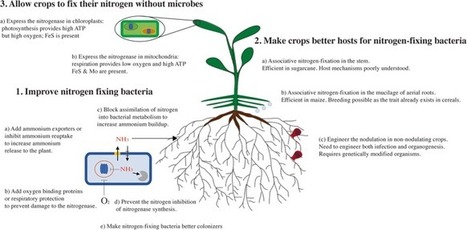
Nitrogen is an essential element of life, and nitrogen availability often limits crop yields. Since the Green Revolution, massive amounts of synthetic nitrogen fertilizers have been produced from atmospheric nitrogen and natural gas, threatening the sustainability of global food production and degrading the environment. There is a need for alternative means of bringing nitrogen to crops, and taking greater advantage of biological nitrogen fixation seems a logical option. Legumes are used in most cropping systems around the world because of the nitrogen-fixing symbiosis with rhizobia. However, the world's three major cereal crops—rice, wheat, and maize—do not associate with rhizobia. In this review, we will survey how genetic approaches in rhizobia and their legume hosts allowed tremendous progress in understanding the molecular mechanisms controlling root nodule symbioses, and how this knowledge paves the way for engineering such associations in non-legume crops. We will also discuss challenges in bringing these systems into the field and how they can be surmounted by interdisciplinary collaborations between synthetic biologists, microbiologists, plant biologists, breeders, agronomists, and policymakers.
The radical S-adenosylmethionine (SAM) enzyme NifB occupies a central and essential position in nitrogenase biogenesis. NifB catalyzes the formation of an [8Fe-9S-C] cluster, called NifB-co, which constitutes the core of the active-site cofactors for all 3 nitrogenase types. Here, we produce functional NifB in aerobically cultured Saccharomyces cerevisiae. Combinatorial pathway design was employed to construct 62 strains in which transcription units driving different expression levels of mitochondria-targeted nif genes (nifUSXB and fdxN) were integrated into the chromosome. Two combinatorial libraries totaling 0.7 Mb were constructed: An expression library of 6 partial clusters, including nifUSX and fdxN, and a library consisting of 28 different nifB genes mined from the Structure–Function Linkage Database and expressed at different levels according to a factorial design. We show that coexpression in yeast of the nitrogenase maturation proteins NifU, NifS, and FdxN from Azotobacter vinelandii with NifB from the archaea Methanocaldococcus infernus or Methanothermobacter thermautotrophicus yields NifB proteins equipped with [Fe-S] clusters that, as purified, support in vitro formation of NifB-co. Proof of in vivo NifB-co formation was additionally obtained. NifX as purified from aerobically cultured S. cerevisiae coexpressing M. thermautotrophicus NifB with A. vinelandii NifU, NifS, and FdxN, and engineered yeast SAM synthase supported FeMo-co synthesis, indicative of NifX carrying in vivo-formed NifB-co. This study defines the minimal genetic determinants for the formation of the key precursor in the nitrogenase cofactor biosynthetic pathway in a eukaryotic organism.
Below-ground microbes can induce systemic resistance (ISR) against foliar pests and pathogens on diverse plant hosts. The prevalence of ISR among plant-microbe-pest systems raises the question of host specificity in microbial induction of ISR. To test whether ISR is limited by plant host range, we tested the ISR-inducing ectomycorrhizal (ECM) fungus Laccaria bicolor on the non-mycorrhizal plant Arabidopsis. We found that root inoculation with L. bicolor triggered ISR against the insect herbivore Trichoplusia ni and induced systemic susceptibility (ISS) against the bacterial pathogen Pseudomonas syringae pv. tomato DC3000 (Pto). We found that L. bicolor-triggered ISR against T. ni was dependent on jasmonic acid (JA) signaling and salicylic acid (SA) biosynthesis and signaling. We found that heat killed L. bicolor and chitin are sufficient to trigger ISR against T. ni and ISS against Pto and that the chitin receptor CERK1 is necessary for L. bicolor-mediated effects on systemic immunity. Collectively our findings suggest that some ISR responses might not require intimate co-evolution of host and microbe, but rather might be the result of root perception of conserved microbial signals.
Loss-of-function alleles of MLO (Mildew Resistance Locus O) confer broad-spectrum resistance to foliar infections by powdery mildew pathogens. Like pathogens, microbes that establish mutually beneficial relationships with their plant hosts, trigger the induction of some defense responses. Initially, barley colonization by the root endophyte Serendipita indica (syn. Piriformospora indica) is associated with enhanced defense gene expression and the formation of papillae at sites of hyphal penetration attempts. This phenotype is reminiscent of mlo-conditioned immunity in barley leaf tissue and raises the question whether MLO plays a regulatory role in the establishment of beneficial interactions. Here we show that S. indica colonization was significantly reduced in plants carrying mlo mutations compared to wild type controls. The reduction in fungal biomass was associated with the enhanced formation of papillae. Moreover, epidermal cells of S. indica-treated mlo plants displayed an early accumulation of iron in the epidermal layer suggesting increased basal defense activation in the barley mutant background. Correspondingly, the induction of host cell death during later colonization stages was impaired in mlo colonized plants, highlighting the importance of the early biotrophic growth phase for S. indica root colonization. In contrast, the arbuscular mycorrhizal fungus Funneliformis mosseae displayed a similar colonization morphology on mutant and wild type plants. However, the frequency of mycorrhization and number of arbuscules was higher in mlo-5 mutants. These findings suggest that MLO differentially regulates root colonization by endophytic and AM fungi.
While synthetic nitrogen fuels modern agriculture, its production is energy-intensive, and its application leads to aquatic pollution and greenhouse gas emissions. Sustainable intensification of agriculture to provide both food for humans and feedstocks for bio-based fuels and materials requires alternative options for nitrogen management. For nearly fifty years, nitrogen fixation in cereal crops has been pursued to address this challenge. Efforts to engineer plants for nitrogen fixation have made strides through eukaryotic nitrogenase expression and a deepened understanding of root nodulation pathways, but deployment of transgenic nitrogen fixing cereals may be outpaced by population growth. By contrast, a root-associated bacterium that can fix and supply nitrogen to cereals could offer a sustainable solution for nitrogen management on a shorter timescale.
Mycorrhizal symbiotic relationship is one of the most common collaborations between plant roots and the arbuscular mycorrhizal fungi (AMF). The first barrier for establishing this symbiosis is plant cell wall which strongly provides protection against biotic and abiotic stresses. The aim of this study was to investigate the gene expression changes in cell wall of wheat root cv. Chamran after inoculation with AMF, Funneliformis mosseae under two different irrigation regimes. To carry out this investigation, total RNA was extracted from the roots of mycorrhizal and non-mycorrhizal plants, and analyzed using RNA-Seq in an Illumina Next-Seq 500 platform. The results showed that symbiotic association between wheat and AMF and irrigation not only affect transcription profile of the plant growth, but also cell wall and membrane components. Of the 114428 genes expressed in wheat roots, the most differentially expressed genes were related to symbiotic plants under water stress. The most differentially expressed genes were observed in carbohydrate metabolic process, lipid metabolic process, cellulose synthase activity, membrane transports, nitrogen compound metabolic process and chitinase activity related genes. Our results indicated alteration in cell wall and membrane composition due to mycorrhization and irrigation regimes might have a noteworthy effect on the plant tolerance to water deficit.
Soil microorganisms play an important role in enhancing soil fertility and plant health. Arbuscular mycorrhizal fungi and plant growth promoting rhizobacteria form a key component of the soil microbial population. Arbuscular mycorrhizal fungi form symbiotic association with most of the cultivated crop plants and they help plants in phosphorus nutrition and protecting them against biotic and abiotic stresses. Many species of Bacillus occurring in soil are also known to promote plant growth through phosphate solubilization, phytohormone production and protection against biotic and abiotic stresses. Synergistic interaction between AMF and Bacillus spp. in promoting plant growth compared to single inoculation with either of them has been reported. This is because of enhanced nutrient uptake, protection against plant pathogens and alleviation of abiotic stresses (water, salinity and heavy metal) through dual inoculation compared to inoculation with either AMF or Bacillus alone.
Symbiotic microorganisms improve nutrient uptake by plants. To initiate mutualistic symbiosis with arbuscular mycorrhizal (AM) fungi, plants perceive Myc factors, including lipochitooligosaccharides (LCOs) and short-chain chitooligosaccharides (CO4/CO5), secreted by AM fungi. However, the molecular mechanism of Myc factor perception remains elusive. In this study, we identified a heteromer of LysM receptor-like kinases consisting of OsMYR1/OsLYK2 and OsCERK1 that mediates the perception of AM fungi in rice. CO4 directly binds to OsMYR1, promoting the dimerization and phosphorylation of this receptor complex. Compared with control plants, Osmyr1 and Oscerk1 mutant rice plants are less sensitive to Myc factors and show decreased AM colonization. We engineered transgenic rice by expressing chimeric receptors that respectively replaced the ectodomains of OsMYR1 and OsCERK1 with those from the homologous Nod factor receptors MtNFP and MtLYK3 of Medicago truncatula. Transgenic plants displayed increased calcium oscillations in response to Nod factors compared with control rice. Our study provides significant mechanistic insights into AM symbiotic signal perception in rice. Expression of chimeric Nod/Myc receptors achieves a potentially important step toward generating cereals that host nitrogen-fixing bacteria.
The formation of nitrogen‐fixing nodules on legume hosts is a finely‐tuned process involving many components of both symbiotic partners. Production of the exopolysaccharide succinoglycan by the nitrogen‐fixing bacterium Sinorhizobium meliloti 1021 is needed for an effective symbiosis with Medicago spp, and the succinyl modification to this polysaccharide is critical. However, it is not known when succinoglycan intervenes in the symbiotic process, and it is not known whether the plant lysin‐motif receptor‐like kinase MtLYK10 intervenes in recognition of succinoglycan, as might be inferred from work on the Lotus japonicus MtLYK10 ortholog, LjEPR3. We studied the symbiotic infection phenotypes of S. meliloti mutants deficient in succinoglycan production or producing modified succinoglycan, in wild‐type Medicago truncatula plants and in Mtlyk10 mutant plants. On wild‐type plants, S. meliloti strains producing no succinoglycan or only unsuccinylated succinoglycan still induced nodule primordia and epidermal infections, but further progression of the symbiotic process was blocked. These S. meliloti mutants induced a more severe infection phenotype on Mtlyk10 mutant plants. Nodulation by succinoglycan‐defective strains was achieved by in trans rescue with a Nod factor‐deficient S. meliloti mutant. While the Nod factor‐deficient strain was always more abundant inside nodules, the succinoglycan‐deficient strain was more efficient than the strain producing only unsuccinylated succinoglycan.
Together, these data show that succinylated succinoglycan is essential for infection thread formation in M. truncatula, and that MtLYK10 plays an important, but different role in this symbiotic process. These data also suggest that succinoglycan is more important than Nod factors for bacterial survival inside nodules.
Legumes develop root nodules in symbiosis with nitrogen-fixing rhizobial bacteria. Rhizobia evoke cell division of differentiated cortical cells into root nodule primordia for accommodating bacterial symbionts. In this study, we show that NODULE INCEPTION (NIN), a transcription factor in Lotus japonicus that is essential for initiating cortical cell divisions during nodulation, regulates the gene ASYMMETRIC LEAVES 2-LIKE 18/LATERAL ORGAN BOUNDARIES DOMAIN 16a (ASL18/LBD16a). Orthologs of ASL18/LBD16a in nonlegume plants are required for lateral root development. Coexpression of ASL18a and the CCAAT box–binding protein Nuclear Factor-Y (NF-Y) subunits, which are also directly targeted by NIN, partially suppressed the nodulation-defective phenotype of L. japonicus daphne mutants, in which cortical expression of NIN was attenuated. Our results demonstrate that ASL18a and NF-Y together regulate nodule organogenesis. Thus, a lateral root developmental pathway is incorporated downstream of NIN to drive nodule symbiosis.
To get content containing either thought or leadership enter:
To get content containing both thought and leadership enter:
To get content containing the expression thought leadership enter:
You can enter several keywords and you can refine them whenever you want. Our suggestion engine uses more signals but entering a few keywords here will rapidly give you great content to curate.


 Your new post is loading...


 Scoop.it!