 Your new post is loading...

|
Scooped by
Jean-Michel Ané
June 22, 2020 12:52 PM
|
Background: White lupin is an old crop with renewed interest due to its seed high protein content and high nutritional value. Despite a long domestication history in the Mediterranean basin, modern breeding efforts have been fairly scarce. Recent sequencing of its genome has provided tools for further description of genetic resources but detailed characterization is still missing. Results: Here, we report the genome sequencing of several accessions that were used to establish a white lupin pangenome. We defined core genes that are present in all individuals and variable genes that are absent in some and may represent a gene pool for stress adaptation. We believe that the identification of novel genes, together with a more comprehensive reference sequence, represents a significant improvement of the white lupin genetic resources. As an example, we used this pangenome to identify selection footprints and to provide a candidate gene for one of the main QTLs associated with late flowering in Ethiopian lupin types. A 686 nucleotide deletion was identified in exon 3 of the LaFTa1 (Lupinus albus Flowering Time a1) gene that suggests a molecular origin for this trait of importance, defining the need for vernalization in some lupins. Conclusions: The white lupin pangenome provides a novel genetic resource to better understand how domestication has shaped the genomic variability amongst this crop. It will be of major importance for breeders to select new breeding traits and incorporate them into new, more efficient and robust cultivars in order to face a growing demand for plant protein sources, notably in Europe.
|
|
Scooped by
Jean-Michel Ané
June 21, 2020 12:59 PM
|
By virtue of complex ecologies, the behavior of mutualisms is challenging to study and nearly impossible to predict. However, laboratory engineered mutualistic systems facilitate a better understanding of their bare essentials. On the basis of an abstract theoretical model and a modifiable experimental yeast system, we explore the environmental limits of self-organized cooperation based on the production and use of specific metabolites. We develop and test the assumptions and stability of the theoretical model by leveraging the simplicity of an artificial yeast system as a simple model of mutualism. We examine how one-off, recurring, and permanent changes to an ecological niche affect a cooperative interaction and change the population composition of an engineered mutualistic system. Moreover, we explore how the cellular burden of cooperating influences the stability of mutualism and how environmental changes shape this stability. Our results highlight the fragility of mutualisms and suggest interventions, including those that rely on the use of synthetic biology.
|
|
Scooped by
Jean-Michel Ané
June 21, 2020 12:52 PM
|
Pulses are one of the most important categories of food plants, and Pea (Pisum sativum L.) as a member of pulses is considered a key crop for food and feed and sustainable agriculture. Integrative multi-omics and microsymbiont impact studies on the plant's immune system are important steps toward more productive and tolerant food plants and thus will help to find solutions against food poverty. Didymella pinodes is a main fungal pathogen of pea plants. Arbuscular mycorrhizal fungi (AMF) promote plant growth and alleviate various stresses. However, it remained unclear as to how the AMF effect on seed metabolism and how this influences resistance against the pathogen. This study assesses the AMF impacts on yield components and seed quality upon D. pinodes infection on two different P. sativum cultivars, susceptible versus tolerant, grown in pots through phenotypic and seed molecular analyses. We found that AMF symbiosis affects the majority of all tested yield components as well as a reduction of disease severity in both cultivars. Seeds of mycorrhizal pea plants showed strong responses of secondary metabolites with nutritional, medicinal, and pharmaceutical attributes, also involved in pathogen response. This is further supported by proteomic data, functionally determining those primary and secondary metabolic pathways, involved in pathogen response and induced upon AMF-colonization. The data also revealed cultivar specific effects of AMF symbiosis that increase understanding of genotype related differences. Additionally, a suite of proteins and secondary metabolites are presented, induced in seeds of P. sativum upon AMF-colonization and pathogen attack, and possibly involved in induced systemic resistance against D. pinodes, useful for modern breeding strategies implementing microsymbionts toward increased pathogen resistance.
|
|
Scooped by
Jean-Michel Ané
June 21, 2020 12:50 PM
|
Central southern Mexico contains highly diverse legumes. In this study, nodule-associated bacteria (NAB) were isolated from wild legume nodules and from nodules on Phaseolus vulgaris plants used as a plant-trap in soils from the same areas as the wild legumes. The bacteria were identified through the 16S rRNA gene sequence analysis, tested for plant growth-promoting (PGP) activities and the production of antimicrobial compounds, and analyzed for potential nodulation by amplifying the nodC gene. Several genera with PGP activity were isolated from legume nodules, including Achromobacter, Acinetobacter, Aeromonas, Bacillus, Brevibacillus, Brevibacterium, Burkholderia, Cupriavidus, Dyella, Ensifer, Enterobacter, Herbaspirillum, Kosakonia, Labrys, Microbacterium, Moraxella, Paraburkholderia, Pseudomonas, Rhizobium, Stenotrophomonas; and Aeromonas, Marinococcus Pseudarthrobacter and Pseudoxanthomonas were found in plant legume nodules for the first time. Pseudomonas was the most common bacteria, and Mimosa pudica was colonized by the largest number of genera (6 different genera). A Burkholderia strain from the Burkholderia cepacia complex and a firmicutes strain harbor the nodC gene, identifying them as potential novel nodulating bacteria and showing that most of the strains isolated in this study were NAB. The most frequent PGP activity identified among the strains isolated from wild legumes was IAA synthesis. Two bacteria, Stenotrophomonas sp. and Rhizobium sp., synthesized more than 250 μg/ml, which is more than the level of synthesis reported in this study for Azospirillum brasilense Sp7 (59.77 μg/ml). Nitrogen fixation and antimicrobial compound production were not common, but the production of siderophores was frequently found among all the strains. This study shows that diverse NAB with PGP activity are very common in the legume nodules from central southern Mexico.
|
|
Scooped by
Jean-Michel Ané
June 21, 2020 12:47 PM
|
Arbuscules are the core structures of arbuscular mycorrhizae (AM), and arbuscule development is regulated by environmental stress, e.g., low pH. Recent studies indicate that lipid transfer from plants is essential for AM fungal colonization; however, the role of lipid transfer in arbuscule formation and the dynamics of lipid accumulation in arbuscules under low pH stress are far from well understood. In the symbiosis of tomato and Rhizophagus intraradices under contrasting pH conditions (pH 4.5 vs. pH 6.5), we investigated arbuscule formation, nutrient uptake, alkaline phosphatase activity and lipid accumulation; examined the gene expression involved in phosphate transport, lipid biosynthesis and transfer and sugar metabolism; and visualized the lipid dynamics in arbuscules. Low pH greatly inhibited arbuscule formation, in parallel with reduced phospholipid fatty acids accumulation in AM fungus and decreased P uptake. This reduction was supported by the decreased expression of plant genes encoding lipid biosynthesis and transfer. More degenerating arbuscules were observed under low pH conditions, and neutral lipid fatty acids accumulated only in degenerating arbuscules. These data reveal that, under low pH stress, reduced lipid transfer from hosts to AM fungi is responsible for the inhibited arbuscule formation.
|
|
Scooped by
Jean-Michel Ané
June 21, 2020 11:50 AM
|
The symbiosis receptor kinase SymRK plays an essential role in symbiotic signal transduction and nodule organogenesis. Several proteins bind to SymRK, but how the symbiosis signals are transduced from SymRK to downstream components remains elusive. We previously demonstrated that both SymRK interacting protein 1 (SIP1, an ARID-type DNA-binding protein) and SymRK interacting E3 ligase [SIE3, a RING (Really Interesting New Gene)-containing E3 ligase] interact with SymRK to regulate downstream cellular responses in Lotus japonicus during the legume-rhizobia symbiosis. Here, we show that SIE3 interacts with SIP1 in both yeast cells and Nicotiana benthamiana. SIE3 associated with itself and formed a homodimer. The cysteine 266 residue was found to be essential for SIE3 dimerization and for promoting nodulation in transgenic hairy roots of L. japonicus. Our findings provide a foundation for further investigating the regulatory mechanisms of the SymRK-mediated signaling pathway, as well as the biological function of E3 ligase dimerization in nodule organogenesis.
|
|
Scooped by
Jean-Michel Ané
June 19, 2020 12:02 PM
|
The lack of diversity among faculty at universities and medical schools in the United States is a matter of growing concern. However, the factors that influence the career choices of underrepresented minority and female postdoctoral researchers have received relatively little attention. Here we report the results of a survey of 1284 postdocs working in the biomedical sciences in the US. Our findings highlight possible reasons why some underrepresented minority and female postdocs choose not to pursue careers in academic research, and suggest interventions that could be taken in the early stages of postdoctoral training to prevent this attrition of underrepresented groups.
|
|
Scooped by
Jean-Michel Ané
June 18, 2020 10:33 PM
|
In the upcoming years, legume crops will be subjected to multiple, diverse, and overlapping environmental stressors (raise in global temperatures and CO2, drought, salinity, and soil pollution). These factors will menace legume productivity and food quality and security. In this context, tolerant plant growth promoting rhizobacteria (PGPR) are useful biotechnological tools to assist legume establishment and growth. In this chapter, tolerant PGPR able to promote legume growth will be revised. Besides, in the era of -omics, the mechanisms underlying this interaction are being deciphered, particularly transcriptomic, proteomic, and metabolomic changes modulated by PGPR, as well as the molecular dialog legume-rhizobacteria.
|
|
Scooped by
Jean-Michel Ané
June 18, 2020 10:27 PM
|
It is known that plant and associated bacteria coevolved, but just now the roles of chemical signaling compounds in these intricate relationships have been systematically studied. Many Gram-negative bacteria produce N-acyl-L-homoserine lactones (AHL), chemical signals used in quorum-sensing bacterial communications mechanisms. In recent years, it has been shown that these compounds may also influence the development of plants, acting as allelochemicals, in still not well understood eukaryot-prokaryot interactions. In the present work, a quorum-sensing molecule produced by the tomato associated bacterium Pseudomonas sp. was characterized and its effects on germination and growth of tomato seedlings were accessed. The chemical study of the bacterium extract led to the identification of N-3-oxo-dodecanoyl-L-homoserine lactone (1), using gas chromatography coupled to electron impact mass spectrometry (GC-MS), and ultra-high resolution Qq-time-of-flight mass spectrometry (UHR-QqTOF-MS) equipped with an electrospray ionization source (ESI). The synthetic compound was tested at different concentrations in tomato to evaluate its effects on seed germination and seedlings root growth. Inhibition of tomato seed germination and root growth were observed in the presence of micromolar concentrations of the compound 1. Scanning electron microscopy evidenced morphological alterations on roots in the presence of the compound, with reduction of growth, impaired root hairs development and cracks in the rhizodermis.
|
|
Scooped by
Jean-Michel Ané
June 18, 2020 10:22 PM
|
Efforts to boost crop yield and meet global food demands while striving to reach sustainability goals are hindered by the increasingly severe impacts of abiotic stress, such as drought. One strategy for alleviating drought stress in crops is to utilize root-associated bacteria, yet knowledge concerning the relationship between plant hosts and their microbiomes during drought remain under-studied. One broad pattern that has recently been reported in a variety of monocot and dicot species from both native and agricultural environments, is the enrichment of Actinobacteria within the drought-stressed root microbiome. In order to better understand the causes of this phenomenon, we performed a series of experiments in millet plants to explore the roles of drought severity, drought localization, and root development in provoking Actinobacteria enrichment within the root endosphere. Through 16S rRNA amplicon-based sequencing, we demonstrate that the degree of drought is correlated with levels of Actinobacterial enrichment in four species of millet. Additionally, we demonstrate that the observed drought-induced enrichment of Actinobacteria occurs along the length of the root, but the response is localized to portions of the root experiencing drought. Finally, we demonstrate that Actinobacteria are depleted in the dead root tissue of Japanese millet, suggesting saprophytic activity is not the main cause of observed shifts in drought-treated root microbiome structure. Collectively, these results help narrow the list of potential causes of drought-induced Actinobacterial enrichment in plant roots by showing that enrichment is dependent upon localized drought responses but not root developmental stage or root death.
|
|
Scooped by
Jean-Michel Ané
June 18, 2020 10:20 PM
|
Purpose
Vegetated slope is an important ecosystem to protect the landslide and soil erosion. Although the heterogeneity of slope has received increasing attention, the understanding of soil microbial community and ecological process in the slope soil still remains limited. The purpose of this study was to figure out the slope spatial heterogeneity through measuring dynamics of nitrogen (N) diffusion, composition, and assembly patterns of arbuscular mycorrhizal fungi (AMF) community.
Materials and methods
In this study, stable isotope tracer (15N) was used to study the dynamics of the soil N diffusion in five slope ecosystems, and the soil was sampled on the 7th and 40th day after tracer addition at a small scale. At the same time, the community structure of AMF in slope soil was analyzed by Illumina MiSeq sequencing.
Results and discussion
The δ15N of downslope and upslope soil enriched gradually away the labeled plot with the treatment time. It indicated that N could be conveyed inversely from the labeled plot to its upslope. Among the five different plant communities, the amount of N isotope transferred to the upslope was significantly higher in Setaria viridis slope with the extension of time, and the difference in the N amount of transfer was accompanied by the fact that the proportion of Glomus of this slope was much higher than that of other slopes. Redundancy analysis (RDA) showed that the AMF community structure in the Setaria viridis slope soils was correlated with the pH. The composition of AMF community upslope and downslope was quite different. Mantel analysis showed that the difference in AMF community structure was poorly affected by plant communities. Our work highlighted an important role of neutral forces in the assembly of AMF community in the slope ecosystem.
Conclusions
Our results revealed that N could be conveyed upward in the slope ecosystems. The AMF community in the five slopes seemed to be more randomly phylogenetically assembled. It was speculated that AMF community may play a major role in the transfer of N upward. Future works should test those conjectures and determine how the phylogenetic variation in AMF affects the N diffusion.
|
|
Scooped by
Jean-Michel Ané
June 18, 2020 10:07 PM
|
Arbuscular mycorrhizal fungi (AMF) live in symbiosis with plant roots, facilitating mineral nutrient transfer from soil to hosts through large networks of extraradical hyphae. Limited data are available on the fungal structures (appressoria) connecting soil- to root-based mycelium, in relation to plant nutrition. Two in vivo systems were set up using three AMF, Funneliformis mosseae, Funneliformis coronatus and Rhizoglomus irregulare, grown in symbiosis with Cichorium intybus. The assessment of plant P content, number of appressoria, diameter of their subtending hyphae and length of colonized roots allowed calculation of the total cross-section area of appressorium-subtending hyphae, which differed among the three AMF and was correlated with plant P contents and with extraradical mycelium density. A conservative evaluation of P fluxes from soil- to plant-based hyphae occurring through appressoria gave values ranging from 1.7 to 4.2 × 10⁻⁸ mol cm−2 s−1 (moles per total cross-section area of the appressorium subtending hyphae per time elapsed), depending on AMF identity. This work suggests that, beyond intraradical colonization and extraradical mycelium extent, connections between extraradical and intraradical fungal mycelium through appressoria are important for mycorrhizal plant nutrition, as appressorium structural traits and density can be related to P transfer mediated by AMF.
|
|
Scooped by
Jean-Michel Ané
June 17, 2020 6:34 PM
|
Methodological advances over the past two decades have propelled plant microbiome research, allowing the field to comprehensively test ideas proposed over a century ago and generate many new hypotheses. Studying the distribution of microbial taxa and genes across plant habitats has revealed the importance of various ecological and evolutionary forces shaping plant microbiota. In particular, selection imposed by plant habitats strongly shapes the diversity and composition of microbiota and leads to microbial adaptation associated with navigating the plant immune system and utilizing plant-derived resources. Reductionist approaches have demonstrated that the interaction between plant immunity and the plant microbiome is, in fact, bidirectional and that plants, microbiota, and the environment shape a complex chemical dialogue that collectively orchestrates the plant microbiome. The next stage in plant microbiome research will require the integration of ecological and reductionist approaches to establish a general understanding of the assembly and function in both natural and managed environments.
|
|
|
Scooped by
Jean-Michel Ané
June 21, 2020 12:59 PM
|
The reduction of dinitrogen to ammonia by nitrogenase reflects a complex choreography involving two component proteins, MgATP and reductant. At center stage of this process resides the active site cofactor, a complex metallocluster organized around a trigonal prismatic arrangement of iron sites surrounding an interstitial carbon. As a consequence of the choreography, electrons and protons are delivered to the active site for transfer to the bound N2. While the detailed mechanism for the substrate reduction remains enigmatic, recent developments highlight the role of hydrides and the privileged role for two irons of the trigonal prism in the binding of exogenous ligands. Outstanding questions concern the precise nature of the intermediates between N2 and NH3, and whether the cofactor undergoes significant rearrangement during turnover; resolution of these issues will require the convergence of biochemistry, structure, spectroscopy, computation, and model chemistry.
|
|
Scooped by
Jean-Michel Ané
June 21, 2020 12:56 PM
|
Studies have shown that the application of arbuscular mycorrhizal (AM) fungi or exogenous melatonin (MT) can alleviate drought stress and improve plant growth, but the additive effects of both treatments on plants grown under drought stress are largely unknown. In this study, we conducted a pot experiment to investigate the effects of AM inoculation (Funneliformis mosseae BGC XJ01) and/or MT application on tobacco (Nicotiana tabacum L. cv. Yuyan No. 6) seedling growth, photosynthetic and chlorophyll fluorescence parameters, antioxidant enzymatic activity, osmotic adjustment substance accumulation, and nutrient uptake under three water conditions (75–80%, 50–55%, and 30–35% of the maximum moisture retention capacity). The results show that applying either the AM inoculant or MT alone significantly increased tobacco seedling growth and decreased the negative effects of drought stress. Furthermore, AM inoculation alone promoted root function (root biomass, root/shoot ratio, root system architecture), facilitated the capture and conversion of solar energy (photosynthetic rate, ΦPSII), and increased nutrient uptake more effectively than MT. In contrast, exogenous MT application alone was more effective at increasing peroxidase and catalase activity and decreasing H2O2 and MDA accumulation, which in turn enhanced the adaptation of seedlings to drought stress by improving their antioxidant capacity and reducing oxidative damage. Nevertheless, applying exogenous MT significantly enhanced the AM colonization rate under AM inoculation conditions but had no obvious effect on AM colonization under noninoculated conditions. The combined application of AM and MT had an additive effect and produced the largest increases in tobacco seedling growth, photosynthetic ability, antioxidant enzymatic activity, and N, P, and K uptake and the largest decreases in H2O2 and MDA contents of all the treatments. The results suggest that AM inoculation in combination with exogenous MT application may render plants more productive and more tolerant of drought stress.
|
|
Scooped by
Jean-Michel Ané
June 21, 2020 12:51 PM
|
Our aim is to evaluate the changes in arbuscular mycorrhiza characteristics of winter wheat in a three-year experiment. Study results show that fertilizers produce strong variations in arbuscular mycorrhiza extension, with colonization frequency values within 76–98%. The intensity of colonization is only 12% when phosphorus (P) exceeds nitrogen (N) in autumn, but reaches 38% when the N:P ratio is equal. Root colonization shows no consistency from one experimental year to another, with the largest fluctuations recorded in colonization intensity (22–65%) and arbuscules abundance (0–5%). Arbuscules are maintained below 1% by fertilizer with more P than N. Colonization forecasting models indicate P as a factor for the reduction of symbiosis. Each kg of applied P can reduce the colonization frequency by 0.28% and intensity by 0.37%. The maximum of the colonization degree is 61% due to the synergy of equal N and P doses in autumn and ammonium nitrate applied in spring. The application of multiple moderate doses acts as a stimulant for the development of a large root-fungal interface. View Full-Text
|
|
Scooped by
Jean-Michel Ané
June 21, 2020 12:50 PM
|
Long-term monoculture (LTM) decreases the yield and quality of peanut, even resulting in changes in the microbial community. However, the effect of LTM on peanut rhizobial communities has still not been elucidated. In this study, we isolated and characterized peanut rhizobia from 6 sampling plots with different monoculture cropping durations. The community structure and diversity index for each sampling site were analyzed, and the correlations between a peanut rhizobium and soil characteristics were evaluated to clarify the effects on peanut rhizobial communities. The competitive abilities among representative strains were also analyzed. A total of 283 isolates were obtained from 6 sampling plots. Nineteen recA haplotypes were defined and were grouped into 8 genospecies of Bradyrhizobium, with B. liaoningense and B. ottawaense as the dominant groups in each sample. The diversity indexes of the rhizobial community decreased, and the dominant groups of B. liaoningense and B. ottawaense were enriched significantly with extended culture duration. Available potassium (AK), available phosphorus (AP), available nitrogen (AN), total nitrogen (TN) and organic carbon (OC) gradually increased with increasing monoculture duration. OC, TN, AP and AK were the main soil characteristics affecting the distribution of rhizobial genospecies in the samples. A competitive nodulation test indicated that B. liaoningense presented an excellent competitive ability, which was congruent with its high isolation frequency. This study revealed that soil characteristics and the competitive ability of rhizobia shape the symbiotic rhizobial community and provides information on community formation and the biogeographic properties of rhizobia.
|
|
Scooped by
Jean-Michel Ané
June 21, 2020 12:45 PM
|
Despite of important functions of strigolactones (SLs) and karrikins (KARs) in plant development, plant–parasite and plant–fungi interactions, their roles in soybean–rhizobia interaction remain elusive. SL/KAR signaling genes GmMAX2a, GmD14s, and GmKAIs are activated by rhizobia infection. GmMAX2a restored atmax2 root hair defects and soybean root hairs were changed in GmMAX2a overexpression (GmMAX2a ‐OE ) or knockdown (GmMAX2a ‐KD ) mutants. GmMAX2a ‐KD gave fewer, whereas GmMAX2a ‐OE produced more nodules than GUS hairy roots. Mutation of GmMAX2a in its KD or OE transgenic hairy roots affected the rhizobia infection‐induced increases in early nodulation gene expression. Both mutant hairy roots also displayed the altered auxin, jasmonate and abscisic acid levels, as further verified by transcriptomic analyses of their synthetic genes. Overexpression of an auxin synthetic gene GmYUC2a also affected SL and KAR signaling genes. GmMAX2a physically interacted with SL/KAR receptors GmD14s, GmKAIs, and GmD14Ls with different binding affinities, depending on variations in the critical amino acids, forming active D14/KAI‐SCFMAX2 complexes. The knockdown mutant roots of the nodule‐specifically expressing GmKAI s and GmD14L s gave fewer nodules, with altered expression of several early nodulation genes. The expression levels of GmKAI s, and GmD14L s were markedly changed in GmMAX2a mutant roots, so did their target repressor genes GmD53 s and GmSMAX1 s. Thus, SL and KAR signaling were involved in soybean–rhizobia interaction and nodulation partly through interactions with hormones, and this may explain the different effects of MXA2 orthologs on legume determinate and indeterminate nodulation. The study provides fresh insights into the roles of GmMAX2‐mediated SL/KAR signaling in soybean root hair and nodule formation.
|
|
Scooped by
Jean-Michel Ané
June 21, 2020 11:49 AM
|
Dendrobium officinale Kimura et Migo is a famous precious medicinal plant in China. Seed and seedling were cultivated with the mycorrhizal fungus Sebacina sp. CCaMK was initially cloned from D. officinale based on a SSH cDNA library of symbiotically germinated seeds with Sebacina sp. Phylogenetic analysis was performed among DoCCaMK and other CCaMKs. The particle bombardment technique was used to visualize DoCCaMK-GFP. qRT-PCR and western blot analysis were conducted to determine the tissue expression patterns of DoCCaMK with (SGS) and without (UGS) Sebacina sp. Furthermore, the effect of KN-93 on CCaMK expression was also examined. Using NMT the net Ca2+ fluxes and the CCaMK concentration were measured during D. officinale seed germination. DoCCaMK had the highest homology with Lilium longiflorum CCaMK. The DoCCaMK-GFP protein localized in the nucleus and cell membrane. CCaMK expression was significantly upregulated after symbiosis with Sebacina sp. KN-93 could be used as an inhibitor of CCaMK to inhibit D. officinale seed germination. Ca2+ influx and the concentration of the CCaMK in the SGS group was significantly more than that of the UGS group. The characterization of CCaMK provides certain genetic evidence for the involvement of this gene during seed germination and mycorrhizal cultivation in D. officinale.
|
|
Scooped by
Jean-Michel Ané
June 18, 2020 10:33 PM
|
Soybean nodules contain four major leghemoglobin (Lb) components, Lba, Lbc1, Lbc2 and Lbc3. A sensitive and selective method for quantitative analysis of the four Lb components was devised with capillary isoelectric focusing (CIEF). The changes in the concentrations of four Lb components in nodules during the initial stages of development were compared between hypernodulating soybean mutant NOD1–3 and its parent cv. Williams. The hydroponically cultivated soybean plants were periodically sampled. All the visible nodules were collected from the roots, and then the four Lb components in the largest nodules were analyzed with the CIEF method. In NOD1–3 Lbs were initially detected at 19 days after sowing (DAS), a few days earlier than in Williams at 22 DAS. The Lbcs (Lbc1, Lbc2 and Lbc3) were the main component at the earliest nodule growth stage, and the relative proportion of Lba increased with nodule growth in both NOD1–3 and Williams. This result is in agreement with previous observation, and the CIEF method is considered to be useful for Lb components analysis to define their function and gene expression.
|
|
Scooped by
Jean-Michel Ané
June 18, 2020 10:31 PM
|
Aims
Although phosphorus (P) availability and plant cultivation affect diazotrophic populations, studies often consider individual factors rather than their combined effects. Their relative importance to diazotrophs remains poorly understood, especially in acidic soils with P deficiency. It is hypothesized that the influences of P fertilization and plant cultivation on diazotrophic communities differ in acidic soils. The objectives were to investigate these influences and identify the key determining factors.
Methods
Maize was grown in an acidic soil that was supplemented with 0, 20, and 50 mg P kg− 1 for 42 days. Maize biomasses, plant nutrient contents, and soil physicochemical properties were determined. Based on the nifH gene, the abundances and community compositions of diazotrophs in the different plant/soil compartments (bulk soils, rhizosphere soils, and roots) were respectively investigated using quantitative PCR and high-throughput sequencing.
Results
P fertilization significantly improved the diazotrophic abundances in the bulk and rhizosphere soils, but not in the roots. The plant/soil compartments had stronger effects on the abundance and diversity of diazotrophs than did P fertilization. Furthermore, the plant/soil compartments influenced diazotrophic community composition, but P fertilization did not. However, in the same sampling site, P fertilization caused community variations in the bulk and rhizosphere soils, rather than in the roots.
Conclusions
Although P fertilization affected the abundances and compositions of diazotrophic communities in the bulk and rhizosphere soils, the plant/soil compartments resulting from maize cultivation had more noticeable effects than did P fertilization. These findings improved the understanding of biological nitrogen fixation in acidic soils.
|
|
Scooped by
Jean-Michel Ané
June 18, 2020 10:26 PM
|
Background
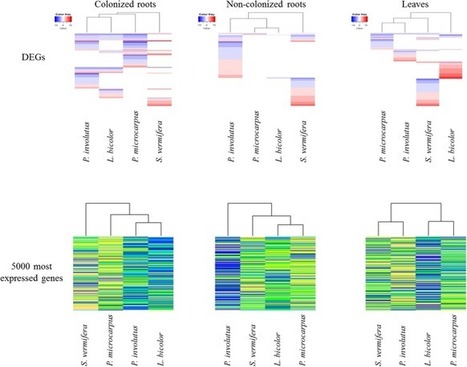
Associations of tree roots with diverse symbiotic mycorrhizal fungi have distinct effects on whole plant functioning. An untested explanation might be that such effect variability is associated with distinct impacts of different fungi on gene expression in local and distant plant organs. Using a large scale transcriptome sequencing approach, we compared the impact of three ectomycorrhizal (EMF) and one orchid mycorrhizal fungi (OMF) on gene regulation in colonized roots (local), non-colonized roots (short distance) and leaves (long distance) of the Quercus robur clone DF159 with reference to the recently published oak genome. Since different mycorrhizal fungi form symbiosis in a different time span and variable extents of apposition structure development, we sampled inoculated but non-mycorrhizal plants, for which however markedly symbiotic effects have been reported. Local root colonization by the fungi was assessed by fungal transcript analysis.
Results
The EMF induced marked and species specific effects on plant development in the analysed association stage, but the OMF did not. At local level, a common set of plant differentially expressed genes (DEG) was identified with similar patterns of responses to the three EMF, but not to the OMF. Most of these core DEG were down-regulated and correspond to already described but also new functions related to establishment of EMF symbiosis. Analysis of the fungal transcripts of two EMF in highly colonized roots also revealed onset of a symbiosis establishment. In contrast, in the OMF, the DEG were mainly related to plant defence. Already at short distances, high specificities in transcriptomic responses to the four fungi were detected, which were further enhanced at long distance in leaves, where almost no common DEG were found between the treatments. Notably, no correlation between phylogeny of the EMF and gene expression patterns was observed.
Conclusions
Use of clonal oaks allowed us to identify a core transcriptional program in roots colonized by three different EMF, supporting the existence of a common EMF symbiotic pathway. Conversely, the specific responses in non-colonized organs were more closely related to the specific impacts of the different of EMF on plant performance.
|
|
Scooped by
Jean-Michel Ané
June 18, 2020 10:20 PM
|
Several aspects of the legume–rhizobia symbiosis are far from being completely understood, such as the transport of compounds through the symbiosome membrane and the molecular actors (receptors, transcription factors and hormones) involved in the systemic regulation of nodulation. In this work, the transcriptomes of L. japonicus plants growing under symbiotic or non-symbiotic conditions were studied in roots and shoots, in order to look for new genes involved in nodule function and regulation both at the local and systemic levels. Several of the genes differentially expressed in roots were well-known nodulins; however, other genes with unknown function were also discovered that showed univocal nodule-specific expression profiles. Transporters of the Nitrate Transporter1/Peptide Transporter Family family, putative oligopeptide transporters, as well as other uncharacterized transporters were upregulated in nodulated roots. Five transcription factors, as well as receptors/kinases and an f-box domain containing protein, all of unknown function, were also more upregulated in nodulated roots. In the shoots of nodulated plants, genes involved in jasmonic acid and indole-3-acetic acid metabolism were differentially expressed. Moreover, three genes encoding for different glutaredoxins, proteins that were recently involved in the systemic signaling of the Arabidopsis nitrogen status, were highly downregulated in the leaves of nodulated plants. Protein–protein interaction network analysis identified nitrate reductase as a central hub in nitrogen metabolism, and a putative protein of the NADH-ubiquinone complex was highly connected to several SWEET transporters. Clustering analysis of the differentially expressed genes also suggested a possible role for a previously uncharacterized ethylene-responsive transcription factor and for LBD38 homologs in L. japonicus nodule function. The new genes identified in this study represent a promising target for the understating and manipulation of symbiotic nitrogen fixation, with the aim of improving crop legumes’ productivity.
|
|
Scooped by
Jean-Michel Ané
June 18, 2020 10:17 PM
|
Soybean root rot is a typical soil-borne disease that severely affects the yield of soybean, and F. mosseae, the dominant strain of AMF in continuous cropping of soybean. The aim of this study was to providing an experimental basis for the study of the molecular mechanism underlying the alleviation of the obstacles associated with the continuous cropping of soybean by AMF. In this study, F. mosseae was inoculated in soil planted with soybean infected with F. oxysporum. The results showed that the incidence of soybean root rot was significantly reduced after inoculation with F. mosseae. The significantly upregulated genes encoded the ABC transporter, ATP-binding/permease protein and the ABC transporter, ATP-binding protein. The significantly downregulated genes encoded chitin-binding domain proteins; key enzymes involved in metabolic pathways such as glycolysis, including class II fructose-bisphosphate aldolase and NAD-dependent glyceraldehyde-3-phosphate dehydrogenase, glycoside hydrolase family 61 protein, which hydrolyse cellulose and hemicellulose; actin and other major components of the cytoskeleton. The DEGs were enriched in antigen processing and presentation, carbon fixation in photosynthetic organisms, glycolysis/gluconeogenesis, the MAPK signalling pathway, protein processing in the endoplasmic reticulum and RNA degradation. Inoculation with F. mosseae could promote the growth and development of soybean and improve disease resistance. This study provides an experimental basis for further research on the molecular mechanism underlying the alleviation of challenges associated with the continuous cropping of soybean by AMF.
|
|
Scooped by
Jean-Michel Ané
June 17, 2020 6:38 PM
|
An increasing number of organisms are subjected to abiotic (e.g., air, water, and soil quality, temperature), but also biotic (e.g., new pathogens) stressors. These stressors may disturb the chemical and physiological homeostasis of living systems, and thus impact their ecology and evolution. Because eukaryotes are often associated with symbionts, these changes do not only impact the host but rather the holobiont, an assemblage of interacting species. Indeed, stressors can modify the symbiotic community composition and functions directly, but also indirectly through their impact on host physiology. Any disruption of the symbiotic homeostasis can then impact the host fitness. On the other side, several symbionts protect their host against various threats, and they may facilitate the adaptation of the holobiont to the new environment by limiting the negative impact of stress on the host. It now remains to clarify if their presence constitutes a driver of adaptation of the host or an obstacle limiting the selection of adaptive traits in the host, and to discuss if symbiosis is always the optimal strategy to cope with stressors. The reciprocal impact between stress and symbiosis can become more complex when stressors are considered in combination, as it occurs in nature. Indeed, synergistic or antagonistic effects may impact the holobiont response, and studies characterizing individual disturbances may not be sufficient. In the current context of climate change and globalized pollution, it is thus crucial to develop integrative approaches to predict how organisms, communities and ecosystems will face combinations of stressors.
|


 Scoop.it!









Great paper from @hufnagelbarbara and @PeretLab