Your new post is loading...

|
Scooped by
Jean-Michel Ané
August 15, 2020 2:51 PM
|
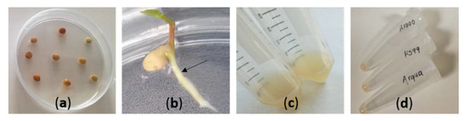
Previous efforts to transform lentil have been considerably hampered by the crop’s recalcitrant nature, giving rise to particularly low transformation and regeneration frequencies. This study aimed at optimizing an Agrobacterium rhizogenes-mediated transformation protocol for the generation of composite lentil plantlets, comprised of transgenic hairy roots and wild-type shoots. Transformation was performed by inoculating the cut hypocotyl of young lentil seedlings, while optimization involved the use of different bacterial strains, namely R1000, K599 and Arqua, and protocols differing in media composition with respect to the presence of acetosyringone and MES. Composite plantlets had a transgenic hairy root system characterized by an increased number of hairy roots at the hypocotyl proximal region, occasionally showing plagiotropic growth. Overall findings underline that transformation frequencies are subject to the bacterial strain, media composition as well as their combined effect. Among strains tested, R1000 proved to be the most capable of hairy root formation, while the presence of both acetosyringone and MES in inoculation and culture media yielded considerably higher transformation rates. The transgenic nature of hairy roots was demonstrated by the Ri T-DNA-mediated transfer of the rolB2 gene and the simultaneous absence of the virCD sequence of A. rhizogenes. Our findings provide strong evidence that A. rhizogenes-mediated transformation may be employed as a suitable approach for generating composite seedlings in lentil, a species whose recalcitrance severely hampers all efforts addressed to transformation and whole plant regeneration procedures. To the best of our knowledge, this is the first report on the development of a non-laborious and time-efficient protocol for the generation of transgenic hairy roots in lentil, thus providing an amenable platform for root biology and gene expression studies in the context of improving traits related to biotic and abiotic stress tolerance.
|
|
Scooped by
Jean-Michel Ané
August 15, 2020 1:08 PM
|
Tropical Montane Forests are unique climate-influenced ecosystems with a vital role for some ecosystem services, of which one of the most important is soil carbon storage. Changes in forest cover affect forest structure, composition and functioning, but little is known about how such changes influence the belowground carbon content. In this study, we addressed this issue by evaluating whether fine-root production differed between forest-cover types and contrasting seasons after controlling arbuscular mycorrhizal fungi (AMF) traits, and what the minimum time required to detect such differences is. We also determined whether AMF-related traits were affected by distinct forest cover and seasons after controlling fine-root production. The objects of study were four forests with distinct degradation histories in the Atlantic Forest: Old-growth, Post-selective logging, Post-clear-cut and Post-pasture forests. Data were collected in four 2500-m2 plots installed in each area and analyzed through multivariate statistics. Fine-root production differed significantly between forest covers, and marginally between seasons, as it was greater in the post-pasture area and in the rainy season. Some AMF traits also differed between forest covers and seasons, especially the abundance of viable spores in the dry season. We found that the shortest period necessary to identify differences in the production of fine roots was over three months. This study shows that forests with different degradation histories and annual climatic variations significantly affect fine-root production and AMF dynamics in Tropical Montane Forests. In particular, ecosystems that have been more perturbed tend to invest more in fine-root production (post-pasture). Our results help to better understand belowground interactions and biomass investment under different managed ecosystems.
|
|
Scooped by
Jean-Michel Ané
August 15, 2020 1:03 PM
|
For all living organisms, nitrogen is an essential element, while being the most limiting in ecosystems and for crop production. Despite the significant contribution of synthetic fertilizers, nitrogen requirements for food production increase from year to year, while the overuse of agrochemicals compromise soil health and agricultural sustainability. One alternative to overcome this problem is biological nitrogen fixation (BNF). Indeed, more than 60% of the fixed N on Earth results from BNF. Therefore, optimizing BNF in agriculture is more and more urgent to help meet the demand of the food production needs for the growing world population. This optimization will require a good knowledge of the diversity of nitrogen-fixing microorganisms, the mechanisms of fixation, and the selection and formulation of efficient N-fixing microorganisms as biofertilizers. Good understanding of BNF process may allow the transfer of this ability to other non-fixing microorganisms or to non-leguminous plants with high added value. This minireview covers a brief history on BNF, cycle and mechanisms of nitrogen fixation, biofertilizers market value, and use of biofertilizers in agriculture. The minireview focuses particularly on some of the most effective microbial products marketed to date, their efficiency, and success-limiting in agriculture. It also highlights opportunities and difficulties of transferring nitrogen fixation capacity in cereals.
|
|
Scooped by
Jean-Michel Ané
August 15, 2020 12:50 PM
|
Across the tree of life, hosts have evolved mechanisms to control and mediate interactions with symbiotic partners. We suggest that the evolution of physical structures that allow hosts to spatially separate symbionts, termed compartmentalization, is a common mechanism used by hosts. Such compartmentalization allows hosts to: (i) isolate symbionts and control their reproduction; (ii) reward cooperative symbionts and punish or stop interactions with non-cooperative symbionts; and (iii) reduce direct conflict among different symbionts strains in a single host. Compartmentalization has allowed hosts to increase the benefits that they obtain from symbiotic partners across a diversity of interactions, including legumes and rhizobia, plants and fungi, squid and Vibrio, insects and nutrient provisioning bacteria, plants and insects, and the human microbiome. In cases where compartmentalization has not evolved, we ask why not. We argue that when partners interact in a competitive hierarchy, or when hosts engage in partnerships which are less costly, compartmentalization is less likely to evolve. We conclude that compartmentalization is key to understanding the evolution of symbiotic cooperation.
|
|
Scooped by
Jean-Michel Ané
August 13, 2020 10:20 PM
|
As the world erupts with demands for racial justice, the chemistry community has the obligation, opportunity and momentum to drive for diversity and inclusion in the sciences. Efforts towards that end must begin by allocating opportunities for success on the basis of potential, not privilege, and follow through by soliciting and acting upon feedback from the scholars we have recruited.
|
|
Scooped by
Jean-Michel Ané
August 13, 2020 4:55 PM
|
Previous studies have revealed duplications and diversification of myosin XI genes between angiosperms and bryophytes; however, the functional differentiation and conservation of myosin XI between them remain unclear. Here, we identified a single myosin XI gene from the liverwort Marchantia polymorpha (Mp). The molecular properties of Mp myosin XI are similar to those of Arabidopsis myosin XIs responsible for cytoplasmic streaming, suggesting that the motor function of myosin XI is able to generate cytoplasmic streaming. In cultured Arabidopsis cells, transiently expressed green fluorescent protein (GFP)‐fused Mp myosin XI was observed as some intracellular structures moving along the F‐actin. These intracellular structures were co‐localized with motile endoplasmic reticulum (ER) strands, suggesting that Mp myosin XI binds to the ER and generates intracellular transport in Arabidopsis cells. The tail domain of Mp myosin XI was co‐localized with that of Arabidopsis myosin XI‐2 and XI‐K, suggesting that all these myosin XIs bind to common cargoes. Furthermore, expression of GFP‐fused Mp myosin XI rescued the defects of growth, cytoplasmic streaming and actin organization in Arabidopsis multiple myosin XI knockout mutants. The heterologous expression experiments demonstrated the cellular and physiological competence of Mp myosin XI in Arabidopsis. However, the average velocity of organelle transport in Marchantia rhizoids was 0.04 ± 0.01 μm s−1, which is approximately one‐hundredth of that in Arabidopsis cells. Taken together, our results suggest that the molecular properties of myosin XI are conserved, but myosin XI‐driven intracellular transport in vivo would be differentiated from bryophytes to angiosperms.
|
|
Scooped by
Jean-Michel Ané
August 11, 2020 10:29 PM
|
The nitrogen fixing ability of common bean (Phaseolus vulgaris L.) in association with rhizobia is often characterized as poor compared to other legumes, and nitrogen fertilizers are commonly used in bean production to achieve high yields, which in general inhibits nitrogen fixation. In addition, plants cannot take up all the nitrogen applied to the soil as a fertilizer leading to runoff and groundwater contamination. The overall objective of this work is to reduce use of nitrogen fertilizer in common bean production. This would be a major advance in profitability for the common bean industry in Canada and would significantly improve the ecological footprint of the crop. In the current work, 22 bean genotypes [including recombinant inbred lines (RILs) from the Mist × Sanilac population and a non-nodulating mutant (R99)] were screened for their capacity to fix atmospheric nitrogen under four nitrogen regimes. The genotypes were evaluated in replicated field trials on N-poor soils over three years for the percent nitrogen derived from atmosphere (%Ndfa), yield, and a number of yield-related traits. Bean genotypes differed for all analyzed traits, and the level of nitrogen significantly affected most of the traits, including %Ndfa and yield in all three years. In contrast, application of rhizobia significantly affected only few traits, and the effect was inconsistent among the years. Nitrogen application reduced symbiotic nitrogen fixation (SNF) to various degrees in different bean genotypes. This variation suggests that SNF in common bean can be improved through breeding and selection for the ability of bean genotypes to fix nitrogen in the presence of reduced fertilizer levels. Moreover, genotypes like RIL_38, RIL_119, and RIL_131, being both high yielding and good nitrogen fixers, have potential for simultaneous improvement of both traits. However, breeding advancement might be slow due to an inconsistent correlation between these traits.
|
|
Scooped by
Jean-Michel Ané
August 8, 2020 10:28 PM
|
The enzyme molybdenum nitrogenase converts atmospheric nitrogen gas to ammonia and is of critical importance for the cycling of nitrogen in the biosphere and for the sustainability of life. Alternative vanadium and iron-only nitrogenases that are homologous to molybdenum nitrogenases are also found in archaea and bacteria, but they have a different transition metal, either vanadium or iron, at their active sites. So far alternative nitrogenases have only been found in microbes that also have molybdenum nitrogenase. They are less widespread than molybdenum nitrogenase in bacteria and archaea, and they are less efficient. The presumption has been that alternative nitrogenases are fail-safe enzymes that are used in situations where molybdenum is limiting. Recent work indicates that vanadium nitrogenase may play a role in the global biological nitrogen cycle and iron-only nitrogenase may contribute products that shape microbial community interactions in nature.
|
|
Scooped by
Jean-Michel Ané
August 8, 2020 10:26 PM
|
Mycoheterotrophic plants are non-photosynthetic plants that obtain nutrients from fungi. Even though most of these plants are associated with the mycorrhizal partners of surrounding photosynthetic plants, recent studies have suggested that some mycoheterotrophic orchids indirectly obtain carbon from decaying organic matter through associations with saprotrophic fungi. However, such suggestions have been based primarily on indirect evidence, such as the 13C and 15N abundances of fungi and plants. It was recently reported that some mycoheterotrophs yield elevated Δ 14C values, owing to the indirect acquisition of 14C-enriched bomb carbon from dead wood. The approach was based on the anthropogenic change of Δ 14C values; atmospheric CO2 were globally elevated by nuclear weapons testing in the 1950s and early 1960s, but have steadily declined since its peak after the atmospheric nuclear test ban treaty of 1963. The study has provided novel evidence that mycoheterotrophic plants can exploit both mycorrhizal and saprotrophic fungi. We suggest that the radiocarbon analysis is also useful for investigating the nutritional modes of mixotrophic plants as well as for investigating whether the recruitment of wood-decaying fungi into novel mycorrhizal partnerships preceded the evolution of full mycoheterotrophy.
|
|
Scooped by
Jean-Michel Ané
August 8, 2020 10:21 PM
|
Arbuscular mycorrhizal fungi (AMF) are ubiquitous in cultivated soils, forming symbiotic relationships with the roots of major crop species. Although physiological and molecular genetic studies have demonstrated the potential of the symbiosis to enhance host plant nutrition and alleviate environmental stress, experimental difficulties have complicated estimation of the actual benefit in the field. Furthermore, host response to the symbiosis can range from positive to negative depending on the plant variety. Here, a novel mapping strategy, based on the use of AMF-resistant plant varieties, was implemented to evaluate maize response to arbuscular mycorrhiza in the field. AMF were found to make a significant contribution to plant growth and yield components, both in terms of absolute affect and as a driver of variation among plant genotypes. Characterization of the genetic architecture of host response distinguished mycorrhiza dependence and benefit and indicated genetic trade-off between mycorrhizal and non-mycorrhizal growth. This approach is applicable to other crop species, permits further mechanistic analysis and is scalable to yield trials.
|
|
Scooped by
Jean-Michel Ané
August 8, 2020 10:09 PM
|
We write this commentary in response to a recent paper by Barros et al. (2020) which reports rates of N2 fixation of 0–265 kg ha−1 (above-ground biomass only with no accounting of fixed N in the roots) by 15 sorghum (Sorghum bicolor (L.) Moench) genotypes at four sites in Brazil. The high values reported require careful consideration because they are up to ten times higher than observed elsewhere in Brazil on sorghum inoculated with diazotrophs specifically selected from parallel glasshouse experiments (dos Santos et al. 2017). Sorghum is a widely-grown poaceous grain crop, but one not known for its N2-fixing capability. Based on the data presented, we calculate the rate of N2 fixation would have needed to exceed 3 kg ha−1 day−1 during the first 90 days of growth for the highest fixing sorghum genotype, a rate higher than observed for most N2-fixing legumes (e.g. soybean, Glycine max (L.) Merrill; La Menza et al. 2020). Barros et al. (2020) used a methodology that relies on small natural differences in 15 N abundance (usually expressed as δ15N; parts per thousand relative to atmospheric N2) which generally occur between atmospheric N2 and plant-available N in the soil, the latter sampled with a known non-N2-fixing plant. The N2-fixing plants, partly or wholly rely on atmospheric N2 as an N source for growth, display significantly lower δ15N than plants with lesser or no dependence on N2 fixation. At the two sites at which sorghum δ15N were significantly different to the δ15N of the non-N2-fixing reference plants, the median Ndfa was calculated to be 52% and shoot N fixed 45 kg N ha−1.
|
|
Scooped by
Jean-Michel Ané
August 8, 2020 10:01 PM
|
Mycorrhizal fungi transfer nutrients to plants in exchange for photosynthates. Plants allocate up to 20% of their carbon to mycorrhizal structures, mycelium and fruit bodies of their fungal partners. Individuals of mycorrhizal fungi may encompass hundreds of square metres of soil and defragmented litter, linking multiple plant individuals of different species and size (Figure 1). Using a free‐air 13CO2 enrichment (web‐FACE) technique in a mature forest, interspecific transfer accounted for 40% of fine root carbon after 5 years of back and forth transfer between trees. In this issue of Molecular Ecology, Rog, Rosenstock, Körner, and Klein (2020) show that closely related trees shared relatively more mycorrhizal fungi than distantly related trees in the same experimental site, which correlated to increased carbon sharing.
|
|
Scooped by
Jean-Michel Ané
August 8, 2020 9:53 PM
|
Arbuscular mycorrhizal fungi (AMF) play an important role in phosphorus (P) nutrition of plants. Varietal differences in AMF infection occur but there is limited information on the importance of these differences to P efficiency in wheat. This work was conducted to determine whether variation in AMF infection could help explain genetic differences in responses to P. Ten wheat varieties that vary in their grain yield response to P were compared at different rates of P in two controlled environment experiments. Plant samples were also collected from a field experiment with two P rates. Significant genetic variation was observed for AMF colonization in all experiments, but these differences were not consistently related to the yield responsiveness to P among the ten varieties. Two varieties, Carazinho and RAC875 that have a low yield response to P, had consistently high root colonization while a P-responsive variety, Wyalkatchem, had low root colonization. Adding P fertilizer reduced AMF colonization and at high P rates negative associations between AMF colonization and seedling growth and P uptake were observed among the varieties. Among some varieties, their grain yield response to P and P efficiency were consistent with their AMF colonization. However, the negative effect of mycorrhizal infection on seedling growth at high soil P suggests AMF colonization may only be a suitable trait for improved P efficiency in farming systems where available P is consistently low.
|
|
|
Scooped by
Jean-Michel Ané
August 15, 2020 1:08 PM
|
Microorganismal diversity can be explained in large part by selection imposed from both the abiotic and biotic environments, including—in the case of host-associated microbiomes—interactions with eukaryotes. As such, the diversity of host-associated microbiomes can be usefully studied across a variety of scales: within a single host over time, among host genotypes within a population, between populations and among host species. A plethora of recent studies across these scales and across diverse systems are: (i) exemplifying the importance of the host genetics in shaping microbiome composition; (ii) uncovering the role of the microbiome in shaping key host phenotypes; and (iii) highlighting the dynamic nature of the microbiome. They have also raised a critical question: do these complex associations fit within our existing understanding of evolution and coevolution, or do these often intimate and seemingly cross-generational interactions follow novel evolutionary rules from those previously identified? Herein, we describe the known importance of (co)evolution in host–microbiome systems, placing the existing data within extant frameworks that have been developed over decades of study, and ask whether there are unique properties of host–microbiome systems that require a paradigm shift. By examining when and how selection can act on the host and its microbiome as a unit (termed, the holobiont), we find that the existing conceptual framework, which focuses on individuals, as well as interactions among individuals and groups, is generally well suited for understanding (co)evolutionary change in these intimate assemblages.
|
|
Scooped by
Jean-Michel Ané
August 15, 2020 1:07 PM
|
Plants recruit specific microorganisms to live inside and outside their roots that provide essential functions for plant growth and health. The study of the microbial communities living in close association with plants helps in understanding the mechanisms involved in these beneficial interactions. Currently, most of the research in this field has been focusing on the description of the taxonomic composition of the microbiome. Therefore, a focus on the plant-associated microbiome functions is pivotal for the development of novel agricultural practices which, in turn, will increase plant fitness. Recent advances in microbiome research using model plant species started to shed light on the functions of specific microorganisms and the underlying mechanisms of plant–microbial interaction. Here, we review (1) microbiome-mediated functions associated with plant growth and protection, (2) insights from native and agricultural habitats that can be used to improve soil health and crop productivity, (3) current -omics and new approaches for studying the plant microbiome, and (4) challenges and future perspectives for exploiting the plant microbiome for beneficial outcomes. We posit that integrated approaches will help in translating fundamental knowledge into agricultural practices.
|
|
Scooped by
Jean-Michel Ané
August 15, 2020 12:53 PM
|
Plants use a variety of hormonal and peptide signals to control root development, including in adapting root development to cope with nutrient stress. Nitrogen (N) is a major limiting factor in plant growth and in response to N stress plants dramatically modulate root development, including in legumes influencing the formation of N-fixing nodules in response to external N supply. Recently, specific CLE peptides and/or receptors important for their perception, including CLV1 and CLV2, have been found to play important roles in root development in a limited number of species, including in some cases the response to N. In the legume Medicago truncatula, this response also appears to be influenced by RDN1, a member of the hydroxyproline O-arabinosyltransferase (HPAT) family which can modify specific CLE peptides. However, it not known if this signalling pathway plays a central role in root development across species, in particular root responses to N. In this study, we sought to systematically examine the role of homologues of these genes in root development of the legume pea (Pisum sativum. L) and non-legume tomato (Solanum lycopersicum) using a mutant based approach. This included a detailed examination of root development in response to N in these mutant series in tomato. We found no evidence for a role of these genes in pea seedling root development. Furthermore, the CLV1-like FAB gene did not influence tomato root development, including N response. In contrast, both CLV2 and the HPAT FIN appear to positively influence root size in tomato but do not mediate root responses to N. These suggest a relatively species-specific role for these genes in root development, including N regulation of root architecture.
|
|
Scooped by
Jean-Michel Ané
August 13, 2020 10:32 PM
|
Healthy plants host diverse but taxonomically structured communities of microorganisms, the plant microbiota, that colonize every accessible plant tissue. Plant-associated microbiomes confer fitness advantages to the plant host, including growth promotion, nutrient uptake, stress tolerance and resistance to pathogens. In this Review, we explore how plant microbiome research has unravelled the complex network of genetic, biochemical, physical and metabolic interactions among the plant, the associated microbial communities and the environment. We also discuss how those interactions shape the assembly of plant-associated microbiomes and modulate their beneficial traits, such as nutrient acquisition and plant health, in addition to highlighting knowledge gaps and future directions.
|
|
Scooped by
Jean-Michel Ané
August 13, 2020 4:56 PM
|
Modern agriculture is facing challenge to ensure global food demand. However, climate change is causing increase in temperature which leads to severe droughts in some areas. Numerous biotechnological techniques are being used to overcome this drought stress, among them the use of arbuscular mycorrhizal fungi (AMF) is thought to be a proficient approach for mitigation of drought stress. AMF provide drought tolerance by biochemical and physiological mechanisms. Some of well known mechanisms include modification of hormonal balance including strigolactones, abscisic acid, gibberellic acid, salicylic acid, and jasmonic acid. AMF improve plant water status by increasing hydraulic conductivity, stomatal conductance, water use efficiency, relative water content, and biomass content. Symbiosis of AMF changes expression of plasma membrane and tonoplast aquaporins (water transporting channels) (PIPs and TIPs), which improves water status of the plant. AM increases the rate of photosynthesis of plant by mending photosystem-II (PSII) and boosts quantum efficiency of PSII under drought stress conditions. AM alters the transcript levels of chloroplast genes encoding antenna proteins involved in transfer of excitation energy. This chapter mainly focuses on the mechanisms adopted by AM to provide drought tolerance to plants.
|
|
Scooped by
Jean-Michel Ané
August 11, 2020 10:32 PM
|
Background
DELLAs play key roles in plant gibberellin signaling pathways and are generally important in plant development and growth. However, DELLAs in many plant taxa have not yet been systematically analyzed.
Results
In our study, we searched for DELLA genes across 58 green plant genomes and found 181 DELLAs. Structure analysis showed some DELLA domains do not contain “D-E-L-L-A” sequences and instead contain similar domains, including DGLLA and DSLLH domains. “VHYNP” motifs in plant DELLAs comprise 23 types of sequences, while some DELLAs did not contain GRAS domains. In grape, we found that the DELLA protein GSVIVT01015465001 contains an F-box domain, while apple DELLA proteins MDP0000220512 and MDP0000403162 contain a WW domain and a BCIP domain, respectively. These DELLAs can be divided into 22 homologous groups and 17 orthologous groups, and 35 paralogous genes were identified. In total, 35 positively selected genes (PSGs) and 121 negatively selected genes (NSGs) were found among DELLAs based on selective pressure analysis, with an average Ks of NSGs that was significantly higher than that of PSGs (P < 0.05). Among the paralogous groups, CBI and Fop were significantly positively correlated with GC, GC1, GC2, GC12, and GC3, while CAI was significantly positively correlated with GC, GC1, GC12, and GC. The paralogous groups with ω values exceeding 1 had significantly higher Ka values. We also found some paralogous groups with ω values exceeding 1 that differed in their motifs.
Conclusions
This study provides helpful insights into the evolution of DELLA genes and offers exciting opportunities for the investigation of DELLA functions in different plants.
|
|
Scooped by
Jean-Michel Ané
August 11, 2020 10:23 PM
|
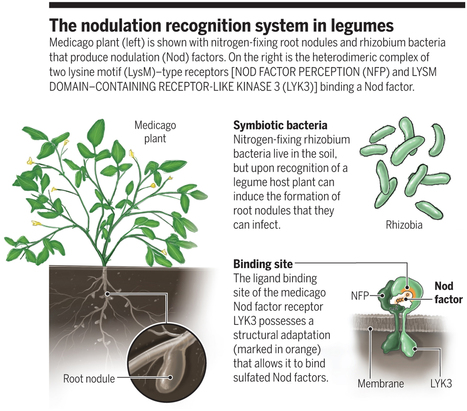
Some plant species establish mutualistic cooperation with nitrogen-fixing bacteria to overcome nitrogen shortage. The interaction between legume plants and rhizobial bacteria is the canonical example of such mutualism. It leads to the formation of root nodules, which provide the environment for the bacteria to convert atmospheric dinitrogen into ammonia. Nodule formation is initiated by rhizobium-secreted compounds called nodulation (Nod) factors. Perception of Nod factors by receptors in the plant root cells initiates nodule organogenesis and is essential for bacterial infection (1). Several legumes evolved a narrow host range such that only one or a few rhizobium species can initiate nodulation (2). This specificity is largely determined by the Nod factor receptors. On page 663 of this issue, Bozsoki et al. (3) provide structural characterization of the binding site of a Nod factor receptor in legumes. The structural basis of rhizobial Nod factor recognition is a key to understanding the evolution of specificity in symbioses.
|
|
Scooped by
Jean-Michel Ané
August 8, 2020 10:28 PM
|
Three new arbuscular mycorrhizal fungal species—Glomus ibericum, Septoglomus mediterraneum, and Funneliformis pilosus—are described and illustrated. In the field, the three species were associated with roots of Ammophila arenaria (Poaceae), Elymus farctus (Poaceae), Otanthus maritimus (Asteraceae), and Echinophora spinosa (Apiaceae) colonizing maritime dunes located along the Mediterranean coast in eastern Spain. The novelty of these species is supported by morphological, molecular, and phylogenetic analyses. Single-species cultures of S. mediterraneum and F. pilosus were obtained using Trifolium repens as a host plant, both forming arbuscular mycorrhizae, whereas single-species cultures from G. ibericum could not be obtained. Spores of G. ibericum usually occur in sporocarps, rarely singly in soil or inside roots. In contrast, S. mediterraneum only forms single spores in soil and F. pilosus occurs in sporocarps and singly in soil or inside roots. The respective small subunit, internal transcribed spacer, and large subunit (SSU-ITS1-5.8S-ITS2-LSU) nrDNA sequences placed the new species in the genera Glomus, Septoglomus, and Funneliformis, all of them separated from previously described species.
|
|
Scooped by
Jean-Michel Ané
August 8, 2020 10:25 PM
|
Fungi are key players in vital ecosystem services, spanning carbon cycling, decomposition, symbiotic associations with cultivated and wild plants and pathogenicity. The high importance of fungi in ecosystem processes contrasts with the incompleteness of our understanding of the patterns of fungal biogeography and the environmental factors that drive those patterns. To reduce this gap of knowledge, we collected and validated data published on the composition of soil fungal communities in terrestrial environments including soil and plant-associated habitats and made them publicly accessible through a user interface at https://globalfungi.com. The GlobalFungi database contains over 600 million observations of fungal sequences across > 17 000 samples with geographical locations and additional metadata contained in 178 original studies with millions of unique nucleotide sequences (sequence variants) of the fungal internal transcribed spacers (ITS) 1 and 2 representing fungal species and genera. The study represents the most comprehensive atlas of global fungal distribution, and it is framed in such a way that third-party data addition is possible.
|
|
Scooped by
Jean-Michel Ané
August 8, 2020 10:21 PM
|
Members of the order Rhizobiales include those capable of nitrogen fixation in nodules as well as pathogens of animals and plants. This lifestyle diversity has important implications for agricultural and medical research. Leveraging large-scale genomic data, we infer that Rhizobiales originated as a free-living ancestor ∼1,500 million years ago (Mya) and that the later emergence of host-associated lifestyles broadly coincided with the rise of their eukaryotic hosts. In particular, the first nodulating lineage arose from either Azorhizobium or Bradyrhizobium 150 to 80 Mya, a time range in general concurrent with the emergence of legumes. The rates of lifestyle transitions are highly variable; nodule association is more likely to be lost than gained, whereas animal association likely represents an evolutionary dead end. We searched for statistical correlations between gene presence and lifestyle and identified genes likely contributing to the transition and adaptation to the same lifestyle in divergent lineages. Among the genes potentially promoting successful transitions to major nodulation lineages, the nod and nif clusters for nodulation and nitrogen fixation, respectively, were repeatedly acquired during each transition; the fix, dct, and phb clusters involved in energy conservation under micro-oxic conditions were present in the nonnodulating ancestors; and the secretion systems were acquired in lineage-specific patterns. Our study data suggest that increased eukaryote diversity drives lifestyle diversification of bacteria and highlight both acquired and preexisting traits facilitating the origin of host association.
|
|
Scooped by
Jean-Michel Ané
August 8, 2020 10:04 PM
|
Legumes and actinorhizal plants are capable of forming root nodules symbiosis with rhizobia and Frankia bacteria. All these nodulating species belong to the nitrogen fixation clade. Most likely, nodulation evolved once in the last common ancestor of this clade. NIN (NODULE INCEPTION) is a transcription factor that is essential for nodulation in all studied species. Therefore, it seems probable that it was recruited at the start when nodulation evolved. NIN is the founding member of the NIN-like protein (NLP) family. It arose by duplication, and this occurred before nodulation evolved. Therefore, several plant species outside the nitrogen fixation clade have NLP(s), which is orthologous to NIN. In this review, we discuss how NIN has diverged from the ancestral NLP, what minimal changes would have been essential for it to become a key transcription controlling nodulation, and which adaptations might have evolved later.
|
|
Scooped by
Jean-Michel Ané
August 8, 2020 9:59 PM
|
Understanding the diversity and community composition of arbuscular mycorrhizal (AM) fungi in stressful conditions is fundamental to predicting the occurrence and function of indigenous AM fungal associations in a changing soil environment. Here, using whole-soil inoculum, we investigated the effects of salinity on community structure and colonization rate of AM fungi in roots, and assessed their influence on maize (Zea mays L.) performance. Three different salinity treatments (0, 75, and 150 mM NaCl) were applied to mycorrhizal inoculated and non-inoculated plants. Results showed that salinity levels significantly influenced AM fungal composition and diversity as well as vesicular and hyphal colonization in roots. The AM fungal community composition and diversity index differed slightly under the 0 and 75 mM NaCl treatments, but changed significantly under the 150 mM NaCl treatment. Increased vesicular and declined hyphal colonization were observed under 75 and 150 mM NaCl treatments relative to the control. Further analyses uncovered that plants under the 0 and 75 mM NaCl treatments, where Glomeraceae predominated as root symbionts, had a higher mycorrhizal growth response than plants under the 150 mM NaCl treatment, where Claroideoglomeraceae abundance increased significantly. This study provides evidence that saline stress plays a vital role in community structure and root colonization by AM fungal communities. Additionally, our data suggested that community composition may be more important for mycorrhizal symbiotic function than the rate of root colonization. Finally, while the relative abundance of Claroideoglomeraceae was found to increase with stress in saline soil, their role needs to be further clarified in future studies.
|