Your new post is loading...

|
Scooped by
Jean-Michel Ané
August 26, 2020 10:48 PM
|
The future of the world’s flora may depend as much, if not more, on what’s below the ground as what’s above. Beneath 90% of all plants lies an invisible support system—subterranean fungal partners that form a network of filaments connecting plants and bringing nutrients and water to their roots. In return, the plants provide a steady supply of carbon to the fungi. Now, researchers are learning that these hidden partners can shape how ecosystems respond to climate change.
The right fungal partners can help plants survive warmer and drier conditions, according to a study reported earlier this month at the online annual meeting of the Ecological Society of America. But other studies at the meeting showed climate change can also disrupt these so-called mycorrhizal fungi, possibly speeding the demise of their host plants. “The picture is becoming clearer that we really cannot ignore the responses of mycorrhizal fungi to climate change,” says Matthias Rillig, an ecologist at the Free University of Berlin.
|
|
Scooped by
Jean-Michel Ané
August 25, 2020 10:19 PM
|
Microbiomes associated with various plant structures often contain members with the potential to make specialized metabolites, e.g., molecules with antibacterial, antifungal, or siderophore activities. However, when and where microbes associated with plants produce specialized metabolites, and the potential role of these molecules in mediating intramicrobiome interactions, is not well understood. Root nodules of legume plants are organs devoted to hosting symbiotic bacteria that fix atmospheric nitrogen and have recently been shown to harbor a relatively simple accessory microbiome containing members with the ability to produce specialized metabolites in vitro. On the basis of these observations, we sought to develop a model nodule microbiome system for evaluating specialized microbial metabolism in planta. Starting with an inoculum derived from field-grown Medicago sativa nodules, serial passaging through gnotobiotic nodules yielded a simplified accessory community composed of four members: Brevibacillus brevis, Paenibacillus sp., Pantoea agglomerans, and Pseudomonas sp. Some members of this community exhibited clear cooperation in planta, while others were antagonistic and capable of disrupting cooperation between other partners. Using matrix-assisted laser desorption ionization–imaging mass spectrometry, we found that metabolites associated with individual taxa had unique distributions, indicating that some members of the nodule community were spatially segregated. Finally, we identified two families of molecules produced by B. brevis in planta as the antibacterial tyrocidines and a novel set of gramicidin-type molecules, which we term the britacidins. Collectively, these results indicate that in addition to nitrogen fixation, legume root nodules are likely also sites of active antimicrobial production.
|
|
Scooped by
Jean-Michel Ané
August 25, 2020 12:50 PM
|
A wide variety of nitrogen (N)-fixing Bacteria and Archaea inhabit plant rhizospheres and endospheres. This diazotrophic community is often dominated by α-Proteobacteria, although many other taxa are also present. Diazotrophic community composition is influenced by physicochemical factors, including land use, geography, climate, and soil type. Similarly, soil N fixation rates are predicted by short-term soil physicochemical conditions (e.g., moisture, temperature, nutrient concentrations). Microbial community composition may also influence N fixation rates, but it is unclear if it does so through taxon-specific N fixation abilities, or if the physicochemical template influences the microbial community and N fixation rates similarly. In agricultural ecosystems, rhizosphere and endosphere N fixation is often assumed to be minimal, but recent mass balance data suggest that N fixation contributes nearly 25% of crop N requirements. In natural ecosystems, N fixation inputs are highly variable and uncertain, exceeding those of legumes in some systems, and barely detectable in others. Critical knowledge gaps and priorities for research include better estimates of rhizosphere and endosphere fixation rates, defining the role of diazotrophic community composition in influencing fixation rates, and elucidating the relationship between N-fixing microbes and plants.
|
|
Scooped by
Jean-Michel Ané
August 25, 2020 9:38 AM
|
Soil health is the continued capacity of soil to function as a vital living ecosystem that sustains plants, animals and humans, and connects agricultural and soil science to policy, stakeholder needs and sustainable supply-chain management. Historically, soil assessments focused on crop production, but, today, soil health also includes the role of soil in water quality, climate change and human health. However, quantifying soil health is still dominated by chemical indicators, despite growing appreciation of the importance of soil biodiversity, owing to limited functional knowledge and lack of effective methods. In this Perspective, the definition and history of soil health are described and compared with other soil concepts. We outline ecosystem services provided by soils, the indicators used to measure soil functionality and their integration into informative soil-health indices. Scientists should embrace soil health as an overarching principle that contributes to sustainability goals, rather than only a property to measure.
|
|
Scooped by
Jean-Michel Ané
August 24, 2020 1:33 PM
|
As global warming intensifies, here are the plant science innovations helping to combat climate change and grow increasingly challenging conditions.
|
|
Scooped by
Jean-Michel Ané
August 22, 2020 12:22 PM
|
Arbuscular mycorrhizal fungi (AMF) form symbiosis with most terrestrial plant roots, obtaining photosynthates in return for mineral nutrients. Ecological theories based on the economics of trading partnership predict that nutrient enrichment would suppress AMF. Experimental results from nitrogen (N) and phosphorous (P) additions, however, were highly variable, and the underlying mechanisms remain unclear. Here we show distinct AMF responses to soil N:P stoichiometry manipulations via gradients of long‐term N and P additions in a Mongolian steppe. A complementary experiment with an acid addition gradient was designed to help tease apart the effect of N‐induced acidification from N nutrient. AMF root colonization and extraradical fungal biomass progressively decreased along the P gradient under two distinct host plant species, suggesting a carbon (C)‐P tradeoff. In contrast, low to moderate N inputs increased both AMF parameters, corresponding to the increasing N:P ratio. Yet, high N inputs reduced AMF colonization and biomass, and the magnitudes of N‐led inhibition were similar to those under acid additions that induced comparable changes in soil pH. Structural equation modelling further showed that while soil N:P stoichiometry primarily controlled the effect of P addition on AMF, N‐induced soil acidity overtook the N:P stoichiometry under high N inputs and dominated the effects of reactive N on AMF. In addition, AMF community composition in roots was more dependent on host plants and unresponsive to changes in soil nutrients. We further proposed a comprehensive framework that integrates biological and geochemical effects of reactive N and P inputs on AMF. Together, these results indicate that while the C‐P tradeoff controls P suppression of AMF, N‐induced acidification dominates the N inhibition. Our findings suggest that incorporation of geochemical impacts of N and P inputs would facilitate modelling efforts to project mycorrhizal impact on plant interactions and soil C balance under future nutrient enrichment scenarios.
|
|
Scooped by
Jean-Michel Ané
August 22, 2020 12:07 PM
|
Glycine max is easily infected with root rot in continuous cropping systems, which can severely affect crop yield. Arbuscular mycorrhizal fungi (AMF) can reduce the incidence of root rot and increase plant height and biomass indices. However, the molecular changes that occur during soybean symbiosis with AMF remain largely unknown. To better understand the molecular mechanism underlying soybean symbiosis with AMF, we performed transcriptomic and proteomic analyses to explore the changes in protein expression during a high-incidence period (79 days) in asymbiotic and symbiotic plants and to identify the key proteins that regulate the mechanism of soybean symbiosis with AMF. A total of 10 104 genes were identified in the CK-vs-F comparison, and 11 562 genes were significantly differentially expressed in the AF group compared with the F group. A total of 9488 proteins were identified, with 256 differentially expressed proteins (DEPs) in the CK-vs-F comparison and 651 DEPs in the F-vs-AF comparison. Key pathways and DEPs were found to be involved in processes associated with “phenylalanine metabolism”, “plant hormone signal transduction”, “plant-pathogen interaction”, and “metabolic pathways”. The expression of phenylalanine ammonia-lyase (PAL), calcium-dependent protein kinase (CPK), and other defense-related proteins was upregulated by Funneliformis mosseae, indicating that inoculation promotes the development of soybean and increases disease resistance. Our results suggest that symbiosis promotes the growth and development of soybean and increases disease resistance. This study provides new insight into the molecular basis of the mechanism by which AMF affect plant disease resistance.
|
|
Scooped by
Jean-Michel Ané
August 22, 2020 11:13 AM
|
While the importance of mutualisms across the tree of life is recognized, it is not understood why some organisms evolve high levels of dependence on mutualistic partnerships, while other species remain autonomous or retain or regain minimal dependence on partners. We identify four main pathways leading to the evolution of mutualistic dependence. Then, we evaluate current evidence for three predictions: (a) Mutualisms with different levels of dependence have distinct stabilizing mechanisms against exploitation and cheating, (b) less dependent mutualists will return to autonomy more often than those that are highly dependent, and (c) obligate mutualisms should be less context dependent than facultative ones. Although we find evidence supporting all three predictions, we stress that mutualistic partners follow diverse paths toward—and away from—dependence. We also highlight the need to better examine asymmetry in partner dependence. Recognizing how variation in dependence influences the stability, breakdown, and context dependence of mutualisms generates new hypotheses regarding how and why the benefits of mutualistic partnerships differ over time and space.
|
|
Scooped by
Jean-Michel Ané
August 21, 2020 6:52 PM
|
Establishment of symbiotic nitrogen fixation requires coordination of both nodule development and infection events. Despite evolution of a variety of anatomical structures, the nodule organ serves a common purpose in establishing a localised area to facilitate efficient nitrogen fixation. As in all plant developmental processes, the establishment of a new nodule organ is regulated by plant hormones. During nodule initiation, regulation of plant hormone signalling is one of the major targets of symbiotic signalling. We review the role of major developmental hormones in the initiation of the nodule organ and argue that manipulation of plant hormones is a key requirement for engineering nitrogen fixation in non-legumes as the basis for improved food security and sustainability.
|
|
Scooped by
Jean-Michel Ané
August 21, 2020 6:50 PM
|
Numerous studies of terrestrial orchids have demonstrated widespread partial mycoheterotrophy, particularly the possibility of obtaining organic matter from surrounding trees through a common fungal network. Fungi are also widespread in epiphytic orchid roots, but there have been no attempts to determine if epiphytes accept organic matter from the living stems of their phorophytes. We hypothesise that such transfer does not exist because epiphytes and phorophytes harbour different fungal communities. To test this hypothesis, we tagged three short Randia sp. trees with 13C-enriched CO2 and examined 13C transfer from the phorophyte into the epiphytic orchids Grosourdya appendiculata, Dendrobium oligophyllum and Gastrochilus sp. in Cat Tien National Park, (South Vietnam, Cat Tien National Park, plot size approx. 1 ha). The coincidence of fungal sequences in the orchid roots and in the branches on which they grew was also examined. We did not detect 13C label moving from phorophytes to epiphytes. Using Illumina sequencing, 162 fungal operational taxonomic units (OTUs) were detected. The fungal communities were significantly different between the roots of epiphytes and branches of phorophytes, although no strict fungal specificity at the species level was found in either epiphytes or phorophytes.
|
|
Scooped by
Jean-Michel Ané
August 18, 2020 10:19 PM
|
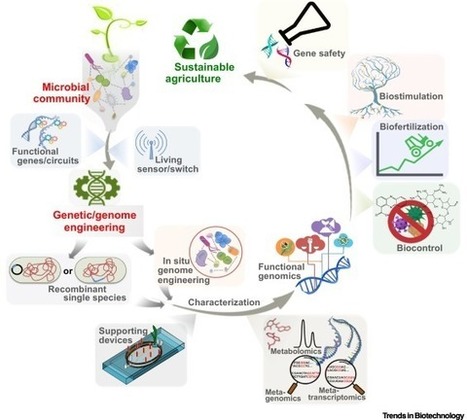
Mutualistic microbes associated with plants have enormous potential for economical and sustainable agriculture.
There are two approaches to plant microbiome engineering: the bottom-up approach that involves isolating, engineering, and reintroducing specific microbes, and the top-down approach that involves synthetic ecology, using horizontal gene transfer to a broad range of hosts in situ and then phenotyping the microbiome.
Recent advances in genome engineering tools, meta-omic tools, computational tools, and genome-wide functional genomics can improve our ability to engineer microbes for biocontrol, biofertilization, and biostimulation, as well as enhanced crop productivity and yield.
Various devices can facilitate the evaluation of genetically modified microbes before field studies.
Robust biosafety, biosecurity, and biocontainment strategies need to be developed for use of genetically modified microbes in the environment.
|
|
Scooped by
Jean-Michel Ané
August 18, 2020 10:01 PM
|
Legume plants form a symbiosis with N2-fixing soil rhizobia, resulting in new root organs called nodules that enable N2-fixation. Nodulation is a costly process that is tightly regulated by the host through Autoregulation of Nodulation (AON) and nitrate-dependent regulation of nodulation. Both pathways require legume-specific CLAVATA/ESR-related (CLE) peptides. Nitrogen-induced nodulation-suppressing CLE peptides have not previously been characterised in Medicago truncatula, with only rhizobia-induced MtCLE12 and MtCLE13 identified. Here, we report on novel peptides MtCLE34 and MtCLE35 in nodulation control pathways. The nodulation-suppressing CLE peptides of five legume species were classified into three clades based on sequence homology and phylogeny. This approached identified MtCLE34 and MtCLE35 and four new CLE peptide orthologues of Pisum sativum. Whereas MtCLE12 and MtCLE13 are induced by rhizobia, MtCLE34 and MtCLE35 respond to both rhizobia and nitrate. MtCLE34 was identified as a pseudogene lacking a functional CLE-domain. Overexpression of MtCLE12, MtCLE13 and MtCLE35 inhibits nodulation. Together, our findings indicate that MtCLE12 and MtCLE13 have a distinct role in AON, while MtCLE35 regulates nodule numbers in a rhizobia- and nitrate-dependent manner. MtCLE34 likely had a similar role to MtCLE35 but its function was lost due to a nonsense mutation resulting in the loss of the mature peptide.
|
|
Scooped by
Jean-Michel Ané
August 15, 2020 2:51 PM
|
To survive, plants and animals must continually defend against pathogenic microbes that would invade and disrupt their tissues. Yet they do not attempt to extirpate all microbes. Instead, they tolerate and even encourage the growth of commensal microbes, which compete with pathogens for resources and via direct inhibition. We argue that hosts have evolved to cooperate with commensals in order to enhance the pathogen resistance this competition provides. We briefly describe competition between commensals and pathogens within the host, consider how natural selection might favour hosts that tilt this competition in favour of commensals, and describe examples of extant host traits that may serve this purpose. Finally, we consider ways that this cooperative immunity may have facilitated the adaptive evolution of non-pathogen-related host traits. On the basis of these observations, we argue that pathogen resistance vies with other commensal-provided benefits for being the principal evolutionary advantage provided by the microbiome to host lineages across the tree of life.
|
|
|
Scooped by
Jean-Michel Ané
August 26, 2020 4:18 PM
|
Symbiotic nitrogen fixation carried out in legume root nodules requires transition metals. These nutrients are delivered by the host plant to the endosymbiotic nitrogen-fixing bacteria living with the nodule cells, a process in which vascular transport is essential. As it occurs in root-to-shoot transport, members of the Yellow Stripe-Like (YSL) family of metal transporters should also be required for root-to-nodule metal delivery. The genome of the model legume Medicago truncatula encodes for eight YSL proteins, four of them with a high degree of similarity to Arabidopsis thaliana YSLs involved in long-distance metal trafficking. Among them, MtYSL3 is a plasma membrane protein expressed by vascular cells in roots and nodules, and by cortical nodule cells. Reducing the expression levels of this gene had no major effect on plant physiology when assimilable nitrogen was provided in the nutrient solution. However, nodule functioning was severely impaired, with a significant reduction of nitrogen fixation capabilities. Further, iron and zinc accumulation and distribution changed. Iron was retained in the apical region of the nodule, while zinc became strongly accumulated in the nodule veins in the ysl3 mutant. These data suggest a role of MtYSL3 in vascular delivery of iron and zinc to symbiotic nitrogen fixation.
|
|
Scooped by
Jean-Michel Ané
August 25, 2020 12:53 PM
|
Availability of efficient DNA assembly methods is a basic requirement for synthetic biology. A variety of modular cloning systems have been developed, based on Golden Gate cloning for DNA assembly, to enable users to assemble multigene constructs from libraries of standard parts using a series of successive one-pot assembly reactions. Standard parts contain the DNA sequence coding for a genetic element of interest such as a promoter, coding sequence or terminator. Standard parts for the modular cloning system MoClo must be flanked by two BsaI restriction sites and should not contain internal sequences for two type IIS restriction sites, BsaI and BpiI, and optionally for a third type IIS enzyme, BsmBI. We provide here a detailed protocol for cloning of basic parts. This protocol requires the following steps (1) defining the type of basic part that needs to be cloned, (2) designing primers for amplification, (3) performing PCR amplification, (4) cloning of the fragments using Golden Gate cloning, and finally (5) sequencing of the part. For large basic parts, it is preferable to first clone subparts as intermediate level −1 constructs. These subparts are sequenced individually and are then further assembled to make the final level 0 module.
|
|
Scooped by
Jean-Michel Ané
August 25, 2020 12:49 PM
|
Even though beneficial plant–microbe relationships have been studied for over one century, the recognition of a complex microbiome inhabiting the plant is relatively recent and reveals new opportunities for manipulating plant growth and health. Endophytes, commonly defined as non-pathogenic microorganisms inhabiting the plant interior, constitute an important component of the plant microbiome. Specifically, bacterial endophytes gained research interest only in the past decades, due to their role in plant-growth promotion and their potential use in agriculture. New research is continuously published in this topic, with increasing sophistication provided by new technologies such as omics. For this reason, this chapter aimed to summarize current knowledge on bacterial endophytes focusing on three major aspects: (1) current knowledge on their bacterial endophytic diversity and regulation by plant and soil factors, (2) functional aspects of bacterial endophytes and available tools to study them, and (3) role of bacterial endophytes on plant fitness and potential manipulation tools in agroecosystems. To fit the scope of this book, which is the rhizosphere, the chapter focused on soil-borne facultative endophytes, even though we acknowledge the relevance of obligate vertically transmitted endophytes.
|
|
Scooped by
Jean-Michel Ané
August 24, 2020 8:34 PM
|
THE SOLUTION IS UNDER OUR FEET “Innovative…a nature documentary that will leave you feeling hopeful.” – People Magazine WATCH THE TRAILER 0 Our Goal: 1 Billion Trailer Views. Help us get there. Narrated and featuring Woody Harrelson, Kiss the Ground is an inspiring and groundbreaking film that reveals the first viable solution to our climate […]
|
|
Scooped by
Jean-Michel Ané
August 22, 2020 12:27 PM
|
Malectin-like domain-containing receptor-like kinases (MRLKs) compose a big and diverse protein family in plants that plays significant roles in biotic and abiotic stress response. However, the MRLK family members in Citrus, as well as their roles during drought stress (abiotic stress) and arbuscular mycorrhizal fungi (AMF) colonization, remain relatively unknown. In the present study, we characterized the MRLK family genes in Citrus. By analyzing the presence of malectin-like domains and searching through the Citrus genome, we identified 47 CsMRLKs located within nine chromosomes, with most CsMRLKs mainly located on chromosome 1. These 47 CsMRLK family members were classified into 6 subfamilies with distinct malectin domains. Gene expression analysis showed that all 47 CsMRLKs were expressed in the roots and exhibited differential expression patterns. During the drought stress response, CsMRLK6, 7, 8, 9, 10, 11, 19, 25, 26, and 40 were downregulated. AMF colonization downregulated the expression of CsMRLK6, 10, 11, 12, 14, 17, 20, 30, 35, 43, and 47 and upregulated the expression of CsMRLK2, 5, 13, 21, 22, 28, 29, 32, 38, 41, 45, and 46. In addition, AMF colonization and drought stress showed a synergistic effect, in which the downregulated genes became even more weakened and the upregulated genes became even more enhanced. The present study offers useful perception into the Citrus MRLK gene family and its responses in AMF colonization and drought stress.
|
|
Scooped by
Jean-Michel Ané
August 22, 2020 12:20 PM
|
Intensive agriculture requires large inputs of chemicals to avoid losses caused by pathogen infections. Exploring the rhizosphere of plants, which is an area with enormous abundance and diversity of microorganisms, represents a promising strategy to protect plants from pathogens in a sustainable way. Recent studies revealed the importance of soil microbiome in the process of natural plant defense and how current management practices can interfere in the dynamics of these microbial communities shaping a protective microbiome. This review emphasizes the main findings related to changes in rhizosphere microbiome composition and functions during plant infection by soilborne pathogens. Understanding plant-microbiome interactions in the rhizosphere is key to develop microbiome-based strategies for assembling beneficial protective resident microbial communities in production systems.
|
|
Scooped by
Jean-Michel Ané
August 22, 2020 12:03 PM
|
Arbuscular mycorrhizal fungi (AMF) are ubiquitous in cultivated soils, forming symbiotic relationships with the roots of major crop species. Although studies in controlled conditions have demonstrated the potential of the symbiosis to enhance host plant nutrition and alleviate environmental stress, practical difficulties make it hard to estimate the actual benefit in cultivated fields, not least because of the lack of availability of suitable AMF-free controls. Furthermore, the response can vary depending on the plant variety in a manner which is not fully understood. Here, we implemented a novel strategy based on the selective incorporation of AMF-resistance into a genetic mapping population to evaluate maize response in the field. We found AMF to account for about one third of the grain production in a rain-fed medium input field, as well as to impact the relative performance of plant varieties. Characterization of the genetic architecture of host response allowed us to distinguish mycorrhizal benefit from dependence and indicated a trade-off between mycorrhizal and non-mycorrhizal performance, both at the level of individual QTL and genomewide. This approach is applicable to other crop species, permits further mechanistic analysis and is scalable to full yield trials.
|
|
Scooped by
Jean-Michel Ané
August 22, 2020 11:08 AM
|
An evolutionarily ancient plant hormone receptor complex comprising the α/β-fold hydrolase receptor KARRIKIN INSENSITIVE 2 (KAI2) and the F-box protein MORE AXILLARY GROWTH 2 (MAX2) mediates a range of developmental responses to smoke-derived butenolides called karrikins (KARs) and to yet elusive endogenous KAI2 ligands (KLs). Degradation of SUPPRESSOR OF MAX2 1 (SMAX1) after ligand perception is considered to be a key step in KAR/KL signaling. However, molecular events which regulate plant development downstream of SMAX1 removal have not been identified. Here we show that Lotus japonicus SMAX1 is specifically degraded in the presence of KAI2 and MAX2 and plays an important role in regulating root and root hair development. smax1 mutants display very short primary roots and elongated root hairs. Their root transcriptome reveals elevated ethylene responses and expression of ACC Synthase 7 (ACS7), which encodes a rate-limiting enzyme in ethylene biosynthesis. smax1 mutants release increased amounts of ethylene and their root phenotype is rescued by treatment with ethylene biosynthesis and signaling inhibitors. KAR treatment induces ACS7 expression in a KAI2-dependent manner and root developmental responses to KAR treatment depend on ethylene signaling. Furthermore, in Arabidopsis, KAR-induced root hair elongation depends on ACS7. Thus, we reveal a connection between KAR/KL and ethylene signaling in which the KAR/KL signaling module (KAI2–MAX2–SMAX1) regulates the biosynthesis of ethylene to fine-tune root and root hair development, which are important for seedling establishment at the beginning of the plant life cycle.
|
|
Scooped by
Jean-Michel Ané
August 21, 2020 6:50 PM
|
Although rhizobia establishing a nitrogen-fixing symbiosis with legumes are also known to promote growth in non-legumes, studies on rhizobia association with wheat roots are scarce.
We searched for Rhizobium leguminosarum symbiovar viciae (Rlv) strains naturally competent for wheat roots colonization. We isolated 20 strains and tested the ability of a subset for wheat roots colonization when co-inoculated with other Rlv. We also measured the effect of these strains on wheat root architecture and Arbuscular Mycorrhizal Fungal (AMF) colonization.
We found a low diversity of Rlv in wheat roots compared to that observed in the Rlv species complex. Only a few strains, including those isolated from wheat roots, and one strain isolated from pea nodules, were efficient to colonize wheat roots in co-inoculation conditions. These strains had a high ability for endophytic colonization of wheat root and were able to stimulate root development and AMF colonization in single strain inoculation conditions.
These results suggest that wheat is an alternative host for some Rlv; nevertheless, there is a strong competition between Rlv strains for wheat root colonization. Furthermore, our study suggests that the level of endophytic colonization is critical for Rlv ability to promote wheat growth.
|
|
Scooped by
Jean-Michel Ané
August 18, 2020 10:21 PM
|
To increase the legumes’ nitrogen fixation, the seeds were treated with a mixture of biopreparations of 4-aminobenzoic acid (PABA) at a concentration of 0.05% aqueous solution, to with adding of “Nikfan” biopreparation in an amount of 0.1% of the solution volume. The seeds of leguminous grasses such as clover and alfalfa were soaked in this mixture, and 10-15 days after emergence of seedlings, foliar feeding of this concentration was carried out. In the phase of budding and the beginning of flowering, plant productivity was accounted and active nodules were counted. We used variants with seed treatment by industrial strains for each culture, as well as without biopreparation treatment, as a control experiment. As a result of the obtained data, it was found that the use of a biopreparations mixture significantly increases the number of nodules, more biological nitrogen is accumulated in the soil, and protein content in the herbage increases. Correlation was established between the number of nodule bacteria and leaf area at the 4th-5th internodes in clover and the 6th-7th in alfalfa.
|
|
Scooped by
Jean-Michel Ané
August 18, 2020 10:16 PM
|
Bradyrhizobium are abundant soil bacteria and the major symbiont of legumes. The recent availability of Bradyrhizobium genome sequences provides a large source of information for analysis of symbiotic traits. In this study, we investigated the evolutionary dynamics of the nodulation genes (nod) and their relationship with the genes encoding type III secretion systems (T3SS) and their effectors among bradyrhizobia. Based on the comparative analysis of 146 Bradyrhizobium genome sequences, we identified six different types of T3SS gene clusters. The two predominant cluster types are designated RhcIa and RhcIb and both belong to the RhcI-T3SS family previously described in other rhizobia. They are found in 92/146 strains, most of them also containing nod genes. RhcIa and RhcIb gene clusters differ in the genes they carry: while the translocon-encoding gene nopX is systematically found in strains containing RhcIb, the nopE and nopH genes are specifically conserved in strains containing RhcIa, suggesting that these last two genes might functionally substitute nopX and play a role related to effector translocation. Phylogenetic analysis suggests that bradyrhizobia simultaneously gained nod and RhcI-T3SS gene clusters via horizontal transfer or subsequent vertical inheritance of a symbiotic island containing both. Sequence similarity searches for known Nop effector proteins in bradyrhizobial proteomes revealed the absence of a so-called core effectome, i.e. that no effector is conserved among all Bradyrhizobium strains. However, NopM and SUMO proteases were found to be the main effector families, being represented in the majority of the genus. This study indicates that bradyrhizobial T3SSs might play a more significant symbiotic role than previously thought and provides new candidates among T3SS structural proteins and effectors for future functional investigations.
|
|
Scooped by
Jean-Michel Ané
August 18, 2020 9:56 PM
|
To study the role of pea LysM receptor-like kinase K1 in the coordination of the infection process, starting in epidermis and nodule organogenesis in the root cortex of plants, during the development of rhizobium-legume symbiosis, the genetic constructs in which K1 gene was cloned under the control of tissue-specific promoter pLeEXT1 of tomato Lycopersicon esculentum extensin gene and the constitutive promoter of cauliflower mosaic virus (CaMV35S, cauliflower mosaic virus 35S) were obtained. During the transformation of the Nod- mutant line, the k1-1, with two types of constructs, the restoration of nodule formation was observed, which indicated the possible participation of K1 in the control not only early, but also later stages of symbiosis development in pea.
|