Your new post is loading...

|
Scooped by
Jean-Michel Ané
September 26, 2020 8:15 PM
|
The plant endosphere is colonized by complex microbial communities and microorganisms, which colonize the plant interior at least part of their lifetime and are termed endophytes. Their functions range from mutualism to pathogenicity. All plant organs and tissues are generally colonized by bacterial endophytes and their diversity and composition depend on the plant, the plant organ and its physiological conditions, the plant growth stage as well as on the environment.
Plant‐associated microorganisms, and in particular endophytes, have lately received high attention, because of the increasing awareness of the importance of host‐associated microbiota for the functioning and performance of their host. Some endophyte functions are known from mostly lab assays, genome prediction and few metagenome analyses, however, we have limited understanding on in planta activities, particularly considering the diversity of micro‐environments and the dynamics of conditions. In our review, we present recent findings on endosphere environments, their physiological conditions and endophyte colonization. Furthermore, we discuss microbial functions, the interaction between endophytes and plants as well as methodological limitations of endophyte research. We also provide an outlook on needs of future research to improve our understanding on the role of microbiota colonizing the endosphere on plant traits and ecosystem functioning.
|
|
Scooped by
Jean-Michel Ané
September 26, 2020 4:25 PM
|
Regulation by oxygen (O2) in rhizobia is essential for their symbioses with plants and involves multiple O2 sensing proteins. Three sensors exist in the pea microsymbiont Rhizobium leguminosarum Rlv3841: hFixL, FnrN and NifA. At low O2 concentrations (1%) hFixL signals via FxkR to induce expression of the FixK transcription factor, which activates transcription of downstream genes. These include fixNOQP, encoding the high-affinity cbb3-type terminal oxidase used in symbiosis. In vitro, the Rlv3841 hFixL-FxkR-FixK cascade was active at 1% O2, and confocal microscopy showed the cascade is active in the earliest stages of Rlv3841 differentiation in nodules (zones I-II). In vitro and in vivo work showed that the hFixL-FxkR-FixK cascade also induces transcription of fnrN at 1% O2 and in the earliest stages of Rlv3841 differentiation in nodules. We confirmed past findings suggesting a role for FnrN in fixNOQP expression. However, unlike hFixL-FxkR-FixK, Rlv3841 FnrN was only active in the near-anaerobic zones III-IV of pea nodules. Quantification of fixNOQP expression in nodules showed this was driven primarily by FnrN, with minimal direct hFixL-FxkR-FixK induction. Thus, FnrN is key for full symbiotic expression of fixNOQP. Without FnrN, nitrogen fixation was reduced by 85% in Rlv3841, while eliminating hFixL only reduced fixation by 25%. The hFixL-FxkR-FixK system effectively primes the O2 response by increasing fnrN expression in early differentiation (zones I-II). In Zone III of mature nodules, the near-anaerobic conditions activate FnrN, which induces fixNOQP transcription to the level required to achieve wild-type nitrogen fixation activity. Modelling and transcriptional analysis indicates that the different O2 sensitivities of hFixL and FnrN lead to a nuanced spatiotemporal pattern of gene regulation in different nodule zones in response to changing O2 concentration. Multi-sensor O2 regulation systems are prevalent in rhizobia, suggesting the fine-tuned control they enable is common and maximizes the effectiveness of the symbioses.
|
|
Scooped by
Jean-Michel Ané
September 23, 2020 10:13 PM
|
Language usage helps maintain unconscious biases. In plant biology for example, there is the careless use of the term ‘higher plants’, without thinking about its meaning or implication. If there is a definition of ‘higher plants’ then it is synonymous with vascular plants, but the image it conjures is of upstanding, leafy land-dwelling plants. The problem is that ‘higher’ is a charged term implying superiority of this group over their non-vascular cousins.
|
|
Scooped by
Jean-Michel Ané
September 23, 2020 9:50 PM
|
Many Gram‐negative bacteria communicate by using homoserine lactones (HSLs) as quorum sensing (QS) signals in a cell density‐dependent manner. In addition to fatty acyl‐homoserine lactone (acyl‐HSL) signals, certain strains, most of them associated with plants, produce non‐canonical aryl‐HSLs such as cinnamoyl‐HSL. However, the role of aryl‐HSL in endophytic associations remained elusive. Bradyrhizobium sp. strain ORS278 possesses a LuxI‐LuxR type QS system and produces cinnamoyl‐HSL as a QS signal. Here, we report that strain ORS278 promotes growth of domesticated rice (Oryza sativa). QS mutants unable to produce cinnamoyl‐HSL exhibited reduced plant‐growth promoting activity in comparison to the parent strain ORS278. Likewise, the QS mutants were impaired in their ability to colonize rice roots. These findings suggest that genes controlled by cinnamoyl‐HSL play an important role in the association between rice and ORS278. However, biofilm production was not visibly altered in these mutants. In conclusion, our study highlights the importance of aryl‐HSLs in endophytic plant‐bacteria interactions.
|
|
Scooped by
Jean-Michel Ané
September 23, 2020 9:32 PM
|
Arbuscular mycorrhizal (AM) symbiosis is a mutually beneficial association of plants and fungi of the sub-phylum Glomeromycotina. Endosymbiotic AM fungi colonize the inner cortical cells of the roots, where they form branched hyphae called arbuscules that function in nutrient exchange with the plant. To support arbuscule development and subsequent bidirectional nutrient exchange, the root cortical cells undergo substantial transcriptional re-programming. REDUCED ARBUSCULAR MYCORRHIZA 1 (RAM1), previously studied in several dicot plant species, is a major regulator of this cortical cell transcriptional program. Here, we generated ram1 mutants and RAM1 overexpressors in a monocot, Brachypodium distachyon. The AM phenotypes of two ram1 lines revealed that RAM1 is only partly required to enable arbuscule development in B. distachyon. Transgenic lines constitutively overexpressing BdRAM1 showed constitutive expression of AM-inducible genes even in the shoots. Following inoculation with AM fungi, BdRAM1-overexpressing roots showed higher arbuscule densities relative to controls, indicating the potential to manipulate the relative proportion of symbiotic interfaces via modulation of RAM1. However, the overexpressors also show altered expression of hormone biosynthesis genes and aberrant growth patterns including stunted bushy shoots and poor seed set. While these phenotypes possibly provide additional clues about the scope of influence of BdRAM1, they also indicate that directed approaches to increase the density of symbiotic interfaces will require a more focused, potentially cell-type specific manipulation of transcription factor gene expression.
|
|
Scooped by
Jean-Michel Ané
September 23, 2020 10:53 AM
|
Background
Deterioration of the ecological environment in recent years has led to increasing soil salinization, which severely affects the cultivation of agricultural crops. While research has focused on improving soil environment through the application of pollution-free microbial fertilizers, there are relatively few plant growth-promoting bacteria suitable for saline-alkali environments. Although Klebsiella variicola can adapt to saline-alkali environments to successfully colonize rhizosphere microenvironments, only a few studies have investigated its role in promoting crop growth. Its effect on the crop rhizosphere soil microenvironment is especially unclear.
Methods
In this study, the biological function of K. variicola and its colonization in maize seedling rhizosphere soil were studied in detail through selective media and ultraviolet spectrophotometry. The effects of K. variicola on the rhizosphere soil microenvironment and the growth of maize seedlings in saline-alkali and neutral soils were systematically analysed using the colorimetric method, the potassium dichromate volumetric method, and the diffusion absorption method.
Results
Our results showed that K. variicola played a role in indole acetic acid, acetoin, ammonia, phosphorus, and potassium production, as well as in nitrogen fixation. A high level of colonization was observed in the rhizosphere soil of maize seedlings. Following the application of K. variicola in neutral and saline-alkali soils, the nutrient composition of rhizosphere soil of maize seedlings increased in varying degrees, more notably in saline-alkali soil. The content of organic matter, alkali-hydrolysable nitrogen, available phosphorus, available potassium, alkaline phosphatase, sucrase, urease, and catalase increased by 64.22%, 117.39%, 175.64%, 28.63%, 146.08%, 76.77%, 86.60%, and 45.29%, respectively, insaline-alkalisoil.
Conclusion
K.variicola, therefore, performed a variety of biological functions to promote the growth of maize seedlings and effectively improve the level of soil nutrients and enzymes in the rhizosphere of maize seedlings, undersaline-alkali stress conditions. It played an important role in enhancing the rhizosphere microenvironment of maize seedlings under saline-alkali stress.
|
|
Scooped by
Jean-Michel Ané
September 23, 2020 10:41 AM
|
Current research needs to be more focused on agronomical plants to effectively utilize the knowledge obtained from model plant species. Efforts to improve legumes have long employed common breeding tools. Recently, biotechnological approaches facilitated the development of improved legumes with new traits, allowing them to withstand climatic changes and biotic stress. Owing to its multiple uses and profits, alfalfa (Medicago sativa L.) has become a prominent forage crop worldwide. This review provides a comprehensive research summary of tissue culture-based genetic transformation methods, which could be exploited for the development of transgenic alfalfa with agronomically desirable traits. Moreover, advanced bio-imaging approaches, including cutting-edge microscopy and phenotyping, are outlined here. Finally, characterization and the employment of beneficial microbes should help to produce biotechnologically improved and sustainable alfalfa cultivars.
|
|
Scooped by
Jean-Michel Ané
September 19, 2020 9:49 PM
|
Background: Enhanced agricultural production is essential for increasing demand of the growing world population. At the same time, to combat the adverse effects caused by conventional agriculture practices to the environment along with the impact on human health and food security, a sustainable and healthy agricultural production needs to be practiced using beneficial microorganisms for enhanced yield. It is quite challenging because these microorganisms have rich biosynthetic repositories to produce biomolecules of interest; however, the intensive research in allied sectors and emerging genetic tools for improved microbial consortia are accepting new approaches that are helpful to farmers and agriculturists to meet the ever-increasing demand of sustainable food production. An important advancement is improved strain development via genetically engineered microbial systems (GEMS) as well as genetically modified microorganisms (GMOs) possessing known and upgraded functional characteristics to promote sustainable agriculture and food security. With the development of novel technologies such as DNA automated synthesis, sequencing and influential computational tools, molecular biology has entered the systems biology and synthetic biology era. More recently, CRISPR/Cas has been engineered to be an important tool in genetic engineering for various applications in the agri sector. The research in sustainable agriculture is progressing tremendously through GMOs/GEMS for their potential use in biofertilizers and as biopesticides.
Conclusion: In this review, we discuss the beneficial effects of engineered microorganisms through integrated sustainable agriculture production practices to improve the soil microbial health in order to increase crop productivity.
|
|
Scooped by
Jean-Michel Ané
September 19, 2020 9:47 PM
|
Introduction: Plants do not grow in isolation, rather they are hosts to a variety of microbes in their natural environments. While, few thrive in the plants for their own benefit, others may have a direct impact on plants in a symbiotic manner. Unraveling plant-microbe interactions is a critical component in recognizing the positive and negative impacts of microbes on plants. Also, by affecting the environment around plants, microbes may indirectly influence plants. The progress in sequencing technologies in the genomics era and several omics tools has accelerated in biological science. Studying the complex nature of plant-microbe interactions can offer several strategies to increase the productivity of plants in an environmentally friendly manner by providing better insights. This review brings forward the recent works performed in building omics strategies that decipher the interactions between plant-microbiome. At the same time, it further explores other associated mutually beneficial aspects of plant-microbe interactions such as plant growth promotion, nitrogen fixation, stress suppressions in crops and bioremediation; as well as provides better insights on metabolic interactions between microbes and plants through omics approaches. It also aims to explore advances in the study of Arabidopsis as an important avenue to serve as a baseline tool to create models that help in scrutinizing various factors that contribute to the elaborate relationship between plants and microbes. Causal relationships between plants and microbes can be established through systematic gnotobiotic experimental studies to test hypotheses on biologically derived interactions.
|
|
Scooped by
Jean-Michel Ané
September 19, 2020 9:39 PM
|
The heavy metal pollution is a worldwide problem and has received a serious concern for the ecosystem and human health. In the last decade, remediation of the agricultural polluted soil has attracted great attention. Phytoremediation is one of the technologies that effectively alleviate heavy metal toxicity, however, this technique is limited to many factors contributing to low plant growth rate and nature of metal toxicities. Arbuscular mycorrhizal fungi (AMF) assisted alleviation of heavy metal phytotoxicity is a cost-effective and environment-friendly strategy. AMF have a symbiotic relationship with the host plant. The bidirectional exchange of resources is a hallmark and also a functional necessity in mycorrhizal symbiosis. During the last few years, a significant progress in both physiological and molecular mechanisms regarding roles of AMF in the alleviation of heavy metals (HMs) toxicities in plants, acquisition of nutrients, and improving plant performance under toxic conditions of HMs has been well studied. This review summarized the current knowledge regarding AMF assisted remediation of heavy metals and some of the strategies used by mycorrhizal fungi to cope with stressful environments. Moreover, this review provides the information of both molecular and physiological responses of mycorrhizal plants as well as AMF to heavy metal stress which could be helpful for exploring new insight into the mechanisms of HMs remediation by utilizing AMF.
|
|
Scooped by
Jean-Michel Ané
September 19, 2020 2:36 PM
|
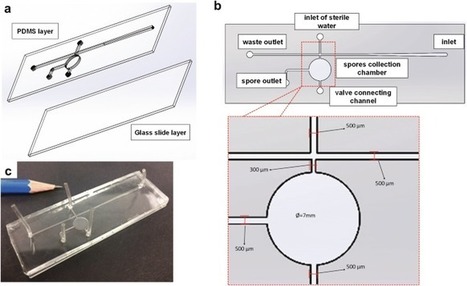
Arbuscular mycorrhizal fungi are beneficial components often included in biofertilizers. Studies of the biology and utilization of these fungi are key to their successful use in the biofertilizer industry. The acquisition of isolated spores is a required step in these studies; however, spore quality control and spore separation are bottlenecks. Filtered and centrifuged spores have to be hand-picked under a microscope. The conventional procedure is skill-demanding, labor-intensive, and time-consuming. Here, we developed a microfluidic device to aid manual separation of spores from a filtered and centrifuged suspension. The device is a single spore streamer equipped with a manual temporary flow diversion (MTFD) mechanism to select single spores. Users can press a switch to generate MTFD when the spore arrives at the selection site. The targeted spore flows in a stream to the collection chamber via temporary cross flow. Using the device, spore purity, the percentage of spore numbers against the total number of particles counted in the collecting chamber reached 96.62% (median, n = 10) which is greater than the spore purity obtained from the conventional method (88.89% (median, n = 10)).
|
|
Scooped by
Jean-Michel Ané
September 19, 2020 2:24 PM
|
Aims
Conventional agriculture promotes negative feedbacks of soil microbes on crop performance (plant soil feedbacks, PSFs) by stimulating species-specific pathogens. Crop traits, modified by domestication, also influence PSFs. Therefore, we asked if crop cultivars and their wild progenitors promote soil pathogens and mutualists differently, and thus trigger different PSFs.
Methods
We studied PSFs in cultivated varieties and wild progenitors of ten crops. In a first season, we grew all genotypes separately in a common soil to obtain genotype-specific soil inocula (‘trained soil’) for a second season. In season two, we examined the effects of the trained soil on plant interactions with arbuscular mycorrhizal fungi and with root-feeding nematodes, and on plant performance.
Results
Mycorrhizal colonization was lower, and nematode infection rate was higher, in plant roots growing on soils previously trained by domesticated plants. Moreover, domesticated plants showed lower mycorrhizal colonization, and higher nematode infection rates than their wild progenitors, irrespective of previous soil training. The response of plant performance to soil training was species-specific and unrelated to cultivated vs wild status.
Conclusions
Soil legacies differed between cultivated varieties and their wild progenitors, suggesting an impact of domestication on the way rhizosphere organisms are recruited, on the resistance of plants to herbivores, and on their interactions with root mutualists.
|
|
Scooped by
Jean-Michel Ané
September 18, 2020 9:19 PM
|
Legumes are the second most important family of crop plants. One defining feature of legumes is their unique ability to establish a nitrogen-fixing root nodule symbiosis with soil bacteria known as rhizobia. Since domestication from their wild relatives, crop legumes have been under intensive breeding to improve yield and other agronomic traits but with little attention paid to the belowground symbiosis traits. Theoretical models predict that domestication and breeding processes, coupled with high−input agricultural practices, might have reduced the capacity of crop legumes to achieve their full potential of nitrogen fixation symbiosis. Testing this prediction requires characterizing symbiosis traits in wild and breeding populations under both natural and cultivated environments using genetic, genomic, and ecological approaches. However, very few experimental studies have been dedicated to this area of research. Here, we review how legumes regulate their interactions with soil rhizobia and how domestication, breeding and agricultural practices might have affected nodulation capacity, nitrogen fixation efficiency, and the composition and function of rhizobial community. We also provide a perspective on how to improve legume-rhizobial symbiosis in sustainable agricultural systems.
|
|
|
Scooped by
Jean-Michel Ané
September 26, 2020 8:15 PM
|
Phosphorus (P) deficiency is a critical environmental constraint that affects the growth and development of several legume crops that are usually cultivated in semi-arid regions and marginal areas. P-deficiency is known to be a significant limitation for symbiotic nitrogen fixation (SNF), and variability in SNF is strongly interlinked with the concentrations of inorganic phosphate (Pi) in the nodules. To cope with P-deficiency, legumes trigger various adaptive responses, including the induction and secretion of acid phosphatases (APases) and phytases, maintenance of Pi homeostasis in nodules and other organs, and improvement of oxygen consumption per unit of nodule mass. While the induction of phytases is a universal response to P-deficiency in higher plants, the physiological role of these enzymes in nodules of N2-fixing legume is crucial but still not fully understood. Understanding the role of APases and phytases activities in response to environmental constraints may be important in developing strategies to improve the tolerance of the nodulated legume to low-P availability. In this review, we summarize and discuss recent advances in the understanding of the expression of phytases within the nodules of legumes under P-deficiency and address whether this expression might influence the nodule respiration and contribute to adaptation of N2 fixing legumes to low-P environments. Finally, we will provide perspectives on future directions for research in this field.
|
|
Scooped by
Jean-Michel Ané
September 24, 2020 10:18 AM
|
Drought is a critical factor limiting the productivity of legumes worldwide. Legumes can enter into a unique tripartite symbiotic relationship with root-nodulating bacteria of genera Rhizobium, Bradyrhizobium, or Sinorhizobium and colonization by arbuscular mycorrhizal fungi (AMF). Rhizobial symbiosis provides nitrogen necessary for growth. AMF symbiosis enhances uptake of diffusion-limited nutrients such as P, Zn, Cu, etc., and also water from the soil via plant-associated fungal hyphae. Rhizobial and AMF symbioses can act synergistically in promoting plant growth and fitness, resulting in overall yield benefits under drought stress. One of the approaches that rhizobia use to survive under stress is the accumulation of compatible solutes, or osmolytes, such as trehalose. Trehalose is a non-reducing disaccharide and an osmolyte reported to accumulate in a range of organisms. High accumulation of trehalose in bacteroids during nodulation protects cells and proteins from osmotic shock, desiccation, and heat under drought stress. Manipulation of trehalose cell concentrations has been directly correlated with stress response in plants and other organisms, including AMF. However, the role of this compound in the tripartite symbiotic relationship is not fully explored. This review describes the biological importance and the role of trehalose in the tripartite symbiosis between plants, rhizobia, and AMF. In particular, we review the physiological functions and the molecular investigations of trehalose carried out using omics-based approaches. This review will pave the way for future studies investigating possible metabolic engineering of this biomolecule for enhancing abiotic stress tolerance in plants.
|
|
Scooped by
Jean-Michel Ané
September 23, 2020 9:51 PM
|
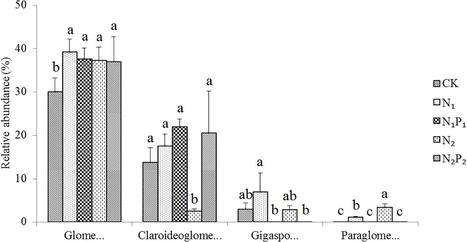
Increased inorganic nitrogen (N) and phosphorus (P) additions expected in the future will endanger the biodiversity and stability of agricultural ecosystems. In this context, a long-term fertilizer experiment (37 years) was set up in the black soil of northeast China. We examined interaction impacts of elevated fertilizer and host selection processes on arbuscular mycorrhizal fungi (AMF) communities in wheat rhizosphere soil using the Illumina MiSeq platform. The soil samples were subjected to five fertilization regimes: no fertilizer (CK) and low N (N1), low N plus low P (N1P1), high N (N2), and high N plus high P (N2P2) fertilizer. Long-term fertilization resulted in a significant shift in rhizosphere soil nutrient concentrations. The N fertilization (N1 and N2) did not significantly change rhizosphere AMF species diversity, but N plus P fertilization (N1P1 and N2P2) decreased it compared with CK. Non-metric multidimensional scaling showed that the rhizosphere AMF communities in CK, N1, N2, N1P1 and N2P2 treatments were distinct from each other. The AMF communities were predominantly composed of Glomeraceae, accounting for 30.0–39.1% of the sequences, and the relative abundance of family Glomeraceae was more abundance in fertilized soils, while family Paraglomeraceae were increased in N1 and N2 compared with CK. Analysis shown that AMF diversity was directly affected by soil C:P ratio but indirectly affected by plant under long-term fertilization. Overall, the results indicated that long-term N and P fertilization regimes changed rhizosphere AMF diversity and community composition, and rhizosphere AMF diversity was both affected by soil C:P ratio and plant.
|
|
Scooped by
Jean-Michel Ané
September 23, 2020 9:41 PM
|
Plastic film mulching can affect soil organic carbon (C) lability in semiarid regions. Arbuscular mycorrhizal (AM) fungi represent an important route for plant‐derived C into soil and can be influenced by agricultural practices. Whether the changes of AM fungal community affect soil organic C sequestration is a fundamental question in semiarid environments. To this end, we conducted two field experiments investigating the influence of a Funneliformis mosseae inoculation and mycorrhizal‐suppression using benomyl application on maize growth, soil fractions of organic C, AM fungal parameters, including diversity profiling using the Illumina MiSeq. The results showed that AM fungal community composition was significantly altered by plastic mulching and fungicide applications, soil organic C fractions and nitrogen were most important factors in influencing the AM fungal community. Arbuscular mycorrhizal fungal inoculation significantly increased particulate organic C (POC) and light fraction organic C (LFOC) content, due to enhanced mycorrhizal hyphal length (EMH), glomalin content and root biomass. Conversely, fungicide applications reduced labile organic C, possibly through decreasing EMH, glomalin content and soil AM fungal diversity. Increases in relative abundance of F. mosseae in rhizosphere soil, coupled with increases in AM fungal root colonization from F. mosseae inoculation indicates successfully established by outcompeting the existing natural AM fungal community. Plastic mulching resulted in significant increases in maize yield and water use efficiency, and AM fungal inoculation was found to amplify the effects. Thus, AM fungal inoculation may act as an effective farming practice to improve soil organic C fractions, which can boost maize productivity.
|
|
Scooped by
Jean-Michel Ané
September 23, 2020 8:56 PM
|
The enigma of soil nitrogen balance sheets originally described by Allison in 1955 has endured for 65 years. Originally the accounting showed a positive balance between N gains and losses, which indicated a failure to measure all losses, widely suspected of being gaseous N emissions. Measurement of organic, inorganic and gaseous N forms derived from 15N-enriched nitrate added to soils under both anaerobic and aerobic conditions in small- to medium-scale short-term experiments in closed vessels without plants, demonstrated that it is possible to achieve a complete 15N balance. A recent partial N balance at the global scale of the three main cereal crops over a 50-year time span showed a negative balance between N gains and losses, indicating a failure to measure all N gains or to accurately measure net changes in total soil N to a sufficient soil depth. Therefore, if the enigma is to be resolved in a realistic agronomic setting, fundamental decisions need to be made regarding the approach to be adopted, the cereal crop to be studied, the nature of the measurements required and their temporal and spatial scales.
|
|
Scooped by
Jean-Michel Ané
September 23, 2020 10:52 AM
|
Associations between leguminous plants and symbiotic nitrogen fixing bacteria (rhizobia) are a classical example of mutualism between a eukaryotic host and a specific group of prokaryotic microbes. Though being in part species-specific, different strains may colonize the same plant symbiotic structure (nodule). It is known that some rhizobial strains are better competitor than others, but detailed analyses aimed to predict from the rhizobial genome its competitive abilities are still scarce. Here we performed a bacterial genome wide association (GWAS) analysis to define the genomic determinants related to the competitive capabilities in the model rhizobial species Sinorhizobium meliloti. Thirteen tester strains were GFP-tagged and assayed against three reference competitor strains RFP-tagged (Rm1021, AK83 and BL225C) in a Medicago sativa nodule occupancy test. Competition data in combination with strains genomic sequences were used to build-up a model for GWAS based on k-mers. The model was then trained and applied for competition capabilities prediction. The model was able to well predict the competition abilities against two partners, BL225C, Rm1021 with coefficient of determination of 0.96 and 0.84, respectively. Four strains showing the highest competition phenotypes (> 60% single strain nodule occupancy; GR4, KH35c, KH46 and SM11) versus BL225C were used to identify k-mers associated with competition. The k-mers with highest scores mapped on the symbiosis-related megaplasmid pSymA and on genes coding for transporters, proteins involved in the biosynthesis of cofactors and proteins related to metabolism (i.e. glycerol, fatty acids) suggesting that competition abilities reside in multiple genetic determinants comprising several cellular components.
|
|
Scooped by
Jean-Michel Ané
September 19, 2020 9:54 PM
|
To defend against microbial invaders but also to establish symbiotic programs, plants need to detect the presence of microbes through the perception of molecular signatures characteristic of a whole class of microbes. Among these molecular signatures, extracellular glycans represent a structurally complex and diverse group of biomolecules that has a pivotal role in the molecular dialogue between plants and microbes. Secreted glycans and glycoconjugates like symbiotic lipochitooligosaccharides or immunosuppressive cyclic β-glucans act as microbial messengers that prepare the ground for host colonization. On the other hand, microbial cell-surface glycans are important indicators of microbial presence. They are conserved structures normally exposed and thus accessible for plant hydrolytic enzymes and cell-surface receptor proteins. While the immunogenic potential of bacterial cell-surface glycoconjugates such as lipopolysaccharides and peptidoglycan has been intensively studied in the past years, perception of cell-surface glycans from filamentous microbes such as fungi or oomycetes is still largely unexplored. To date, only few studies have focused on the role of fungal-derived cell-surface glycans other than chitin, highlighting a knowledge gap that needs to be addressed. The objective of this review is to give an overview on the biological functions and perception of microbial extracellular glycans, primarily focusing on their recognition and their contribution to plant-microbe interactions.
|
|
Scooped by
Jean-Michel Ané
September 19, 2020 9:48 PM
|
A better understanding of nitrogen (N) behavior and agronomic practices is needed to improve biological nitrogen fixation (BNF) and N use efficiency under field conditions. This study aims on investigating the potential for the use of biological agents that can fix atmospheric N and are related to multiple mechanisms benefits to improve cowpea (Vigna unguiculata (L.) Walp.) development and productivity, leading to a positive residual effect on wheat (Triticum aestivum L.) development. The study was set up under a no-till system in a Rhodic Haplustox, in a randomized complete block design, with four replicates. Treatments were tested in a full factorial design and included: i) three types of inoculation (without inoculation – control; Bradyrhizobium sp. inoculation (strains SEMIA 6462 and SEMIA 6463) – the conventional inoculation of cowpea; and Bradyrhizobium sp. combined with A. brasilense (strains Ab-V5 and Ab-V6) – the co-inoculation); and ii) five N rates (0 to 160 kg N ha−1) applied as urea-15N isotope. The residual effects of inoculations and N application rates applied during the cowpea growing season were evaluated on wheat (successor crop). Co-inoculation was found to increase cowpea grain yield by 40.5% and 14.1% compared to the control and Bradyrhizobium sp. inoculation when N was omitted and up to 37.6% and 50.8% when N was applied. Co-inoculation increased N use efficiency, N recovery and N accumulation on cowpea, leading to improved crop growth. The co-inoculation also provided a positive residual effect on wheat resulting in increased plant N accumulation, crop development, and greater wheat grain yield compared to the control (increase of 7.8%) and Bradyrhizobium sp. inoculated plants (increase of 5.8%). Co-inoculation was found to increase N use efficiency on cowpea by 216.5% and 35.5% and on wheat by 159.3% and 29.5% compared to control and Bradyrhizobium sp. inoculation, respectively. The fertilizer N recovery was, on average, 22.2% by cowpea, while fertilizer N recovery by wheat was <2.3%. The percentage of N accumulated on cowpea was on average 30.8%, while the residual cowpea N contribution to wheat provided by co-inoculation was 18.6%. This study showed positive improvements in cowpea-wheat growth production parameters and N management as a result of co-inoculation, indicating that there is an opportunity to reduce N fertilizer input with the combined use of biological agents that promote plant growth and chemical fertilizers.
|
|
Scooped by
Jean-Michel Ané
September 19, 2020 9:40 PM
|
Olive trees are often subjected to a prolonged dry season with low water availability, which induces oxidative stress. Arbuscular mycorrhizal (AM) symbioses can improve olive plant tolerance to water deficit. This study investigated several aspects related to drought tolerance in AM fungi olive plants. Non-AM and AM plants were grown under well-watered or drought-stressed conditions, and mycorrhizal growth response, neutral lipid fatty acid (NLFA)16:1ω5 and phospholipid fatty acid (PLFA) 16:1ω5 in roots (intraradical mycelium) and in soil (extraradical mycelium), carbohydrates (monosaccharides, disaccharides and polyols) and phenolic compounds (phenolic alcohols, flavonoids, lignans, secoiridoids and hydroxycinnamic acid derivatives) were determined. Results showed that the amounts of PLFA 16:1ω5 and NLFA 16:1ω5 were significantly influenced by drought stress conditions. The NLFA 16:1ω5/PLFA 16:1ω5 ratio showed a dramatic decrease (−62%) with the application of water deficit stress, indicating that AM fungi allocated low carbon to storage structures under stress conditions. Mannitol and verbascoside are the main compounds detected in the roots of well-watered plants, whereas oleuropein and mannitol are the main compounds differentially accumulated in the roots of water-stressed plants. The oleuropein/verbascoside ratio increased in the case of drought-stressed AM plants by 30%, while the mannitol/oleuropein ratio was decreased by 46%, when compared to the non-AM stressed plants. Mycorrhization therefore oriented the flux toward the biosynthetic pathway of oleuropein and the data suggest that sugar and phenolic compound metabolism may have been redirected to the formation of oleuropein in roots of AM stressed plants, that may underlie their enhanced tolerance to drought stress.
|
|
Scooped by
Jean-Michel Ané
September 19, 2020 2:40 PM
|
The members of the genus Frankia are, with a few exceptions, a group of nitrogen-fixing symbiotic actinobacteria that nodulate mostly woody dicotyledonous plants belonging to three orders, eight families and 23 genera of pioneer dicots. These bacteria have been characterized phylogenetically and grouped into four molecular clusters. One of the clusters, cluster 1 contains strains that induce nodules on Alnus spp. (Betulaceae), Myrica spp., Morella spp. and Comptonia spp. (Myricaceae) that have global distributions. Some of these strains produce not only hyphae and vesicles, as other cluster 1 strains do, but also numerous sporangia in their host symbiotic tissues, hence their phenotype being described as spore-positive (Sp+). While Sp+ strains have resisted repeated attempts at cultivation, their genomes have recently been characterized and found to be different from those of all described species, being markedly smaller than their phylogenetic neighbours. We thus hereby propose to create a 'Candidatus Frankia alpina' species for some strains present in nodules of Alnus alnobetula and A. incana that grow in alpine environments at high altitudes or in subarctic environments at high latitudes.
|
|
Scooped by
Jean-Michel Ané
September 19, 2020 2:28 PM
|
Plant growth promoting rhizobacteria (PGPR) have enormous potential for solving some of the myriad challenges facing our global agricultural system. Intense research efforts are rapidly moving the field forward and illuminating the wide diversity of bacteria and their plant beneficial activities. In the development of better crop solutions using these PGPR, producers are including multiple different species of PGPR in their formulations in a ‘consortia’ approach. While the intention is to emulate more natural rhizomicrobiome systems, the aspect of bacterial interactions has not been properly regarded. By using a tri-trophic model of Medicago truncatula A17 Jemalong, its nitrogen (N)-fixing symbiont Sinorhizobium meliloti Rm8530 and the PGPR Bacillus subtilis UD1022, we demonstrate indirect influences between the bacteria affecting their plant growth promoting activities. Co-cultures of UD1022 with Rm8530 significantly reduced Rm8530 biofilm formation and downregulated quorum sensing (QS) genes responsible for symbiotically active biofilm production. This work also identifies the presence and activity of a quorum quenching lactonase in UD1022 and proposes this as the mechanism for non-synergistic activity of this model ‘consortium’. These interspecies interactions may be common in the rhizosphere and are critical to understand as we seek to develop new sustainable solutions in agriculture.
|
|
Scooped by
Jean-Michel Ané
September 19, 2020 2:22 PM
|
Aims
Phosphorus (P) is a finite resource and inoculation of phosphorus‐mobilizing bacteria (PMB) is a promising approach for the enhancement of soil P availability and plant P uptake. This drives scientists to search for the microbes effective in mobilizing legacy P in soils.
Methods and Results
The current incubation and greenhouse pot experiments were conducted to investigate P mobilization and pepper P uptake as affected by a new biocontrol and bioremediation bacterium Burkholderia cepacia CQ18. This bacterium converted Ca3(PO4)2, FePO4, AlPO4, and lecithin into soluble inorganic P in the culture solutions and increased available P (including water‐soluble P and Olsen P) in the soil. There were positive correlations between the soluble inorganic phosphorus and the exudates (protons, organic acids (oxalate and gluconate), siderophores and phosphatases) in culture solutions. Pepper plant biomass, fruit yield and P uptake changed in the sequence: chemical fertilizers plus bacterial inoculant > only chemical fertilizers > only bacterial inoculant > blank control.
Conclusions
Taking into account the wide spectrums of P mobilization and simultaneous production of acid, neutral and alkaline phosphatases at a given pH, B. cepacia CQ18 may be a potential PMB used in soils with wide pH ranges. The mechanisms employed by this bacterium in the solubilization of recalcitrant inorganic P could be the efflux of protons, organic acids (oxalate and gluconate) and siderophores. Phosphatases could be of utmost importance in the mineralization of the organic P. The production of siderophores and phosphatases by of B. cepacia CQ18 could thus be crucial for not only the antagonism against plant pathogens but also the mobilization of soil sparingly available P.
Significance and Impact of Study
B. cepacia CQ18 could be potentially developed into a biofertilizer.
|


 Scoop.it!