Your new post is loading...

|
Scooped by
Jean-Michel Ané
October 3, 2020 12:12 PM
|
Folates are multifunctional metabolites in plants that are essential for cell division, nucleic acids and amino acid synthesis. During symbiotic nitrogen fixation in legumes, these cofactors are needed for de novo purine biosynthesis, meaning that changes in the folate pools could directly affect the flow of fixed nitrogen to the plant. Its role related to symbiotic nitrogen fixation has not been yet explored, but recent data suggest a relevant role during the first steps. Transcriptomic, metabolomic and proteomic analyses indicate that folates are accumulated in symbiotic plant tissue, as they are involved, not only in de novo purines biosynthesis, but in nitrogen translocation, endoreduplication and phytohormones biosynthesis. Understanding the possible implication of folate pools during the nitrogen fixation and assimilation, might aid for new engineering targets, in relation to the two transformylations or the production of glycine by serine hydroxymethyl transferase during the de novo purine biosynthetic pathway. In this review, we intend to deliver and discuss the available evidence that support a relevant role of folates during the symbiotic nitrogen fixation.
|
|
Scooped by
Jean-Michel Ané
October 3, 2020 11:21 AM
|
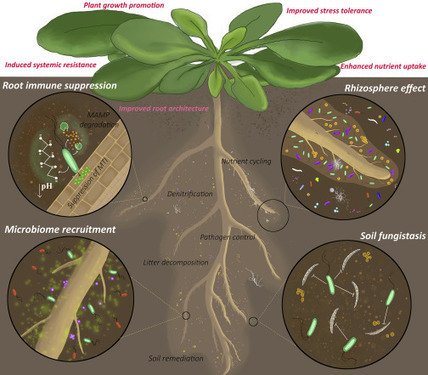
Plant-microbe interactions can be either beneficial or harmful depending on the nature of the interaction. Multifaceted benefits of plant-associated microbes in crops are well documented. Specifically, the management of plant diseases using beneficial microbes is considered to be eco-friendly and the best alternative for sustainable agriculture. Diseases caused by various phytopathogens are responsible for a significant reduction in crop yield and cause substantial economic losses globally. In an ecosystem, there is always an equally daunting challenge for the establishment of disease and development of resistance by pathogens and plants, respectively. In particular, comprehending the complete view of the complex biological systems of plant-pathogen interactions, co-evolution and plant growth promotions (PGP) at both genetic and molecular levels requires novel approaches to decipher the function of genes involved in their interaction. The Clustered Regularly Interspaced Short Palindromic Repeats (CRISPR)/Cas9 (CRISPR-associated protein 9) is a fast, emerging, precise, ecofriendly and efficient tool to address the challenges in agriculture and decipher plant-microbe interaction in crops. Nowadays, the CRISPR/Cas9 approach is receiving major attention in the field of functional genomics and crop improvement. Consequently, the present review updates the prevailing knowledge in the deployment of CRISPR/Cas9 techniques to understand plant-microbe interactions, genes edited for the development of fungal, bacterial and viral disease resistance, to elucidate the nodulation processes, plant growth promotion, and future implications in agriculture. Further, CRISPR/Cas9 would be a new tool for the management of plant diseases and increasing productivity for climate resilience farming.
|
|
Scooped by
Jean-Michel Ané
October 3, 2020 11:11 AM
|
Research aimed at understanding the mechanisms underlying the relationship between tree diversity and antagonist infestation is often neglecting resource-use complementarity among plant species. We investigated the effects of tree species identity, species richness, and mycorrhizal type on leaf herbivory and pathogen infestation. We used a tree sapling experiment manipulating the two most common mycorrhizal types, arbuscular mycorrhiza and ectomycorrhiza, via respective tree species in monocultures and two-species mixtures. We visually assessed leaf herbivory and pathogen infestation rates, and measured concentrations of a suite of plant metabolites (amino acids, sugars, and phenolics), leaf elemental concentrations (carbon, nitrogen, and phosphorus), and tree biomass. Tree species and mycorrhizal richness had no significant effect on herbivory and pathogen infestation, whereas species identity and mycorrhizal type had. Damage rates were higher in arbuscular mycorrhizal fungal (AM) than in ectomycorrhizal fungal (EM) trees. Our structural equation model (SEM) indicated that elemental, but not metabolite concentrations, determined herbivory and pathogen infestation, suggesting that the investigated chemical defence strategies may not have been involved in the effects found in our study with tree saplings. Other chemical and physical defence strategies as well as species identity as its determinant may have played a more crucial role in the studied saplings. Furthermore, the SEM indicated a direct positive effect of AM trees on herbivory rates, suggesting that other dominant mechanisms, not considered here, were involved as well. We found differences in the attribution of elemental concentrations between the two rates. This points to the fact that herbivory and pathogen infestation are driven by distinct mechanisms. Our study highlights the importance of biotic contexts for understanding the mechanisms underlying the effects of biodiversity on tree-antagonist interactions
|
|
Scooped by
Jean-Michel Ané
October 3, 2020 11:06 AM
|
Most land plants form beneficial associations with arbuscular mycorrhizal (AM) fungi which improves mineral nutrition, mainly phosphorus, in the host plant in exchange for photosynthetically fixed carbon. Most of our knowledge on the AM symbiosis derives from dicotyledonous species. We show that inoculation with the AM fungus Funneliformis mosseae stimulates growth and increases Pi content in leaves of rice plants (O. sativa, cv Loto, ssp japonica). Although rice is a host for AM fungi, the systemic transcriptional responses to AM inoculation, and molecular mechanisms underlying AM symbiosis in rice remain largely elusive. Transcriptomic analysis identified genes systemically regulated in leaves of mycorrhizal rice plants, including genes with functions associated with the biosynthesis of phospholipids and non-phosphorus lipids (up-regulated and down-regulated, respectively). A coordinated regulation of genes involved in the biosynthesis of phospholipids and inositol polyphosphates, and genes involved in hormone biosynthesis and signaling (jasmonic acid, ethylene) occurs in leaves of mycorrhizal rice. Members of gene families playing a role in phosphate starvation responses and remobilization of Pi were down-regulated in leaves of mycorrhizal rice. These results demonstrated that the AM symbiosis is accompanied by systemic transcriptional responses, which are potentially important to maintain a stable symbiotic relationship in rice plants.
|
|
Scooped by
Jean-Michel Ané
October 3, 2020 10:56 AM
|
Arbuscular mycorrhizal (AM) fungi play important roles in carbon (C), nitrogen (N) and phosphorus (P) cycling of terrestrial ecosystems. The impact of increasing N deposition on AM fungi will inevitably affect ecosystem processes. However, generalizable patterns of how N deposition affects AM fungi remains poorly understood. Here we conducted a global‐scale meta‐analysis from 94 publications and 101 sites to investigate the responses of AM fungi to N addition, including abundance in both intra‐radical (host roots) and extra‐radical portion (soil), richness and diversity. We also explored the mechanisms of N addition affecting AM fungi by the trait‐based guilds method. Results showed that N addition significantly decreased AM fungal overall abundance (‐8.0%). However, the response of abundance in intra‐radical portion was not consistent with that in extra‐radical portion: root colonization decreased (‐11.6%) significantly, whereas extraradical hyphae length density did not change significantly. Different AM fungal guilds showed different responses to N addition: both the abundance (spore density) and relative abundance of the rhizophilic guild decreased significantly under N addition (‐29.8% and ‐12.0%, respectively), while the abundance and relative abundance of the edaphophilic guild had insignificant response to N addition. Such inconsistent responses of rhizophilic and edaphophilic guilds were mainly moderated by the change of soil pH and the response of root biomass, respectively. Moreover, N addition had an insignificant negative effect on AM fungal richness and diversity, which was strongly related with the relative availability of soil P (i.e. soil available N/P ratio). Collectively, this meta‐analysis highlights that considering trait‐based AM fungal guilds, soil P availability, and host plant C allocation can greatly improve our understanding of the nuanced dynamics of AM fungal communities under increasing N deposition.
|
|
Scooped by
Jean-Michel Ané
October 3, 2020 10:15 AM
|
The study of the cellular dynamics of nodulation has frequently been limited by the difficulty of performing live-cell imaging in nodule primordia and legume roots, which are constituted by multiple cell layers, such is the case of Phaseolus vulgaris. Seeking conditions to reduce the time it takes for rhizobia to infect P. vulgaris root, we decided to explore the nodulation properties of Rhizobium etli CE3 pMP604, a strain that constitutively produces Nod factors through a flavonoids-independent transcriptional activation which is often used to purify Nod factors. Even though the strain infects 12–24 h earlier than the parental R. etli CE3 strain, infection thread (IT) formation, nodule organogenesis processes and N2-fixation activity are similar for both strains. Additionally, we have confirmed that R. etli CE3-DsRed pMP604 is an excellent tool to trace IT development in P. vulgaris roots.
|
|
Scooped by
Jean-Michel Ané
October 3, 2020 10:11 AM
|
Nodulation, the symbiosis between legumes and rhizobial bacteria, is regulated by a suite of hormones including brassinosteroids. Previous studies have found that brassinosteroids promote nodule number by inhibiting ethylene biosynthesis. In this study, we examined the influence of brassinosteroids on the various stages of infection and nodule development. We utilise pea mutants, including brassinosteroid mutants lk, lka and lkb, the ethylene insensitive ein2 mutant and the lk ein2 double mutant, along with transgenic lines expressing the DR5::GUS auxin activity marker to investigate how brassinosteroids interact with ethylene and auxin during nodulation. We show that brassinosteroids inhibit the early stages of nodulation, including auxin accumulation, root hair deformation and infection thread formation, and demonstrate that infection thread formation is regulated by brassinosteroids in an ethylene independent manner. In contrast, brassinosteroids appear to act as promoters of nodule initiation through both an ethylene dependent and independent pathway. Although brassinosteroids positively influence the ultimate number of nodules formed, we found that brassinosteroid-deficiency did not influence nodule structure including the vascular pattern of auxin activity or nitrogen-fixation capacity. These findings suggest that brassinosteroids are negative regulators of infection but positive regulators of nodule initiation. Furthermore, brassinosteroids do not appear to be essential for nodule organogenesis or function. Given the influence of brassinosteroids on discreet stages of nodulation but not nodule function, manipulation of brassinosteroids may be an interesting avenue for future research on the optimisation of nodulation.
|
|
Scooped by
Jean-Michel Ané
October 1, 2020 5:47 PM
|
Looking forward includes looking back every now and then. In 2007, David Weller looked back at 30 years of biocontrol of soil-borne pathogens by Pseudomonas and signified that the progress made over decades of research has provided a firm foundation to formulate current and future research questions. It has been recognized for more than a century that soil-borne microbes play a significant role in plant growth and health. The recent application of high-throughput omics technologies has enabled detailed dissection of the microbial players and molecular mechanisms involved in the complex interactions in plant-associated microbiomes. Here, we highlight old and emerging plant microbiome concepts related to plant disease control, and address perspectives that modern and emerging microbiomics technologies can bring to functionally characterize and exploit plant-associated microbiomes for the benefit of plant health in future microbiome-assisted agriculture.
|
|
Scooped by
Jean-Michel Ané
October 1, 2020 5:31 PM
|
Nitrogen fixation in legumes requires the development of specialized organs called root nodules. Here we characterized the high-confidence transcriptome and genome-wide patterns of H3K4me3 marks in soybean roots and mature nodules symbiotic with Sinorhizobium fredii. Changes in H3K4me3 levels were positively associated with the transcription levels of functional genes in the nodules. The up-regulation of H3K4me3 levels was not only present in leghaemoglobin and nodulin-related genes, but also in genes involved in nitrogen and carbon metabolic pathways. In addition, genes regulating the transmembrane transport of metal ions, phosphates, sulphates, peptides, and sugars were differentially modified. On the contrary, a loss of H3K4me3 marks was found in several key transcription factor genes and was correlated with the down-regulation of the defense-related network in nodules, which could contribute to nodule maintenance. All these findings demonstrate massive reprogramming of gene expressions via alterations in H3K4me3 levels in the genes in mature soybean nodules.
|
|
Scooped by
Jean-Michel Ané
September 30, 2020 6:49 PM
|
Biofilm formation is important for establishing plants-microbe associations. The role of calcium on biofilm formation has been studied in many bacteria except rhizobia. In this study, we investigated the role of calcium for biofilm formation in Azorhizobium caulindans, which forms nodules in the stem and root of its host plant Sesbania rostrata. We found that calcium is essential for A. caulindans biofilm formation, in addition to the presence of extracellular matrix components, eDNA and proteins. Also, calcium-mediated biofilm formation was tested with chemotaxis, motility, cyclic di-GMP synthesis, and quorum sensing mutants. Finally, calcium was found to promote S. rostrata root colonization of A. caulinodans. In total, these results show that calcium is essential for A. caulindans biofilm formation, and it affects the interaction between A. caulinodans and host plant.
|
|
Scooped by
Jean-Michel Ané
September 30, 2020 6:05 PM
|
Serendipita indica (former Piriformospora indica) is a non-obligate endophytic fungus and generally a plant growth and defence promoter with high potential to be used in agriculture. However, S. indica may switch from biotrophy to saprotrophy losing its plant growth promoting traits. Our aim was to understand if the free-living stage growth conditions (namely C availability) regulate S. indica’s phenotype, and its potential as plant-growth-promoting-microbe (PGPM). We grew S. indica in its free-living stage under increasing C availabilities (2–20 g L–1 of glucose or sucrose). We first characterised the effect of C availability during free-living stage growth on fungal phenotype: colonies growth and physiology (plasma membrane proton pumps, stable isotopic signatures, and potential extracellular decomposing enzymes). The effect of the C availability during the free-living stage of the PGPM was evaluated on wheat. We observed that C availability during the free-living stage regulated S. indica’s growth, ultrastructure and physiology, resulting in two distinct colony phenotypes: compact and explorer. The compact phenotype developed at low C, used peptone as the major C and N source, and displayed higher decomposing potential for C providing substrates; while the explorer phenotype developed at high C, used glucose and sucrose as major C sources and casein and yeast extract as major N sources, and displayed higher decomposing potential for N and P providing substrates. The C availability, or the C/N ratio, during the free-living stage left a legacy to the symbiosis stage, regulating S. indica’s potential to promote plant growth: wheat growth promotion by the explorer phenotype was ± 40% higher than that by the compact phenotype. Our study highlights the importance of considering microbial ecology in designing PGPM/biofertilizers. Further studies are needed to test the phenotypes under more extreme conditions, and to understand if the in vitro acquired characteristics persist under field conditions.
|
|
Scooped by
Jean-Michel Ané
September 29, 2020 11:00 PM
|
Arbuscular mycorrhizal fungi function as conduits for underground nutrient transport. While the fungal partner is dependent on the plant host for its carbon (C) needs, the amount of nutrients that the fungus allocates to hosts can vary with context. Because fungal allocation patterns to hosts can change over time, they have historically been difficult to quantify accurately. We developed a technique to tag rock phosphorus (P) apatite with fluorescent quantum-dot (QD) nanoparticles of three different colors, allowing us to study nutrient transfer in an in vitro fungal network formed between two host roots of different ages and different P demands over a 3-week period. Using confocal microscopy and raster image correlation spectroscopy, we could distinguish between P transfer from the hyphae to the roots and P retention in the hyphae. By tracking QD-apatite from its point of origin, we found that the P demands of the younger root influenced both: (1) how the fungus distributed nutrients among different root hosts and (2) the storage patterns in the fungus itself. Our work highlights that fungal trade strategies are highly dynamic over time to local conditions, and stresses the need for precise measurements of symbiotic nutrient transfer across both space and time.
|
|
Scooped by
Jean-Michel Ané
September 26, 2020 8:17 PM
|
This study was performed to isolate non-rhizobial endophytic bacteria from the root nodules of Glycine max (soybean), Vigna radiata (mung bean) and Vigna unguiculata (cowpea). The bacteria were characterized for plant growth promoting properties such as indole acetic acid production, phosphate and zinc solubilisation, nitrogen fixation and hydrogen cyanide production. Phylogenetic identification was performed using the Neighbour-Joining method on16S rRNA gene sequences. The impact of salt tolerant isolates on some properties of wheat cv. Chamran was evaluated by a completely randomised factorial design. Nine isolates having some characteristics related to plant growth promotion were identified as Staphylococcus hominis 7E, Streptomyces sp. 11E, Bacillus sp. 13E, Acinetobacter sp. 19E, from mung bean, Bacillus endophyticus 1E from cowpea, Staphylococcus hominis 9E, Bacillus endophyticus 14E, Brevundimonas sp. 16E and Kocuria sp. 26E from soybean nodules. Isolates 7E and 19E caused maximum growth inhibition of Fusarium on PDA plate. All isolates were able to grow at salinity levels of mixtures containing up to 400 mM of NaCl, CaCl2 and MgCl2, but their growth was inhibited by increasing salinity level. Only the growth of isolate 14E increased at three levels of salinity compared with control. Some isolates, i.e. 7E, 14E, 19E and 26E had higher colony diameter at 45 °C after 48 h of incubation compared to the growth at 30 and 40 °C. Inoculation of soil with isolate 1E and isolate 26E caused to ameliorate salinity stress in wheat and increased the weight of 1000-grains as compared with non-inoculated treatments.
|
|
|
Scooped by
Jean-Michel Ané
October 3, 2020 11:27 AM
|
Metabolites in soil play an important role in regulating plant-microbe interactions and, thereby, plant performance. Biotic factors such as root exudation and microbial activity or abiotic factors such as the concentration of atmospheric carbon dioxide (CO2) can drive both quantitative and qualitative changes in soil metabolite profiles. While the impact of these factors, either in isolation or in combination, are underexplored in soil systems due to technical challenges, recent technological advances have enabled these hurdles to be overcome. Given the key role that mutualistic ectomycorrhizal (ECM) fungi play in forest soils through their symbiotic interaction with trees, and the foreseen changes in forest dynamics with climate change, we investigated the effect of the Eucalyptus grandis-Pisolithus albus (plant host-fungus) association on soil metabolite profiles under ambient and elevated CO2 conditions (aCO2 and eCO2). We found that significant metabolite enrichment predominately occurred in the rhizosphere where a strong effect by ECM fungus was also observed. Specific ECM fungus-induced metabolites were enriched concurrently with an increased host plant root:shoot ratio, suggesting that the influence of ECM fungus on rhizosphere metabolite profiles may impact plant growth. Strikingly, however, we found no observable differences in soil metabolite profiles between the aCO2 and eCO2 conditions, which may be due to nutrient limitation given the low level of nutrients found in typical eucalyptus forest soils. Overall, our findings increase our understanding of soil metabolic processes at the symbiotic plant-microbe interface under current and future atmospheric CO2 scenarios.
|
|
Scooped by
Jean-Michel Ané
October 3, 2020 11:18 AM
|
Mycoviruses are viruses that infect fungi, and hypovirulence-associated mycoviruses have the potential to control fungal diseases. However, it is unclear how mycovirus-mediated hypovirulent strains live and survive in the field, and no mycovirus has been applied for field crop protection. In this study, we found that a previously identified small DNA mycovirus (SsHADV-1) can convert its host, Sclerotinia sclerotiorum, from a typical necrotrophic pathogen to a beneficial endophytic fungus. SsHADV-1 downregulates the expression of key pathogenicity factor genes in S. sclerotiorum during infection. When growing in rapeseed, the SsHADV-1-infected strain DT-8 significantly regulates the expression of rapeseed genes involved in defense, hormone signaling, and circadian rhythm pathways. As a result, plant growth is promoted and disease resistance is enhanced. Field experiments showed that spraying DT-8 at the early flowering stage can reduce the disease severity of rapeseed stem rot by 67.6% and improve yield by 14.9%. Moreover, we discovered that SsHADV-1 could also infect other S. sclerotiorum strains on DT-8-inoculated plants and that DT-8 could be recovered from dead plants. These findings suggest that the mycoviruses may have the ability to shape the origin of endophytism. Our discoveries suggest that mycoviruses may influence the origin of endophytism and may also offer a novel strategy for disease control in which mycovirus-infected strains are used to improve crop health and release mycoviruses into the field.
|
|
Scooped by
Jean-Michel Ané
October 3, 2020 11:09 AM
|
Rare fungal Mortierella capitata increased available phosphorus concentration and Glomeraceae abundance in rhizosphere soils.
•
Mortierella capitata inoculation reshaped rhizosphere bacterial community structure and increased its α diversity.
•
Mortierella capitata up-regulated maize genes involved in sugars export transport and lipids import transport.
•
A putative model of Mortierella capitata enhancing maize growth was proposed.
|
|
Scooped by
Jean-Michel Ané
October 3, 2020 11:01 AM
|
Genome analysis in arbuscular mycorrhizal fungi (AMF) reveals intraindividual nuclear homogeneity combined with high interstrain diversity.
The high number of lineage-specific (LS) genes in AMF genomes is reminiscent of the rapidly evolving LS regions found in plant pathogens. These regions encode secreted effectors and other virulence factors, as well as an expanded set of signaling components such as protein kinases, suggesting a similar role in perception and interaction with the abiotic and biotic environment in AMF.
Genomes of AMF and fungal pathogens exhibit parallels in the amplification of gene families related to signaling; by contrast, predicted secreted effector genes of AM tend to be more conserved (encoded by core genes), while effectors of pathogens are often encoded by LS genes.
AMF retain most of the genetic machinery required for sex, show evidence of ongoing recombination, and can form pseudo-dikaryons. However, the existence of meiotic cells or other (para)sexual stages has yet to be experimentally confirmed.
|
|
Scooped by
Jean-Michel Ané
October 3, 2020 10:51 AM
|
We describe a new Frankia species, for three non-isolated strains obtained from Alnus glutinosa in France and Sweden, respectively. These strains can nodulate several Alnus species (A. glutinosa, A. incana, A. alnobetula), they form hyphae, vesicles and sporangia in the root nodule cortex but have resisted all attempts at isolation in pure culture. Their genomes have been sequenced, they are significantly smaller than those of other Alnus-infective species (5 Mb instead of 7.5 Mb) and are very closely related to one another (ANI of 100%). The name Candidatus Frankia nodulisporulans is proposed.
|
|
Scooped by
Jean-Michel Ané
October 3, 2020 10:12 AM
|
Proteomic approaches are being used to elucidate a better discretion of interactions occurring between host, pathogen, and/or beneficial microorganisms at the molecular level. Application of proteomic techniques, unravel pathogenicity, stress-related, and antioxidant proteins expressed amid plant-microbe interactions and good information have been generated. It is being perceived that a fine regulation of protein expression takes place for effective pathogen recognition, induction of resistance, and maintenance of host integrity. However, our knowledge of molecular plant-microbe interactions is still incomplete and inconsequential. This review aims to provide insight into numerous ways used for proteomic investigation including peptide/protein identification, separation, and quantification during host defense response. Here, we highlight the current progress in proteomics of defense responses elicited by bacterial, fungal, and viral pathogens in plants along with which the proteome level changes induced by beneficial microorganisms are also discussed.
|
|
Scooped by
Jean-Michel Ané
October 1, 2020 5:53 PM
|
As extreme droughts become more frequent, dissecting the responses of root-associated microbiomes to drying-wetting events is essential to understand their influence on plant performance. Here, we show that rhizosphere and endosphere communities associated with drought-stressed rice plants display compartment-specific recovery trends. Rhizosphere microorganisms were mostly affected during the stress period, whereas endosphere microorganisms remained altered even after irrigation was resumed. The duration of drought stress determined the stability of these changes, with more prolonged droughts leading to decreased microbiome resilience. Drought stress was also linked to a permanent delay in the temporal development of root microbiomes, mainly driven by a disruption of late colonization dynamics. Furthermore, a root-growth-promoting Streptomyces became the most abundant community member in the endosphere during drought and early recovery. Collectively, these results reveal that severe drought results in enduring impacts on root-associated microbiomes that could potentially reshape the recovery response of rice plants.
|
|
Scooped by
Jean-Michel Ané
October 1, 2020 5:44 PM
|
Organogenesis of legume root nodules begins with the nodulation factor‐dependent stimulation of compatible root cells to initiate divisions, signifying an early nodule primordium formation event. This is followed by cellular differentiation, including cell expansion and vascular bundle formation, and we previously showed that Lotus japonicus NF‐YA1 is essential for this process, presumably by regulating three members of the SHORT INTERNODES/STYLISH (STY) transcription factor gene family.
In this study, we used combined genetics, genomics and cell biology approaches to characterize the role of STY genes during root nodule formation and to test a hypothesis that they mediate nodule development by stimulating auxin signalling.
We show here that L. japonicus STYs are required for nodule emergence. This is attributed to the NF‐YA1‐dependent regulatory cascade, comprising STY genes and their downstream targets, YUCCA1 and YUCCA11, involved in a local auxin biosynthesis at the post‐initial cell division stage. An analogous NF‐YA1/STY regulatory module seems to operate in Medicago truncatula in association with the indeterminate nodule patterning.
Our data define L. japonicus and M. truncatula NF‐YA1 genes as important nodule emergence stage‐specific regulators of auxin signalling while indicating that the inductive stage and subsequent formation of early nodule primordia are mediated through an independent mechanism(s).
|
|
Scooped by
Jean-Michel Ané
October 1, 2020 5:29 PM
|
Background The influence of farming on plant, animal and microbial biodiversity has been carefully studied and much debated. Here, we compare an isolate-based study of 196 Rhizobium strains to amplicon-based MAUI-seq analysis of rhizobia from 17,000 white clover root nodules. We use these data to investigate the influence of soil properties, geographic distance, and field management on Rhizobium nodule populations.
Results Overall, there was good agreement between the two approaches and the precise allele frequency estimates from the large-scale MAUI-seq amplicon data allowed detailed comparisons of rhizobium populations between individual plots and fields. A few specific chromosomal core-gene alleles were significantly correlated with soil clay content, and core-gene allele profiles became increasingly distinct with geographic distance. Field management was associated with striking differences in Rhizobium diversity, where organic fields showed significantly higher diversity levels than conventionally managed trials.
Conclusions Our results indicate that MAUI-seq is suitable and robust for assessing nodule Rhizobium diversity. We further observe possible profound effects of field management on microbial diversity, which could impact plant health and productivity and warrant further investigation.
|
|
Scooped by
Jean-Michel Ané
September 30, 2020 6:08 PM
|
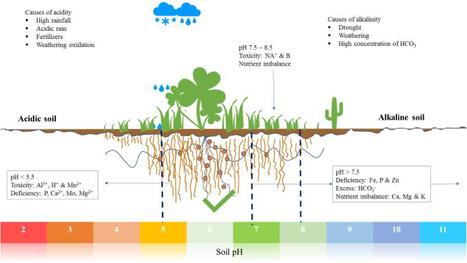
Plant growth often occurs under a range of stressful conditions, including soil acidity and alkalinity. Hydrogen ion concentration, which determines pH of the soil, regulates the entire chemistry of plant nutrient colloidal solutions. Beyond certain levels of pH, multiple stresses such as hydrogen ion toxicity, and nutrient imbalance, toxicities and deficiencies are induced in plants. Breeding for stress coupled with suitable agronomic practices has been a way to deal with this situation in agriculture. However, plant growth promoting microbes (PGPM) have shown potential as sustainable plant growth enhancers and have potential to help with a range of stresses in their environment. Considering the long-term evolutionary relationships between plants and microbes, it is probably that much remains unknown about potential benefits of microbes that could be harnessed from PGPM. This article reviews the current understanding of acidity and alkalinity stress effects on plants and various approaches have or could address these stresses. This review provides a detailed account of the current understanding regarding the role of PGPM in acidity and alkalinity stress management, including when agronomic practices and plant breeding are combined. Approaches already evaluated have shown limitations because acidity and alkalinity in soils are gradual and progressive conditions. Greater exploitation of PGPM in this regard, would be interesting to explore as they have the potential to address multiple stresses in a more sustainable fashion. Future crop production will require further breeding for pH stress resistance, but also implementation of microbial technologies that provide enhanced tolerance to pH stress.
|
|
Scooped by
Jean-Michel Ané
September 30, 2020 5:58 PM
|
Motivation
Trait data are fundamental to the quantitative description of plant form and function. Although root traits capture key dimensions related to plant responses to changing environmental conditions and effects on ecosystem processes, they have rarely been included in large‐scale comparative studies and global models. For instance, root traits remain absent from nearly all studies that define the global spectrum of plant form and function. Thus, to overcome conceptual and methodological roadblocks preventing a widespread integration of root trait data into large‐scale analyses we created the Global Root Trait (GRooT) Database. GRooT provides ready‐to‐use data by combining the expertise of root ecologists with data mobilization and curation. Specifically, we (a) determined a set of core root traits relevant to the description of plant form and function based on an assessment by experts, (b) maximized species coverage through data standardization within and among traits, and (c) implemented data quality checks.
Main types of variables contained
GRooT contains 114,222 trait records on 38 continuous root traits.
Spatial location and grain
Global coverage with data from arid, continental, polar, temperate and tropical biomes. Data on root traits were derived from experimental studies and field studies.
Time period and grain
Data were recorded between 1911 and 2019.
Major taxa and level of measurement
GRooT includes root trait data for which taxonomic information is available. Trait records vary in their taxonomic resolution, with subspecies or varieties being the highest and genera the lowest taxonomic resolution available. It contains information for 184 subspecies or varieties, 6,214 species, 1,967 genera and 254 families. Owing to variation in data sources, trait records in the database include both individual observations and mean values.
Software format
GRooT includes two csv files. A GitHub repository contains the csv files and a script in R to query the database.
|
|
Scooped by
Jean-Michel Ané
September 29, 2020 10:59 PM
|
D14 and KAI2 receptors enable plants to distinguish between strigolactones (SLs) and karrikins (KARs), respectively, in order to trigger appropriate environmental and developmental responses. Both receptors are related to the regulation of Arbuscular Mycorrhizal (AM) formation and are members of the RsbQ‐like family of α,β‐hydrolases. DLK2 proteins, whose function remains unknown, constitute a third clade from the RsbQ‐like protein family. We investigated whether the tomato SlDLK2 is a new regulatory component in the AM symbiosis.
Genetic approaches were conducted to analyse SlDLK2 expression and to understand SlDLK2 function in AM symbiosis.
We show that SlDLK2 expression in roots is AM‐dependent and is associated with cells containing arbuscules. SlDLK2 ectopic expression arrests arbuscule branching and downregulates AM‐responsive genes, even in the absence of symbiosis; while the opposite effect was observed upon SlDLK2 silencing. Moreover, SlDLK2 overexpression in Medicago truncatula roots showed the same altered phenotype observed in tomato roots. Interestingly, SlDLK2 interacts with DELLA, a protein that regulates arbuscule formation/degradation in AM roots.
We propose that SlDLK2 is a new component of the complex plant‐mediated mechanism regulating the life cycle of arbuscules in AM symbiosis.
|


 Scoop.it!