Your new post is loading...

|
Scooped by
Jean-Michel Ané
February 27, 2021 7:19 PM
|
Nitrogen (N) in the agricultural production system influences many aspects of agroecosystems and several critical ecosystem services widely depend on the N availability in the soil. Cumulative changes in regional ecosystem services may lead to global environmental changes. Thus, the soil N status in agriculture is of critical importance to strategize its most efficient use. Nitrogen is also one of the most susceptible macronutrients to environmental loss, such as ammonia volatilization (NH3), nitrous oxide (N2O) emissions, nitrate leaching (NO3), etc. Any form of N losses from agricultural systems can be major limitations for crop production, soil sustainability, and environmental safeguard. There is a need to focus on mitigation strategies to minimize global N pollution and implement agricultural management practices that encourage regenerative and sustainable agriculture. In this review, we identified the avenues of N loss into the environment caused by current agronomic practices and discussed the potential practices that can be adapted to prevent this N loss in production agriculture. This review also explored the N status in agriculture during the COVID-19 pandemic and the existing knowledge gaps and questions that need to be addressed.
|
|
Scooped by
Jean-Michel Ané
February 27, 2021 7:18 PM
|
Glutathione (GSH) plays a key role in regulating the cellular Redox Homeostasis, and appears to be essential for initiation and development of root nodules. Glutathione peroxidase (Gpx) catalyzes the reduction of H2O2 and organic hydroperoxides by oxidation of GSH to oxidized GSH (GSSG), which in turn is reduced by glutathione reductase (GR). However, it has not been determined whether the Rhizobium leguminosarum Gpx or GR is required during symbiotic interactions with pea. To characterize the role of glutathione-dependent enzymes in the symbiotic process, single and double mutants were made in gpxA (encoding glutathione peroxidase) and gshR (encoding glutathione reductase) genes. All the mutations did not affect the rhizobial growth, but they increased the sensitivity of R. leguminosarum strains to H2O2. Mutant in GpxA had no effect on intracellular GSH levels, but can increase the expression of the catalase genes. The gshR mutant can induce the formation of normal nodules, while the gpxA single and double mutants exhibited a nodulation phenotype coupled to more than 50% reduction in the nitrogen fixation capacity, these defects in nodulation were characterized by the formation of ineffective nodules. In addition, the gpxA and gshR double mutant was severely impaired in rhizosphere colonization and competition. Quantitative proteomics using the TMT labeling method was applied to study the differential expression of proteins in bacteroids isolated from pea root nodules. A total of 27 differentially expressed proteins were identified in these root bacteroids including twenty down-regulated and seven up-regulated proteins. By sorting the down-regulated proteins, eight are transporter proteins, seven are dehydrogenase, deoxygenase, oxidase, and hydrolase. Moreover, three down-regulating proteins are directly involved in nodule process.
|
|
Scooped by
Jean-Michel Ané
February 27, 2021 7:16 PM
|
Saponins are a group of plant specialized metabolites which are widely distributed in angiosperm plants and have various biological activities. The present study focused on α-tomatine, a major saponin present in tissues of tomato (Solanum lycopersicum) plants. α-Tomatine is responsible for defense against plant pathogens and herbivores, but its biological function in the rhizosphere remains unknown. Secretion of tomatine was higher at the early growth than the green-fruit stage in hydroponically grown plants, and the concentration of tomatine in the rhizosphere of field-grown plants was higher than that of the bulk soil at all growth stages. The effects of tomatine and its aglycone tomatidine on the bacterial communities in the soil were evaluated in vitro, revealing that both compounds influenced the microbiome in a concentration-dependent manner. Numerous bacterial families were influenced in tomatine/tomatidine-treated soil as well as in the tomato rhizosphere. Sphingomonadaceae species, which are commonly observed and enriched in tomato rhizospheres in the fields, were also enriched in tomatine- and tomatidine-treated soils. Moreover, a jasmonate-responsive ETHYLENE RESPONSE FACTOR 4 mutant associated with low tomatine production caused the root-associated bacterial communities to change with a reduced abundance of Sphingomonadaceae. Taken together, our results highlight the role of tomatine in shaping the bacterial communities of the rhizosphere and suggest additional functions of tomatine in belowground biological communication.
|
|
Scooped by
Jean-Michel Ané
February 27, 2021 7:09 PM
|
•The fungi influenced the biology and chemistry of the rhizosphere and on plant growth.
•The fungal treatments resulted in greater arbuscular colonization and soil Mg content.
•Five fungi consortium showed higher effects on the rhizosphere and plant growth.
|
|
Scooped by
Jean-Michel Ané
February 27, 2021 7:05 PM
|
The spatial structure of the environment is known to affect ecological processes. Unlike the spatial structure of negative interactions, such as competition and predation, the role of spatial structure in positive interaction has received less attention. We tested how the spatial structure of spores of ectomycorrhizal fungi (EMF) in the soil affects the growth of Aleppo pine (Pinus halepensis) seedlings. Spores were spatially distributed at four different levels of patchiness (1 patch, 4 patches, 8 patches and complete mixing) in 4 L pots (all pots received the same total amount of spores). Based on previous findings, we hypothesized that plant performance would gradually increase from the single patch treatment to the complete mixing. However, we found a non-linear response to patchiness. Specifically, plants were largest in the single patch and complete mixing while those in the 4 and 8 patch treatments were the smallest. This non-monotonic response, which might be the result of spatially determined colonization timing or community composition, suggests that the spatial structure of EMF spores has a complex effect on seedling growth.
|
|
Scooped by
Jean-Michel Ané
February 27, 2021 6:51 PM
|
Among legumes, common bean (Phaseolus vulgaris L.) is generally thought to have poor capacity for symbiotic nitrogen fixation (SNF). To reduce the need for expensive and environmentally non-sustainable fertilizer amendments to achieve high yields, bean growers worldwide would benefit from the development of bean varieties with stable, yield-sustaining nitrogen fixing capacity. In this thesis, 400 common bean genotypes were tested in inoculated, low-nitrogen field conditions to observe the diversity for SNF-related and agronomic traits. SNF was quantified using the natural abundance method in which isotope values were calculated from bean seeds, and genotypes that fixed large proportions of N were considered to have superior SNF capacity. In a panel of heirloom and conventional varieties it was confirmed that SNF capacity is greater in Middle American genotypes than in Andean genotypes, and that heirloom bean varieties have a wider range of SNF capacities than conventional varieties. In collaboration with an NGO in Honduras, a panel of Honduran bean varieties was curated, which included landraces, conventional varieties, and varieties developed through participatory plant breeding (PPB). It was found that genetic diversity was greater among Honduran landraces, and that these genotypes had higher SNF capacities than the other breeding categories. Candidate genes associated with SNF were identified in regions of the genome where nucleotide diversity was higher in the landraces and where population genetic differentiation was evident between the landraces and the PPB varieties. With the Middle American diversity panel (MDP) assembled by the Bean Coordinated Agricultural Project (BeanCAP), a genome wide association study (GWAS) was carried out to identify quantitative trait loci (QTL) associated with SNF traits in the entire panel and within each panel subpopulation. The largest number of QTL were found for seed nitrogen content (%N), followed by percent nitrogen derived from the atmosphere (%Ndfa) and leaf chlorophyll content. For most traits, QTL identified for the entire panel were not repeated in the panel subpopulations, nor were QTL shared between the subpopulations. Additionally, the QTL identified in the MDP are novel and do not co-localize to regions of the genome where SNF-related QTL were reported previously. Overall, it can be concluded that diversity for SNF in common bean is wide-ranging, and is found in germplasm as diverse as landraces, heirloom varieties, and varieties bred through conventional and participatory methods. This diversity can be employed in breeding efforts to generate varieties with improved nitrogen fixation for growers worldwide.
|
|
Scooped by
Jean-Michel Ané
February 26, 2021 12:16 AM
|
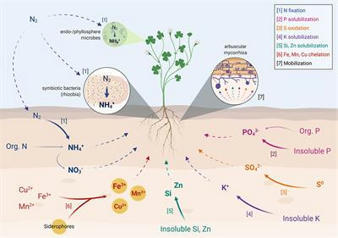
Global population growth poses a threat to food security in an era of increased ecosystem degradation, climate change, soil erosion, and biodiversity loss. In this context, harnessing naturally-occurring processes such as those provided by soil and plant-associated microorganisms presents a promising strategy to reduce dependency on agrochemicals. Biofertilizers are living microbes that enhance plant nutrition by either by mobilizing or increasing nutrient availability in soils. Various microbial taxa including beneficial bacteria and fungi are currently used as biofertilizers, as they successfully colonize the rhizosphere, rhizoplane or root interior. Despite their great potential to improve soil fertility, biofertilizers have yet to replace conventional chemical fertilizers in commercial agriculture. In the last 10 years, multi-omics studies have made a significant step forward in understanding the drivers, roles, processes, and mechanisms in the plant microbiome. However, translating this knowledge on microbiome functions in order to capitalize on plant nutrition in agroecosystems still remains a challenge. Here, we address the key factors limiting successful field applications of biofertilizers and suggest potential solutions based on emerging strategies for product development. Finally, we discuss the importance of biosafety guidelines and propose new avenues of research for biofertilizer development.
|
|
Scooped by
Jean-Michel Ané
February 26, 2021 12:11 AM
|
Despite the economic and ecological importance of Hydnum species, in vitro synthesis of ectomycorrhizae of this genus has not been reported due to difficulties in establishing pure cultures. We inoculated pure cultures of 12 monokaryotic and 3 dikaryotic mycelial strains of an undescribed Hydnum albidum-like species on roots of axenic Pinus densiflora seedlings to synthesize ectomycorrhizae and to evaluate their mycorrhiza-forming ability. Six months after inoculation, both monokaryotic and dikaryotic strains formed ectomycorrhizae with Hartig net hyphae at the root cortex. Monokaryotic and dikaryotic strains exhibited similar morpho-anatomical characteristics of ectomycorrhizae, with the exception for clamped septa of emanating and outer mantle hyphae in the latter. Between monokaryotic and descendant dikaryotic strains, there were no significant differences in number of mycorrhizae in pine seedlings, whereas monokaryotic strains showed a greater total number of root tips and lower colonization rates than the descendant dikaryotic strains. These results indicate that both monokaryotic and dikaryotic mycelia of the H. albidum-like species can form mycorrhizae under axenic condition, and that can be applied toward the cultivation of hedgehog mushrooms.
|
|
Scooped by
Jean-Michel Ané
February 26, 2021 12:09 AM
|
•La100 and La500 decreased root colonization rates and nutrition uptake of maize.
•AMF promoted growth and nutrition uptake of maize in different La-stressed soil.
•AMF and La500 significantly altered α-diversity indexes and rhizosphere microbiome.
•Microbial community structure was mainly influenced by AMF more than La stress.
•AMF assisted phytoremediation is an approach to repair REE contaminated soils.
|
|
Scooped by
Jean-Michel Ané
February 26, 2021 12:04 AM
|
Nitrogen (N) is an essential macronutrient for crop growth and yield, but excessive application of N fertilizer has caused serious environmental pollution and greatly increased the cost of agricultural production. One of the effective and economical solutions to this dilemma is to improve the N use efficiency (NUE) of crops. Although some components involved in regulating NUE have been identified, the underlying molecular mechanism remains largely elusive in rice. Here we report that the OsNLP3 (NIN-like protein 3) is an important regulator in NUE and grain yield under nitrate-sufficient conditions. Both NUE and grain yield were significantly improved by enhanced OsNLP3 expression in the field, but reduced in osnlp3 mutants. The expression of OsNLP3 responds to both nitrate and ammonium, while OsNLP3 nuclear retention is only induced by nitrate, not by ammonium. OsNLP3 regulates the expression of a set of genes involved in N transport and assimilation by directly binding to the nitrate-responsive cis-element in the promoters of these genes. Our study demonstrates that OsNLP3 is significant for the regulation of NUE and grain yield, particularly in nitrate-rich conditions, thus providing a candidate for improving NUE and grain yield in rice.
|
|
Scooped by
Jean-Michel Ané
February 23, 2021 4:44 PM
|
The inclusion of digital sequence information (DSI, including genetic sequence data) in the existing access and benefit‐sharing (ABS) regime will alter the practice of synthetic biology. The potential impediments could be magnified for the “Parts Agenda”: the approach to synthetic biology that fragments genetic resources into their smallest functional units to create standardized, interchangeable “bioparts”, the building blocks for assembling synthetic biological devices. These biological devices are themselves interchangeable and can be used to engineer higher order synthetic biological systems.
This article examines how the extension of ABS laws to include DSI could foreseeably apply to the creation and use of plant‐derived and other bioparts in engineered biological devices expressed in plant chassis.
The article demonstrates that ABS issues will be similar for all approaches to synthetic biology, but that the Parts Agenda is uniquely exposed to the potential regulatory burden of bilateral ABS transactions between users and providers of genetic resources.
The original vision for bioparts was one of openness and sharing, with access and use unencumbered by intellectual property. This article shows that open access to bioparts will not last long if DSI is enclosed within the current ABS regime, destabilizing the values of openness and sharing in synthetic biology that are ostensibly foundational to this still developing field.
|
|
Scooped by
Jean-Michel Ané
February 23, 2021 4:39 PM
|
Many woody and herbaceous plants in temperate forests cannot establish and survive in the absence of mycorrhizal associations. Here, we address and hierarchize how Glomeromycota, a group of soil-borne fungi, forming a ubiquitous type of mycorrhiza, varied in a temperate forest patch in Germany with time, space, plant hosts but also the proximity to Glomeromycota-associating woody species. The communities of Glomeromycota in our study were non-random. We observed that space had a greater impact on fungal community structure than either time or proximity to Glomeromycota-associating trees but unlike host identity did not alter Glomeromycotan richness. The set of parameters which we addressed has rarely been studied together and we believe that the resulting ranking could ease prioritizing some of them to include in future surveys. Glomeromycota are crucial for the establishment of understory plants in temperate forests making it desirable to further explore how they vary in time and space.
|
|
Scooped by
Jean-Michel Ané
February 23, 2021 4:37 PM
|
Rhizobial microsymbionts of grain legumes are ubiquitous in soils and exhibit a wide range of diversity with respect to colony morphology, genetic variability, biochemical characteristics, and phylogenetic relationships. This study assessed the phylogenetic positions of rhizobial microsymbionts of Bambara groundnut from Eswatini exhibiting variations in morpho-physiology, adaptive characteristics, and N2-fixing efficiency. The isolates’ ERIC-PCR profiles revealed the presence of high genetic variation among them. These test isolates also exhibited differences in pH tolerance and IAA production. Multilocus sequence analysis based on the 16S rRNA, atpD, glnII, gyrB, and recA gene sequences of representative test isolates closely aligned them to the type strains of Bradyrhizobium arachidis, B. manausense, B. guangdongense, B. elkanii, and B. pachyrhizi. However, some isolates showed a high divergence from the known reference type strains, indicating that they may represent species yet to be properly characterized and described. Functional characterization in the glasshouse revealed that most of the isolates from the contrasting Agro-ecologies of Eswatini were efficient in N2 fixation, and therefore elicited greater stomatal conductance and photosynthetic rates in the homologous Bambara groundnut. Of the 75 isolates tested, 51% were more effective than the commercial Bradyrhizobium sp. strain CB756, with relative symbiotic effectiveness ranging from 138 to 308%. The findings of this study indicated that the analysis of housekeeping genes and functional traits of Bambara-nodulating microsymbionts can provide a clear view for understanding and predicting rhizobial community structure across environmental gradients.
|
|
|
Scooped by
Jean-Michel Ané
February 27, 2021 7:18 PM
|
Plants rooted in soil have intimate associations with a diverse array of soil microorganisms. While the microbial diversity of soil is enormous, the predominant bacterial phyla associated with plants include Actinobacteria, Bacteroidetes, Firmicutes, Proteobacteria, and Verrucomicrobia. Plants supply nutrient niches for microbes, and microbes support plant functions such as plant growth, development, and stress tolerance. The interdependent interaction between the host plant and its microbes sculpts the plant microbiota. Plant and microbiome interactions are a good model system for understanding the traits in eukaryotic organisms from a holobiont perspective. The holobiont concept of plants, as a consequence of co-evolution of plant host and microbiota, treats plants as a discrete ecological unit assembled with their microbiota. Dissection of plant-microbiome interactions is highly complicated; however, some reductionist approaches are useful, such as the synthetic community method in a gnotobiotic system. Deciphering the interactions between plant and microbiome by this reductionist approach could lead to better elucidation of the functions of microbiota in plants. In addition, analysis of microbial communities’ interactions would further enhance our understanding of coordinated plant microbiota functions. Ultimately, better understanding of plantmicrobiome interactions could be translated to improvements in plant productivity.
|
|
Scooped by
Jean-Michel Ané
February 27, 2021 7:16 PM
|
Arbutus unedo L. is a Mediterranean species used for fruit production; it is tolerant to drought and shows regeneration ability following forest fires. Mycorrhizal plants with Tuber borchii add resilience and value. This study aims to test the effect of quercetin on mycorrhizal synthesis between T. borchii and A. unedo. Two genotypes selected for fruit production and hydric stress tolerance, were micropropagated for mycorrhizal synthesis, accomplished during ex vitro rooting in perlite, using lyophilized spores of T. borchii suspended in culture media with different quercetin levels (0–10 µM). Six months after inoculation, plants were transferred to pots and maintained in nursery. Ten and 12 months after inoculation, roots were morphological examined and molecularly characterized using ITS1-5.8SITS2 rDNA region and specific primers. Results showed that mycorrhizae establishment was dependent on studied factors (genotype, quercetin level, and culture medium) and their interaction (genotype X culture medium). Quercetin levels up to 2.0 µM favored mycorrhizae establishment and plant growth, although levels superior to 4 µM showed a toxic effect. Quercetin showed to be an efficient factor on inducing mycorrhiza thriving independent of the genotype. Morphological observations and molecular analysis confirmed the permanence of the fungus association 10 and 12 months after inoculation. View Full-Text
|
|
Scooped by
Jean-Michel Ané
February 27, 2021 7:13 PM
|
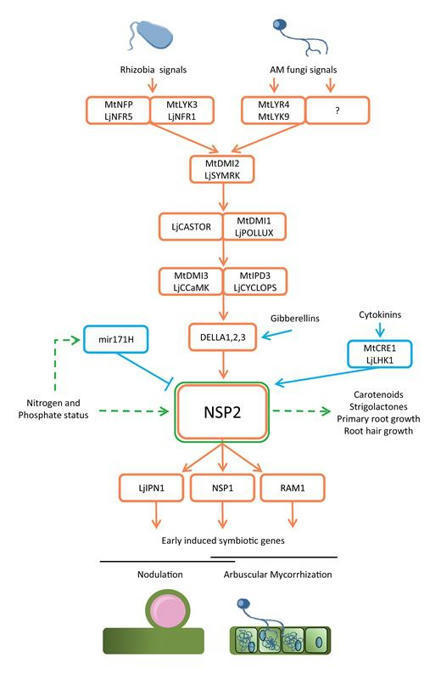
Legumes have the remarkable ability to develop root nodules with nitrogen-fixing rhizobial bacteria. This symbiosis enables them to overcome nitrogen limitation affecting their growth, and such a nutritional advantage is key to the ecological and agronomic success of legumes. Intriguingly, non-nodulating lines can be obtained through inbreeding work in cultivated peanut. Using elegant genetic approaches,Peng et al. (2021)have elucidated this 40-year-old mystery by identifying the underlying genes. They are the two homoeologs of the symbiotic signalling gene NSP2, pinpointing NSP2 as a gene of primary adaptative importance for nodulation in legumes.
|
|
Scooped by
Jean-Michel Ané
February 27, 2021 7:08 PM
|
Serendipita indica is an endophytic fungus that establishes mutualistic relationships with many different plants including important crops as well as the model plant A. thaliana. Successful root colonization typically results in growth promotion and enhanced tolerance against various biotic and abiotic stresses. The fungus delivers phosphorus to the host and receives in exchange carbohydrates. There are hints that S. indica prefers hexoses, glucose, and fructose, products of saccharose cleavage driven by invertases (INVs) and sucrose synthases (SUSs). Carbohydrate metabolism in this interaction, however, remains still widely unexplored. Therefore, in this work, the sugar pools as well as the expression of SUSs and cytosolic INVs in plants colonized by S. indica were analyzed. Using sus1/2/3/4 and cinv1/2 mutants the importance of these genes for the induction of growth promotion and proper root colonization was demonstrated. Furthermore, the expression of several defense-related marker genes in both multiple mutants in comparison to the wild-type plants was determined. Our results show that in colonized A. thaliana plants S. indica manipulates the sugar metabolism by altering the expression of host’s INV and SUS and modulates both the sugar pools and plant defense in its favor. We conclude that the interaction A. thaliana–S. indica is a balancing act between cooperation and exploitation, in which sugar metabolism plays a crucial role. Small changes in this mechanism can lead to severe disruption resulting in the lack of growth promotion or altered colonization rate.
|
|
Scooped by
Jean-Michel Ané
February 27, 2021 7:01 PM
|
The ectomycorrhizal symbiosis is an essential guild of many forested ecosystems and has a dynamic evolutionary history across kingdom Fungi, having independently evolved from diverse types of saprotrophic ancestors. In this study, we seek to identify genomic features of the transition to the ectomycorrhizal habit within the Russulaceae, one of the most diverse lineages of ectomycorrhizal fungi. We present comparative analyses of the pangenome and gene repertoires of 21 species across the order Russulales, including a closely related saprotrophic member of Russulaceae. The ectomycorrhizal Russulaceae is inferred to have originated around the Cretaceous-Paleogene extinction event (73.6-60.1 million years ago (MY)). The genomes of the ectomycorrhizal Russulaceae are characterized by a loss of genes for plant cell-wall degrading enzymes (PCWDEs), an expansion of genome size through increased transposable element (TE) content, a reduction in secondary metabolism clusters, and an association of genes coding for certain secreted proteins with TE “nests”. The saprotrophic sister group of the ectomycorrhizal Russulaceae, Gloeopeniophorella convolvens, possesses some of these aspects (e.g., loss of PCWDE and protease orthologs, TE expansion, reduction in secondary metabolism clusters), resulting from an accelerated rate of gene evolution in the shared ancestor of Russulaceae that predates the evolution of the ectomycorrhizal habit. Genomes of Russulaceae possess a high degree of synteny, including a conserved set of terpene secondary metabolite gene clusters. We hypothesize that the evolution of the ectomycorrhizal habit requires premodification of the genome for plant root association followed by an accelerated rate of gene evolution within the secretome for host-defense circumvention and symbiosis establishment.
|
|
Scooped by
Jean-Michel Ané
February 26, 2021 2:47 PM
|
Fabaceae, with 765 genera and ∼19,500 species, are the third-largest angiosperm family and important both economically and ecologically, with global crops intensively studied in part for their nitrogen-fixing ability. However, resolution of Fabaceae phylogeny and divergence times at intrasubfamilial levels have been elusive, precluding a reconstruction of the evolutionary history of symbiotic nitrogen fixation in Fabaceae. Here, we report a highly resolved phylogeny using >1500 nuclear genes from newly sequenced transcriptomes and genomes of 391 species along with other datasets for a total of 463 legumes spanning all six subfamilies and 333 of 765 genera. The subfamilies are maximally supported as monophyletic, with the clade comprising subfamilies Cercidoideae and Detarioideae being the sister of remaining legumes, and Duparquetioideae and Dialioideae being successive sisters to the clade of Papilionoideae and Caesalpinioideae. Molecular clock estimation revealed early radiation of subfamilies near the K/Pg boundary marked by mass extinction and subsequent divergences of most tribe-level clades within ∼15 million years. Phylogenomic analyses of thousands of gene families support 28 proposed WGD/WGT events across Fabaceae, including those at the ancestors of Fabaceae and five of the subfamilies, with support from further analyses for the Fabaceae ancestral polyploidy. The evolution of rhizobial nitrogen-fixing nodulation in Fabaceae was examined through ancestral character reconstruction and phylogenetic analyses of related gene families, providing support for hypotheses of one or two switch(es) to rhizobial nodulation followed by multiple losses. These results form a foundation for further morphological and functional evolutionary analyses across Fabaceae.
|
|
Scooped by
Jean-Michel Ané
February 26, 2021 12:11 AM
|
Mammalian phase II metabolism of dietary plant flavonoid compounds generally involves substitution with glucuronic acid. In contrast, flavonoids mainly exist as glucose conjugates in plants, and few plant UDP-glucuronosyltransferase enzymes have been identified to date. In the model legume Medicago truncatula, the major flavonoid compounds in the aerial parts of the plant are glucuronides of the flavones apigenin and luteolin. Here we show that the M. truncatula glycosyltransferase UGT84F9 is a bi-functional glucosyl/glucuronosyl transferase in vitro, with activity against a wide range of flavonoid acceptor molecules including flavones. However, analysis of metabolite profiles in leaves and roots of M. truncatula ugt84f9 loss of function mutants revealed that the enzyme is essential for formation of flavonoid glucuronides, but not most flavonoid glucosides, in planta. We discuss the use of plant UGATs for the semi-synthesis of flavonoid phase II metabolites for clinical studies.
|
|
Scooped by
Jean-Michel Ané
February 26, 2021 12:10 AM
|
The main purpose of this study was to screen and select strains from seven Mesorhizobium spp. for efficient phosphate solubilizing and other plant growth-promoting traits. Mesorhizobium species were tested for their ability to dissolve inorganic phosphate sources and multiple plant growth-promoting attributes. From a total of 62 Mesorhizobium strains, 47(76%) strains formed clear zones with an average PSI of 1.9–2.7 on Pikovskaya’s agar plate. The selected strains also released soluble phosphorus [125–150 P (µgml-1)] from tri-calcium phosphate and low level of phosphorous i.e., 15.4 µg/ml and 14.5 µg/ml from inorganic ferrous and aluminum phosphates, respectively, in a liquid medium after 4 days of incubation. The release of soluble P was significantly (P < 0.01) correlated with a drop in pH of the medium. Moreover, screening for multiple plant growth-promoting attributes showed that 40, 28, 26, 21, and 38% of the strains were capable of producing indole-3-acetic acid, hydrogen cyanide, siderophores, ACC deaminase, and antagonism against Fusarium oxysporum f.sp. ciceris under in vitro conditions. The Mesorhizobium strains were endowed with the presence of ACC deaminase which was rarely reported elsewhere. All taken together, the acidic soils harbor numerous and more diverse phosphate solubilizing and plant growth-promoting Mesorhizobium spp. However, greenhouse and field conditions can be further studied within the context of improving chickpea production in Ethiopia.
|
|
Scooped by
Jean-Michel Ané
February 26, 2021 12:08 AM
|
Interactions between microorganisms and host plants determine the growth and development as well as the health of the host plant. Various microbial groups inhabit the rhizosphere, each with its peculiar function. The survival of each microbial group depends to a large extent on its ability to colonize the plant root and outcompete the native organisms. The role of the rhizospheric microbiome in enhancing plant growth has not been fully maximized. An understanding of the complexities of microbial interactions and factors affecting their assembly in the community is necessary to benefit maximally from the cooperations of various microbial communities for sustainable crop production. In this review, we outline the various organisms associated with the plant rhizosphere with emphasis on their interactions and mechanisms used in plant growth promotion.
|
|
Scooped by
Jean-Michel Ané
February 24, 2021 8:49 AM
|
In host-associated bacteria, surface and secreted proteins mediate acquisition of nutrients, interactions with host cells, and specificity of tissue-localization. In Gram-negative bacteria, the mechanism by which many proteins cross or become tethered to the outer membrane remains unclear. The domain of unknown function (DUF)560 occurs in outer membrane proteins throughout Proteobacteria and has been implicated in host-bacteria interactions and lipoprotein surface exposure. We used sequence similarity networking to reveal three subfamilies of DUF560 homologs. One subfamily includes those DUF560 proteins experimentally characterized to date: NilB, a host-range determinant of the nematode-mutualist Xenorhabdus nematophila, and the surface lipoprotein assembly modulators Slam1 and Slam2, which facilitate msurface exposure of lipoproteins in Neisseria meningitidis (1, 2). We show that DUF560 proteins from a second subfamily facilitate secretion of soluble, non-lipidated proteins across the outer membrane. Using in silico analysis, we demonstrate that DUF560 gene complement correlates with bacterial environment at a macro level and host association at a species level. The DUF560 protein superfamily represents a newly characterized Gram-negative secretion system capable of lipoprotein surface exposure and soluble protein secretion with conserved roles in facilitating symbiosis. In light of these data, we propose that it be titled the type eleven secretion system (TXISS).
|
|
Scooped by
Jean-Michel Ané
February 23, 2021 4:43 PM
|
Rhizobia are rod-shaped bacteria that form nitrogen-fixing root nodules on leguminous plants, but they don't carry MreB, a key determinant of rod-like cell shape. Here, we introduced an actin-like mreB homologue from pseudomonad into Mesorhizobium huakuii 7653R (a microsymbiont of Astragalus sinicus L.) and examined the molecular, cellular and symbiotic phenotypes of the resultant mutant. Exogenous mreB caused an enlarged cell size and slower growth in laboratory medium. However, the mutant formed small ineffective nodules on A. sinicus (Nod+ Fix-), and rhizobial cells in the infection zone were unable to differentiate into bacteroids. RNA-seq analysis also revealed minor effects of mreB on global gene expression in free-living cells but larger effects for cells grown in planta. Differentially expressed nodule-specific genes include cell cycle regulators such as the tubulin-like ftsZ1 and ftsZ2. Unlike the ubiquitous FtsZ1, FtsZ2 was commonly found in Rhizobium, Sinorhizobium and Mesorhizobium, but not in closely related non-symbiotic species. Bacterial Two-Hybrid analysis revealed that MreB interacts with FtsZ1 and FtsZ2, which are targeted by the host-derived NCR peptides. Significantly, MreB mutation D283A disrupted the protein-protein interactions and restored the aforementioned phenotypic defects caused by MreB in M. huakuii. Together, our data indicate that MreB is detrimental for modern rhizobia and its interaction with FtsZ1/FtsZ2 cause the symbiotic process to cease at the late stage of bacteroid differentiation. These findings led to a hypothesis that loss of mreB in the common ancestor of Rhizobiales and subsequent acquisition of ftsZ2 are critical evolutionary steps leading to legume-rhizobial symbiosis.
|
|
Scooped by
Jean-Michel Ané
February 23, 2021 4:38 PM
|
Phosphorus (P) is a vital element in biological molecules, and one of the main limiting elements for biomass production as plant-available P represents only a small fraction of total soil P. Increasing global food demand and modern agricultural consumption of P fertilizers could lead to excessive inputs of inorganic P in intensively managed croplands, consequently rising P losses and ongoing eutrophication of surface waters. Despite phosphate solubilizing microorganisms (PSMs) are widely accepted as eco-friendly P fertilizers for increasing agricultural productivity, a comprehensive and deeper understanding of the role of PSMs in P geochemical processes for managing P deficiency has received inadequate attention. In this review, we summarize the basic P forms and their geochemical and biological cycles in soil systems, how PSMs mediate soil P biogeochemical cycles, and the metabolic and enzymatic mechanisms behind these processes. We also highlight the important roles of PSMs in the biogeochemical P cycle and provide perspectives on several environmental issues to prioritize in future PSM applications.
|