Your new post is loading...

|
Scooped by
Jean-Michel Ané
March 13, 2021 6:25 PM
|
Cyanobacteria can form nitrogen-fixing symbioses with a broad range of plant species. Unlike other plant-bacteria symbioses, little is understood about the immunological responses induced by plant cyanobionts (symbiotic cyanobacteria). Here, we demonstrated that the model plant-symbiotic cyanobacteria, Nostoc punctiforme is capable of protecting against programmed cell death (PCD) when induced in Arabidopsis thaliana suspension cell cultures. We also profiled the early transcriptomic changes that were induced in response to conditioned medium (CM) from N. punctiforme cell cultures. Interestingly, the reduction in PCD was preceded by the induction of genes associated with defence and immunity, the most striking of which were a number of WRKY-family transcription factors. Down-regulated genes included those involved in the regulation of cell growth and differentiation. This work is the first to show that a cyanobiont can affect plant PCD and provides a useful transcriptome resource for studying early plant cell responses to symbiotic cyanobacteria.
|
|
Scooped by
Jean-Michel Ané
March 13, 2021 6:14 PM
|
Legumes evolved LysM receptors for recognition of rhizobial Nod factors and initiation of signalling pathways for nodule organogenesis and infection. Intracellularly hosted bacteria are supplied with carbon resources in exchange for fixed nitrogen. Nod factor recognition is crucial for initial signalling, but is reiterated in growing roots initiating novel symbiotic events, and in developing primordia until symbiosis is well-established. Understanding how this signalling coordinates the entire process from cellular to plant level is key for de novo engineering in non-legumes and for improved efficiency in legumes. Here we discuss how recent studies bring new insights into molecular determinants of specificity and sensitivity in Nod factor signalling in legumes, and present some of the unknowns and challenges for engineering.
|
|
Scooped by
Jean-Michel Ané
March 13, 2021 12:50 PM
|
To understand the coevolutionary dynamics of an interaction, theory suggests that we must study how genetic variation in both partners is structured in space. This is because, in coevolution, the spatial distribution of genetic variation in one species can both determine its ability to locally adapt to a partner species and also serve as an agent of selection acting on that partner species. Plant-microbe symbioses are ecologically and economically important, but broad-ranging dispersal and dynamic genome structure in bacteria present unique challenges for understanding spatial genetic processes in these systems. Here we study the model rhizobium Ensifer meliloti using a hierarchically structured sample of 191 strains from 21 sites in the native range and compare its population genetic structure to that of its host plant Medicago truncatula. We find that two of the three elements of the tripartite Ensifer genome lack a pattern of isolation by distance. Overall genetic variation across the symbiont genome is less spatially structured than that of its host, and variation in the two species is uncorrelated, indicating comparatively higher levels of gene flow among sampling sites in these bacterial symbionts relative to host plants. Taken together our results suggest that the spatial structure of genetic variation is impacted differently by the environment in the host and in the three symbiont genomic elements. This could lead to differing responses to selection not only between the host and symbiont, but also between the elements of the symbiont genome.
|
|
Scooped by
Jean-Michel Ané
March 13, 2021 12:47 PM
|
Symbiotic nitrogen fixation is an important part of the nitrogen biogeochemical cycles and the main nitrogen source of the biosphere. As a classical model system for symbiotic nitrogen fixation, rhizobium-legume systems have been studied elaborately for decades. Detailed panorama about the molecular mechanism of the communication and coordination between rhizobia and host plants is becoming clearer. For more systematic insights, there is an increasing demand on new studies integrating multi-omics information. Here we present a comprehensive computational framework, integrating the reconstructed protein interactome of B. diazoefficiens USDA110 with its transcriptome and proteome data, to study the complex protein-protein interaction (PPI) network involved in the symbiosis system. We reconstructed the interactome of B. diazoefficiens USDA110 by computational approaches. Based on the comparison of interactomes between B. diazoefficiens USDA110 and other rhizobia, we inferred that the slow growth of B. diazoefficiens USDA110 may owe to the requirement of more protein modifications and further identified 36 conserved functional PPI modules. Integrated with transcriptome and proteome data, interactomes representing free-living cell and symbiotic nitrogen-fixing (SNF) bacteroid were obtained. Based on the SNF interactome, a core-sub-PPI-network for symbiotic nitrogen fixation was determined and 9 novel functional modules and 11 key protein hubs playing key roles for symbiosis were identified. The reconstructed interactome of B. diazoefficiens USDA110 may serve as a valuable reference for studying the mechanism underlying the SNF system of rhizobia and legumes.
|
|
Scooped by
Jean-Michel Ané
March 13, 2021 12:40 PM
|
•Appropriate rhizobia strains are essential to reduce As accumulation in legumes.
•As accumulation in plants can be decreased by nitrogen and NRT3.1 mutation.
•The contents of As negatively correlated with nitrogen levels in Rhizobium symbionts.
•ABA and linalool can regulate the accumulation of As in plants.
•Rhizobia symbiosis modulates As accumulation via NRT3.1 regulated by ABA and linalool.
|
|
Scooped by
Jean-Michel Ané
March 13, 2021 12:36 PM
|
There is an increasing interest in the use of N2-fixing bacteria for the sustainable biofertilization of crops. Genetically-optimized bacteria for ammonium release have an improved biofertilization capacity. Some of these strains also cross-feed ammonium into microalgae raising additional concerns on their sustainable use in agriculture due to the potential risk of producing a higher and longer-lasting eutrophication problem than synthetic N-fertilizers. Here we studied the dynamic algal cross-feeding properties of a genetically-modified Azotobacter vinelandii strain which can be tuned to over-accumulate different levels of glutamine synthetase (GS, EC 6.3.1.20) under the control of an exogenous inducer. After switching cells overaccumulating GS into a noninducing medium, they proliferated for several generations at the expense of the previously accumulated GS. Further dilution of GS by cell division slowed-down growth, promoted ammonium-excretion and cross-fed algae. The final bacterial population, and timing and magnitude of algal N-biofertlization was finely tuned in a deferred manner. This tuning was in accordance with the intensity of the previous induction of GS accumulation in the cells. This bacterial population behavior could be maintained up to about 15 bacterial cell generations, until faster-growing and nonammonium excreting cells arose at an apparent high frequency. Further improvements of this genetic engineering strategy might help to align efficiency of N-biofertilizers and safe use in an open environment.
|
|
Scooped by
Jean-Michel Ané
March 13, 2021 12:28 PM
|
Methylation of specific genomic DNA sequences is ubiquitous in bacteria and has known roles in immunity and regulation of cellular processes, such as the cell cycle. Here, we explored DNA methylation in bacteria of the genus Ensifer, including its potential role in regulating the process of terminal differentiation occurring during nitrogen-fixing symbiosis with legumes. Using single-molecule real-time sequencing, six unique genome-wide methylated motifs were identified across four Ensifer strains, five of which were strain-specific. These five motifs were nearly fully methylated across the genomes in all tested conditions, and they were not enriched in the promoter regions of symbiosis, carbon source, or cell cycle-regulated genes, suggesting that most DNA methylation is not a major regulatory mechanism in the genus Ensifer. Only the GANTC motif, recognized by the cell cycle-regulated CcrM methyltransferase, was methylated in all strains. In actively dividing cells, methylation of GANTC motifs increased progressively from the ori to ter region in each replicon, in agreement with a cell cycle-dependent regulation of CcrM. The GANTC methylation profile transited into a genome-wide pattern of near full methylation in the early stage of symbiotic differentiation, followed by a progressive decrease in methylation from the ori to ter regions of fully differentiated symbiotic bacteria. This is evidence of a dysregulated and constitutive CcrM activity during terminal differentiation, which we suggest is a driving factor for endoreduplication of terminally differentiated bacteroids.
|
|
Scooped by
Jean-Michel Ané
March 13, 2021 12:23 PM
|
Biological metalloclusters catalyze many of the global-scale redox interconversions of the elements, such as the nitrogenase-mediated reduction of N2 to bioavailable NH3. Understanding the mechanisms of these transformations requires knowledge of how the clusters’ individual metal ions contribute to their physical properties and chemical reactivity. This has been an ongoing challenge for the Fe–S clusters of nitrogenases, which feature many Fe sites that are difficult to distinguish spectroscopically. Using the L-cluster (a key biosynthetic precursor to the Mo nitrogenase catalytic cofactor) as a case study, we show that chemical modification of nitrogenase cofactors is a promising strategy for simplifying their spectroscopic analysis and relating their electronic structures to their geometric structures.
|
|
Scooped by
Jean-Michel Ané
March 13, 2021 12:17 PM
|
Aims
Invasive plants may alter soil fungal communities in a way that improves their growth. Nitrogen (N) content affects the symbiosis between plants and arbuscular mycorrhizal fungi (AMF), further determining plant growth. Yet, it is unclear whether altered AMF communities change the N-form dependence of invasive and native species, and whether N forms alter the invasive plant–AMF interaction (PSIM).
Methods
Two synthetic plant communities, including four Solidago canadensis individuals and four native plant species, were inoculated with AMF spores from S. canadensis-invaded soils and adjacent non-invaded soils, and were provided with nitrate, ammonia, or glutamate. After their growth, the performance of the two plant communities in treatments of AMF origin and N forms, and the pathways of the N forms affecting S. canadensis growth and PSIM were evaluated.
Important Findings
Solidago canadensis had no obvious N-form dependence in any of the AMF inoculations. Native plant species showed faint N-form dependence, but invasive AMF could remove their N-form dependence. In the absence of N, AMF did not affect the growth of S. canadensis and the native plants. In contrast, with N addition, invasive AMF significantly increased the invasive plant’s but not the native plants’ belowground and total biomass. Positive PSIM of S. canadensis was also evidently greater than that of native plant species and was realized through directly or indirectly regulating phenotypic traits including plant height, leaf number, and number of rhizomes. Our findings emphasize the importance of plant–AMF interactions and a unique N-acquisition strategy during plant invasions.
|
|
Scooped by
Jean-Michel Ané
March 12, 2021 7:59 PM
|
Silicates make up about 90% of the Earth’s crust and constitute the main source of mineral nutrients for microorganisms and plants. Fungi can actively weather silicates to extract nutrients. However, it is unclear whether they are able to obtain the same amounts of nutrients and use the same mechanisms when tapping into different mineral sources. We performed a microcosm experiment using the ectomycorrhizal basidiomycetes Paxillus involutus and the silicates K-vermiculite, muscovite and phlogopite as only potassium sources, as they show a different resistance for the removal of K cations from the mineral structure. A combination of transcriptomic, elemental and SEM analyses showed that different minerals stimulated specific weathering mechanisms and led to a change in fungal genes expression. The differential expression of the fungal genes generated alternative chemical attacks on the minerals, resulting in a tailored dissolution and selective uptake of chemical elements according to the leachability of K from the silicate mineral. The K uptake capacity of the fungus was highest with vermiculite in comparison to growth on phlogopite and muscovite. The findings provide new insights into fungal-mineral interactions that will help to interpret key processes for the homeostasis of soil environments.
|
|
Scooped by
Jean-Michel Ané
March 12, 2021 7:53 PM
|
Maize (Zea mays L.) is a highly versatile crop with huge demand of nitrogen (N) for its growth and development. N is the most essential macronutrient for crop production. Despite being the highest abundant element in the atmosphere (~ 78%), it is scarcely available for plant growth. To fulfil the N demand, commercial agriculture is largely dependent on synthetic fertilizers. Excessive dependence on inorganic fertilizers has created extensive ecological as well as economic problems worldwide. Hence, for a sustainable solution to nitrogenous fertilizer use, development of biological nitrogen fixation (BNF) in cereals will be the best alternative. BNF is a well-known mechanism in legumes where diazotrophs convert atmospheric nitrogen (N≡N) to plant-available form, ammonium (NH4+). From many decades, researchers have dreamt to develop a similar symbiotic partnership as in legumes to the cereal crops. A large number of endophytic diazotrophs have been found associated with maize. Elucidation of the genetic and molecular aspects of their interaction will open up new avenues to introgress BNF in maize breeding. With the advanced understanding of N-fixation process, researchers are at a juncture of breeding and engineering this symbiotic relationships in cereals. Different breeding, genetic engineering, omics, gene editing, and synthetic biology approaches will be discussed in this review to make BNF a reality in cereals. It will help to provide a road map to develop/improve the BNF in maize to an advance step for the sustainable production system to achieve the food and nutritional security.
|
|
Scooped by
Jean-Michel Ané
March 12, 2021 7:50 PM
|
•Effects of mycorrhizas, climate, and soil on root traits and function were studied.
•EM plants consumed more carbon for constructing root tissue structures than AM plants.
•The interactions of MAT-SRL and MAT-RNC on Rr were positive and negative, respectively.
|
|
Scooped by
Jean-Michel Ané
March 6, 2021 7:03 PM
|
•Biological nitrogen fixation (BNF) and ammonia uptake were assessed as concurrent.
•BNF was reduced by 83% when treating wastewater containing up to 78 mg of N L−1.
•The nitrogen present in the system did not affect its organic carbon removal rate.
•BNF may occur in typical municipal wastewater treatment systems.
|
|
|
Scooped by
Jean-Michel Ané
March 13, 2021 6:15 PM
|
Synthetic biology holds great promise for addressing global needs. However, most current developments are not immediately translatable to ‘outside-the-lab’ scenarios that differ from controlled laboratory settings. Challenges include enabling long-term storage stability as well as operating in resource-limited and off-the-grid scenarios using autonomous function. Here we analyze recent advances in developing synthetic biological platforms for outside-the-lab scenarios with a focus on three major application spaces: bioproduction, biosensing, and closed-loop therapeutic and probiotic delivery. Across the Perspective, we highlight recent advances, areas for further development, possibilities for future applications, and the needs for innovation at the interface of other disciplines.
|
|
Scooped by
Jean-Michel Ané
March 13, 2021 6:13 PM
|
•Arbuscular mycorrhizal fungi (AMF) and plant symbiosis.
•Role AMF in root development and plant growth promotion.
•AMF influence and plant response under strigolactone (SL) and SL-GR24 application.
•Effects and functions of SL in root development and interaction with AMF.
|
|
Scooped by
Jean-Michel Ané
March 13, 2021 12:48 PM
|
This study focused on the genetic, symbiotic and phenotypic diversity of a collection of 12 Vachellia seyal and Prosopis juliflora rhizobial strains that were isolated from soils influenced by the roots of the grass Sporobolus robustus. Phylogenetic trees were constructed based on data from the 16S rRNA gene, from a multi-locus sequence analysis (MLSA) of the housekeeping genes recA, atpD, glnA and gyrB, as well as from the symbiotic genes nodA, nodC and nifH. Most of the mesorhizobial strains were clustered with the M. plurifarium type strain ORS 1032T and the 16S rRNA gene was as discriminatory as the other housekeeping genes. The Ensifer collection was closely related to E. alkalisoli YIC 4027T and E. fredii LMG 6217T using 16S rRNA and MLSA. Amplification of the Rhizobium collection was only observed with the 16S rRNA gene, where the strains were clustered with Rhizobium sp. 1B, Rhizobium sp. SEMIA 6411, Rhizobium sp. AS1-101a and Rhizobium sp. ORS 3441. The phylogeny of the nifH gene from Mesorhizobium and Ensifer strains were similar to those of nodulation genes (nodA and nodC). The nodA-nodC and nifH gene phylogenies were not consistent with those of 16S rRNA and the housekeeping genes. Ensifer genospecies tolerated high salinity better than the other genotypes after testing on a salt content gradient up to 49‰. We conclude that the rhizosphere of Sporobolus tussocks harbors a rhizobial microbiota, which could be capable of helping V. seyal and P. juliflora to grow better in saline soils.
|
|
Scooped by
Jean-Michel Ané
March 13, 2021 12:46 PM
|
Background
A wide variety of bacterial adaptative responses to environmental conditions are mediated by signal transduction pathways. Two-component signal transduction systems are one of the predominant means used by bacteria to sense the signals of the host plant and adjust their interaction behaviour. A total of seven open reading frames have been identified as putative two-component response regulators in the gram-negative nitrogen-fixing bacteria Azorhizobium caulinodans ORS571. However, the biological functions of these response regulators in the symbiotic interactions between A. caulinodans ORS571 and the host plant Sesbania rostrata have not been elucidated to date.
Results
In this study, we identified and investigated a two-component response regulator, AcfR, with a phosphorylatable N-terminal REC (receiver) domain and a C-terminal HTH (helix-turn-helix) LuxR DNA-binding domain in A. caulinodans ORS571. Phylogenetic analysis showed that AcfR possessed close evolutionary relationships with NarL/FixJ family regulators. In addition, six histidine kinases containing HATPase_c and HisKA domains were predicted to interact with AcfR. Furthermore, the biological function of AcfR in free-living and symbiotic conditions was elucidated by comparing the wild-type strain and the ΔacfR mutant strain. In the free-living state, the cell motility behaviour and exopolysaccharide production of the ΔacfR mutant were significantly reduced compared to those of the wild-type strain. In the symbiotic state, the ΔacfR mutant showed a competitive nodule defect on the stems and roots of the host plant, suggesting that AcfR can provide A. caulinodans with an effective competitive ability for symbiotic nodulation.
Conclusions
Our results showed that AcfR, as a response regulator, regulates numerous phenotypes of A. caulinodans under the free-living conditions and in symbiosis with the host plant. The results of this study help to elucidate the involvement of a REC + HTH_LuxR two-component response regulator in the Rhizobium-host plant interaction.
|
|
Scooped by
Jean-Michel Ané
March 13, 2021 12:39 PM
|
Atmospheric nitrogen (N2)-fixing bacteria, such as various species of rhizobia or Frankia, are common to plant root microbiomes. However, only plants of the Fabids clade, including legumes, actinorhizal species and the Parasponia lineage, engage in intimate relationships with these bacteria to form N2-fixing endosymbiosis1. These highly sophisticated plant–microbe interactions culminate in the formation of symbiotic nodules, a process contingent upon integrating specific metabolic needs (that is, nitrogen and carbon for the plant and bacteria, respectively) with the ability to respond to vastly discriminative information flow. Nodules are lateral root organs developed by the host plant to accommodate compatible N2-fixing bacteria within intracellular compartments. They provide a suitable hypoxic environment for conversion of atmospheric N2 to ammonia by bacterial nitrogenase and its effective assimilation by the host. This renders the plant growth independent of soil nitrogen and is one of the major natural processes contributing to the pool of bio-available nitrogen in natural and artificial ecosystems. Efforts to understand, improve and also replicate the nitrogen-fixing root nodule symbiosis in cereal crops, such as wheat or maize, have been driven by the urgent need to curb anthropogenic nitrogen inputs which, although essential to sustain maximal yields, are highly detrimental to the environment. Considerable knowledge accumulated over decades has been fuelling these efforts2. However, the genetic innovation that instigated diversification of plants from non-nodulating to nodulating remains mostly elusive. A recent paper3 published in Nature by Dong et al. provides important new insight into this subject by showing that SHORTROOT (SHR) and SCARECROW (SCR), two evolutionarily conserved root patterning regulators4, have been redeployed to mediate nodule organogenesis in the legume species Medicago truncatula (Fig. 1).
|
|
Scooped by
Jean-Michel Ané
March 13, 2021 12:33 PM
|
Substantial efforts to characterize the structural and functional diversity of soil, plant and insect-associated microbial communities have illuminated the complex interacting domains of crop-associated microbiomes that contribute to agroecosystem health. As a result, plant-associated microorganisms have emerged as an untapped resource for combating challenges to agricultural sustainability. However, despite growing interest in maximizing microbial functions for crop production, resource efficiency and stress resistance, research has struggled to harness the beneficial properties of agricultural microbiomes to improve crop performance. Here, we introduce the historical arc of agricultural microbiome research, highlighting current progress and emerging strategies for intentional microbiome manipulation to enhance crop performance and sustainability. We synthesize current practices and limitations to managing agricultural microbiomes and identify key knowledge gaps in our understanding of microbe-assisted crop production. Finally, we propose research priorities that embrace a holistic view of crop microbiomes for achieving precision microbiome management that is tailored, predictive and integrative in diverse agricultural systems.
|
|
Scooped by
Jean-Michel Ané
March 13, 2021 12:25 PM
|
Nitrogen (N) and phosphorus (P) are two major plant nutrients, and their deficiencies often limit plant growth and crop yield. The uptakes of N or P affect each other, and consequently, understanding N–P interactions is fundamental. Their signaling mechanisms have been studied mostly separately, and integrating N–P interactive regulation is becoming the aim of some recent works. Lupins are singular plants, as, under N and P deficiencies, they are capable to develop new organs, the N2-fixing symbiotic nodules, and some species can also transform their root architecture to form cluster roots, hundreds of short rootlets that alter their metabolism to induce a high-affinity P transport system and enhance synthesis and secretion of organic acids, flavonoids, proteases, acid phosphatases, and proton efflux. These modifications lead to mobilization in the soil of, otherwise unavailable, P. White lupin (Lupinus albus) represents a model plant to study cluster roots and for understanding plant acclimation to nutrient deficiency. It tolerates simultaneous P and N deficiencies and also enhances uptake of additional nutrients. Here, we present the structural and functional modifications that occur in conditions of P and N deficiencies and lead to the organogenesis and altered metabolism of nodules and cluster roots. Some known N and P signaling mechanisms include different factors, including phytohormones and miRNAs. The combination of the individual N and P mechanisms uncovers interactive regulation pathways that concur in nodules and cluster roots. L. albus interlinks N and P recycling processes both in the plant itself and in nature.
|
|
Scooped by
Jean-Michel Ané
March 13, 2021 12:18 PM
|
The changing global climate affects the agroecosystem making it challenging to achieve the world’s sustainable development goals. Among the facets of belowground microbial communities, the arbuscular mycorrhizal fungi (AMF) hold an important place. They represent the most common symbiont phylum colonizing more than 80% of the plant families and are likely to be affected by global climate change. These fungi facilitate plant’s mineral acquisition, improving growth and protecting them from biotic and abiotic stresses. The elevated carbon dioxide (eCO2) level, temperature, increased nitrogen and phosphorus deposition influences the plant phenology and AMF functioning through changes in diversity and community composition of AMF. The interaction effects of soil management practices due to climate change affect the system productivity and perturb mineral cycling. Understanding the carbon and nitrogen cycling of an agro-ecosystem and its associated AMF communities concerning ecosystem productivity is the need of the hour. Plant-fungal associations require a more environment resilient approach to ameliorate the effect of anthropogenic changes in carbon and nitrogen cycles. Since AMF communities alter due to local environmental conditions and land-use changes, the most adapted community may help in predicting the mycorrhizal responses to chemical fertilizers, eCO2, temperature and drought. In this review, we aimed at investigating (i) the diversity and community composition of AMF in relation to the change in crop and soil management practices, and (ii) how the adapted AMF communities may perform in maintaining the ecosystem resilience of these agroecosystems under climate change conditions. Hence, AMF-plant symbiosis can be effectively integrated into global climate change models. Eventually, the ecosystem resilience will be better understood to exploit the resident AMF communities to offset some of the detrimental effects of anthropogenic environmental change.
|
|
Scooped by
Jean-Michel Ané
March 12, 2021 8:05 PM
|
The bimolecular fluorescence complementation (BiFC) assay has emerged as one of the most popular methods for analysing protein-protein interactions (PPIs) in plant biology. This includes its increasing use as a tool for dissecting the molecular mechanisms of chloroplast function. However, the construction of chloroplast fusion proteins for BiFC can be difficult, and the availability and selection of appropriate controls is not trivial. Furthermore, the challenges of performing BiFC in restricted cellular compartments has not been specifically addressed. Here we describe the development of a flexible modular cloning-based toolkit (MoBiFC) for chloroplast BiFC and proximity labelling using synthetic biology principles. The approach facilitates the cloning process for chloroplast-targeted proteins, allows robust ratiometric quantification, and the toolkit comes with model positive and negative controls. Our study also highlights many potential pitfalls including the choice of fluorescent protein (FP) split, negative controls, cell type, and reference FP. Finally, we provide an example of how users can enrich the toolset by providing functional proximity labelling modules, and we discuss how MoBiFC could be further improved and extended to other compartments of the plant cell.
|
|
Scooped by
Jean-Michel Ané
March 12, 2021 7:54 PM
|
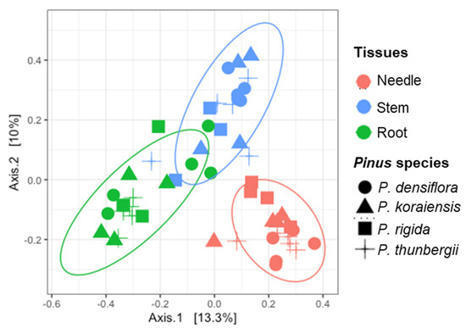
Fungal endophytes are ubiquitous in nature. They are known as potential sources of natural products, and possible agents for biocontrol attributing to their ability to produce a repertoire of bioactive compounds. In this study, we isolated fungal endophytes from three different tissues (needle, stem and root) of four Pinus species (Pinus densiflora, Pinus koraiensis, Pnus rigida, and Pinus thunbergii) across 18 sampling sites in Korea. A total number of 5872 culturable fungal endophytes were isolated using standard culturing techniques. Molecular identification based on the sequence analyses of the internal transcribed spacer (ITS) or 28S ribosomal DNA revealed a total of 234 different fungal species. The isolated fungal endophytes belonged to Ascomycota (91.06%), Basidiomycota (5.95%) and Mucoromycota (2.97%), with 144 operational taxonomic units (OTUs) and 88 different genera. In all sampling sites, the highest species richness (S) was observed in site 1T (51 OTUs) while the lowest was observed in site 4T (27 OTUs). In terms of diversity, as measured by Shannon diversity index (H’), the sampling site 2D (H′ = 3.216) showed the highest while the lowest H’ was observed in site 2K (H’ = 2.232). Species richness (S) in three different tissues revealed that root and needle tissues are highly colonized with fungal endophytes compared to stem tissue. No significant difference was observed in the diversity of endophytes in three different tissues. Among the four Pinus species, P. thunbergii exhibited the highest species richness and diversity of fungal endophytes. Our findings also revealed that the environmental factors have no significant impact in shaping the composition of the fungal endophytes. Furthermore, FUNGuild analysis revealed three major classifications of fungal endophytes based on trophic modes namely saprotrophs, symbiotrophs, and pathotrophs in four Pinus species, with high proportions of saprotrophs and pathothrops. View Full-Text
|
|
Scooped by
Jean-Michel Ané
March 12, 2021 7:50 PM
|
Plants rely on their microbiota for improving the nutritional status and environmental stress tolerance. Previous studies mainly focused on bipartite interactions (a plant challenged by a single microbe), while plant responses to multiple microbes have received limited attention. Here, we investigated local and systemic changes induced in wheat by two plant growth‐promoting bacteria (PGPB), Azospirillum brasilense and Paraburkholderia graminis, either alone or together with an arbuscular mycorrhizal fungus (AMF). We conducted phenotypic, proteomic, and biochemical analyses to investigate bipartite (wheat–PGPB) and tripartite (wheat–PGPB–AMF) interactions, also upon a leaf pathogen infection. Results revealed that only AMF and A. brasilense promoted plant growth by activating photosynthesis and N assimilation which led to increased glucose and amino acid content. The bioprotective effect of the PGPB–AMF interactions on infected wheat plants depended on the PGPB‐AMF combinations, which caused specific phenotypic and proteomic responses (elicitation of defense related proteins, immune response, and jasmonic acid biosynthesis). In the whole, wheat responses strongly depended on the inoculum composition (single vs. multiple microbes) and the investigated organs (roots vs. leaf). Our findings showed that AMF is the best‐performing microbe, suggesting its presence as the crucial one for synthetic microbial community development.
|
|
Scooped by
Jean-Michel Ané
March 10, 2021 9:56 PM
|
Background
The formation of infection threads in the symbiotic infection of rhizobacteria in legumes is a unique, fascinating, and poorly understood process. Infection threads are tubes of cell wall material that transport rhizobacteria from root hair cells to developing nodules in host roots. They form in a type of reverse tip-growth from an inversion of the root hair cell wall, but the mechanism driving this growth is unknown, and the composition of the thread wall remains unclear. High resolution, 3-dimensional imaging of infection threads, and cell wall component specific labelling, would greatly aid in our understanding of the nature and development of these structures. To date, such imaging has not been done, with infection threads typically imaged by GFP-tagged rhizobia within them, or histochemically in thin sections.
Results
We have developed new methods of imaging infection threads using novel and traditional cell wall fluorescent labels, and laser confocal scanning microscopy. We applied a new Periodic Acid Schiff (PAS) stain using rhodamine-123 to the labelling of whole cleared infected roots of Medicago truncatula; which allowed for imaging of infection threads in greater 3D detail than had previously been achieved. By the combination of the above method and a calcofluor-white counter-stain, we also succeeded in labelling infection threads and plant cell walls separately, and have potentially discovered a way in which the infection thread matrix can be visualized.
Conclusions
Our methods have made the imaging and study of infection threads more effective and informative, and present exciting new opportunities for future research in the area.
|