Your new post is loading...

|
Scooped by
Jean-Michel Ané
April 9, 2021 6:36 PM
|
Rhizobia - nitrogen-fixing, root-nodulating bacteria - play a critical role in both plant ecosystems and sustainable agriculture. Rhizobia form intracellular infections within legumes roots where they produce plant accessible nitrogen from atmospheric nitrogen and thus reduce the reliance on industrial inputs. The rhizobia-legume symbiosis is often treated as a pairwise relationship between single genotypes, both in research and in the production of rhizobial inoculants. However in nature individual plants are infected by a high diversity of rhizobia symbionts. How this diversity affects productivity within the symbiosis is unclear. Here, we use a powerful statistical approach to assess the impact of diversity within the Rhizobium leguminosarum - clover symbiosis using a biodiversity-ecosystem function framework. Statistically, we found no significant impact of rhizobium diversity. However this relationship was weakly positive - rather than negative - indicating that there is no significant cost to increasing inoculant diversity. Productivity was influenced by the identity of the strains within an inoculant; strains with the highest individual performance showed a significant positive contribution within mixed inoculants. Overall, inoculant effectiveness was best predicted by the individual performance of the best inoculant member, and only weakly predicted by the worst performing member. Collectively, our data suggest that the Rhizobium leguminosarum - clover symbiosis displays a weak diversity-function relationship, but that inoculant performance can be improved through the inclusion of high performing strains. Given the wide environmental dependence of rhizobial inoculant quality, multi-strain inoculants could be highly successful as they increase the likelihood of including a strain well adapted to local conditions across different environments.
|
|
Scooped by
Jean-Michel Ané
April 9, 2021 6:34 PM
|
Every third-grader knows that plants absorb nutrients from the soil through their roots. The fact that they also release substances into the soil is probably less well known. And this seems to make the lives of plants a lot easier.
That is at least the conclusion of the current study. The participating researchers studied several maize varieties that differ significantly in their yield. In their search for the cause, they came across an enzyme, flavone synthase 2. "The high-yield inbred line 787 we studied contains large amounts of this enzyme in its roots", explains Dr. Peng Yu of the Institute of Crop Science and Resource Conservation (INRES) at the University of Bonn. "It uses this enzyme to make certain molecules from the flavonoid group and releases them into the soil."
|
|
Scooped by
Jean-Michel Ané
April 9, 2021 6:27 PM
|
Soil salinization has adverse effects on plant growth due to direct ion toxicity or secondary damage, such as mineral nutrition imbalance and the water stress caused by low osmotic potential. The rhizosphere processes of plants are likely to play an important role in the biological improvement of saline soil. However, the understanding of this remains limited. This brief review summarizes the progress made recently in the effects of root‐associated microbes especially from halophytic species on the growth stimulation of plants under salinity. For example, halophytes attract and absorb beneficial rhizosphere growth‐promoting bacteria by producing rhizosphere exudates such as organic acids and enzymes, which is conducive to plant growth under salt stress. The plant growth‐promoting exogenous rhizobacteria (PGPR), attached to the roots of halophytes, can promote the growth of plants mainly through the improved absorption of nutrients by the host plants or through producing plant growth regulators. In addition, the colonization of endophytes can regulate plant ion balance and produce secondary metabolites such as growth‐promoting hormone and extracellular enzymes, activating antioxidant systems, and inducing plant system resistance against pathogenic microorganisms, thus promoting the growth of plants under salt stress. The inoculation of arbuscular mycorrhizal fungi (AMF) under salt stress can facilitate plants to change the ion balance or obtain water from the soil, and that the formation of other hyphae may promote the transfer of water and nutrients to plants. Therefore, understanding the effects of root‐associated microbes on the growth stimulation of plants under salinity is of great significance to improving their salt tolerance, so as to improve saline‐alkali land for the construction of a more effective biological improvement model.
|
|
Scooped by
Jean-Michel Ané
April 9, 2021 6:23 PM
|
Related to ABI3/VP1 (RAV) transcription factors play important roles in regulating plant growth and stress tolerance, which have been studied in many plant species, but have remained largely unidentified in legumes. To functionally characterize RAV in legumes, MtRAV3 from legume model plant Medicago truncatula was isolated and its function was investigated by overexpressing MtRAV3 in M. truncatula. Expression analysis demonstrated that MtRAV3 was markedly induced by NaCl and polyethylene glycol (PEG). MtRAV3 overexpression enhanced tolerance of transgenic M. truncatula to mannitol, drought and salt stresses, and induced the expression of adversity-related genes, including MtWRKY76, MtMYB61, cold-acclimation specific protein 31 (MtCAS31), alternative oxidase 1 (MtAOX1) and ethylene response factor 1 (MtERF1). There were lower relative electrolyte leakage and higher chlorophyll content of leaves in the MtRAV3 overexpression plants than in wild type plants under both salt and drought stress. MtRAV3 overexpression M. truncatula were featured by some phenotypes of dwarfing, late flowering, more branches, smaller flower and leaf organs. Further investigations showed that the expression levels of DWARF14 (MtD14), CAROTENOID CLEAVAGE DIOXYGENASES 7 (MtCCD7) and GA3-oxidase1 (MtGA3ox1), which related to dwarf and branch phenotype, were obviously reduced, as well as MtGA3ox1’ (MTR_1g011580), GA20-oxidase1 (MtGA20ox1), MtGA20ox1’ (MTR_1g102070) and GA20-oxidase2 (MtGA20ox2) involved in gibberellins (GAs) pathway. Overall, our results revealed that MtRAV3 exerted an important role in adversity response and plant growth, was a multifunctional gene in M. truncatula, which provided reference for genetic improvement of alfalfa (Medicago sativa).
|
|
Scooped by
Jean-Michel Ané
April 6, 2021 10:16 PM
|
Prokaryotic communities play key roles in biogeochemical transformation and cycling of nutrients in the productive mangrove ecosystem. In this study, the vertical distribution of rhizosphere bacteria was evaluated by profiling the bacterial diversity and community structure in the rhizospheres of four mangrove species (Sonneratia alba, Rhizophora mucronata, Ceriops tagal and Avicennia marina) from Mida Creek and Gazi Bay, Kenya, using DNA-metabarcoding. Alpha diversity was not significantly different between sites, but, significantly higher in the rhizospheres of S. alba and R. mucronata in Gazi Bay than in Mida Creek. Chemical parameters of the mangrove sediments significantly correlated inversely with alpha diversity metrics. The bacterial community structure was significantly differentiated by geographical location, mangrove species and sampling depth, however, differences in mangrove species and sediment chemical parameters explained more the variation in bacterial community structure. Proteobacteria (mainly Deltaproteobacteria and Gammaproteobacteria) was the dominant phylum while the families Desulfobacteraceae, Pirellulaceae and Syntrophobacteraceae were dominant in both study sites and across all mangrove species. Constrained redundancy analysis indicated that calcium, potassium, magnesium, electrical conductivity, pH, nitrogen, sodium, carbon and salinity contributed significantly to the species–environment relationship. Predicted functional profiling using PICRUSt2 revealed that pathways for sulfur and carbon metabolism were significantly enriched in Gazi Bay than Mida Creek. Overall, the results indicate that bacterial community composition and their potential function are influenced by mangrove species and a fluctuating influx of nutrients in the mangrove ecosystems of Gazi Bay and Mida Creek.
|
|
Scooped by
Jean-Michel Ané
April 6, 2021 10:11 PM
|
Plant growth-promoting rhizobacteria (PGPR) have enormous potential for solving some of the myriad challenges facing our global agricultural system. Intense research efforts are rapidly moving the field forward and illuminating the wide diversity of bacteria and their plant beneficial activities. In the development of better crop solutions using these PGPR, producers are including multiple different species of PGPR in their formulations in a “consortia” approach. While the intention is to emulate more natural rhizomicrobiome systems, the aspect of bacterial interactions has not been properly regarded. By using a tri-trophic model of Medicago truncatula A17 Jemalong, its nitrogen (N)-fixing symbiont Sinorhizobium meliloti Rm8530, and the PGPR Bacillus subtilis UD1022, we demonstrate indirect influences between the bacteria affecting their plant growth-promoting activities. Co-cultures of UD1022 with Rm8530 significantly reduced Rm8530 biofilm formation and downregulated quorum sensing (QS) genes responsible for symbiotically active biofilm production. This work also identifies the presence and activity of a quorum quenching lactonase in UD1022 and proposes this as the mechanism for non-synergistic activity of this model “consortium.” These interspecies interactions may be common in the rhizosphere and are critical to understand as we seek to develop new sustainable solutions in agriculture.
|
|
Scooped by
Jean-Michel Ané
April 6, 2021 10:01 PM
|
Mycorrhiza is one of the most important symbiosis for nutrient exchange between fungi and plants where fungi supply mineral nutrients including nitrogen (N) and phosphorous (P) to plants and receive photosynthetically fixed carbon (C) from plant hosts as a reward. In nature, plants gain as much as 80% of mineral nutrient requirements from mycorrhizal fungi which form association with the roots of over 90 % of all plant species. The seeds of Orchidaceae, the largest family of flowering plants, lack endosperms and contain very limited food reserves. The symbiosis with mycorrhizal fungi which form endomycorrhizas is essential for orchid seed germination and protocorm development. With rapid technological advances of next-generation sequencing (NGS), the identification of molecular mechanisms and genes involved in the interplay between orchid and mycorrhizal fungi has become more attention.
|
|
Scooped by
Jean-Michel Ané
April 6, 2021 9:57 PM
|
Arbuscular mycorrhizal fungi (AMF) provide benefits to most crop species via enhanced nutrient uptake, increased drought and abiotic stress resistance, and reduced effects of pathogens and pests. Much remains unclear regarding the specific mechanisms influencing these processes, and the critical roles of AMF are often overlooked in planning agroecological systems. There is growing consensus, however, around the important roles AMF play in improving plant resilience and crop yield while also enhancing the functioning of soil microbial communities. Heterogeneous practices across all scales complicate the successful integration of AMF in agroecological systems. AMF symbioses with crops are passive, or stimulated by incorporation of crop wastes in soil, soil inoculation with AMF spores, or the planting inoculated of seeds. Here we suggest that AMF can have highest beneficial impacts in areas with low levels of agrochemical inputs. We argue that areas with intensive agrochemical inputs can also be made more sustainable with AMF enhancements.
|
|
Scooped by
Jean-Michel Ané
April 6, 2021 9:54 PM
|
Arbuscular mycorrhizal fungi (AMF) greatly facilitate uptake of phosphorus (P) by most plant species. Whether or how this changes if water becomes limiting remained little explored. Medicago truncatula plants were grown in previously sterilized cultivation substrate and inoculated or not with AMF isolate Rhizophagus irregularis ‘PH5’ (M or NM, respectively) in two-compartment rhizoboxes. The compartments were separated or not with root-excluding meshes. A 15-step soil moisture gradient (maintained over 5 weeks) spanned generous water supply through strong water deficiency. Two radioisotopes (33P and 32P) were injected into the plant and distant compartments, respectively, to distinguish cumulative and immediate-term plant P uptake from either of the compartments at each moisture level. M plants were larger than NM plants at high and medium moisture levels and accumulated markedly more P throughout the whole gradient. The immediate-term P uptake did not differ between M and NM plants at high moisture, but at medium and low moistures, M plants acquired significantly more 33P than NM plants, even after accounting for differences in root biomass. Increased immediate-term P uptake by M plants grown under medium and low substrate moistures was probably due to complementary effect of direct hyphal uptake and indirect alterations of substrate hydraulic properties by AMF. This research illustrates that AMF remain functional part of plants even under severe drought stress and thus they should be considered when plant functioning under water deficiency is to be fully understood.
|
|
Scooped by
Jean-Michel Ané
April 6, 2021 9:44 PM
|
A series of new metallophores, referred to as frankobactins, were extracted from cultures of the symbiotic and nitrogen-fixing actinobacterium Frankia sp. CH37. Structure elucidation revealed a 2-hydroxyphenyl-substituted oxazoline core and a chain composed of five proteinogenic and nonproteinogenic amino acids, suggesting nonribosomal peptide synthesis as the biosynthetic origin. By whole-genome sequencing, bioinformatic analysis, and comparison with other Frankia strains, the genetic locus responsible for the biosynthesis was detected. Spectrophotometric titration of frankobactin with Fe(III) and Cu(II) and mass spectrometry established the 1:1 (metal:frankobactin) coordination. Uptake experiments suggested that frankobactin A1 (1) did not serve to recruit iron, but to detoxify Cu(II). As frankobactin A1 prevents the cellular entry of Cu(II), it could play a crucial role in the symbiosis of Frankia sp. and its host in the reclamation of copper-contaminated soil.
|
|
Scooped by
Jean-Michel Ané
April 6, 2021 9:41 PM
|
Rhizobia establish a symbiotic relationship with legumes, which results in the formation of root nodules, the ecological niche for intracellular rhizobia. The infected cell of a root nodule is a special integral unit of plant and nitrogen fixing rhizobia. Nodules tend to be very sensitive to ionic stresses, such as salt stress. High vulnerability toward ionic stresses might be due to defects in ion balance and transport in the infected tissue. The purpose of this minireview is to summarize the current data regarding metal ion transport in the root nodule, with particular emphasis on potassium/sodium ion transport. A bioinformatic approach and in silico gene expression analysis have been used to obtain some insight for K+/Na+ transportеr channels and exchangers in root nodule developmental zones.
|
|
Scooped by
Jean-Michel Ané
April 6, 2021 9:36 PM
|
We report the complete genome sequence of Ensifer mexicanus ITTG R7T, a nitrogen-fixing bacterium isolated from nodules of Acaciella angustissima plants growing naturally in Chiapas, Mexico. The genome is distributed in four replicons comprising one 4.31-Mbp chromosome, one 1,933-Kb chromid, and two plasmids of 436 and 455 Kb.
|
|
Scooped by
Jean-Michel Ané
April 6, 2021 11:39 AM
|
Salt stress is a major agricultural concern inhibiting not only plant growth but also the symbiotic association between legume roots and the soil bacteria rhizobia. This symbiotic association is initiated by a molecular dialogue between the two partners, leading to the activation of a signaling cascade in the legume host and ultimately the formation of nitrogen-fixing root nodules. Here we show that a moderate salt stress increases the responsiveness of early symbiotic genes in Medicago truncatula to its symbiotic partner, Sinorhizobium meliloti, while conversely, inoculation with S. meliloti counteracts salt-regulated gene expression, restoring one-third to control levels. Our analysis of Early Nodulin 11 shows that salt-induced expression is dynamic, Nod-factor dependent, and requires the ionic, but not the osmotic, component of salt. We demonstrate that salt stimulation of rhizobium-induced gene expression requires NSP2, which functions as a node to integrate the abiotic and biotic signals. In addition, our work reveals that inoculation with Sinorhizobium meliloti succinoglycan mutants also hyperinduces ENOD11 expression in the presence or absence of salt, suggesting a possible link between rhizobial exopolysaccharide and the plant response to salt stress. Finally, we identify an accessory set of genes that are induced by rhizobium only under conditions of salt stress and have not been previously identified as being nodulation-related genes. Our data suggests that interplay of core nodulation genes with different accessory sets, specific for different abiotic conditions, function to establish the symbiosis. Together, our findings reveal a complex and dynamic interaction between plant, microbe, and environment.
|
|
|
Scooped by
Jean-Michel Ané
April 9, 2021 6:35 PM
|
Viewing plant species by their mycorrhizal type has explained a range of ecosystem processes. However, mycorrhizal type is confounded with plant phylogeny and the environments in which mycorrhizal partners occur. To circumvent these confounding effects, “dual-mycorrhizal” plant species may be potential models for testing the influence of mycorrhizal type on stand biogeochemistry. To assess their use as models, duality in mycorrhizas within a single host species must be confirmed and factors underlying their variation understood. We surveyed roots, soils, and leaves of mature aspen (Populus tremuloides) across 27 stands in western Canada spanning two biomes: boreal forest and parklands. Aspen roots were mostly ectomycorrhizal with sporadic and rare occurrences of arbuscular mycorrhizas. We further tested whether a climate moisture index predicted abundance of ectomycorrhizal roots (number of ectomycorrhizal root tips m−1 root length) surveyed at two depths (0–20 cm and 20–40 cm) and found that ectomycorrhizal root abundance in subsoils (20–40 cm) was positively related to the index. We subsequently examined the relationships between ectomycorrhizal root abundance, leaf traits, and slow and fast pools of soil organic carbon and nitrogen. The ratio of leaf lignin:N, but not its components, increased along with ectomycorrhizal root abundance in subsoils. Soil carbon and nitrogen pools were independent of ectomycorrhizal root abundance. Our results suggest that (1) categorizing aspen as dual-mycorrhizal may overstate the functional importance of arbuscular mycorrhizas in this species and life stage, (2) water availability influences ectomycorrhizal root abundance, and (3) ectomycorrhizal root abundance coincides with leaf quality.
|
|
Scooped by
Jean-Michel Ané
April 9, 2021 6:30 PM
|
Plants in the bean family (legumes) form nodules on their roots to take up nitrogen. Legumes will stop nodule production when nitrogen is plentiful (Figure 1), but precisely how nitrate presence controls nodule formation in these plants has been a mystery. Now, researchers from Japan have found that interactions between proteins and nitrate can induce and repress genes, controlling nodulation with potential applications in sustainable agriculture.
In a study published in April in The Plant Cell, a research team from the University of Tsukuba has shown that the different DNA-binding properties between proteins that establish nodule development determine if genes involved in symbiosis that govern nodulation turn on or off and that this gene expression is nitrate-induced.
|
|
Scooped by
Jean-Michel Ané
April 9, 2021 6:25 PM
|
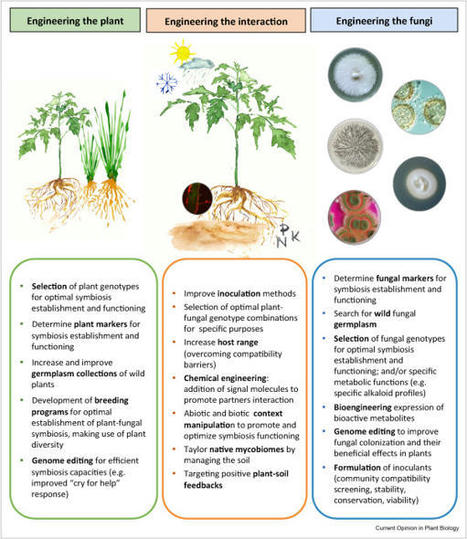
Plant–fungal interactions are widespread in nature, and their multiple benefits for plant growth and health have been amply demonstrated. Endophytic and epiphytic fungi can significantly increase plant resilience, improving plant nutrition, stress tolerance and defence. Although some of these interactions have been known for decades, the relevance of the plant mycobiome within the plant microbiome has been largely underestimated. Our limited knowledge of fungal biology and their interactions with plants in the broader phytobiome context has hampered the development of optimal biotechnological applications in agrosystems and natural ecosystems. Exciting recent technical and knowledge advances in the context of molecular and systems biology open a plethora of opportunities for developing this field of research.
|
|
Scooped by
Jean-Michel Ané
April 8, 2021 2:16 PM
|
En excès dans certains cours d’eau, les fertilisants chimiques sont également responsables de pics de pollution atmosphérique et émetteurs de gaz à effet de serre. L’instauration d’une redevance doit être débattue prochainement à l’Assemblée nationale.
|
|
Scooped by
Jean-Michel Ané
April 6, 2021 10:11 PM
|
Just as the beneficial bacteria living in yogurt and sauerkraut are good for your gut, tiny organisms living in the soil help plants — by getting them nutrients, protecting them from drought, and fending off disease.
As modern agriculture races to produce more food and in a more sustainable way, intense research is underway on natural “probiotic” soil treatments containing living microorganisms. Developers of these products have been including multiple species of beneficial bacteria in their formulations, aiming to boost crop growth and yield. However, these selections must be made very carefully, according to new research from the University of Delaware, because not all good bacteria get along.
In a laboratory study with a relative of alfalfa and two species of beneficial bacteria, UD doctoral student Amanda Rosier and her adviser, Professor Harsh Bais, with Canadian colleague Pascale Beauregard from the Université de Sherbrooke, discovered that one species cuts off the communications signals from the other species, effectively cancelling out its benefits. The findings are reported in Frontiers in Microbiology, a peer-reviewed scientific journal.
|
|
Scooped by
Jean-Michel Ané
April 6, 2021 10:03 PM
|
A trio of BTI scientists led by Maria Harrison, the William H. Crocker Professor at BTI, wondered whether other soil microbes might help the fungi access those nutrients. In a first step toward examining that possibility, the team investigated whether AM fungi associate with a specific community of bacteria. Their research appeared March 1 in The ISME Journal.
|
|
Scooped by
Jean-Michel Ané
April 6, 2021 10:01 PM
|
Drought leads to reductions in plant growth and crop yields. Arbuscular mycorrhizal fungi (AMF), which form symbioses with the roots of the most important crop species, alleviate drought stress in plants. In the present work, we identified 14 GH3 genes in apple (Malus domestica) and provided evidence that MdGH3-2 and MdGH3-12 play important roles during AM symbiosis. The expression of both MdGH3-2 and MdGH3-12 was upregulated during mycorrhization, and the silencing of MdGH3-2/12 had a negative impact on AM colonization. MdGH3-2/12 silencing resulted in the downregulation of five genes involved in strigolactone synthesis, and there was a corresponding change in root strigolactone content. Furthermore, we observed lower root dry weights in RNAi lines under AM inoculation conditions. Mycorrhizal transgenic plants showed greater sensitivity to drought stress than WT, as indicated by their higher relative electrolytic leakage and lower relative water contents, osmotic adjustment ability, ROS scavenging ability, photosynthetic capacity, chlorophyll fluorescence values, and abscisic acid contents. Taken together, these data demonstrate that MdGH3-2/12 plays an important role in AM symbiosis and drought stress tolerance in apple.
|
|
Scooped by
Jean-Michel Ané
April 6, 2021 9:56 PM
|
For successful colonization of host roots, ectomycorrhizal (EM) fungi must overcome host defense systems, and defensive phenotypes have previously been shown to affect the community composition of EM fungi associated with hosts. Secondary metabolites, such as terpenes, form a core part of these defense systems, but it is not yet understood whether variation in these constitutive defenses can result in variation in the colonization of hosts by specific fungal species.
We planted seedlings from twelve maternal families of Scots pine (Pinus sylvestris) of known terpene genotype reciprocally in the field in each of six sites. After 3 months, we characterized the mycorrhizal fungal community of each seedling using a combination of morphological categorization and molecular barcoding, and assessed the terpene chemodiversity for a subset of the seedlings. We examined whether parental genotype or terpene chemodiversity affected the diversity or composition of a seedling's mycorrhizal community.
While we found that terpene chemodiversity was highly heritable, we found no evidence that parental defensive genotype or a seedling's terpene chemodiversity affected associations with EM fungi. Instead, we found that the location of seedlings, both within and among sites, was the only determinant of the diversity and makeup of EM communities.
These results show that while EM community composition varies within Scotland at both large and small scales, variation in constitutive defensive compounds does not determine the EM communities of closely cohabiting pine seedlings. Patchy distributions of EM fungi at small scales may render any genetic variation in associations with different species unrealizable in field conditions. The case for selection on traits mediating associations with specific fungal species may thus be overstated, at least in seedlings.
|
|
Scooped by
Jean-Michel Ané
April 6, 2021 9:45 PM
|
Mutually beneficial symbioses between plants and microbes are widespread and likely arose shortly after plants began to grow on land (Martin et al., 2017). In exchange for photosynthate, microbial symbionts often provide nutrients that would otherwise be inaccessible to plant roots. Legume plants of the Fabaceae family form special nodules in their roots to harbor nitrogen-fixing rhizobia bacteria. Due to the importance of nitrogen in plant growth, and because the Fabaceae family contains many important crop species, the biology of this rhizobial symbiosis has been a focus of study, and many signaling components have been uncovered. However, much of this research has been carried out in a few model legumes together with their native symbionts. Different patterns of legume–rhizobia symbioses have also been reported in nonmodel legumes, but since genetic tools for these species are lacking, it is unclear whether these alternative symbioses require the same molecular components as the models.
|
|
Scooped by
Jean-Michel Ané
April 6, 2021 9:41 PM
|
The increasing rate of fungal infections causes global problems not only in human healthcare but agriculture as well. To combat fungal pathogens limited numbers of antifungal agents are available therefore alternative drugs are needed. Antimicrobial peptides are potent candidates because of their broad activity spectrum and their diverse mode of actions. The model legume Medicago truncatula produces >700 nodule specific cysteine-rich (NCR) peptides in symbiosis and many of them have in vitro antimicrobial activities without considerable toxicity on human cells. In this work we demonstrate the anticandidal activity of the NCR335 and NCR169 peptide derivatives against five Candida species by using the micro-dilution method, measuring inhibition of biofilm formation with the XTT (2,3-Bis-(2-Methoxy-4-Nitro-5-Sulfophenyl)-2H-Tetrazolium-5-Carboxanilide) assay, and assessing the morphological change of dimorphic Candida species by microscopy. We show that both the N- and C-terminal regions of NCR335 possess anticandidal activity as well as the C-terminal sequence of NCR169. The active peptides inhibit biofilm formation and the yeast-hypha transformation. Combined treatment of C. auris with peptides and fluconazole revealed synergistic interactions and reduced 2-8-fold the minimal inhibitory concentrations. Our results demonstrate that shortening NCR peptides can even enhance and broaden their anticandidal activity and therapeutic potential.
|
|
Scooped by
Jean-Michel Ané
April 6, 2021 9:38 PM
|
Rhizobial infection of legume roots during the development of nitrogen-fixing root nodules can occur intracellularly, through plant-derived infection threads traversing cells, or intercellularly, via bacterial entry between epidermal plant cells. Although it is estimated that around 25% of all legume genera are intercellularly infected, the pathways and mechanisms supporting this process have remained virtually unexplored due to a lack of genetically amenable legumes that exhibit this form of infection. In this study, we report that the model legume Lotus japonicus is infected intercellularly by the IRBG74 strain, recently proposed to belong to the Agrobacterium clade of the Rhizobiaceae. We demonstrate that the resources available for L. japonicus enable insight into the genetic requirements and fine-tuning of the pathway governing intercellular infection in this species. Inoculation of L. japonicus mutants shows that Ethylene-responsive factor required for nodulation 1 (Ern1) and Leu-rich Repeat Receptor-Like Kinase (RinRK1) are dispensable for intercellular infection in contrast to intracellular infection. Other symbiotic genes, including nod factor receptor 5 (NFR5), symbiosis receptor-like kinase (SymRK), Ca2+/calmodulin dependent kinase (CCaMK), exopolysaccharide receptor 3 (Epr3), Cyclops, nodule inception (Nin), nodulation signaling pathway 1 (Nsp1), nodulation signaling pathway 2 (Nsp2), cystathionine-β-synthase (Cbs), and Vapyrin are equally important for both entry modes. Comparative RNAseq analysis of roots inoculated with IRBG74 revealed a distinctive transcriptome response compared with intracellular colonization. In particular, several cytokinin-related genes were differentially regulated. Corroborating this observation, cyp735A and ipt4 cytokinin biosynthesis mutants were significantly affected in their nodulation with IRBG74, whereas lhk1 cytokinin receptor mutants formed no nodules. These results indicate a differential requirement for cytokinin signaling during intercellular rhizobial entry and highlight distinct modalities of inter- and intracellular infection mechanisms in L. japonicus.
|
|
Scooped by
Jean-Michel Ané
April 6, 2021 9:36 PM
|
The rhizosphere is a dynamic ecosystem shaped by complex interactions between plant roots, soil, microbial communities and other micro- and macro-fauna. Although studied for decades, critical gaps exist in the study of plant roots, the rhizosphere microbiome and the soil system surrounding roots, partly due to the challenges associated with measuring and parsing these spatiotemporal interactions in complex heterogeneous systems such as soil. To overcome the challenges associated with in situ study of rhizosphere interactions, specialized plant growth chamber systems have been developed that mimic the natural growth environment. This review discusses the currently available lab-based systems ranging from widely known rhizotrons to other emerging devices designed to allow continuous monitoring and non-destructive sampling of the rhizosphere ecosystems in real-time throughout the developmental stages of a plant. We categorize them based on the major rhizosphere processes it addresses and identify their unique challenges as well as advantages. We find that while some design elements are shared among different systems (e.g., size exclusion membranes), most of the systems are bespoke and speaks to the intricacies and specialization involved in unraveling the details of rhizosphere processes. We also discuss what we describe as the next generation of growth chamber employing the latest technology as well as the current barriers they face. We conclude with a perspective on the current knowledge gaps in the rhizosphere which can be filled by innovative chamber designs.
|