


"Technology impacting generic drugs include artificial intelligence, telemedicine, fraud-preventing digital solutions and more, according to the CPhI Annual report for 2020"


 Your new post is loading...
 Scoop.it! "Technology impacting generic drugs include artificial intelligence, telemedicine, fraud-preventing digital solutions and more, according to the CPhI Annual report for 2020" 
No comment yet.
Sign up to comment
Scoop.it!

Manufacturers are adapting with virtual work, remote monitoring, and re-evaluation of facility design and operation to ensure worker safety.
Judy Curtis / SIPR's insight:
Jennifer Markarian writes in Pharmaceutical Technology's June 2020 Equipment and Processing Report: "When the COVID-19 pandemic struck, pharmaceutical manufacturing continued as a highly essential industry, but companies were faced with the challenge of many employees working remotely and the need to ensure that operators working in-person have a healthy workplace. [...] Automation and remote monitoring tools can reduce some of the human interactions with the process in the cleanroom or the lab, but expertise will still be needed. 'While automation looks like a good solution to workplace congestion, the infrastructure and support required to maintain automation is not insignificant,' said Bikash Chatterjee, chief operations and science officer, Pharmatech Associates. 'The lab may begin large deployments of automated solutions to run high volume assays, [for example]. However, anyone who has ever developed and implemented these systems knows they do require care to remain productive and effective.' "
Scoop.it!

Much has been made of the potential of continuous platforms to supplant traditional pharmaceutical batch manufacturing and drive down API production costs. But how suitable is the technology to the precise requirements of complex pharma processing?
Judy Curtis / SIPR's insight:
“People tend to think of continuous manufacturing as something that you have to do only on a large-scale, with metric tons of material, but the reality is you can do it at small scale and have exquisite control” - Bikash Chatterjee, Pharmatech Associates
Scoop.it!

Chief Editor Louis Garguilo asked Outsourced Pharma Advisory Board member and COO/CSO of Pharmatech Associates, Bikash Chatterjee, to talk about building in quality to manufacture ventilators.
Judy Curtis / SIPR's insight:
Building in quality is paramount, writes Bikash Chatterjee in Outsourced Pharma. It is still possible to control the sources of variation that can impact product quality and safety by addressing them as part of the manufacturing process design and scale-up exercise.
While the urgency to move quickly is paramount, the reality is that expediency cannot be achieved at the sacrifice of quality.
Scoop.it!

Driven by digitalisation, Pharma 4.0 is envisioned as the next step in the evolution of pharmaceutical manufacturing. It reflects a shift to improving business performance through data analyses and structured decision-making across the entire pharmaceutical manufacturing value chain.
Judy Curtis / SIPR's insight:
Bikash Chatterjee examines key points to consider in a Pharma 4.0 supply chain, for organisations looking to bring advanced therapies to market.
Scoop.it!

"As we face our latest pandemic threat, the need to have a well-defined and tested business continuity management plan in place cannot be overemphasized." - Bikash Chatterjee, Pharmatech Associates
Judy Curtis / SIPR's insight:
In an expert column in Pharmaceutical Online, Bikash Chatterjee discusses a resiliency framework for pandemic preparedness to help organizations adapt to operational risks, ensure business continuity, and build high-level resilience in all departmental services and sites.
Scoop.it!

"Drug sponsors looking to enter the pharmaceutical markets of China, Japan, and India are faced with regulatory requirements specific to each market, from planning to clinical studies"
Judy Curtis / SIPR's insight:
In an expert column in Clinical Leader, Caitlin Bancroft of Pharmatech Associates discusses strategies for drug sponsors looking to successfully launch products that are ready for Asia.
Scoop.it!

You Brexit, You Buy It – Europe and the New Regulatory – Part 2 By Lynn Hansen, Director of Clinical and Regulatory Affairs, Pharmatech Associates
Judy Curtis / SIPR's insight:
Part 2 of Lynn Hansen's article on Brexit from a regulatory point of view. The primary positive for the life sciences community is that there are contingency plans, in the form of numerous government guidance/instructions developed for “a Brexit deal” or “no Brexit deal.” Another positive: when the UK’s Medicines and Healthcare Regulatory Agency (MHRA) becomes the UK regulatory authority once again, it may end up obtaining its own seat on the International Council on Harmonization (ICH). The MHRA, as the UK’s representative, currently participates in the ICH as part of the EU’s delegation, and sits on many of the ICH’s expert working groups, allowing it to influence international standards. MHRA often is more progressive and open-minded than other European Agencies and may help advance changes faster.
Scoop.it!

Amsterdam, 21 October 2019: CPhI Worldwide – the world’s largest pharma event taking place in Frankfurt (5th-7th November 2019) – has released the first part of its eponymous 2019 Annual Report. Experts Bikash Chatterjee, President and Chief Science Officer at Pharmtech Associates and Girish Malhotra, President of EPCOT International, discuss how manufacturing could be revolutionised by new technologies, but warn, that regulators must change to prevent hindering future innovation.
Judy Curtis / SIPR's insight:
In the 2019 CPhI Annual Report, Bikash Chatterjee forecasts a positive outlook for the medium and long-term future of the industry, foreseeing that Pharma 4.0, the Internet of Things, and Artificial Intelligence could ultimately deliver huge shifts in how we discover and develop medicines – even if the short term applications may not bring the results people are striving for.
“There is no doubt we will see broader adoption of IoT on the shop floor and in the distribution portion of the supply chain in the short term. The biggest impact operationally, I believe, will be seen in the clinical trial management stage of the drug development lifecycle, over the next five years. However over the next decade, AI could have a transformational impact on molecular selection and design,” commented Chatterjee.
Despite the call for these advances, Chatterjee emphasizes that such improvements within the industry will not come about unless they are used in the right way, and address the right questions. He forewarns, “the focus on technology in the absence of understanding the basic question to be answered can derail a cross-functional initiative in the blink of an eye”. Chatterjee also calls for both AI and pharmaceutical companies to gain a better understanding of each other’s fields in order to expedite the process of disruptive technology adoption.
Scoop.it!

The new EU draft guidance, Guideline on the Quality Requirements for Drug-Device Combinations, diverges from the U.S. draft guidance. Part 2 of a two-part series examines the EU guidelines.
Judy Curtis / SIPR's insight:
Manufacturers in both the U.S. and EU should adjust their timelines for putting products on the market based on the new guidance issued by regulatory bodies for these regions. Caitlin Bancroft of Pharmatech Associates advises combination device makers to read the guidances and comment to both agencies, in Pharmaceutical Online. "The FDA is legally required to address comments and consider whether they should result in changes to the guidance. The EMA will also consider implications of comments on the guideline and potentially make changes if enough parties identify gaps. Once the guidances are finalized, getting to know them in detail is essential. Both are going to shape the way applications for drug-device products go forward. Manufacturers in both the U.S. and EU should adjust their timelines for putting products on the market based on the new guidance. "
Scoop.it!

One of the inevitable consequences of political change is disruption to the global economic engine. Disruption can result from political instability, regulation, or even innovation. Now, from the portent of the coming Brexit storm, to the enactment of major provisions of the Drug Quality Security Act (DSCA), to the promise of blockchain and artificial intelligence (AI), the requirements for modern supply chain management are in evolution, as are the efforts underway to safeguard supply chain integrity.
Judy Curtis / SIPR's insight:
Bikash Chatterjee of Pharmatech discusses efforts underway to safeguard the pharma supply chain.
Scoop.it!
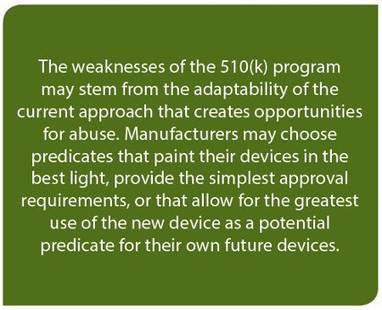
The Premarket Notification (510(k)) pathway for medical device approval presents challenges for device manufacturers, FDA reviewers, and patients.
Judy Curtis / SIPR's insight:
In an article in Pharmaceutical Outsourcing, Caitlin Bancroft of Pharmatech Associates explores several new upgrades to the 510(k) regulatory pathway implemented by the FDA. The agency’s efforts have been varied and impact many different aspects of the device approval and monitoring systems, including: pre-market requirements, the use of real world evidence in applications, substantial equivalency determinations, and post-market surveillance. Two particularly impactful changes are the newly established Safety and Performance Based Pathway, and the unofficially proposed 10-year cap on predicate devices.
Scoop.it!
Regulatory, cultural, and technical differences between drug and device development can pose challenges.
Judy Curtis / SIPR's insight:
Pharmaceutical Technology spoke with Kerri-Anne Mallet, Clinical and Regulatory Affairs at Pharmatech Associates and with Bikash Chatterjee, Chief Science Officer and president; Lynn Hansen, RAC, director, Regulatory Affairs; and Caitlin Bancroft, Regulatory Affairs; all at Pharmatech Associates, about some of the differences in drug and device development, best practices for combination product development, and issues specific to Internet-connected combination products.
|
Scoop.it!

Judy Curtis / SIPR's insight:
What The DMF?! Industry and FDA Pharmatech's Michael Cooper writes about how, ultimately, the change of oversight from CDER to CBER will affect all past, present, and future biologic-related master files and marketing applications/approvals. It will be interesting to observe how much CBER will honor past CDER reviews and approvals, and how much sponsors will have to re-defend already approved submissions and regulatory strategies.
Scoop.it!
Controlled Release Roundtable, pp 58-65
Judy Curtis / SIPR's insight:
Bikash Chatterjee and Adam Lambert of Pharmatech Associates weigh in with fellow industry experts on developing and manufacturing controlled release products, in the latest issue of American Pharmaceutical Review.
Scoop.it!

The FDA is authorized to grant Emergency Use Authorizations for any medical countermeasure that facilitates the diagnosis, prevention, or treatment of SARS-CoV-2.
Judy Curtis / SIPR's insight:
In an article in Outsourced Pharma, Bikash Chatterjee writes that understanding the FDA’s expectations will allow drug sponsors to make the most of available data derived during the emergency use authorization (EUA) and position them for a smoother regulatory process.
Scoop.it!

Reducing risk while while maintaining process velocity are key to defeating this virus
Judy Curtis / SIPR's insight:
Stephanie Gaulding, Director, Regulatory Compliance at Pharmatech Associates writes how, using infrastructure and regulatory intelligence, life sciences consultants work to meet our changing reality: from planning a regulatory strategy for a COVID-19 treatment or vaccine, to evaluating suppliers using remote assessment methods, or bringing critical medical equipment to the market.
Consulting networks and their experience bring perspective on what to prioritize in escalating situations, and to respond appropriately, in alignment with clients' ongoing projects and initiatives.
Scoop.it!

It is critical that organizations looking to engage an external contract service provider be aware of new regulations to align their program
Judy Curtis / SIPR's insight:
Bikash Chatterjee's article in Life Science Leader discusses how the regulatory philosophies of the major markets are converging, creating avenues that accelerate access to new drug therapies while providing a solid, structured framework for clinical trial and regulatory oversight. Drug sponsors pursuing an outsourcing strategy will have to make sure the necessary processes and systems are in place — both internally and with their contract service providers — to ensure compliance in a new decade of modernized market regulatory expectations.
Scoop.it!

The FDA issued draft guidance on the qualification process for drug development tools (DDTs) in December 2019
Judy Curtis / SIPR's insight:
In an expert column in BioProcess Online commenting on FDA's new qualification process guidance, Pharmatech's Bikash Chatterjee writes that the benefits of having universally accepted drug development tools for a specific context of use could be profound in shortening the development timeline and accelerating the review process. The FDA is seeking feedback on the guidance by Feb. 12, 2020 before finalizing the program.
Scoop.it!

The FDA's new pharmaceutical quality assessment system is intended to capture and manage information about inherent risk and control approaches for product design, manufacturing, and facilities
Judy Curtis / SIPR's insight:
KASA represents an ambitious step forward for the FDA in standardizing and increasing the efficiency of the drug review process. Bikash Chatterjee writes that building the system on a risk framework is consistent with most major regulatory philosophies, to be effective, the challenge will be to set up risk evaluation standards that can both accommodate the spectrum of current and future drug therapy programs and leverage industry's experience in creating and managing these systems.
Scoop.it!

You Brexit, You Buy It – Europe and the New Regulatory – Part 1 of 2, By Lynn Hansen, Director of Clinical and Regulatory Affairs, Pharmatech Associates. With Brexit looming, questions and concerns hover like a grey cloud over the UK pharmaceutical industry. Industry insiders and colleagues in London found that the confusion surrounding what comes next was offset by a constant and wearying news update on Brexit…
Judy Curtis / SIPR's insight:
Lynn Hansen of Pharmatech Associates writes about the challenges that stem from Brexit for regulators guiding the transition for pharmaceutical, medical device, biotech, and veterinary companies to ensure that the supply chain of valuable products for many patient populations can be maintained.
Scoop.it!

The goal of Pharma 4.0 is to create the intelligence needed for engineers and operators to make smarter decisions that increase operational efficiencies, improve yields, and drive business performance.
Judy Curtis / SIPR's insight:
Bikash Chatterjee discusses the current and potential future impacts of the application of Industry 4.0 concepts to the pharmaceutical manufacturing industry, in an article in Tablets & Capsules, October 2019.
Scoop.it!

Pharma 4.0 & IoT: Applications across the Drug Development Life Cycle and Supply Chain Pharma 4.0 applies Industry 4.0 concepts to the pharmaceutical setting. Within modular structured smart factories, cyber-physical systems monitor physical processes, create a virtual copy of the physical world, and help make decentralized decisions.
Judy Curtis / SIPR's insight:
The goal of Pharma 4.0 is to create the intelligence needed for engineers and operators to make smarter decisions that increase operational efficiencies, improve yield and engineering productivity, and substantially drive business performance. AI, deep learning, and blockchain technologies will be deployed in myriad settings, to ensure quality, enforce contract terms, improve shop floor performance, or optimize clinical analysis. [This article has been adapted from the 2019 CPhI Annual Report.]
Scoop.it!

Designing Combination products for compliance: Caitlin Bancroft of Pharmatech analyses the new U.S. draft guidance (part 1) and the EU draft guidance in a two-part article in Pharmaceutical Online.
Judy Curtis / SIPR's insight:
Today the FDA provides a structured framework for evaluate and regulate combination products, considering both device- and drug component contributions to industry. In the European Union, things were similarly structured. Regulators on both sides of the Atlantic risked falling behind when it comes to combination products that are ever increasing in complexity and capability. The new EU draft guidance, Guideline on the quality requirements for drug-device combinations, and U.S. draft guidance, Principles of Premarket Pathways for Combination Products, are important. the latest attempts by each body to adequately regulate combination products. In this two-part series, Caitlin Bancroft examine the two guidances in detail, in Pharmaceutical Online. Part 1 — published here — covers the U.S. regulatory guidance. [Part 2 explains the differences in European Union guidelines for combination products, to appear in the next issue of the publication.]
Scoop.it!

If we are to jump into cGMP, where is the line of converting from 361 to 351 Regulations and Practices for a manufacturing facility drawn?
Judy Curtis / SIPR's insight:
Lynn Hansen of Pharmatech Associates explores a basic roadmap for the process of migration to the new regulatory environment, within the 36-month timetable mandated by the FDA and ending on November 16, 2020. Companies currently in the tissue-based regenerative medicine business need to understand and comply with the FDA’s expectations for human cells, tissues and cellular and tissue-based product (HCT/P) under development in the next two years. HCT/P pertains to products containing or consisting of human cells or tissues that are intended for implantation, transplantation, infusion, or transfer into a human recipient.
|





Bikash Chatterjee, CEO of Pharmatech Associates, said the concept of patient centricity has gone beyond being a buzzword to being a core value and that telemedicine will have a long-lasting impact.
Chatterjee also foresees the industry will see voice collection of data in the home begin to be incorporated into both home and health settings.