Technology has, quite clearly, transformed the role of the sales rep. But at the same time, predictions that the rep would go the way of the dodo bird have themselves been proved false.
Key opinion leaders are much more digitally-minded than other physicians, according to the Sources & Interactions Study, September 2014 – Medical/Surgical Edition. Here are a few key data-points pharma marketers and agencies need to know about key opinion leaders in order to refine digital marketing plans:
KOLs are more likely to use smartphones and tablets for professional purposes than all doctors surveyed. About 91% use smartphones for work reasons and 66% say they use a tablet for professional purposes. When using their smartphones, key opinion leaders are more likely to use medical apps compared with all physicians. 83% use at least one of the apps we study on their mobile devices vs. 69% of all physicians. About 68% use diagnostic tool/clinical reference smartphone apps and 60% use drug and coding reference smartphone apps. Looking at tablet apps, 64% of KOLs use one of the types we study on their tablets compared to 47% of all physicians. More than half of key opinion leaders (57%) use the Internet for professional purposes more than four times per day compared to 42% of all physicians. On average, they use the Internet almost 15 times per week for work with 97% using the Internet at least daily for professional purposes. In comparison, 88% of all physicians use the Internet at least daily for work. While only 30% of all physicians say they use email to communicate with patients, that percentage increases to 47% of all key opinion leaders. Key opinion leaders are more likely to use social networks for professional purposes compared to all other physicians. For example, 57% of key opinion leaders use medical association social networks while only 41% of all physicians use them.
The Sources & Interactions™ Study is a detailed examination of doctors’ online and mobile activities, e-detailing experience, and exposure to (and evaluation of) information sources including traditional and emerging media, pharma reps, CME, convention and more. The study is conducted every six months and targets more than 3,000 physicians annually across 22 specialties, exploring their media preferences and habits. Sources & Interactions was designed to help marketers and their agencies cost-effectively allocate resources to their overall promotional mix, and provide publishers with specific insight about where their offerings fit into physicians (and other healthcare professionals’) information inventory.
Cegedim Relationship Management today announced the release of a full multichannel suite via the enhanced integration of the Kadrige iDetailing solution for performing remote interactions, with Cegedim’s Customer Relationship Management solution,...
Healthcare professionals are pressed for time now more than ever. Time is filled with entering data into EHR systems and managing an increasing patient load. It can be hard to reach them even at the best of times, but physicians and specialists are undergoing a shift in the way they prefer to communicate. Healthcare organizations looking to connect with these individuals need to keep current marketing trends in mind to achieve success. Our recent HCP Communication Study aimed to uncover the way healthcare professionals prefer to communicate, particularly with the life science industry. Here are the four things you should know:
Pharma companies could also engage in physician conversations in online HCP communities such as Doximity and Sermo.
What Do Docs Discuss Online?
Will New FDA Guidelines Allow Pharma to Join In?
Pharmaguy interviews Peter Kirk, CEO & Sermo (see Bio), who talks about the nature and value of physician discussions on Sermo and how pharma can engage docs on social media sites and online discussion boards.
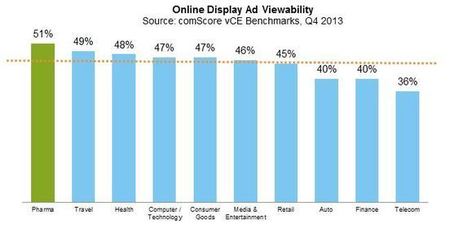
comScore, Inc. (NASDAQ: SCOR), a leader in measuring the digital world, today released results from its eighth annual Online Marketing Effectiveness Benchmarks for the Pharmaceutical Industry, conducted in partnership with marketing innovation consultancy Evolution Road LLC.
MobiHealthNews How ACOs are pushing pharma further beyond the pill MobiHealthNews Pharma needs to make the shift, as many companies have already begun to do, from selling drugs and therapies, to selling holistic condition management, whether that...
Many companies are reporting that the iPad novelty has worn off and healthcare professionals are demanding more than just another animation presented on a mobile device. So what exactly are healthcare professionals asking for?
Unique Approach for Multichannel Marketing - Meet Dynamic KPIs in eWizard ... MarketWatch Your Customer is in Charge - the hottest topic of Eyeforpharma - the most rated and popular event organized for Life Science yearly.
INTERVIEW: Accenture's David Logue talks digital pharma PharmaTimes DL: Pharma marketing organisations are often set up with a dependency on colleagues in the technology function to deliver digital experiences.
A new Harris Poll finds Americans favor generic prescription drugs over brand name products by a considerable margin. Eighty-one percent of those who buy prescription drugs say they would purchase generics more often than brand name drugs. A 42% subset goes so far as to assert that they would "always" choose to buy a generic drug. Older generations are especially likely to indicate that they would always go with generics (50% Matures, 44% Baby Boomers, and 46% Gen X vs. 33% Millennials).
I was sent an email from a reader of Pharma Marketing Blog directing me to an infographic about the day in the life of a digital marketer. You can view the entire graphic here, but I want to focus on the section reproduced below and compare that to what my day looked like yesterday. You can compare it to your own day and see if you fit the pattern.
AbelsonTaylor held a roundtable to discuss Apples recent introduction on the HealthKit and Health apps with three of the agencys executives. Each offers a unique point of view on how Apples new platforms will shape our industry
#Pharma firms are moving away from the traditional reliance on sales reps (MRs) to sell their products to the medical fraternity. Instead, they are gradually shifting to software-oriented #e-detail...
The sales reps are game, the HCPs are receptive and the mobile technology is ready. Rebecca Mayer Knutsen reports on the circumstances that have converged to provide pharma with its most promising mobile selling moment to date. he in-the-moment mobile engagement trend—designed to take advantage of the technology in our pockets, purses and briefcases—requires a brand-new thought process and reinvention of information. Slower to adopt and invest in innovative approaches than other industries, is pharma finally ready to take a seat at the table?"
Digital sales communication allows for new ways to communicate – offering the opportunity for more relevant information, provided in a more engaging way.
Good article that shows the disease or condition is more important motivator. Also that the type of digital media preferred is different per age group.
Almost two-thirds (66%) of Americans would use a mobile health apps to manage health-related issues, according to the findings released from Makovsky/Kelton
To get content containing either thought or leadership enter:
To get content containing both thought and leadership enter:
To get content containing the expression thought leadership enter:
You can enter several keywords and you can refine them whenever you want. Our suggestion engine uses more signals but entering a few keywords here will rapidly give you great content to curate.


 Your new post is loading...
 Scoop.it!