E-SANTÉ : COMPRENDRE. RELIER. TRANSFORMER.
316.0K views | +119 today
E-SANTÉ : COMPRENDRE. RELIER. TRANSFORMER.

Une veille sur la santé numérique en France et à l’international : politiques publiques, données, infrastructures, IA, services et usages. Études, rapports et retours de terrain sélectionnés par Lionel Reichardt, Pharmageek, pour comprendre les transformations et éclairer les décisions.

ESSAI
Your new post is loading...
Rescooped by Lionel Reichardt / le Pharmageek from Mobile Health: How Mobile Phones Support Health Care
July 20, 2013 2:54 AM
Scoop.it!

How private is data on health and fitness apps? | mobihealthnews

How private is data on health and fitness apps? | mobihealthnews | E-SANTÉ : COMPRENDRE. RELIER. TRANSFORMER. | Scoop.it

Recently, MobiHealthNews wrote about the number of fitness app installs expected to grow to 248 million in 2017 from 156 million in 2012, a 60 percent rise. While more consumers are downloading health apps, one research firm suggests app users should be cautious about what personal information they’re volunteering when they use those apps.

This week, Privacy Rights Clearinghouse released a study funded by the California Consumer Protection Foundation addressing the privacy risks of mobile health and fitness apps. The study analyzed privacy policies from December 2012 to June 2013 for 43 apps from the top 200 lists of Apple and Android app stores; 23 were free and 20 were paid.

The health and fitness apps in the report included mood apps, diabetes management apps, prescription medication shopping apps and pregnancy apps. All apps’ privacy settings were analyzed from two vantage points, a consumer’s perspective and technical perspective.

When the report analyzed the privacy policies of the apps, they found 74 percent of free apps and 60 percent of paid apps had a privacy policy in the app or on the developer’s website, while the remaining percentage of apps had no privacy policy at all. For the apps that had a privacy policy on the developer’s website, 43 percent of the free apps and 25 percent of the paid apps provided a link in the app to find it. The others required a user to search independently for the policy.

The report’s authors identify their strong bias in favor of personal privacy, but do not intend to persuade consumers not to use the applications. Rather the company intends to give consumers more information about what data apps collect and what they do with it.

“What we recommend is that users should just assume at the outset that in using a mobile application, everything they enter, both personal information and usage information, is going to the developer and also very likely to a number of unidentified third parties,” Project Manager Linda Ackerman said in a webinar about the report. “So use cautiously and just be aware of your own comfort level about sharing the kind of information that an app is asking you to enter.”

After studying where the data within apps went, the Clearinghouse found 39 percent of free apps and 30 percent of paid apps sent information to someone not disclosed by the developer in the app or the app’s privacy policy. Further, only 13 percent of free apps and 10 percent of paid apps encrypted all data connections between the app and developer’s website(s). One of the most stark contrasts between free and paid apps was whether apps shared user-generated personally identifiable information (PII) with advertisers — 43 percent of free apps shared this information in contrast to only 5 percent of paid apps. Widespread dissemination of a user’s PII can lead to identity theft, embarrassment or harm to the user’s reputation, according to the report.

“If you are concerned about privacy, particularly avoid applications with embedded advertising and use only paid applications,” Ackerman said. “If you can, some applications let you test the app first without entering PII, your personally identifiable information, so if you have that option you can try the app out and see how it feels to your first.”

Due to price constraints, the Clearinghouse only analyzed paid apps that ranged from $1.50 to $20 and didn’t include apps that required additional measuring devices like pedometers, weight scales or glucose meters.


Via Chanfimao, dbtmobile
No comment yet.
Scooped by Lionel Reichardt / le Pharmageek
July 19, 2013 3:26 AM
Scoop.it!

Le succès des applications gratuites sur l'App Store

Le succès des applications gratuites sur l'App Store | E-SANTÉ : COMPRENDRE. RELIER. TRANSFORMER. | Scoop.it

L'agence de publicité et d'analyse des comportements Flurry Analytics a mis en relief les pratiques tarifaires sur l'App Store. Entre une application à 0,89 € et sa version gratuite ...

No comment yet.
Rescooped by Lionel Reichardt / le Pharmageek from Digital Retail Marketing
July 19, 2013 3:16 AM
Scoop.it!

L'impact vertueux du multicanal se confirme

L'impact vertueux du multicanal se confirme | E-SANTÉ : COMPRENDRE. RELIER. TRANSFORMER. | Scoop.it
La crise et le mauvais temps ont fait décoller le lèche vitrine digital et baisser les ventes en magasin. Seule la synchronisation du physique et du digital peut ouvrir des perspectives de croissance pour le commerce dans son ensemble.

Via Lise Déchamps, Jérôme Simon agent immobilier Versailles
Lise Déchamps's curator insight, July 18, 2013 4:32 AM

Les distributeurs qui résistent le mieux sont ceux qui ont réellement supprimé les silos et pensé leur stratégie digitale pour à la fois profiter de la dynamique digitale tout en pilotant une conversion intégrant le point de vente physique. A travers le mobile, la data et la refonte des dispositifs web, la synchronisation du point de vente et du digital est en marche et ouvre des solutions aux enseignes en ces temps difficiles. La vraie barrière n'est plus dans la méconnaissance du phénomène ROPO ou la vision pour le dynamiser, mais dans la capacité des enseignes à penser, agir et piloter en mode multicanal. "

Jérôme Simon agent immobilier Versailles's curator insight, July 18, 2013 4:50 AM

les vertus du désilotage

Rescooped by Lionel Reichardt / le Pharmageek from e santé et e patients
July 19, 2013 3:11 AM
Scoop.it!

Informer et rassurer grâce aux serious games santé

Informer et rassurer grâce aux serious games santé
Les serious game permettent de façon ludique, d'informer le grand public sur des questions de santé, des maladies, des examens médicaux et particulièrement d...

Via Géraldine GOULINET FITE
No comment yet.
Rescooped by Lionel Reichardt / le Pharmageek from Festival de la Communication Santé
July 19, 2013 3:06 AM
Scoop.it!

TLM juin-sept 2013 Interview Dominique Noel Festival de la Communication santé sur la médecine à l'ère des réseaux sociaux

Interview de Dominique Noel, Présidente du Festival de la Communication Santé sur : "la médecine à l'ère des réseaux sociaux.

Via Festival Communication Santé
No comment yet.
Rescooped by Lionel Reichardt / le Pharmageek from NTIC et Santé
July 19, 2013 3:03 AM
Scoop.it!

Meda Cardio : application mobile pour les cardiologues

Meda Cardio : application mobile pour les cardiologues | E-SANTÉ : COMPRENDRE. RELIER. TRANSFORMER. | Scoop.it

Le laboratoire Meda Pharma propose une application mobile à destination des cardiologues : Meda Cardio. Présentation.

Disponible gratuitement mais réservée aux professionnels de santé, l’application Meda Cardio a été développée en partenariat avec la Lettre du Cardiologue.

Elle met à disposition des cardiologues des scores, échelles et classifications en cardiologie : CHADS2, CHA2DS2-VASc, Cockroft, DFG/MDRD, EHRA, Epworth, Euroscore 2010, Fageström, Framingham, HAS-BLED, Hemorrhage, IMC,…

Réservée aux professionnels de santé, cette application nécessite un code d’activation fournit par le laboratoire après authentification du statut via le numéro RPPS.


Via Festival Communication Santé, dbtmobile
No comment yet.
Rescooped by Lionel Reichardt / le Pharmageek from Training and Training Prevention
July 19, 2013 2:55 AM
Scoop.it!

Healthcare Quality | Patient Satisfaction/Safety: Clinician-to-Clinician Communication

Healthcare Quality | Patient Satisfaction/Safety: Clinician-to-Clinician Communication | E-SANTÉ : COMPRENDRE. RELIER. TRANSFORMER. | Scoop.it
Too many health care organizations still use cumbersome call centers, flow charts and Rolodexes to determine which clinician to call about a patient issue and the best way to contact that person.

Via Greg Younger
Greg Younger's curator insight, July 18, 2013 1:46 PM

Quote:

"In an examination of patient safety events ..., my colleagues and I found that the majority were caused by communication issues. A frequent problem is a delay or difficulty in physicians reaching one another. Instituting a reliable method of contacting clinicians and getting responses seems like a simple task, but it is one of the most complex processes of any health system — and it became critical to the patient safety aspect of our workflow."

Rescooped by Lionel Reichardt / le Pharmageek from New pharma
July 19, 2013 2:52 AM
Scoop.it!

AstraZeneca takes a personal approach to connecting with patients' wallets

AstraZeneca takes a personal approach to connecting with patients' wallets | E-SANTÉ : COMPRENDRE. RELIER. TRANSFORMER. | Scoop.it
Within the discussion around AstraZeneca's branded approach to YouTube, I've yet to see any commentary focusing on the fact that whilst the AstraZeneca’s Health Connections blog states that ‘AstraZeneca believes that it is important to share information with patients by engaging with them online’, the principle information it seems to want to convey is the cost of the medication.

If I didn’t live in a country with a national health system and I was considering taking Nexium, I’d want to know about its efficacy as a treatment for acid reflux before I turned my attention to how much it costs.
What’s the key message here?
Nexium costs $18 a month.


Thanks.


Now, what is it for, what does it do, and is it effective?


By all means make the implicit message that ‘Nexium is an affordable medication’ explicit, but not at the expense of explaining why the medication is an effective treatment for the conditions it is indicated for.


Not doing so makes it look like AstraZeneca is trying to smuggle a message about affordability in through the back door.


The truly disappointing thing is, there’s really no need to do this: of course cost is an issue to consumers in geographies that don’t have national health systems, but why not state that plainly rather than embedding the message in a graphic?
AstraZeneca should take a long, cold look at the disjuncture between the narrative that they appear to believe they’re constructing around supporting educational need on their branded channel on YouTube (with comments currently switched off, I notice), and the primacy of the message they’re actually conveying around medication cost which consumers are exposed to first.....


Via rob halkes
rob halkes's curator insight, July 18, 2013 1:56 PM

Great Analysis of how A pharma company must rethink it's intentions with communication on line, because the company runs the risk due to its traditional nature to be promotove rather than informative..;-)

Change is difficult! ;-)

Rescooped by Lionel Reichardt / le Pharmageek from Digital News in France
July 19, 2013 2:45 AM
Scoop.it!

La télévision peut également mesurer le rythme cardiaque grâce à la reconnaissance faciale

La télévision peut également mesurer le rythme cardiaque grâce à la reconnaissance faciale | E-SANTÉ : COMPRENDRE. RELIER. TRANSFORMER. | Scoop.it
Des chercheurs du MIT ont créé une caméra qui s'intégrera à une télévision afin de mesurer le rythme cardiaque d’un téléspectateur, via un système de reconnaissance faciale, lorsqu'il regarde l'écran.

Via Rémy TESTON
No comment yet.
Rescooped by Lionel Reichardt / le Pharmageek from Pharma: Trends and Uses Of Mobile Apps and Digital Marketing
July 19, 2013 2:40 AM
Scoop.it!

Top tips from Pharma's digital thought leaders

Top tips from Pharma's digital thought leaders | E-SANTÉ : COMPRENDRE. RELIER. TRANSFORMER. | Scoop.it
The Pharmaceutical Marketing Society educates, informs and facilitates networking among its 1400-plus members to promote excellence in pharmaceutical and life sciences marketing.

Via eMedToday
eMedToday's curator insight, July 18, 2013 8:20 PM

These are great tips from the big boys

eMedToday's curator insight, July 18, 2013 8:21 PM

e detailing is done in the context of the digital enviroment. 

Rescooped by Lionel Reichardt / le Pharmageek from How Game Mechanics can influence health
July 17, 2013 1:51 AM
Scoop.it!

Why Behavior Change Apps Fail To Change Behavior | TechCrunch

Why Behavior Change Apps Fail To Change Behavior | TechCrunch | E-SANTÉ : COMPRENDRE. RELIER. TRANSFORMER. | Scoop.it

Imagine walking into a busy mall when someone approaches you with an open hand. “Would you have some coins to take the bus, please?” he asks. But in this case, the person is not a panhandler. The beggar is a PhD.


Via Nitro Digital
Nitro Digital's curator insight, July 16, 2013 8:49 AM

It's self-determination theory proving out again. If it feels like something you want to do you're much more likely to be motivated to do it! 

Rescooped by Lionel Reichardt / le Pharmageek from Digital Health
July 17, 2013 1:44 AM
Scoop.it!

Big data revolution in healthcare sector

Big data revolution in healthcare sector | E-SANTÉ : COMPRENDRE. RELIER. TRANSFORMER. | Scoop.it
Researchers are in the process of using the unstructured data to generate predictive health interventions

Via Alex Butler
Halo 's curator insight, July 16, 2013 12:21 PM

The power of big data to make an impact in the Healthcare Industry.

kc odonkor's curator insight, July 17, 2013 11:36 AM

very exciting...

José Manuel Taboada's curator insight, July 18, 2013 4:49 AM

Benditos algoritmos.

Rescooped by Lionel Reichardt / le Pharmageek from Social marketing - Health Promotion
July 17, 2013 1:40 AM
Scoop.it!

Online Prevention Aimed at Lifestyle Behaviors: A Systematic Review of Reviews

Online Prevention Aimed at Lifestyle Behaviors: A Systematic Review of Reviews | E-SANTÉ : COMPRENDRE. RELIER. TRANSFORMER. | Scoop.it
Results: According to health priorities, interventions are largely targeted at weight-related behaviors, such as physical activity and dietary behavior. Evaluations are predominantly effect-focused and overall effects are small, variable, and not sustainable. Determinants of effectiveness are unclear; effectiveness cannot yet be unambiguously attributed to isolated elements. Actual reach of interventions is undiversified, mostly reaching participants who are female, highly educated, white, and living in high-income countries. One of the most substantial problems in online prevention is the low use of the interventions, a phenomenon seen across all behavior domains.

Via Giuseppe Fattori
No comment yet.
Rescooped by Lionel Reichardt / le Pharmageek from Digital marketing pharma
July 20, 2013 2:48 AM
Scoop.it!

Apple’s top 118 apps for doctors, nurses, patients

Apple’s top 118 apps for doctors, nurses, patients | E-SANTÉ : COMPRENDRE. RELIER. TRANSFORMER. | Scoop.it

Last November, MobiHealthNews compiled a list of Apple’s top 80 apps for doctors, nurses, and patients. Since then, Apple has added some new apps to their list and taken off many others.


Via Olivier Delannoy
eMedToday's curator insight, July 20, 2013 6:26 AM

A little technical but great list of apps

Lindsay Wilson's curator insight, August 5, 2013 2:59 PM

A great list of health care related apps.

Pharmaplus's curator insight, August 7, 2013 6:52 AM

Good list of health care apps


Rescooped by Lionel Reichardt / le Pharmageek from ma selection d'actus pharma (in french !)
July 19, 2013 3:19 AM
Scoop.it!

La Stratégie Web 2.0 des laboratoires pharmaceutiques - Linkfluence

La Stratégie Web 2.0 des laboratoires pharmaceutiques - Linkfluence | E-SANTÉ : COMPRENDRE. RELIER. TRANSFORMER. | Scoop.it
L’animation sur les réseaux sociaux est un véritable enjeu pour les laboratoires pharmaceutiques. Par Linkfluence, leader en Social Media Intelligence.

Via Rémy TESTON, Thierry Geufroi
No comment yet.
Rescooped by Lionel Reichardt / le Pharmageek from Latest mHealth News
July 19, 2013 3:12 AM
Scoop.it!

Who should regulate mHealth? | mHealthNews

Who should regulate mHealth? | mHealthNews | E-SANTÉ : COMPRENDRE. RELIER. TRANSFORMER. | Scoop.it

Not everyone is eager to see the U.S. Food and Drug Administration issue its final guidance on mobile medical app regulation.


While the mHealth Regulatory Coalition and several mHealth advocates have asked the FDA to release its long-delayed guidance – which has been in the works since the agency issued preliminary guidelines in late 2011 – a coalition of roughly 120 health IT stakeholders has asked the government to put the brakes on the FDA until a much more wide-ranging study of HIT regulations is finished.


In fact, some are wondering if the FDA is the right agency to oversee mHealth regulation.


Via Sam Stern
No comment yet.
Rescooped by Lionel Reichardt / le Pharmageek from Msante & Quantified Self
July 19, 2013 3:10 AM
Scoop.it!

Withings, le pionnier français du Quantified Self lève 23,5 millions d'euros

Withings, le pionnier français du Quantified Self lève 23,5 millions d'euros | E-SANTÉ : COMPRENDRE. RELIER. TRANSFORMER. | Scoop.it
Le pionnier français du quantified-self et de la santé connectée compte accélérer son développement international et renforcer ses projets de R&D.

Via Cecile Chelim
No comment yet.
Rescooped by Lionel Reichardt / le Pharmageek from médecine augmentée
July 19, 2013 3:03 AM
Scoop.it!

Les applications médicales de Kinect

Les applications médicales de Kinect | E-SANTÉ : COMPRENDRE. RELIER. TRANSFORMER. | Scoop.it
Les objets connectés se font une place de plus en plus grande dans la médecine, zoom sur les utilisations de Kinect en santé.

Via Chanfimao, Géraldine GOULINET FITE
Chanfimao's curator insight, July 18, 2013 7:24 AM

Objet ludique fabriqué pour la console XBOX 360 en 2010 et utilisé au départ par les gamers, le Kinect de Microsoft a su se faire une place de choix dans le cœur des développeurs. Ayant vite reconnu son potentiel (au delà du domaine du jeu vidéo), ils ont détourné l’appareil quasiment dès sa sortie à l’aide de pilotes libres et gratuits (un pilote permet la communication avec des périphériques tels que la Kinect, une souris ou un clavier). 

Rescooped by Lionel Reichardt / le Pharmageek from Veille Pharma
July 19, 2013 2:57 AM
Scoop.it!

Un "Instagram des médecins" pour résoudre des cas complexes

Un "Instagram des médecins" pour résoudre des cas complexes | E-SANTÉ : COMPRENDRE. RELIER. TRANSFORMER. | Scoop.it
Les internautes adorent partager sur Instagram des photos de plage, de chats ou de mets délicieux. Mais d'autres préfèrent échanger des images...

Via Alexandre DUBOIS
No comment yet.
Scooped by Lionel Reichardt / le Pharmageek
July 19, 2013 2:54 AM
Scoop.it!

Doctor Videos for Heathcare Providers and Patients

eMedToday's curator insight, July 20, 2013 6:29 AM

Great index of medical videos


Should be used in hospital marketing

Rescooped by Lionel Reichardt / le Pharmageek from Digital marketing pharma
July 19, 2013 2:46 AM
Scoop.it!

Comment: AstraZeneca takes branded approach to YouTube - PMLiVE

Comment: AstraZeneca takes branded approach to YouTube - PMLiVE | E-SANTÉ : COMPRENDRE. RELIER. TRANSFORMER. | Scoop.it

Comment: AstraZeneca takes branded approach to YouTube PMLiVE It's an unusual step as far as pharma social media initiatives go, which are usually not brand-specific, but the company is positioning it as “a more personal approach to connecting with...


Via Olivier Delannoy
eMedToday's curator insight, July 18, 2013 8:17 PM

Brilliant move. Use video for patient education not the wasted money on TV

eMedToday's curator insight, July 18, 2013 8:18 PM

E detailing needs to use video to educate. 


Not PDF


Not paper


Not the sales rep

Rescooped by Lionel Reichardt / le Pharmageek from Hospitals: Trends in Branding and Marketing
July 19, 2013 2:41 AM
Scoop.it!

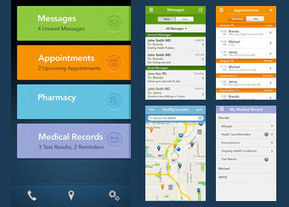
KP’s Member Mobile App Gets a Makeover

KP’s Member Mobile App Gets a Makeover | E-SANTÉ : COMPRENDRE. RELIER. TRANSFORMER. | Scoop.it

The Center for Total Health blog is a space for thought-provoking dialogue on issues challenging the health sector.

Via eMedToday
eMedToday's curator insight, July 18, 2013 7:46 PM

KP does it righ


KP’s original member app was launched in 2012 and so far has been downloaded 600,000 times.  The app made it possible for users to securely email their doctors, refill prescriptions and check lab results from anywhere with a smartphone.  All of those features continue to be available in the refreshed version.

Rescooped by Lionel Reichardt / le Pharmageek from Pharma: Trends in e-detailing
July 19, 2013 2:39 AM
Scoop.it!

Physicians' primary uses of smartphones are accessing drug information (72%)

Wolters Kluwer is a market-leading global information services and publishing company focused on professionals.

Via Matt Vaidis, eMedToday
eMedToday's curator insight, July 18, 2013 8:26 PM

Why e detailing


83% of physicians find it challenging to keep up with the latest research80% at least sometimes use browsers such as Google and Yahoo for information, coming in as the second top physician information source after professional journals (84%)55% of physicians use both smartphones and tablets in their daily practicePrimary uses of smartphones are accessing drug information (72%), communicating with nurses and other staff (44%), accessing medical research (43%) and accessing evidence-based clinical reference tools at the point of care with patients (42%)Mobile apps are the most heavily used digital/social media channel for physicians, used by 24%

Rescooped by Lionel Reichardt / le Pharmageek from Social media & health - Médias sociaux & santé

July 17, 2013 1:47 AM
Scoop.it!

Big Pharma Gets Social With Yammer | Yammer Blog

Big Pharma Gets Social With Yammer | Yammer Blog | E-SANTÉ : COMPRENDRE. RELIER. TRANSFORMER. | Scoop.it

“One of the first verticals to adopt Yammer, enterprise social continues to grow and thrive in the pharmaceutical industry. This has been a dynamic development for a knowledge-based industry that is historically security driven and compliance heavy.
We asked several prominent pharmaceutical companies, including Sanofi and Bristol-Myers Squibb, with active Yammer networks how they have balanced the risks and rewards of Enterprise Social Networking (ESN) and set out to evaluate how ESN has enabled agility at three stages of the drug development lifecycle: designing; manufacturing; and selling.”


Via Thierry Le Magny
No comment yet.
Rescooped by Lionel Reichardt / le Pharmageek from Health IT and mHealth News
July 17, 2013 1:40 AM
Scoop.it!

Electronic Medical Records May Boost Patient Safety : NPR

Electronic Medical Records May Boost Patient Safety : NPR | E-SANTÉ : COMPRENDRE. RELIER. TRANSFORMER. | Scoop.it
Audie Cornish speaks with Dr. Farzad Mostashari, the national coordinator for health information technology who leads the federal government's efforts to have doctors and hospitals adopt electronic medical records.

Via HealthRx Corporation
No comment yet.