


Via Chanfimao


Une veille sur la santé numérique en France et à l’international : politiques publiques, données, infrastructures, IA, services et usages. Études, rapports et retours de terrain sélectionnés par Lionel Reichardt, Pharmageek, pour comprendre les transformations et éclairer les décisions.
 Your new post is loading...
 Scoop.it! 
No comment yet.
Sign up to comment
Scoop.it!

Une étude du cabinet Deloitte auprès des professionnels de santé américains analyse l'adoption des nouvelles technologies par le corps médical. Synthèse en infographie avec la société Health Me. So... Via Agathe Quignot
Scoop.it!
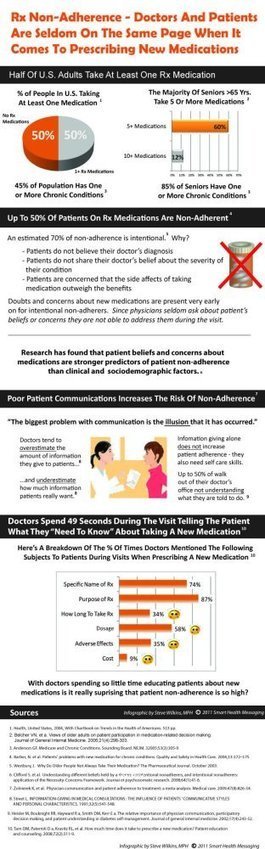
I am a big fan of Infographics. They are a great for turning otherwise complex data into practical information. Here's an Infographic I built to describe the "disconnect" that often occurs between physicians and patients and the impact of adherence... Via rob halkes, sandra camara pestana, Giovanna Marsico

rob halkes's curator insight,
July 22, 2013 4:03 AM
Great infographic. I think it supports my view on “therapy adherence”
Scoop.it!

An animated bubble plot of nearly four-thousand biomedical journals over ten years reveals success, decline and the shifting nature of science publishing. Via blogbrevity

Laura Perez's curator insight,
October 9, 2013 9:51 AM
Aunque es un gráfico muy bonito hay algunos datos que se han procesado de manera no muy comprensible pero... se puede tener en cuenta a la hora de buscar referéncias. :)!
Scoop.it!
Scoop.it!

The announcement signals a shift for the industry, which in the past has resisted calls to systematically share its data. Via EVELYNE PIERRON
Scoop.it!
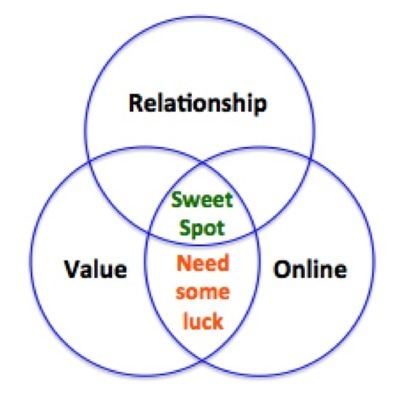
Actually Pharma often has a clear goal for why it wants to work with online communities, which is a good start. The issue, perhaps unsurprisingly is that the goal is often self-serving. Exciting for the Pharma company, less so for the HCPs.
Via Olivier Delannoy, Pharmacomptoir / Corinne Thuderoz
Scoop.it!

From
gigaom

Apple is suddenly really interested in health tech Via Thibaud Guymard
Scoop.it!

That's not to say that social media does not play an important role in a comprehensive marketing plan, but search beats email and social media in making sales. The bottom line: Marketing professionals should monitor how ... Via eMedToday

eMedToday's curator insight,
July 22, 2013 1:05 AM
key
The important take-away idea for healthcare and hospital marketing is that, according to both reports, organic search remains the primary means for users to find what they are looking for online. Further, your internet marketing resources—website, Facebook page, email or social media—require your own, personalized, comparative ranking with respect to what works best in your situation. Where is your hospital n the search ranking?
Scoop.it!

Montreal based startup OMsignal developed a T-shirt that can track your daily steps, calorie burn, heart rate, and even your breathing pattern and emotional well-being and send this information to a smart app on your mobile device and even share it... Via eMedToday
Scoop.it!
The importance of e-detailing today's marketing environment? A study by Verispan in 2007 showed 80 percent of physicians to participate in e-detailing initiatives, even more telling, 20 percent of doctors have totally replaced ... Via eMedToday
eMedToday's curator insight,
July 20, 2013 8:17 PM
The importance of e-detailing today’s marketing environment? A study by Verispan in 2007 showed 80 percent of physicians to participate in e-detailing initiatives, even more telling, 20 percent of doctors have totally replaced e-detailing for personal sales calls. More and more Big Pharma is taking note.
Scoop.it!

Los laboratorios redirigen parte de su política comercial a las boticas y reciclan a sus equipos de ventas Via Pere Florensa
Scoop.it!

Proper acknowledgement of the payer's perspective is necessary for successful drug development..
The escalating cost of medicines is forcing tough decisions on payers in Europe who are struggling to ensure drug availability while staying within government-dictated healthcare budgets. The resulting austerity measures and related drug price cuts have increased the pressure on pharmaceutical executives to sustain prices and avoid the problems associated with international price differences. However, these events are just the tip of the larger changes happening in healthcare globally... To improve the financial success of a branded drug, manufacturers must embrace the needs of payers at every stage in a new drug's development and commercialisation process. Unfortunately, the industry's longstanding order of developing and launching drugs makes adopting such change an almost Sisyphean task... ... The general analytical process for a typical payer is exemplified by this series of questions: Considering the payer perspective and evidentiary needs for all payers in countries worldwide would be a complex undertaking. Figure 1 helps make sense of the global patchwork of healthcare systems and their requirements by classifying the world into four key global payer segments that represent different cost management philosophies. .. Read more on the website of PmLive..! Via rob halkes
rob halkes's curator insight,
July 19, 2013 5:58 AM
Great insights into payers perspectives on health care costs - you can imagine how the health care world will change..! |
Scoop.it!

Mobile devices are enhancing patient and doctor communication in ways that improve overall health outcomes. New Study: Mobile Health Improves Engagement, Outcomes
Scoop.it!
eMedToday's curator insight,
July 23, 2013 11:05 PM
Your patients are on the smartphone.
Can they see your web site on their phone or use a hospital mobile app
Few hospitals have mobile web sites or mobile apps.
eMedToday's curator insight,
July 23, 2013 11:07 PM
Few Pharmas have mobile web sites and relatively few Pharma mobile apps exist, maybe 400 in total
Scoop.it!
eMedToday's curator insight,
July 24, 2013 11:06 PM
summary:
More than three in four physicians that have participated in e-detailing say they will participate again in the future, according to the Kantar Media
Yet 53% of doctors haven’t ever participated in a pharmaceutical manufacturer e-detail presentation, and only 27% did so within the past six months. Interestingly, three out of ten doctors don’t see sales reps, and among this group, three in ten have participated in e-details, suggesting that this tactic is reaching an audience that in-person detailing alone can’t.
Scoop.it!
Video from the UST Conference on the Future of Health Care, "Strategic Innovation for Uncertain Times, which took place at the University of St. Thomas on No... Via eMedToday
Scoop.it!
Premier site français d’information en continu sur les technologies de l’information et de la communication (TIC, NTIC) dans la santé - TIC santé (#Opendata #esante : le débat sur l'ouverture des données de santé prévu ... Via L'Université d'été de la e-santé
Scoop.it!
Google Tech Talk July 11, 2013 (more info below) ABSTRACT Play2Prevent is a new initiative aimed at forging collaborations and partnerships between scientist... Via Alex Butler, Rémy TESTON
Scoop.it!

Pour mieux comprendre l'univers de la pharma et de la santé
Scoop.it!

In an effort to collaborate around healthcare innovation, Harvard's prestigious Business and Medical Schools formed a joint initiative last year called the Forum on Healthcare Innovation. Via uri goren
Scoop.it!

shows how 36 key Internet behaviours play out across mulitple devices. Via Olivier Delannoy, eMedToday
Scoop.it!

Télémédecine: diagnostiquer les otites chez soi grâce à un accessoire pour smartphone | SmartPlanet.fr - DbtMobile, le blog (Télémédecine: diagnostiquer... Via Emmanuel Capitaine
Scoop.it!

L’évolution de la relation client a pris de l’ampleur sur internet. Cependant, ce mouvement est moins dynamique chez les professionnels de santé.
Scoop.it!

There are 5 main areas of Big Data investigation in real world outcomes by pharma today... Remote, mobile health – The use of mobile devices such as smart phones to gather data on treatment adherence, on-going patient care, predictive symptoms or adverse events and health outcomesHealthcare provider data – Collecting data from electronic medical records that includes patient diagnosis, treatment, adherence and outcome.Connecting genomic analysis with patient outcomes and subpopulations in order to progress personalized medicineUtilizing data both from health records and pre-clinical studies to find new indications for therapeutic pipelinesBetter clinical decision making in order to improve patient outcomes with prescribed therapeutic I often see articles that describe how big data won’t save pharma but smart analytics on data might. In the end Big Data is only as good as the questions that are being asked of it and essentially at present Big Data in healthcare is one big Petri dish. Certainly we will see a lot more business intelligence and analytics roles – both in pharma and providers – moving into big data applications and there will be huge demand for this talent in the years to come. This is the time to debate and discuss where the whole strategy of Big Data is going to take us and I hope this ebook inspires your team to invest further in the area. ... See how health care is a "late runner up":
Via rob halkes
rob halkes's curator insight,
July 19, 2013 5:46 AM
Interesting viewpoints and promising initiatives..;-) We can see how health care might have good examples in benchmarks from other businesses!
eMedToday's curator insight,
July 24, 2013 11:03 PM
There are 5 main areas of Big Data investigation in real world outcomes by pharma today… Remote, mobile health – The use of mobile devices such as smart phones to gather data on treatment adherence, on-going patient care, predictive symptoms or adverse events and health outcomesHealthcare provider data – Collecting data from electronic medical records that includes patient diagnosis, treatment, adherence and outcome.Connecting genomic analysis with patient outcomes and subpopulations in order to progress personalized medicineUtilizing data both from health records and pre-clinical studies to find new indications for therapeutic pipelinesBetter clinical decision making in order to improve patient outcomes with prescribed therapeutic |






