Your new post is loading...

|
Scooped by
Lionel Reichardt / le Pharmageek
August 21, 2013 1:43 AM
|
LUMO Body Tech, a Palo Alto, CA company that's developed its own posture monitoring technology, and that we've had a chance to try out, has unveiled the la
Mobile web traffic more than doubled in South America, the continent with the largest growth rate, where web access via mobile leaped from 3.2% to 6.8%.
Via FredColantonio
Votre docteur pourra vous examiner méticuleusement avec son ...
Daily Geek Show
L'idée de ce projet est de placer ce robot sur le corps du patient pendant son transfert à l'hôpital. Le médecin peut alors ...
Via Agathe Quignot
|
|
Rescooped by
Lionel Reichardt / le Pharmageek
from Pharmabook
August 19, 2013 5:02 PM
|
What excited Mutual Mobile most from this year's Wearable Technologies Conference?
Via Philippe Loizon
What can we do about all this?One conceptually simple recommendation from the expert panel, which got the most press attention, was to literally change the vocabulary of cancer screening and diagnosis: remove the word “cancer” from the...
Via Giuseppe Fattori, Giovanna Marsico
Paris — Face aux puissants laboratoires pharmaceutiques, de nouveaux acteurs de la recherche à but non lucratif ont réussi à développer des traitements prometteurs ces dernières années, notamment contre les maladies infectieuses ou tropicales....
Via Pharmacomptoir / Corinne Thuderoz
Showing off how your medical app can work in a clinical setting might lead you down the path of developing on a visually appealing medium like an iPad.
Via Nitro Digital
Pourquoi et comment un professionnel de santé peut utiliser le réseau social Twitter ? Les avantages et les risques que représentent Twitter pour les professionnels de santé.
Via Rémy TESTON
En conjuguant Big data et technologies portatives, une startup chinoise entend empêcher à temps le développement de maladies chroniques chez les personnes à risque en leur proposant des solutions personnalisées.
Via VALWIN
Besides being a way to increase medication adherence, identifying pills on the fly could ensure patients don't encounter unwanted side effects or somehow ingest the wrong medication. But the data play here is much bigger: Indexing the world's pill supply. Optical character recognition and image recognition have spawned all sorts of amazing mobile apps. They can help users identify trees in the forest, identify business cards, and even measure heart rate. Now one new iPhone product, MedSnap ID, could change the way pharmacies are run by allowing for the instant identification of pills via phone camera. MedSnap's product can help reduce the tens of thousands of patient deaths from accidental drug interactions annually, and save pharmacies and health care providers a ton by cutting down on wasted manpower from slower traditional medication history management tools. Users place a set of pills on a special tray or a clear imaging service, take a picture with MedSnap, and the product's algorithms identify the pills from 60 images used for machine indexing. Pills are identified through a combination of imprint recognition (the characters or logo on the pill) and visual characteristics (size, color, density, etc.). Apart from the company's current database--which is primarily centered on drugs available in the United States--users can add to what the company calls the Pill Mapping Project, an effort to “index the world's prescription drug supply so that it can be ready by a technology using a smart phone in a healthcare, patient, or caregiver environment.” Identifying pills in medical settings is important, if only for the fact that an overworked, inattentive, or distracted medical professional can endanger lives by handing the wrong medication to the wrong person. Medical institutions currently use a host of proprietary products to identify pills, many of which require trips back and forth to a computer terminal. Apart from wasting time and money for the health care provider, this also ironically increases chances of a pharmacist being distracted.
Via nrip, Gilles Jourquin
|
|
Scooped by
Lionel Reichardt / le Pharmageek
August 18, 2013 3:23 AM
|
Lesoir-echos
Une croissance mondiale timide
Lesoir-echos
L'industrie pharmaceutique a connu une croissance au cours de l'année 2012 à un seul chiffre.
From 2000 to 2010, the number of people in the U.S. civilian noninstitutionalized population under age 40 obtaining at least one outpatient prescription anti-diabetic or anti-hypertensive increased.From 2000 to 2010, the total number of outpatient prescriptions for persons under age 40 increased for anti-diabetics, anti-hypertensives, and statins—41%, 49%, & 179%, respectively.Comparing 2000 with 2010, for persons under age 40 in the U.S. civilian noninstitutionalized population inflation adjusted total expenses increased for anti-diabetics (126%) and for statins (97%).From 2000 to 2010, for persons under age 40, the inflation adjusted average cost per drug purchase of a prescription anti-diabetic increased 61% from $77 to $124.From 2000 to 2010, for persons under age 40, the inflation adjusted average cost per drug purchase of a prescription anti-hypertensive and statin decreased.
Via Seth Bilazarian, MD
|
|
|
Scooped by
Lionel Reichardt / le Pharmageek
August 21, 2013 1:39 AM
|
Mobile health is an area that continues to grow as technology evolves day by day, and there are many opportunities for the pharmaceutical industry to get involved. In the iPhone app store alone, applications have burst to over 900,000 since 2008, almost 6,000 of which regard Health and Fitness. There really is an app for just about anything, and with the evolution of technology moving so rapidly, sometimes it's hard to keep up. When it comes to mobile health, both physicians and patients can benefit. Apps for physicians tend to focus on keeping up-to-date in their field, and these range from broadcasting continuing medical education (CME) podcasts to providing diagnostic advice. Two of the more popular apps geared toward physicians are: • Doximity and Epocrates – o Mainly used as a reference for prescription and OTC drugs, this app features a "pill ID" function which identifies pills based on their physical characteristics including shape and etching • Medical Radio – o Offering podcasts for both GPs and specialists, this app is provided by ReachMD who provide 15-minute presentations for CME Patient-centric apps are more tailored to provide support and guidance in terms of lifestyle or compliance. For lifestyle guidance: • RunKeeper – o Tracks a user's run or walk and determines how many calories have been burned by taking into account speed and elevation. This information is then published to the website and synced to social media and/ or other health related apps
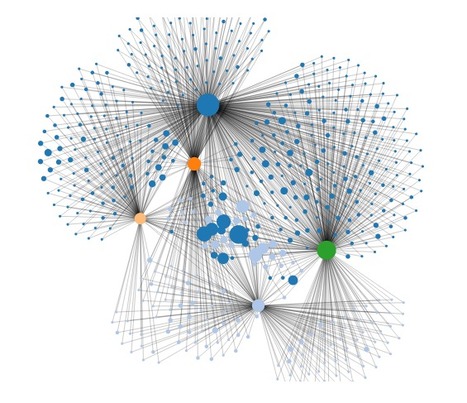
See on Scoop.it – NTIC et Santé Observation des usages au sein des communautés de la santé et de l’e-santé du web social (étude réalisée par Linkfluence) See on www.slideshare.net Related posts: Les nouvelles technologies au chevet de l’observance médicamenteuse...
Via Festival Communication Santé
|
|
Scooped by
Lionel Reichardt / le Pharmageek
August 20, 2013 6:44 AM
|
Independent online professional networks work best as part of a multi-channel campaign
|
|
Scooped by
Lionel Reichardt / le Pharmageek
August 19, 2013 5:03 PM
|
Hospitals around the U.S. are trying to change how doctors practice by using data to monitor their progress toward goals.
University of Notre Dame researchers have developed a computer-aided method that uses electronic medical records to offer the promise of rapid advances toward personalized health care, disease management and wellness.
Notre Dame computer science professor Nitesh V. Chawla and his doctoral student, Darcy A. Davis, developed the system called Collaborative Assessment and Recommendation Engine (CARE) for personalized disease risk predictions and wellbeing.
"The potential for 'personalizing' health care from a disease prevention, disease management and therapeutics perspective is increasing," Chawla said. "Health care informatics and advanced analytics, or data science, may contribute to this shift from population-based evidence for health care decision-making to the fusion of population and individual based evidence in health care. The key question is: how to leverage health population data to drive patient-centered health care?"
At the heart of CARE is a novel collaborative filtering method that captures patient similarities and produces personalized disease risk profiles for individuals. Using what is known as Big Data science, the system generates predictions focused on other diseases that are based on Big Data from similar patients.
"In its most conservative use, the CARE rankings can provide reminders for conditions that busy doctors may have overlooked," Chawla said. "Utilized to its full potential, CARE can be used to explore broader disease histories, suggest previously unconsidered concerns, and facilitate discussion about early testing and prevention, as well as wellness strategies that may ring a more familiar bell with an individual and are essentially doable.
"We believe that our work can lead to reduced re-admission rates, improved quality of care ratings and can demonstrate meaningful use, impact personal and population health, and push forward the discussion and impact on the patient-centered paradigm."
Chawla points out that the core premise of CARE is centered on patient empowerment and patient engagement.
Via nrip
|
|
Rescooped by
Lionel Reichardt / le Pharmageek
from Pharmabook
August 19, 2013 1:36 PM
|
A few years ago, when you need help to lose weight, you might have driven over to a local diet support group, stepped on a scale and left with a dieting program. Now, all you have to do is find your smartphone.
Via Philippe Loizon
|
|
Scooped by
Lionel Reichardt / le Pharmageek
August 19, 2013 3:47 AM
|
pApp is that it allows Doctors and other healthcare professionals to create mobile apps for their patients without any advanced coding knowledge
|
|
Scooped by
Lionel Reichardt / le Pharmageek
August 18, 2013 3:33 AM
|
The simple tool allows patients to scan their own retinas and email the images to doctors to remotely diagnose cataracts.
You hear lots of buzzwords in healthcare IT today, and some even declare mHealth obsolete? What is missing?
Via Sam Stern
L'e-santé devient une réalité
Le Figaro
Il n'y a pas si longtemps, monter sur sa balance le matin restait une expérience très personnelle, limitée au périmètre de la salle de bains et à l'éventuel public d'un membre de sa famille.
Via Festival Communication Santé
The self-tracking trend has exploded into a plethora of shiny new gadgets and toys - but will the appeal last, and will we sink under mountains of data?
Via uri goren, Dan Baxter
|
|
Rescooped by
Lionel Reichardt / le Pharmageek
from Pharmabook
August 18, 2013 3:22 AM
|
Guest post by Giancarlo De Lio, Co-Founder of VitalHub Prior to 2007, the mobile environment was very constricted. The iPhone, iPad, Android, and Windows Phone didn’t exist.
Via Philippe Loizon
|