 Your new post is loading...

|
Scooped by
rob halkes
February 21, 2013 3:38 AM
|
Mobile and digital health’s potential to help bring about healthy behavior changes has led a number of companies to target the problem with new connected devices, applications, and services. Some of these have claimed to be highly effective: MediSafe recently stated that their app raised users’ adherence rate to 81 percent over the course of its first eight weeks that it was made available, and Vitality GlowCaps once reported pushing adherence rates to as high as 98 percent, both well above the World Health Organization average of 50 percent. NEHI has stated that digital health offerings similar to these have considerably improved adherence, but the market penetration for these tools is still low. The challenge for these companies is not just to develop an effective product, but also to figure out who will pay for it. That means addressing the sticky question of whose problem med adherence really is. Patients don’t take their medication for a number of reasons. Forgetfulness is one, particularly in chronic disease patients who have a large regimen of pills to keep track of and in elderly patients who may have poor memories or become confused easily. But other patients don’t take their meds for psychological reasons: some patients “feel fine” and skip a drug, some are concerned about real side effects. Some, according to NEHI Senior Health Policy Associate Nick McNeill, are concerned about imagined side effects. Finally, many patients stop taking medications because they simply can’t afford the co-pay. This, of course, is not a complete list but it does include some of the more commonly referenced reasons. Digital health could play a role in resolving some of them.
|
|
Scooped by
rob halkes
February 18, 2013 10:47 AM
|
Introduction The iWatch will fill a gaping hole in the Apple ecosystem. It will facilitate and coordinate not only the activities of all the other computers and devices we use, but a wide array of ... Sensors enable the watch to monitor you in sickness and in health, tracking calories burned, miles walked, steps climbed, restlessness of sleep, even advent of tremor and other early warnings of serious health conditions..."
|
|
Rescooped by
rob halkes
from Health Care Business
February 17, 2013 3:52 PM
|
Even in an age of hype, calling something “the blockbuster drug of the century” grabs our attention. In this case, the “drug” is actually a concept—patient activation and engagement—that should have formed the heart of health care all along. The topic of this thematic issue of Health Affairs, patient engagement is variously defined; the Institute for Healthcare Improvement describes it as “actions that people take for their health and to benefit from care.” Engagement’s close cousin is patient activation—“understanding one’s own role in the care process and having the knowledge, skills, and confidence to take on that role,” as Judith Hibbard and coauthors explain. More holistic definitions broaden these concepts further, describing patients and families working with providers all across health care, in such areas as patient-centered outcomes research. Two articles in this issue, including Entry Point, examine engagement in the “ultimate conversation” about the end of life. Go on reading...!
|
|
Scooped by
rob halkes
February 3, 2013 3:55 AM
|
Two months ago, Gary Rager's girlfriend asked him to do the unthinkable. The 44-year-old woman, who has suffered disabling pain for the past three years, asked Rager if he would help her end her life.
6 Key analytics for successful population health management infographic outlines key analytics, barriers, tools and workflows to ensure successful PHM
Via Dan Baxter
|
|
Scooped by
rob halkes
January 31, 2013 7:00 AM
|
According to a study recently published in Medical Decision Making, physicians who used computerized clinical decision support (CDS) to confirm a diagnosis or treatment plan were viewed as incompetent or less capable by patients. ...the University of Missouri study asserts that patients are mistrustful of the technology, perceiving physicians as “less professional, less thorough, and having less diagnostic ability.” ...
|
|
Rescooped by
rob halkes
from Self-care and self-management
January 25, 2013 8:34 AM
|
A presentation delivered by Stephen Davies at the Fitness Writers' Association in London, UK
Via John Worth
|
|
Scooped by
rob halkes
January 15, 2013 5:38 AM
|
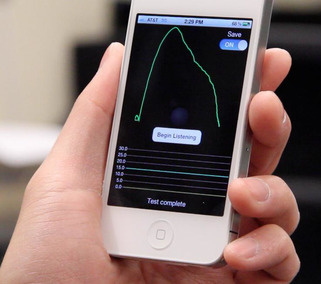
Breathe in, breathe out. Dial and repeat. Today, a deep sigh at your smartphone could reveal a well-developed emotional connection with your gadget. But one day those sighs could tip off your doctor to a latent or worsening lung condition. A group at the University of Washington, in collaboration with Seattle Children’s Hospital, is developing a way to check how healthy your lungs are when you breathe out at your smartphone. For patients with conditions like asthma, chronic bronchitis, or cystic fibrosis doctors sound out their pipes using a spirometer, a device that measures volumes of air breathed in and out. The exhaled volume indicates if the patient’s air passages are clogged and leading to difficulty breathing. ..
|
|
Scooped by
rob halkes
January 10, 2013 9:36 AM
|
Self-Management Explained People die prematurely and suffer from poor health simply because they don’t have the knowledge, skills and confidence to self-manage their health effectively. But whether they recognise it or not, patients and their carers are already self-managing during the many thousands of hours they spend at home caring for themselves each year. Better patient self-management leads to healthier patients, more appropriate health service usage, and fewer unplanned hospital admissions.
|
|
Scooped by
rob halkes
January 10, 2013 7:27 AM
|
The growth of the Internet and the rise of social networks have changed the way we communicate, interact, find information, shop, learn, and more, including the way we learn about healthcare pharmaceuticals and medical devices The number of groups that have grown around specific issues in healthcare is astounding. To get an idea of just how many online communities there are for different diseases and conditions, just take a look at this list, which aggregates the wide variety and large number of pharma and healthcare communities online. Hashtags help categorize conversations within social media, marking them by keywords or acronyms specific to a certain topic. This makes it easier to create and find specific communities, whether it’s #HCSM (healthcare social media), #Diabetes, or #BreastCancer. Twitter chats are ways for people around the globe to come together to discuss specific topics. Symplur is doing a great job of compiling all of the healthcare hashtags and categorizing them.
A health IT startup claims since its mobile health app to improve patient adherence hit the market in November, patient adherence has exceeded 81 percent.
Via Dan Baxter
|
|
Scooped by
rob halkes
January 10, 2013 1:47 AM
|
Sitting in a physician’s office wearing nothing but a paper thin gown can be daunting in and of itself. Now imagine, your white coat syndrome worsens as your doctor throws out unfamiliar vocabulary, as your mind draws a blank. If this sounds familiar, you’re not alone, according to Archives of Internal Medicine most patients only understand and retain about half of what a provider tells them, and do not feel comfortable asking providers to clarify. Approximately 90 million people in the United States lack the basic skills or proficiency necessary to understand and use health information as reported by The Institute of Medicine. National data from the Center for Education Statistics suggests that only 12 percent of American adults have proficient health literacy skills – reading, writing, understanding, computing, communication and using health information. The growing disparity in health literacy is directly impacting patient health. Low health literacy has been estimated to cost the U.S. economy between $106 billion and $236 billion annually reported by the Center for Health Policy Research. As defined in Health People 2010, Health literacy is:
“The degree to which individuals have the capacity to obtain, process, and understand basic health information and services needed to make appropriate health decisions.” The problem affects patients of all demographics. People of all ages, race, income and education levels have a difficult time communicating with healthcare providers, and health literacy can also be influenced by culture, language, religion and belief systems.
|
|
Scooped by
rob halkes
January 8, 2013 10:19 AM
|
In the two previous posts in this series of Twitter visualizations, we've looked at the growth of patient communities and the dynamics and centrality of on From looking at the visualization below, one can think of them as virtual communities set in space like constellations of stars but with people orbiting one another. The laws of physics still apply, but gravity has become a function of conversations. Conversation is gravity. Boundaries are broken down. Traditional barriers like location, profession, demographics, physical abilities and conditions will not stop you from joining in. The world is flattening. And because many traditional hierarchies and perceptions are eroding as a consequence of healthcare social media, new types of communication and communities are emerging. Twitter is the new melting pot of ideas, people, and disruptive innovation.....
|
|
Scooped by
rob halkes
January 8, 2013 9:52 AM
|
If you’re not comfortable sharing a sensitive health question with your doctor, you’re not alone. Two out of three Americans go to the Web to get answers on private health topics such as sex, STDs, weight issues and substance abuse, according to researchers. In a recent study performed by Pearl.com, a subscription portal website that connects users to doctors, lawyers and other professionals for advice, 63 percent of the 1,000 people surveyed said they’re more likely to find answers to private health-related questions online rather than in-person at their doctor’s office. Interesting, though: the reasons users gave for going to the web rather than their doctors weren’t just that their questions were personal or embarrassing. Some said they weren’t going to their doctors because they were afraid those types of questions wouldn’t be covered by insurance (18%) or would incur an expensive co-pay (19%). Thirteen percent also thought that going to a doctor to get their question answered would lead to the discovery of a pre-existing condition.
|
|
Scooped by
rob halkes
January 7, 2013 10:50 AM
|
PREPARE is a program that can help you: make medical decisions for yourself and otherstalk with your doctorsget the medical care that is right for you You can view this website with your friends
and family.
|
|
Scooped by
rob halkes
January 4, 2013 1:10 AM
|
A study on the effect that a medications color and shape have on adherence gives short shrift to the marketing component that urges patients not to take medications that dont conform to doctors orders...
|
|
Rescooped by
rob halkes
from Social Media and Healthcare
January 3, 2013 10:13 AM
|
For over 2 years, Symplur has collected health conversations on Twitter. From a humble start, our infrastructure has grown and matured to scale with the tr
Via bacigalupe
|
|
Scooped by
rob halkes
December 23, 2012 1:24 PM
|
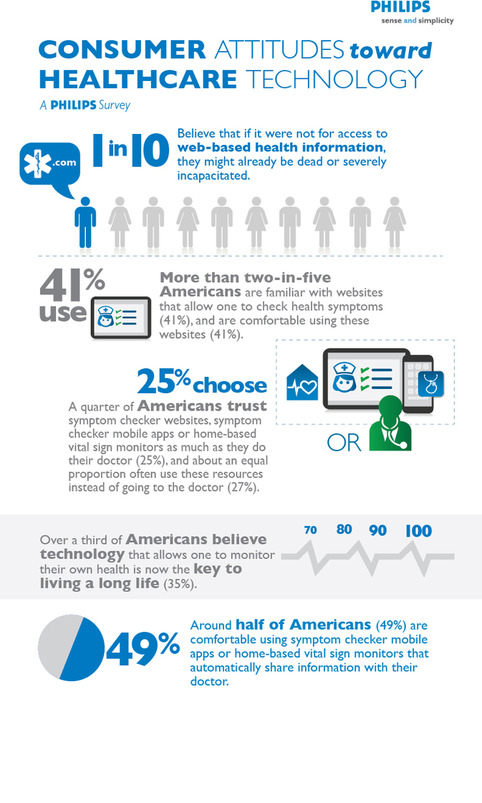
Philips Survey Reveals One in 10 Americans Believe Online Health Information Saved Their Life A recent U.S. survey commissioned by Royal Philips Electronics (NYSE: PHG, AEX: PHIA), a leading health and well-being company, found that consumers believe web-enabled, mHealth and mobile apps are part of their health care solutions and key to living long lives. For example, one in 10 Americans (11 percent) surveyed believe that if it were not for web-based health information, “they might already be dead or severely incapacitated.” “We are in the early stages of the web-enabled, mHealth, mobile app world of healthcare delivery. Near- future apps will focus on tying together health information technologies, connecting with doctors, nurses, healthcare professionals and patients, all within a social context that facilitates shared medical decision-making,” said Dr. Eric Silfen, Chief Medical Officer of Philips Healthcare. “This evolution will harken the new vital signs of the clinical times with technologies that help prevent medical errors, lower the financial and social cost of care, sustain a higher quality of medical practice and support an evidence-based standard for medicine in general. Ultimately, the technological undercurrents of the post-PC world – the power of many, designer gadgets, cloud ecosystems, and mobile app computing – will hasten the personalization and partnerships that will transform sustainable medical care to the highest quality.”
|
|
Scooped by
rob halkes
December 20, 2012 4:49 AM
|
Better than any existing literature, this book highlights techniques and behaviors that clinicians must use to support the empowered patient, and suggests significant improvements to decision aids.
|
|
Scooped by
rob halkes
December 20, 2012 4:46 AM
|
I have come to believe that patient portals in particular and patient access to clinical data in general are major steps toward patient empowerment. .. Pathologists and radiologists are hopefully coming to terms with patient access to a much broader swath of diagnostic information. Clinicians and hospital executives are in the same boat.."
|
|
Scooped by
rob halkes
November 28, 2012 12:53 AM
|
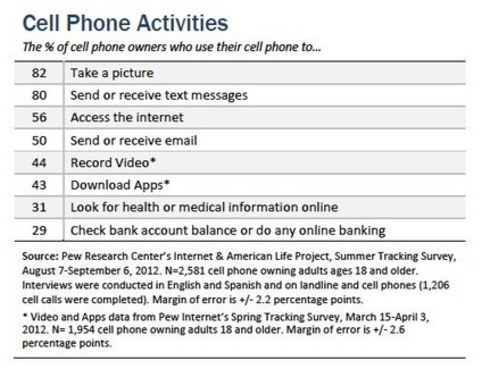
Cell Phone Activities | Pew Internet & American Life Project... Fully 85% of American adults own a cell phone and now use the devices to do much more than make phone calls. Cell phones have become a portal for an ever-growing list of activities. In nationally representative phone surveys in the spring and summer, the Pew Research Center’s Internet & American Life Project obtained readings on some of the most popular activities: ....
|
|
Scooped by
rob halkes
November 27, 2012 9:37 AM
|
Having discussed with Howard Luks, Eugene Borukovich and Andrew Spong on Twitter (resp. @hjluks @HealthEugene @andrewspong ) about the enormous growth of Apps for patients in trying to cope with their health(y) problems, we were wondering how this "tsunami" of apps will turn into serious help and use for patients. Howard thought it would be because fo the doctors' choice, Eugene mentioned an incentive system could do the trick, which Andrew doubted. I am convinced that the fit of app to different phases of use by patients will appear to create sustainable use. To acquire this knowledge on how apps are used, we do not so much need "code-a-thons" or "awesome designs", but serious investigation in the app use and functionality for disease management.. It was mentioned we could do a seminar... I like that, maybe might initiate it myself. What do you think guys? Anyway, here's anohter reference of apps to look at.. ;-) Rob ( oh, yes, it is @rohal )
|
|
Scooped by
rob halkes
November 27, 2012 8:58 AM
|
An app that ‘gamifys’ medical education and one that provides cancer information to patients were among the mHealth winners in a UN-backed global competition to identify the best mobile applications and services. The health and education category at the World Summit Award – Mobile also featured apps that assist type I diabetics with self-management, help people cope with stress and check for harmful chemicals in cosmetics. The bi-annual awards are a global initiative within the framework of the United Nations World Summit on the Information Society, and this year 40 apps from 28 countries on five continents were selected as winners. WSA-mobile chairman Peter Bruck said: “Our goal is to find and promote mobile content that really makes a difference for people around the globe. The awarded apps prove that there is a lot going on outside Europe and the USA. “If we want to make use of mobile technology’s full potential, these trends must not be ignored.”
|
|
Scooped by
rob halkes
November 22, 2012 3:48 PM
|
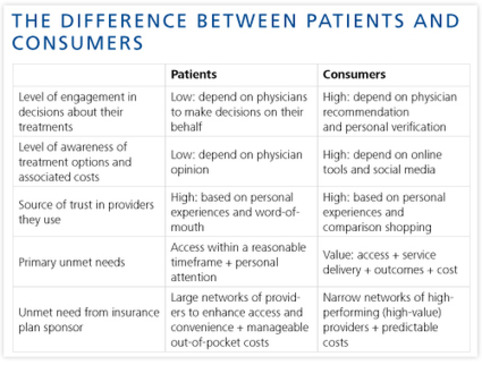
Insights to engagement.... by Deloitte Review In classic business pedagogy, a consumer is the end user who has the willingness, opportunity and resources to purchase a product or service. Consumers are the foundation of the United States’ economy: 70 percent of our Gross Domestic Product (GDP) is dependent upon personal consumption - their needs and wants drive innovation in every domain of our daily lives … except, perhaps, health care. In the health care industry, physicians call consumers “patients;” health plans call them “enrollees” or “members;” and bio-pharma companies refer to them as “users” or sometimes “subjects” if they are involved in a clinical trial. Many of the designations in health care infer that—unlike other industries—individuals play a primarily passive or reactionary role. Recently, health policy experts and economists have challenged the health care industry’s disregard of consumerism; they reason that costs would be lower, service better and quality substantially improved if the industry repositioned itself as a consumer market... This article highlights data-driven insights gleaned from five years of Deloitte* consumer surveys and other Deloitte studies that point to untapped potential for increased health care industry engagement with consumers and, with that, new challenges and opportunities for providers, health plans, employers and government.... Ah, ehm...
|
|
Scooped by
rob halkes
November 22, 2012 9:56 AM
|
"When we compared the use of clinical services before and after the index date between MHM users and nonusers, we saw a significant increase in the per-member rates of office visits (0.7 per member per year; 95% CI, 0.6-0.7; P < .001) and telephone encounters (0.3 per member per year; 95% CI, 0.2-0.3; P < .001)."... Context: Prior studies suggest that providing patients with online access to health records and e-mail communication with physicians may substitute for traditional health care services. Objective: To assess health care utilization by both users and nonusers of online access to health records before and after initiation of MyHealthManager (MHM), a patient online access system. Results: "When we compared the use of clinical services before and after the index date between MHM users and nonusers, we saw a significant increase in the per-member rates of office visits (0.7 per member per year; 95% CI, 0.6-0.7; P < .001) and telephone encounters (0.3 per member per year; 95% CI, 0.2-0.3; P < .001)."... Having online access to medical records and clinicians was associated with increased use of clinical services compared with group members who did not have online access.
|























This is moving in the right direction. Measure the change in health brought about by the app. The patient will learn why taking the meds is helpful, and the physicians can embrace this kind of evidence.
Once a developer understands the mechanisms (within the app) that drive the desired change in health metrics, he/she can focus product design efforts on driving patients toward those mechanisms.