Your new post is loading...

|
Rescooped by
Complexity Digest
from Social Simulation
April 2, 2012 8:18 AM
|
My view as developed in that post is that debt is central to understanding economic systems, and not just because it has a redistributive element in apportioning losses between creditors and debtors when recession forces credit writedowns. In any event, I think the standard approach of simplifying complex economic systems leads to simplistic models that are inadequate for anyone interested in tail risk.
Via Frédéric Amblard
|
|
Scooped by
Complexity Digest
March 30, 2012 3:49 PM
|
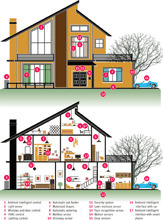
The idea of ambient intelligence implies an intrinsic link between individuals and their environment, enabling individuals to access and interact with computing artifacts in ways that are intuitive and do not disrupt everyday activities. Given the many different environments encountered as part of everyday life (…) enabling such interaction is a formidable technological challenge. The reward may be an environment that is safer, uses less energy, and responds to the needs of all individuals (…). Recent advances in embedded systems, robotics, and sensor technology suggest that ambient intelligence may indeed be realized (…)
|
|
Scooped by
Complexity Digest
March 30, 2012 3:44 PM
|
A crowd of pedestrians is a complex system that exhibits a rich variety of self-organized collective behaviours. For instance, when two flows of people are walking in opposite directions in a crowded street, pedestrians spontaneously share the available space by forming lanes of uniform walking directions. This “pedestrian highway” is a typical example of self-organized functional pattern, as it increases the traffic efficiency with no need of external control. In this work, we have conducted a series of laboratory experiments to determine the behavioral mechanisms underlying this pattern. In contrast to previous theoretical predictions, we found that the traffic organization actually alternates in time between well-organized and disorganized states. Our results demonstrate that this unstable dynamics is due to interactions between people walking faster and slower than the average speed of the crowd. While the traffic efficiency is maximized when everybody walks at the same speed, crowd heterogeneity reduces the collective benefits provided by the traffic segregation. This work is a step ahead in understanding the mechanisms of crowd self-organization, and opens the way for the elaboration of management strategies bound to promote smart collective behaviors.
|
|
Scooped by
Complexity Digest
March 30, 2012 3:13 PM
|
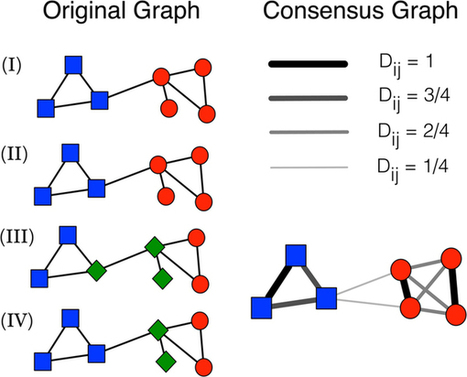
The community structure of complex networks reveals both their organization and hidden relationships among their constituents. Most community detection methods currently available are not deterministic, and their results typically depend on the specific random seeds, initial conditions and tie-break rules adopted for their execution. Consensus clustering is used in data analysis to generate stable results out of a set of partitions delivered by stochastic methods.
|
|
Scooped by
Complexity Digest
March 30, 2012 3:00 PM
|
In insect colonies, different individuals specialize in different tasks related to colony maintenance and growth. Unveiling why this division of labor evolved and how individuals decide which task to take on is crucial for our understanding of complex group behavior. Here we model the evolution of general behavioral rules for processing environmental signals of task need in social insect colonies, using artificial neural networks.
|
|
Scooped by
Complexity Digest
March 30, 2012 2:55 PM
|
Many faculty, staff, and students at academic institutions think about starting companies at some point in their careers. As academic funding models change, and how academia views entrepreneurial activity changes, starting companies is likely to happen more frequently. Hence, it is worth considering Ten Simple Rules to contemplate when starting a company while in academia.
|
|
Scooped by
Complexity Digest
March 30, 2012 2:47 PM
|
This paper deals with the arrow of complexification of engineering. We claim that the complexification of engineering consists in (a) that shift throughout which engineering becomes a science; thus it ceases to be a (mere) praxis or profession; (b) becoming a science, engineering can be considered as one of the sciences of complexity. In reality, the complexification of engineering is the process by which engineering can be studied, achieved, and understood in terms of knowledge, and not of goods and services any longer. Complex engineered systems and bio-inspired engineering are so far the two expressions of a complex engineering.
|
|
Scooped by
Complexity Digest
March 30, 2012 2:41 PM
|
The elementary cellular automaton following rule 184 can mimic particles flowing in one direction at a constant speed. Therefore, this automaton can model highway traffic qualitatively. In a recent paper, we have incorporated intersections regulated by traffic lights to this model using exclusively elementary cellular automata. In such a paper, however, we only explored a rectangular grid. We now extend our model to more complex scenarios using an hexagonal grid. This extension shows first that our model can readily incorporate multiple-way intersections and hence simulate complex scenarios. In addition, the current extension allows us to study and evaluate the behavior of two different kinds of traffic-light controller for a grid of six-way streets allowing for either two- or three-street intersections: a traffic light that tries to adapt to the amount of traffic (which results in self-organizing traffic lights) and a system of synchronized traffic lights with coordinated rigid periods (sometimes called the “green-wave” method). We observe a tradeoff between system capacity and topological complexity. The green-wave method is unable to cope with the complexity of a higher-capacity scenario, while the self-organizing method is scalable, adapting to the complexity of a scenario and exploiting its maximum capacity. Additionally, in this article, we propose a benchmark, independent of methods and models, to measure the performance of a traffic-light controller comparing it against a theoretical optimum.
|
|
Scooped by
Complexity Digest
March 30, 2012 2:33 PM
|
Network modeling plays a critical role in identifying statistical regularities and structural principles common to many systems. The large majority of recent modeling approaches are connectivity driven, in the sense that the structural pattern of the network is at the basis of the mechanisms ruling the network formation. Connectivity driven models necessarily provide a time-aggregated representation that may fail to describe the instantaneous and fluctuating dynamics of many networks.
|
|
Scooped by
Complexity Digest
March 30, 2012 2:23 PM
|
The Time To the Most Recent Common Ancestor (TMRCA) based on human
mitochondrial DNA (mtDNA) is estimated to be twice that based on the
non-recombining part of the Y chromosome (NRY). These TMRCAs have special
demographic implications because mtDNA is transmitted only from mother to
child, and NRY from father to son. Therefore, mtDNA reflects female history,
and NRY, male history. To investigate what caused the two-to-one female-male
TMRCA ratio in humans, we develop a forward-looking agent-based model (ABM)
with overlapping generations and individual life cycles.
|
|
Rescooped by
Complexity Digest
from Social Foraging
March 29, 2012 4:16 PM
|
We’ve recently seen Facebook go public with a $100 billion valuation and General Motors, formerly the world’s biggest company, go effectively bankrupt and need to be bailed out by the US government.Meanwhile, the new web darlings, Instagram andPinterest, have built communities of millions of people in a matter of months, not years and they have done it with a staff that can fit in my living room (which, I might add, is not that big). What’s amazing is that we have come to take things like these in stride. Such events have become not exactly the rule, but not the exception either. In short, we have witnessed the complete transformation of business as we knew it. The scale economy has become the semantic economy, where value chains have been subsumed by value networks.
Via Ashish Umre
|
|
Scooped by
Complexity Digest
March 26, 2012 4:42 PM
|
The spectacle of animals moving en masse is arguably one of the most fascinating phenomena in biology. For example, schools of fish can move in an orderly manner, and then change direction abruptly or, if under pressure from a nearby predator, swirl like a vigorously stirred fluid. The non-living world also has examples of collective motion, in systems that consist of units ranging from macromolecules to metallic rods, or even robots. On page 448 of this issue, Sumino et al. describe another, until now unobserved, example of such behaviour: the coordinated motion of hundreds of thousands of subcellular structures known as microtubules, which spontaneously self-organize into a lattice-like structure of vortices. When considered in the context of about half a dozen known universal classes of collective-motion pattern, this new structure poses challenges in terms of explaining how it can arise and its relevance to applications.
|
|
Scooped by
Complexity Digest
March 26, 2012 4:34 PM
|
Dynamical criticality has been shown to enhance information processing in dynamical systems, and there is evidence for self-organized criticality in neural networks. A plausible mechanism for such self-organization is activity dependent synaptic plasticity. Here, we model neurons as discrete-state nodes on an adaptive network following stochastic dynamics. At a threshold connectivity, this system undergoes a dynamical phase transition at which persistent activity sets in. In a low dimensional representation of the macroscopic dynamics, this corresponds to a transcritical bifurcation. We show analytically that adding activity dependent rewiring rules, inspired by homeostatic plasticity, leads to the emergence of an attractive steady state at criticality and present numerical evidence for the system's evolution to such a state.
|
|
|
Rescooped by
Complexity Digest
from MABS
April 2, 2012 8:17 AM
|
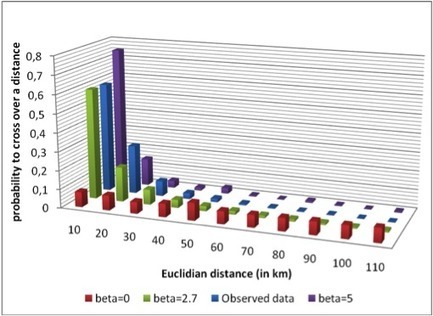
Human mobility and, in particular, commuting patterns have a fundamental role in understanding socio-economic systems. Analysing and modelling the networks formed by commuters, for example, has become a crucial requirement in studying rural areas dynamics and to help decision-making. This paper presents a simple spatial interaction commuting model with only one parameter. The proposed algorithm considers each individual who wants to commute, starting from their residence to all the possible workplaces. The algorithm decides the location of the workplace following the classical rule inspired from the gravity law consisting of a compromise between the job offers and the distance to the job. The further away the job is, the more important the offer should be to be considered for the decision. Inversely, the quantity of offers is not important for the decision when these offers are close by. The presented model provides a simple, yet powerful approach to simulate realistic distributions of commuters for empirical studies with limited data availability. The paper also presents a comparative analysis of the structure of the commuting networks of the four European regions to which we apply our model. The model is calibrated and validated on these regions. The results from the analysis show that the model is very efficient in reproducing most of the statistical properties of the network given by the data sources.
Via David Rodrigues
|
|
Scooped by
Complexity Digest
March 30, 2012 3:47 PM
|
Individuals spend most of their time in their home or workplace; for many, these places are their sanctuaries. Over the course of the 20th century, technological advances have helped to enhance the comfort and shelter provided by our homes. Insights gained from capturing and modeling behavior in these places may be useful in making our environments more intelligent and responsive to our needs. Recent advances are bringing such “ambient intelligence” in the home closer to reality.
|
|
Scooped by
Complexity Digest
March 30, 2012 3:16 PM
|
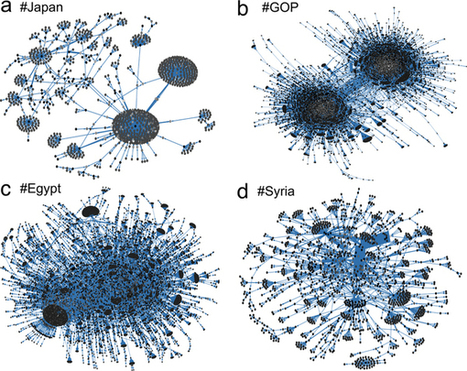
The wide adoption of social media has increased the competition among ideas for our finite attention. We employ a parsimonious agent-based model to study whether such a competition may affect the popularity of different memes, the diversity of information we are exposed to, and the fading of our collective interests for specific topics. Agents share messages on a social network but can only pay attention to a portion of the information they receive. In the emerging dynamics of information diffusion, a few memes go viral while most do not. The predictions of our model are consistent with empirical data from Twitter, a popular microblogging platform. Surprisingly, we can explain the massive heterogeneity in the popularity and persistence of memes as deriving from a combination of the competition for our limited attention and the structure of the social network, without the need to assume different intrinsic values among ideas.
|
|
Scooped by
Complexity Digest
March 30, 2012 3:02 PM
|
(…) we provide a method to build models of collective dynamics from homing pigeon flight data. We show that our models follow the source dynamics well, and from them we are able to infer that significant collective behavior occurs in pigeon flights. Our results are consistent with the basic principles of previous hypotheses and models that have been proposed. Our approach serves as an initial outline towards the usage of experimental data to construct computational models to understand many complex phenomena with hypothesized collective behavior.
|
|
Scooped by
Complexity Digest
March 30, 2012 2:58 PM
|
Proteins are remarkable machines of the living systems that show diverse biochemical functions. Biochemical diversity has grown over time via molecular evolution. In order to understand how diversity arose, it is fundamental to understand how the earliest proteins evolved and served as templates for the present diverse proteome. The one sequence - one structure - one function paradigm is being extended to a new view: an ensemble of different conformations in equilibrium can evolve new function and the analysis of inherent structural dynamics is crucial to give a more complete understanding of protein evolution.
|
|
Scooped by
Complexity Digest
March 30, 2012 2:51 PM
|
Computational modeling and behavioral experimentation suggest that human frontal lobe function is capable of monitoring three or four concurrent behavioral strategies in order to select the most suitable one during decision-making.
|
|
Scooped by
Complexity Digest
March 30, 2012 2:46 PM
|
Emergence of cooperation in evolutionary prisoner's dilemma game strongly depends on the topology of underlying interaction network. We explore this dependence using community networks with different levels of structural heterogeneity, which are generated by a tunable upper-bound on the total number of links that any vertex can have. We study the effect of community structure on cooperation by analyzing a finite population analogue of the evolutionary replicator dynamics. We find that structural heterogeneity mediates the effect of community structure on cooperation. In the community networks with low level of structural heterogeneity, community structure has negative effect on cooperation. However, the positive effect of community structure on cooperation appears and enhances with increasing structural heterogeneity. Our work may be helpful for understanding the complexity of cooperative behaviors in social networks.
|
|
Scooped by
Complexity Digest
March 30, 2012 2:36 PM
|
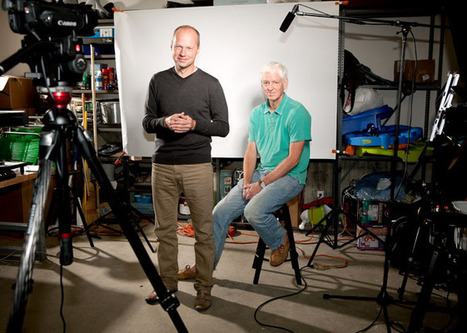
People around the world have gone crazy for this opportunity. Fully two-thirds of my 160,000 classmates live outside the US. There are students in 190 countries—from India and South Korea to New Zealand and the Republic of Azerbaijan. More than 100 volunteers have signed up to translate the lectures into 44 languages, including Bengali. In Iran, where YouTube is blocked, one student cloned the CS221 class website and—with the professors’ permission—began reposting the video files for 1,000 students.
|
|
Scooped by
Complexity Digest
March 30, 2012 2:24 PM
|
Microbes providing public goods are widespread in nature despite running the risk of being exploited by free-riders. However, the precise ecological factors supporting cooperation are still puzzling. Following recent experiments, we consider the role of population growth and the repetitive fragmentation of populations into new colonies mimicking simple microbial life-cycles. Individual-based modeling reveals that demographic fluctuations, which lead to a large variance in the composition of colonies, promote cooperation. Biased by population dynamics these fluctuations result in two qualitatively distinct regimes of robust cooperation under repetitive fragmentation into groups. First, if the level of cooperation exceeds a threshold, cooperators will take over the whole population. Second, cooperators can also emerge from a single mutant leading to a robust coexistence between cooperators and free-riders. We find frequency and size of population bottlenecks, and growth dynamics to be the major ecological factors determining the regimes and thereby the evolutionary pathway towards cooperation.

|
Suggested by
Segismundo
March 29, 2012 4:18 PM
|
Here we develop an approach and propose a quantity (measure) which is simple enough to be widely applicable, reveals a number of universal features of the organization of real-world networks and, as we demonstrate, is capable of capturing the essential features of the structure and the degree of hierarchy in a complex network.
|
|
Scooped by
Complexity Digest
March 26, 2012 4:47 PM
|
In the past decade, ecologists have increasingly applied complex network theory (1, 2) to ecological interactions, both in entire food webs (3) and in networks representing ecological interactions, especially those between plants and their animal pollinators or seed dispersers (4). How important are individual species to the maintenance of such ecological networks? On page 1489 of this issue, Stouffer et al. (5) analyze terrestrial, freshwater, and marine food webs to infer the contributions of individual species to network stability. In a related field study on page 1486 of this issue, Aizen et al. (6) explore plant and pollinator webs on a landscape scale. Using a different field study design, Pocock et al. (7) recently focused on a local community in which several webs of different kinds of interactions and organisms form a composite network.
|
|
Scooped by
Complexity Digest
March 26, 2012 4:36 PM
|
We investigate the motion of pedestrians through obscure corridors where the
lack of visibility (due to smoke, fog, darkness, etc.) hides the precise
position of the exits. We focus our attention on a set of basic mechanisms,
which we assume to be governing the dynamics at the individual level. Using a
lattice model, we explore the effects of non-exclusion on the overall exit flux
(evacuation rate). More precisely, we study the effect of the buddying
threshold (of no-exclusion per site) on the dynamics of the crowd and
investigate to which extent our model confirms the following pattern revealed
by investigations on real emergencies: If the evacuees tend to cooperate and
act altruistically, then their collective action tends to favor the occurrence
of disasters.
|