Your new post is loading...
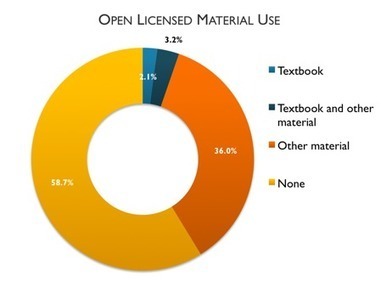
By Phil HillMore Posts (417) In 2012 the Babson Survey Research Group (BSRG) put out a new report on usage and perceptions of open educational resources (OER) usage in higher education. Covered in this blog post, the 2012 report was really … Continue reading →
Via Mark Smithers

|
Scooped by
Peter Mellow
July 18, 2016 7:50 PM
|
Education institutions world over have turned to the Internet and other digital technologies to develop and enhance teaching and learning. Recently, Open Educational Resources (OER) has gained accelerated focus for their potential to transcend geographic, socio-cultural, economic and educational boundaries and to promote life-long learning. The rapid expansion of OER provides new and great opportunities, but at the same time, they challenge existing views on teaching and learning practices.

|
Scooped by
Kim Flintoff
July 6, 2016 7:23 PM
|
Illume Learning is introducing a free course creation tool designed to help professors save time on looking for course resources.
Illume provides end-to-end resources for professors to access materials, including:
25 million text, trade and scholarly books;
Tens of thousands of case studies;
Articles from 12,645 academic journals;
Millions of articles from 65 leading newspapers and 140 magazines;
Hundreds of thousands of syllabi, reading lists and lecture slide presentations; and
Tens of thousands of tutorials from Khan Academy, simulations, problem sets, videos and course notes.
|
|
Scooped by
Kim Flintoff
June 23, 2016 10:40 PM
|
Sponsored by the Association of College and Research Libraries (ACRL), this one-of-a-kind book demonstrates the best tools, resources, and techniques for discovering, selecting, and integrating interactive open educational resources (OERs) into the teaching and learning process. The author examines many of the best repositories and digital library websites for finding high quality materials, explaining in depth the best practices for effectively searching these repositories and the various methods for evaluating, selecting, and integrating the resources into the instructor’s curriculum and course assignments, as well as the institution’s learning management system.
|
|
Scooped by
Peter Mellow
June 16, 2016 10:16 PM
|
Ev Williams became a billionaire by helping to create the free and open web. Now, he’s betting against it.
|
|
Scooped by
Peter Mellow
June 15, 2016 6:29 PM
|
The OER Degree Initiative will create degree programs that utilize openly licensed learning materials, eliminating the purchase of expensive textbooks and saving community college students thousands of dollars.
|
|
Scooped by
Kim Flintoff
June 8, 2016 9:33 PM
|
In response to the growing impact of Open Educational Resources (OER) adoption across SUNY, the Open SUNY Textbook (OST) project is offering services to support wide faculty adoption of OER that can be effectively sustained, improved and shared, as well as delivered to students to give them the day-one access to course materials they need for academic success. Our OER services will continue to include supporting the development of new, original low-cost learning materials for SUNY students, using a financial model that any SUNY campus can easily join. These new and continuing services provide faculty with a common platform to remix, revise, reuse, redistribute, and retain openly-licensed content from any source, including their own original works.
SUNY OER Services is a scaled-up, networked, and sustainable approach to digital learning and publishing within the SUNY system, using curated OER content, faculty course supports, and instructional technology development and design.
Some of the best of the best in open source image sites are listed in this article, as well as great guidelines for ethical searches and Creative Commons
Via Kim Flintoff
Following on from my previous post, here is a list of my favourite resource sites. These are excellent options when looking for and using creative commons images.
Via Mark Smithers
|
|
Scooped by
Peter Mellow
May 24, 2016 6:10 PM
|
Finding high-quality open educational resources used to be a challenge, but a number of curated OER collections have made the task much easier for educators. Here are eight sources that can help.
STEM literacy is for everyone! STEM literate individuals are able to use concepts from science, technology, engineering and mathematics to understand complex problems and to innovate with others to solve them. A STEM literate person considers how STEM can improve the social, cultural, economic, and environmental conditions of their local and global communities. Building STEM literacy ensures we have both the scientists and global citizens we need to thoughtfully build equitable and sustainable futures.
Below, you'll find resources to help you stay informed about the latest news and research, get connected to other educators working in OER Commons, and start building your own teaching and learning materials.
|
|
Scooped by
Kim Flintoff
May 11, 2016 3:40 AM
|
In light of further data provided by Tim Gowers on unsustainable costs of journal subscriptions for academic libraries and stretched university budgets, Stevan Harnad finds that plans for universities to fund open access alternatives will also be a burden as 80% of journals are still subscription-based. What is needed now is for universities and funders to develop mutually reinforcing self-archiving policies, like HEFCE’s new open access policy for the Research Excellence Framework.
|
|
Scooped by
Peter Mellow
May 3, 2016 6:33 PM
|
The web has democratized access to much of the world’s information, yet the scholarly output of the world’s universities remains steadfastly inaccessible
|
|
|
Rescooped by
Peter Mellow
from Learning with MOOCs
July 19, 2016 6:07 PM
|
How “Open” are MOOCs? Academics have expressed concerns about some of the access deterrents they include. Paywalls and copyright protection may stand at odds with ideas about open learn…
|
|
Scooped by
Peter Mellow
July 7, 2016 11:26 PM
|
A number of higher education–focused sessions at the American Library Association (ALA) Annual Conference touched on issues surrounding student retention and completion—and with the costs of tuition, housing, and materials constantly rising, saving students money is a major consideration. When the conversation includes state and community colleges, and a student body that may have less access to financial resources, finding strategies to cut costs becomes more important than ever. Open educational resources (OER)—freely accessible texts and media that faculty can assemble, repurpose, and package under open access agreements for teaching and research—are a rapidly growing option.
|
|
Scooped by
Peter Mellow
July 6, 2016 6:06 PM
|
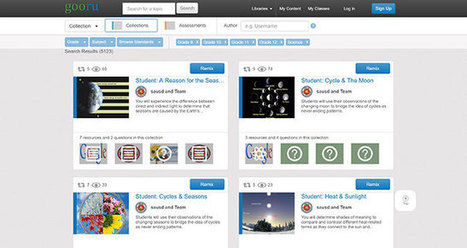
The company bills its course creation tool as the world’s largest database of teaching materials available to instructors in higher education.
|
|
Scooped by
Kim Flintoff
June 17, 2016 9:16 PM
|
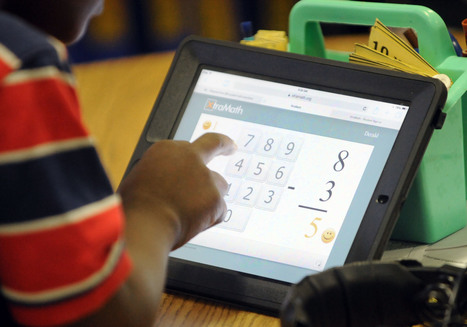
Teachers and students at one district are replacing print with digital. By and large, it’s working
For students at Central Valley middle and high schools, accessing classroom lessons rarely involves opening a book. Instead, they power up glowing iPad screens and swipe and tap their way through math problems, the day’s reading or interactive content.
|
|
Scooped by
Kim Flintoff
June 16, 2016 3:03 AM
|
A community college reform group has selected a handful of schools in Virginia and Maryland to develop degree programs using open-source materials in place of textbooks, an initiative that could save students as much as $1,300 a year.
Such open educational resources — created using open licenses that let students download or print materials for free — have gained popularity as the price of print textbooks have skyrocketed, but courses that use the materials remain a novelty in higher education. Achieving the Dream, an education advocacy groups based in Silver Spring, Md., aims to change that by offering $9.8 million in grants to support the development of open-source degree programs at 38 colleges in 13 states.
|
|
Scooped by
Kim Flintoff
June 10, 2016 7:33 PM
|
The tl;dr:
Supporting effective OER adoption at scale has its problems.
Many of these problems have openly licensed solutions.
Sometimes it makes sense to deploy these solutions yourself; sometimes it makes more sense to work with a partner.
|
|
Scooped by
Kim Flintoff
June 8, 2016 9:30 PM
|
The launch of SUNY OER Services should make high-quality educational resources more accessible and affordable to more students in the New York state higher education system.
The State University of New York (SUNY) has launched a new initiative designed to make open educational resources (OER) more readily available to its faculty and students, thereby lowering the cost of textbooks and improving access to educational materials.
The system's Open SUNY Textbook Project (OST), begun in 2012, has created SUNY OER Services in conjunction with the private-sector Lumen Learning. The project will: - Help SUNY faculty find, curate and design OER content that can be used in their courses and research; - Encourage support for using OER among faculty and students; - Work to integrate open content into SUNY classrooms; and - Help faculty develop and share new open learning materials.
|
|
Scooped by
Peter Mellow
May 31, 2016 7:08 PM
|
The past decade has seen a steady growth in the disruptive potential of open educational resources (OER)—free, high-quality, openly licensed educational materials in a variety of media—to enhance access, improve outcomes and lower costs for students. There is evidence that the movement has reached a tipping point. With major support from the Hewlett Foundation and other funders, the focus has shifted to large-scale—program-wide or even enterprise-wide—adoption of OER as the core or even sole curricular educational content.
What is also clear is that fully realizing the potential of OER to achieve these outcomes will require a strategic approach, adequate institutional resources and a willingness to transform more fundamental aspects of the traditional model of delivering education.
|
|
Scooped by
Kim Flintoff
May 25, 2016 6:51 PM
|
Courseware developer Junction Education has partnered with course material fulfillment firm MBS Direct to bring its OER-based courses and authoring platform to a wider range of campuses.
Junction provides course materials, resources, analytics and tools for blended or fully online courses that are designed to integrate with institutions' LMS of choice. The company focuses right now primarily on high-enrollment courses, such as Intro to Psychology, Principles of Microeconomics and others. Its courses are editable and include assessments and real-time analytics.
|
|
Scooped by
Kim Flintoff
May 23, 2016 7:07 PM
|
This is an excellent posts looking at five key questions regarding the sustainability of open educational resources (OERs), backed with examples and references. Here they are
"Is the production of OERs sustainable?" After the end of the UKOER funding stream, there was "a dramatic decline in the number of resources added to JORUM." But a "huge amount" of content is being produced on other platforms. "I see this not as a petering out of OER production, but a shift in its context."
"Are OER platforms sustainable?" We don't know yet. "Entire platforms can disappear. In the non-open world, the closing of a platform means the loss of its content. We don’t have that problem in the OER world."
"Are communities of open practice sustainable?" There are examples both ways, but "the continuation of the OER conference itself suggests a positive answer to the question about communities."
"Are the OERs themselves sustainable: are they being updated so as not to lose relevance?" A tiny number of resources get remixed, but is that bad? Most academic publications aren't cited, but a small number get a huge number of citations. "To decide whether too much or too little adaptation is happening, we need to know the distribution that “'should' exist, and it’s not clear how to do this."
"Do OERs promote an awareness of sustainability across all subjects?" We don't know.
|
|
Scooped by
Peter Mellow
May 19, 2016 9:02 PM
|
To make research more accessible, separate the review and dissemination processes.
|
|
Scooped by
Peter Mellow
May 4, 2016 7:24 PM
|
To improve the student experience in online courses, we need to focus on community-building, sharing and peer support.
|