Open online courses open up higher education to a wider population, but they are not as beneficial as actual classroom learning.
KF: Joshua Kim applauds many of the developments in open access courses but offers the caveat that they are not the solution to issues of quality higher education -
"What we should avoid, however, is confusing open online education with traditional online courses. When we do that we forget that a true education is about more than the delivery of content. If we want to extend the benefits of higher education then, as a society, we will need to invest in higher education. There are no technological shortcuts."
Constructivist is what constructivist explores I am in the process of constructing a week of activities on ICT4D (and Mobile for Development-M4d) for the next installment of the MobiMOOC scheduled ...
Jim Groom is the Director of Teaching and Learning Technologies at the University of Mary Washington in Fredericksburg, Virginia. He has been working for over fifteen years in education with a consistent focus on the development of teaching and learning in higher education. In addition to extensive experience teaching at the college level, for the past seven years he has worked primarily in the field of instructional technology. Recent projects include an intercampus collaborative course known affectionately as ds106, a "massive" open online digital storytelling course that re-thinks the intersection of the humanities and online, distributed community-based learning experiences. He was also instrumental in the development of UMW Blogs, a multi-user blogging environment designed to provide an academic web-authoring solution to faculty and students that is flexible and open. Jim regularly blogs about edtech, film, literature, toys, and whatever else interests him at bavatuesdays.com.
We\'ve been following the MOOC (Massive Open Online Course) movement for a couple years now because we and our clients are all engaged in online learning at some level, be it totally online, flipped or hybrid, or just lecture capture for on-demand...
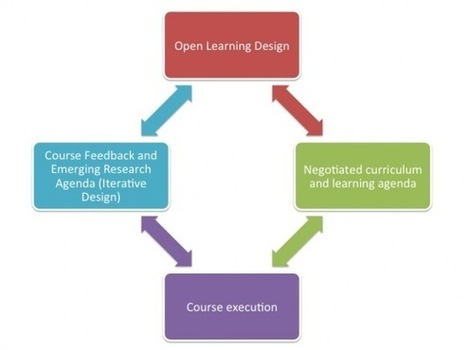
The project will design, deliver and evaluate an 8-10 week Open Learning Design Studio MOOC (Massive Open Online Course) focusing on the theme of curriculum design with OERs, to be held in Autumn 2012.
Further details regarding how to get involved, start dates, and core themes will be announced during the summer. In the meantime, please register your interest here: http://goo.gl/KJqbn so we can keep you informed.
Why don't we talk more about collaborative production of learning materials?
Open educational resources allow academics to not reinvent the wheel but to reuse materials that have been produced by other academics. The idea of sharing and reusing educational materials is related to the need of a cultural change in academia, embracing open knowledge which includes open access journals and open educational resources.
THE building momentum behind free online higher education has been given another shot in the arm after UNESCO announced it will ask governments worldwide to commit to developing, promoting and making available open educational resources.
"The University of Southern Queensland and Wollongong University are among 15 institutions which will contribute courses to the Open Education Resource University, which is being run by WikiEducator."
"Open Nottingham 2011 - Seminar Presentations", a playlist of the presentations from the Open Nottingham event held in April 2011.
KF: While overall focus of the event related to higher education the following presentations might be of speciic interest to those looking at OER strategies in relation to Teaching and Learning.
#2 - What does "openness" mean to univeristies: David White (19 mins)
#3 - The OER University: Wayne Mackintosh (28 mins)
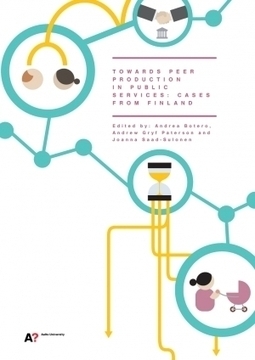
Aalto University in Finland has a new publication, "Towards Peer Production in Public Services: Cases from Finland" available for free download.
KF: An interesting book available under a reasonably new "copyfarleft" licensing arrangement. The book provides some useful insights into openness and peer/collaborative production strategies. It brings to mind the Cachalot (http://itunes.apple.com/au/app/cachalot/id458866319?mt=8) book from Duke University where expertise is crowd-sourced, peer review is managed and distribution is open-source. These new models of content creation and distribution are set to challenge the established (dis)order of publishing and distribution. Thanks to Yves Simon for the suggestion.
Initiatives seek to give students permanent online records for skills they have developed that they could then use when applying to college or for jobs.
KF: The badges approach is especially suited to more open education strategies and begins to recognise that there are sytill areas that do no require formal accreditation. I suspect the approach has a long way to go before mainstream adoption and will need to address some questions around "assurance of learning" if it is to be picked up more ubiquitiously. I can see there being a system whereby even your employer can award badges that help you map your learning from experience and training.
"The OER World Congress organized by UNESCO has adopted the Paris Declaration in June 2012. The Declaration shows the importance of Open Educational Resources and gives recommendations to governments and institutions around the globe. In this document, I will briefly give an introduction to OER and reflect on the main recommendations as well as propose implementation actions for governments as well as institutions."
KF: As with many UNESCO inititiatives they are proposals for international cooperation and understanding, they do not impose an obligation for implementation. The Paris Declaration seems to be another of these. It has set out to establish the key considerations to make OER a genuine global asset. The PDF document on this page highlights the key features and makes some sugestions about how governments and institutions around the world can harness the possibilities and potential of OER.
The challenges faced by higher education around the world are daunting and cannot be met by the traditional institution-based education system. For the current model to meet the needs of future generations, we would need to build and fund thousands of new universities. And yet the past ten years have demonstrated that there is another way. Scalable education on the web is increasingly possible, largely through the use of commodity software that is easy to use and available freely or at low cost to anyone.
KF: Another quick reference guide from the EDUCAUSE 7 Things collection. It discusses the definition, current activity and future possibilities of the trend in MOOCs.
KF: This article outlines some concerns regarding the efficacy and sustainability of MOOCs in their current incarnation. It also offers some caveats about risks involved in entering the MOOC playing field without properly considering the input requirements and user expectations.
Building on the strengths of OER10, OER11 and Cambridge 2012 (where OER12 and OCWC12 conferences combined), OER13 will take place at the University of Nottingham.
KF: An online magazine for EdTech Leaders. While the magazine focusses mainly on K-12 contexts there is plenty of general content that can be applied in higher education. This issue features an article about Digital Badges.
Jorum Repository of learning and teaching materials...
"Jorum is a JISC-funded Service in Development in UK Further and Higher Education, to collect and share learning and teaching materials, allowing their reuse and repurposing. This free online repository service forms a key part of the JISC Information Environment, and is intended to become part of the wider landscape of repositories being developed institutionally, locally, regionally or across subject areas. We use a modified version of DSpace for Jorum."
TED Talks The recent generations have been bathed in connecting technology from birth, says futurist Don Tapscott, and as a result the world is transforming into one that is far more open and transparent.
KF: Don Tapscott discusses some approaches to thinking about more opennes in thw way we operate in the digital world; draws on variants of sharism, open-access, open-source frameworks. It challenges on many levels - personal, social, economic, creative, and educational. If the world is to change we need to define the direction and this sets a reasonably good case for openness.
Schoox is an Academy for Self-Learners where members can teach, learn and certify their knowledge online. Users can create private or public online courses by using files or web resources incredibly easy and in seconds.
KF: This approach blends together curation, OER and independent learning. In conjunction with a good badge system there is making of an informal alternative to any educational sector.
"PeerJ is an Open Access publisher of scholarly articles. We aim to drive the costs of publishing down, while improving the overall publishing experience, and providing authors with a publication venue suitable for the 21st Century. Our tag line is: "Your Peers, Your Science. Academic Publishing Is Evolving" and we are committed to improving the process of scholarly publishing."
KF: From what I can see this seems to be using the same sort of model as the Cachalot project. The key difference being that this site is suggesting a commercial model to sell an open access approach.
To get content containing either thought or leadership enter:
To get content containing both thought and leadership enter:
To get content containing the expression thought leadership enter:
You can enter several keywords and you can refine them whenever you want. Our suggestion engine uses more signals but entering a few keywords here will rapidly give you great content to curate.


 Your new post is loading...