


What lies ahead for the Media & Learning community: a return to traditional campus-based learning services, prioritizing quality and embracing gradual innovation? Or will institutions take a leap…


 Your new post is loading...
 Scoop.it! What lies ahead for the Media & Learning community: a return to traditional campus-based learning services, prioritizing quality and embracing gradual innovation? Or will institutions take a leap… 
No comment yet.
Sign up to comment
Scoop.it!
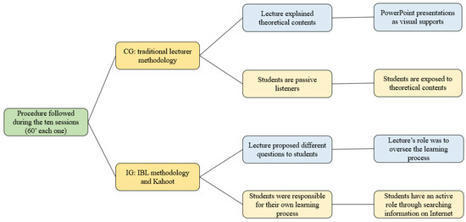
Active learning environments mediated by technologies in which learners assume ownership of their learning and receive daily feedback are gaining in popularity. Nevertheless, variables such as pre-service teachers’ learning gains and their perception towards these educational approaches have been...
Scoop.it!

By: Nader Ale Ebrahim As a researcher, you want your work to be seen and have a positive impact on the world. But in today's competitive research landscape, it can be difficult to get your work noticed.
Scoop.it!

Abstract. This study aims to estimate the total amount of article processing charges (APCs) paid to publish open access (OA) in journals controlled by the five large commercial publishers Elsevier, Sage, Springer-Nature, Taylor & Francis and Wiley between 2015 and 2018. Using publication data from WoS, OA status from Unpaywall and annual APC prices from open datasets and historical fees retrieved via the Internet Archive Wayback Machine, we estimate that globally authors paid $1.06 billion in publication fees to these publishers from 2015–2018. Revenue from gold OA amounted to $612.5 million, while $448.3 million was obtained for publishing OA in hybrid journals. Among the five publishers, Springer-Nature made the most revenue from OA ($589.7 million), followed by Elsevier ($221.4 million), Wiley ($114.3 million), Taylor & Francis ($76.8 million) and Sage ($31.6 million). With Elsevier and Wiley making most of APC revenue from hybrid fees and others focusing on gold, different OA strategies could be observed between publishers.Peer Review. https://www.webofscience.com/api/gateway/wos/peer-review/10.1162/qss_a_00272
Scoop.it!

HPE-Bot is an innovative AI-powered health professions tutor designed to provide personalized support and guidance on demand. With HPE-Bot, students can gain a deeper understanding of health professions concepts and achieve academic and career success. Our AI tutor uses advanced technology to personalize learning experiences, offering students immediate feedback and guidance to help them master health professions concepts with ease. Try HPE-Bot today and experience the future of health professions education.
Scoop.it!

COVID-19, the disease caused by SARS-CoV-2, has caused significant morbidity and mortality worldwide. The betacoronavirus continues to evolve with global health implications as we race to learn more to curb its transmission, evolution, and sequelae. The focus of this review, the second of a three-part series, is on the biological effects of the SARS-CoV-2 virus on post-acute disease in the context of tissue and organ adaptations and damage. We highlight the current knowledge and describe how virological, animal, and clinical studies have shed light on the mechanisms driving the varied clinical diagnoses and observations of COVID-19 patients. Moreover, we describe how investigations into SARS-CoV-2 effects have informed the understanding of viral pathogenesis and provide innovative pathways for future research on the mechanisms of viral diseases.
Scoop.it!

Absolutely scary and even worse than what I imagined. More than 400,000 research articles have been flagged as potential paper mills products (i.e. completely…
Gilbert C FAURE's insight:
désolant
Scoop.it!

🌐 From static to dynamic: The urgent call for an exponential curriculum. Let's prepare our students for the world of tomorrow!
Scoop.it!

Lubar: lucky beyond all recognition | Business
Scoop.it!
Microlearning is quickly becoming a popular form of education for learners who do not have the time to commit to traditional learning. Via EDTECH@UTRGV
|
Scoop.it!
|

|
Suggested by
LIGHTING
November 13, 2023 4:39 AM
|
Scoop.it!

Il était une fois les blogs pédagogiques : des espaces numériques d’écriture et de publication très faciles à ouvrir pour les enseignant·es. Il était une fois « leWebPédagogique » : une plateforme de blogs centrés sur l’éducation, gratuits, sans publicité, sans recueil de données des élèves contributeurs. Depuis 2005, 50 000 blogs y ont été créés pour partager des ressources,…

|
Scooped by
Gilbert C FAURE
November 10, 2023 3:28 AM
|
Scoop.it!

C'est avec plaisir que j'annonce la publication de notre livre de 336 pages chez Doin. Il est commandable à partir de ce lien. Ecrire un livre est ambitieux, et je n'y suis arrivé que grâce à l'aide de Marie-Eve Rougé-Bugat et de Evelyne Decullier. Les relectures croisées sont indispensables et…
|
|
Scooped by
Gilbert C FAURE
November 9, 2023 2:40 AM
|
Scoop.it!

Background Evaluating academics is a challenge, and the use of indicators such as scientific impact (i.e. number of published papers and their citation rate) is complex and poorly validated. We propose a new indicator for academic medical research: the “Free lunches” index (fl-index), computed from the sum of gifts from the industry. The fl-index provides a direct and straightforward measure of industry investment consisting in regaling a clinical researcher with rewards like a leisurely meal in a Michelin-starred restaurant or a relaxing stay in a high-end resort hotel. Methods and findings 3,936 French academics were included in this observational and satirical retrospective study using the French database registering gifts received by medical doctors and Web of Science, over the years 2014–2019. Pearson’s correlation coefficients explored the associations between the fl-index and in the h-index (the maximum number of published papers h that have each been cited at least h times) increase over the period 2014–2019. The diagnostic properties and optimal thresholds of the fl-index for detecting high scientific productivity were explored. High scientific productivity was defined as ranking in the top 25% scientists in terms of increase in the h-index. To detect possible differences according to medical disciplines, subgroup analyses were performed. The correlation coefficient between the fl-index and the increase in the h-index was 0.31 (95% CI 0.29 to 0.34). The optimal threshold was 7,700 € for the fl-index, giving a sensitivity of 65% (95% CI 61 to 67%), a specificity of 59% (95% CI 57 to 61%). However, there were considerable differences across medical disciplines, with correlations ranging from 0.12 (Morphology and morphogenesis) to 0.51 (Internal medicine, geriatrics, general surgery and general medicine), and the median fl-index ranging from 37 € (Public health, environment and society) to 30 404 € (Cardiorespiratory and vascular pathologies). Importantly, the highest correlations and values for the fl-index were observed for clinical disciplines. Conclusions Overall, the correlation between the fl-index and an increase in the h-index was modest so that the fl-index cannot be used as a surrogate for academic success as gauged by productivity-based metrics. However, future residents could use these results to complement the usual metrics in order to choose (or avoid) certain specialties, depending on whether they are more eager to produce scientific articles or to enjoy an affluent lifestyle that they consider well-deserved. Registration osf.io/7d4bk.
|
|
Scooped by
Gilbert C FAURE
November 8, 2023 10:23 AM
|
Scoop.it!

La médiation documentaire opérée par le support, le(s) système(s) de signes qu’il mobilise, ainsi que les usages associés aux outils et technologies pour l’enseignement anticipent des attentes en termes de littératie scolaire, soit un ensemble de compétences qu’exerce l’élève en autonomie afin de...
Supports et Resources Personnalisés.
Pratique de la curation de contenu pour les informations et la connaissance en Médecine
La curation de contenu,
pour/par l'enseignant
par/pour l'étudiant
production d'outils personnalisés
Pour des Supports didactiques individualisés
Pratique de la curation de contenu..
plan
contexte: infobésité, quantité et renouvellement rapide de l'information et des connaissances
Curation, le mot est utilisé dans l'AO
contenus : information et connaissance
Supports num"risés
Méthodes
La curation de contenus:
les outils les méthodes
Les secrets d'un post en microlearning
Domaines didactiques
géographie (Classes préparatoires
immunologie médicale (initiation à la recherche clinique
plus distance learning (langue française.. filières médicales francophones, Covid
de la pédagogie top down aux nouvelles formes de learning
plus appliqués à l'andragogie
self, active, micro
Résultats
L'Enseignant offre des resources sélectionnées, commentées, attractives, actualisées au quotidien
L'étudiant utilise ces ressources?
L'étudiant crée son topic d'intérêt, apprend à lire, à trouver à sélectionner, à analyser, commenter, écrire
utile en médecine et ailleurs (lecture d 'article), écriture de rapports, mémoires, thèses, de textes de demandes
Interactions possibles avec l'enseignant
Discussion
avantages: mémorisation, ludique
drawbacks: éphémère, mais livres , blogs... aussi
share?
|
|
Scooped by
Gilbert C FAURE
November 3, 2023 4:46 AM
|
Scoop.it!
7 bases de données free access?
|
|
Scooped by
Gilbert C FAURE
October 27, 2023 3:07 AM
|
Scoop.it!

In the educational process, quality has long been considered a critical component. It may get impacted due to different factors especially when talking about the COVID19 pandemic. The purpose of this investigation is to explore the impact and relationship between COVID-19 and the quality of education using bibliometric analysis. As face-to-face learning shifts to online learning, this research investigates how the COVID-19 epidemic has affected education quality, concentrating on Programme Educational Outcomes (PEOs), Programme Learning Outcomes (PLOs), and Course Learning Outcomes (CLOs). The research covers pandemic online education, literature, and trends. There are two important steps in any bibliometric analysis selecting keywords and databases. The initial set of keywords was selected by the authors' experience and then an online survey study through Google Forms was conducted among experts in the research area. This was followed by a search of the selected keywords in the databases consisting of PubMed, Web of Science (WoS), and SCOPUS. Therefore, the final data was collected from the SCOPUS database on August 24, 2021. Hence, 182 documents were considered for the current study. The document's data were analysed by using the “visualization of similarities” (VOS) Viewer software and the R-Tool of the Bibliometrix-package that was specifically designed for quantitative Bibliometrics research. Based on the obtained data, the results showed the quality of education that may get impacted by the changing of the education delivery from face-to-face to online-based learning. In conclusion, this study showed the importance of studying the correlation and impact of COVID-19 on the quality of education.
|
|
Scooped by
Gilbert C FAURE
October 26, 2023 4:53 AM
|
Scoop.it!

Formation à distance | La Revue internationale des technologies en pédagogie universitaire - RITPU/ IJTHE consacre son plus récent numéro à la formation à…
|
|
Scooped by
Gilbert C FAURE
October 25, 2023 4:27 AM
|
Scoop.it!

Le web parle toutes les langues. Il permet aussi de les traduire. La toile offre de nombreux sites de traduction en ligne qui permettent de s'affranchir
|
|
Scooped by
Gilbert C FAURE
October 23, 2023 10:54 AM
|
Scoop.it!
NASCE2023.pptx - Téléchargez le document au format PDF ou consultez-le gratuitement en ligne
|
|
Scooped by
Gilbert C FAURE
October 10, 2023 4:18 AM
|
Scoop.it!

EXTRAIT DE LIVRE / La sérendipité est un mot qui amuse tout le monde mais qui est à l'origine de beaucoup d'innovations et de découvertes. Dans son ouvrage intitulé « Le super-pouvoir de la créativité »*, Louise Côté nous éclaire sur le





