 Your new post is loading...

|
Rescooped by
Gilbert C FAURE
from Information Science
April 23, 2015 2:31 AM
|
Everyone can now download their entire Google history, getting everything they’ve ever searched as a comprehensive document.
Via Afroditi Fragkou
|
|
Scooped by
Gilbert C FAURE
April 14, 2015 1:18 PM
|
One of the many things we love about Japan is its amazing customer service, from intelligent packing to omnipresent station attendants who pop out of the walls to help you.

|
Suggested by
LIGHTING
April 11, 2015 9:16 AM
|
Asking students to blog for an audience of their classmates instead of writing an essay for a professor can bring out different qualities in their writing, according to a study published in next month’s volume of Teaching Sociology. But don’t expect instructors to do away with essays just yet. “One general conclusion one can draw from these findings is that journals and blogs each have their own strengths in terms of their ability to engage students in deep reflection,” author Drew Foster writes. “Specifically, students appear to be overall more likely to take greater intellectual risks in blogs, which they know will be read and commented upon by their peers. Conversely, journals -- the more private option -- compel students to be vulnerable and take more personal risks in their reflection.”
Via Faculty Focus
|
|
Scooped by
Gilbert C FAURE
March 31, 2015 9:35 AM
|
Tel était l'intitulé de la conférence introductive de Didier Frochot, cogérant des Infostratèges, lors de la journée organisée le 5 février dernier à ...
|
|
Scooped by
Gilbert C FAURE
March 25, 2015 3:30 AM
|
Teaching Information Fluency describes the skills and dispositions of information fluency adept searchers. Readers will receive in-depth information on what it takes to locate, evaluate, and ethically use digital information. The book realistically examines the abilities of Internet searchers today in terms of their efficiency and effectiveness in finding online information, evaluating it and using it ethically. Since the majority of people develop these skills on their own, rather than being taught, the strategies they invent may suffice for simple searches, but for more complex tasks, such as those required by academic and professional work, the average person’s performance is adequate only about 50% of the time. The book is laid out in five parts: an introduction to the problem and how search engine improvements are not sufficient to be of real help, speculative searching, investigative searching, ethical use and applications of information fluency. The intent of the book is to provide readers ways to improve their performance as consumers of digital information and to help teachers devise useful ways to integrate information fluency instruction into their teaching, since deliberate instruction is needed to develop fluency. Since it is unlikely that dedicated class time will be available for such instruction, the approach taken embeds information fluency activities into classroom instruction in language arts, history and science. Numerous model lessons and resources are woven into the fabric of the text, including think-alouds, individual and group search challenges, discussions, assessments and curation, all targeted to Common Core State Standards as well as information fluency competencies.
|
|
Scooped by
Gilbert C FAURE
March 21, 2015 5:38 AM
|
Millennials are anything but 'newsless,' passive, or uninterested in civic issues, according to a new comprehensive study of the information habits of people age 18-34.
|
|
Rescooped by
Gilbert C FAURE
from Medical Education Canada
March 19, 2015 12:24 PM
|
in-Training is the online magazine for medical students, founded in April 2012 . All content on in-Training is contributed by medical students worldwide. As a peer-edited publication, the in-Training Editorial Board consists entirely of medical students and is editorially independent, with all content reviewed solely by the medical student editors and the editors-in-chief prior to publication.
Via Deirdre Bonnycastle
Alice Chen writes: "We all know that our digital natives are very at ease with technology. In fact, they’re in love with technology, but does that automatically make them digital proficient?
When I originally pondered this question, I began to realize that the 5 C's often discussed in education today - communication, collaboration, creativity, critical thinking, and citizenship - needed to be expanded to include these other areas as well: curation, copyright, character and connectedness."
Via Mary Reilley Clark, Lynnette Van Dyke, juandoming
|
|
Suggested by
LIGHTING
March 15, 2015 3:41 AM
|
For most of us, the sight of blue lights and yellow lines outside an airplane's window is the cue to turn our phones back on.
|
|
Scooped by
Gilbert C FAURE
March 13, 2015 3:12 PM
|
Discworld author Sir Terry Pratchett dies at his home aged 66, eight years after he was diagnosed with Alzheimer's disease.
|
|
|
Scooped by
Gilbert C FAURE
April 22, 2015 1:40 AM
|
Attention all designers, artists, fashion enthusiasts and people who just appreciate some nice Japanese artwork: The Smithsonian Libraries should be your best friends.
|
|
Scooped by
Gilbert C FAURE
April 12, 2015 10:45 AM
|
For half a century, the government funded research. Times are changing.
|
|
Rescooped by
Gilbert C FAURE
from Le tourisme pour les pros
April 9, 2015 2:20 AM
|
Quels métiers choisir ? Avec les fiches métiers de TourMaG.com, retrouvez toutes les informations utiles à votre orientation, avec en bonus le témoignage d'un professionnel. Cette semaine, découvrez : reporter du territoire. Reporter de territoire est une toute nouvelle compétence au sein des...
Via Florent Guitard, Gengembre Dominique
“ Creating content for multiple platforms each and every day can be taxing for even the most skilled copywriter. It means coming up with fresh, interesting content constantly to provide great resources”
Via Jeff Domansky, Suvi Salo, Mika Auramo
|
|
Scooped by
Gilbert C FAURE
March 31, 2015 11:46 AM
|
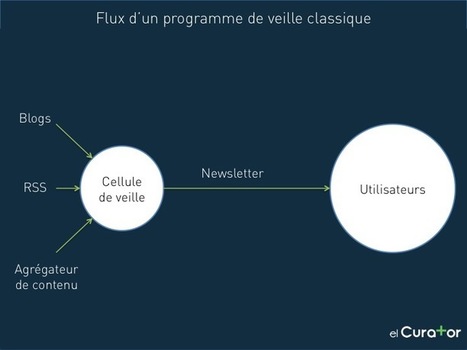
Témoignage de Sylvie Pelletier, Région Languedoc-Roussillon, sur les outils de son système de veille, à savoir Tiny Tiny RSS, Yahoo! Pipes et MailChimp
|
|
Scooped by
Gilbert C FAURE
March 31, 2015 7:25 AM
|
by Vincent Larivière, Stefanie Haustein, Katy Börner
Scholarly collaborations across disparate scientific disciplines are challenging.
|
|
Rescooped by
Gilbert C FAURE
from Curation, Veille et Outils
March 27, 2015 3:12 AM
|
|
|
Scooped by
Gilbert C FAURE
March 25, 2015 3:19 AM
|
In the first study of an entire wine grapevine's microbiome, researchers have found that the microbes associated with the grapes, leaves and flowers are largely derived from the soil microbes found around the plant's roots.
|
|
Rescooped by
Gilbert C FAURE
from Learning & Technology News
March 19, 2015 12:24 PM
|
Having the opportunity to expand the horizon of my traditional EFL classroom has been just as exciting for me as for my students.
Via Nik Peachey
|
|
Rescooped by
Gilbert C FAURE
from LaLIST Veille Inist-CNRS
March 19, 2015 12:23 PM
|
"Description : Thibaud Hulin est maître de conférences à l’Université de Bourgogne en sciences de l’information et de la communication, membre du laboratoire CIMEOS de Dijon. Ses recherches portent...
Via LaLIST
For students to grow into their digital voices, they must understand the value of personal communication and projecting their own work on the global stage.
Via Dr. Tom D'Amico (@TDOttawa)
|
|
Suggested by
LIGHTING
March 15, 2015 3:41 AM
|
Il n’est pas facile de mesurer à l’aide d’une règle ou d’un mètre les longueurs de lignes et les aires de surfaces circulaires. Voilà pourquoi le nombre Pi est si important pour les scientifiques et les techniciens.
|
















!!!!