Notebook or My Personal Learning Network
21.2K views | +21 today
Notebook or My Personal Learning Network
a personal notebook since summer 2013, a virtual scrapbook
Your new post is loading...
Rescooped by Gilbert C FAURE from Social Media and Healthcare
December 6, 2015 1:59 PM
Scoop.it!

For doctors who blog, a 5-letter mnemonic and a top 10 list about professionalism

For doctors who blog, a 5-letter mnemonic and a top 10 list about professionalism | Notebook or My Personal Learning Network | Scoop.it

Physicians who blog spoke about their experiences at Kidney Week in Philadelphia, so it feels very “meta” to blog about the bloggers: Bryan S. Vartabedian (AKA Doctor_V), MD; Margaret S. Chisolm, MD; and Joel Topf, MD, (AKA Kidney_Boy). Each touched on professionalism in the age of social media.


(The American Society of Nephrology has adopted social media, specifically, Twitter, Dr. Topf explained, using the Twitter hashtag #Kidneywk14.Signs throughout the conference center encouraged attendees to participate. The panel also included a patient blogger, Sarah E. Kucharski, who separately discussed how doctors can use social media to communicate with patients.)

The 3 doctors each emphasized aspects of professionalism that are worth reviewing for those who are already extending their reputations online. And, Dr. Vartabedian said, physicians' professional reputations are already on the Internet. Patients expect to find information about their physicians online, and may be put off if they can't.

Dr. Vartabedian told the audience that physicians can maintain their reputations first by creating content, and then joining the conversation about that content.

Dr. Chisolm encouraged professionalism from physicians who use social media. Any mistake quickly becomes public, cannot be erased or truly kept private, and can quickly become amplified as it is reposted.

Dr. Topf recalled a case of a physician who thought that he could anonymously post everyday grumblings about patients on Twitter. But, during a malpractice case, the opposing lawyer asked him about a specific tweet, and asked point blank if that “anonymous” doctor was behind it. The physician had to settle the next day.

Before blogging, Dr. Chisolm encouraged physicians to THINK. Specifically, is the post:

True?
Helpful?
Inspiring?
Necessary?
Kind?

If you're posting about a patient, it's OK. She compared it to a case study. But, she encouraged the physician to get the patient's permission, preferably in writing. An audience member recounted his own experiences asking patients for permission. First, he said he writes the post. Then he shows it to the patient and asks permission to post it. “I'm always terrified before I ask, and they are always flattered,” he recounted.

10 rules for professionalism, as related by Dr. Chisolm:
1) Manage your online image proactively,
2) Your personal and professional identities can't always be separated,
3) Engage with the public, but be careful about giving advice,
4) Respect the privacy of all patients,
5) Show your human side (talk about sports, hobbies and the like) but maintain professional boundries,
6) Contribute expertise, insights and experiences, which are for physicians, the meat of the social media experience,
7) Treat others with respect
8) Remember that others may be watching you,
9) Support colleagues, and intervene when necessary, particularly for learners, and
10) Test out new ideas, learn from mistakes, and have fun.


Via Plus91
No comment yet.
Scooped by Gilbert C FAURE
December 5, 2015 1:04 AM
Scoop.it!

The most popular tools for research : #LibTechNotes

The most popular tools for research : #LibTechNotes | Notebook or My Personal Learning Network | Scoop.it
The most popular tools for research
No comment yet.
Scooped by Gilbert C FAURE
December 4, 2015 9:39 AM
Scoop.it!

Beyond citation analysis: a model for assessment of research impact

Beyond citation analysis: a model for assessment of research impact | Notebook or My Personal Learning Network | Scoop.it
Beyond citation analysis: a model for assessment of research impact
Gilbert C FAURE's insight:

2010, any application since?

No comment yet.
Rescooped by Gilbert C FAURE from L'E-Réputation
December 2, 2015 7:04 AM
Scoop.it!

Qui sont les utilisatrices "influencers" sur Pinterest ? #SMO

Qui sont les utilisatrices "influencers" sur Pinterest ? #SMO | Notebook or My Personal Learning Network | Scoop.it
Bonjour tout le monde, En effectuant ma veille informationnelle stratégique avec mon logiciel de veille automatisée, je suis tombée sur une infographie indiquant les profils des "influenceurs" sur ...

Via Véronique Duong
Abdelhamid Niati's curator insight, December 16, 2015 5:40 AM

Qui sont les utilisatrices "influencers" sur Pinterest ? #SMO

Rescooped by Gilbert C FAURE from Les laboratoires du CNRS Occitanie Ouest dans la presse
November 30, 2015 8:39 AM
Scoop.it!

CERTOP - Les arts et les métiers de la vigne et du vin : révolution des savoirs et des savoirs faire (sous dir.) D. CORNOT, M. POUZENC, P. STREHAIANO - Livre

CERTOP - Les arts et les métiers de la vigne et du vin : révolution des savoirs et des savoirs faire (sous dir.) D. CORNOT, M. POUZENC, P. STREHAIANO - Livre | Notebook or My Personal Learning Network | Scoop.it

Cet ouvrage propose une réflexion sur la véritable révolution des arts et des métiers de la vigne et du vin qui s’est opérée au cours de l’histoire, et plus particulièrement au cours des dernières décennies, le mot « révolution » étant également pris dans son sens latin de « retour en arrière ». Les thèmes abordés vont de l’étude des vignerons biologiques iconoclastes au problème de la mondialisation et de l’ancrage territorial, en passant par l’œnotourisme et la vinification du processus naturel aux nouvelles technologies.


Via Le CNRS Occitanie Ouest
No comment yet.
Rescooped by Gilbert C FAURE from Information and digital literacy in education via the digital path
November 27, 2015 3:43 AM
Scoop.it!

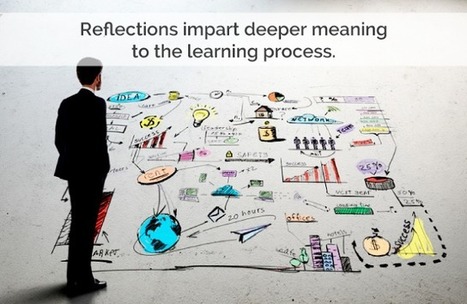
Stories, Scenarios and Micro eLearning: Why Reflect? The Role of Reflection in the Learning Process

Stories, Scenarios and Micro eLearning: Why Reflect? The Role of Reflection in the Learning Process | Notebook or My Personal Learning Network | Scoop.it

Via Elizabeth E Charles
No comment yet.
Rescooped by Gilbert C FAURE from 21st Century skills of critical and creative thinking
November 25, 2015 12:31 AM
Scoop.it!

Making Teaching Visible: He who does the talking, does the learning

Making Teaching Visible: He who does the talking, does the learning | Notebook or My Personal Learning Network | Scoop.it

Via NikolaosKourakos, Lynnette Van Dyke
Sharon Berman's curator insight, November 25, 2015 3:30 PM

Not only is the graphic very telling, there are lessons to be learnt within this short article.  Students, no matter what age, will benefit from "talking" to teach others, or to demonstrate their understanding.

Kristie Coster's curator insight, November 25, 2015 4:50 PM

Yes!! I sometimes think that the teacher who is standing up the front doing all the talking is the one who is doing all the work.

Rescooped by Gilbert C FAURE from LaLIST Veille Inist-CNRS
November 23, 2015 3:52 AM
Scoop.it!

OpenEdition expérimente un dispositif d’évaluation ouverte des articles

OpenEdition expérimente un dispositif d’évaluation ouverte des articles | Notebook or My Personal Learning Network | Scoop.it
" Dans le cadre du projet européen OpenAIRE2020 (Open Access Infrastructure for Research in Europe toward 2020), OpenEdition expérimente actuellement un dispositif d’évaluation ouverte par les pair...

Via LaLIST
No comment yet.
Rescooped by Gilbert C FAURE from TechnoVeille
November 23, 2015 2:25 AM
Scoop.it!

Test de Limber : nouvel outil gratuit de veille et curation

Test de Limber : nouvel outil gratuit de veille et curation | Notebook or My Personal Learning Network | Scoop.it
"Test de Limber : nouvel outil gratuit de veille et curation" bonne lecture https://t.co/FlzEyxiq5u

Via Assane FALL™
No comment yet.
Rescooped by Gilbert C FAURE from Learning & Technology News
November 20, 2015 2:16 AM
Scoop.it!

The Future Belongs to the Curious: How Are We Bringing Curiosity Into School?

The Future Belongs to the Curious: How Are We Bringing Curiosity Into School? | Notebook or My Personal Learning Network | Scoop.it

The only rational answer to the conundrum of curiosity is to disengage our educational system from standardized testing and common curricula. Curiosity does not hold up well under intense expectation. Give agency to teachers, with the explicit message to slow down and provide students time to wonder and be curious.


Via Nik Peachey
Willem Kuypers's curator insight, November 23, 2015 1:17 PM

Et le RTBF nous dit d'être curieux. Voilà leur diction revisité. Pour que nos étudiants soient curieux, il faut encore l'être soi-même et adapter la manière de l'évaluer.

Barbara Goebel's curator insight, November 28, 2015 10:32 PM

Curiosity projects, MakerSpaces, Passion projects, asking questions and seeking answers...all mind-expanders.

Valerie Morris's curator insight, May 25, 2016 3:18 PM

Curious?

Scooped by Gilbert C FAURE
November 19, 2015 3:47 AM
Scoop.it!

A Japanese doctor’s 10 tips for proper medical care

A Japanese doctor’s 10 tips for proper medical care | Notebook or My Personal Learning Network | Scoop.it
With the world’s knowledge quite literally at our fingertips, the sheer amount of information available to us can be overwhelming.
No comment yet.
Scooped by Gilbert C FAURE
November 17, 2015 1:17 PM
Scoop.it!

How to Track the Impact of Research Data with Metrics | Digital Curation Centre

How to Track the Impact of Research Data with Metrics | Digital Curation Centre | Notebook or My Personal Learning Network | Scoop.it
How to Track the Impact of Research Data with Metrics
Gilbert C FAURE's insight:

scoop it is not inside

No comment yet.
Scooped by Gilbert C FAURE
November 17, 2015 3:50 AM
Scoop.it!

Attentats de Paris | Espace Pédagogique Clemi G...

Attentats de Paris | Espace Pédagogique Clemi G... | Notebook or My Personal Learning Network | Scoop.it
Ressources pédagogiques Clemi Guadeloupe
No comment yet.
Scooped by Gilbert C FAURE
December 5, 2015 2:26 AM
Scoop.it!

L'Engagement dans le travail. Qu'est-ce que le vrai boulot ? - Revues.org

L'Engagement dans le travail. Qu'est-ce que le vrai boulot ? - Revues.org | Notebook or My Personal Learning Network | Scoop.it
Le livre qu’Alexandra Bidet a publié aux Presses universitaires de France se présente comme un ouvrage se situant dans le champ de la sociologie du travail.
No comment yet.
Scooped by Gilbert C FAURE
December 4, 2015 11:50 AM
Scoop.it!

Everything you need to know about dining at a sushi restaurant—in handy infographics!【Pics】

Everything you need to know about dining at a sushi restaurant—in handy infographics!【Pics】 | Notebook or My Personal Learning Network | Scoop.it
Many of us dream of eating authentic sushi in Japan. But do you know the proper decorum for ordering? How about paying the bill? And what’s the difference between nigiri and narezushi, anyway?
No comment yet.
Suggested by LIGHTING
December 2, 2015 8:47 AM
Scoop.it!

Maison, 4 pièces, 167 m², Les Vans

Sud Ardèche – Les Vans 07140, Dans un cadre privilégié, très belle vue, excellente exposition. Mas ancien en pierres apparentes sur magnifique terrain arboré de 5; 361 m⊃2; agrémenté d'une piscine offrant grande pièce de vie avec cuisine ouverte ent...
Gilbert C FAURE's insight:

regarder l'intérieur

No comment yet.
Rescooped by Gilbert C FAURE from Kazakhstan
December 1, 2015 10:18 AM
Scoop.it!

Tenants could ski out their front door at new flats in Kazakhstan

Tenants could ski out their front door at new flats in Kazakhstan | Notebook or My Personal Learning Network | Scoop.it
Residents at a proposed apartment building in Astana would be able to ski or snowboard down a 1,000ft slope linking the roof to the ground

Via Kenneth Carnesi,JD
Gilbert C FAURE's insight:

!!!!!

No comment yet.
Scooped by Gilbert C FAURE
November 29, 2015 1:54 PM
Scoop.it!

Google Scholar Digest: Microsoft Academic Search

Google Scholar Digest: Microsoft Academic Search | Notebook or My Personal Learning Network | Scoop.it
How many academic documents are visible and freely available on the Web?
No comment yet.
Rescooped by Gilbert C FAURE from Information and digital literacy in education via the digital path
November 27, 2015 3:41 AM
Scoop.it!

Search Engine List

Search Engine List | Notebook or My Personal Learning Network | Scoop.it
Need a good search engine? Here is a comprehensive list of the top search engines on the Web.

Via Elizabeth E Charles
No comment yet.
Scooped by Gilbert C FAURE
November 24, 2015 5:39 AM
Scoop.it!

Anewstip - Connect with global media influentials

Anewstip - Connect with global media influentials | Notebook or My Personal Learning Network | Scoop.it
Search global media influentials by what they have written or tweeted. More than 200 million articles and 1 billion tweets from 1 million media contacts.
Gilbert C FAURE's insight:

search media contacts

No comment yet.
Rescooped by Gilbert C FAURE from TechnoVeille
November 23, 2015 3:51 AM
Scoop.it!

Outils de veille : catalogue de solutions gratuites ou peu coûteuses

Catalogue d'outils de veille couvrant des domaines très variés: collecte de l'information, surveillance de pages web, partage de l'information, visualisation d…

Via Serge Courrier, Assane FALL™
Gilbert C FAURE's insight:

scoop it inside

Patrick LENORMAND – Ressources Presse/Ressources Formation's curator insight, November 24, 2015 6:29 AM

Un catalogue détaillé d'outils pour la veille, à télécharger via SlideShare et LinkedIn

Rescooped by Gilbert C FAURE from Information and digital literacy in education via the digital path
November 20, 2015 2:18 AM
Scoop.it!

Information Literacy for Health Professionals: Teaching Essential Information Skills with the Big6 Information Literacy Model

Information Literacy for Health Professionals: Teaching Essential Information Skills with the Big6 Information Literacy Model | Notebook or My Personal Learning Network | Scoop.it
(2013). Information Literacy for Health Professionals: Teaching Essential Information Skills with the Big6 Information Literacy Model. Community & Junior College Libraries: Vol. 19, No. 3-4, pp. 77-91. doi: 10.1080/02763915.2014.953435    

Health professionals frequently do not possess the necessary information-seeking abilities to conduct an effective search in databases and Internet sources. Reference librarians may teach health professionals these information and technology skills through the Big6 information literacy model (Big6). This article aims to address this issue. It also exposes the possibilities of applying the Big6 model in health sciences libraries and other informational contexts, based on several instances of successful integration of this model into information literacy programs in health sciences environments as well as several instances of using the model for solving diverse information problems within this context. This model promises to be practical for reference librarians and information professionals who are interested in a different approach to instructional and information literacy work in health sciences libraries, thus the paper suggests to take a closer look at Big6.


Via Elizabeth E Charles
No comment yet.
Scooped by Gilbert C FAURE
November 19, 2015 10:18 AM
Scoop.it!

« ἕν οἶδα ὅτι οὐδὲν οἶδα » hén oȋda hóti oudèn oȋda, et en latin « scio me nihil scire »)

tandis que les autres croient savoir ce qu'ils ne savent pas. :

Gilbert C FAURE's insight:

 « ἕν οἶδα ὅτι οὐδὲν οἶδα » hén oȋda hóti oudèn oȋda, et en latin « scio me nihil scire ») est une maxime attribuée auphilosophe grec Socrate.


On trouve ce fameux adage chez Platon dans l'Apologie de Socrate (21d), et dans le Ménon (80d 1-3).


CITATION : "Cet homme, me sembla-t-il, passait aux yeux de beaucoup de gens et surtout à ses propres yeux pour quelqu'un qui savait quelque chose, mais ce n'était pas le cas. Et le résultat fut que je m'attirai son inimité et celle de plusieurs des gens qui assistaient à la scène. En repartant, je me disais donc à moi-même : "Je suis plus savant que cet homme-là. En effet, il est à craindre que nous ne sachions ni l'un ni l'autre rien qui vaille la peine, mais, tandis que, lui, il s'imagine qu'il sait quelque chose alors qu'il ne sait rien, moi qui effectivement ne sait rien, je ne vais pas m'imaginer que je sais quelque chose. En tout cas, j'ai l'impression d'être plus savant que lui en ceci qui représente peu de chose : je ne m'imagine même pas savoir ce que je ne sais pas. " (Platon, Apologie de Socrate).

No comment yet.
Scooped by Gilbert C FAURE
November 19, 2015 3:34 AM
Scoop.it!

Visualising Global Scientific Collaboration - Digital Science

Visualising Global Scientific Collaboration - Digital Science | Notebook or My Personal Learning Network | Scoop.it
Visualising Global Scientific Collaboration
No comment yet.
Scooped by Gilbert C FAURE
November 17, 2015 12:41 PM
Scoop.it!

Au tour d'Instagram de se lancer dans la « curation » de contenu - Next INpact

Next INpact
Au tour d'Instagram de se lancer dans la « curation » de contenu
Next INpact
Comme les Moments de Twitter, Instagram se lance dans la « curation » de contenus afin de proposer une vision d'ensemble pour un événement en particulier.
No comment yet.