Such teamwork can be difficult but quite productive, writes Ben Shneiderman, and the most successful teams share certain key characteristics.


 Your new post is loading...
 Scoop.it!
Such teamwork can be difficult but quite productive, writes Ben Shneiderman, and the most successful teams share certain key characteristics.

No comment yet.
Sign up to comment
Scoop.it!

Comment bien comprendre et utiliser la société numérique actuelle et à venir ? IonisX, la plateforme d’enseignement supérieure propose un mooc stratégique qui a retenu l’attention d’INfluencia.
Via Nathalie Issenmann
Gilbert C FAURE's insight:
Share your insight
Scoop.it!
Gilbert C FAURE's insight:
historical place, now alive again
Scoop.it!

The 436 guestrooms include 40 suites, two 1,561 square foot Presidential Suites, and one 2,100 square foot Penthouse Suite with a 1,248 square feet terrace including a lounge area and a plunge pool.
Scoop.it!

Will classes in curiosity, problem-solving and creative thinking soon be on the curriculum? Our latest report thinks it should. Via Nik Peachey
Gilbert C FAURE's insight:
Interesting choice.
Scoop.it!

Going beyond the 4Ss of digital note taking (support, save, search, and share), students should work toward curating, synthesizing, and reflecting on their learning. Via Nik Peachey
Gilbert C FAURE's insight:
Making curation part of an information management process.

Rosemary Tyrrell, Ed.D.'s curator insight,
April 1, 2016 7:12 PM
Making curation part of an information management process. 
Rod Murray's curator insight,
April 2, 2016 11:20 AM
Making curation part of an information management process. 
Norman René Trujillo Zapata's curator insight,
April 4, 2016 1:33 PM
Making curation part of an information management process.
Scoop.it!

Une veille continue et bien organisée permet de détecter les signaux faibles et de faire émerger des idées, en amont de l’innovation.
Scoop.it!

From the creators of SparkNotes, something better. Understand more, faster. Free! Via Ana Cristina Pratas
Gilbert C FAURE's insight:
helpful for too busy students
Scoop.it!

There are currently 7,500 varieties of apples in the world today - incredibly though, basically every single one of these can be traced back to a Mother an Via Kenneth Carnesi,JD
Scoop.it!
Scoop.it!

When I was a kid, my father brought home from I know not where an enormous collection of National Geographic magazines spanning the years 1917 to 1985. I found, tucked in almost every issue, one of the magazine’s gorgeous maps—of the Moon, St.
Gilbert C FAURE's insight:
for map and open access lovers
Scoop.it!
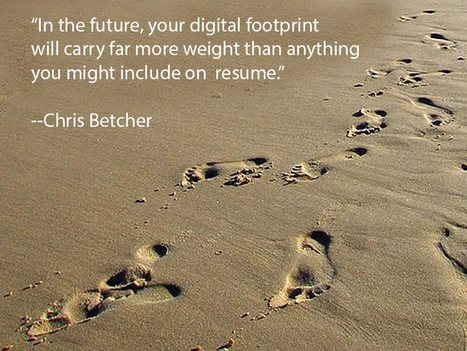
11 Tips For Students To Manage Their Digital Footprints
Scoop.it!

I’m going to keep this fairly short and let the images below do the
|
Scoop.it!

Meta Science is a free literature discovery engine powered by artificial intelligence. Create your free account today.
Gilbert C FAURE's insight:
before registering
Scoop.it!
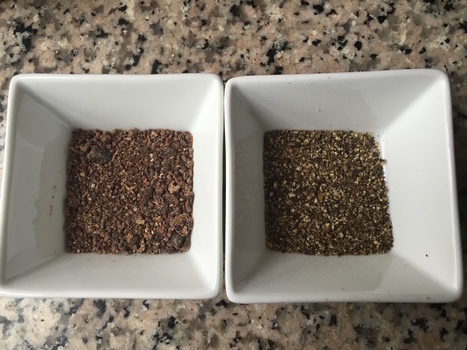
Long pepper was the first pepper Europe fell in love with, before black pepper took over.
Scoop.it!

"Sometimes I'm sad and I don’t know why. It's just a cloud that comes along and covers me up."
Scoop.it!

Want to get started with content curation? Use this map to perfect your curation strategy.
Scoop.it!
From
medium

Gilbert C FAURE's insight:
Robin Good has great insight into why focused curation matters. Reading this right after Dan Russell's post about syntopical reading made me think about how I curate. In an ideal experience of curating for learning Robin states: "...each student becomes not just a learner, but, as it should be, he becomes also a reviewer, an investigator, an explorer and a contributor to the ideas and understanding surrounding that subject."
Let's make sure we're teaching students curation as a literacy skill. It's not just bookmarking or Pinning or Scooping links, but engaging with them, directing their own learning, and maybe even adding something that helps others learn.

Mary Reilley Clark's curator insight,
March 10, 2016 11:27 AM
Robin Good has great insight into why focused curation matters. Reading this right after Dan Russell's post about syntopical reading made me think about how I curate. In an ideal experience of curating for learning Robin states: "...each student becomes not just a learner, but, as it should be, he becomes also a reviewer, an investigator, an explorer and a contributor to the ideas and understanding surrounding that subject."
Let's make sure we're teaching students curation as a literacy skill. It's not just bookmarking or Pinning or Scooping links, but engaging with them, directing their own learning, and maybe even adding something that helps others learn. 
Stephania Savva, Ph.D's curator insight,
March 11, 2016 12:36 AM
Robin Good has great insight into why focused curation matters. Reading this right after Dan Russell's post about syntopical reading made me think about how I curate. In an ideal experience of curating for learning Robin states: "...each student becomes not just a learner, but, as it should be, he becomes also a reviewer, an investigator, an explorer and a contributor to the ideas and understanding surrounding that subject."
Let's make sure we're teaching students curation as a literacy skill. It's not just bookmarking or Pinning or Scooping links, but engaging with them, directing their own learning, and maybe even adding something that helps others learn. 
Leslie Haas's curator insight,
March 13, 2016 12:47 AM
Robin Good has great insight into why focused curation matters. Reading this right after Dan Russell's post about syntopical reading made me think about how I curate. In an ideal experience of curating for learning Robin states: "...each student becomes not just a learner, but, as it should be, he becomes also a reviewer, an investigator, an explorer and a contributor to the ideas and understanding surrounding that subject."
Let's make sure we're teaching students curation as a literacy skill. It's not just bookmarking or Pinning or Scooping links, but engaging with them, directing their own learning, and maybe even adding something that helps others learn.
Scoop.it!

Many results have been obtained when studying scientific papers citations databases in a network perspective. Articles can be ranked according to their current in-degree and their future popularity or citation counts can even be predicted.
Gilbert C FAURE's insight:
to complete anatomy and physiology of scientific papers
Scoop.it!

There are now many methods available to assess the relative citation performance of peer-reviewed journals.
Scoop.it!

On November 12, 2014, ACRL released the third draft of the Framework for Information Literacy for Higher Education and called upon the community to provide additional feedback. Against this backdrop, this issue brief is particularly timely. In "Information Literacy and Research Practices," Nancy Fried Foster, Ithaka S+R's senior anthropologist, demonstrates how "researchers in the wild" are adhering to many of the goals described in the draft Framework. Via Elizabeth E Charles

Gilbert C FAURE's comment,
March 1, 2016 8:03 AM
any discussion of content curation, ie scoop.it usage for information literacy in research?
Scoop.it!

Eugene Garfield, one of the founders of biliometrics and scientometrics, once claimed that “Citation indexes resolve semantic problems associated with traditional subject indexes by using citation …
Scoop.it!
Results Frequently perceived detrimental effects of contemporary publication culture were the strong focus on citation measures (like the Journal Impact Factor and the H-index), gift and ghost authorships [...]...
Scoop.it!

An academic search engine that utilizes artificial intelligence methods to provide highly relevant results and novel tools to filter them with ease.
Scoop.it!

A Comparison between Two Main Academic Literature Collections: Web of Science and Scopus Databases
|