Your new post is loading...

|
Suggested by
LIGHTING
February 10, 2019 3:38 AM
|
Marre de ne pas vous faire comprendre à l'oral à cause des tons chinois ? Voici 3 exercices concrets pour maitriser les tons en mandarin. Récupérez en bonus la table des tons + 20 mots utiles en chinois.

|
Scooped by
Gilbert C FAURE
February 9, 2019 3:59 AM
|
Enginuity the social search and analytics platform for discovering socially relevant content, ranking search results via social network shares, sentiment analysis of content and social commentary.
|
|
Scooped by
Gilbert C FAURE
February 8, 2019 2:37 AM
|
Sign up to save favorites, view curated content and get exclusive access to valuable content.
|
|
Scooped by
Gilbert C FAURE
February 7, 2019 12:10 PM
|
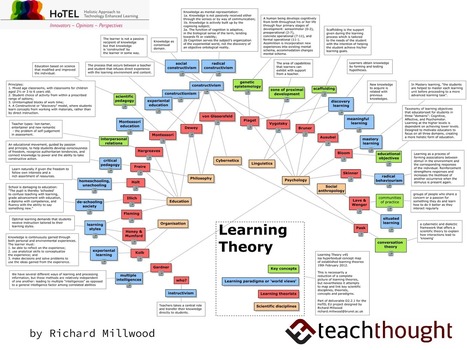
A Visual Summary: 32 Learning Theories Every Teacher Should Know by Terry Heick Learning theory–and the research that goes into it–is a topic seen frequently in universities and teaching programs, then less frequently after once teachers begin practicing in the classroom. Why this is true is complicated. (If you’re teaching, you may have more pressing …
|
|
Scooped by
Gilbert C FAURE
February 5, 2019 1:18 PM
|
Discover Peach Sliders in : This sweet sandwich celebrates Georgia's favorite crop.
|
|
Scooped by
Gilbert C FAURE
February 4, 2019 12:23 PM
|
Scientific data and research results are being published at an unprecedented rate. Many database curators and researchers utilize data and information from the primary literature to populate databases, form hypotheses, or as the basis for analyses or validation of results.
|
|
Scooped by
Gilbert C FAURE
February 4, 2019 4:57 AM
|
Difficulties and potential biases in identifying cholangiocarcinoma (CCA) epidemiology and risk factors are relevant issues with consequences on the ethio‐pathogenetical understanding and public health policy against this heterogeneous malignancy. In geographical areas where epidemiology and risk factors are known, such as in Thailand where endemic liver flukes are associated CCA, the measures to prevent CCA are well known (avoiding consumption of raw fish), although very hard to implement.1, 2 On the contrary, since the multilevel heterogeneity of CCA has made an accurate classification very challenging, translational studies and clinical trials are negatively affected.1 Indeed, the epidemiologic trend of CCA shows a constant and dramatic increase in mortality worldwide,1, 2 in contrast to the decrease in hepatocellular carcinoma (HCC) mortality in Europe in recent years.4 Furthermore, difficulties with the classification coding for CCA, and with the various terminology that is used, may underestimate the burden of CCA. In a recent report, the four ICD‐10 (International Classification of Diseases) subcodes for CCA were taken in account and used.5 This report showed that in England alone in 2013, 1965 new CCAs were diagnosed with an incidence rate of 3.65 per 100 000 individuals, while 2161 deaths and a mortality rate of 4.01 per 100 000 individuals were registered. The number of deaths in England from CCA from 2010 to 2013 surpassed those for HCC, with 7743 vs 6899 deaths in 2013 for CCA and HCC respectively.5 For this reason, biases and criticisms regarding CCA epidemiology and risk factors merit attention.6 The potential misclassification of perihilar CCA (pCCA) as intrahepatic (iCCA) is a known problem.7, 8 Indeed, pCCA is not represented by a topographical code. These tumours can be assessed only by a histology code for “Klatskin” tumours (8162/3). Notably, since the introduction of ICD‐O‐3 in 2001 in the US and in 2008 in Europe, both C22.1 and C24.0 are possible localization codes for these tumours, while in the previous ICD‐O‐2 version (adopted in the US in 1991 and in Europe in 1995), the histological code for pCCA was cross‐referenced to the iCCA topographical code.7, 8 This classification for pCCA has led to strongly varying degrees of misclassification and has affected epidemiological trends of iCCA and pCCA/dCCA.7, 8 The most recent report concerning the misclassification of CCA was reported in Liver International by Walter et al, who analysed the epidemiological trends and impact of CCA misclassification in Germany.10 During the observed period, the percentage of pCCA misclassified as iCCA dropped from 35% (2003‐2005) to 12% (2012‐2014). After reclassification, pCCA accounted for 13% of biliary tract tumours (iCCA: 46%, dCCA: 41%). Reclassification of pCCA led to a further increase in the incidence of iCCA and a stable or slightly decreasing trend in pCCA/dCCA. However, it is evident that the impact of pCCA misclassification and its reclassification affected the epidemiological picture relatively less than what might be expected, especially in the light of clinical‐pathological studies which reported that pCCA is the most frequent location of CCA, as compared with iCCA and dCCA.11 In older surgical reports, pCCA accounted for the majority of CCAs (approximately 67%, vs 6% of intrahepatic and 27% of distal tumours),11 while epidemiological studies reported the percentage of pCCA as 1%‐13%.7, 8 Therefore, it should be questioned whether CCA epidemiologic studies, like the one by Walter et al, reflect clinical‐pathological observations and whether other causes of misclassification and underreporting exist for CCA in general and for pCCA in particular. In this regard, there are several possible explanations to be considered. First of all, varying terminology/nomenclature has been adopted (“hilar”, “perihilar” and “Klastkin”) and there are varying coding practices on how to classify these terms which sometimes results in the exclusion of important pathological/clinical information.4, 9 Khan et al reported that most registries would not code a CCA described as “hilar” with the designated “Klatskin” histology code.9 Moreover, the difficulties in reaching a final diagnosis of pCCA in clinical practice is well known. Indeed, an Italian study of CCA incidence has reported that tissue‐proven diagnosis was obtained in <80% of the cases, even in tertiary centres, hindering the reporting of pCCA which is only possible through the histology code for the “Klastkin”.6 Moreover, while tissue access is relatively easy in iCCA and dCCA, the same is not true in pCCA,1 and the histological heterogeneity of CCA and the lack of specific immunohistochemical markers favours frequent misdiagnosis and misclassification.6 Another problem in cancer registries is that as many as 30%‐40% of CCAs are classified as NOS (ie, site not otherwise specified).1, 6 Khan et al reported that if the tumour site is unspecified, most registries classify CCA as intrahepatic.9 All these considerations highlight the difficulties of CCA epidemiologic studies,7, 8 including the recent study by Walter et al. However, the article by Walter et al contains information and details on the histology of each CCA type (according to the ICD), which is an important step forward. For example, a huge portion of pCCAs/dCCAs were classified as adenocarcinomas (39%) or neoplasms (17.8%), while overlapping biliary tract lesions (C24.8) and unspecified site tumours (C24.9) showed a very high rate of mucinous production features. It is possible that overlapping lesions and unspecified site tumours include pCCA, which has a clear association with mucinous differentiation as opposed to iCCA. In Walter et al, only 71 iCCAs showed mucinous differentiation, in contrast to 119 pCCAs/dCCAs. During the last meeting of the European Network for the Study of CCA (ENS‐CCA) in June 2018, Professor Shahid Khan reported that ICD‐11, which will be presented at the World Health Assembly in May 2019 for adoption by Member States, will code iCCA, pCCA and dCCA separately, and ICD‐O 4 will be aligned to ICD‐11 and will also have separate topography/morphology codes for iCCA, pCCA and dCCA. This will not solve all the topographical classification issues of CCA; however, it will be a step forward in accurately depicting the epidemiology of CCA. In the meanwhile, since the assessment of dCCA is currently not possible in the present classification system it is conceivable that all tumours with a topography code of C24.0, apart from tumours with the histology code 8162/3 (Klatskin‐tumours), will be classified as dCCA, as was done by Walter et al in their study.10 An additional matter of intense debate in CCA classification concerns the limits of the histology classification. ICD‐O does not consider the histological heterogeneity of the bile ducts.6, 12, 13 Indeed, extrahepatic bile ducts are composed of ducts which have a wall containing peribiliary glands (PBGs) and are lined by mucin‐producing cholangiocytes.6, 12, 13 The intrahepatic ducts are formed by large bile ducts (segmental, area, septal), which continue the histological organization of the extrahepatic ducts, and by small bile ducts (interlobular and ductules) composed of a single layer of non‐mucin‐producing tall cholangiocytes.6, 12, 13 (Figure 1) As a consequence, it has been demonstrated that tumours arising from these separate structures have different clinical‐pathology features.6, 12, 13 Expert researchers have proposed histology classifications based on the anatomy of bile ducts of origin: the large bile duct or pure mucin‐producing CCA, and the small bile duct, cholangiolar or mixed CCA.12, 13 The different histological subtypes of iCCA also demonstrate important differences in terms of epidemiology and risk factors and clinical‐pathologic presentation, while the large bile duct type and pCCA share many similarities, including risk factors and pathologic background.17 A recent consensus of ENS‐CCA endorsed this proposal since histological subtypes of CCA should be correlated with the molecular profiles and subgroup analyses in clinical trials.1 In ICD‐O, neither the heterogeneity of the tissue of origin nor iCCA subtypes are considered. The scientific community has proposed that CCAs be classified according to their anatomical location as intrahepatic (iCCA), perihilar (pCCA) or distal CCA (dCCA). As such, the second‐order branches of the bile ducts are the cut‐off point for iCCA versus pCCA, while, the origin of the cystic duct is the cut‐off point for pCCA versus dCCA.3 However, this classification includes CCA types which have some similarities but also important inter‐tumour differences.1, 17 Indeed, the site of origin of CCAs clearly influences the prognosis (see the TNM staging system where the three CCA subtypes are listed separately) and surgical therapy, but as far as ethio‐pathogenesis is concerned, dCCA, pCCA and even a subgroup of iCCA, namely the large bile duct type, share many aspects, including risk factors, histomorphology, and cellular and molecular carcinogenesis.12, 13 Thus, it is clear that all classification systems of CCA based on topography are disconnected from tumour biology.12, 13 Further studies and international consensuses may result in a solid understanding of CCA histological classification and a subsequent improvement in ICD‐O.
|
|
Scooped by
Gilbert C FAURE
February 4, 2019 4:01 AM
|
Linkedin est aujourd’hui LE réseau social professionnel dans le monde
et représente donc une source d’information incontournable dans un contexte de veille et de recherche d’information. Mais si son utilité paraît évidente pour tout ce qui a trait à l’information sur les personnes, elle ne s’y limit
|
|
Scooped by
Gilbert C FAURE
February 3, 2019 1:07 PM
|
When massive open online courses (MOOCs) first captured global attention in 2012, advocates imagined a disruptive transformation in postsecondary education. Video lectures from the world's best professors could be broadcast to the farthest reaches of the networked world, and students could demonstrate proficiency using innovative computer-graded assessments, even in places with limited access to traditional education. But after promising a reordering of higher education, we see the field instead coalescing around a different, much older business model: helping universities outsource their online master's degrees for professionals ([ 1 ][1]). To better understand the reasons for this shift, we highlight three patterns emerging from data on MOOCs provided by Harvard University and Massachusetts Institute of Technology (MIT) via the edX platform: The vast majority of MOOC learners never return after their first year, the growth in MOOC participation has been concentrated almost entirely in the world's most affluent countries, and the bane of MOOCs—low completion rates ([ 2 ][2])—has not improved over 6 years.
MOOC providers explored several potential revenue models in their first years, but selling certificates of completion was the most prominent. In early public talks ([ 3 ][3], [ 4 ][4]), Coursera cofounder Daphne Koller described their business model as a blue ccean strategy ([ 5 ][5]): Rather than focus on existing consumers of higher education, they would sustain a new global service by converting nonconsumers of higher education—especially in places with limited access—into online learners at the world's best universities. MOOC providers would make learning materials freely and widely available and would earn revenue from a portion of learners who purchased the opportunity to earn verified certificates and credentials.
Data on enrollment, intention, and completion show the challenges with this model.
We analyzed data from all MOOCs taught on edX by its founding partners MIT and Harvard University, from the start of the initiative in October 2012 to May 2018 (organized into annual cohorts starting in June). The dataset includes 565 course iterations from 261 different courses, with a combined 12.67 million course registrations from 5.63 million learners. Data from other edX partners or MOOC providers might reveal different dynamics, but we have a detailed view of two of the largest course providers.
MOOC researchers realized early on that most MOOC registrants leave soon after enrollment. Of those who register for a course, 52% never enter the courseware (table S4), and attrition typically remains high in the first 2 weeks of a course ([ 2 ][2]). We see similar patterns when looking at engagement over multiple years. New individual learners increased from 2012 to 2016 but have declined since (see the first figure). The largest initial cohort was in 2015 to 2016, but only 12% of those 1.1 million individual learners took an additional HarvardX or MITx course in the following year. Second-year retention rates have declined with every cohort, from 38% in the first cohort to 7% in the 2016–2017 cohort. A growing global demand for ongoing learning from MOOCs that might have maintained a blue ocean strategy never materialized.
It was clear from the first few years of MOOC research that MOOCs disproportionately drew their learners from affluent countries and neighborhoods, and markers of socioeconomic status were correlated with greater persistence and certification ([ 6 ][6], [ 7 ][7]). In 2012 to 2013, 80% of learners came from countries rated with high or very high United Nations Human Development Index ratings ([ 8 ][8]). That proportion grew slightly through 2015 to 2016, so that the majority of new registrations and certifications came from the world's most affluent countries (see the second figure). Rather than creating new pathways at the margins of global higher education, MOOCs are primarily a complementary asset for learners within existing systems.
Last, MOOCs' low completion rate has barely budged (fig. S1), despite 6 years of investment in course development and learning research ([ 9 ][9]). A strategy that depends on bringing new learners into higher education cannot succeed if educational institutions cannot support learners in converting their time and financial investment into completing a course to earn a credential with labor market value.
![Figure][10]
Consistently low retention and recent enrollment declines
Year-to-year enrollment of learner cohorts defined by their year of first activity. Parenthesis shows percentage retained from initial cohort size.
GRAPHIC: N. CARY/ SCIENCE
![Figure][10]
Disproportionate participation from affluent countries
Number of enrollments and certifications per year divided into quartiles based on the UN Human Development Index (HDI) rating of each registrant's home country.
GRAPHIC: N. CARY/ SCIENCE
In light of these trends, financial sustainability for MOOC platforms may depend on reaching smaller numbers of people with greater financial means that are already embedded in higher-education systems rather than bringing in new nonconsumers from the margins.
In October 2018, edX became the last of the major MOOC providers to announce partnerships with universities to offer fully online professional master's degrees ([ 10 ][11]), 5 years after Udacity made the first such partnership with Georgia Tech. EdX's move into fully online master programs was followed by their December 2018 decision—mirroring earlier decisions by Coursera and Udacity—to begin building paywalls around their previously freely available content ([ 11 ][12]).
In these initiatives, MOOC providers will compete with well-established, for-profit companies in helping universities to outsource their online degrees. For two decades, a class of companies called “online program managers” or “school-as-a-service” companies—Pearson Embanet, 2U, and Wiley Education Services—have supported colleges in creating online degrees ([ 1 ][1]). Universities choose how much of the total student experience to outsource to these providers, who offer services that include marketing and recruitment, admissions, online course management, curriculum design, and course instruction and assessment. School-as-a-service providers typically earn revenue by taking a fraction of the tuition of each student enrolled.
|
|
Scooped by
Gilbert C FAURE
February 3, 2019 4:56 AM
|
Multiple researchers were aware of He Jiankui's clinical trial before the news became public in November.
|
|
Scooped by
Gilbert C FAURE
February 2, 2019 2:53 AM
|
Alexandre Bovet a pu analyser 171 millions de tweets diffusés les 5 mois précédant l’élection de Trump. Conclusion : le mécanisme viral des fake news suit une logique distincte que la diffusion des infos traditionnelles. De quoi permettre d’identifier l’infox. Et de la traquer.
|
|
Scooped by
Gilbert C FAURE
January 31, 2019 3:31 PM
|
Dans cette troisième partie nous voyons comment les outils de mindmapping nous aident à extraire et organiser l'information utile d'un corpus documentaire.
|
If you follow my blog, you know I curate a lot of resources for teachers. This post brings together a suggested list, a curated list if you will, of 16 curation tools for teachers and students from the Shake Up Learning community. Choosing how to curate and what tools to use can be a very personal decision depending on your own needs and preferences. That’s what’s so great about the world wide web of tools! There is no shortage of tools.
Curation is absolutely necessary in the information age! As Gayle Allen says in her book, The New Pillars of Modern Teaching, “We’re assembling resources in a way that represents the ongoing story of our learning. We are the curators.”
Via Jim Lerman, THE OFFICIAL ANDREASCY, Elizabeth E Charles
|
|
Rescooped by
Gilbert C FAURE
from E-Learning-Inclusivo (Mashup)
February 9, 2019 3:57 AM
|
Despite its ubiquity and undeniable usefulness as a tool in the eLearning repertoire, microlearning defies easy definition. It fills a multitude of roles and is called on in a huge range of situations, both at work and in learners’ personal and consumer lives. But despite the abundance of both actual microlearning and discussion about microlearning, the question remains: Is microlearning really learning? The answer is, “It depends.”
Via Marta Torán, Edumorfosis, juandoming
Freely available, open education resources provide opportunities for college students to strengthen their critical thinking and quantitative literacy skills using sophisticated active-learning strategies. In a 2017 Wakefield market research survey, investigators found 85 percent of college students elected not to buy one or more required hard copy course textbooks. Students also are turning more frequently to their mobile devices to complete their coursework. Their reasons included the high price of textbooks and the fact that they did not value textbooks as learning tools. Instead, students are enticed by online course content, which can be accessed anywhere on campuses equipped with modern network infrastructures.
Via Elizabeth E Charles
|
|
Scooped by
Gilbert C FAURE
February 7, 2019 11:46 AM
|
Content curation is the engine behind every successful brand. Regardless of your specialization, your projects and ideas can grow in size and complexity thanks to a constant influx of content.
For getting new content, social media is the undisputed best source. Unlimited time and space for conversation create content that is later a viable part in a campaign.
Almost every big brand gets at least a part of their content from social media. Therefore, we can say it’s surely effective in both content curation and content marketing.
In this article, we’ve decided to dive into the details of social media as a platform for new content creation.
|
|
Scooped by
Gilbert C FAURE
February 5, 2019 4:08 AM
|
|
|
Scooped by
Gilbert C FAURE
February 4, 2019 11:52 AM
|
Découvrir les recherches sur "Web of Science, Scopus, Sci-Hub, Google Scholar" par période, lieu et popularité sur Google Trends
|
|
Scooped by
Gilbert C FAURE
February 4, 2019 4:49 AM
|
Steve chats with Christian Lauersen and Marie Engberg Eiriksson, founders of Library Planet, a library-focused crowd-sourced travel blog, about library collaboration, why they started Library Planet, how you can contribute, and the making of a bossa nova library song. Christian Lauersen is director of Libraries and Citizen Services in Roskilde Municipality. He believe libraries are crucial institutions…
|
|
Scooped by
Gilbert C FAURE
February 4, 2019 3:57 AM
|
Research is rarely created for private use; researchers publish their work so that others can read and use it, to advance the collective understanding of a field and impact people’s lives. Yet traditional approaches to scholarship, which emphasize publication in subscription-based rather than open access journals, inhibit not only the dissemination of research but also its usefulness, particularly outside of academia. Across all fields, scholars, educators, and members of the public benefit from scholarship which is easily accessible. Open science and public, social scholarship can break down these barriers to accessibility and utility. In this age which calls for a more informed citizenry, the use of social media to share and promote discussion of research could change not only the nature of scholarly communication but also the nature of scholarship and scholars’ roles. In this conceptual article, we argue that practicing public, social scholarship and increasing the use of social media to promote scholarship are the civic responsibility of citizen-scholars, so that research becomes more widely accessible, shareable, and usable in the public sphere.
|
|
Scooped by
Gilbert C FAURE
February 3, 2019 6:56 AM
|
CleverPDF offers dozens of high quality free online PDF tools, including PDF to Office, iWork and other format conversion, merge or split PDF, PDF security and more!
|
|
Scooped by
Gilbert C FAURE
February 3, 2019 4:55 AM
|
The book, The 100-year Life: Living and Working in an Age of Longevity, written by Lynda Gratton and Andrew Scott – both professors at the London Business School, shows us that individuals are now living longer than ever, and that as life expectancy continues to rise many people will be routinely working for 60 or …
|
|
Scooped by
Gilbert C FAURE
February 1, 2019 2:29 AM
|
Create A Curriculum That Questions The Purpose Of Knowledge
|


 Scoop.it!