Your new post is loading...

|
Rescooped by
Gilbert C FAURE
from E-Learning-Inclusivo (Mashup)
December 6, 2020 4:16 AM
|
Check out these great education tools for inclusion into teacher toolboxes anytime. Explore what they can do in your teaching environments.
Via NextLearning, juandoming
|
|
Scooped by
Gilbert C FAURE
December 4, 2020 11:50 AM
|
Evidence must be used to guide interventions for the COVID-19 pandemic, but that evidence must be comprehensive, credible and shared for it to be effective. This report focuses on how global scientific research and patenting activity relevant to SARS-CoV-2, including its genetics and pathogenesis, can be discovered and made transparent, open, shareable and navigable to help inform how it could be translated into intervention options. We demonstrate how the platform Lens.org can be used to conduct reliable systematic scholarly and patent searches, refine and build domain-based collections to share publicly, and set alerts to receive notifications for updates. We also provide some analyses/comments on some of these collections. Our aim is to enable researchers to find clarity into the discovery, analysis, and translation of COVID-19 scientific and patent knowledge into products, practices or services to help mitigate the current crisis.
|
|
Rescooped by
Gilbert C FAURE
from Learning & Technology News
December 2, 2020 10:53 AM
|
If we teach our children the mechanics of inquiry but fail to connect the dots between these new skills and the learner’s sense of curiosity, we have failed. Suppose we encourage our children to be curious problem seekers, sensitive to opportunities for wonderment and empower them with the capacity to design and implement purposeful inquiries. In that case, we might also ignite a passion for lifelong learning.
Via Nik Peachey
|
|
Scooped by
Gilbert C FAURE
December 2, 2020 10:51 AM
|
Find and offer many resources and develop your students into experts and well-trained information seekers, with Library's education support
|
|
Scooped by
Gilbert C FAURE
December 1, 2020 6:17 AM
|
Articles de Médecine et theses de Santé publique tirés des Journaux d'Afrique sont indexés sur AIM dans le but d'améliorer l'accès à l'information sanitaire sur l'Afrique.
|
|
Scooped by
Gilbert C FAURE
November 29, 2020 4:09 AM
|
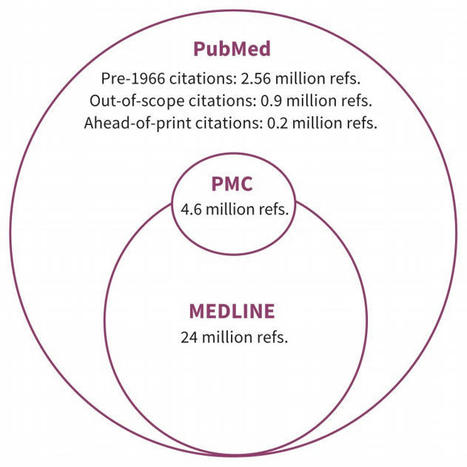
CMAJ. 2018 Sep 4; 190(35): E1042–E1045. doi: 10.1503/cmaj.180154 PMCID: PMC6148641 PMID: 30181150 How predatory journals leak into PubMed Andrea Manca, PhD, David Moher, PhD, Lucia Cugusi, PhD, Zeevi Dvir, PhD, and Franca Deriu, MD PhD See the reply "The authors respond to “Rigorous policies ensure integrity of NLM literature databases”" in volume 191 on page E290. See the reply "Rigorous policies ensure integrity of NLM literature databases" in volume 191 on page E289. This article has been cited by other articles in PMC. KEY POINTS PubMed, MEDLINE and PubMed Central are all funded by the National Library of Medicine but are different databases. PubMed has been reported to include some articles published in predatory journals. MEDLINE and PubMed policies for the selection of journals for database inclusion are slightly different. Weaknesses in the criteria and procedures for indexing journals in PubMed Central may allow publications from predatory journals to leak into PubMed. Closing these loopholes is necessary to protect the integrity of reputable databases and safeguard biomedical research. Recent reports that PubMed, one of the world’s leading biomedical databases, includes predatory journals and their publications1,2 is cause for concern. PubMed handles millions of queries daily and represents a key source of knowledge for health researchers worldwide. Much medical research that underpins clinical practice relies on the findings generated by peer-reviewed studies that are retrieved via biomedical databases, in particular, those that are free to search such as MEDLINE and PubMed. Thus, it is imperative that these databases are free of contamination by the outputs of predatory journals with their critically flawed peer review procedures.3 We analyze why this is happening and identify some possible solutions to stop the penetration of predatory journals and publishers into biomedical databases. What is a predatory journal and why does predatory publishing matter? There is no clear consensus definition for predatory publishers and journals. Such journals have been referred to as “low quality, amateurish, and often unethical academic publishing that is usually Open Access (OA).”4 Although the descriptor “predatory” has been criticized,5 it is now widely recognized and accepted. The term was introduced by librarian Jeffrey Beall6 who also created and maintained updated blacklists of potential predatory publishers and journals, which were acclaimed by many for their utility in helping scholars to spot fraudulent journals until they were removed in January 2017 for undisclosed reasons.7 Recently, there has been a move to favour identification based on potentially predatory publishing practices.8 In this regard, a set of evidence-based salient features of journals suspected to be predatory has been proposed; these features are straightforward to assess (Box 1).9 A recent commentary identified potential characteristics of predatory journals related to categories such as journal operations, editorial and peer review, manner of communication with authors, article processing charges, and ways of dissemination, indexing and archiving.10 Along with the development of general criteria to discern legitimate from predatory operations, the scientific community has shown an increasing demand for whitelists of journals, because it seems more feasible to evaluate journals objectively based on what they do rather than what they do not do. The Directory of Open Access Journals is widely considered the most comprehensive whitelist of open-access journals deemed to be reputable.11 Yet, adequate quality control of journal whitelists remains a problem.12 Box 1: The scope of interest includes nonbiomedical subjects with biomedical topics. The website contains errors in spelling and grammar. Images are distorted or fuzzy, intended to look like something they are not or are unauthorized. The language on the home page targets authors. The Index Copernicus Value is promoted on the website. There is no description of the process for handling manuscripts. The website requests that manuscripts should be submitted via email. Rapid publication is promised. There is no retraction policy. Information on whether and how journal content will be digitally preserved is absent. The processing or publication charge for the article is low (e.g., < US$150.00). Journals that claim to be open access either retain copyright of the published research or fail to mention copyright. The contact email address is nonprofessional and not affiliated with a journal (e.g., @gmail.com or @yahoo.com). Note: Adapted from Shamseer and colleagues.9 Most predatory journals are active in the biomedical sphere.13 Predatory publishing practices allow bad research that is poorly peer-reviewed, or published without peer review, to be published alongside real science that is rigorously reviewed, thus obscuring scientific truth.14 Furthermore, predatory publications may be included in the resumés of scholars seeking employment or promotion and tenure.15 What are MEDLINE and PubMed policies for the inclusion of journals? Both MEDLINE and PubMed are maintained by the National Library of Medicine, the world’s largest biomedical library, founded in 1836 within the National Institutes of Health.16 Among the library’s products, three — MEDLINE, PubMed and PubMed Central — play a prominent role in the access to and distribution of scientific knowledge. These three databases overlap considerably, as shown in Figure 1. Users of the PubMed search engine query all three databases simultaneously as the default option. However, each database can be searched separately, because there are some important differences between them. MEDLINE is the largest subset of PubMed; it started in print in the 1960s and contains more than 24 million references to journal articles in life sciences with a concentration on biomedicine, the largest fraction of which are included as PubMed references.17 A distinctive feature of a MEDLINE literature search is that the records are indexed with National Library of Medicine Medical Subject Headings (MeSH), the vocabulary thesaurus controlled by the National Library of Medicine that is used for indexing articles for PubMed. PubMed was introduced in 1996 as an experimental database under the Entrez retrieval system; free full access to MEDLINE started from 1997. PubMed contains more than 28 million citations and abstracts from journals indexed in MEDLINE and, unlike MEDLINE, also life science journals and online books, which are free to access through the National Center for Biotechnology Information Bookshelf. PubMed also provides access to journals and manuscripts deposited in PubMed Central, additional relevant websites and links to the other molecular biology resources at the National Center for Biotechnology Information. PubMed Central is an electronic archive of full-text journal articles that offers free access to its content. It contains more than 4 million articles, most of which have a corresponding entry in PubMed, and a small portion of which do not because they fall outside of PubMed’s scope (e.g., book reviews).18 MEDLINE and PubMed have different policies for journal selection, which means that just over 5600 journals are indexed in the former and about 30 000 are indexed in the latter (as of March 2018). The decision on whether to index a journal in MEDLINE is made by the Director of the National Library of Medicine based on quality and policy considerations that are set by the Board of Regents of the library. A Literature Selection Technical Review Committee is then responsible for reviewing journal titles and assessing the quality of their content. This committee comprehensively reviews applications through a multistep procedure.19 To cross-check a journal’s data, the procedure follows guidelines from the International Committee of Medical Journal Editors that were developed collaboratively by the World Association of Medical Editors, the Committee on Publication Ethics, the Directory of Open Access Journals and the Open Access Scholarly Publishers Association, and are based on principles of transparency that represent a minimum set of criteria to meet and maintain when seeking membership in any of the four organizations.20 The strict processes and criteria outlined above for a journal’s inclusion in MEDLINE are not mandatory for inclusion in PubMed and PubMed Central. Although open access journals and publishers indexed in MEDLINE are retrievable in the Directory of Open Access Journals and the Open Access Scholarly Publishers Association, a worrying number of those indexed by PubMed are not listed in either directory, because PubMed policies for journal selection are less strict. As a result, PubMed may well include journals that either did not apply for MEDLINE indexing, or did apply but did not satisfy minimum criteria for inclusion. Other factors, such as the need to deposit research funded by the National Institutes of Health under the Public Access Policy, the broader scope and the wide range of available material in PubMed compared with MEDLINE, may contribute to the absence of many PubMed citations in the whitelists of the Directory of Open Access Journals and the Open Access Scholarly Publishers Association. What are the potential loopholes? The journal selection policy for PubMed Central comprises a pre-application — a requirement for an ISSN number, which is easy to obtain;21 a two-year history of publication; and a minimum of 25 peer-reviewed articles — followed by a six-step procedure (i.e., Submit Application, Initial Application Screening, Scientific Quality Review, Technical Evaluation, Pre-Production and Release to Live).22 This is a looser and apparently more flexible procedure than MEDLINE’s; it is supervised by the National Library of Medicine, which also provides a qualitative review. Although the preapplication phase does consider conformance with guidelines and best practices published by professional organizations, including Recommendations for the Conduct, Reporting, Editing, and Publication of Scholarly Work in Medical Journals from the International Committee of Medical Journal Editors,23 Principles of Transparency and Best Practice in Scholarly Publishing20 and the Recommended Practices for the Presentation and Identification of E-Journals from the National Information Standards Organization,24 this process is not always uniform. Some journals indexed in PubMed Central are less than two years old and with fewer than 25 articles (often fewer than 10, even after counting the total number of articles issued on the journal’s website), which can be easily verified by searching the journal’s or publisher’s name in the National Library of Medicine’s catalog (www.ncbi.nlm.nih.gov/nlmcatalog/) to check the publication start year and the number of articles published in that journal. The National Library of Medicine may consider an application from a publishing organization that has been publishing scholarly content for less than two years if there is evidence that the management and individuals responsible for editorial quality and operations have adequate experience in comparable positions at other organizations. That is, any journal or publisher candidate that did not apply for or meet criteria can be indexed in PubMed Central if they show that at least one credible published author is listed among its editorial board. However, it has been reported that predatory journals often use the identities of reputable researchers, who are unaware of being listed in the editorial board of these journals.25 This may explain the unauthorized use of academic names for editorial boards and the relentless number of daily invitations many researchers receive to join an editorial board of a never-heard-of journal. In its qualitative review of candidate journals to be considered for inclusion in PubMed Central, the National Library of Medicine considers the 16 recommendations outlined in the guideline from the International Committee of Medical Journal Editors23; however, in the absence of any assessment from MEDLINE’s Literature Selection Technical Review Committee, the journal’s title and publisher’s name are not double-checked with the lists of these directories. Predatory journals often register journal names very similar to established legitimate journals and may not be recognized as fraudulent. As a result, open-access journals that do not qualify for inclusion may be indexed in PubMed Central and subsequently “leak” into the PubMed database. How could predatory journals be kept out of PubMed? The National Library of Medicine could raise the bar for journal inclusion in PubMed and PubMed Central by requiring all candidates to satisfy all three MEDLINE preapplication requirements fully (application of quality and policy considerations set by the Board of Regents of the NLM; review of journals’ titles and quality by the Literature Selection Technical Review Committee; and cross-check of journals’ data using minimum criteria set out in 2014 International Committee of Medical Journal Editors guidelines) and by adding a fourth criterion of asking candidate journals and publishers to show membership in the Directory of Open Access Journals, Open Access Scholarly Publishers Association, Committee on Publication Ethics and World Association of Medical Editors. Double-checking of journal titles and publishers by the organization’s Literature Selection Technical Review Committee, which is mandatory for inclusion in MEDLINE, would help identify those journals that slip into PubMed via PubMed Central despite not being whitelist journals. Additionally, the National Library of Medicine could make information about journal applicants available for scrutiny by the wider research community. Collectively, these safeguards might constrain the infiltration of PubMed by predators and the use of the National Library of Medicine in the inadvertent promotion of predatory journals. Footnotes Competing interests: None declared. This article has been peer reviewed. Contributors: Andrea Manca, Lucia Cugusi and Franca Deriu drafted the manuscript. Andrea Manca conceived and designed the study, gathered data, and contributed to the analysis and interpretation of the data. David Moher contributed to the conception of the study, interpreted data and revised the manuscript critically for important intellectual content. Lucia Cugusi co-conceived the study, and contributed to the analysis and interpretation of the data. Zeevi Dvir contributed to the design of the study, interpreted data and revised the manuscript critically for important intellectual content. Franca Deriu conceived and designed the study, gathered data, and contributed to the analysis and interpretation of the data. All of the authors gave final approval of the version to be published and agreed to be accountable for all aspects of the work in ensuring that questions related to the accuracy or integrity of any part of the work are appropriately investigated and resolved. Funding: This work did not receive any specific grant from funding agencies in the public, commercial or not-for-profit sectors. David Moher is funded by a University Research Chair at the University of Ottawa, Ottawa, Ont. References 1. Manca A, Martinez G, Cugusi L, et al. Predatory open access in rehabilitation. Arch Phys Med Rehabil 2017;98:1051–6. [PubMed] [Google Scholar] 2. Manca A, Martinez G, Cugusi L, et al. The surge of predatory open-access in neurosciences and neurology. Neuroscience 2017;353:166–73. [PubMed] [Google Scholar] 3. Manca A, Cugusi L, Dvir Z, et al. PubMed should raise the bar for journal inclusion. Lancet 2017;390:734–5. [PubMed] [Google Scholar] 4. Berger M. Everything you ever wanted to know about predatory publishing but were afraid to ask. Chicago: American Library Association; 2017. Available: www.ala.org/acrl/sites/ala.org.acrl/files/content/conferences/confsandpreconfs/2017/EverythingYouEverWantedtoKnowAboutPredatoryPublishing.pdf (accessed 2018 June 24). [Google Scholar] 5. Eriksson S, Helgesson G. Time to stop talking about ‘predatory journals’. Learn Publ 2018;31:181–3. [Google Scholar] 6. Beall J. Predatory publishers are corrupting open access. Nature 2012;489:179. [PubMed] [Google Scholar] 7. Strielkowski W. Predatory journals: Beall’s List is missed. Nature 2017;544:416. [PubMed] [Google Scholar] 8. Butler D. Investigating journals: the dark side of publishing. Nature 2013;495:433–5. [PubMed] [Google Scholar] 9. Shamseer L, Moher D, Maduekwe O, et al. Potential predatory and legitimate biomedical journals: can you tell the difference? A cross-sectional comparison. BMC Med 2017;15:28. [PMC free article] [PubMed] [Google Scholar] 10. Moher D, Shamseer L, Cobey KD, et al. Stop this waste of people, animals and money. Nature 2017;549:23–5. [PubMed] [Google Scholar] 11. Van Noorden R. Open-access website gets tough. Nature 2014;512:17. [PubMed] [Google Scholar] 12. Bohannon J. Who’s afraid of peer review? Science 2013;342:60–5. [PubMed] [Google Scholar] 13. Moher D, Srivastava A. You are invited to submit… . BMC Med 2015;13:180. [PMC free article] [PubMed] [Google Scholar] 14. Beall J. Medical publishing triage — chronicling predatory open access publishers. Ann Med Surg (Lond) 2013;2:47–9. [PMC free article] [PubMed] [Google Scholar] 15. Bagues MF, Sylos-Labini M, Zinovyeva N. A walk on the wild side: an investigation into the quantity and quality of” predatory” publications in Italian academia. LEM Working Paper Series, No. 2017/01. Pisa (Italy): Scuola Superiore Sant’Anna, Laboratory of Economics and Management (LEM); 2017. [Google Scholar] 16. About the National Library of Medicine. Bethesda (MD): U.S. National Library of Medicine; 2004. Apr. 22 (updated 2018 June 22). Available: www.nlm.nih.gov/about/index.html (accessed 2018 June 24). [Google Scholar] 17. MEDLINE, PubMed, and PMC (PubMed Central): How are they different?” Bethesda (MD): U.S. National Library of Medicine; 2018. Apr. 20 (updated 2018 June 22). Available: www.nlm.nih.gov/bsd/difference.html (accessed 2018 June 24). [Google Scholar] 18. What is the difference between PubMed Central (PMC) and PubMed? Bethesda (MD): U.S. National Library of Medicine; Available: https://support.nlm.nih.gov/knowledgebase/article/KA-03247/en-us (accessed 2018 June 24). [Google Scholar] 19. MEDLINE(R) journal selection [fact sheet]. Bethesda (MD): U.S. National Library of Medicine; 1988. Jan. 1 (updated 2018 Mar. 14). Available: www.nlm.nih.gov/pubs/factsheets/jsel.html (accessed 2018 June 24). [Google Scholar] 20. Principles of transparency and best practice in scholarly publishing. Hampshire (UK): Committee on Publication Ethics (COPE); 2018. Available: https://publicationethics.org/resources/guidelines-new/principles-transparency-and-best-practice-scholarly-publishing (accessed 2018 June 24). [Google Scholar] 21. Requesting an ISSN. Paris: International Standard Serial Number (ISSN) International Centre; Available: www.issn.org/services/requesting-an-issn/ (accessed 2018 June 24). [Google Scholar] 22. How to participate in PMC. Bethesda (MD): U.S. National Library of Medicine; (updated 2018 June 12). Available: www.ncbi.nlm.nih.gov/pmc/pub/addjournal/ (accessed 2018 June 24). [Google Scholar] 23. Recommendations for the conduct, reporting, editing, and publication of scholarly work in medical journals. International Committee of Medical Journal Editors (ICMJE); (updated December 2017). Available: www.icmje.org/icmje-recommendations.pdf (accessed 2018 June 24). 24. PIE-J: the presentation & identification of e-journals — A recommended practice of the National Information Standards Organization. Baltimore: National Information Standards Organization (NISO); 2013. Available: https://groups.niso.org/apps/group_public/download.php/10368/rp-16-2013_pie-j.pdf (accessed 2018 June 24). [Google Scholar] 25. Sorokowski P, Kulczycki E, Sorokowska A, et al. Predatory journals recruit fake editor. Nature 2017;543:481–3. [PubMed] [Google Scholar] Articles from CMAJ : Canadian Medical Association Journal are provided here courtesy of Canadian Medical Association
|
|
Scooped by
Gilbert C FAURE
November 27, 2020 1:37 PM
|
|
|
Scooped by
Gilbert C FAURE
November 26, 2020 8:41 AM
|
La traversée à pied des Balkans de la côte orientale de Chypre aux Dolomites : l’itinéraire, des conseils pratiques, étapes, dénivelés, traces GPS. 4 mois de marche, 3450 kilomètres à pied dans neuf pays (Chypre, Grèce, Albanie, Monténégro, Bosnie-Herzégovine, Croatie, Slovénie, Autriche et Italie). Un chemin dans les montagnes avec environ 150 kilomètres de dénivelés…
|
|
Rescooped by
Gilbert C FAURE
from Educational Technology News
November 25, 2020 2:33 AM
|
"Online learning is slowly becoming one of the most popular forms of studying in the world. Many students worldwide have ditched the routine of traditional schooling for the flexibility and convenience of virtual studying. While there are plenty of benefits to online learning, there are also a few challenges that both the students and teachers will face."
Via EDTECH@UTRGV
|
|
Rescooped by
Gilbert C FAURE
from Educational Technology News
November 25, 2020 2:33 AM
|
Blended learning is becoming the new norm in teaching. Here’s how to make the most of the assessments in the blended classroom:
Via EDTECH@UTRGV
|
|
Scooped by
Gilbert C FAURE
November 18, 2020 5:55 AM
|
In this month’s editorial, the PLOS Medicine Editors discuss the role of preprints in human health research and propose a 3-part framework for ensuring benefit.

|
Suggested by
Société Francaise d'Immunologie
November 17, 2020 5:16 AM
|
Un rocher volcanique perdu dans l’Atlantique, des fleurs en veux-tu en-voilà, une forêt primaire inscrite au patrimoine mondial, des petits ports, une capitale plus qu’attachante et un rien de vague à l’âme.
|
|
Scooped by
Gilbert C FAURE
November 17, 2020 5:05 AM
|
EPALE Community Conference 2020 - All the contents available here!
|
|
|
Scooped by
Gilbert C FAURE
December 4, 2020 1:12 PM
|
Print it out and reference it before you're scheduled to speak.
|
|
Scooped by
Gilbert C FAURE
December 3, 2020 1:02 PM
|
We all deserve something nice this year....
|
|
Rescooped by
Gilbert C FAURE
from Learning & Technology News
December 2, 2020 10:52 AM
|
The shift to online learning has catalyzed the need for students to be more independent in structuring their own time and schedules, managing their responsibilities, and advocating for their needs. And these changes in learning modalities and the skills necessary to engage in that learning have affected students of all ages. Even our youngest elementary students are being expected to utilize executive functioning skills often not developed until high school or college.
Via Nik Peachey
|
|
Scooped by
Gilbert C FAURE
December 1, 2020 9:06 AM
|
Why do stone, bronze, iron, oil and data get all the attention?
|
|
Scooped by
Gilbert C FAURE
December 1, 2020 6:14 AM
|
Academics say online methodologies can produce more collaborative, diverse and ethical research

|
Suggested by
LIGHTING
November 28, 2020 4:38 AM
|
The new WHO 2020 Guidelines on Physical Activity and Sedentary Behaviour1 provide
recommendations on the amount and types of physical activity for various age groups,
pregnant and post-partum women, and people living with chronic conditions or disabilities.
|
|
Scooped by
Gilbert C FAURE
November 27, 2020 6:23 AM
|
Explore this superb list, compiled by eLearning Industry, which incudes the top eLearning Content Providers For Microlearning 2020.
|
|
Scooped by
Gilbert C FAURE
November 26, 2020 8:23 AM
|
A collection of tools and resources for promoting game-based learning. Mixed by nikpeachey.
|
|
Rescooped by
Gilbert C FAURE
from Educational Technology News
November 25, 2020 2:33 AM
|
"Microlearning is loved by contemporary learners. It improves the knowledge and skills retention of learners as compared with conventional classroom and online learning methods; provides just-in-time learning, which is a necessity in this fast-paced world; and takes much less time to create and develop. Microlearning provides great ROI to the company implementing it."
Via EDTECH@UTRGV
|
|
Scooped by
Gilbert C FAURE
November 22, 2020 1:08 PM
|
Avec ses plats qui ne connaissent pas les effets de mode, la gastronomie alsacienne est un exemple de continuité dans le temps. Branchées ou plus traditionnelles, nos adresses préférées entre Strasbourg et Colmar.
|
|
Scooped by
Gilbert C FAURE
November 17, 2020 11:25 AM
|
Novelty. Burke, Edmund. 1909-14. On the Sublime and Beautiful. The Harvard Classics
|
|
Suggested by
Société Francaise d'Immunologie
November 17, 2020 5:16 AM
|
1300+ km de sentiers balisés.Profitez des plus belles balades sous le label...
|


 Scoop.it!